
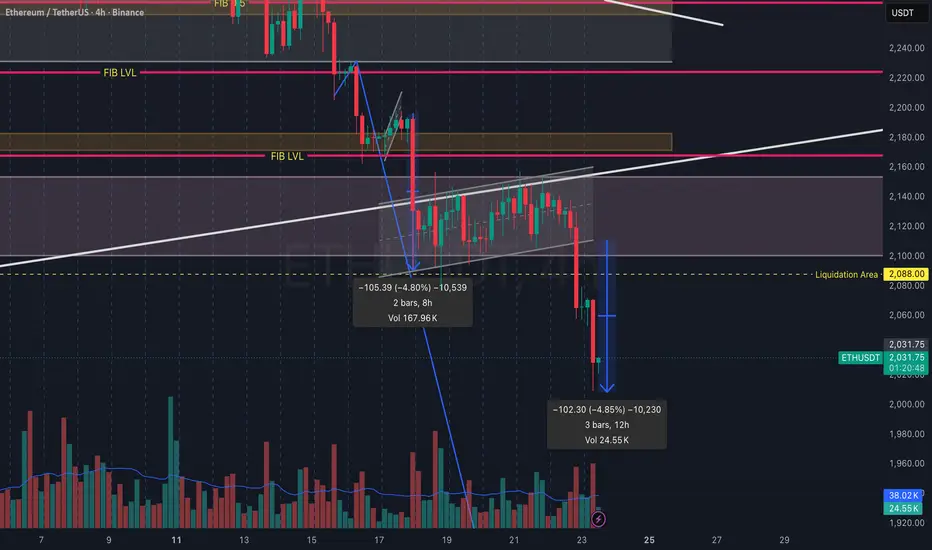
After spending a good amount of time in a consolidation/accumulation range, ETH started showing signs of weakness instead of strength.
The upward move inside the range lacked momentum, volume confirmation was weak, and every bounce looked corrective rather than impulsive.
A classic bear flag and pole pattern was formed on the 4H timeframe:
What makes this setup interesting is that the downside move after breakdown traveled almost exactly the same size as the original pole — nearly a perfect measured move completion.
This is a good example of how:
The market gave multiple signs of distribution before continuation to the downside.
The upward move inside the range lacked momentum, volume confirmation was weak, and every bounce looked corrective rather than impulsive.
A classic bear flag and pole pattern was formed on the 4H timeframe:
- Initial bearish impulse created a pole of around 102 points
- Price then moved into a weak rising consolidation channel
- No strong reclaim of key resistance or moving averages
- Breakdown finally came during the Friday NY session with aggressive momentum
What makes this setup interesting is that the downside move after breakdown traveled almost exactly the same size as the original pole — nearly a perfect measured move completion.
This is a good example of how:
- weak consolidation after a dump can act as continuation
- small higher highs alone are not enough for bullish confirmation
- volume and momentum matter during breakout attempts
The market gave multiple signs of distribution before continuation to the downside.
Trade closed: target reached

Disclaimer
The information and publications are not meant to be, and do not constitute, financial, investment, trading, or other types of advice or recommendations supplied or endorsed by TradingView. Read more in the Terms of Use.
Disclaimer
The information and publications are not meant to be, and do not constitute, financial, investment, trading, or other types of advice or recommendations supplied or endorsed by TradingView. Read more in the Terms of Use.