PCR Trading Strategies How Option Prices Move (Option Greeks)
Option premiums move because of time, volatility, and market direction. The Greeks explain this movement.
1. Delta – Direction Sensitivity
Delta shows how much premium changes with a ₹1 move in the underlying.
Call delta: +0.3 to +1.0
Put delta: –0.3 to –1.0
Higher delta = faster premium movement.
2. Theta – Time Decay
Theta is the killer for option buyers.
As time passes, the premium loses value.
Sellers benefit from theta
Buyers suffer from thet
Trendcontinuationpatterns
Part 2 Master Candle Stick Patterns Key Terms in Options
Option trading revolves around certain essential terms that define risk, reward, and price movement.
Premium
The price you pay to buy an option.
For the buyer, premium = maximum loss.
Strike Price
The fixed level at which you buy (Call) or sell (Put) if you choose to exercise the contract.
Expiry
Every option expires weekly or monthly.
India has:
Weekly expiry: Nifty, Bank Nifty, Fin Nifty
Monthly expiry: All indices & stocks
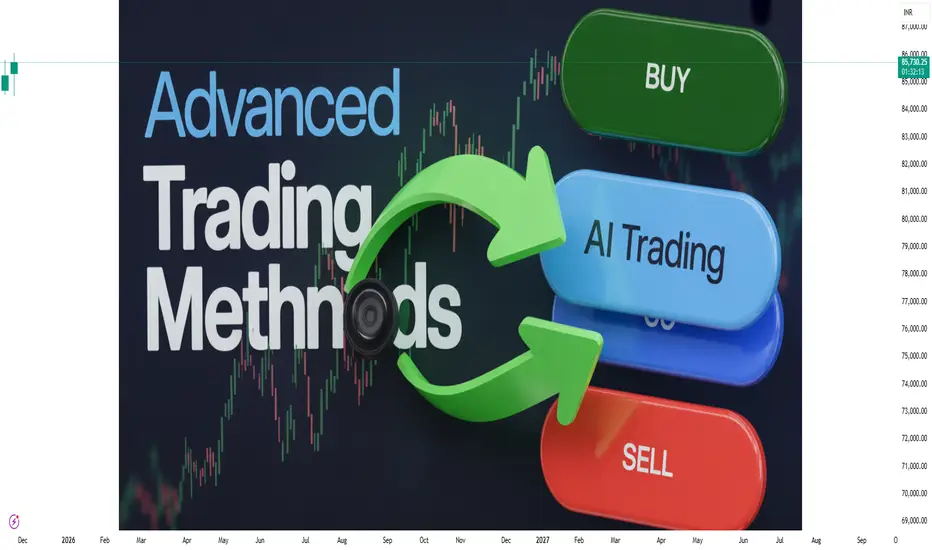
Advanced Trading Methods 1. Multi-Timeframe Analysis (MTFA)
One of the most powerful advanced methods is multi-timeframe analysis. Instead of relying on a single chart, traders study the market on higher and lower timeframes simultaneously. Higher timeframes reveal the dominant trend, while lower timeframes help identify precise entries and exits.
For example:
Weekly chart → Determines long-term trend direction.
Daily chart → Confirms momentum and key levels.
Hourly chart → Provides exact entry zones.
Professional
Building a Strong Crypto Investment Strategy1. Understand the Market and Its Risks
Before investing, it’s crucial to understand what cryptocurrency is and how it operates. Crypto assets range from store-of-value coins like Bitcoin to smart-contract platforms like Ethereum and utility tokens designed for specific ecosystems. Each category carries different levels of risk and potential return.
Crypto markets are known for extreme price swings. A coin can rise or fall by 20–30% within hours. Investors must acknowledge this volatility and m
Core Principles of Intraday Scalping Strategy1. Precision in Entry and Exit Timing
The heart of scalping lies in flawless timing. Since each trade aims to capture only a few ticks or points, even a slight delay can turn a winning trade into a losing one. Scalpers rely heavily on lower time frames such as the 1-minute, 3-minute, or 5-minute charts to pinpoint micro-trends and volatility spikes.
To achieve precision, traders often utilize tools such as:
Level 2 market depth
Order flow analysis
Volume-profile clusters
Price action patte
Best Timeframes for Candle PatternsCommon Mistakes Traders Make
Relying only on candle patterns without context
Trading patterns blindly without trend confirmation
Not waiting for candle close
Ignoring volume
Forcing patterns where there are none
Using too many candlestick rules
Candlestick patterns should be signals, not guarantees.
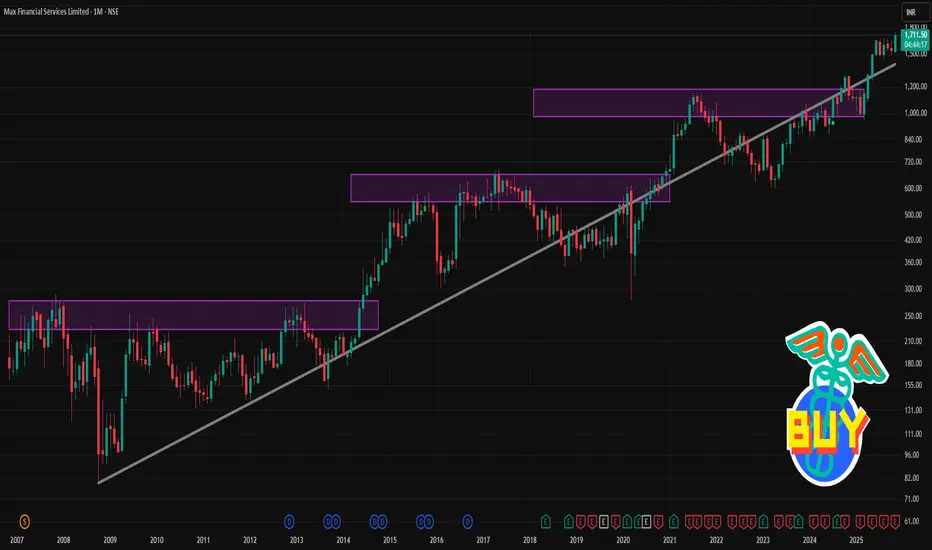
MFSL 1 Month Time Frame 📊 Key Price / Recent Performance
Recent close: ~₹1,736.70.
52‑week high ≈ ₹1,751.40; 52‑week low ≈ ₹950.00.
Over the past 1 month, MFSL is up by roughly 8 – 9 %.
According to recent technical‑level analyses:
Level Price (INR)
Support 1 (near‑term) ~₹1,677.8 – ₹1,678.0
Support 2 ~₹1,645 – ₹1,657.6
Support 3 / lower band ~₹1,621.9
Pivot / Recent support‑
Part 1 Support and ResistanceWhy Option Trading Is Popular
(1) Low Capital Requirement
A trader can control large exposure by paying only premium.
(2) Risk Can Be Controlled
Option buyers lose only the premium, unlike futures.
(3) Multiple Strategies
Options allow endless combinations:
Directional trades
Hedge positions
Neutral trades
Volatility trades
Income trades
(4) Can Earn in Any Market
You can profit in:
✔ Uptrend
✔ Downtrend
✔ Sideways periods
✔ High volatility
✔ Low volatility
Part 11 Trading Master Class How Call Options Work
A Call Option gives the buyer the right to buy the underlying asset at the strike price.
You buy a call when you expect the market to go up.
Example:
Nifty at 22,000
You buy 22,200 CE at ₹50 premium.
If Nifty moves to 22,400, the call becomes valuable.
Intrinsic value = 22,400 – 22,200 = ₹200
Profit = 200 – 50 = ₹150
But if Nifty stays below 22,200, your call expires worthless and you lose the premium.
Risk = ₹50
Reward = unlimited
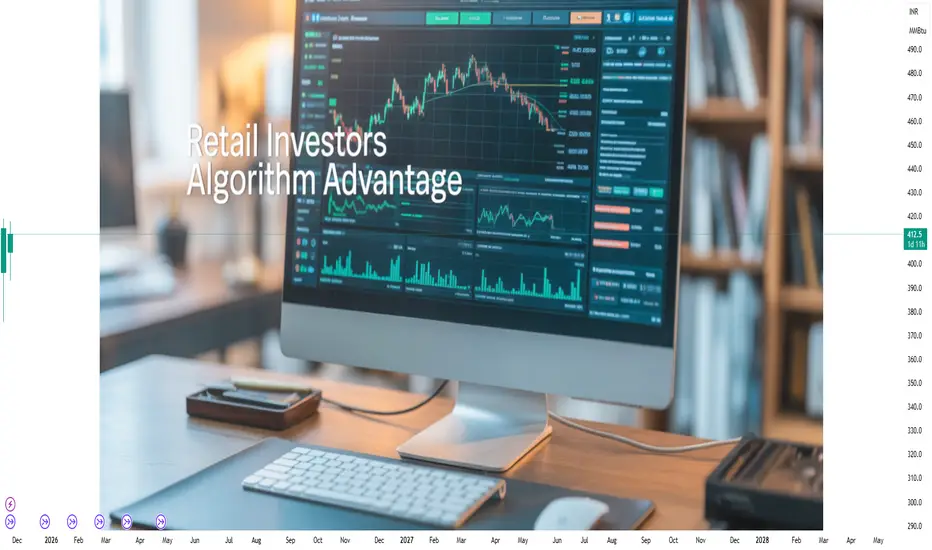
Advantages of Algorithmic Trading for Retail InvestorsIntroduction
In the modern financial markets, technology has revolutionized trading, making it more accessible, efficient, and sophisticated. Algorithmic trading, often referred to as algo-trading or automated trading, is a prime example of this transformation. It involves using computer algorithms to execute trades based on predefined rules for price, volume, timing, and other market conditions. While algorithmic trading was initially the domain of institutional investors and hedge funds due t
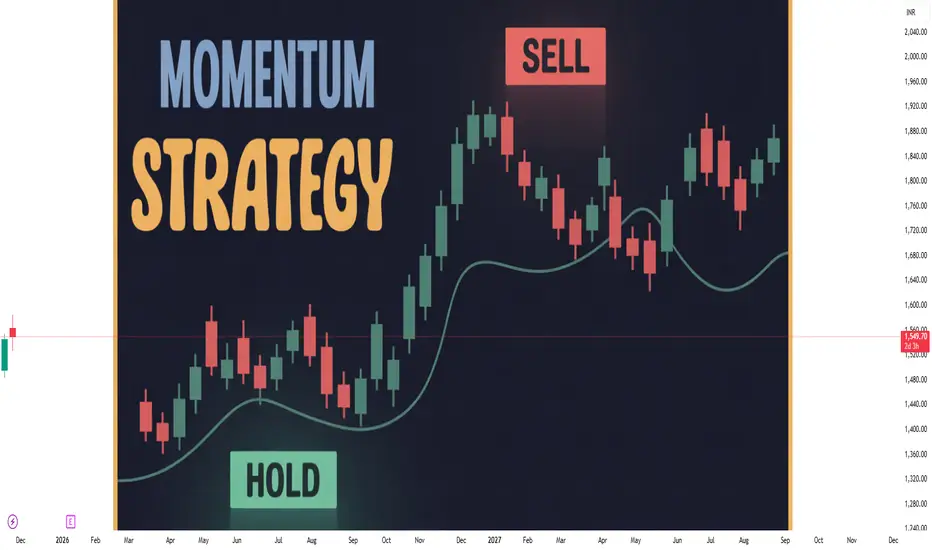
Best Timeframes for Riding Momentum1. Understanding Momentum Across Timeframes
Momentum is not equal on all charts. A stock may show momentum on a 5-minute chart due to a news spike, while the daily chart might show a strong trend reversal building over days or weeks. Therefore, selecting a timeframe is essentially choosing the type of momentum you want to ride:
Short-term momentum (scalping/intraday)
Medium-term momentum (swing trading)
Long-term momentum (positional/trend trading)
The key is to match your risk appetite, ca
E-Commerce Profits in the Trading Market1. The Evolution of E-Commerce in Trading Markets
Traditional trading relied heavily on physical marketplaces, intermediaries, warehousing networks, and region-specific demand. E-commerce broke these boundaries, enabling sellers to trade goods across vast geographies with minimal friction. With digital payments, online marketplaces, automated logistics, and data analytics, the trading market’s profit model fundamentally shifted from limited, location-based selling to scalable, digital-led opera
Part 8 Trading Master Class With Experts Role of Volume & Open Interest
These indicators help understand market participation:
Volume shows activity
Open Interest shows fresh positions
Rising OI + rising price → strong trend
Rising OI + falling price → trend strength in opposite direction
Falling OI → position unwinding
Options with high OI often influence intraday support/resistance.
Part 6 Learn Institutional TradingWhat Is Premium?
Premium is the cost of buying an option.
It depends on multiple factors:
Underlying price
Strike price
Time to expiry
Volatility (IV)
Interest rates
Market demand and supply
If implied volatility is high, premium rises.
If expiry date is near, premium decays faster.
Part 2 Ride The Big Moves Call Option Simplified
A call option is useful when you expect the market to go up.
If you buy a call option, you are paying a premium to the seller.
If the price rises above your strike price before expiry, your call option gains value.
Example:
NIFTY trading at 22,000. You buy a 22,000 CE.
If NIFTY goes to 22,300, your call becomes profitable because you have the right to buy at 22,000.
If the market falls instead, you lose only the premium you paid.
Technical Indicators Used in Momentum Trading1. Relative Strength Index (RSI)
The Relative Strength Index (RSI) is one of the most popular momentum indicators used by traders. Developed by J. Welles Wilder, the RSI measures the speed and magnitude of price movements over a specified period, typically 14 days. The indicator oscillates between 0 and 100 and helps identify overbought and oversold conditions in the market.
Overbought Condition: RSI above 70 suggests that the asset might be overbought, indicating potential for a price correct
Trading Styles in the Indian Market1. Intraday Trading
Intraday trading, commonly known as day trading, is one of the most popular styles in India due to high volatility and leverage availability. It involves entering and exiting trades within the same trading day. The primary objective is to capture small price movements across large volumes.
Key Features
Short time frames: 1–5 minutes, 15 minutes, or hourly charts.
High leverage: Brokers offer margin for intraday trades.
Targets are small: 0.3% to 1.5% moves.
Risk managem
Part 1 Ride The Big Moves What Are Options?
Options are derivatives, which means their value is derived from an underlying asset such as stocks, indices, commodities, or currencies. In equity and index markets, options help traders speculate on price movements or protect their existing positions.
An option is essentially a contract that grants the buyer the right (but not the obligation) to buy or sell the underlying asset at a predetermined price (called the strike price) before a specific date (called the expiry).
T
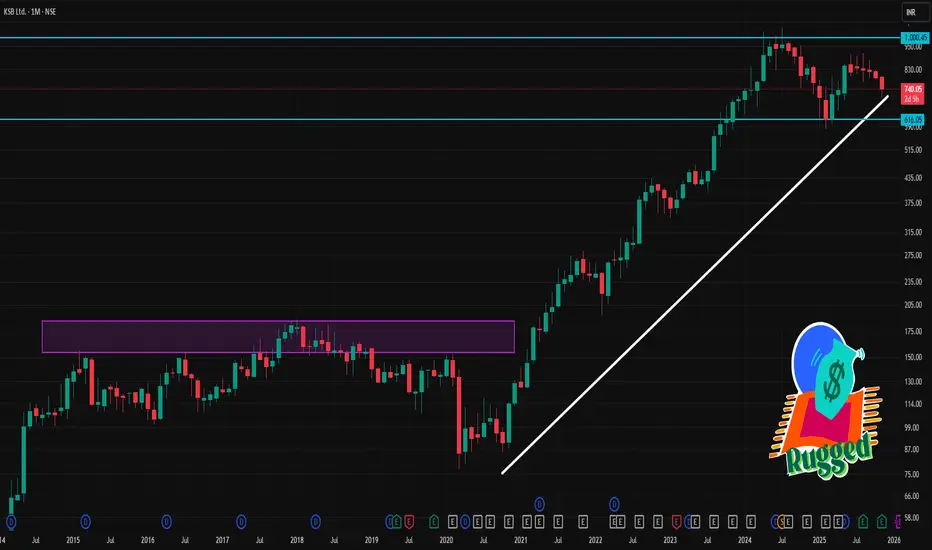
KSB 1 Month Time Frame 📊 Recent Price & Context
1. As of this week, KSB share price is trading around ₹ 740–748.
2. Over the past 1 month, the stock has seen a decline: some data suggest ~–10% to –12% monthly movement.
3. 52-week trading range: ~₹ 582 (low) to ~₹ 912 (high).
⭐ What this implies (1-Month Outlook)
Base case (neutral / consolidation): Price may hover between ₹ 702–750, possibly swinging around support-resistance zones if broader markets remain stable.
Bullish near-term bounce: If sentiment or funda
UNIONBANK 1 Week Time Frame 🔎 Current snapshot
Share price recently around ₹152.85–₹156.94.
52-week trading range: ~₹100.81 (low) to ~₹158.65 (high).
Fundamentals wise: low P/E vs peers, reasonable book value / dividend yield.
📈 Short-term (1-week) “Levels to watch”
Based on technical-forecast projections from providers:
Level type Price
Support (down-side) ~ ₹149.7
Alternate lower support
Introduction to DivergenceShould You Trade Options?
Options are powerful tools, but they require:
Understanding of market structure
Technical or quantitative edge
Patience and discipline
Clear strategy
Risk management
If you want leverage and flexibility, options are excellent.
If you want consistency and low risk, focus on credit spreads or hedged selling.
Introduction to Put-Call Ratio (PCR)Psychology in Option Trading
Option trading is not just technical—it's emotional.
Traders face:
Fear of missing out (FOMO)
Overtrading during high volatility
Holding losers too long
Expecting miracles from OTM options
Disciplined psychological control is essential.
Part 2 Intraday Trading Master ClassMargin and Risk Management
Option buying requires no margin except the premium.
Option selling requires high margin because:
Risk is unlimited.
Exchanges demand safety.
Risk Management Rules
Never sell naked options without stop-loss.
Avoid selling during high volatility events.
Use spreads to reduce risk.
Position size properly—do not over-leverage.