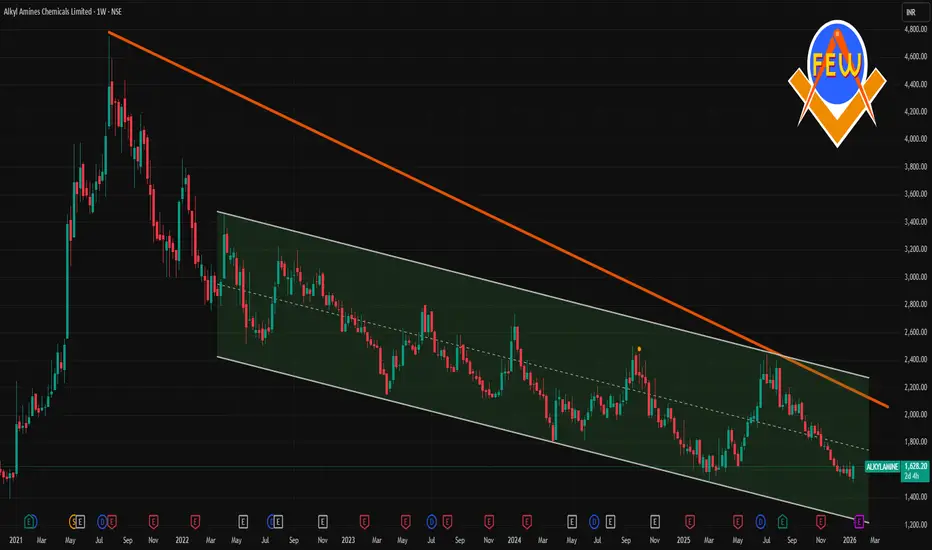
IOC 1 Week Time Frame 🔎 Current Snapshot
Latest price on NSE: ~ ₹163.00–₹163.50.
52‑week trading range: ₹110.72 (low) ⇒ ₹174.50 (high).
On moving averages: price is above 50‑day, 100‑day and 200‑day MA — a bullish structural sign, though short‑term oscillators are mixed/neutral.
Recent 1‑week performance: modest gains (price near upper of recent short‑term range) — suggests a cautious bullish bias, not a runaway rally.
✅ My “Base‑Case” 1‑Week Scenarios
Scenario A – Mild Bullish (likely): Price hovers between ₹160–165, bouncing off support ~₹160 and possibly testing ₹165–166.
Scenario B – Bullish Breakout (if catalysts align): Break above ₹165–166 → move toward ₹167–168 (maybe touching ₹170).
Scenario C – Weak/Neutral (in adverse market): If oil/market turns negative & price breaks below ₹160, watch for dips toward ₹158–159.
Chartstructure
KALYANKJIL 1 Week Time Frame 📉 1‑Week Price Movement & Technical Snapshot
The share price has fallen by ~4–5% over the last week.
Current quote (around 9–10 Dec 2025) is in the ₹468–473 range.
From its 52‑week high of ₹794.60, the stock is down more than 40%.
Technical‑analysis commentary suggests “bearish momentum” and “mixed signals” — indicating consolidation or possible further downside in the short term.
📊 Fundamentals & Market Context
Recent financials show some strength: the company reported good revenue growth and profitability in recent quarters.
On the valuation side: the stock quotes a high P/E (price-to-earnings) and P/B (price-to-book) compared with some peers — implying expectations are already priced in.
Some analysts as per recent reports have highlighted structural headwinds (like weaker jewellery demand, gold‑price volatility, cautious consumer spending), which may weigh on near‑term performance.
BIKAJI 1 Day Time Frame 📈 Recent Price & Basic Info
Latest price (NSE / BSE) ~ ₹725.60 (close on 10-Dec-2025)
Day’s range: ~ ₹703.90 to ₹731.15.
52-week range: ₹558.80 (low) to ~ ₹864.00 (high)
🧭 Support / Resistance / Pivot-based Levels (Daily)
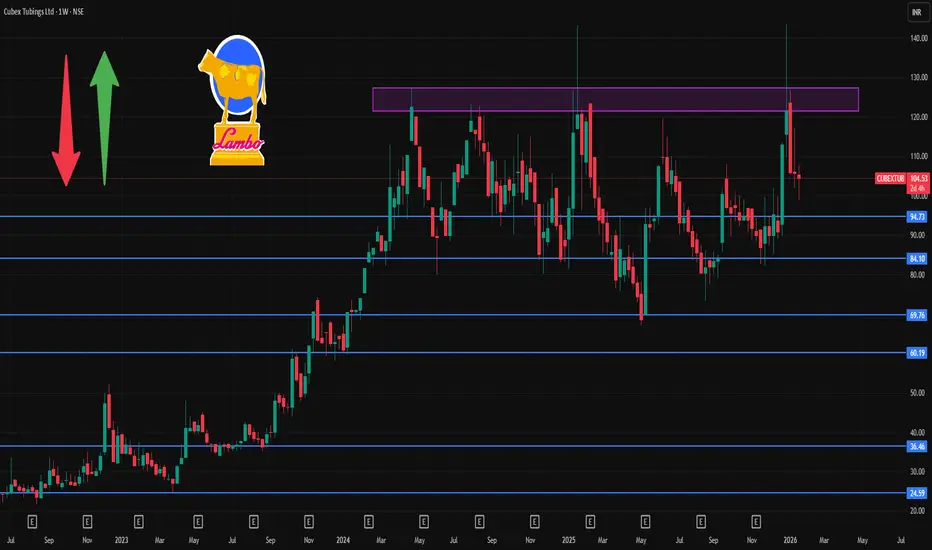
From pivot-analysis (classic / Fibonacci / others) :
Pivot / Level Price (₹) / Range
Pivot (daily) ~ ₹724.95
Support 1 (S1) ~ ₹722–723 — near pivot
Resistance 1 (R1) ~ ₹727–728
Upper zones / Higher resistances (R2/R3) ~ ₹729–732
Indicative lower support zones (if price dips) ~ ₹699–¥690+
POWERGRID 1 Day Time Frame 📊 CURRENT PRICE (Approx, Live Intraday)
₹263 – ₹266 approx range today as of latest data.
These are derived from today’s price movements and expected intraday behaviour:
✅ Pivot Point (Central Reference)
Pivot: ~ ₹264.4 – ₹265.9
📈 Resistance Levels
R1: ~ ₹265.9 – ₹266.0
R2: ~ ₹267.25
R3: ~ ₹268.75
📉 Support Levels
S1: ~ ₹263.05
S2: ~ ₹261.55
S3: ~ ₹260.20
These reflect short-term intraday pivot support & resistance derived from price movement and are useful for 1-day trading decisions (breakouts or pullbacks).
RAMCOCEM 1 Day Time Frame 📌 Current Price (Approx)
₹1007–₹1011 range on NSE during today’s session. Live market shows price around this zone (previous close ~₹1,011).
📊 Daily Pivot & Support/Resistance Levels (Updated)
(from reliable intraday pivot data)
Daily Pivot Zone
Central Pivot Point (CPR): ~₹1,011.4–₹1,011.8 (key equilibrium level)
Resistance Levels
R1: ~ ₹1,019
R2: ~ ₹1,027
R3: ~ ₹1,034–₹1,035
(above these levels can imply stronger upside if sustained)
Support Levels
S1: ~ ₹1,011–₹1,003
S2: ~ ₹996–₹992
S3: ~ ₹988–₹980
(broken support zones may accelerate downside)
✅ Key ODI pivots (Standard daily):
S1 ~ ₹1003.7
Pivot ~ ₹1019.1
R1 ~ ₹1027.3 (minor breakout level)
ZYDUSWELL 1 Day Time Frame 🔎 Current snapshot
Recent quoted share‑price: ~ ₹419.7 as on close of market.
52‑week high / low ~ ₹530.9 / ₹298.6.
✅ What this implies (for today / next trading session)
If price moves upward and clears ₹456–₹463, next target zone could be ₹470–₹475 — and if momentum persists, maybe up to ₹485–₹487.
If price falls, keep an eye on ₹441–₹453 as first support; a break below ₹420–₹422 could open risk of deeper slide.
Given current price (~₹420), the stock is nearer to support side — so a modest bounce is possible if broader market or sector sentiment improves.
⚠️ What to watch out for
Daily technicals work best with volume confirmation — weak volume may render levels less reliable.
Mid‑term factors (earnings, fundamentals, market news) can overrule technical‑only moves.
Given the stock’s 52‑week high/low spread, volatility remains significant — so manage risk (stop‑loss, position sizing) carefully.
WIPRO 1 Day Time Frame 📊 Quick Snapshot
Last traded price: ~ ₹255-256
52-week range: Low ~ ₹228, High ~ ₹324–325
Recent volatility: stock has been trading in a range near ₹250–256 over past few sessions.
📈 What to Watch for the Day
If price holds above ~₹255 and gains strength, Wipro may attempt a move toward ₹265-270 — a reasonable intraday target.
If price drops below ~₹250, downside pressure could take it to ~₹245–248, or even retest ~₹242-240 if broader markets weaken.
Keep an eye on volume: higher-than-average volume on breakout or breakdown often validates the move.
DIXON 1 Day View📌 Recent Price & Context
Last price around ₹ 14,554–₹ 14,570.
52‑week range: low ~ ₹12,202 and high ~ ₹19,149.
Recent technicals (RSI, MACD, etc.) suggest weak momentum / a “sell” bias on daily chart.
⚠️ What the Technicals Indicate Now
With daily RSI & MACD negative/weak — momentum is bearish right now.
Price is near lower part of pivot‑derived zone — meaning downside risk exists if supports fail.
For bulls to regain control, breaking above ~ ₹14,400–14,500 (R1–R2) would be an encouraging sign — could pave way to medium‑term levels.
If support at ~ ₹14,115–14,020 breaks, the next major support would be around the lower zone / 52‑week low vicinity (but that’s a bigger move).
HEROMOTOCO 1 Day View📈 Current Technical Snapshot
As of the most recent close, Hero MotoCorp is trading around ₹ 6,174–₹ 6,175.
Medium‑ to long‑term moving averages (20‑day, 50‑day, 100‑day, 200‑day) are all below current price — indicating a bullish trend on daily timeframe.
Momentum indicators (e.g. MACD, RSI, CCI) remain positive in recent technical overlays — reflecting continued bullish bias.
🧭 What this means (short‑term bias)
As long as the stock remains above ~ ₹ 6,098–6,100, positive bias likely remains intact — supports may hold if there’s a pullback.
A break above ₹ 6,200–6,205 could open near‑term upside toward ₹ 6,250–6,300+ (near recent highs / psychological resistance).
On downside — if price breaks convincingly below ~ ₹ 6,000, next real support comes only near ₹ 5,995–6,000.
⚠️ What to Watch / Limitations
Technical levels are zones, not precise lines — price may overshoot briefly before reaction.
Market‑wide factors or news (macroeconomic, demand for two‑wheelers, policy, daily volume) can override technicals.
These levels are short‑term / 1‑day to few‑day oriented. For swing or long‑term holdings, combine with weekly / monthly chart analysis.
FORTIS 1 Day Time Frame 📈 Recent Price & Context
Last closing price was ~ ₹904.85.
52-week range: Low ≈ ₹577, High ≈ ₹1,104.30.
The stock has corrected from recent highs — showing some weakness in the near term.
🧭 What It Means (For Traders)
For a day-trader / intraday: watch pivot + support/resistance zones (≈ ₹908 pivot; ₹895/886 supports; ₹918/931 resistances). Use tight stop-loss near support for longs.
For a swing-trader / short-term horizon (few days to 1–2 weeks): current bearish indicators suggest caution — better to wait for a clear bounce above ~₹918–930 range or a confirmed breakdown below ~₹886 to decide direction.
Keep an eye on broader market sentiment & sector news — hospital/health-care stocks often react to regulatory or news events which can override technicals.
SANSERA 1 Week Time Frame 📊 Current snapshot
Current price is ≈ ₹1,746–₹1,750 (today) — just near its recent 52‑week high.
52‑week range runs roughly ₹972 (low) – ₹1,770 (high)
Key valuation metrics: P/E is steep (≈ 43–44×), P/B ~3.8–3.9×.
🔎 Short‑term technical view (1‑week horizon)
Since the stock is hovering near its all‑time/52‑week high, there’s limited headroom unless a positive trigger (new order wins, sector‑level boost, favourable global auto demand, etc.) appears.
If momentum continues and market sentiment stays positive, possible upside could push toward ₹1,780–₹1,800. That’s not guaranteed, but breakouts often test just above recent highs.
On the flip side — if broader auto‑ancillary sentiment weakens or there’s profit‑taking — a pull‑back or consolidation toward ₹1,680–₹1,700 seems plausible (near some short‑term support zone + psychological buffer).
VARROC 1 Day Time Frame 📈 Where VARROC stands now
Recent quotes put VARROC around ₹ 659 – ₹ 692 per share.
On a 1‑day / very short‑term basis, the stock recently showed a jump of ~4‑5%.
The 52‑week range for the stock has been roughly ₹ 374 – ₹ 674–689 — so current levels are near the upper end of that band.
⚠️ What to keep in mind / Risks in 1‑day frame
The stock remains relatively volatile — intraday swings (highs/lows) have been wide in recent sessions.
Short‑term moves may be driven more by news/event‑driven sentiment (like EV contract wins) than by underlying long‑term fundamentals; such moves can reverse quickly if news is not sustained.
✅ My take (for a 1‑day horizon)
If you are looking at a 1‑day trade: VARROC could still have some upside — especially if momentum continues, given recent positive news + technical breakout. But treat it as a high‑risk, high‑reward speculative trade.
STEELCAS 1 Day Time FrameKey levels for Steelcast (STEELCAS)
📌 Resistance: ~ ₹223.7 (1st) and ~ ₹227.3 (2nd)
📌 Support: ~ ₹216.9 (1st) and ~ ₹213.7 (2nd)
📌 Pivot / reference price: ~ ₹220.5
Context / what this means
The stock opened around ₹221, traded between ₹221‑₹224.6 today.
As long as price stays above support (~₹216.9), the near‑term bias remains mildly positive; a move above resistance (~₹223.7–₹227.3) could bring some upside — possibly re‑testing recent upper range (near 52‑week high zone).
A break below support may push it toward lower support zone around ₹213–₹210.
HDFCLIFE 1 Month Time Frame 📊 Current price & recent moves (1‑month)
As of 26 Nov 2025, the stock was trading at around ₹787.55.
As per another source on 28 Nov 2025, the price is ~ ₹772.40.
The 52‑week trading range is roughly ₹584.30 (low) to ₹820.75 (high).
Technical data suggests the share price is above its 50‑day and 200‑day simple moving averages — a sign of medium‑term strength.
🧮 What this “level view” indicates
The stock is currently closer to its 52‑week high than to its recent lows — indicating investor confidence or positive sentiment.
The 1‑month return is decent (6‑8%), attractive for short‑term holders/traders.
Support levels (around ₹730‑₹750) seem to be respected, which gives a cushion against sharp downside (unless broader markets disrupt).
The fact that price is above both 50-day and 200-day SMAs suggests the medium‑term trend remains bullish or at least stable.
ICICIPRULI 1 Day Time Frame 📌 Latest Price & Context
Recent traded price: ~ ₹ 625–626.
52‑week range: Low ~ ₹525.80 — High ~ ₹704.70.
📈 What It Suggests (For 1‑Day / Short‑Term View)
As long as price remains above ~₹ 623–625, there is a short‑term bullish bias — next target could be ~₹ 630–635.
Dip toward ~₹ 615–620 could offer a buy‑on‑dip type entry (for traders), if volume and overall market sentiment stay supportive.
If price breaks below ~₹ 605–600, it may head toward the lower support zone — then caution/adapt strategy.
INDIGO 1 Hour Time Frame ✅ Current Price & Broad Trend
1. Latest publicly quoted price: around ₹5,916–₹5,923.
2. On a daily/mid‑term view, most technical indicators remain bullish: moving averages (50‑day, 200‑day) are supportive, and technical‑rating screens (on several platforms) show a “Strong Buy”.
📌 What it means on 1‑hour chart / near term
As long as price stays above the pivot (~₹5,872), the near‑term bias remains slightly bullish / range‑to‑upside.
A dip toward ~₹5,870–₹5,820 could act as a buyable support, while the ~₹5,730–₹5,820 zone is more “secondary buffer.”
On upside — a clear break above ~₹6,015–₹6,020 could target ₹6,100–₹6,200+ (near 52‑week high zone).
If price falls below ~₹5,820 decisively, then the risk increases of a deeper pullback toward ~₹5,730 or lower — but that’s a deeper intraday/swing‑trade scenario, not a baseline expectation.
LICHSGFIN 1 Day Time Frame 📍 Key Current Levels
The stock is trading around ₹ 550 (recent quotes ~₹ 548-550) on the NSE.
Pivot & major levels (from one source) on the daily:
Classic pivot: ~₹ 550.32
Support levels: ≈ ₹ 547.39 (S1), ≈ ₹ 542.02 (S2)
Resistance levels: ≈ ₹ 555.69 (R1), ≈ ₹ 558.62 (R2)
Longer-term moving averages: 50-day MA ≈ ₹ 559.47; 200-day MA ≈ ₹ 570.32 — both above current price, indicating downward pressure.
RSI and oscillator reading: RSI around ~41 (neutral/leaning oversold) per one data point.
🔍 Interpretation & What to Watch
With price below major moving averages (50 & 200 day), the bias remains bearish on the daily chart.
The pivot around ₹ 550 is a key level: holding above may help stabilise; falling below could signal more weakness.
Important support to watch: ~₹ 547 and then ~₹ 542. If these break, risk of further downside.
Key resistance: ~₹ 555-558 zone. A break up through that with volume could offer short-term upside.
The RSI being relatively low (though not deeply oversold) suggests potential for a rebound if positive trigger arises, but trend is not yet positive.
Because the broader trend remains negative, any bounce should be treated cautiously unless backed by strong volume and a clear breakout above that resistance zone.
LTF 1 Day Time Frame 📊 Key Price Levels
Current price: ~ ₹ 289–294 per share.
Daily support zone: around ₹ 286–288.
Daily resistance zone: around ₹ 290–295+.
Pivot / central region: ~ ₹ 289.9 (~₹ 290).
✅ What to Watch
If price firmly rises above ~₹ 295, watch for the next resistance near ~₹ 300+ zone.
If price drops below ~₹ 286, support at ~₹ 280 & ~₹ 275 may come into play.
Volume and momentum—if breakout happens with strong volume, the move may have follow-through.
⚠️ Important Caveats
These levels are approximate and based on publicly available data. Market conditions can shift quickly.
Always combine technical levels with fundamentals, news, and broader market conditions.
Trading/investing carries risk—ensure your position size, stop-loss, and strategy align with your risk appetite.
ERIS 1 Day View 📊 Current Price & Range
Last traded around ₹1,669 – ₹1,672
Today’s observed intraday range so far: Low ~ ₹1,651.6 and High ~ ₹1,679.2.
Previous close was ~ ₹1,669.60.
🔍 Key Technical Levels (1-Day)
Support levels to monitor:
1. ~ ₹1,650 mark – near today’s intraday low (~1,651).
2. A stronger buffer may lie around ₹1,620-1,630, given prior trading zones (though exact MA data not fully pulled).
3. If price breaks decisively below ~₹1,650, the next meaningful lower zone might be nearer the 52-week low area (~₹1,100) but that’s much further away.
Resistance levels to monitor:
1. Immediate resistance near today’s high ~ ₹1,679-1,680.
2. If momentum builds, next resistance around ~ ₹1,700-₹1,720 area.
3. The 52-week high (~₹1,910) remains well above current price and acts as long-term cap.
⚠️ Notes & Caveats
These levels are based on publicly available price ranges today; they do not include detailed moving-average levels or intraday support/resistance lines from charting software.
Always consider external risks: market sentiment, pharma sector news, regulatory updates, earnings surprises for Eris.
Short-term trading involves higher volatility and increased risk; these setups should be used with proper stop-losses and position sizing.
MAHSEAMLES 1 Week Time Frame 🔍 Current Price & Context
Latest price ~ ₹570 (on NSE as of today)
52-week low ~ ₹540.50, 52-week high ~ ₹814.30
On the daily technicals: recent signals show moving averages (shorter term) are positive, but the 200-day MA is still signalling “sell”.
📏 Weekly Timeframe Key Levels & Structure
Based on pivot-levels, support/resistance calculations and previous ranges:
Weekly pivot (Standard) around ~ ₹571.30
Support zone:
~ ₹557-560 region (S1) from pivot table.
A major structural support near ~ ₹540-550, given the 52-week low and previous reaction zone.
Resistance zone:
Immediate resistance ~ ~₹579-580 region (R1-R2) from weekly pivot table.
Broader resistance / upside hurdle near ~ ₹600+, and medium term near ~ ₹650-700+ (based on higher pivots & prior highs)
Decoding Angled Necklines in Inverted Head & ShouldersThis chart showcases a perfect example of how inverted head and shoulders patterns don't always follow textbook formations. Points A and B represent the shoulders, while C forms the deeper head—but notice the crucial difference: the neckline (red line) is tilted rather than horizontal.
Pattern Education Points:
- Traditional vs Reality: While many educational materials show horizontal necklines, real market patterns frequently display angled necklines, which are equally valid
-Shoulder Structure: The left shoulder (A) and right shoulder (B) don't need perfect symmetry—market patterns reflect actual supply and demand dynamics, not geometric precision
Market Structures:
- Before A, There was serious consolidation and then a Lower Low formation in the markets -> showcasing a dry volume dip and significant correction ( marking C ) as well as a result .
- Accompanied by a decent V shape recovery, tilted neckline is been touched again - showcasing market multi structure patterns are really important and there identification can lead to a decent trade idea
- later the next shoulder ( B ) gives solid consolidation but this time the dip is not solid unlike the normal Inverted HnS which makes the 2nd dip equal to the 1st shoulder dip here its a solid consolidation with small dip and a marubozu green candle after that .
Disclaimer: This content is for educational purposes and not financial advice. Always do your own research before making trading decisions.
One-Sided Broadening Pattern | Pure Price Action Storytelling🔹 White Line: Captures the expanding higher-high resistance zone — part of the broader one-sided broadening pattern. Each new high is breaching the prior, giving the top side its expanding identity.
🔹 Horizontal Zone (Red to Green Shift): What once acted as a strong supply zone now flipped to a demand zone — price has respected this region multiple times, marking its evolution.
🔹 Red Line: A clean Counter-Trendline (CT) containing multiple touches, recently broken.
🔹 Yellow Line: A hidden diagonal resistance — tight and respected — offering another layer of confluence.
🔹 Green Dotted Line: Subtle hidden support built over time — watch how the structure was reacting along this line.
🔹 Orange Line: Marks wick-based rejection from a recent swing — subtle but clear evidence of supply exhaustion on that specific level.
🧠 This chart is not about predictions — it's about how beautifully price respects structure when drawn with logic and precision. Just charting. Just behavior. Just price.