XAUUSD (Gold) – H1 Chart Idea & AnalysisGold previously printed a strong impulsive rally, followed by an aggressive sell-off that broke short-term structure. After the sharp drop, price formed a volatility spike and is now in a corrective phase, retracing into a key supply / resistance zone.
Key Zones
Entry Zone (Sell Area): ~4,880 – 4,930
This zone aligns with prior consolidation and acts as a bearish order block where sellers previously stepped in.
Target Zone: ~5,000 – 5,060
This is the next major liquidity pool / imbalance zone above, marked as the profit target on the chart.
Trade Bias
Primary Bias: Short-term bullish retracement into resistance, followed by potential bearish reaction.
Price is currently testing the entry zone, suggesting a sell-from-resistance setup if bearish confirmation appears.
Technical Confluence
Retracement after an impulsive bearish move
Previous support flipped into resistance
Presence of imbalance / supply zone
Corrective structure rather than impulsive bullish continuation
Trade Plan
Entry: Sell within the marked resistance zone
Invalidation: Strong H1 close above the zone
Target: Upper marked target zone (partial or full, depending on risk management)
Summary
This setup is based on a corrective pullback into a strong resistance area after a sharp bearish displacement. As long as price remains below the resistance zone, the probability favors a rejection and continuation move. Wait for confirmation and manage risk strictly.
Cyrptocurrency
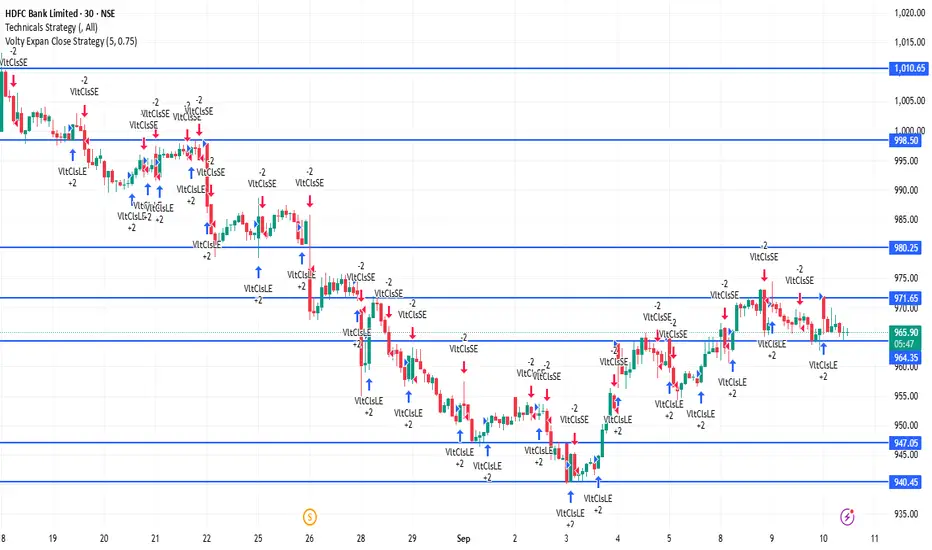
HDFCBANK 30Minutes Time frameHDFC Bank – 30M Important Levels (Current)
These levels are calculated using today’s intraday pivot data and provide reliable reference points for short-term trading.
Pivot Point (Mid-Level): ~₹967
First Resistance (R1): ~₹972
Second Resistance (R2): ~₹979
First Support (S1): ~₹960
Second Support (S2): ~₹955
These intraday pivots help highlight key zones where intra-day price action often stalls, reverses, or accelerates.
Intraday Trend Outlook (30M Chart)
Above ₹972: Bullish momentum may continue, with potential upside toward ~₹979.
Between ₹960 – ₹972: Neutral-to-bullish range; watch for sustain or reversal.
Below ₹960: Bearish pressure may build, potentially testing down to ~₹955.
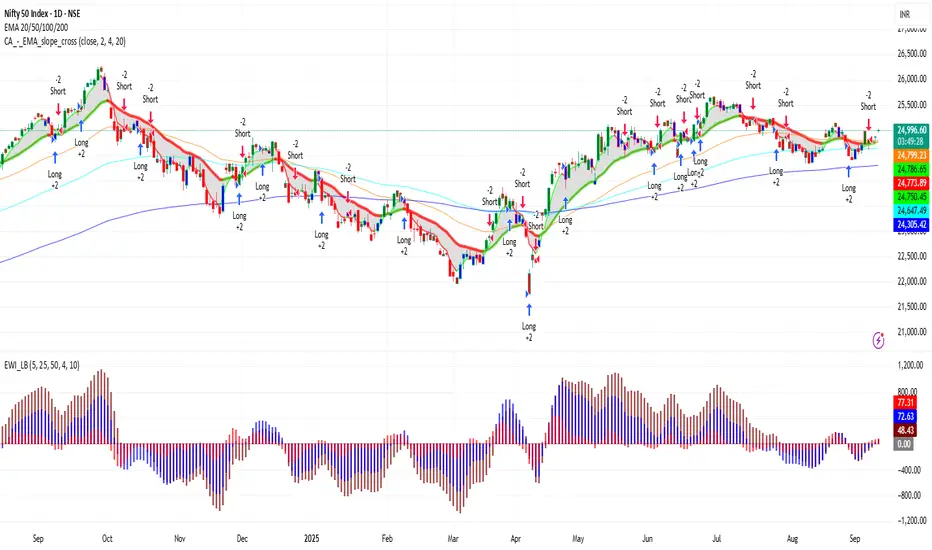
NIFTY 1D Time frame📍 NIFTY – 1D Important Levels
🔹 Support Zones
22,200 – 22,300 → Immediate daily support
21,900 – 22,000 → Strong support zone; buyers likely to step in here
21,500 – 21,600 → Major support; breakdown may shift trend to bearish
🔹 Resistance Zones
22,700 – 22,800 → Immediate daily resistance
23,000 – 23,100 → Strong resistance; breakout may fuel next leg higher
23,400 – 23,500 → Major resistance; if crossed, long-term bullish momentum strengthens
⚖️ Daily Trend Outlook
Nifty is currently in a bullish trend on the daily chart, making higher lows and sustaining above key moving averages.
Momentum remains strong as long as price holds above 22,200.
A breakout above 22,800 will likely push the index toward 23,000 – 23,500.
A breakdown below 22,200 could invite selling pressure toward 22,000 – 21,600.
XAUUSD 1H📍 XAUUSD – 1H Key Levels
🔹 Support Zones
$1925 – $1927 → Immediate intraday support
$1918 – $1920 → Stronger short-term support
$1910 – $1912 → Major support zone, breakdown could trigger deeper fall
🔹 Resistance Zones
$1935 – $1937 → First intraday resistance
$1945 – $1947 → Strong resistance area where sellers may re-enter
$1955 – $1960 → Major resistance; breakout above this can fuel a larger rally
⚖️ Quick Summary
Above $1935, bulls may push toward $1945 – $1960.
Below $1920, bears could drag price back to $1910 – $1900.
Range to monitor: $1920 – $1935 (decisive breakout will set next trend).
XAUUSD (Gold) – 1H Chart Analysis
🔹 Trend Overview
On the 1-hour chart, XAUUSD is currently showing short-term bullish bias but with nearby resistance.
Price action is making higher lows, but upside moves are facing supply zones.
🔹 Key Levels to Watch
Immediate Support Zone: $1918 – $1922
Major Support: $1910 – $1912
Immediate Resistance Zone: $1935 – $1940
Stronger Resistance: $1950
🔹 Indicators (1H Chart)
Moving Averages → Price trading above 20 EMA and near 50 EMA, showing short-term strength.
RSI (Relative Strength Index) → Around 60–65, leaning bullish but not overbought.
MACD → Positive crossover, momentum favoring buyers.
Volume → Buying volume spikes at dips, showing accumulation.
🔹 Intraday Trading Scenarios
Bullish Case
If price sustains above $1935, upside can extend to $1945 – $1950.
Breakout above $1950 opens path toward $1960+.
Bearish Case
If price drops below $1922, retracement towards $1912 – $1910 is possible.
Strong breakdown below $1910 may test $1900.
🔹 Summary
Bias: Mildly Bullish (as long as above $1920 support)
Support Levels: $1922 / $1910
Resistance Levels: $1935 / $1950
Traders should watch the $1920 – $1935 zone for the next decisive move.
NIFTY 1H Important Levels 📍 NIFTY – 1H Important Levels
🔹 Support Zones
22,350 – 22,400 → Immediate intraday support
22,200 – 22,250 → Strong support zone
22,000 – 22,050 → Major support; breakdown here may trigger deeper selling
🔹 Resistance Zones
22,600 – 22,650 → Immediate resistance on 1H chart
22,800 – 22,850 → Strong resistance; breakout can push momentum higher
23,000 → Major psychological resistance
⚖️ Quick Summary
Bias: Mildly bullish as long as Nifty trades above 22,350.
Breakout above 22,650 may extend the rally towards 22,850 – 23,000.
Breakdown below 22,350 may drag it towards 22,200 – 22,000.
Current watch zone: 22,350 – 22,650.
Technical Analysis Mastery🧠 What is Technical Analysis?
Technical Analysis (TA) is the skill of analyzing price charts and patterns to predict future movements of stocks, indices, commodities, forex, or cryptocurrencies. It’s like reading the mood and psychology of the market by observing price and volume.
Instead of studying company balance sheets or industry trends (that’s fundamental analysis), technical analysis assumes that everything important is already reflected in the price. It’s used by intraday traders, swing traders, and even investors to make smarter entries and exits.
📚 The Core Principle of Technical Analysis
There are three main beliefs that form the base of technical analysis:
Price Discounts Everything
All news, emotions, expectations, and fundamentals are already priced into the chart. So, instead of worrying about inflation or earnings, a technical analyst looks at price action.
Price Moves in Trends
Markets don’t move randomly. They trend – either up, down, or sideways. TA helps you identify the direction of the trend and when it might be changing.
History Repeats Itself
Market behavior is repetitive because human psychology is repetitive. Fear and greed create familiar patterns. Candlestick patterns, chart patterns, and indicators are all built on this belief.
🧭 Types of Market Trends
To master technical analysis, you need to understand trends first:
📈 Uptrend (Bullish): Higher highs and higher lows.
📉 Downtrend (Bearish): Lower highs and lower lows.
➡️ Sideways (Range-bound): Price moves within a horizontal range.
Your first job as a technical analyst is to identify the current trend. Once you know this, your job becomes easier:
Buy in an uptrend, sell in a downtrend, stay cautious in a sideways market.
📊 Reading Price Charts (The Visual Language)
The chart is your battlefield. Let’s break down the types:
1. Line Chart
Shows the closing price over time.
Clean and simple, but lacks detail.
2. Bar Chart
Shows open, high, low, close (OHLC).
More informative than a line chart.
3. Candlestick Chart (Most Popular)
Shows OHLC in a visually rich format.
Green (or white) candles = price went up.
Red (or black) candles = price went down.
Candlesticks reveal trader emotions and help spot patterns like Doji, Hammer, Engulfing, etc.
🔍 Support & Resistance – The Foundation
Support = A price level where demand is strong enough to stop the price from falling further.
Resistance = A level where selling pressure prevents the price from rising.
Imagine support as a floor and resistance as a ceiling. Once broken, these levels often flip roles (old resistance becomes new support).
Example:
If Nifty keeps bouncing back from 21,000 – it’s a support zone.
If it keeps failing near 22,000 – that’s resistance.
✍️ Chart Patterns – Visual Clues to Price Moves
Chart patterns are shapes formed by price on a chart, often signaling upcoming moves.
✅ Continuation Patterns
Price will likely continue in the same direction.
🔺 Flag & Pennant
🔻 Triangle (Symmetrical, Ascending, Descending)
📦 Rectangle
🔄 Reversal Patterns
Suggests trend may reverse.
👨🦲 Head and Shoulders
🧍♂️ Double Top / Bottom
🛑 Rounding Top / Bottom
These patterns help you plan trades with entry, stop loss, and target.
🧠 Candlestick Patterns – Market Psychology in Action
Candlestick patterns show short-term momentum and emotion.
🔥 Bullish Candles
Hammer: Long wick at bottom – buyers stepping in.
Bullish Engulfing: Green candle swallows previous red one.
Morning Star: A 3-candle reversal pattern.
🧊 Bearish Candles
Shooting Star: Long wick at top – sellers taking over.
Bearish Engulfing: Red candle engulfs previous green one.
Evening Star: Opposite of Morning Star.
Candlestick mastery = understanding buyer vs seller fight in every candle.
🧰 Indicators & Oscillators – Your Technical Tools
Indicators are formulas applied to price data to give more insight.
🛣️ Trend Indicators
Moving Averages (MA):
SMA: Simple Moving Average.
EMA: Exponential (gives more weight to recent price).
Used to identify and confirm trends.
MACD (Moving Average Convergence Divergence):
Measures momentum and crossover signals.
Parabolic SAR:
Gives entry/exit dots on chart.
📉 Momentum Indicators (Oscillators)
RSI (Relative Strength Index):
Measures overbought (>70) or oversold (<30).
Stochastic Oscillator:
Shows momentum, good for spotting reversal zones.
CCI (Commodity Channel Index):
Helps detect cyclical trends.
These are tools to confirm what you see on price action – never trade based on indicators alone.
🧪 Volume – The Fuel Behind Moves
Volume tells you how strong or weak a price move is.
Rising volume + rising price = strong uptrend.
Low volume + breakout = fakeout risk.
Volume spike at support/resistance = possible reversal or breakout.
Smart traders always watch volume with price action. It shows institutional interest.
🧱 Building a Trading Setup (Strategy Framework)
A solid technical trading setup has:
Market Context (Trend, Sentiment)
Entry Trigger (Pattern, Indicator, Breakout)
Stop Loss Level (Support/Resistance, ATR, Swing High/Low)
Target (Risk:Reward ratio, Resistance/Support, Fibonacci)
Volume Confirmation
Risk Management Plan
🧠 Psychological Mastery in TA
Even the best technical setup can fail without the right mindset.
Stick to Plan: Don’t react emotionally.
Accept Losses: TA gives probabilities, not guarantees.
Avoid Overtrading: Quality > Quantity.
Backtest Your Strategies: Practice builds confidence.
Mastering TA is not just about charts – it’s about mastering yourself.
🧪 Advanced Concepts in Technical Analysis
Once you’re comfortable with the basics, explore:
🔁 Fibonacci Retracement & Extensions
📏 Average True Range (ATR) for volatility
📈 Ichimoku Cloud for trend + momentum
🔎 Multi-Time Frame Analysis
🔄 Divergence (RSI/Price divergence for reversal signals)
These tools help fine-tune entries and exits.
🧩 Common Mistakes in Technical Analysis
Avoid these traps:
Trading every breakout – wait for confirmation.
Ignoring the trend – don’t go against it.
Using too many indicators – analysis paralysis.
Revenge trading – leads to big losses.
Disrespecting stop loss – small loss can become disaster.
✅ How to Master Technical Analysis?
Learn from real charts – theory alone won’t help.
Practice Daily – track 1-2 instruments closely.
Journal Your Trades – analyze what worked/failed.
Backtest Setups – check success over historical data.
Follow Experts – learn from professional TA traders.
Join Communities – share and get feedback.
Consistency is the key to mastery. 📈
🧠 Final Thoughts: Why Technical Analysis Works
Because humans behave in predictable patterns, and TA captures those behaviors in charts. Whether it’s fear of missing out or panic selling, the psychology leaves footprints on price action.
You don’t need to predict the future. You need to react smartly to what the chart is telling you.
Mastering technical analysis takes time, patience, and lots of screen time – but once you get it, it becomes a powerful edge in the market.
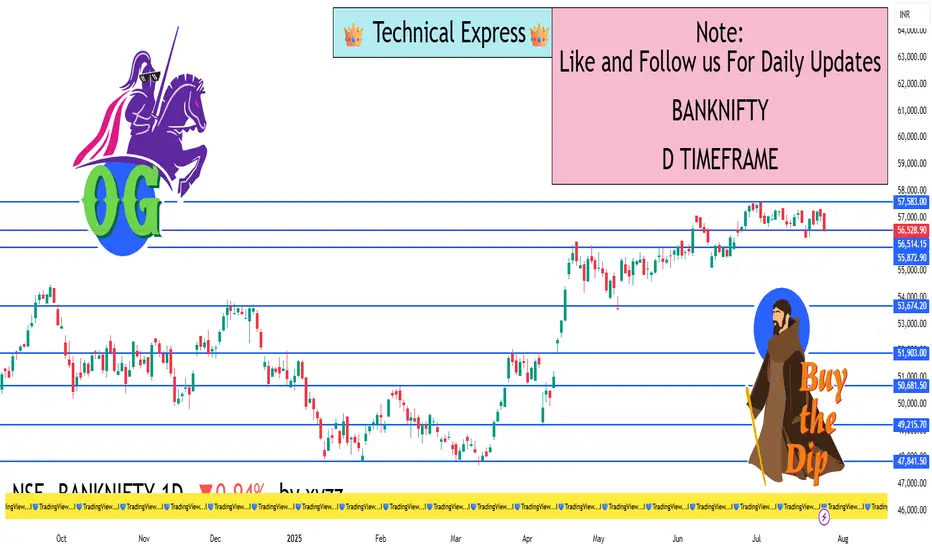
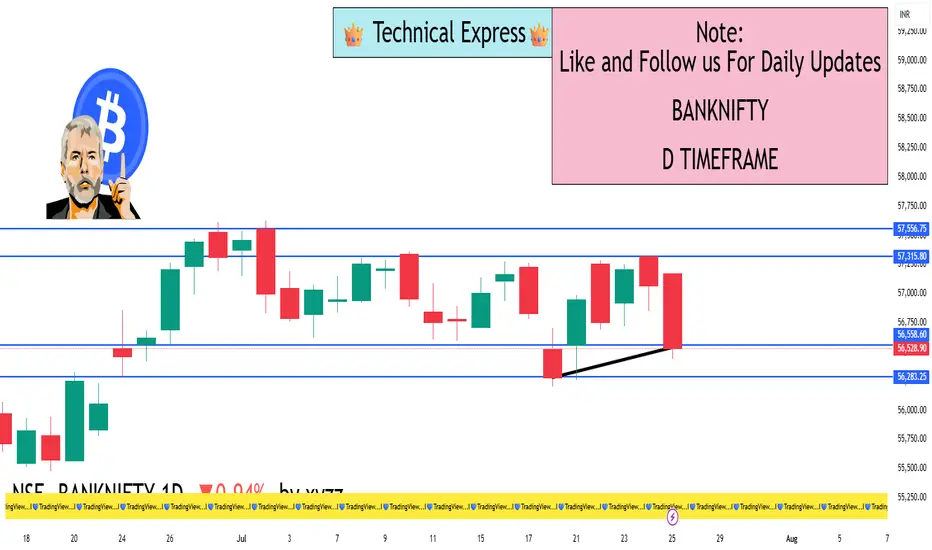
BANKNIFTY 1D TimeframeClosing Price: ₹56,528.90
Opening Price: ₹57,113.90
Day High: ₹57,170.70
Day Low: ₹56,439.40
Net Change: –₹537.15 (–0.94%)
🔹 Key Price Levels
📉 Support Zones:
Support 1 (S1): ₹56,255
Support 2 (S2): ₹55,982
Support 3 (S3): ₹55,524
Fibonacci Support Zone: ₹56,260 – ₹56,430
Camarilla Support Levels: ₹56,460 / ₹56,395 / ₹56,328
📈 Resistance Zones:
Resistance 1 (R1): ₹56,987
Resistance 2 (R2): ₹57,444
Resistance 3 (R3): ₹57,718
Fibonacci Resistance Zone: ₹56,992 – ₹57,165
Camarilla Resistance Levels: ₹56,596 / ₹56,663 / ₹56,730
🔸 Pivot Point (Central Level): ₹56,713
🔹 Trend Direction (1-Day Timeframe)
📊 Short-Term Trend: Consolidating with mild bearish pressure.
📉 Price closed below pivot point (₹56,713), signaling short-term weakness.
✅ Still within bullish structure as long as it holds above ₹55,980 – ₹56,000.
🔹 Technical Indicator Snapshot
RSI: Around 58 → Still in bullish territory, but momentum cooling.
MACD: Positive crossover, but histogram flattening — sign of range or pause.
20 EMA: Near ₹57,000 → Price is currently below this level.
50 EMA: Around ₹55,500 → Still acts as major support.
Price Action: Forming inside candles → Indicates compression/indecision.
Ride The Big Moves🚀 Ride The Big Moves 📈
"Ride The Big Moves" is a powerful trading strategy and mindset that focuses on capturing large, high-probability market moves—rather than chasing small, uncertain fluctuations. It’s about positioning yourself with the trend, identifying institutional footprints, and holding trades with discipline and conviction for maximum reward.
This concept is rooted in smart money principles: letting your winners run, minimizing overtrading, and waiting for momentum-backed breakouts instead of guessing tops and bottoms. Whether you're trading options, stocks, or futures, the goal is simple—enter with precision, and ride the wave to its full potential.
👉 Perfect for:
✅ Swing Traders
✅ Intraday Momentum Traders
✅ Institutional-Style Traders
✅ Traders seeking fewer but higher-quality setups
🔍 Key Components:
Identifying high-volume breakout zones
Trend confirmation using price action
Entry triggers aligned with momentum shifts
Risk management for extended holds
Avoiding noise & false signals
Stop settling for crumbs — Ride The Big Moves and trade like the pros.
Options Trading vs Stock Trading👋 Introduction
If you've ever stepped into the world of the stock market, chances are you've heard about both stock trading and options trading. While they both exist under the umbrella of equity markets, they are fundamentally different beasts.
Imagine stock trading like buying a house — you own the asset. In contrast, options trading is like paying a small amount to rent the house with the option to buy it later — you get access, flexibility, and leverage, but also more complexity and risk.
In this guide, we’ll break it down in simple language, so you can understand:
What each involves
How they work
Risks vs rewards
Which one suits your trading style
📌 1. What Is Stock Trading?
Stock trading involves buying and selling shares of publicly listed companies on the stock exchange.
Example:
You buy 10 shares of TCS at ₹3,500, totaling ₹35,000. If the price rises to ₹3,800, and you sell, you make a ₹3,000 profit.
Key features:
Ownership: You become a partial owner of the company
No expiry: You can hold stocks forever
Dividends: You may earn income from dividends
Capital appreciation: Profit is made when price rises
Lower complexity: Ideal for beginners
📌 2. What Is Options Trading?
Options trading involves buying and selling contracts (not shares directly), that give you the right (but not the obligation) to buy or sell a stock at a specific price before a set date.
There are two main types of options:
Call Option: Betting that the price will go up
Put Option: Betting that the price will go down
Each contract typically covers 1 lot (e.g., 25 shares) of a stock or index.
Example:
You buy a Reliance 2800 Call Option for ₹50, and each lot = 250 shares. Your total cost = ₹12,500. If Reliance goes above ₹2800 and the premium rises to ₹100, you earn ₹12,500 profit.
Key features:
Leverage: Small capital, large exposure
Limited time: All options have expiry dates (weekly/monthly)
No ownership: You control a right, not the actual stock
Higher risk: Gains can be huge, losses can be total
Advanced strategy: Better for experienced traders
💥 3. Risk-Reward Trade-off
Stock Trading:
Lower volatility: Stock prices move gradually
Better for long-term wealth
Risk is limited to the price going down, but you still own the stock
Options Trading:
High leverage = high reward, high risk
Option premiums can decay rapidly due to time decay (theta)
Entire premium can become zero at expiry
Can be used for hedging or speculation
🧮 4. Margin & Capital Requirements
Stock Trading:
You pay the entire value of the stock upfront (unless using margin facilities)
Brokers may offer 5x margin for intraday, but that’s separate
Options Trading:
Option buyers pay only the premium
Option sellers (writers) require huge margin due to unlimited loss potential
Can start with as low as ₹500–₹5,000 per trade
🧠 5. Who Should Trade What?
You Are Prefer Stock Trading Prefer Options Trading
Beginner ✅ Yes ❌ No (unless trained)
Short-term trader ✅ Yes ✅ Yes
Investor ✅ Yes ❌ Not ideal
Hedger ❌ No ✅ Yes
Speculator ❌ Less ideal ✅ Perfect
🔁 8. Time Decay – The Invisible Killer in Options
One key concept in options is time decay (theta). As expiry nears, the premium loses value even if the stock doesn’t fall.
If you're long in options and your view is wrong or delayed, your option can become worthless.
Stock trading has no such concept — the price remains based on fundamentals and demand-supply.
🧮 6. Strategies Comparison
📈 Stock Trading:
Buy and Hold
Swing Trading
Intraday
🧩 Options Trading:
Buy Call / Buy Put (directional)
Sell Options (income)
Straddle / Strangle (neutral)
Iron Condor / Butterfly (advanced)
🧭 7. Regulatory Perspective
SEBI has increased margin requirements for option sellers due to high risk.
Recent data shows that:
90%+ retail option buyers lose money
85%+ option sellers make money, but require capital and strategy
Stock traders lose less on average, but make smaller % gains
💬 8. Psychological Factor
Stock trading is slower and requires patience
Options trading is fast, intense, and emotional — often leading to impulse trading
You must develop:
Strong discipline
Risk management
Understanding of Greeks (for options)
📚 9. Learning Curve
Area Difficulty (1 to 10)
Stock Trading 3–5
Options Trading 7–9
Options involve:
Understanding of strike prices, expiry, premium, Greeks (delta, theta, vega, gamma)
Quick decision-making under pressure
Multiple possibilities with the same price movement
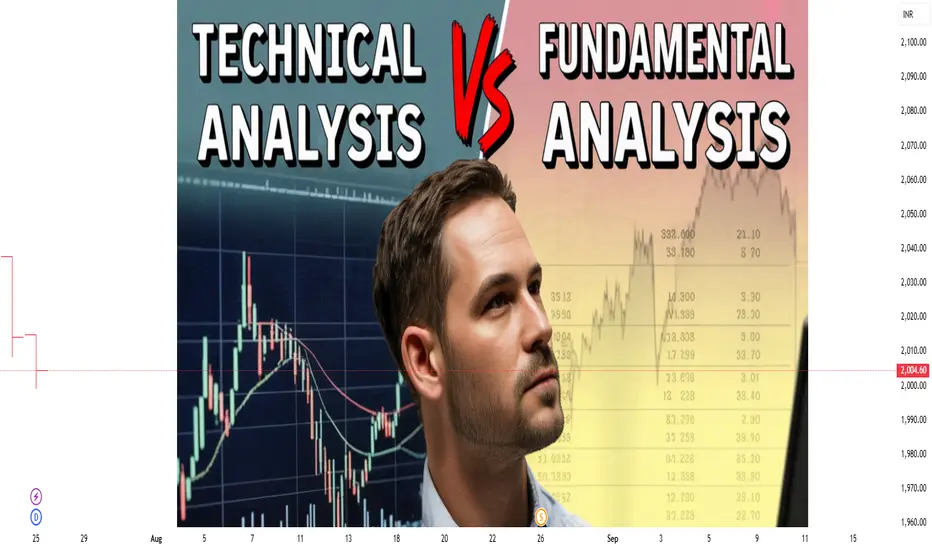
Technical Analysis vs Fundamental AnalysisWhat’s the Difference?
When people analyze stocks or any tradable asset, they usually follow one of two main approaches: Technical Analysis or Fundamental Analysis. Each one is like using a different lens to look at the same object. Both methods try to answer the same question:
“Should I buy, sell, or avoid this stock?”
But how they arrive at that answer is completely different.
1️⃣ What is Technical Analysis?
Technical Analysis is all about reading charts. It’s based on the belief that everything that affects a stock's price is already reflected in the stock price itself.
So instead of reading about a company's earnings or business strategy, technical analysts look at price movements, trading volumes, and patterns on charts to try to guess what might happen next.
How It Works:
Technical traders believe that history repeats itself.
Price moves in trends — up, down, or sideways.
Patterns like flags, triangles, and head-and-shoulders are seen as hints.
Indicators like RSI (Relative Strength Index), MACD (Moving Average Convergence Divergence), and moving averages are used to make decisions.
Key Concepts in Technical Analysis:
Candlestick Patterns: These show how the price moved in a given time — whether buyers or sellers were in control.
Support & Resistance: Support is a price level where a stock tends to stop falling. Resistance is where it often stops rising.
Volume: Helps you understand the strength behind a price movement.
Breakouts & Reversals: Important signals that indicate possible trend changes.
Real-Life Example:
Let’s say Stock A is trading at ₹500. It has bounced from this price three times before. That level becomes a support. If it suddenly jumps above ₹550 with high volume, that could be seen as a breakout, and a trader might enter a short-term position.
Pros of Technical Analysis:
Helpful for short-term trading like intraday or swing trades.
Fast decision-making based on visual cues.
Doesn’t require knowledge of a company’s financials.
Can be used across all asset classes (stocks, forex, commodities, crypto).
Cons of Technical Analysis:
It doesn’t look at what the company actually does.
False signals can mislead.
It works on probability — not certainty.
Can be overwhelming with too many indicators.
2️⃣ What is Fundamental Analysis?
Fundamental Analysis is like doing background research on a company before deciding whether to invest in it. Instead of looking at charts, you look at the company’s financial health, industry conditions, economic trends, and management quality.
The main goal is to find the true value (intrinsic value) of a stock and compare it with the current market price.
How It Works:
If the intrinsic value is more than the market price, the stock is considered undervalued and worth buying.
If the market price is more than the intrinsic value, it’s seen as overvalued, and better to avoid or sell.
Key Tools of Fundamental Analysis:
Financial Reports: Balance Sheet, Income Statement, Cash Flow Statement.
Ratios: PE (Price-to-Earnings), ROE (Return on Equity), Debt-to-Equity, EPS (Earnings Per Share).
Company's Business Model: What the company does, how it earns, and whether it's sustainable.
Management Quality: Experience and vision of the leadership.
Industry & Economy: Is the industry growing? Are economic conditions favorable?
Pros of Fundamental Analysis:
Ideal for long-term investment.
Helps understand the actual business you’re putting money into.
Less affected by short-term volatility.
Encourages rational decision-making.
Cons of Fundamental Analysis:
Takes time and effort to study.
May not tell you when exactly to buy or sell.
Requires understanding of finance, economics, and accounting.
Stock may stay undervalued for a long time despite good fundamentals.
✅ Which One Should You Choose?
It all depends on your personality, goals, and time commitment.
Go for Technical Analysis if:
You’re active and want to trade daily or weekly.
You like working with patterns and visuals.
You want to time your entry and exit precisely.
You are okay with taking risks for quick gains.
Go for Fundamental Analysis if:
You think long-term and want to build wealth.
You want to invest in solid companies.
You have patience and a stable mindset.
You prefer logic and numbers over charts.
⚖️ Can You Combine Both?
Yes, and that’s what many experienced market participants do.
This combined approach is called techno-fundamental analysis.
For example:
You use fundamentals to select a good company.
You use technicals to find the right entry point.
This way, you get the best of both worlds.
🧠 Final Thought
There’s no universal rule that says one method is always better. It’s all about what suits your style and objective.
If you’re building a portfolio for retirement or wealth over 10+ years, fundamental analysis is your friend.
If you want to trade actively and spot market opportunities daily or weekly, technical analysis is the way to go.
Over time, learning both will make you a more flexible and better-informed market participant.
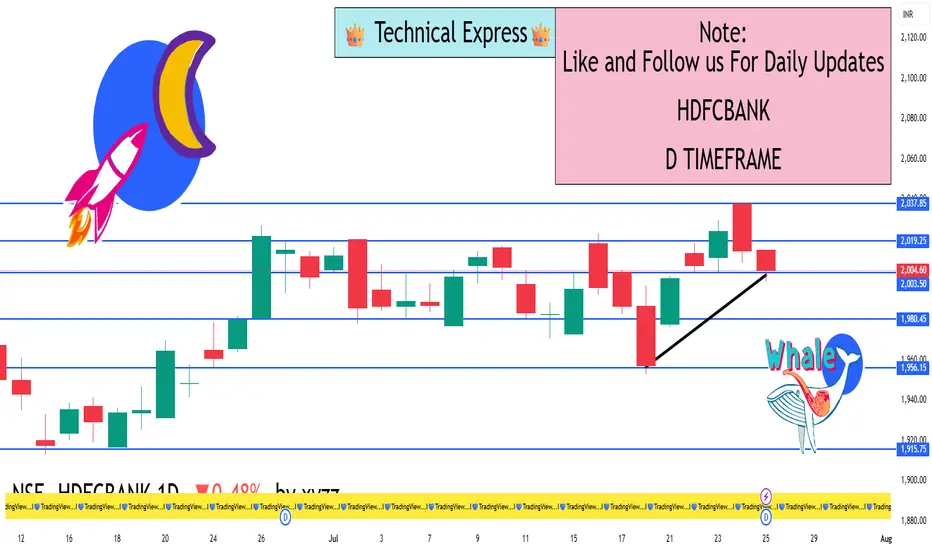
HDFCBANK 1D TimeframeClosing Price: ₹2,004.60
Opening Price: ₹2,018.80
Day’s High: ₹2,028.00
Day’s Low: ₹1,996.75
Net Change: –₹16.10 (–0.80%)
Trend: Mild Bearish
🔻 Support Levels
₹1,985 – Immediate support (20-day moving average)
₹1,950 – Short-term support (50-day moving average)
₹1,910 – Medium support (100-day moving average)
🔺 Resistance Levels
₹2,030 – Recent swing high and near-term resistance
₹2,050 – Breakout zone if momentum picks up
₹2,100 – Major resistance area
📈 Technical Indicators
RSI (Relative Strength Index): ~62
➤ In neutral to bullish territory, showing healthy momentum but close to overbought levels.
MACD (Moving Average Convergence Divergence):
➤ MACD line above Signal line – currently a bullish signal.
Volume:
➤ Normal trading volume; no heavy buying or panic selling.
➤ Indicates steady participation from both retail and institutional investors.
Candlestick Pattern:
➤ Small bearish candle after a strong bullish move earlier in the week.
➤ Indicates temporary profit booking or hesitation near resistance zone.
🧠 Market Sentiment
Overall sentiment remains positive for HDFC Bank due to:
Strong financials and balance sheet
Good loan growth reported in recent results
High investor confidence post bonus issue announcement
However, profit booking is likely near ₹2,030 as it is a psychological and technical resistance.
✅ Conclusion
Short-Term View: Mild pullback within an uptrend; no major weakness.
Medium-Term Trend: Still bullish as price remains above key moving averages.
Action to Watch:
A breakout above ₹2,030 may trigger a rally toward ₹2,050+.
A drop below ₹1,985 may invite short-term selling toward ₹1,950.
BANKNIFTY 1D TimeframeClosing Value: 56,528.90
Net Change: −537.15 points (−0.94%)
Opening Price: 57,034.40
Day’s High: 57,170.70
Day’s Low: 56,439.40
Trend: Bearish
📊 Technical Analysis
✅ Candle Pattern:
A strong bearish candle was formed.
Price opened higher but failed to sustain and closed near the day’s low — a sign of heavy intraday selling.
🔻 Support Zones:
56,400 – Immediate support (also the day's low)
56,000 – Psychological round number
55,750 – Medium-term support (from earlier price consolidation)
🔺 Resistance Zones:
56,800 – Near-term resistance
57,000 – Critical level; needs to be reclaimed for bullish reversal
57,300 – Stronger resistance zone based on recent highs
📈 Indicator Summary:
RSI (Relative Strength Index): Likely below 50, signaling weakening bullish momentum
MACD (Moving Average Convergence Divergence): Bearish crossover remains intact
Volume: Higher than average, suggesting institutional selling pressure
🧠 Market Sentiment:
Bearish sentiment prevailed across major banks including HDFC Bank, ICICI Bank, Axis Bank, Kotak Bank, and SBI
Pressure also visible in PSU banks (like PNB, Bank of Baroda, Canara Bank)
Overall market mood was risk-averse due to global uncertainty and potential interest rate impact
Foreign Institutional Investors (FIIs) continued their selling streak
Traders remain cautious ahead of upcoming quarterly bank results
✅ Conclusion:
Bank Nifty is currently in a short-term downtrend.
If 56,400 breaks decisively, it may head toward 56,000 and 55,750.
For bulls to regain strength, Bank Nifty must cross back above 57,000 with strong volume and momentum.
Advance Option Trading💼 Advance Option Trading
Advance Option Trading is the next level of trading options — where strategies go beyond simple buying of calls and puts. It involves using multi-leg strategies, understanding the Greeks, managing volatility, and hedging risk like professionals do.
This level of trading is used by experienced traders, institutions, and fund managers who want to take advantage of market complexity, pricing inefficiencies, and risk-reward opportunities in a calculated way.
🔧 What You Learn in Advanced Option Trading:
⚖️ Multi-leg strategies:
Spreads (Bull/Bear, Debit/Credit)
Iron Condors 🕊️, Butterflies 🦋, Straddles & Strangles 🔄
Calendar spreads 🗓️ and Diagonal spreads ➕
🧠 Options Greeks Mastery:
Delta (directional risk)
Theta (time decay)
Vega (volatility sensitivity)
Gamma & Rho (rate of change and interest rate risk)
📈 Volatility Trading:
Learn to trade Implied Volatility (IV) vs. Historical Volatility (HV)
Use volatility crush during earnings
Find edge in IV skew and term structure
🛡️ Hedging and Portfolio Management:
Use options to protect investments
Manage long-term positions with short-term trades
Build delta-neutral portfolios that profit in any direction
🧩 Why It’s Powerful:
🧮 Offers custom risk-reward setups
🔄 Allows you to profit in all market conditions (up, down, sideways)
🎯 Gives you precision control over market exposure
💰 Generates income through strategies like covered calls and credit spreads
🛡️ Helps hedge large portfolios or speculative positions safely
📌 In simple words:
Advanced Option Trading is like playing chess in the financial markets — it’s strategic, thoughtful, and designed to give you an edge over ordinary traders. You don’t just guess direction; you plan for every move the market can make.
Institutional Trading🏦 Institutional Trading
Institutional Trading refers to the buying and selling of large volumes of financial assets by big organizations such as banks 🏛️, hedge funds 📊, mutual funds 💼, pension funds 💰, and proprietary trading firms. These trades are typically high in value and are executed with sophisticated strategies, tools, and market access that retail traders don’t have.
Institutional traders use:
📈 Advanced algorithms
🧠 Data-driven analysis
💹 Block orders
🔍 Deep market research
🛡️ Strong risk management systems
Because of their size and influence, institutional trades can impact market prices, create liquidity zones, and often set the trend for retail traders to follow.
📌 In simple words:
Institutional Trading is how the "big players" move the markets — strategically, in high volume, and with professional precision.
Option Trading📘 Option Trading
Option Trading is a type of trading where you buy and sell contracts called options, instead of directly buying stocks. These contracts give you the right (but not the obligation) to buy or sell an asset at a set price within a specific time.
There are two main types:
🟢 Call Option – Right to buy the asset
🔴 Put Option – Right to sell the asset
Traders use options to:
📈 Make profits from price movements
🛡️ Hedge their investments
💰 Generate consistent income
⚖️ Manage risk with limited capital
Options are powerful because they offer leverage (small investment, big potential), but they also come with higher risks if not used carefully.
📌 In simple words:
Option Trading lets you bet on whether a stock will go up 📈 or down 📉, without owning it — and helps smart traders manage risk and reward like a pro.
Technical Class📚 Technical Class
A Technical Class in trading is a structured learning program focused on teaching you how to read and analyze price charts 📈, indicators 📊, and market patterns 🔁 to make smart and profitable trading decisions.
In a good technical class, you’ll learn to:
🔍 Read candlestick charts like a pro
🧱 Identify support & resistance levels
📉 Spot breakouts, fakeouts, and trend reversals
🔄 Use moving averages, RSI, MACD, and volume tools
🧠 Understand market psychology through patterns
📌 Time your entry and exit points with precision
⚖️ Combine multiple indicators for confirmation
These classes are perfect for:
🚀 Beginners who want to build a strong foundation
📈 Intermediate traders ready to sharpen their skills
🎯 Anyone looking to trade based on logic, not emotion
📌 In simple words:
A Technical Class teaches you how to "read the market" — using charts, patterns, and indicators — so you can trade with confidence, clarity, and strategy.
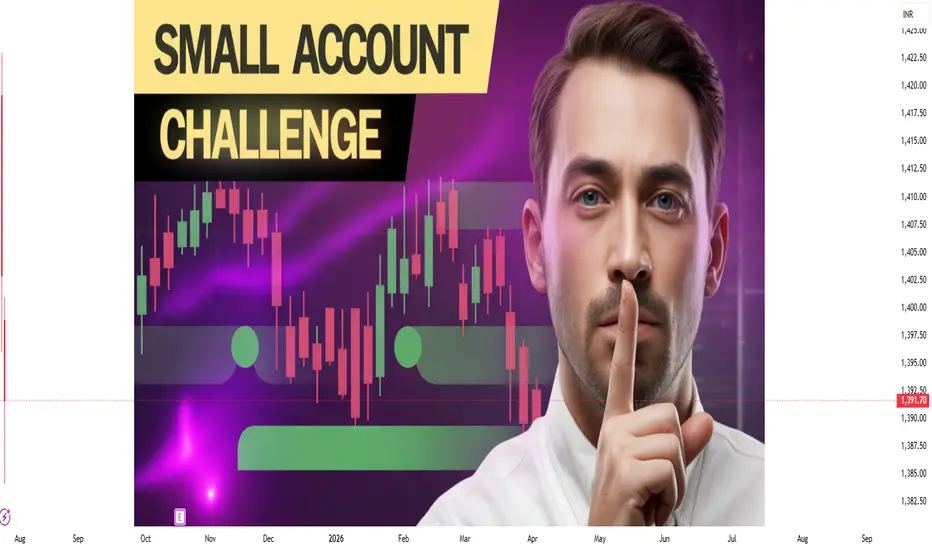
Small Account Scalping / Challenge Trading🔍 What is Small Account Scalping?
Scalping means taking very short, quick trades — entering and exiting the market in a matter of seconds to a few minutes — to capture small price moves.
Now combine this with a small account — typically ₹1,000 to ₹10,000 (or $100 to $500). You're looking at a trading style where:
Tiny profits are taken quickly
High discipline and speed are critical
Risk-to-reward ratios are tight
Compounding is the core idea (small wins stack up)
Scalping with a small account is not just about earning big money quickly — it's often done as a "challenge" to prove skill, build discipline, or simply to show that trading isn’t about how much money you have, but how well you manage it.
🎯 What is Challenge Trading?
Challenge Trading is when a trader publicly sets a goal, like:
Turning ₹5,000 into ₹50,000
Growing $100 to $1,000 in 30 days
Doubling capital in 10 trades
These challenges are usually:
Documented daily (on YouTube, Telegram, or Instagram)
Done with full transparency
Focused on scalping or intraday setups
Built around strict rules and money management
Why do people do it?
For credibility
To learn discipline
To inspire beginners
To prove skill without needing big capital
📉 Why Most Traders Fail with Small Accounts
Let’s be honest — 90% of small account traders blow their capital within days or weeks.
Here’s why:
1. Overleveraging
Trying to turn ₹1,000 into ₹5,000 in one day? Most traders overtrade, use max quantity, and take unnecessary risks.
2. No Risk Management
They don’t respect stop-losses. One bad trade wipes 50% or more of their account.
3. Emotional Trading
Small capital = High emotions. Losing ₹300 from ₹1,000 hurts more than ₹3,000 from ₹1,00,000.
4. No Consistency
They jump from strategy to strategy. From breakout trading to option buying to indicator-based setups — nothing sticks.
5. Trying to Get Rich in One Day
Small accounts are not magic lamps. Trying to “flip money” quickly always backfires without a strong base strategy.
✅ How to Actually Win at Small Account Scalping
Let’s now focus on how to do it right — step by step.
✳️ Step 1: Choose the Right Market Instrument
For scalping with small capital, you want:
High liquidity (easy entries & exits)
Fast movement
Low capital requirement
Some good choices:
Index options like Nifty/BankNifty Weekly
FinNifty (Tuesday expiry)
Micro lots in Futures (if margin allows)
USDT/INR scalping on crypto exchanges (Binance, CoinDCX)
Stocks like Reliance, Tata Motors, SBIN – but be cautious
Avoid:
Illiquid stocks
High lot-size contracts
Multi-leg option strategies with high cost
✳️ Step 2: Pick a Scalping Setup That Works
You don’t need 10 strategies. Just 1-2 that work well on a small timeframe.
Examples:
Breakout on 1-min chart
Mark consolidation
Wait for breakout candle with volume
Enter with tight SL, book in 1:1.5 or trail
VWAP Rejection Entry
Wait for price to test VWAP
If rejected, enter in the opposite direction
Small risk, quick reward
Fakeout Trap
Market fakes breakout → reverses
Enter with confirmation of reversal
Common in BankNifty scalping
News-Based Scalping
RBI decisions, GDP data, Budget day
Extreme volatility → use strict stop-loss
✳️ Step 3: Master Position Sizing
Golden rule: Never lose more than 2-3% in one trade.
With ₹2,000 capital:
Risk max ₹40–₹60 per trade
Use option buying, not futures
Focus on quantity control
If you're using 50% of capital in one trade, you’re doing it wrong. That’s not scalping — that’s gambling.
✳️ Step 4: Use a Simple Tool Setup
Keep your charts clean.
Timeframe: 1-min or 3-min
Indicators: VWAP, EMA (9 or 20), Volume
Levels: Draw basic support/resistance
Avoid: Overloaded charts with 6 indicators
✳️ Step 5: Take Only 1–3 Trades a Day
In small account scalping, overtrading kills faster than losing.
Max 3 trades per day
Win 2 out of 3 = Green Day
Lose 2 = Stop trading
Stick to the plan. Live to trade another day.
✳️ Step 6: Focus on % Growth, Not ₹ Profit
Don’t compare yourself to traders making ₹20K/day
If you make ₹150 on ₹2,000 → that’s 7.5% gain
Make 5% a day for 20 days = 100% monthly compounding!
Small wins matter. They build discipline, confidence, and capital.
🧠 Psychology Behind Challenge Trading
To win the small account game, your mindset matters more than your strategy.
Mental Rules:
Treat every rupee as if it’s ₹1,000
Never chase revenge trades
Accept red days calmly — they’re part of the game
Celebrate consistency more than profit
📌 Tracking Your Progress
Make a Trading Journal:
Entry/Exit time
Setup used
Why you entered
How you felt
Profit/Loss
Over 30 days, this builds emotional and strategic control.
🚫 Mistakes to Avoid in Small Account Scalping
❌ Averaging in loss
❌ Trading without stop-loss
❌ Copying random Telegram tips
❌ Overtrading after losses
❌ Ignoring brokerage and slippage
❌ Expecting daily profits
🏁 Final Words: Is Small Account Scalping Worth It?
✅ YES — if:
You want to build confidence and discipline
You want to master trading with risk management
You like fast-paced, quick decision-making
❌ NO — if:
You’re in a hurry to make big profits
You trade emotionally
You don’t journal your trades or follow structure
It’s a journey — not a race.
With patience and process, your ₹2,000 account can one day fund your ₹2 Lakh trading journey.
Meme Stocks & Retail MomentumIn the last few years, the world of stock markets has witnessed something unusual. Stocks of struggling companies suddenly skyrocketed, not because of strong fundamentals or big institutional investments, but because of... memes, social media posts, and retail trader hype.
Welcome to the world of Meme Stocks and Retail Momentum.
This isn’t traditional investing. It’s the new-age, internet-powered way of moving markets — often driven more by emotion and community than by earnings reports or financial analysis.
They are not driven by traditional factors like strong balance sheets, industry leadership, or earnings growth. Instead, they’re driven by community hype and retail investor activity.
Key Features of Meme Stocks:
Sudden, dramatic price surges 🚀
Lots of trading activity by small/retail investors
Heavy buzz on social media & forums
High volatility (prices can jump or crash in hours)
Often targeted by short-sellers
🎯 Real-Life Examples of Meme Stocks
1. GameStop (GME) – USA
In early 2021, GME went from $17 to nearly $483 in weeks. Why?
It was heavily shorted by hedge funds.
Reddit users decided to push back and caused a short squeeze.
Retail investors coordinated buying, sending the price to the moon.
This was a social movement, not just a trade. It became a battle between “small traders” and “Wall Street giants.”
2. AMC Entertainment (AMC)
A struggling cinema chain during COVID saw its stock go up over 1000% in months.
Why?
Meme hype
Reddit army
FOMO (Fear of Missing Out)
3. Bed Bath & Beyond, Blackberry, Nokia
All had their moment as meme stocks even if their business fundamentals were weak.
4. Indian Examples
While India hasn’t seen the exact same meme stock culture, we’ve seen similar retail momentum in:
Zee Entertainment (after merger news & social buzz)
Vodafone Idea (VI) – due to social campaigns and hopes
IRCTC – when people piled in during rapid rallies
👥 What is Retail Momentum?
Now let’s talk about retail momentum — the force behind meme stocks.
Retail Momentum means:
A sudden inflow of buying (or selling) from small, individual investors, usually following trends or hype.
This momentum is usually:
Fast-moving
Emotional
Trend-following
Influenced by influencers, YouTubers, or social forums
Retail traders often follow:
WhatsApp groups
YouTube tips
Trending stocks on Twitter
Telegram pump groups
When thousands (or lakhs) of people chase the same stock, price moves dramatically — even if there's no news or earnings change.
🤖 How Social Media Creates Market Movement
Social media has turned into a financial battleground.
Here’s how a meme stock or retail wave starts:
One user posts a chart, theory, or meme on Reddit, X, or Telegram.
It goes viral. Thousands like or comment.
YouTubers make videos explaining how it can go “5x”.
Traders start piling in.
Price moves rapidly.
News channels pick it up.
Even more retail investors join.
The price spikes even further.
At this point, the stock is not rising on logic. It's rising on human emotion and network effect.
📈 Why Do Meme Stocks Go Up So Fast?
Short Squeezes
Hedge funds or big players short the stock.
Retail investors aggressively buy.
Short sellers are forced to cover — which pushes the price up further.
FOMO (Fear of Missing Out)
When people see others making 100%, 200% in days, they panic and enter at any price.
Retail Buying Power
Today, thanks to apps like Zerodha, Robinhood, Upstox, Groww — it’s easy to buy a stock.
Even a small investor can join in with ₹500.
Community Psychology
People feel like part of a movement.
They hold, buy, and even defend the stock online — often calling it “diamond hands.”
💣 Why Do Meme Stocks Crash?
No Fundamental Support
Eventually, reality hits. The stock isn’t worth the inflated price.
Profit Booking
Early traders book profits → price falls → panic spreads → others sell.
Regulatory Actions
Exchanges might restrict buying (like Robinhood did in GME).
Dilution
Companies issue new shares to cash in on hype → lowers value per share.
🧠 Psychology Behind Meme Stocks
Meme stocks are a human behavior experiment in real-time.
They show:
The power of belief
Herd mentality
Rebellion against institutions
Internet unity
Addiction to risk and gambling thrill
It’s part social movement, part financial play, and part crowd psychology.
🧰 Tips for Trading Retail Momentum Stocks
Enter early or don’t enter at all
Don’t jump in when it's already trending on YouTube.
Use trailing stop-loss
Lock your profits as the stock climbs.
Book profits partially
Don’t wait for the “moon.” Sell in phases.
Avoid margin/leverage
You can be wiped out in one bad move.
Track social buzz
Use tools like Google Trends, Twitter hashtags, Reddit mentions.
Never invest your main capital
Treat it as a speculative side bet, not a long-term investment.
🏁 Final Thoughts: Meme Stocks Are a Mirror of Modern Markets
Meme stocks and retail momentum are not going away. They are part of the new-age investor culture:
Fast-paced
Emotionally charged
Social media influenced
Sometimes logical, often not
They’ve changed how people see the markets. Retail investors now know they can move prices. But with that power comes great risk.
If you want to explore meme stocks, do it with eyes wide open, a small budget, and full acceptance of the risk.
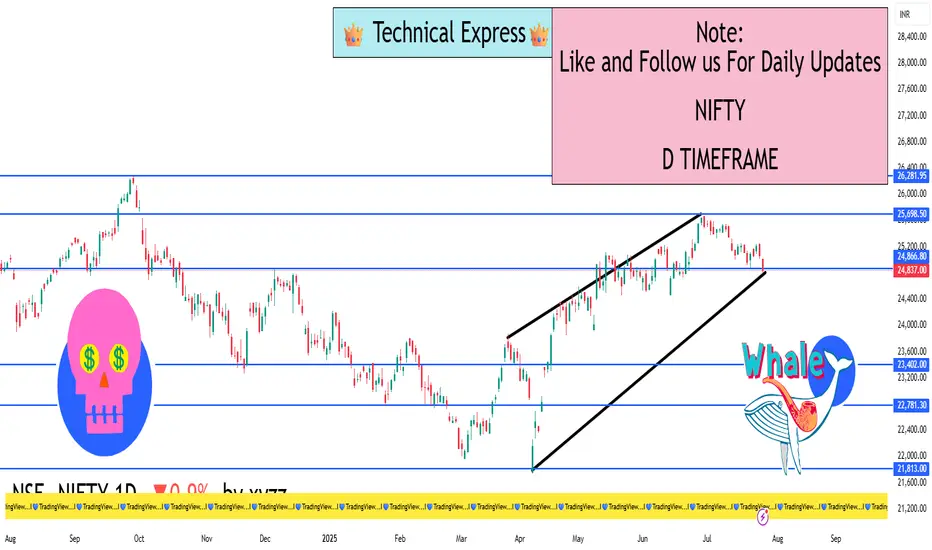
NIFTY 1D Timeframe📉 Nifty 1D Snapshot (as of July 25, 2025)
Previous Close: 25,062
Opening Price: 25,010
Intraday High: 25,010
Intraday Low: 24,806
Closing Price: 24,833
Change: Down by approximately 230 points (–0.9%)
🕯️ Candlestick Pattern (Daily Chart)
A clear bearish candle was formed today.
The index opened flat, tested the previous day’s low, and faced selling pressure all day.
Closing is near the day’s low, which shows weakness and no buying support at lower levels.
🔍 Support & Resistance Levels
Level Type Price Range
Immediate Resistance 25,000 – 25,050
Immediate Support 24,800 – 24,750
Next Support Zone 24,650 – 24,600
If Nifty breaks below 24,800, expect a move toward 24,650.
If it reclaims 25,000, a minor pullback or bounce could occur.
📊 Technical Overview
Short-Term Trend: Bearish
Medium-Term Trend: Neutral
Structure: Lower highs forming; prices struggling to hold key supports
Indicators (Typical Behavior):
RSI likely near 50 – neutral but leaning bearish
MACD may have crossed downward
Moving averages (like 5 & 20-day) likely showing bearish crossover
🧠 Market Sentiment Factors
Broad-based sectoral weakness led the fall – especially financials, IT, auto, and energy.
Major stocks like Reliance, HDFC Bank, Infosys, and Bajaj twins contributed heavily to the decline.
Investor mood remains cautious due to:
Weak earnings from select companies
Foreign investor outflows
Global uncertainty (interest rates, trade deals, etc.)
✅ Trading Strategy Insights
For Swing Traders:
Avoid long trades unless there’s a strong reversal candle from 24,750–24,800 zone.
Shorting near 25,000 resistance could offer low-risk entries.
For Intraday Traders:
Watch for consolidation between 24,800–25,000.
Play range until a breakout or breakdown occurs.
For Breakdown Traders:
A confirmed break below 24,750 can lead to quick dips toward 24,600 or lower.
📌 Summary
Nifty dropped 230 points, forming a strong bearish candle.
Bears are in control unless bulls reclaim 25,000+.
Support sits at 24,800, with downside potential toward 24,650–24,600 if broken.
Sentiment remains cautious; short-term trend is bearish.
Price Action Trading What is Price Action Trading?
Price Action Trading means making trading decisions based on the actual price movement on the chart—nothing else. No RSI, no MACD, no fancy indicators. Just candlesticks, structure, support/resistance, and patterns.
Think of it like this: If the market is a language, price action is learning to read, write, and speak it fluently.
🤔 Why Use Price Action?
Because indicators are lagging. They react after the move has happened. Price action is real-time, showing what’s happening right now.
Benefits:
Helps identify real support/resistance zones
Tells you the story of buyers vs sellers
Works on any time frame (1-min, 5-min, daily, etc.)
No dependency on tools—just your eyes and chart reading skills
🔍 Key Elements of Price Action
1. Market Structure
This is the foundation of price action. Market moves in three ways:
Uptrend (Higher Highs, Higher Lows)
Downtrend (Lower Highs, Lower Lows)
Range (Sideways, Consolidation)
If you understand structure, you already know:
Where the trend is
When it's changing
Where you can enter/exit
2. Support and Resistance
These are areas where price reacts repeatedly. In price action, these are called zones, not exact lines.
How to Identify?
Look for areas where price bounced or reversed multiple times.
These become decision zones for future trades.
Support = Price zone where buyers come in
Resistance = Price zone where sellers push price down
3. Trendlines & Channels
Drawing trendlines connecting swing highs/lows gives you:
A guide to trend strength
Breakout/breakdown points
Dynamic support/resistance
Channels help identify range-bound moves and reversal points at the edges.
4. Breakouts & Fakeouts
Price often breaks out from:
Ranges
Trendlines
Chart patterns
But not all breakouts are real. Some are fakeouts to trap retail traders.
A good price action trader waits for confirmation (like a strong candle close) before reacting.
📘 How to Trade Using Price Action – Step-by-Step
Let’s now apply this knowledge in a live trading-style thinking process.
✅ Step 1: Understand the Trend (Structure)
On a clean chart (no indicators), mark recent swing highs/lows
Ask: Is the market making Higher Highs and Higher Lows (uptrend)?
If yes → look only for buy opportunities
✅ Step 2: Identify Key Zones
Mark:
Major support and resistance
Previous day’s high/low
Intraday breakout zones
These are your action points.
✅ Step 3: Wait for Price Reaction
At those zones, wait for:
Reversal patterns like pin bar, engulfing
Breakout candles with strong body (not doji)
Volume spike (optional)
✅ Step 4: Entry and Stop-Loss
Entry: After confirmation candle closes (not before)
Stop-loss: Just below/above the zone or candle wick
Target: Use recent structure zones or risk-reward ratio (e.g., 1:2)
✅ Step 5: Trade Management
If price moves in your favor, trail SL (e.g., to break even)
Watch for reversal signs to exit manually if needed
Never hold hoping for miracle recovery
🎯 Price Action Trading in Intraday (Example with Bank Nifty)
Check 5-min and 15-min chart.
Mark:
Opening range high/low
Pre-market support/resistance
Day’s high/low from yesterday
Wait for price to reach these zones.
Watch for:
Rejection candles (pin bar, inside bar)
Breakout retests
Place trade with small SL and clear RR.
Example Scenario:
Bank Nifty opens near yesterday’s high
You see a bearish pin bar on 5-min rejecting resistance
You short with SL above the high, target recent swing low
Risk = 30 pts, Reward = 70 pts → good setup
🧠 Psychological Side of Price Action
Trading price action requires:
Patience (waiting for setups)
Discipline (following rules, not emotions)
Chart reading skill (comes with time and practice)
Don’t try to force trades. If price doesn’t reach your zone or give confirmation — stay out.
No trade is better than a bad trade.
🧪 Tools That Help (Optional)
Although price action is tool-free, these tools can support your analysis:
TradingView – for clean charts
Volume – to confirm strength of moves
Sessions Indicator – mark Asia/Europe/US zones
❗ Mistakes to Avoid
Trading every candle — wait for context + confirmation
Ignoring market structure — never go against strong trend
Jumping in during volatile news — sit out
Not marking clean zones — messy chart = messy trades
No stop-loss — one big loss can kill weeks of gains
✨ Summary – Price Action Trading Blueprint
Component Role in Trading
Market Structure Understand the trend
Support/Resistance Identify key decision zones
Candles Watch for rejection/confirmation
Entry Rules Confirm with candle close
SL & RR Define before entry
Patience Only trade A+ setups
💬 Final Thoughts
Price action trading is a skill, not a hack.
It takes practice, patience, and screen time. But once you understand it deeply, you don’t need indicators or news. The chart will tell you everything.
You’ll start seeing things others can’t:
Why that candle reversed exactly there
Why the market faked out and then reversed
Where buyers/sellers are hiding
And most importantly—you’ll gain confidence in your own decisions.
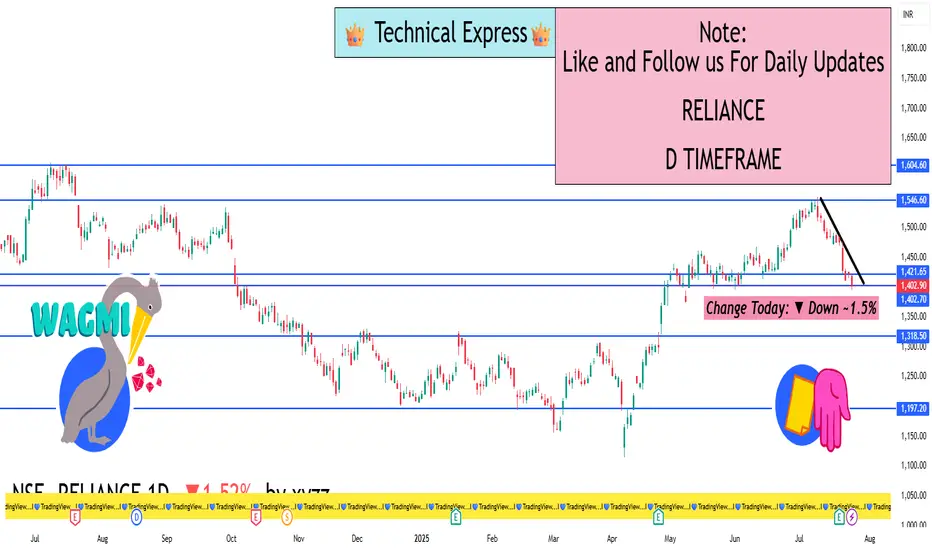
RELIANCE 1D TimeframeStock Data (1D Time Frame)
Current Market Price: ₹1,403 – ₹1,405 (Approx.)
Change Today: ▼ Down ~1.5%
Previous Close: ₹1,425
Day’s High: ₹1,427
Day’s Low: ₹1,398
52-Week High: ₹1,551
52-Week Low: ₹1,115
🧾 Intraday Performance Summary
Reliance opened mildly negative and continued a downward trend due to broader market weakness.
The stock touched an intraday low near ₹1,398 as profit-booking continued post its recent rally.
Despite reporting record profits in Q1, investor sentiment remains cautious due to underperformance in its Oil-to-Chemicals (O2C) and Retail segments.
🧠 Technical View (1-Day Time Frame)
Indicator Status
Trend Short-term Weak/Bearish
RSI (Relative Strength Index) Near 45 – slightly weak
Support Level ₹1,390 – ₹1,350 zone
Resistance Level ₹1,430 – ₹1,470
Volume Above average during dips
Stock is trading below key moving averages (20 and 50 DMA).
Break below ₹1,390 may lead to further correction toward ₹1,350.
Upside momentum may resume only if it breaks and sustains above ₹1,430–₹1,440 levels.
🧮 Fundamental Insights
💼 Q1 FY26 Highlights:
Net Profit: Around ₹30,783 crore, helped by a one-time gain from stake sales.
Core Business Growth: Adjusted profit growth (excluding exceptional items) is about 25% year-over-year.
Retail & O2C: Both divisions saw margin pressure despite revenue growth.
Jio Platforms: Continued to show strong performance through ARPU improvement and subscriber growth.
New Energy Segment: Investment in green energy, solar, and hydrogen tech continues to build momentum.
📈 Key Growth Drivers Ahead
Jio Expansion – Increased monetization from 5G and digital platforms.
Retail Scaling – Aggressive expansion through online + offline strategies.
Green Energy Push – Investments in solar panels, hydrogen energy, and battery storage to become significant in 2025–26.
Potential IPOs – Jio and Retail business listing possibilities can unlock value.
🛑 Risks to Watch
Pressure on global refining margins may continue to affect the O2C segment.
Delay in clean energy execution can lead to valuation stress.
Macro market correction or FII selling could drag heavyweights like Reliance.
🔮 Outlook
Short Term: Cautious-to-bearish unless ₹1,430 is reclaimed. ₹1,350 is a critical support.
Medium to Long Term: Remains fundamentally strong. New growth drivers (Jio, Retail, Energy) support a positive outlook beyond 3–6 months.
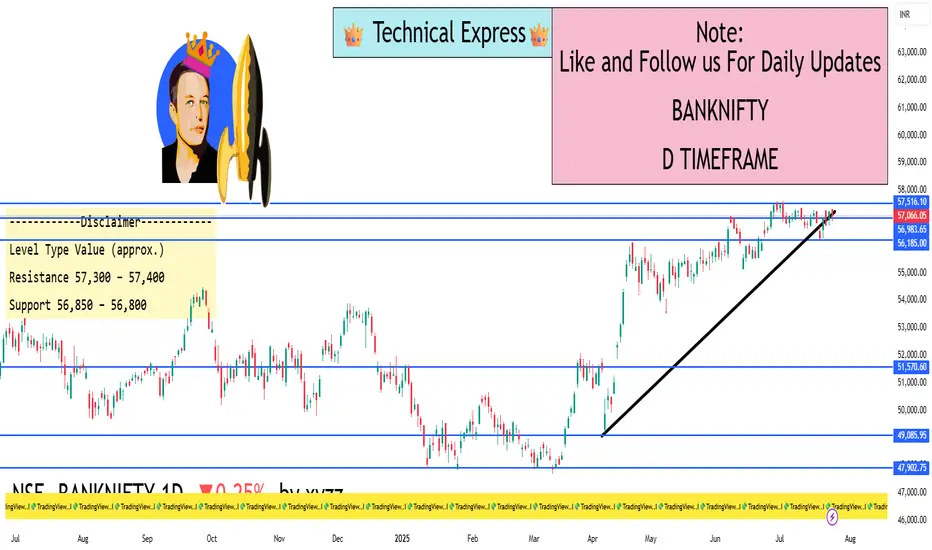
BANKNIFTY 1D Timeframe Key Data (as of early afternoon):
Current Price: ~57,080
Opening Price: 57,316
Day’s High: 57,316
Day’s Low: 56,851
Previous Close: 57,210
Net Change: –128 points (around –0.22%)
Intraday Price Action Summary
Bearish Start: Opened near the high and immediately faced selling pressure, especially in major private banks.
Dip to Support: Price dropped to 56,851, testing key intraday support.
Mild Recovery Attempt: Found some buying interest near the support but still trading below the day’s open.
📊 Technical Levels – 1D View
Level Type Value (Approximate)
Resistance 1 57,300
Resistance 2 57,600
Support 1 56,850
Support 2 56,500
Trend Bias Neutral to Bearish
RSI Level (Est.) 48–50 (sideways zone)
A break above 57,300 could resume bullish momentum.
A fall below 56,800 may extend the decline toward 56,500.
Why Bank Nifty Is Weak Today
Profit Booking: After recent gains, traders are squaring off long positions.
IT Sector Drag: Broader market weakness (led by IT) has spilled over into banking.
Global Cues: No strong global signals to support risk-on sentiment.
Mixed Bank Performance: While PSU banks like Canara Bank and PNB are showing strength, private banks such as Axis, ICICI, and Kotak are under pressure.
Intraday Trading Strategy
If you’re Bullish:
Look for a breakout above 57,300 for confirmation.
Targets could be 57,600 and 58,000 with a stop below 56,850.
If you’re Bearish:
Wait for a break below 56,800.
Downside targets may be 56,500 and 56,300.
Sideways Play: If the index continues to hold between 56,850–57,300, focus on range-bound scalping or wait for a breakout.
Conclusion
Bank Nifty is trading in a consolidation-to-weak zone today. The index is at a technical crossroads—holding above 56,850 keeps hopes for a bounce alive, while a fall below it could invite fresh selling. Eyes should be on private sector banks and broader market sentiment for the next directional cue.
Institution Option Trading🏢 Who Are These Institutions?
Institutions involved in option trading include:
🏦 Hedge Funds
🏢 Proprietary (Prop) Trading Firms
💼 Investment Banks
🌍 FIIs/DIIs
🧠 Pension Funds & Insurance Companies
They trade options across equities, indices (like Nifty/Bank Nifty), commodities, and currencies, often managing portfolios worth hundreds of crores.
🔍 Institutional Option Trading Strategies
1. Delta Neutral Strategy (Market-Neutral)
Example: Sell ATM straddle and hedge with futures.
Objective: Profit from time decay (theta) while keeping position neutral to price movement.
2. Volatility Arbitrage
Institutions bet on difference between implied and actual volatility.
Buy options when IV is low, sell when IV is high.
3. Calendar Spreads
Sell near expiry option, buy longer expiry of the same strike.
Used when institutions expect IV to rise but minimal short-term price movement.
4. Iron Condors and Butterflies
Multi-leg strategies for range-bound markets.
Used with large capital to generate steady income with limited risk.
5. Protective Puts / Covered Calls
Portfolio hedging: buy puts to protect against downturns, sell calls to earn extra income.
Very common among mutual funds and long-term portfolios.
📈 Option Chain Reading – Institutional Footprint
When institutions enter or adjust option positions, they leave footprints in the option chain. You can spot them by watching:
Sudden spike in OI (Open Interest) at specific strikes
Sharp rise in IV without much price movement
Heavy Put or Call writing near resistance/support zones
Unusual option activity (UOA) before key events
⚠️ How Retail Traders Can Learn From Institutional Option Trading
Track Option Chain + OI Changes Daily
Learn to Read Greeks Before Taking a Trade
Watch How IV Shifts Before & After Events
Backtest Simple Institutional Strategies (e.g. ATM Straddles)
Focus on Consistency and Capital Protection
🛑 Common Retail Mistakes in Options (Avoided by Institutions)
Buying deep OTM options blindly
Overtrading in low-volume strikes
Selling naked options without hedge
Ignoring IV or theta decay
Trading without stop-loss or adjustment plans
🧘 Conclusion: Why Mastering Institutional Option Trading Matters
Understanding how institutions trade options allows you to:
✅ Avoid emotional traps
✅ Trade with the flow of smart money
✅ Use real risk management
✅ Build income and protection strategies
✅ Improve win-rate and longevity in trading