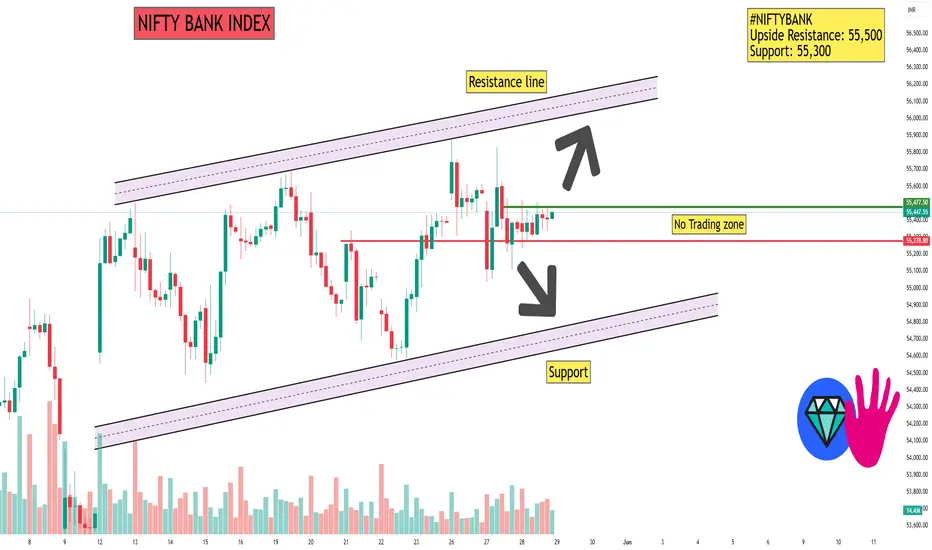
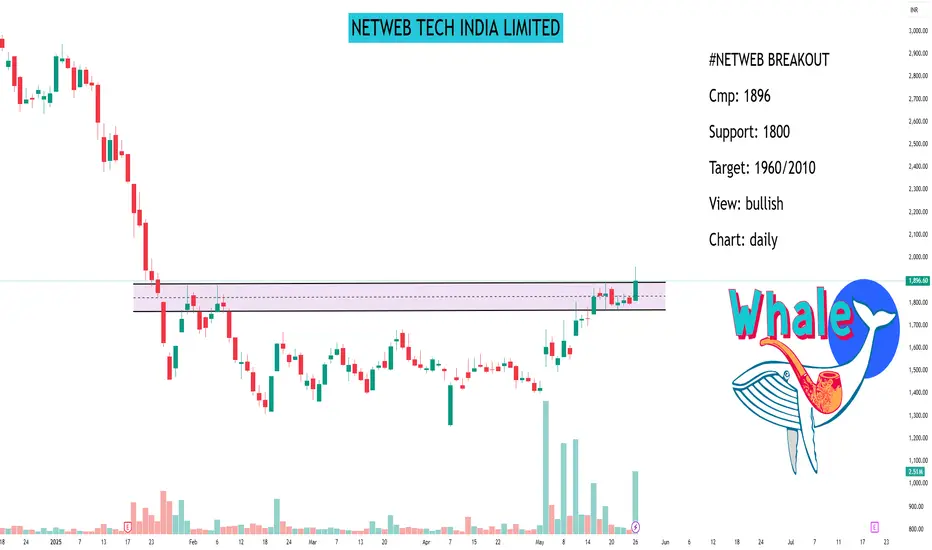
INDO STAR CAPTIAL LTDBREAKOUT STOCK
Stock: #INDOSTAR
Chart: daily
View: bullish
Key points:
Indostar Capital Finance is trading 7.63% upper at Rs 336.40 as compared to its last closing price.
Indostar Capital Finance has been trading in the price range of 345.20 & 308.60.
Indostar Capital Finance has given 24.58% in this year & 6.28% in the last 5 days.
Indostar Capital Finance has TTM P/E ratio 79.27 as compared to the sector P/E of 33.60.
(7.63%).
The Mutual Fund holding in Indostar Capital Finance was at 0.01% in 31 Mar 2025.
The MF holding has decreased from the last quarter.
The FIl holding in Indostar Capital Finance was at 2.68% in 31 Mar 2025.
The FIl holding has increased from the last quarter
Forex
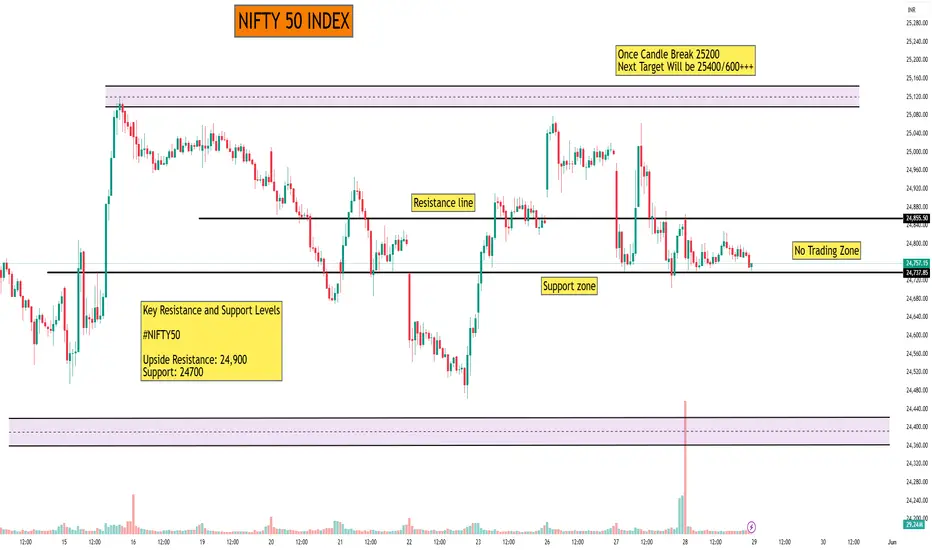
NMDC LTDNMDC Limited (National Mineral Development Corporation) is a leading Indian public sector enterprise under the Ministry of Steel, Government of India. Established in 1958, NMDC is India's largest producer of iron ore, with operations spanning mining, mineral exploration, and value-added production.
🏢 Company Overview
Headquarters: Hyderabad, Telangana
Chairman & Managing Director: Amitava Mukherjee
Ownership: Government of India holds approximately 60.79% stake
Employees: Approximately 5,887 (as of March 2019)
🛠️ Core Operations
Iron Ore Mining: NMDC operates highly mechanized iron ore mines in Chhattisgarh (Bailadila) and Karnataka (Donimalai), producing over 45 million tonnes annually.
Diamond Mining: Operates India's only mechanized diamond mine at Panna, Madhya Pradesh, with a capacity of 84,000 carats per year.
Other Minerals: Engaged in the exploration and extraction of copper, rock phosphate, limestone, dolomite, gypsum, bentonite, and beach sands.
🌍 Global Presence & Diversification
International Ventures: Through its subsidiary, Legacy Iron Ore Limited, NMDC holds exploration tenements in Western Australia for iron ore, gold, tungsten, and base metals.
Strategic Investments: Holds a 26% stake in International Coal Ventures Pvt. Ltd. (ICVL), which owns coking coal deposits in Mozambique.
🏗️ Nagarnar Steel Plant
NMDC established a 3 million tonnes per annum (MTPA) integrated steel plant at Nagarnar, Chhattisgarh, to diversify into steel production. In 2022, the steel business was demerged to form NMDC Steel Limited, which was listed on Indian stock exchanges in February 2023.
📈 Financial Highlights
Stock Listings: Listed on the Bombay Stock Exchange (BSE) and National Stock Exchange (NSE) under the ticker symbol 'NMDC'.
Shareholding Pattern (as of February 2020):
Government of India: 69.65%
Life Insurance Corporation of India: 13.699%
Other Institutional Investors: Approximately 24%
🏆 Awards & Recognition
SCOPE Eminence Award 2019-20 for CSR Excellence
Most Sustainable & Innovative Manufacturing Practices at World HRD Congress & Awards 2024
CEO of the Year Award at the Business Leader of Year 2024
Best PSU for CSR in Mining and Minerals at the Global CSR Excellence and Leadership Awards 2024
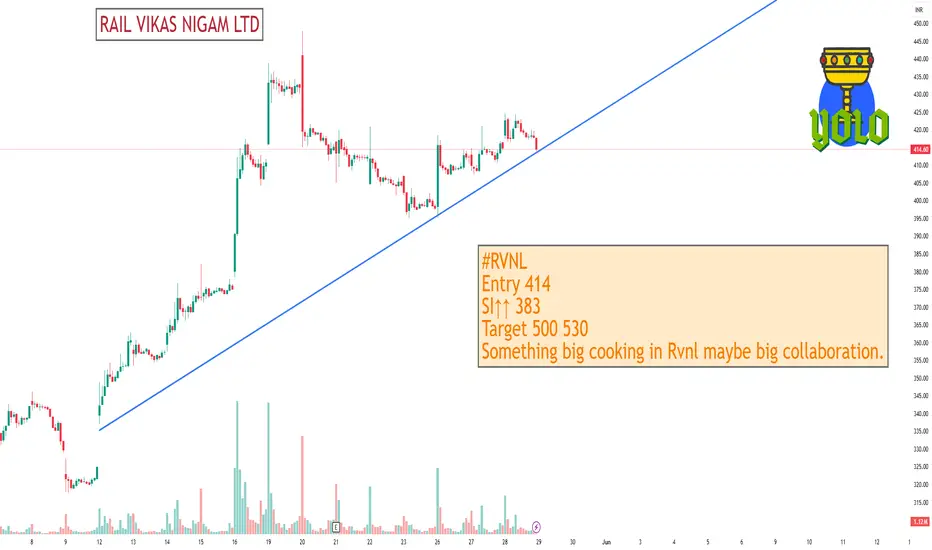
Will Gold Surge with a Gap Up as US-China Trade War Heats Up?XAU/USD Analysis: Will Gold Surge with a Gap Up? (26/5 - 30/5)
Fundamental Outlook
US-China Trade War: China's halt on US goods imports weakens the USD, boosting gold (inverse USD correlation).
Trump’s 50% EU Tariff Threat: Potential EU retaliation could spike global uncertainty, driving investors to gold as a safe haven.
Gold Demand: Rising trade tensions and inflation fears are pushing capital into gold, especially in India and China with upcoming festivals.
Macro Drivers
Monetary Policy:
US Fed: Trade war fallout may pressure rate cuts, reducing USD appeal and supporting gold.
China’s PBOC: Possible Yuan devaluation could lift gold prices in USD terms.
Market Sentiment:
Expect VIX spikes from trade uncertainties, favoring gold.
Strong physical gold demand in Asia supports prices.
Key Events:
US PCE inflation and consumer confidence data (watch for high inflation boosting gold).
Monitor EU/China trade retaliation statements.
Technical Analysis (H4 Chart)
Trend: Gold is in a strong ascending channel with support (3,325) and resistance (3,407 - 3,444).
Current Price: 3,407.554, testing key resistance (3,407 - 3,444).
Support Levels: 3,361.648 (mid-channel), 3,325.347 (channel support).
Resistance: 3,444.436 (all-time high).
Price Action: Recent Doji candle at resistance suggests possible pullback before continuation.
Fair Value Gaps (FVG):
3,325 - 3,340
3,361 - 3,407
Scenarios:
Bullish: Break above 3,444 with momentum could trigger a gap up, targeting 3,500
Bearish: Failure at 3,444 may lead to a pullback to 3,361 or 3,325.
Gap Up Probability: 60% chance at market open (26/5), driven by bullish sentiment.
Trading Plan
Buy Strategy
Entry: 3,361 - 3,370 (pullback to FVG or mid-channel).
Take Profit: 3,444 (resistance), 3,500 (breakout target).
Stop Loss: Below 3,325 (channel support).
Sell Strategy
Entry: Sell on rejection at 3,444 with bearish confirmation (e.g., strong bearish candle or head-and-shoulders).
Take Profit: 3,361 (FVG zone).
Stop Loss: Above 3,444.
Best Trading Times
Monitor market open (26/5) for gap-up confirmation.
Trade during London/New York sessions for optimal liquidity.
Key Takeaways
Gold is poised for potential upside due to trade war escalation and USD weakness. Watch for a breakout above 3,444 for a possible gap up or a pullback to 3,361 for buying opportunities. Stay updated on US inflation data and trade policy news.
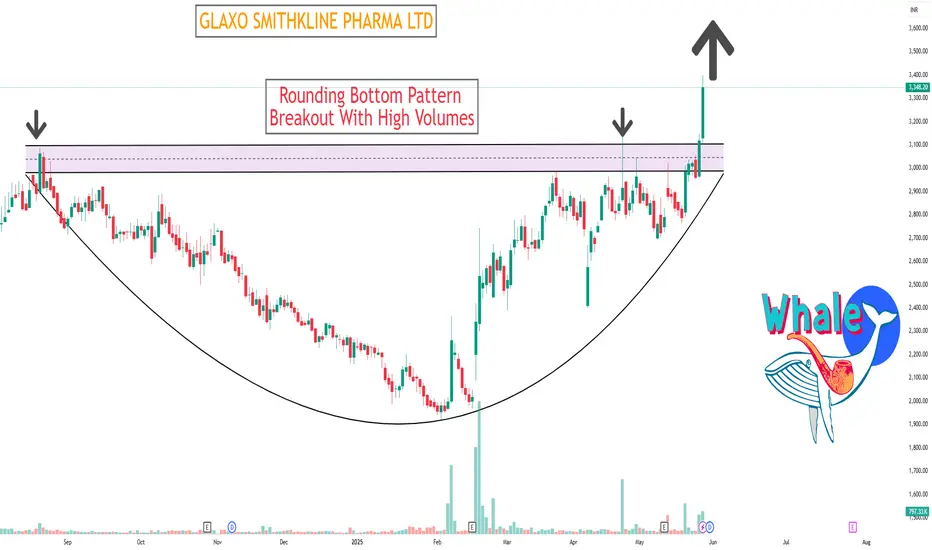
Institutional Trading part 4Institutional trading involves buying and selling securities by organizations on behalf of other investors, typically in large volumes. These traders, often working for entities like mutual funds, pension funds, and hedge funds, manage significant capital and can influence market prices. Institutional trading differs from retail trading, which involves individual investors making smaller trades for their own accounts.
Database Trading"Database trading" refers to using structured databases, often containing financial market data, to make trading decisions. This involves analyzing historical data, identifying patterns, and potentially automating trading strategies based on those findings. It can also encompass the idea of trading access to data itself on a platform similar to a stock exchange.
Advanced RSI "Advanced RSI" typically refers to strategies or techniques that go beyond the basic interpretation of the Relative Strength Index (RSI) indicator in trading. It involves using the RSI in more sophisticated ways, such as combining it with other indicators, exploring different RSI settings, and identifying advanced trading patterns.
STEEL AUTHORITY OF INDIASTEEL AUTHORITY OF INDIA
Sail long.....
SAIL Technical Breakout Setup
Current Price: *125.74 (+2.66%)
Date: May 23, 2025
Key Technical Levels
Entry Zone: Above yellow support zone (*125-130 range) Stop Loss: Red line at *96.33
Target 1: Green dotted line at *173.76 (+38% upside) Target 2: Green dotted line at *259.10 (+106% upside)
Technical Analysis
Pattern Recognition:
SAIL is forming a long-term triangular consolidation pattern
Stock is approaching the apex of a multi-year triangle
Blue diagonal trendline acts as major resistance since 2008 highs
Yellow horizontal zone provides strong support
Current Market Structure:
Price is holding above the critical yellow support zone
Recent bounce shows buying interest at these levels
Volume appears to be picking up on the recent move
Probability Assessment
Target 1 (*173.76) Probability: Moderate to High
This level represents the previous resistance zone
If breakout sustains above ₹130, this becomes achievable
Risk-reward ratio: Approximately 1:1.6
Target 2 (*259.10) Probability: Lower
This is an ambitious target requiring significant momentum
Would need broader market support and sector rotation
Risk-reward ratio: Approximately 1:5.5
Trading Strategy
For Aggressive Traders:
Enter on sustained close above *130
Partial booking at Target 1
Trail stop loss for Target 2
For Conservative Traders:
Wait for weekly close above *135
Smaller position size given the risk
Risk Management:
Strict stop loss at *96.33 (23% downside risk)
Position sizing should reflect the volatility
Important Notes:
Steel sector performance depends on infrastructure spending
Global commodity prices impact fundamentals
This is a technical setup - fundamental analysis required separately
This analysis is for educational purposes. Trade at your own risk.
ANGEL ONE LTDANGEL ONE LTD
Finding Market Clues with Simple Tools
This is not a trade I took - just an observation I found fascinating and wanted to share.
In ANGEL ONE's recent price action, I applied a simple 3-step process:
Identify a turning point
Spot a potential 5-wave Elliott Wave structure
Look for RSI divergence at key highs/lows
After a sharp downtrend, price made a lower low while RSI showed a higher low- hinting at a possible bullish reversal.
Later, price moved up in what could be a 5-wave structure. But near the top, price made a higher high while RSI made a lower high-a possible bearish divergence.
I didn't trade this setup - but it's fascinating how often these simple techniques reveal potential market shifts. It's not about being right every time, but about learning to read the market structure better.
Books like Elliott Waves Made Simple by Steve Sinclair have helped me more than any social media post. They teach you to think with structure, not noise.
This isn't a buy/sell recommendation. Just sharing something I'm practicing. Mistakes will happen, but that's part of the learning curve. The market is always there - it's on us to keep improving our technical reading.
MARUTI SUZUKI INDIA LTD.MARUTI SUZUKI INDIA LTD.
How to Trade Maruti Suzuki Using Supply Zones
NSE: MARUTI | Date: May 22, 2025
Maruti Suzuki has formed two key supply zones - price areas where sellers are likely to step in and push the stock lower. Understanding these zones helps you identify potential entry and exit points for your trades.
Supply Zone 1: 13,086 -12,912 & Supply Zone 2: 12,808 - 12,594
Bearish Scenario:
Maruti is currently trading near 12,445, below both identified supply zones. Recent price action shows a strong bearish candle accompanied by above- average volume, indicating active selling pressure around these resistance levels. If the price continues to remain below 12,800, selling pressure may persist. Traders could consider cautious short-selling strategies either at current levels or wait for the price to move back into the supply zones for confirmation before initiating short positions. It is important to follow proper risk management practices, including placing stop-loss orders above the supply zones, to manage potential downside risks.
Bullish Scenario:
A sustained breakout above 13,100 with strong volume confirmation would indicate that buying interest has surpassed selling pressure within the supply zones. Such a breakout may invalidate the resistance levels and signal renewed upward momentum in the stock, presenting potential opportunities for long positions. Traders may consider initiating or increasing long positions once the breakout is confirmed through price action and volume. It is important to use appropriate risk management measures, such as placing stop-loss orders below the breakout level.
For Learners:
Think of supply zones like traffic jams for bulls - when the price enters these zones, you can expect potential slowdowns or reversals unless there's strong momentum to push through. Always combine supply zone analysis with other confirmations like volume, candlestick patterns, and broader market context.
▲ Risk Management Tip: Always trade with a clearly defined stop loss. Avoid entering positions impulsively. It is advisable to start with a smaller quantity and increase your exposure only if the price action confirms the continuation of the trend. Capital protection should always be the priority.
Disclaimer
This content is created purely for educational and informational purposes. It is not intended as investment advice, stock recommendations, or trading tips. Trading and investing in the stock market involves risk. Please consult with a SEBI- registered financial advisor before making any investment decisions. The author/creator is not registered with SEBI and shall not be held responsible for any losses incurred based on this information. Always do your own research and use proper risk management.
If you found this analysis helpful, don't forget to Follow, so you never miss out on a trade-worthy setup, breakout opportunity, or valuable educational insight again. Stay updated and trade smarter!?
BAJAJ FINANCE LTDAs of the market close on May 23, 2025, Bajaj Finance Ltd. (NSE: BAJFINANCE) was trading at ₹9,243.50. Based on recent technical analyses, here are the key daily support and resistance levels:
📊 Daily Support and Resistance Levels
Classic Pivot Points:
Support Levels:
S1: ₹9,140.83
S2: ₹9,038.17
S3: ₹8,965.33
Resistance Levels:
R1: ₹9,316.33
R2: ₹9,389.17
R3: ₹9,491.83
Pivot Point: ₹9,213.67
Fibonacci Pivot Points:
Support Levels:
S1: ₹9,146.63
S2: ₹9,105.21
S3: ₹9,038.17
Resistance Levels:
R1: ₹9,280.71
R2: ₹9,322.13
R3: ₹9,389.17
Pivot Point: ₹9,213.67
Camarilla Pivot Points:
Support Levels:
S1: ₹9,227.41
S2: ₹9,211.33
S3: ₹9,195.24
Resistance Levels:
R1: ₹9,259.59
R2: ₹9,275.67
R3: ₹9,291.76
Pivot Point: ₹9,213.67
📈 Technical Indicators Overview
Moving Averages:
20-day EMA: ₹9,046.05
50-day EMA: ₹8,838.25
100-day EMA: ₹8,444.91
200-day EMA: ₹7,961.51
Current Price: ₹9,243.50
Interpretation: The current price is above all major moving averages, indicating a bullish trend.
Technical Summary:
Overall Rating: Strong Buy
Moving Averages: Buy
Technical Indicators: Strong Buy
🔍 Key Observations
The stock is trading above its pivot point and all major moving averages, suggesting bullish
Immediate resistance is observed around ₹9,316.33 (Classic R1), with further resistance at ₹9,389.17 (Classic R2).
Immediate support lies at ₹9,140.83 (Classic S1), with stronger support at ₹9,038.17 (Classic S2).
Please note that these levels are based on historical data and technical analysis, and actual market conditions may vary. It's advisable to use these levels in conjunction with other indicators and market news when making trading decisions.
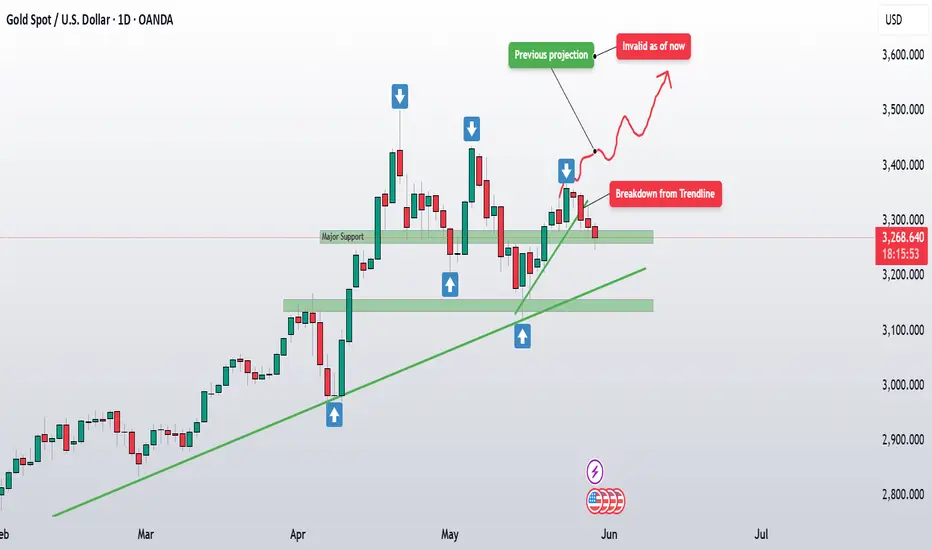
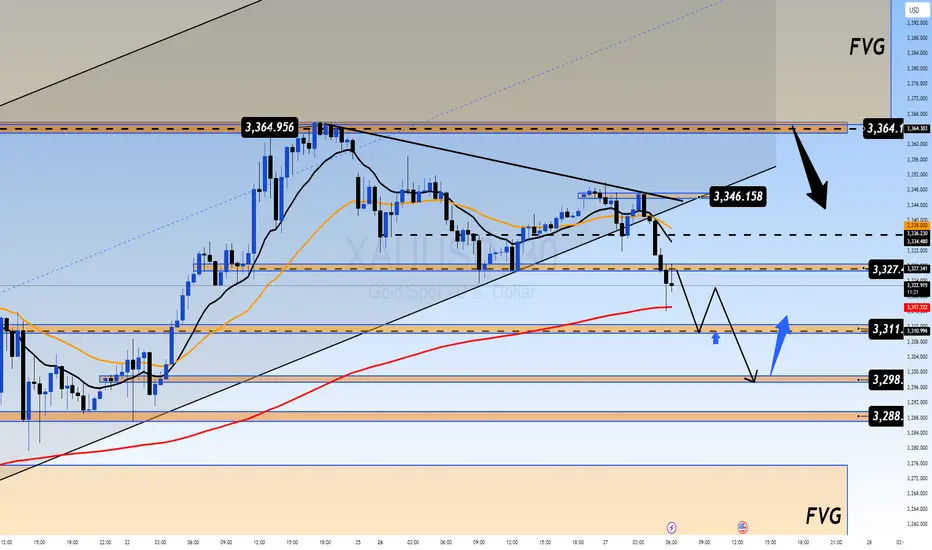
GOLD PLAN 23/05–YIELD CURVE FLIPS Will Gold Breakout or Sell Off🔥 GOLD PLAN 23/05 – YIELD CURVE FLIPS | Will Gold Breakout or Sell Off at 3360?
Global markets are heating up again as risk sentiment shifts. A major alert comes from the U.S. bond market:
For the first time since October 2021, the yield curve between the 5-year and 30-year treasuries inverted to +1.00%, signaling strong expectations for inflation and future growth concerns.
🌍 MACRO CATALYSTS DRIVING GOLD:
Iran warns the U.S.: “Leash your mad dog!” – escalating rhetoric as Israel is rumored to be preparing a strike on Iran's nuclear sites. Tehran vows to retaliate and holds the U.S. accountable.
Goldman Sachs says: “Only one way – BUY GOLD!”
Following the failed 20-year bond auction, rising deficits, and fiscal stress, GS urges investors to move into gold and crypto.
The return of risk-off sentiment makes Gold the #1 safe haven asset, attracting global institutional flow.
📈 TECHNICAL OUTLOOK (H1 Chart):
Critical resistance at 3358–3360 is a key decision zone.
A breakout here may trigger a strong move toward previous highs (ATH zone: 3390–3400).
Major support lies around 3276–3274.
A breakdown here may expose gold to deeper pullbacks below the 3200 handle, revisiting the FVG zone.
📌 TRADE PLAN FOR TODAY:
🔵 BUY ZONE:
Entry: 3276 – 3274
SL: 3270
TP: 3280 – 3284 – 3288 – 3292 – 3296 – 3300
🔵 BUY SCALP:
Entry: 3304 – 3302
SL: 3298
TP: 3308 – 3312 – 3316 – 3320 – 3325 – 3330 – 3340
🔻 SELL ZONE:
Entry: 3376 – 3378
SL: 3382
TP: 3372 – 3368 – 3364 – 3360 – 3350
🔻 SELL SCALP:
Entry: 3344 – 3346
SL: 3350
TP: 3340 – 3336 – 3332 – 3328 – 3324 – 3320
⚠️ Caution:
With geopolitical risk and bond market stress rising, volatility is expected to spike. Be patient and trade only on confirmation from key zones.
🎯 Stick to the plan. Don't chase the price. Protect your capital.
Learn Institutional Level Trading part 6Institutional trading involves the buying and selling of financial instruments for large organizations and entities, like mutual funds, pension funds, and insurance companies, on behalf of their clients or members. These entities trade large volumes, potentially influencing market prices and liquidity.
Learn Institutional Level Trading part 3Trading institutions operate through entities which combine multiple investment funds from investors to invest in financial markets. These firms operate differently from people who maintain brokerage accounts since they oversee massive asset portfolios while their market-shaping trading volume defines their operations.
Gold What’s Happening on Monthly Price Action:What’s Happening on Monthly Price Action:
Parabolic rally: Gold has gone nearly vertical since mid-2023 a textbook parabolic curve.
Zero rejection wicks: Current and previous candles show strong-bodied closes near the highs, suggesting very little distribution.
RSI is overbought: Hovering well above 70, but still rising, meaning the momentum is intact and buyers are still in full control.
This move still has no exhaustion signal on the monthly.
No long upper wicks
No bearish engulfing
No divergence on RSI yet
We are likely in Phase 2 of the bull run where price accelerates with institutional momentum, not retail euphoria.
We are due for a healthy correction, but calling a top here is premature. A market can stay irrational longer than you can stay solvent.
"Overbought and staying overbought” is a sign of strength, not weakness. Until price shows a rejection the bulls are driving this train. We ride the wave, not fight it
PCR Trading Strategy part 2Typically, a put-call ratio is a derivative indicator. It is designed to enable traders to determine the sentiment of the options market effectively. This ratio is computed either by factoring in the open interest for a given period or based on the volume of options trading
PCR Trading Strategy part 1The Put-Call Ratio (PCR) is a technical indicator used by traders to gauge market sentiment and identify potential trend reversals. It's calculated by dividing the total open interest of put options by the total open interest of call options. A high PCR (above 1) suggests bearish sentiment, while a low PCR (below 1) indicates bullish sentiment. Traders often use PCR as a contrarian indicator, meaning they might look to buy when the PCR is high, anticipating a reversal, or sell when it's low, expecting a downturn.
Option and Database TradingIn financial terms, "option trading" and "database trading" refer to distinct activities. Option trading involves buying and selling contracts that grant the right, but not the obligation, to buy or sell an underlying asset at a specific price within a certain timeframe. Database trading, on the other hand, is not a standard financial term. It likely refers to trading or managing data within databases, which could include activities like data analysis, querying, or manipulation.
RSI and RSI Divergence RSI: Divergence appears when the RSI's highs or lows diverge from price. For example, if the price makes new lows but the RSI bottoms at higher levels, it signals bullish divergence; if the price makes new highs but the RSI peaks at lower levels, it signals bearish divergence.