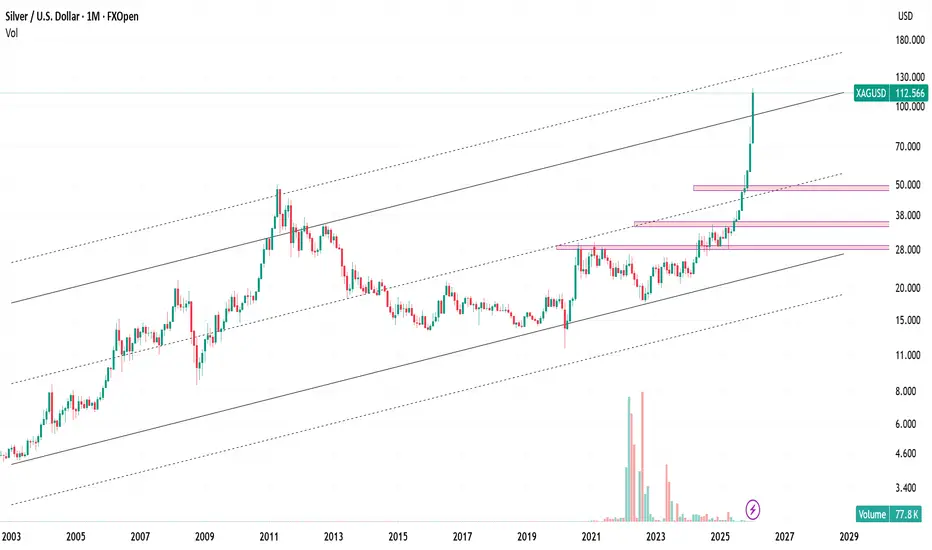
It seems silver is going to loose its shine soonSilver (XAGUSD) prices are near all time high, hovering near the VAH logarithmically on monthly chart. Highly cautious period next one or two months. Keep watching !!Shortby rmng9637
Geopolitical Risk PremiumsUnderstanding the Concept and Its Market Implications In global financial markets, the notion of risk is central to how investors price assets, allocate capital, and manage portfolios. Among the different forms of risk, geopolitical risk has become increasingly significant in the 21st century, as globalization, interconnected economies, and rapid information flows amplify the impact of political events on financial markets. The concept of a geopolitical risk premium refers to the additional return investors demand for holding assets that are exposed to uncertainties arising from political, military, or social instability across countries or regions. At its core, the geopolitical risk premium represents compensation for potential negative outcomes stemming from events such as wars, terrorist attacks, political upheavals, trade disputes, sanctions, or abrupt policy changes. Unlike traditional financial risks, which are often quantifiable using historical data, geopolitical risks are inherently uncertain, discontinuous, and asymmetric, making the estimation of a risk premium both complex and subjective. The Mechanism of Geopolitical Risk Premiums Financial theory suggests that the expected return on an asset reflects not only the risk-free rate of return and market-wide risks but also idiosyncratic risks specific to that asset or region. Geopolitical events can introduce shocks that disrupt cash flows, trade, supply chains, or economic growth. As a result, investors demand a premium—essentially a cushion for potential losses—when investing in environments where such risks are prevalent. For example, consider an investor evaluating bonds issued by a country with a history of political instability. Even if the bonds offer a higher yield relative to a stable country, the investor must assess the likelihood of default, currency devaluation, or capital controls triggered by political events. The additional yield above the normal market rate compensating for these uncertainties constitutes the geopolitical risk premium. Factors Driving Geopolitical Risk Premiums Political Stability and Governance: Countries with weak institutions, frequent government changes, corruption, or opaque policymaking tend to have higher geopolitical risk premiums. Investors perceive that sudden policy shifts, regulatory changes, or mismanagement could adversely impact investments. Military Tensions and Conflicts: Wars, armed conflicts, or regional tensions create immediate and sometimes long-lasting disruptions to trade, energy supplies, and markets. For instance, heightened tensions in the Middle East often lead to spikes in oil prices, reflecting a premium priced by markets for geopolitical uncertainty. Economic Sanctions and Trade Disputes: Sanctions imposed by one country on another, or protracted trade disputes, can significantly affect corporate profits and currency values. Investors factor these risks into asset pricing, demanding higher returns for exposure to affected regions. Terrorism and Civil Unrest: Beyond formal military conflicts, terrorism, insurgencies, and civil unrest can damage infrastructure, reduce investor confidence, and impair economic growth. Markets respond by incorporating a risk premium for affected assets. Resource and Energy Dependence: Countries heavily reliant on commodities or energy exports may experience higher geopolitical risk premiums. Political instability or conflict in resource-rich regions can disrupt global supply chains, influencing asset prices far beyond local borders. Globalization and Contagion Effects: In an interconnected world, geopolitical events rarely remain isolated. An attack or policy change in one region can have ripple effects on global markets, magnifying the perceived risk and inflating the geopolitical risk premium. Measurement of Geopolitical Risk Premiums Unlike interest rate or credit risk premiums, which can be measured relatively directly, geopolitical risk premiums are derived indirectly through market pricing. Several approaches exist: Bond Yield Spreads: Sovereign bonds issued by politically unstable countries often carry higher yields relative to similar-maturity bonds from stable nations. The excess yield can be interpreted as a geopolitical risk premium. Equity Market Volatility: In periods of heightened geopolitical tension, equity markets typically experience increased volatility. Analysts may estimate the risk premium embedded in stock prices by comparing expected returns during calm periods versus times of uncertainty. Commodity Price Spikes: Commodities like oil, gold, and precious metals are highly sensitive to geopolitical events. Price surges in these markets often reflect a risk premium for potential supply disruptions due to conflicts, sanctions, or political unrest. Currency Fluctuations: Emerging market currencies are particularly susceptible to geopolitical shocks. A depreciating currency during periods of tension implies a higher required return for investors holding assets denominated in that currency. Geopolitical Risk Indices: Academic and commercial entities, such as the Baker, Bloom, and Davis Geopolitical Risk Index (GPR), quantify geopolitical risk based on the frequency of news articles mentioning conflicts, terrorism, and international tensions. These indices can be correlated with asset returns to approximate the risk premium demanded by investors. Implications for Financial Markets Geopolitical risk premiums influence nearly every segment of financial markets, from equities and bonds to currencies and derivatives. The key implications include: Capital Allocation: Investors may shift capital toward safer assets or regions with lower geopolitical risk, creating a "flight to safety." This can lead to increased demand for government bonds of stable economies and a temporary decline in emerging market investment. Asset Pricing Volatility: Geopolitical events tend to induce sharp, sudden market reactions. Risk premiums fluctuate rapidly in response to news, making pricing more sensitive and increasing overall market volatility. Portfolio Diversification: To manage geopolitical risk, investors often diversify across countries, sectors, and asset classes. However, systemic geopolitical events, such as global conflicts or major trade wars, can reduce the effectiveness of traditional diversification strategies. Impact on Risk Models: Standard financial models often assume normal market conditions and historical correlations. Geopolitical events can invalidate these assumptions, resulting in underestimation of risk unless a geopolitical risk premium is explicitly incorporated. Policy and Central Bank Response: Central banks and governments may intervene in markets to stabilize financial conditions during periods of heightened geopolitical risk. Such interventions can temporarily alter risk premiums and market dynamics. Challenges in Managing Geopolitical Risk Premiums While investors recognize the importance of geopolitical risk, accurately quantifying and managing it is challenging: Unpredictability: Geopolitical events are often sudden and extreme. Unlike economic indicators, they cannot be forecasted reliably using historical trends alone. Complex Interconnections: Events in one region may affect multiple countries and markets, making the assessment of the total risk premium difficult. Behavioral Biases: Investor sentiment can exaggerate perceived risk, leading to temporary overshooting of premiums during crises. Hedging Limitations: Instruments like options, futures, or insurance policies may provide partial protection but rarely eliminate geopolitical risk completely. Examples of Geopolitical Risk Premiums in Action Middle East Conflicts and Oil Prices: Tensions in the Strait of Hormuz or conflicts in oil-rich countries often trigger sudden spikes in crude prices, reflecting a risk premium for potential supply disruption. Brexit and European Markets: The uncertainty surrounding the UK’s exit from the EU led to higher risk premiums for UK assets, including government bonds and equities, as investors demanded compensation for policy and market uncertainty. Russia-Ukraine Conflict (2022 Onwards): Global markets priced in significant risk premiums due to sanctions, disrupted energy supplies, and economic fallout, affecting commodity prices, equities, and sovereign bonds worldwide. Conclusion The geopolitical risk premium is a crucial component of asset pricing in a globally connected economy. It represents the compensation investors require for bearing risks stemming from political instability, military conflicts, terrorism, trade disputes, and policy uncertainty. While difficult to quantify precisely, geopolitical risk premiums influence capital flows, asset prices, and portfolio strategies across markets. Understanding and monitoring these premiums is vital for investors seeking to navigate the uncertainties of global finance, manage risk exposure, and optimize returns in an increasingly complex geopolitical landscape. By acknowledging both the magnitude and unpredictability of geopolitical events, financial professionals can make more informed decisions, incorporate appropriate risk-adjusted pricing, and better anticipate market reactions in times of political turmoil. In essence, geopolitical risk premiums are not just an abstract concept—they are a real, measurable, and actionable factor shaping the modern financial ecosystem.Educationby GlobalWolfStreet1
Impact of Geopolitical Risks on Indian Financial MarketsIntroduction Geopolitical risks have emerged as a significant determinant of financial market behavior across the globe. Defined as the potential for political, social, or military events to disrupt the stability of economies and financial markets, these risks can profoundly impact investor sentiment, capital flows, and asset prices. India, as one of the fastest-growing emerging economies, is particularly sensitive to geopolitical developments due to its strategic location, dependency on energy imports, and integration with global trade networks. From regional conflicts in South Asia to global trade tensions, geopolitical events create volatility in Indian financial markets and influence both domestic and international investors’ decision-making processes. Channels Through Which Geopolitical Risks Affect Markets The impact of geopolitical risks on Indian financial markets occurs through several interlinked channels: Investor Sentiment and Market Volatility: Geopolitical instability can trigger uncertainty among investors, leading to sudden sell-offs in equity markets. Fear of potential disruptions in economic activity prompts investors to adopt risk-averse strategies, often reallocating capital to safe-haven assets such as gold, U.S. Treasury securities, or currencies like the Swiss Franc. In India, major geopolitical shocks have historically led to heightened volatility in the Bombay Stock Exchange (BSE) and the National Stock Exchange (NSE). Foreign Institutional Investment (FII) Flows: India relies significantly on foreign institutional investors (FIIs) to provide liquidity and drive equity market growth. Geopolitical tensions can prompt FIIs to withdraw or reduce investments in emerging markets due to perceived risks, adversely affecting stock indices. For instance, conflicts in the Middle East impacting oil prices often lead to capital outflows from Indian markets, weakening the rupee and exerting downward pressure on equity valuations. Commodity Prices and Inflation: India is heavily dependent on imports for critical commodities, particularly crude oil. Geopolitical disruptions in oil-producing regions, such as the Middle East, directly impact crude oil prices, influencing inflation and fiscal policy. Rising crude prices increase production and transportation costs, squeezing corporate margins and reducing disposable income for consumers. This ripple effect negatively impacts stock markets, especially sectors like transportation, manufacturing, and consumer goods. Currency Fluctuations: The Indian rupee is highly sensitive to global geopolitical developments. Crises in oil-rich regions, U.S.-China trade tensions, or conflicts affecting major global economies can lead to capital flight from emerging markets, depreciating the rupee. Currency depreciation increases import costs, fuels inflation, and heightens uncertainty for foreign investors, creating further pressure on equity and bond markets. Interest Rates and Monetary Policy: Geopolitical shocks can indirectly influence monetary policy decisions. Rising inflation due to higher commodity prices or currency depreciation can compel the Reserve Bank of India (RBI) to adopt a tighter monetary stance, raising interest rates to stabilize prices. Higher interest rates may dampen investment and consumption, affecting corporate earnings and stock market performance. Historical Examples of Geopolitical Risk Impact on Indian Markets Gulf Wars and Oil Price Shocks: During the Gulf War in 1990-1991, crude oil prices surged due to conflict in the Middle East, creating inflationary pressures in India. The Indian stock market experienced volatility, and capital outflows intensified due to investor concerns about the country’s balance of payments and economic stability. The rupee depreciated significantly, and sectors dependent on imported oil and petrochemicals were hit hardest. U.S.-China Trade Tensions: Although primarily affecting global markets, trade wars between the U.S. and China had spillover effects on India. Investor apprehension about global growth slowdown led to FII outflows from Indian equities. Export-oriented industries in India, such as IT and manufacturing, faced uncertainty regarding demand and pricing, impacting their stock performance. Russia-Ukraine Conflict (2022): The Russia-Ukraine war caused a global energy crisis and disrupted commodity markets. India faced rising crude oil and gas prices, leading to inflationary pressures and fiscal stress. Indian equities reacted with short-term volatility, particularly in energy-intensive sectors and industries heavily reliant on imports. Currency depreciation and bond market stress were also observed as global risk sentiment deteriorated. Border Tensions with China and Pakistan: Regional conflicts have historically influenced investor sentiment in India. Escalating tensions along the India-China border or cross-border skirmishes with Pakistan often create uncertainty regarding domestic stability, prompting investors to temporarily reduce equity exposure, resulting in short-term market corrections. Sectoral Impacts of Geopolitical Risks The impact of geopolitical risks is often sector-specific: Energy and Oil & Gas: Directly affected due to import dependency and global supply disruptions. Defense and Infrastructure: Geopolitical tensions often increase defense spending, benefiting defense contractors and infrastructure companies. IT and Exports: Trade disruptions and sanctions affect export-oriented businesses, including IT and pharmaceutical sectors. Banking and Financial Services: Volatility affects investor confidence, credit growth, and risk-weighted assets, impacting banking profitability. Strategies Adopted by Investors and Policymakers Portfolio Diversification: Investors often diversify across asset classes and geographies to hedge against geopolitical risks. Gold and other safe-haven assets are popular choices during periods of heightened uncertainty. Derivative Hedging: Hedging using futures, options, and currency swaps allows investors and corporates to mitigate exposure to market and currency volatility induced by geopolitical developments. Policy Interventions: The Indian government and RBI actively monitor global developments. Strategic petroleum reserves, currency interventions, and monetary policy adjustments are tools used to manage external shocks. For instance, during periods of oil price spikes, the government has reduced excise duties to contain inflationary pressures. Long-Term Investment Outlook: While short-term market movements are highly sensitive to geopolitical shocks, long-term investors often focus on India’s underlying growth potential, robust domestic consumption, and reform-driven policies to maintain confidence. Challenges and Risks Despite strategies to mitigate geopolitical risks, certain challenges persist: Unpredictability: Geopolitical events are inherently uncertain and often occur suddenly, making it difficult for investors and policymakers to respond immediately. Global Interconnectedness: India’s integration with global financial markets amplifies the impact of distant geopolitical events. Inflationary Pressures: Persistent inflation due to commodity price shocks can undermine economic stability and erode investor confidence. Currency Depreciation: Continuous volatility in the rupee can create uncertainty for foreign investors and corporates with significant external debt exposure. Conclusion Geopolitical risks represent a complex and multifaceted challenge for Indian financial markets. They affect market sentiment, investment flows, commodity prices, currency stability, and monetary policy decisions. Historical evidence demonstrates that both global and regional geopolitical events have significant short-term impacts, often causing volatility and sector-specific repercussions. However, India’s robust economic fundamentals, strategic policy interventions, and long-term growth potential provide a cushion against sustained market disruption. For investors, a careful blend of risk management strategies, diversification, and a long-term outlook remains essential to navigate the uncertainties posed by geopolitical risks. As India continues to integrate further into global markets, understanding and managing these risks will remain a crucial aspect of financial market strategy.Educationby TechnicalExpress1
Gold hits record 3,759 | Safe-haven flows surge back🟡 XAU/USD – 23/09 | Captain Vincent ⚓ 🔎 Captain’s Log – Context & News Today Gold surged nearly +2% , hitting a record $3,759/oz . Geopolitical tensions : Israel launched missiles into Lebanon, killing 5 (including 4 US citizens) → safe-haven demand rushed back into Gold. USD weakened , capital flowed out of stocks & bonds → strong support for precious metals. ETFs & speculators : heavy buying amplified the rally. Silver : jumped to its highest level in 14 years, reinforcing strength in the precious metals sector. ⏩ Captain’s Summary : Gold is fueled by geopolitics, macro factors, and safe-haven demand. But after a hot rally, the big question: continue breaking highs or face sharp swings if the FED shifts tone? 📈 Captain’s Chart – Technical Analysis (H45) Storm Breaker (Resistance / Sell Zone) 3,771 – 3,787 (Fibo 0.5–0.618 confluence, ATH test zone) Golden Harbor (Support / Buy Zone) Near support: 3,740 (previous high turned support) OB Dock: 3,717 – 3,723 Breakout Harbor: 3,689 – 3,691 Market Structure Gold broke out to Higher High around 3,755 – 3,759. Main trend remains bullish, but prone to volatility / pullback after a hot rally. 🎯 Captain’s Map – Trade Plan ✅ Buy (trend-follow priority) Buy Zone 1 (OB) Entry: 3,717 – 3,723 SL: 3,707 TP: 3,725 – 3,730 – 3,735 – 3,740 – 3,750 Buy Zone 2 (Breakout Retest) Entry: 3,689 – 3,691 SL: 3,678 TP: 3,699 – 3,710 – 3,7xx ⚡ Sell (short-term scalp if overbought) Sell Zone (ATH test) Entry: 3,783 – 3,785 SL: 3,795 TP: 3,759 – 3,740 – 3,717 ⚓ Captain’s Note “The geopolitical storm pushed the Golden sails past 3,759. Golden Harbor 🏝️ (3,717 – 3,689) is the safe dock for sailors to board the northbound trend. Storm Breaker 🌊 (3,771 – 3,787) may raise heavy waves, suitable for short Quick Boarding 🚤 scalps. The main voyage remains bullish, but after a hot rally, sailors must keep a firm hand on the helm to avoid being thrown off by choppy swings.”Longby CaptainVincentUpdated 1
XAU/USD – GOLD 08/09 | Captain VincentObserving JPY & USD | Buy still holds dominance 🔎 Captain’s Log – News Context This morning there were no major new updates. The US session tonight (08/09) will also not release big data. The latest impact on the market is Japanese PM S. Ishiba’s resignation , which pressured JPY downward and slightly lifted the Dollar. However, Gold only made a small correction and maintained strong stability. ➡️ Captain’s Summary: Dollar and JPY currently only have indirect influence, not enough to push Gold deeply lower. The main trend is still supported for a bullish rebound. 📈 Captain’s Chart – Technical Analysis Captain’s Shield (Main Support): Golden Harbor OB: 3542 – 3549 Main Buy Zone: 3549 – 3551 Liquidity Dock: 3573 – 3575 Storm Breaker (Resistance): Quick Boarding: 3602 – 3604 (Short-term Sell scalp) Storm Breaker Peak: 3632 – 3634 (Sell zone – may form a new ATH) ⏩ Price structure remains bullish (continuous BOS). Corrections are mainly liquidity grabs before pushing up to higher resistance zones. 🎯 Captain’s Map – Trade Scenarios ✅ Golden Harbor (BUY – Priority) Buy Zone: 3549 – 3551 | SL: 3542 | TP: 3553 → 3557 → 3560 → 3563 → 35xx Liquidity Dock: 3573 – 3575 | SL: 3565 | TP: 3578 → 3581 → 3583 → 35xx ⚡ Quick Boarding (SELL Scalp – Short-term) Entry: 3602 – 3604 SL: 3610 TP: 3600 → 3597 → 3594 → 3591 → 3588 → 35xx 🌊 Storm Breaker (SELL Zone – New ATH) Entry: 3632 – 3634 SL: 3640 TP: 3629 → 3625 → 3623 → 3619 → 361x ⚓ Captain’s Note “The golden ship sails steadily as the seas remain calm this morning, with no big news waves. Golden Harbor 🏝️ (3549 – 3551) together with OB near 3542 is the safe anchorage for sailors riding the bullish trend. Liquidity Dock ⚓ (3573 – 3575) is just a temporary anchor before the bullish winds carry the ship further. Quick Boarding 🚤 (3602 – 3604) is for those who want to ride short-term waves. And if the ship touches Storm Breaker 🌊 (3632 – 3634) , it may be a new wave peak – but the grand journey is still headed North with the bullish sails full of wind.”Longby CaptainVincentUpdated 2
XAU/USD – FED, Tariffs & NFP Today | Captain Vincent🔎 Captain’s Log – Context & News The probability of a FED rate cut in September has risen to 99.4% (from 96.6%) → almost certain. FED’s Cook is under fraud investigation , combined with weak prior economic data → further strengthens momentum for Gold. US–Japan deal : US reduces chip import tariffs to 15%, in return Japan invests 550B USD + purchases 8B USD in agricultural products. Although positive, it does not change the main outlook as markets remain focused on interest rates & inflation. Trump : Threatens tariffs on all chip/semis companies not entering the US → raises geopolitical concerns. NFP & Unemployment Rate (UR) tonight at 19:30 → key event, may trigger strong volatility. ⏩ Captain’s Summary: Capital flow still leans towards BUY Gold thanks to FED rate cut expectations, but short-term shakeouts may occur before/after the news. 📈 Captain’s Chart – Technical Analysis M30 BOS: Gold has just formed a Break of Structure, overall trend remains bullish. Captain’s Shield (Support): 3484 – 3486 (Main Buy Zone). Storm Breaker (Resistance): 3575 – 3593 (aligned with Fibo 0.5 – 0.618). If it breaks 3591 – 3593 → pathway to new ATH 3608 – 3610 or higher. If it fails at Storm Breaker → price may retest Golden Harbor (3484) before bouncing back. 🎯 Captain’s Map – Trade Scenarios ✅ Golden Harbor (BUY – Priority) Entry: 3484 – 3486 SL: 3478 TP: 3490 → 3493 → 3497 → 3505 → 35xx ⚡ Quick Boarding (SELL Scalp – Short-term) Entry: 3575 – 3577 SL: 3585 TP: 3570 → 3565 → 3560 → 3555 → 35xx 🌊 Storm Breaker (SELL Zone – Resistance) Entry: 3591 – 3593 SL: 3600 TP: 3588 → 3585 → 3580 → 3575 → 35xx ⚓ Captain’s Note “The Golden ship sails smoothly as FED is almost certain to cut rates in September. Golden Harbor 🏝️ (3484) is the safe anchorage to continue riding the bullish tide. Storm Breaker 🌊 (3575–3593) may create big waves for short Quick Boarding 🚤 , but the main current still carries us North.”Longby CaptainVincentUpdated 1
XAU/USD – Market awaits JOLTS, Gold holds safe-haven role⚓️ Captain Vincent – XAU/USD: US–Venezuela tensions push Gold as safe haven 1. Market News 🌍 US Secretary of State Marco Rubio confirmed that the US military attacked a drug ship departing from Venezuela, as Washington steps up pressure on the Maduro government. Earlier, Trump offered a $50 million bounty to force Venezuela’s President out of power, while deploying military forces near the Caribbean coast. 👉 These moves raise fears of a potential regional conflict, making Gold the top safe-haven asset. The strong rally this morning reflects safe-haven flows returning to GOLD. 📌 Tonight’s focus (3/9 – 21:00): JOLTS Job Openings report – a key gauge of US labour market health. If the data comes weaker than expected → USD may face more pressure → Gold could accelerate higher. 2. Technical Analysis ⚙️ On the H1 chart, Gold has formed multiple BOS (Break of Structure), showing the bullish trend remains in control. Buy Zone 3,478 – 3,480: Aligns with a major Order Block, strong support for pullback entries. Sell Zone 3,577 – 3,579: Near fib extension 1.618, potential resistance where profit-taking may appear. Key Support – Resistance zones: Support: 3,528 – 3,507 Resistance: 3,562 – 3,585 3. Trade Scenarios 📌 🔺 BUY Zone (Priority) Entry: 3,478 – 3,480 SL: 3,470 TP: 3,483 → 3,486 → 3,489 → 349x → 35xx 🔻 SELL Zone (Resistance) Entry: 3,577 – 3,579 SL: 3,586 TP: 3,573 → 3,570 → 3,567 → 3,560 → 35xx 4. Conclusion ⚓ Gold continues to benefit from US–Venezuela geopolitical tensions, while maintaining a bullish structure with consecutive BOS signals. In the short term, traders may: Look to BUY around 3,478 – 3,480 to follow the main trend. Watch for short-term SELL at 3,577 – 3,579 if price retests strong resistance. 👉 With geopolitical risks rising and US economic data (JOLTS) due tonight, Gold remains the No.1 safe-haven asset.Longby CaptainVincentUpdated 1