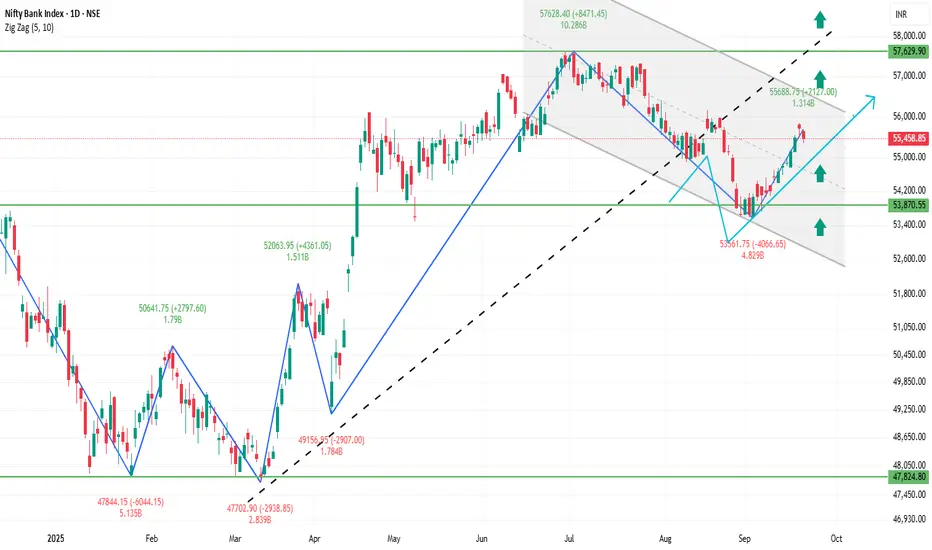
BANKNIFTY 1D Time frameCurrent Trend: BANKNIFTY is showing consolidation with mild bullish bias.
Support Zone: Strong support lies near 55,200 – 55,400. If this holds, buyers may remain active.
Resistance Zone: Key resistance is around 55,800 – 56,000. A breakout above this can bring strong momentum.
Indicators: Daily structure is stable; candles show demand near support zones.
Outlook:
Above 56,000 → fresh rally possible.
Below 55,200 → weakness can extend.
👉 In short:
Sideways to bullish.
Strength above 56,000, weakness below 55,200.
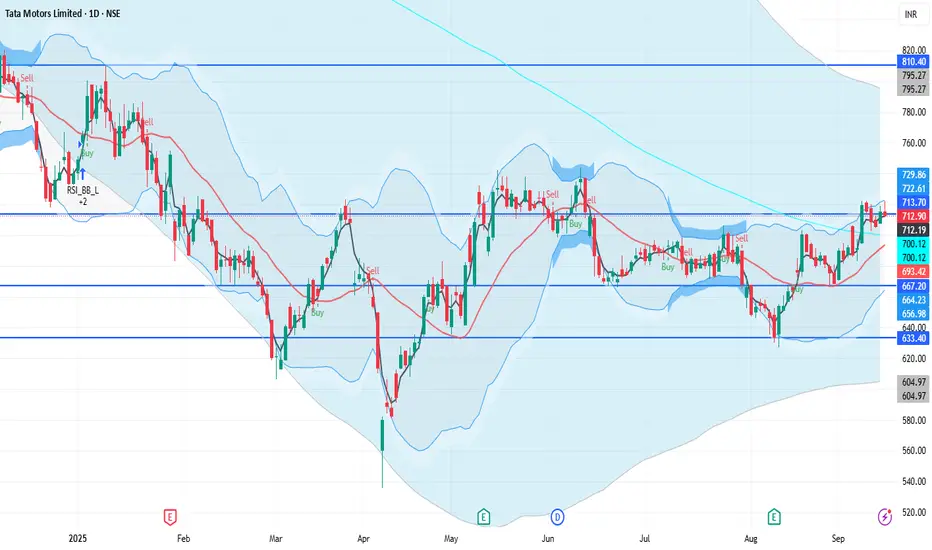
Tatamotors
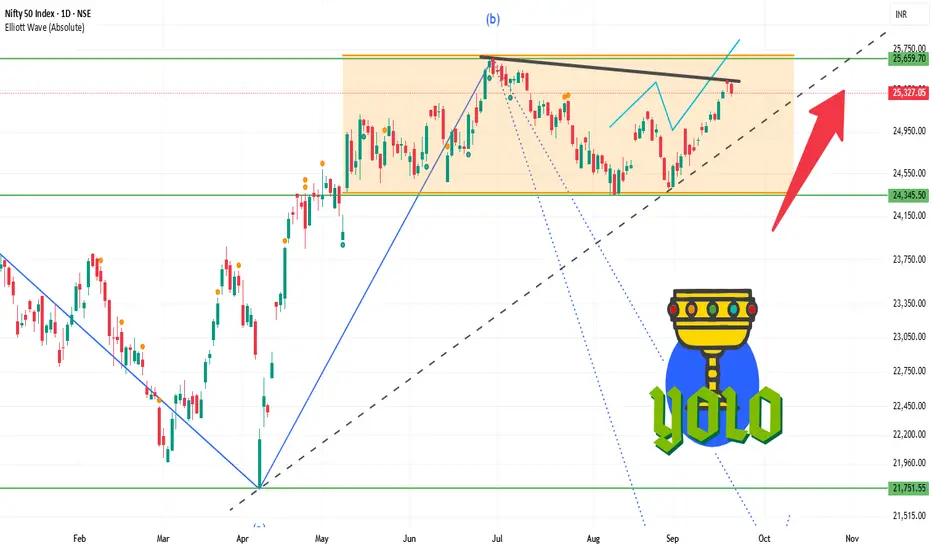
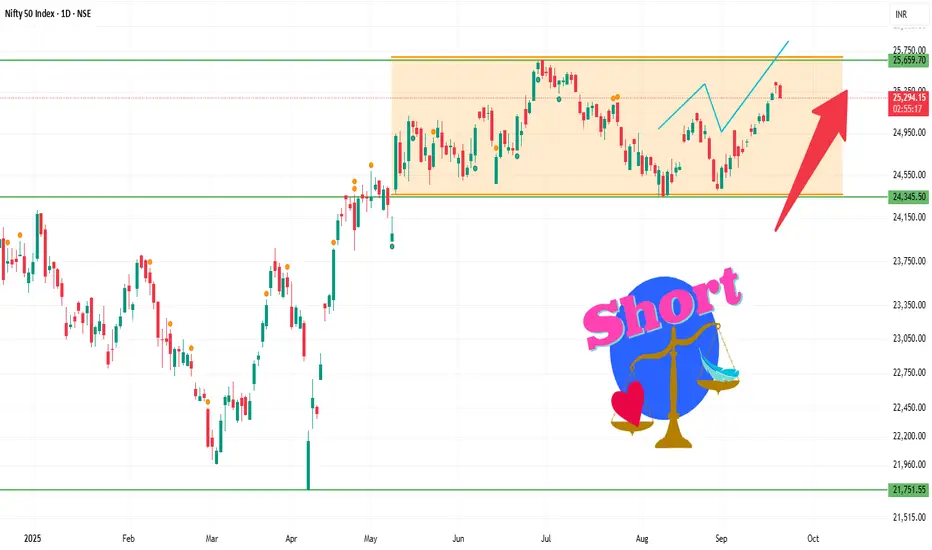
NIFTY 1D Time frameCurrent Trend: Market is moving sideways with limited momentum.
Support Zone: Strong support is around 25,200 – 25,250; bounce is possible from here.
Resistance Zone: If NIFTY sustains above 25,350 – 25,400, fresh upward momentum may come.
Indicators: Daily candle shows buyers are slightly in control, but resistance breakout is important.
Outlook: As long as NIFTY holds above 25,200, the uptrend remains safe. A close above 25,400 can trigger new buying.
👉 In short:
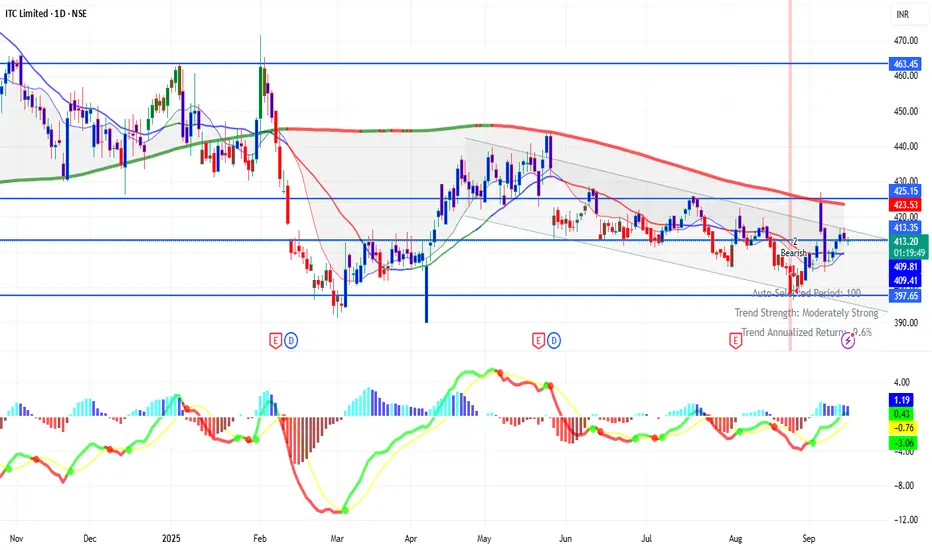
Sideways to bullish tone.
Weakness below 25,200, strength above 25,400.
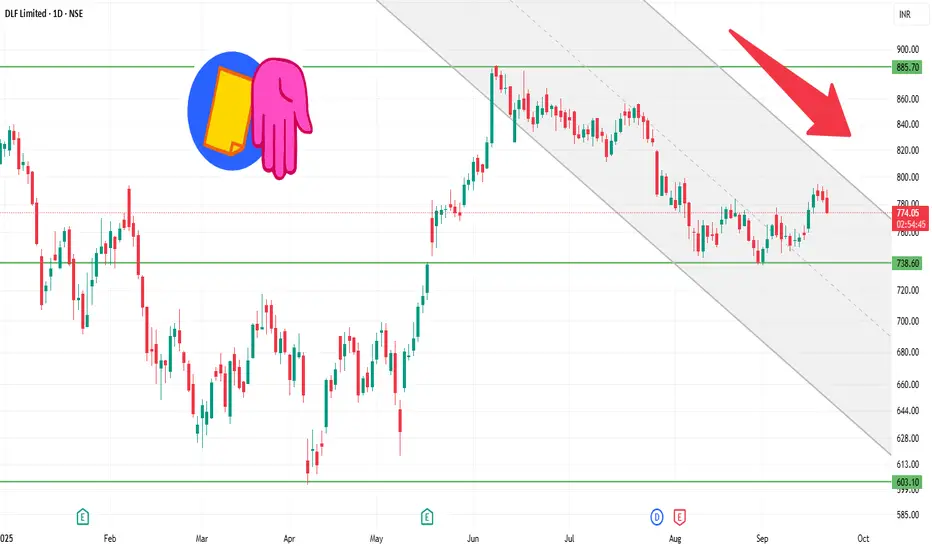
DLF 1D Time frameCurrent
Price: ₹783.10 (as of last close)
52-Week Range: ₹601.20 – ₹929.00
Market Cap: ₹1.94 lakh crore
P/E Ratio: 43.26 (lower than sector average)
EPS (TTM): ₹18.12
Dividend Yield: 0.77%
Debt-to-Equity: 0.10 (very low)
ROE: 10.76%
ROCE: 6.51%
⚙️ Technical Indicators
RSI (14-day): 56.38 — Neutral to slightly bullish.
MACD: 4.28 — Positive, supporting bullish momentum.
Moving Averages: Trading above both 50-day and 200-day EMAs, indicating a long-term uptrend.
Trend Rating: Strong Buy, according to daily technical analysis.
📈 Short-Term Outlook
Bullish Scenario:
Entry: Above ₹800 with strong volume.
Targets: ₹820–₹825, ₹840–₹850.
Stop Loss: ₹780.
Bearish Scenario:
Entry: Below ₹780 with confirmation.
Targets: ₹760–₹765, ₹740–₹745.
Stop Loss: ₹800.
⚠️ Risks
Breakdown below ₹780: Could lead to a short-term correction toward ₹760–₹765.
Failure to break above ₹800: May result in consolidation or minor pullback.
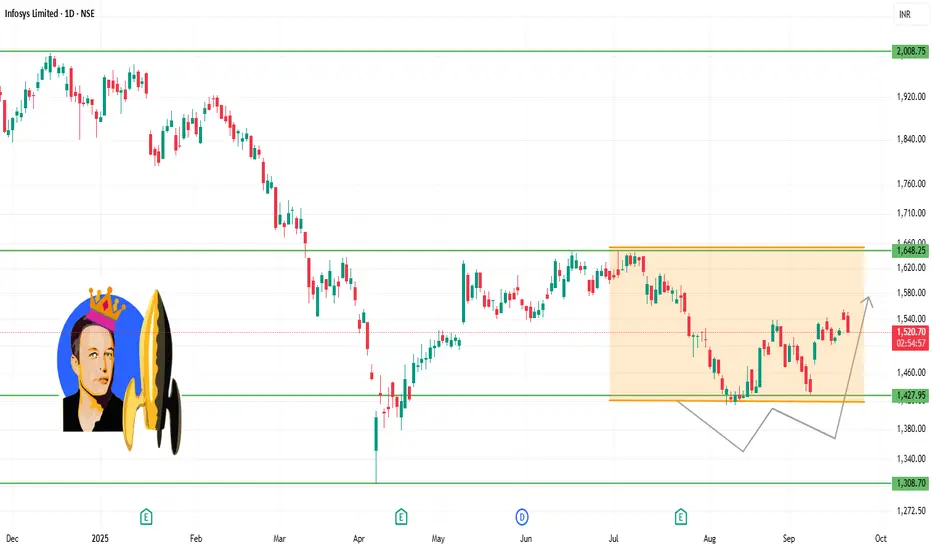
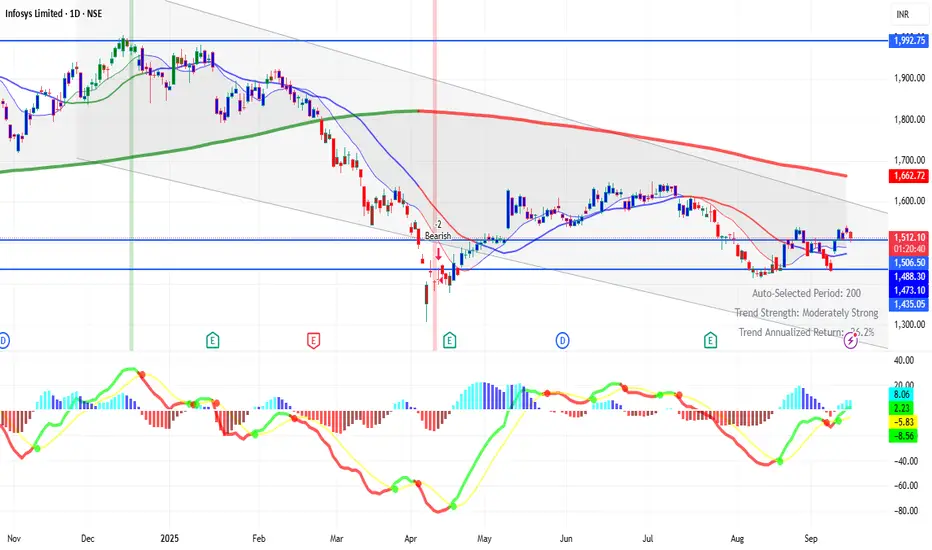
INFY 1D Time frameCurrent Facts
INFY is trading around ₹1,525-₹1,530.
Recent high / resistance being tested around ₹1,540-₹1,550.
The stock has a 52-week low around ₹1,307 and a high near ₹2,006.
Technical momentum is neutral to mildly bullish. Indicators like MACD are positive but RSI is not yet overbought.
🔍 Key Support & Resistance Levels
Immediate Support: ~ ₹1,500-₹1,510 — this is the level to watch closely. If INFY remains above this, it helps maintain bullish bias.
Secondary Support: ~ ₹1,470-₹1,490, in case the nearer support fails.
Immediate Resistance: ~ ₹1,540-₹1,550 — price is facing supply pressure here.
Stronger Resistance: ~ ₹1,560-₹1,570 if INFY manages to break above the nearer resistance.
⚙️ Interpretation & Outlook
As long as INFY stays above the ~₹1,500 support, bulls have a chance to push toward resistance.
Selling pressure is visible near the resistance zone; repeated failures at that zone could lead to consolidation or a pullback.
If INFY breaks above ₹1,550 with strong volume, the upside may extend toward ~₹1,560-₹1,570 and beyond.
⚠️ Risk Points
Breakdown below ₹1,500 may drag INFY toward the ~₹1,470-₹1,490 support.
If that too fails, deeper weakness may set in, possibly toward lower zones depending on market sentiment.
SBIN 1D Time frameCurrent Facts
Price is trading around ₹854–₹861.
In the past 52 weeks, it has moved between ₹680 (low) and about ₹875–₹880 (high).
Recently, the stock has shown a positive trend, moving up slowly but facing resistance near the higher levels.
🔍 Support & Resistance Zones
Immediate Support: ₹840–₹846 (if it stays above this, trend remains safe).
Stronger Support: ₹820–₹830 (this is the fallback level if the first support breaks).
Immediate Resistance: ₹860–₹869 (the stock is struggling to cross this zone).
Higher Resistance: ₹880–₹900 (if it breaks out strongly, these are the next targets).
⚙️ Technical View
Trend is positive to neutral — buyers are active but sellers are pushing back at resistance.
Momentum is moderate — not too weak, not too overheated.
A decisive breakout above ₹869 with volume can give a rally toward ₹880–₹900.
⚠️ Risks
If the price falls below ₹840, there is a chance of decline toward ₹820–₹830.
Weak breakout attempts without strong buying may cause sideways movement.
🔮 Possible Scenarios
Bullish: Strong move above ₹869 → targets ₹880–₹900.
Range: Stock stays between ₹840–₹860.
Bearish: Break below ₹840 → fall toward ₹820–₹830.
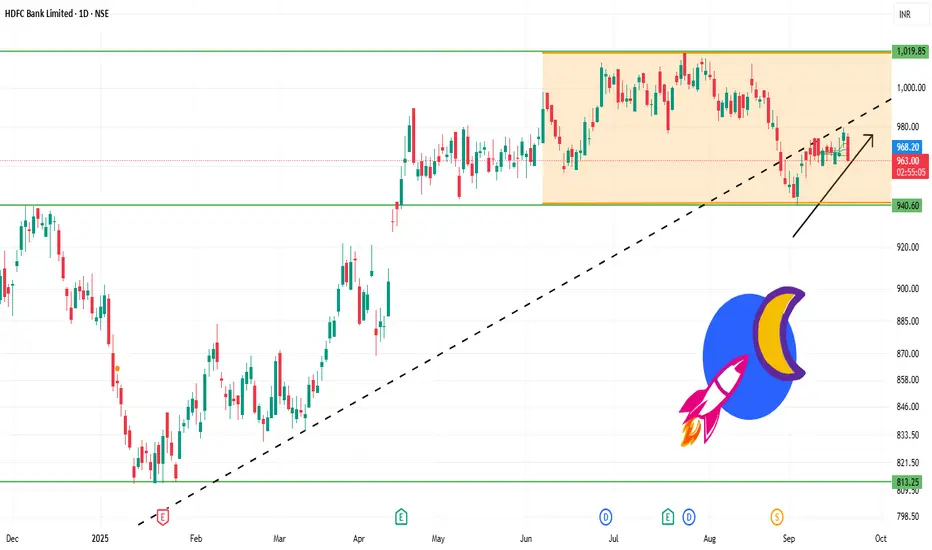
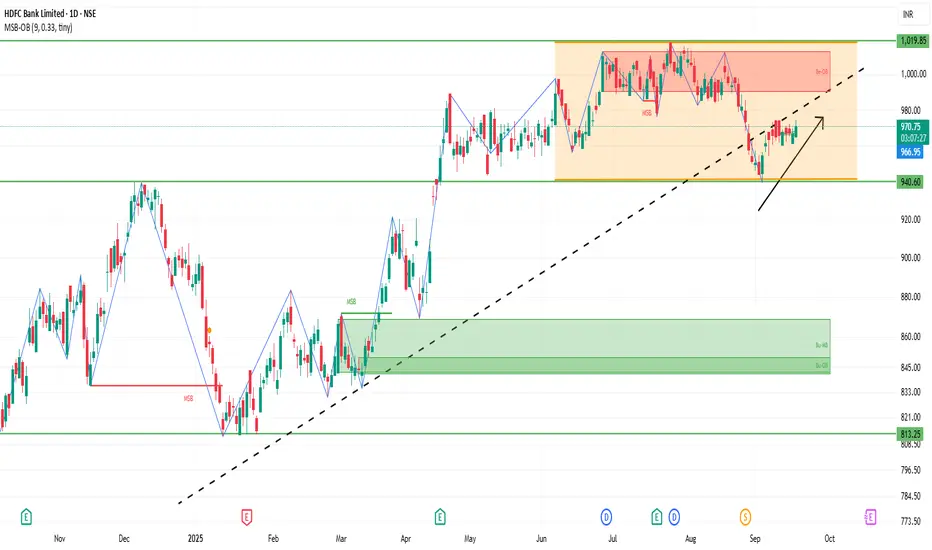
HDFCBANK 1D Time frameTrend
Trading around ₹967 – ₹970.
Stock is in a consolidation phase for the past few months.
Long-term trend is intact since it is above the 200-day moving average.
Support Levels
₹960 – ₹965 → immediate support zone.
₹945 – ₹950 → stronger support; if this breaks, stock may weaken further.
Resistance Levels
₹970 – ₹975 → immediate resistance; stock is struggling to cross this area.
₹980 – ₹992 → next major resistance; breakout above this could open path to ₹1,020.
Indicators
RSI near 55 → neutral to mildly bullish, not overbought.
MACD positive, showing some upward momentum.
Short-term moving averages are mixed, but long-term support remains strong.
Price Action
Range-bound between ₹960 – ₹975.
Breakout or breakdown from this range will decide the next trend.
✅ Facts & Insights
Fact 1: Above ₹975, HDFC Bank can rally towards ₹980 – ₹992 and possibly ₹1,020.
Fact 2: Below ₹960, stock may slip to ₹945 – ₹950, and deeper to ₹920 – ₹900 if weakness continues.
Fact 3: Long-term outlook remains positive, but short-term is sideways until a breakout.
Nifty 1D Time frameCurrent Facts
Current Level: ~25,300–25,310
Trend: Mildly bullish; Nifty is trading above short-term moving averages (20-day & 50-day EMA).
Momentum Indicators:
RSI (14-day): ~60 → positive but not overbought.
MACD: Positive → supports short-term bullish bias.
Price Action: Daily candles show small upper wicks → slight profit-booking near resistance levels.
⚙️ Outlook
Bullish Scenario:
Holding above 25,270 → retest 25,350–25,370 and possibly 25,420–25,450.
Range / Consolidation:
Price oscillates between 25,270 – 25,350 → sideways action expected.
Bearish Scenario:
Close below 25,250 → downside risk toward 25,180–25,200 or lower.
⚠️ Facts
25,300–25,310 acts as a short-term pivot — above it favors bulls, below it favors bears.
Immediate resistance is at 25,350–25,370; breakout here can trigger upside momentum.
Support at 25,250 is crucial; failure to hold may result in deeper correction.
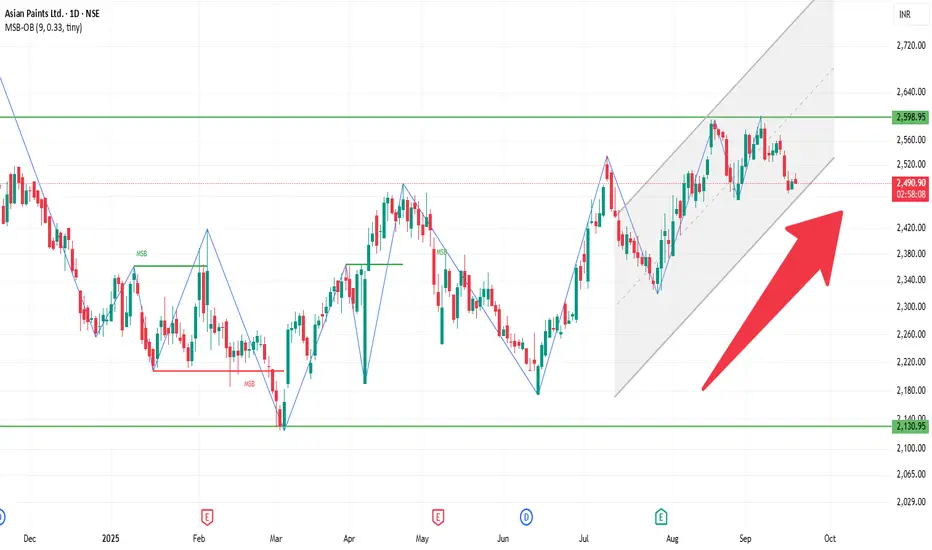
ASIANPAINT 1D Time frameCurrent View
The stock is trading around ₹2,490-₹2,500, roughly in that band.
Recent price action suggests sideways to slightly negative bias in the short term.
The stock is below many of its medium-to-long term moving averages, but above some short term ones — mixed signals.
⚙️ Indicators & Momentum
RSI is in neutral to slightly weak territory (not deeply oversold, not overbought).
MACD shows bearish pressure in recent periods.
Some oscillators & momentum tools showing mild divergence, meaning upward momentum is not strong.
Short-term moving averages are giving mixed signals: some support, some resistance.
📌 Key Levels to Watch
Resistance Zones: ~ ₹2,520-₹2,550 is a resistance range.
Support Zones: ~ ₹2,450-₹2,470 nearer support. More substantial support around ₹2,400-₹2,430.
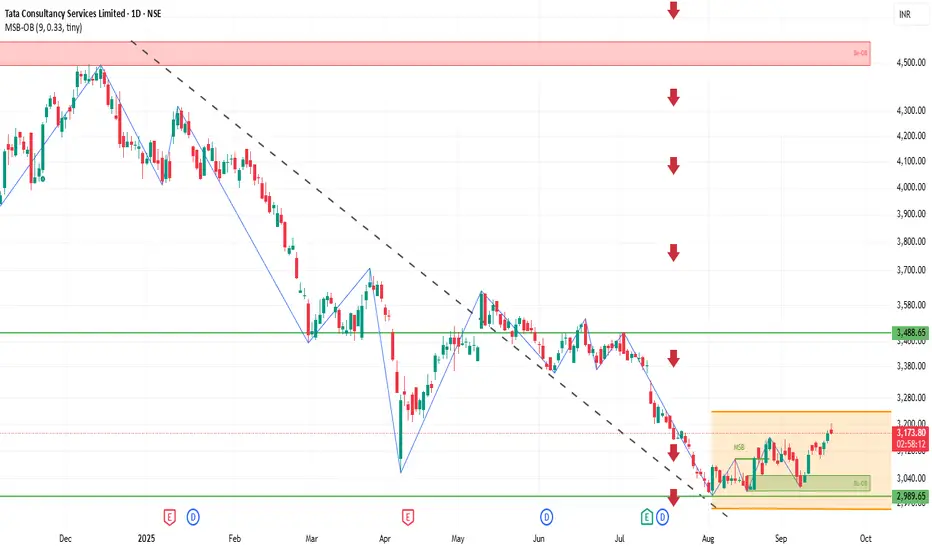
TCS 1D Time frameCurrent Snapshot
Price: ₹3,174
Stock has moved above earlier resistance zones (₹3,150 – ₹3,170).
Momentum looks positive, buyers are holding strength.
📌 Key Levels
Immediate Resistance: ₹3,190 – ₹3,200
Next Resistance: ₹3,220 – ₹3,250
Immediate Support: ₹3,150 – ₹3,160
Stronger Support: ₹3,100 – ₹3,120
✅ Outlook
If TCS sustains above ₹3,170, it can extend the rally toward ₹3,200 – ₹3,220.
If it slips back below ₹3,160, consolidation may happen around ₹3,120 – ₹3,150.
Larger trend remains bullish as long as price stays above ₹3,100.
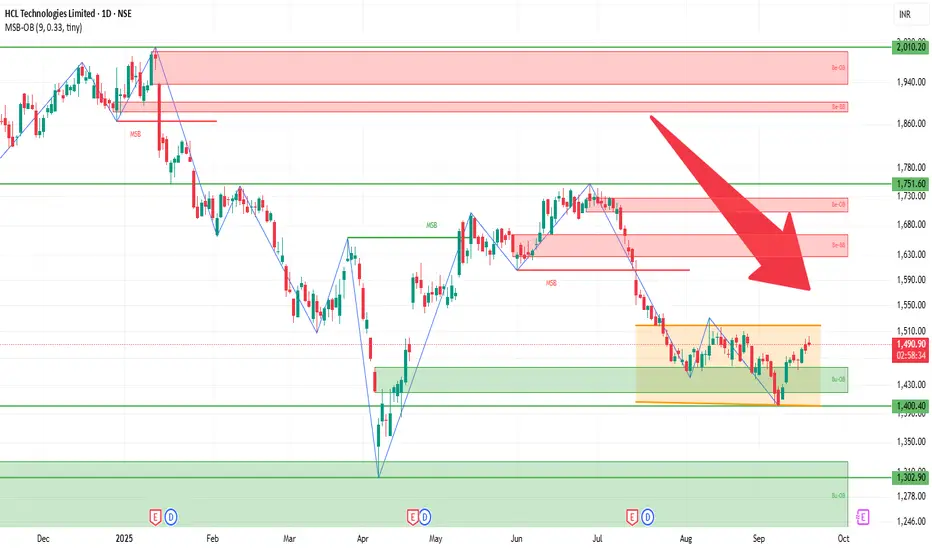
HCLTECH 1D Time frameCurrent Picture
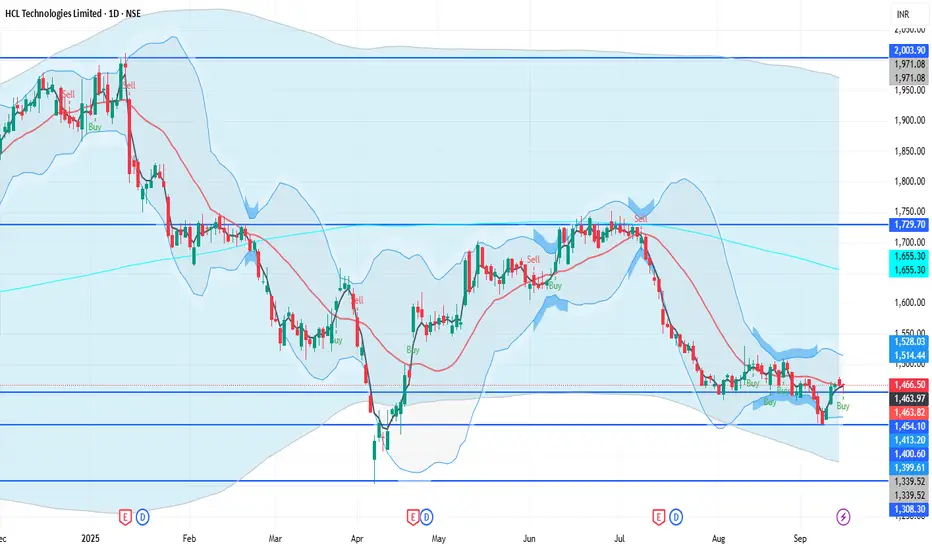
Share price is ~ ₹1,499-₹1,505.
Recent momentum has been upward; the stock is trading above most moving averages—short-, medium-, and long-term.
Indicators are generally favoring continuation of the uptrend.
⚙️ Indicators / Momentum
Many oscillators (RSI, MACD, CCI etc.) are in bullish territory.
Moving averages from 5-, 10-, 20-, 50-, 100- to 200‐day are all aligned bullish (price above them).
Volatility is moderate to high — good movement, but also risk of pullbacks.
📌 Key Support & Resistance Levels
Immediate Resistance: around ₹1,505-₹1,515.
Immediate Support: near ₹1,480-₹1,490.
Stronger support further down around ₹1,400-₹1,420 in case of sharper correction.
✅ Outlook & Risks
Short term bias is bullish as long as price holds above the immediate support (≈ ₹1,480).
If resistance around ₹1,510 breaks decisively, more upside is likely.
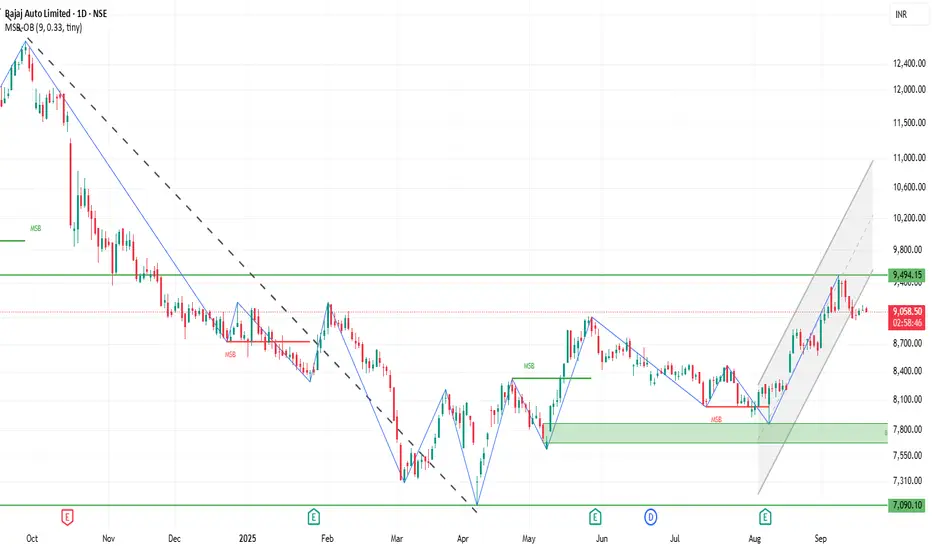
BAJAJ_AUTO 1D Time frameCurrent Snapshot
Price is trading around ₹9,080 – ₹9,100.
Stock is moving above both 50-day and 200-day moving averages, showing a steady uptrend.
It is still below its all-time high, so recovery space remains.
⚙️ Indicators / Momentum
RSI: Neutral, neither overbought nor oversold.
MFI (Money Flow Index): Balanced, showing moderate buying pressure.
Momentum: Stable with a slightly bullish bias.
📌 Key Levels
Immediate Resistance: ₹9,300 – ₹9,400.
Immediate Support: ₹8,800 – ₹9,000.
Stronger Support: Near ₹7,500 on longer-term charts.
✅ Outlook
Trend remains mildly bullish as long as price stays above ₹9,000.
Break above ₹9,400 could push price toward new highs.
Fall below ₹8,800 may lead to deeper correction.
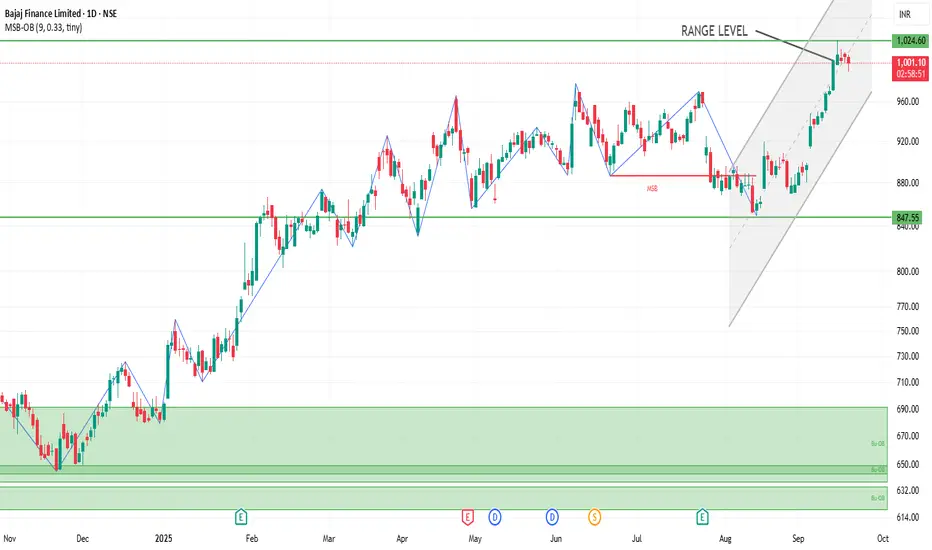
BAJFINANCE 1D Time frameCurrent Overview
Price is trading around ₹995 – ₹1,008.
Recently touched a 52-week high near ₹1,025.
Stock is moving above 50-day and 200-day moving averages, showing a strong uptrend.
⚙️ Indicators (Daily)
RSI (14) → Slightly overbought, but still stable.
MACD & Momentum → Mixed to positive, buyers still in control.
Volume → Strong volume seen near recent highs, showing active participation.
📌 Key Levels
Immediate Resistance: ₹1,010 – ₹1,025 (recent top).
Immediate Support: ₹995 – ₹1,000 (nearby cushion).
Stronger Support: ₹950 – ₹980 zone (50 & 100-day moving averages).
Part 2 Candle Stick Pattern Types of Options
There are two primary types of options:
a) Call Options
Gives the holder the right to buy an underlying asset at a specified strike price.
Investors buy calls when they expect the underlying asset price to rise.
Example: If stock ABC is trading at ₹100 and you buy a call with a strike price of ₹110, you profit if ABC rises above ₹110 plus the premium paid.
b) Put Options
Gives the holder the right to sell an underlying asset at a specified strike price.
Investors buy puts when they expect the underlying asset price to fall.
Example: If stock XYZ is trading at ₹200 and you buy a put with a strike price of ₹190, you profit if XYZ falls below ₹190 minus the premium paid.
Option Pricing and Valuation
Option pricing is crucial in determining potential profits and risks. Two main components influence the price of an option:
a) Intrinsic Value
For a call option: Current Price – Strike Price
For a put option: Strike Price – Current Price
Intrinsic value is zero if the option is out-of-the-money.
b) Time Value
Time value depends on:
Time to Expiry: Longer time increases the premium.
Volatility: Higher volatility increases the likelihood of profitable movements.
Interest Rates: Small effect on option premiums.
Dividends: Impact options on dividend-paying stocks.
c) Black-Scholes Model
Widely used for European-style options pricing.
Formula incorporates current stock price, strike price, time to expiration, volatility, and risk-free rate.
d) Greeks
Measures the sensitivity of option prices to various factors:
Delta: Sensitivity to the underlying asset price.
Gamma: Rate of change of delta.
Theta: Time decay effect.
Vega: Sensitivity to volatility.
Rho: Sensitivity to interest rate changes.
SENSEX 1D Time frameCurrent Status
Sensex Level: 82,623
Change: +594.95 points (+0.73%)
Opening: 81,852
Day’s Range: 81,780 – 82,443
52-Week Range: 71,425 – 85,978
📈 Market Sentiment
Trend: Mildly bullish
Leading Sectors: Auto, Realty, Telecom
Investor Mood: Optimistic, but watching global cues
🔍 Key Levels to Watch
Immediate Support: 81,800 – 81,850
Resistance Zone: 82,400 – 82,500
Psychological Milestone: Breaking above 82,500 may push higher
🧭 Outlook
Sensex is showing positive momentum supported by strong sectors.
Bulls are slightly stronger, but resistance near 82,400–82,500 may cap upside.
A drop below 81,800 could bring downside pressure toward 81,500–81,400.
HDFCBANK 1D Time frameCurrent Stock Price
Current Price: ₹966.85
Day’s Range: ₹965.15 – ₹974.40
52-Week Range: ₹806.50 – ₹1,018.85
Market Cap: ₹14.88 lakh crore
P/E Ratio: 21.03
EPS (TTM): ₹45.97
Dividend Yield: 1.13%
Book Value: ₹339.84
📈 Trend & Outlook
Short-Term Trend: Mildly bullish; stock showing positive movement in recent sessions.
Resistance Levels: ₹974.40 (day’s high), ₹1,018.85 (52-week high).
Support Levels: ₹965.15 (day’s low), ₹950.00 (recent low).
Investor Sentiment: Positive, supported by institutional buying and favorable outlook.
🧭 Key Notes
Stock has room to move higher if it breaks near-term resistance.
If it falls below support, downside may extend to ₹950 or lower.
Overall, bulls are slightly stronger, but watch resistance for profit booking.
BHARTIARTL 1D Time frameCurrent Stock Price
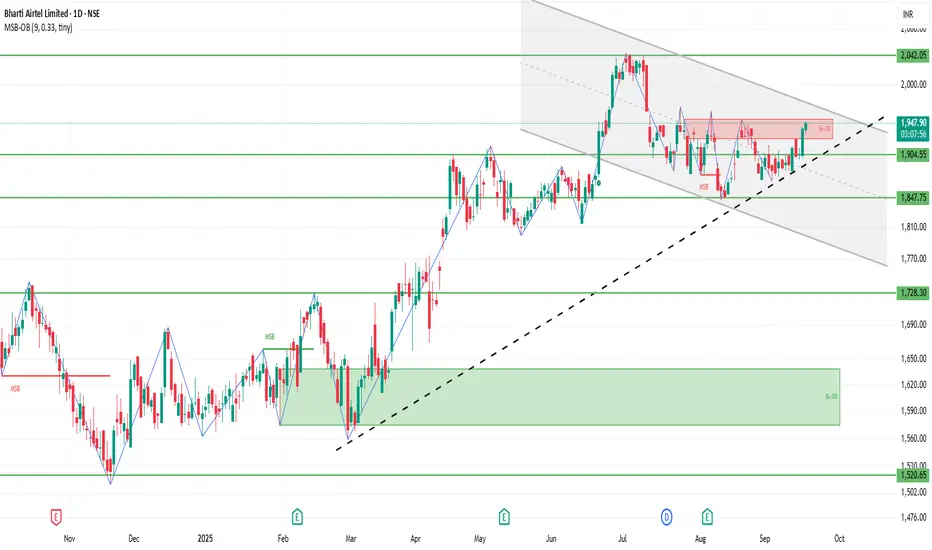
Current Price: ₹1,944.50
Day’s Range: ₹1,933.25 – ₹1,944.85
52-Week Range: ₹1,510.80 – ₹2,045.80
Market Cap: ₹11.63 lakh crore
P/E Ratio (TTM): 31.89
EPS (TTM): ₹60.94
Dividend Yield: 0.82%
Book Value: ₹150.17
📈 Trend & Outlook
Short-Term Trend: Bullish; the stock is trading near its 52-week high, indicating strong investor confidence.
Resistance Levels: ₹1,944.85 (day’s high), ₹2,045.80 (52-week high).
Support Levels: ₹1,933.25 (day’s low), ₹1,910.00 (psychological support).
Investor Sentiment: Positive, with strong institutional interest and favorable analyst outlooks.
🧭 Analyst Insights
Valuation: The stock
Volume Profile & Market Structure AnalysisPart 1: Understanding Market Structure
1.1 What is Market Structure?
Market structure is the framework of price movement. It’s the natural rhythm of the market, made up of highs, lows, trends, ranges, breakouts, and consolidations. Think of it as the skeleton of price action, which reveals how institutions and retail traders interact.
In simple terms, market structure helps us answer:
Is the market trending up, trending down, or consolidating?
Where are liquidity pools likely located?
Which price levels matter most to big players (banks, hedge funds, market makers)?
1.2 The Building Blocks of Market Structure
Swing Highs and Swing Lows
Swing High: A peak where price fails to continue higher.
Swing Low: A valley where price fails to continue lower.
These levels often act as liquidity pools where stop losses gather.
Trends
Uptrend: Higher highs (HH) and higher lows (HL).
Downtrend: Lower lows (LL) and lower highs (LH).
Sideways/Range: Price oscillates between support and resistance with no clear direction.
Break of Structure (BoS)
When price violates the previous high or low, signaling a shift in trend. Example: if price makes a new higher high after a downtrend, that could signal a bullish shift.
Change of Character (ChoCh)
A sudden break in the short-term market rhythm, often the first clue of a potential trend reversal.
Liquidity
Stop orders, pending orders, and clusters of positions sitting around obvious levels (support, resistance, round numbers).
Market makers often push price toward these liquidity zones to fill large institutional orders.
1.3 Institutional vs. Retail Market Structure
Retail traders often focus on patterns (double tops, triangles, flags).
Institutions care about liquidity and order flow. They engineer moves to trap retail positions and accumulate their own.
This is why understanding structure at an institutional level (smart money concepts) is crucial. It explains phenomena like false breakouts, liquidity sweeps, and stop hunts.
Part 2: Understanding Volume Profile
2.1 What is Volume Profile?
Volume Profile is a charting tool that shows how much trading volume occurred at each price level during a given period. Instead of just telling you “when” trades occurred (time-based volume), it tells you “where” trades occurred in price.
The Volume Profile is plotted as a horizontal histogram along the price axis. This makes it easier to see which price zones attracted the most participation from traders and institutions.
2.2 Key Components of Volume Profile
Point of Control (POC)
The price level with the highest traded volume.
Acts as a magnet for price because it represents “fair value.”
Value Area (VA)
The range where about 70% of trading volume occurred.
Split into:
Value Area High (VAH)
Value Area Low (VAL)
High-Volume Nodes (HVN)
Areas of heavy participation (accumulation zones).
Price often consolidates here.
Low-Volume Nodes (LVN)
Areas where price quickly passed through with little trading.
Often act as support/resistance.
2.3 Why Volume Profile Matters
Shows institutional footprints: Institutions need liquidity to fill big orders, so they often transact heavily around POC and HVNs.
Highlights imbalances: When price rejects LVNs, it suggests aggressive buying/selling dominance.
Helps with trade entries & exits: Knowing where fair value is (POC) vs. imbalance zones helps traders time reversals or continuations.
Part 3: Combining Market Structure & Volume Profile
Market Structure tells you the direction of the market, while Volume Profile shows you where the heavy battles occur. Used together, they create a powerful framework.
3.1 Example: Trend Continuation Setup
Step 1: Identify the trend using Market Structure (higher highs, higher lows).
Step 2: Look at Volume Profile to find the POC or Value Area Low (support).
Step 3: If price retraces to VAL while maintaining bullish structure, it’s often a high-probability continuation zone.
3.2 Example: Reversal Setup
Step 1: Notice a Change of Character (ChoCh) in structure.
Step 2: Check if price swept liquidity near an HVN or POC.
Step 3: If Volume Profile shows rejection of that value area, it signals strong reversal potential.
3.3 Liquidity & Volume Synergy
Liquidity pools (stop-loss clusters) often sit near low-volume nodes because price moves fast through those zones.
Institutions push price into these LVNs to trigger stops and then absorb liquidity.
Once filled, price usually returns to HVNs (fair value).
Part 4: Practical Strategies with Volume Profile & Market Structure
4.1 The Volume Profile Rejection Strategy
Identify LVNs.
Wait for price to test and sharply reject.
Enter with trend confirmation from market structure.
4.2 Breakout + Volume Profile Confirmation
If price breaks a structural level (BoS), check if it’s supported by high volume near POC.
Strong volume = genuine breakout.
Weak volume = likely false breakout.
4.3 Value Area Rotations
Price often oscillates between VAH and VAL.
Strategy: Buy near VAL, sell near VAH, exit at POC.
Works best in ranging conditions.
Part 5: Psychological & Institutional Insights
Retail Traps: Market structure fakeouts occur around LVNs, engineered by institutions.
Smart Money Accumulation: Seen in HVNs—where large players accumulate before big moves.
Auction Theory: Markets function as auctions—Volume Profile is essentially a visualization of that auction process.
Conclusion
Volume Profile and Market Structure Analysis are not “magic bullets,” but together they form one of the most institutionally aligned trading frameworks available to retail traders.
Market Structure explains where price wants to go.
Volume Profile explains where participants are most active.
By combining them, traders can anticipate moves with higher probability, avoid traps, and align themselves closer to the behavior of professional market participants.
Ultimately, the goal is to stop thinking like a retail trader chasing indicators and start thinking like a liquidity hunter—someone who understands where the market is auctioning, who’s trapped, and where the next wave of orders is likely to hit.