AI & Technology Sector LeadershipNavigating Innovation, Strategy, and Global Impact
The Artificial Intelligence (AI) and broader technology sectors have become pivotal drivers of the global economy, reshaping industries, markets, and societies. Leadership within this domain is not simply about managing companies; it requires a visionary approach, combining technological expertise, strategic foresight, and an understanding of societal impact. Effective leadership in AI and technology is thus characterized by the ability to navigate rapid innovation, drive sustainable growth, and maintain ethical stewardship over emerging technologies.
1. The Landscape of AI & Technology
The AI and technology sector is remarkably diverse, encompassing areas such as software development, cloud computing, machine learning, robotics, semiconductors, cybersecurity, and more recently, generative AI and quantum computing. The sector’s growth trajectory has been exponential, fueled by data proliferation, advances in computing power, and evolving consumer behavior. According to industry reports, AI alone is expected to contribute trillions to the global economy over the next decade, with applications ranging from autonomous vehicles and precision medicine to personalized marketing and predictive analytics.
This rapid expansion places unique demands on leadership. Unlike traditional industries, technology leaders must contend with disruption as a constant, where yesterday’s innovation quickly becomes obsolete. Successful leaders are those who can anticipate trends, align their organizations with emerging opportunities, and foster a culture of continuous learning and adaptability.
2. Core Traits of Technology Sector Leaders
Leadership in the AI and technology space is defined by several core traits:
a. Visionary Thinking: Technology leaders must envision the future impact of their innovations. For instance, AI leaders are not merely focused on developing algorithms; they must understand how these solutions reshape industries, improve efficiency, and enhance human experiences. Visionary leadership entails strategic foresight, the ability to identify trends, and the courage to pursue transformative projects even amidst uncertainty.
b. Technical Acumen: While leadership encompasses more than technical expertise, understanding the technological underpinnings of one’s business is critical. Leaders must grasp AI architectures, cloud systems, cybersecurity frameworks, or software development processes to make informed strategic decisions, allocate resources efficiently, and guide teams effectively.
c. Agility and Adaptability: The pace of technological change demands leaders who can pivot quickly. Organizations led by adaptive leaders can respond to disruptive innovations, emerging competitors, and shifting regulatory landscapes. Agility also extends to workforce management, ensuring that talent development, recruitment, and reskilling initiatives keep pace with evolving technological demands.
d. Ethical and Responsible Leadership: With AI and technology increasingly influencing society, ethical considerations are central to leadership. Leaders must navigate issues such as data privacy, algorithmic bias, environmental sustainability, and the societal impact of automation. Ethical stewardship enhances public trust, mitigates reputational risks, and aligns technology deployment with human-centered values.
e. Collaborative and Inclusive Leadership: Innovation rarely occurs in isolation. Leaders must foster collaborative environments where cross-functional teams, diverse perspectives, and open communication drive creativity. Inclusivity in hiring, team management, and product development ensures that solutions are equitable and resonate across diverse markets.
3. Strategic Pillars of Leadership in AI & Technology
a. Innovation Management: At the core of technology leadership is the ability to manage and scale innovation. This involves identifying promising research areas, funding exploratory projects, and maintaining a balance between short-term returns and long-term breakthroughs. Companies like Google, Microsoft, and Tesla exemplify how strategic investment in R&D fuels competitive advantage.
b. Talent Acquisition and Development: Human capital is the lifeblood of AI and technology companies. Leaders must attract top engineers, data scientists, and researchers while fostering a culture of continuous learning. Initiatives such as hackathons, mentorship programs, and partnerships with academic institutions enable the cultivation of skills that align with future technological trends.
c. Market and Competitive Strategy: Successful leaders must translate technological capability into market advantage. This includes understanding customer needs, differentiating products, and leveraging partnerships or acquisitions to expand technological capabilities. Strategic decisions in AI, for example, may involve whether to focus on enterprise applications, consumer-facing solutions, or industry-specific platforms.
d. Regulatory and Policy Navigation: AI and technology sectors operate under increasing regulatory scrutiny. Leaders must proactively engage with policymakers, comply with evolving regulations, and anticipate geopolitical implications of technology deployment. Cybersecurity, data governance, and AI safety regulations require a proactive approach to risk management and corporate responsibility.
4. Case Studies in Leadership
a. Sundar Pichai – Alphabet Inc.: Under Pichai’s leadership, Alphabet has maintained dominance in AI and cloud computing while expanding into new arenas such as autonomous vehicles and quantum computing. Pichai exemplifies a balance of technical understanding, visionary strategy, and global market navigation.
b. Satya Nadella – Microsoft: Nadella’s tenure is a testament to transformative leadership. By pivoting Microsoft toward cloud computing, AI, and enterprise solutions, he revitalized the company’s growth trajectory. Nadella emphasized culture, collaboration, and inclusivity, demonstrating that technological leadership is inseparable from organizational culture.
c. Jensen Huang – NVIDIA: Huang has led NVIDIA to become a global leader in AI hardware, leveraging GPU technology to drive advances in machine learning. His focus on innovation, market foresight, and ecosystem-building underscores the importance of aligning technological capability with strategic market positioning.
5. Challenges and Future Directions
a. Rapid Technological Change: Leaders must continuously monitor emerging technologies and assess their relevance. From AI generative models to quantum computing, staying ahead of technological curves is a constant challenge.
b. Ethical Dilemmas: As AI systems influence decision-making in finance, healthcare, and law enforcement, leaders face heightened scrutiny over fairness, transparency, and accountability. Navigating these ethical dilemmas is increasingly central to leadership effectiveness.
c. Global Competition and Geopolitics: Technology leadership is also shaped by international dynamics. Trade restrictions, intellectual property disputes, and differing regulatory frameworks require leaders to adopt globally informed strategies.
d. Workforce Evolution: Automation and AI are reshaping job roles, creating opportunities and displacing traditional functions. Leaders must manage workforce transitions, reskill employees, and foster a culture that embraces change.
6. The Role of AI in Leadership Itself
Interestingly, AI is also transforming leadership practices. AI-driven analytics and predictive models enhance decision-making, optimize operations, and improve customer insights. Leaders who leverage AI for strategic foresight, risk management, and organizational efficiency gain a competitive advantage. However, reliance on AI also requires caution to avoid overdependence on algorithms at the expense of human judgment and ethical considerations.
7. Conclusion
Leadership in the AI and technology sector is multidimensional, combining vision, technical expertise, ethical stewardship, and strategic agility. It is not simply about producing innovative products but shaping the trajectory of industries and societies. Leaders must navigate rapid technological change, global competition, regulatory complexities, and ethical dilemmas while fostering inclusive and innovative organizational cultures.
The future of AI and technology leadership will increasingly demand a synthesis of human and artificial intelligence capabilities, where leaders not only leverage technological tools but also ensure that their applications align with societal values and global progress. Those who can balance innovation with responsibility, agility with strategy, and technical insight with ethical foresight will define the next era of technological advancement, driving growth, transformation, and sustainable impact worldwide.
Technologystocks
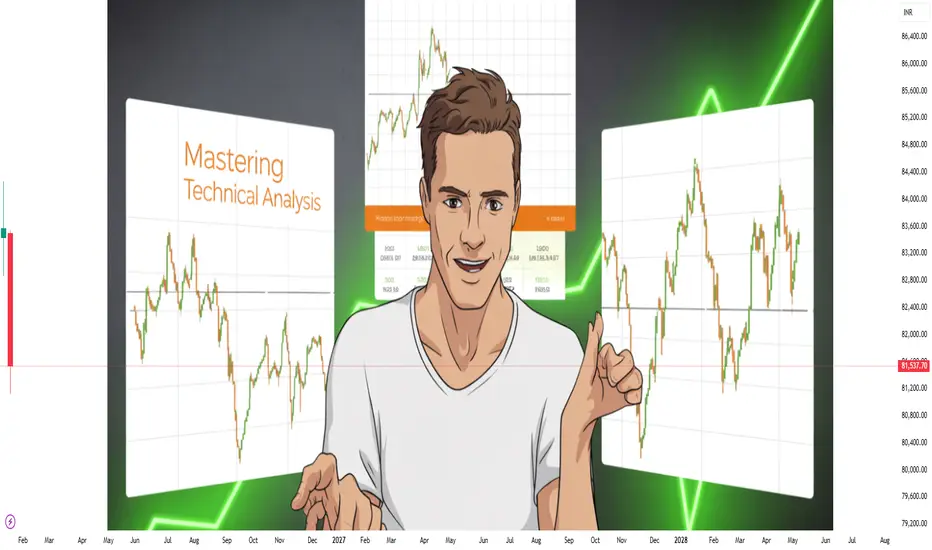
Mastering Technical Analysis1. Understanding the Foundation of Technical Analysis
Technical analysis is based on three core assumptions:
Price discounts everything – All known information, including fundamentals, news, and market sentiment, is already reflected in the price.
Prices move in trends – Markets tend to trend, and once a trend is established, it is more likely to continue than reverse.
History tends to repeat itself – Human behavior in markets is consistent, leading to recurring patterns.
Mastering technical analysis starts with internalizing these principles and learning to trust price behavior over opinions or predictions.
2. Market Structure and Price Action
At the heart of technical analysis lies price action—the direct study of price movement without excessive indicators. Understanding market structure involves identifying:
Higher highs and higher lows (uptrend)
Lower highs and lower lows (downtrend)
Sideways or range-bound markets
Support and resistance levels are crucial. Support is where demand overcomes supply, while resistance is where selling pressure dominates. These levels often act as decision zones where price reacts sharply.
Candlestick analysis enhances price action reading. Patterns such as doji, engulfing, hammer, and shooting star reveal shifts in market sentiment. Mastery comes from observing these candles in context—not in isolation.
3. Chart Patterns and Their Psychology
Chart patterns visually represent market psychology. Some of the most powerful patterns include:
Trend continuation patterns: flags, pennants, rectangles
Reversal patterns: head and shoulders, double top/bottom, rounding formations
Consolidation patterns: triangles and ranges
Each pattern reflects a battle between buyers and sellers. For example, a head and shoulders pattern signals weakening buying pressure after repeated attempts to push price higher. Mastery lies in recognizing these patterns early and confirming them with volume and price behavior.
4. Technical Indicators: Tools, Not Crutches
Indicators are mathematical calculations derived from price and volume. While useful, over-reliance can create confusion. Mastery means choosing a few complementary indicators:
Trend indicators: Moving averages, ADX
Momentum indicators: RSI, MACD, Stochastic
Volume indicators: Volume profile, OBV
Volatility indicators: Bollinger Bands, ATR
For example, RSI helps identify overbought and oversold conditions, but it works best when aligned with trend direction. Indicators should confirm what price action already suggests, not contradict it.
5. Time Frame Analysis and Top-Down Approach
Professional traders analyze multiple time frames. This top-down approach begins with higher time frames to identify trend direction and key levels, then moves to lower time frames for precise entries.
Higher time frames show trend and structure
Lower time frames show entry and exit precision
This alignment reduces false signals and improves consistency. Mastery involves respecting the dominant trend while timing trades efficiently.
6. Volume and Market Participation
Volume validates price movement. A breakout supported by strong volume has higher reliability than one without participation. Key volume concepts include:
Volume expansion during breakouts
Volume divergence during trend exhaustion
Accumulation and distribution phases
Understanding volume reveals whether institutions are entering or exiting positions. Master traders follow volume because it reflects real commitment, not just price fluctuations.
7. Risk Management: The Core of Mastery
No technical analysis system works without solid risk management. This includes:
Defining risk per trade (usually 1–2% of capital)
Using stop-loss orders logically (below support or above resistance)
Maintaining favorable risk-reward ratios (minimum 1:2)
Mastering technical analysis is less about winning every trade and more about controlling losses. Consistency in risk management separates professionals from amateurs.
8. Trading Psychology and Discipline
Even the best analysis fails without emotional control. Fear, greed, and impatience distort decision-making. Master traders develop:
Discipline to follow rules
Patience to wait for confirmation
Emotional neutrality after wins and losses
A trading journal is a powerful tool. Recording setups, emotions, and outcomes helps identify behavioral patterns and refine strategy over time.
9. Backtesting and Continuous Improvement
Technical mastery requires constant refinement. Backtesting strategies on historical data builds confidence and highlights weaknesses. Markets evolve, and strategies must adapt.
Learning from losses, adjusting parameters, and staying aligned with market conditions ensure long-term growth. Mastery is not a destination—it is a continuous learning process.
10. Integrating Technical Analysis with Market Context
While technical analysis focuses on charts, awareness of broader market context enhances accuracy. Economic events, sector trends, and inter-market correlations influence price behavior. A technically strong setup aligned with favorable market conditions carries higher probability.
Conclusion
Mastering technical analysis is a blend of art and science. It requires deep understanding of price behavior, disciplined risk management, emotional control, and continuous learning. There is no perfect indicator or pattern, but there is consistency in approach. Traders who respect probability, manage risk, and stay adaptable ultimately succeed. Technical analysis is not about predicting markets—it is about preparing for them with clarity, structure, and confidence.
L&T Technology has given breakout | Now it will be unstoppable!!Hello Traders and Investors, i hope you all will be doing good.
I have brought an analysis on L&T Technology Services, i hope it will be beneficial to you guy's,
So let's start:-
As we all know Nifty IT was not performing well since last one year, but now it is accelerating,,i think this momentum will take all good fundamentally stocks to their all time highs. today also Nifty IT roaring with 611 points up(+1.97%) as of now.
I already have posted analysis of Tech Mahindra and similar kind of pattern we are seeing in this L&T Technology also. Hero Also we have seen neat and clean breakout on chart. In this also earlier trend was in Downtrend then Accumulation phase and now it has given breakout of Accumulation phase so now the trend has shift ot Uptrend. We will get confirmation in some few coming sessions.
Some Technical important Levels for L&T Technology Services:-
Best Entry Point to go long in it will be 4050-4120. Now it is trading at 4111.
Keep stop loss at 3908
Targets will be 4311/4684
Price is above 200-D EMA (Means Trend is Positive)
MACD is giving bullish crossover (Means Trend is positive)
Indicator and Price Action showing bullish View in this stock.
Some other Important things about this Stock:-
₹ 43,383 Cr.
Current Price
₹ 4,106
High / Low
₹ 4,319 / 3,076
Stock P/E
38.1
Book Value
₹ 469
Dividend Yield
1.10 %
ROCE
32.8 %
ROE
25.0 %
Face Value
₹ 2.00
Debt
₹ 454 Cr.
EPS
₹ 111
PEG Ratio
2.16
Promoter holding
73.8 %
Intrinsic Value
₹ 2,622
Pledged percentage
0.00 %
EVEBITDA
23.0
PROS
Company is almost debt free.
Company has a good return on equity (ROE) track record: 3 Years ROE 23.7%
Company has been maintaining a healthy dividend payout of 38.0%
CONS
Stock is trading at 8.90 times its book value.
Stock is Giving opportunity for long term investment also at this levels. So trade carefully and always follow discipline in trading.
Disclaimer:- Please always do your own analysis or consult with your financial advisor before taking any kind of trades.
Dear traders, If you like my work then do not forget to hit like and follow me, and guy's let me know what do you think about this idea in comment box, i would be love to reply all of you guy's.
Thankyou.
This tech hardware CMO could be the next turnaround story!NSE:OPTIEMUS
Technicals:
- Stock price has cleared 3 resistance zones in 3 days and broken out of a long consolidation
- Stock is nearing its all time high resistance zone with strength
- Stock price is showing high relative strength compared to NIFTY
Fundamentals:
- YoY data are bleak with low growth numbers
- However quarterly financials are encouraging with growing sales, margins and earnings
Business:
- Company produces wearables for brands such as Noise and Harman which are well known Gen Z brands
- They will commission new factory for wearables in Noida by December-end as part of its strategy to expand capacity to meet growing demand for smartwatches and truly wireless stereo (TWS) earbuds
- They intend to expand into batteries, displays, and microphone contract manufacturing
Source: Screener.in, Tickertape.in, LiveMint
Disclaimer: Not a recommendation. Only for research and education purposes.
Range Breakout Allsec TechlogyRange Breakout
Buy Allsec Technologies
Closing Price - 451.95
SL - 360 (WCB)
Target - 650/715/800
SWKS BUY 03.09.2019BUY signal at 75.27 $
Skyworks Solutions Inc. designs, develops, manufactures and markets semiconductor products, including intellectual property. The Company's analog semiconductors are connecting people, places, and things, spanning a number of new and unimagined applications within the automotive, broadband, cellular infrastructure, connected home, industrial, medical, military, smartphone, tablet and wearable markets. Its geographical segments include the United States, Other Americas, China, Taiwan, South Korea, Other Asia-Pacific, Europe, Middle East and Africa. This company develops 5G technology.
If you want to see more history of this strategy, I will able to show you if you request me.
ATTENTION this strategy may has downtrend about 10-15%, so you can split your buy order, that you have not big downtrend.
__________________________________________________________________________
You can use the signals independently or like indicator of trends together with other indicators in your trading strategy.
Know that the success of your strategy that based on those signals depends from your money management and the additional conditions that you make in these strategies.
You use these signals inside your strategies at your own risk.
The chart shows the last trades on the product + the last signal.
I have several strategies for different products, and I want to show you proof of it works on history, and you will be able to see it, when returns to that profile.
Therefore, subscribe and watch for that profile.
The signals rare but useful.
Longs Initiated @ 2407, Reversal too confirmStrategy: Buy @ 2407 and add more for 2600+ target
------------------------------
TCS 0.25% was on uptrend and correcting it's uptrend after hitting 2700 resistance zone . Correction was on running flat correction which was supposed to be completed below 2100 levels. Post 2100 support reach, script was able to jump and tested 2550, We are calling it's five wave impulse move in nested manner. 2407 can provide good support level here to go long.
Long Tech Mahindra For Target 455 And 480TechM has Probably Made a Double bottom Around 405 to 407 Levels on Weekly Charts.
Daily Trend has Change to upwards. Closing Above 456 would take him further to 483 Levels ( 50% of Swing Range )
Its a Worth Buy and accumulate at Current level From 440 keeping a Exit Level @ below 427 on Closing Basis.
A Short to Medium Term Trade.