GBP/USD Signals Trend Shift – Impulsive Upside ExpectedThe chart shows that GBP/USD has completed a full W–X–Y corrective pattern, with the final wave (y) and its C wave forming a clean bottom near the long-term support line. From that low, price has started a strong upward move, which looks like the beginning of a new impulsive Wave 1. The current pullback toward the 0.382–0.618 Fibonacci zone is typical behavior for a Wave 2 retracement before the next strong rally. As long as the price stays above the invalidation level at 1.30094 (the wave (y) bottom), the bullish scenario remains valid. This suggests that GBP/USD is preparing for a larger Wave 3 push to the upside.
Stay tuned!
@Money_Dictators
Thank you :)
Trade
RAJESHEXPO 1 Day Time Frame 📌 Current Price (Approx Intraday)
Price range today: ~ ₹187.72 – ₹211.85
Recent last close/quoted prices vary around ₹190–₹206 depending on data source — markets fluctuate intraday.
📍 Key Daily Pivot & Levels (1‑Day View)
🔹 Central Pivot
Daily Pivot: ~ ₹224.34 (near central)
🔸 Resistance Levels
(These act as potential targets on the upside)
R1: ~ ₹257.74
R2: ~ ₹277.61
R3: beyond ₹277+ (higher trend resistances)
(Standard pivot levels from pivot calculators)
🔹 Support Levels
(Key downside support zones possible today)
S1: ~ ₹210.81 – ₹224.34 (CPR midpoint)
S2: ~ ₹190.94 – ₹210.81
S3: ~ ₹177.41
(Standard pivot supports from daily pivot analysis)
⚡ Note: Because the market price today is trading significantly below the central pivot (~₹224+) and within ₹187–₹211, the immediate trading levels of interest for intraday are mostly between:
📌 Support: ~ ₹190 → ₹177
📌 Resistance: ~ ₹211 → ₹257+
Part 10 Trade Like Institutions The Premium and How It Works
To acquire an option, the buyer pays a premium to the seller (writer).
Premium is determined by:
underlying price
strike price
time to expiration
volatility
interest rates
For buyers:
Maximum loss = premium paid
Potential profit = high, theoretically unlimited for calls
For sellers (writers):
Maximum profit = premium received
Potential loss = very large or unlimited
This imbalance is why selling options requires margin and expertise.
Candle Pattern What Are Candlestick Patterns?
Candlestick patterns originate from Japanese rice traders and represent the open, high, low, and close of price. They are especially useful for identifying short-term reversals, continuations, and market indecision.
Common Mistakes Traders Make
Trading patterns without confirmation
Ignoring higher timeframes
Overtrading every pattern
Forgetting risk management
Ignoring market context and trend
Patterns work best when aligned with:
Trend direction
Support & resistance
Volume
Broader market sentiment
Chart Patterns What Are Chart Patterns?
Chart patterns are recognizable formations created by price movements on a chart. They develop over time and help traders identify trends, reversals, or continuation of trends. Chart patterns are usually formed by support and resistance levels, trendlines, and consolidation phases.
Types of Chart Patterns
Chart patterns are broadly classified into:
Reversal Patterns
Continuation Patterns
Bilateral (Neutral) Patterns
Small Account ChallengesNavigating the Market with Limited Capital
Trading or investing with a small account is one of the most demanding yet most common starting points for market participants. Whether in stocks, forex, commodities, or crypto, a small account magnifies every decision, emotion, and mistake. While the markets offer equal access to everyone, the reality is that account size significantly influences strategy, psychology, risk management, and growth potential. Understanding the challenges of a small account is essential to surviving early stages and building a sustainable path toward long-term success.
Limited Margin for Error
The biggest challenge of a small account is the lack of room for mistakes. A few bad trades can cause disproportionate damage. For example, a 10% loss on a ₹10,000 account feels manageable, but psychologically it can be devastating because recovery requires a higher percentage gain. Unlike large accounts, where losses can be absorbed and diversified across multiple positions, small accounts are fragile. This forces traders to be extremely precise with entries, exits, and position sizing—skills that usually take time and experience to develop.
Position Sizing Constraints
Small accounts face strict position sizing limitations. Many quality trades require a certain stop-loss distance to respect market structure. However, with limited capital, traders often feel compelled to reduce stop-loss size unrealistically or increase position size beyond safe limits just to make the trade “worth it.” This leads to overleveraging, premature stop-outs, or catastrophic losses. The challenge is balancing proper risk management with the desire to generate meaningful returns from a small base.
Overtrading and the Urge to Grow Fast
A common psychological trap for small account traders is overtrading. Because profits appear small in absolute terms, traders feel pressure to trade frequently, chase volatility, or jump into low-quality setups. This behavior is driven by impatience rather than strategy. Overtrading increases transaction costs, emotional fatigue, and exposure to random market noise. Instead of compounding steadily, the account often fluctuates wildly, making consistent growth nearly impossible.
Emotional Pressure and Psychological Stress
Small accounts carry intense emotional weight. Every trade feels important, sometimes even “make or break.” This pressure can cause fear of pulling the trigger, hesitation at key moments, or panic exits. On the other hand, a few winning trades may create overconfidence, leading to reckless risk-taking. Emotional swings are sharper because the account represents hard-earned capital and often personal savings. Managing psychology becomes as important—if not more important—than technical or fundamental analysis.
High Impact of Costs and Fees
For small accounts, brokerage fees, spreads, commissions, and taxes have a much larger relative impact. A trade that looks profitable on paper may yield minimal net gains after costs. Frequent trading further amplifies this issue. In markets like forex or crypto, spreads alone can eat into profits significantly. This makes strategy selection critical; traders must focus on setups with favorable risk-reward ratios rather than small, frequent scalps that may not survive costs.
Limited Diversification Opportunities
Diversification is a cornerstone of risk management, but small accounts struggle with it. Capital constraints often force traders to concentrate on one or two instruments or strategies. While focus can be beneficial, it also increases exposure to specific market conditions. If that instrument enters a choppy or unfavorable phase, the account suffers. Large accounts can rotate across sectors, assets, or time frames, but small accounts must rely heavily on timing and discipline.
Leverage: A Double-Edged Sword
Leverage is often seen as a solution for small accounts, but it is also one of their greatest threats. While leverage allows traders to control larger positions, it magnifies losses faster than gains. Many small accounts are wiped out not because the strategy was wrong, but because leverage was misused. The challenge lies in using leverage responsibly—as a tool, not a crutch—while respecting strict risk limits.
Information Overload and Strategy Confusion
Small account traders are frequently overwhelmed by too much information. Social media, trading courses, tips, and signals promise quick growth and “sure-shot” strategies. This creates confusion, constant strategy switching, and lack of consistency. A small account does not have the luxury to experiment endlessly. Every strategy change resets the learning curve, leading to losses that could have been avoided with patience and focus.
Slow Compounding and Unrealistic Expectations
One of the hardest realities to accept is that small accounts grow slowly when managed properly. Safe risk percentages (1–2% per trade) produce modest gains in the beginning. This clashes with unrealistic expectations of doubling accounts quickly. The challenge is mental: respecting the process, trusting compounding, and understanding that survival and consistency matter more than short-term growth.
Turning Challenges into Strengths
Despite these difficulties, small accounts also offer valuable advantages. They force traders to develop discipline, precision, and emotional control early. Losses, while painful, are usually smaller in absolute terms and serve as affordable lessons. Traders who successfully grow small accounts often build stronger habits than those who start large. The key is shifting the mindset from “making money fast” to building skill, consistency, and capital protection.
Conclusion
Small account challenges are real, intense, and unavoidable for most traders. Limited capital magnifies risk, emotions, and mistakes, while restricting flexibility and diversification. However, these same constraints can shape disciplined, resilient, and skilled market participants. Success with a small account is not about aggressive growth or constant action—it is about patience, risk control, psychological mastery, and long-term thinking. Those who respect these principles may not grow fast, but they grow strong, laying a foundation for sustainable success in the markets.
Part 2 Candle Patterns Profit Potential in Buying Options
a) Unlimited Upside in Call Buying
Max profit can be extremely high if stock surges.
b) High Return on Small Investment
Low premium gives high leverage.
Example: ₹5,000 investment generating ₹25,000 profit.
c) Best for Momentum Trades
Short-term sharp moves create strong premium expansion.
d) Limited Risk
Maximum loss = premium paid.
This helps manage losses clearly.
e) News-Based Profit Opportunity
Earnings announcements
Budget events
Interest rate decisions
Mastering Complex Techniques for Consistent Market ProfitsAdvanced Option Strategies
Options trading goes far beyond simple call buying or put selling. While basic strategies help beginners understand direction-based trades, advanced option strategies are designed for experienced traders who want to profit from volatility, time decay, range-bound markets, and risk asymmetry. These strategies focus not just on predicting price direction, but on managing probability, risk, and reward with precision.
This guide explores advanced option strategies in a structured way, helping you understand when to use them, how they work, and why professionals rely on them.
1. The Philosophy Behind Advanced Option Strategies
Advanced option strategies are built on three core option variables, often called the Option Greeks:
Delta – sensitivity to price movement
Theta – impact of time decay
Vega – sensitivity to volatility
Professional traders don’t trade opinions; they trade probabilities. Advanced strategies aim to:
Control downside risk
Benefit from time decay
Capture volatility changes
Maintain flexibility under different market conditions
These strategies are especially effective in sideways, low-volatility, or event-driven markets, where simple directional trades fail.
2. Multi-Leg Option Structures
Advanced strategies typically involve multiple option legs (combination of calls and puts). These structures allow traders to:
Reduce capital required
Hedge risk efficiently
Improve probability of success
Generate steady income
Unlike naked options, multi-leg strategies define risk upfront, making them suitable for disciplined traders.
3. Iron Condor Strategy
The Iron Condor is one of the most popular advanced strategies for range-bound markets.
Structure:
Sell one out-of-the-money call
Buy one higher strike call
Sell one out-of-the-money put
Buy one lower strike put
Market View: Neutral
Profit Source: Time decay (Theta)
Risk: Limited on both sides
This strategy works best when:
Volatility is high and expected to fall
The underlying asset stays within a defined range
No major news or events are expected
Iron Condors are widely used by institutional traders to generate consistent income.
4. Butterfly Spread Strategy
A Butterfly Spread is designed for situations where the trader expects very low volatility and price consolidation.
Structure (Call Butterfly):
Buy one lower strike call
Sell two at-the-money calls
Buy one higher strike call
Market View: Neutral
Profit Zone: Near the middle strike
Risk: Very low, predefined
Butterflies offer:
High reward-to-risk ratio
Low capital requirement
Precision-based trading
However, timing is critical—this strategy performs best close to expiry.
5. Calendar Spread (Time Spread)
Calendar spreads exploit differences in time decay between near-term and far-term options.
Structure:
Sell a near-expiry option
Buy a far-expiry option at the same strike
Market View: Mild directional or neutral
Profit Source: Faster decay of short-term option
Best Environment: Low volatility, stable price
This strategy is commonly used before:
Earnings announcements
Economic events
Policy decisions
Traders benefit when the underlying price stays close to the strike while time passes.
6. Ratio Spread Strategy
A Ratio Spread involves unequal numbers of bought and sold options.
Example:
Buy one call
Sell two higher strike calls
Market View: Moderately bullish or bearish
Risk: Can be unlimited if unhedged
Ratio spreads are used when traders expect:
Controlled price movement
Volatility contraction
Strong resistance or support levels
This strategy demands active monitoring and deep understanding of risk.
7. Backspread Strategy
The Backspread is a volatility-focused strategy, often used ahead of major market moves.
Structure (Call Backspread):
Sell one at-the-money call
Buy two out-of-the-money calls
Market View: Strong directional move expected
Profit Source: Volatility expansion
Risk: Limited
Backspreads are ideal when:
Volatility is low but expected to rise sharply
Big news or events are approaching
Traders want asymmetric payoff
This strategy can deliver explosive profits if the market moves aggressively.
8. Diagonal Spread Strategy
Diagonal spreads combine different strikes and different expiries, offering more flexibility than calendar spreads.
Benefits:
Directional bias with time decay advantage
Adjustable risk profile
Better control over delta and theta
Traders use diagonal spreads for slow trending markets, where price moves steadily over time.
9. Advanced Volatility-Based Strategies
Professional traders focus heavily on volatility rather than direction.
Key volatility strategies include:
Long straddle/strangle (volatility expansion)
Short straddle/strangle (volatility contraction with strict risk control)
Vega-neutral portfolios
Understanding Implied Volatility (IV) is crucial:
Buy options when IV is low
Sell options when IV is high
This single principle separates amateurs from professionals.
10. Risk Management in Advanced Option Trading
No advanced strategy works without disciplined risk management.
Key rules:
Always define maximum loss before entry
Avoid over-leveraging
Adjust positions proactively
Exit when probabilities shift
Advanced traders treat option strategies like business setups, not gambling tools.
11. Common Mistakes Traders Make
Ignoring volatility environment
Holding short options into major events
Overtrading complex structures
Focusing only on profit, not probability
Simplicity with discipline often outperforms unnecessary complexity.
12. Final Thoughts: Becoming a Professional Option Trader
Advanced option strategies are not about predicting markets perfectly. They are about positioning intelligently based on probability, volatility, and time.
By mastering these strategies, traders can:
Generate income in sideways markets
Protect capital during uncertainty
Achieve consistent long-term performance
The real edge lies not in the strategy itself, but in execution, patience, and risk control. When used correctly, advanced option strategies transform options trading from speculation into a structured, professional trading approach.
Part 11 Trading Master ClassRole of Time and Volatility
Two critical forces dominate option trading:
Time Decay (Theta):
As expiry approaches, the time value of an option erodes. Option sellers often benefit from this decay, especially in sideways markets.
Implied Volatility (IV):
IV reflects market expectations of future price movement. High IV means expensive options; low IV means cheaper options. Buying options in low IV and selling in high IV is a common professional approach.
YESBANK 1 Day Time Frame 📊 Daily Time Frame Levels (1 D)
Current approximate price: ~₹21.7–₹22.7 (varies by source)
🔹 Pivot & Daily Reference Level
Daily pivot (Classic): ~ ₹22.58–₹22.60
🧱 Resistance Levels
Immediate resistance: ~ ₹24.00–₹24.03 (1st major upside barrier)
Above that, psychologically significant levels are near recent 52-week highs around ₹24.30
📉 Support Levels
Short-term support: ~ ₹22.22
Medium/stronger support: ~ ₹20.97
Lower support zones (broader view): ~ ₹19.17–₹18.50 (from broader multi-period analysis)
📈 Technical Indicator Snapshot (Daily)
RSI appears mid-range (neutral/slightly weak) on some chart summaries (~40–46), indicating no strong overbought/oversold condition on the daily chart.
Some aggregators still show a general sell bias based on moving averages and oscillator signals (especially if price < longer-term MAs).
🧠 How Traders Often Use These Levels
Bullish scenario: A sustained break above ₹24.00–₹24.30 with volume could target higher levels.
Bearish scenario: Failure below ₹20.97/₹20 may open the way toward ₹19–₹18 region.
Pivot plays: Near daily pivot (~₹22.58), intraday traders often watch for bounces or breaks for direction.
Option Trading Strategies for Smart Market Participation1. What Are Option Trading Strategies?
Option trading strategies are planned combinations of call and put options.
They are designed to control risk, reduce cost, and improve probability.
Each strategy matches a specific market condition—bullish, bearish, neutral, or volatile.
The goal is not prediction, but risk-adjusted profitability.
2. Core Building Blocks of Options
Call Option: Profits when price moves upward.
Put Option: Profits when price moves downward.
Strike Price: Pre-decided buy/sell price.
Expiry Date: Time limit for the option.
Premium: Cost paid or received for the option.
3. Bullish Option Strategies (Rising Market)
Long Call
Buy a call option when expecting strong upside.
Risk is limited to premium; profit potential is unlimited.
Bull Call Spread
Buy lower strike call, sell higher strike call.
Lower cost and controlled risk with limited profit.
Cash-Secured Put
Sell put to earn premium while planning to buy stock at lower price.
4. Bearish Option Strategies (Falling Market)
Long Put
Buy put when expecting sharp downside.
Limited risk with high profit potential.
Bear Put Spread
Buy higher strike put, sell lower strike put.
Ideal for moderate downtrend with reduced cost.
Call Credit Spread
Sell call spread to benefit from falling or stagnant prices.
5. Sideways Market Strategies (Range-Bound Market)
Covered Call
Hold stock and sell call for regular income.
Iron Condor
Sell out-of-the-money call and put spreads.
Profits from low volatility and time decay.
Short Strangle (Advanced)
Sell OTM call and put when market is stable.
6. Volatility-Based Strategies (Big Move Expected)
Long Straddle
Buy call and put at same strike.
Profits from strong movement in any direction.
Long Strangle
Buy OTM call and put; cheaper than straddle.
Calendar Spread
Profit from changes in volatility and time decay.
7. Option Selling Strategies (Time Decay Advantage)
Sellers benefit from Theta (time decay).
Credit Spreads offer limited risk with consistent income.
High probability strategies when market remains stable.
Requires strong risk management and margin control.
8. Role of Option Greeks in Strategies
Delta: Measures price sensitivity.
Theta: Measures time decay (favors sellers).
Vega: Measures volatility impact.
Gamma: Measures speed of Delta change.
Greeks help select, manage, and adjust strategies.
9. Risk Management in Option Trading
Always use defined-risk strategies.
Risk only 1–2% of capital per trade.
Avoid naked selling without protection.
Set predefined exit rules.
Adjust positions instead of panicking.
10. Capital Allocation & Position Sizing
Diversify across multiple strategies and expiries.
Avoid all-in trades.
Keep cash reserve for adjustments.
Focus on consistency, not jackpots.
11. Psychological Discipline in Options
Small frequent losses are normal.
Avoid revenge trading.
Follow strategy logic, not emotions.
Patience and discipline beat prediction skills.
12. Adapting Strategies to Market Conditions
High volatility → Prefer option selling after spike.
Low volatility → Buy options or calendar spreads.
Trending market → Directional spreads.
Sideways market → Income strategies.
13. Beginner vs Professional Approach
Beginners should start with spreads and hedged strategies.
Professionals focus on probability, risk-reward, and consistency.
Strategy selection matters more than market prediction.
14. Key Advantages of Option Trading Strategies
Limited and defined risk.
Profit in any market condition.
Lower capital requirement.
Multiple ways to adjust losing trades.
Income generation opportunity.
15. Final Conclusion
Option trading strategies are not about complexity—they are about structure, discipline, and probability. When used correctly, they allow traders to control risk, adapt to market behavior, and build consistent returns over time. Success in options comes from understanding strategy logic, respecting risk, and maintaining emotional discipline. Master these elements, and option trading becomes a powerful weapon in your trading journey.
Part 12 Trading Master Class Call Option Explained
A Call Option gives the buyer the right to buy the underlying asset at a fixed price (strike price) before or on expiry.
Example:
If NIFTY is trading at 22,000 and you buy a 22,200 Call Option, you expect the market to move up.
If NIFTY goes to 22,400 → You profit
If NIFTY stays below 22,200 → Option may expire worthless
Maximum loss = Premium paid
Profit potential = Unlimited
Call options are generally used when traders are bullish on the market.
Derivatives Trading SecretsMastering Leverage, Risk, and Market Psychology
Derivatives trading is often seen as a complex and high-risk area of financial markets, reserved only for professionals. However, when understood correctly, derivatives can become powerful tools for profit generation, risk management, and strategic positioning. The real “secrets” of derivatives trading are not hidden formulas or insider tricks, but a deep understanding of leverage, disciplined risk control, market structure, and trader psychology. This article раскрыts the core principles that successful traders consistently apply to gain an edge in derivatives markets.
Understanding the True Nature of Derivatives
Derivatives are financial contracts whose value is derived from an underlying asset such as stocks, indices, commodities, currencies, or cryptocurrencies. Common derivatives include futures, options, and swaps. The first secret of derivatives trading is recognizing that these instruments amplify both opportunity and risk. Because derivatives often require only a margin instead of full capital, traders gain leverage. This leverage magnifies profits, but it also magnifies losses with equal force.
Many beginners focus only on potential returns and overlook how quickly losses can accumulate. Successful traders, on the other hand, treat derivatives as precision instruments. They understand that derivatives are not investments in the traditional sense but tactical tools designed for specific objectives such as hedging, speculation, or arbitrage.
Leverage Is a Double-Edged Sword
One of the most important derivatives trading secrets is knowing how to use leverage responsibly. High leverage is attractive because it allows traders to control large positions with relatively small capital. However, excessive leverage is the primary reason most derivative traders fail.
Professional traders rarely use maximum leverage. Instead, they calculate position size based on acceptable risk per trade, usually limiting losses to a small percentage of total capital. They understand that survival comes first. In derivatives trading, staying in the game long enough is more important than chasing extraordinary gains in a single trade.
The secret lies in controlled leverage—using just enough to enhance returns while maintaining enough margin to withstand normal market volatility.
Risk Management Is the Real Edge
If there is one universal truth in derivatives trading, it is that risk management matters more than strategy. Many traders spend years searching for the perfect setup while ignoring basic risk principles. Successful traders think in probabilities, not certainties.
They define risk before entering a trade by setting stop-loss levels, understanding margin requirements, and planning exit strategies. They also account for gap risk, volatility spikes, and event-driven movements such as earnings, economic data, or policy announcements.
Another key secret is consistency. Instead of risking large amounts on a few trades, disciplined traders risk small, repeatable amounts over many trades. This approach allows the law of large numbers to work in their favor.
Volatility Is a Friend, Not an Enemy
In derivatives markets, volatility is not something to fear—it is something to understand. Futures and options traders, in particular, thrive on volatility. The secret is not predicting direction alone but understanding how volatility impacts pricing.
Options traders focus heavily on implied volatility, time decay, and volatility cycles. They know when to buy options during low volatility and when to sell or structure spreads during high volatility. Futures traders adjust position sizes based on volatility to avoid being shaken out by normal price swings.
Rather than avoiding volatile markets, experienced traders adapt their strategies to changing volatility conditions.
Market Structure and Liquidity Matter
Another often-overlooked secret is the importance of market structure. Liquidity, bid-ask spreads, open interest, and contract specifications play a major role in derivatives trading success. Highly liquid contracts such as index futures or major stock options offer tighter spreads and smoother execution, reducing trading costs.
Professionals prefer liquid markets because they allow quick entry and exit without significant slippage. They also pay attention to rollover dates in futures contracts and changes in open interest to gauge market sentiment and participation.
Understanding how institutions operate within derivatives markets provides insight into price behavior that retail traders often miss.
Timing Is More Important Than Prediction
Many traders believe success depends on predicting market direction accurately. In reality, timing and execution matter far more. Even a correct market view can result in losses if entries and exits are poorly timed.
Derivatives trading secrets include waiting for confirmation, trading with the trend, and aligning multiple time frames. Traders often enter positions when momentum aligns with broader market structure, rather than trying to catch tops and bottoms.
Patience is a hidden advantage. The ability to wait for high-probability setups separates professionals from impulsive traders.
Psychology Determines Long-Term Success
The most powerful secret in derivatives trading lies in the trader’s mindset. Fear, greed, overconfidence, and revenge trading are responsible for most losses. Because derivatives move quickly, emotional mistakes are amplified.
Successful traders develop emotional discipline. They accept losses as part of the business and do not attach ego to individual trades. They follow predefined rules even after a series of losses or wins.
Keeping a trading journal, reviewing mistakes, and focusing on process rather than outcome are common habits among consistently profitable derivatives traders.
Adaptability Is Essential
Markets evolve, and strategies that work today may fail tomorrow. Another critical secret is adaptability. Professional traders continuously monitor market conditions and adjust their strategies accordingly. They know when to be aggressive and when to step back.
They also understand that no single strategy works in all market environments. Trend-following strategies perform well in strong directional markets, while range-bound strategies work better during consolidation phases.
Flexibility and continuous learning keep traders aligned with the market rather than fighting it.
Conclusion
Derivatives trading secrets are not about shortcuts or guaranteed profits. They are about mastering leverage, respecting risk, understanding volatility, and maintaining psychological discipline. Derivatives offer immense potential, but only to those who approach them with preparation, patience, and professionalism.
By focusing on risk management, controlled leverage, market structure, and mindset, traders can transform derivatives from dangerous instruments into powerful tools. In the end, the true secret of derivatives trading is not predicting the market—but managing yourself within it.
ASHAPURMIN 1 Day Time Frame 📌 Current Live Price (Daily)
Approx ₹745.4 on NSE at latest available update.
This reflects the recent trading session where the stock moved between ~₹705 (low) and ~₹751 (high) before settling near ₹745.45.
📊 Daily Technical Levels (Pivot / Support / Resistance)
🔹 Pivot Point Levels (based on yesterday’s range)
(These can be used for today’s intraday bias)
Daily Pivot: ~₹733.8
Support 1: ~ ₹716.6
Support 2: ~ ₹687.8
Support 3: ~ ₹670.6
Resistance 1: ~ ₹762.6
Resistance 2: ~ ₹779.8
Resistance 3: ~ ₹808.6
(Classic pivot method daily)
Part 1 Ride The Big Moves Hedging Strategies Using Options
Protective Put
A protective put involves buying a put option against an existing stock position.
Purpose: Portfolio insurance
Cost: Premium paid
Benefit: Downside protection
Used by long-term investors during uncertain markets.
Collar Strategy
A collar combines:
Long stock
Long put
Short call
This caps both upside and downside and is useful during volatile periods.
Part 2 Candle Stick Patterns Greeks in Options
Option Greeks measure the sensitivity of options to various factors.
a. Delta
Measures change in premium when underlying moves.
b. Gamma
Measures change in delta.
c. Theta
Measures time decay—how quickly premium reduces.
d. Vega
Measures impact of volatility.
e. Rho
Measures impact of interest rate changes.
Beginners primarily track Delta and Theta.
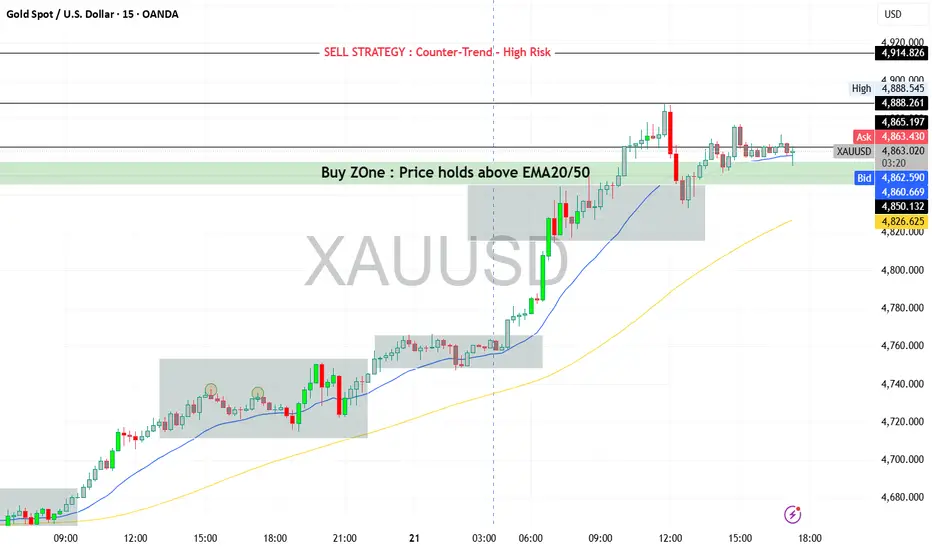
XAUUSD (Gold) Technical Outlook - 12/12/2025XAU/USD is trading around $4,278 with a Strong Buy trend across all major timeframes, confirming a solid bullish structure. As long as price holds above the 4,257 pivot, the uptrend remains intact, supported by the price trading above all moving averages. The bullish targets for the day are 4,283 → 4,311 → 4,340, with ideal buying opportunities on dips between 4,260–4,270 or a breakout entry above 4,285. Stop-loss for dip buying is 4,247, and for breakout buying is 4,270. A bearish scenario becomes valid only if price falls below 4,257, opening downside targets toward 4,230 and 4,175, but this remains a low-probability setup.
Price: $4,278 | Trend: Strong Buy
All timeframes (30M–Monthly) show bullish momentum
Price trading above all MAs = uptrend confirmed
Bullish Scenario
Bullish above 4,257
Targets: 4,283 → 4,311 → 4,340
Buy dips: 4,260–4,270
Breakout buy: Above 4,285
Bearish Scenario (Low Probability)
Bearish only below 4,257
Targets: 4,230 → 4,175
Day Strategy
Dip Buy SL: 4,247
Breakout Buy SL: 4,270
Disclaimer: This analysis is for educational and informational purposes only. It is not financial advice. Trading in Forex, Commodities, and Crypto involves risk. Always do your own research and trade at your own responsibility.