Part 1 Ride The Big Moves Hedging Strategies Using Options
Protective Put
A protective put involves buying a put option against an existing stock position.
Purpose: Portfolio insurance
Cost: Premium paid
Benefit: Downside protection
Used by long-term investors during uncertain markets.
Collar Strategy
A collar combines:
Long stock
Long put
Short call
This caps both upside and downside and is useful during volatile periods.
Trade
Part 2 Candle Stick Patterns Greeks in Options
Option Greeks measure the sensitivity of options to various factors.
a. Delta
Measures change in premium when underlying moves.
b. Gamma
Measures change in delta.
c. Theta
Measures time decay—how quickly premium reduces.
d. Vega
Measures impact of volatility.
e. Rho
Measures impact of interest rate changes.
Beginners primarily track Delta and Theta.
XAUUSD (Gold) Technical Outlook - 12/12/2025XAU/USD is trading around $4,278 with a Strong Buy trend across all major timeframes, confirming a solid bullish structure. As long as price holds above the 4,257 pivot, the uptrend remains intact, supported by the price trading above all moving averages. The bullish targets for the day are 4,283 → 4,311 → 4,340, with ideal buying opportunities on dips between 4,260–4,270 or a breakout entry above 4,285. Stop-loss for dip buying is 4,247, and for breakout buying is 4,270. A bearish scenario becomes valid only if price falls below 4,257, opening downside targets toward 4,230 and 4,175, but this remains a low-probability setup.
Price: $4,278 | Trend: Strong Buy
All timeframes (30M–Monthly) show bullish momentum
Price trading above all MAs = uptrend confirmed
Bullish Scenario
Bullish above 4,257
Targets: 4,283 → 4,311 → 4,340
Buy dips: 4,260–4,270
Breakout buy: Above 4,285
Bearish Scenario (Low Probability)
Bearish only below 4,257
Targets: 4,230 → 4,175
Day Strategy
Dip Buy SL: 4,247
Breakout Buy SL: 4,270
Disclaimer: This analysis is for educational and informational purposes only. It is not financial advice. Trading in Forex, Commodities, and Crypto involves risk. Always do your own research and trade at your own responsibility.
Introduction to Derivatives and Options1. Derivatives Trading Strategies
Derivatives can be traded using a variety of strategies depending on market expectations, risk tolerance, and investment objectives.
A. Hedging Strategies
Hedging is a risk management technique used to protect against adverse price movements in the underlying asset.
Futures Hedging:
A trader holding a physical asset (like wheat, crude oil, or shares) can hedge by taking a futures position in the opposite direction. For example, a farmer expecting to sell wheat in three months can sell wheat futures now to lock in the price, reducing the risk of price decline.
Portfolio Hedging with Index Futures:
Institutional investors can hedge against market-wide risk using index futures. For instance, holding a portfolio of Nifty 50 stocks, an investor may sell Nifty futures to protect against a market downturn.
Interest Rate Hedging with Swaps:
Companies with floating-rate loans may use interest rate swaps to exchange variable payments for fixed payments, thus reducing exposure to interest rate fluctuations.
B. Speculative Strategies
Speculators use derivatives to profit from price movements in underlying assets without necessarily owning them.
Long and Short Futures:
Traders can go long (buy) if they expect prices to rise or short (sell) if they expect prices to fall. For example, a trader anticipating a rise in crude oil prices buys crude futures to benefit from price appreciation.
Spread Trading:
Spread strategies involve taking offsetting positions in related derivatives to profit from relative price movements. Common spreads include:
Calendar spreads: Buying a long-dated contract while selling a short-dated contract.
Inter-commodity spreads: Trading price differences between related commodities, like gold vs. silver.
Leverage and Margin Trading:
Derivatives often allow high leverage, enabling traders to control large positions with smaller capital. While leverage increases profit potential, it also amplifies risk.
C. Arbitrage Strategies
Arbitrage exploits price inefficiencies between markets or instruments to earn risk-free or low-risk profits.
Cash-and-Carry Arbitrage:
Traders buy the underlying asset and sell futures simultaneously if futures are overpriced relative to spot prices.
Index Arbitrage:
Exploits differences between index futures and the actual underlying stocks in the index.
Inter-market Arbitrage:
Identifying price discrepancies across different exchanges for the same asset.
2. Option Trading Strategies
Options trading strategies can be divided into basic strategies for beginners and advanced strategies for professional traders.
A. Basic Option Strategies
Long Call:
Buy a call option expecting the underlying asset to rise.
Risk: Limited to premium paid.
Reward: Unlimited potential profit.
Long Put:
Buy a put option expecting the underlying asset to fall.
Risk: Limited to premium paid.
Reward: Gains increase as the asset price declines.
Covered Call:
Holding the underlying stock and selling a call option on it.
Objective: Earn premium income while holding the stock.
Risk: Stock may rise above strike price; profit is capped.
Protective Put:
Buy a put option while holding the underlying asset.
Objective: Insure against a price drop.
Cost: Premium paid for the put.
B. Advanced Option Strategies
Spreads
Spreads involve buying and selling options of the same type (calls or puts) with different strike prices or expirations to limit risk and optimize returns.
Bull Call Spread:
Buy a call at a lower strike and sell a call at a higher strike.
Profitable if the underlying price rises moderately.
Lower cost than a simple long call.
Bear Put Spread:
Buy a put at a higher strike and sell a put at a lower strike.
Profitable if the underlying price falls moderately.
Calendar Spread:
Buy a long-term option and sell a short-term option at the same strike.
Profits from time decay differences.
Straddles and Strangles
These are volatility strategies designed to profit from significant price movements, regardless of direction.
Straddle:
Buy both a call and put at the same strike price.
Profitable if the asset moves sharply up or down.
Strangle:
Buy a call and put with different strike prices.
Cheaper than straddle but requires larger price movement for profit.
Butterfly and Condor Spreads
Butterfly Spread: Combines buying and selling multiple options to profit from minimal price movement.
Iron Condor: Uses both call and put spreads to generate income in low-volatility markets.
Synthetic Positions
Synthetic Long Stock: Buy a call and sell a put at the same strike.
Synthetic Short Stock: Sell a call and buy a put.
Purpose: Mimics stock positions using options, often at lower capital outlay.
3. Risk Management in Derivatives and Options Trading
Risk management is crucial in derivatives trading due to leverage and market volatility.
Stop Loss Orders: Automate exits to limit losses.
Position Sizing: Control exposure relative to capital.
Hedging: Use options or futures to reduce risk on existing positions.
Volatility Assessment: Traders must evaluate implied volatility for option pricing and strategy selection.
4. Practical Applications
Institutional Investors: Use derivatives for hedging portfolios, managing interest rate risk, and currency exposure.
Retail Traders: Utilize options strategies for speculative bets, income generation, and hedging personal investments.
Corporate Usage: Companies hedge commodity prices, interest rates, and foreign currency exposure to stabilize cash flows.
Conclusion
Derivatives and options trading strategies offer a wide array of tools for hedging, speculation, arbitrage, and income generation. While derivatives provide leverage and flexibility, options add non-linear payoff structures that can be tailored for risk and return preferences.
Understanding each strategy, market conditions, and risk-reward dynamics is critical for successful trading. Beginners should start with basic strategies and limited exposure, while advanced traders can explore complex spreads and volatility trades to maximize returns and manage risk effectively.
Part 1 Ride The Big Moves Strategy Selection Using Market Conditions
Choosing the correct strategy depends on:
a. Trend Direction
Uptrend: Long calls, bull spreads.
Downtrend: Long puts, bear spreads.
Sideways: Iron condor, calendar spreads.
b. Volatility Expectation
High expected volatility: Straddle, strangle.
Low expected volatility: Credit spreads, condors.
c. Time to Expiry
Short expiry favors sellers due to fast time decay.
Long expiry favors buyers due to slower decay.
d. Liquidity
High open interest and narrow bid–ask spreads reduce slippage.
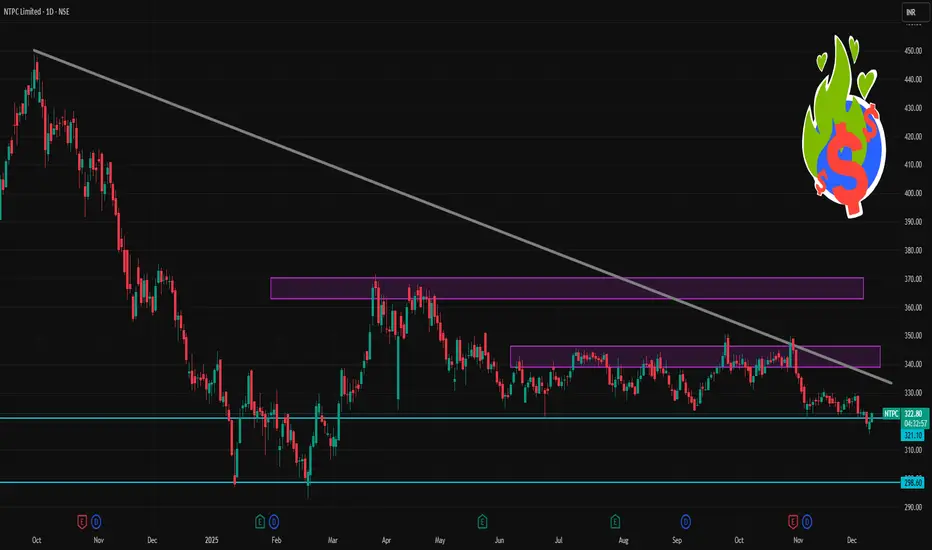
NTPC 1 Day Time Frame 📊 Current Price (Approx)
Trading around ₹319–₹320 on NSE (latest intraday range) — this is the most recent live price you’ll see on charts right now (delayed ~20 sec) and confirmed by TradingView data.
🎯 1-Day Pivot & Support-Resistance Levels
✅ Pivot Point
Central Pivot: ~₹318.9 – ₹319.4 (daily pivot based on recent range)
📈 Resistance Levels
R1: ~₹321–₹322 (first immediate hurdle)
R2: ~₹324–₹325 (stronger resistance)
R3: ~₹327–₹328+ higher barrier if momentum picks up
📉 Support Levels
S1: ~₹316–₹317 — first support zone intraday pivot tests
S2: ~₹313–₹314 — secondary support zone
S3: ~₹310–₹311 — deeper support if the stock weakens sharply
👉 These levels are typical pivot-based support/resistance from standard daily pivot calculations and recent technical tools (Classic/Fibonacci/Camarilla).
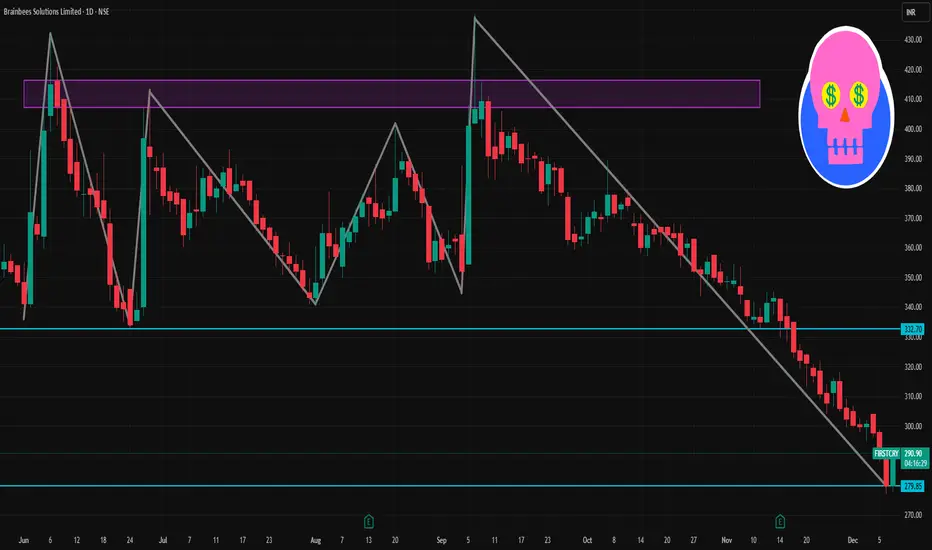
FIRSTCRY 1 Day Time Frame 📊 What the 1‑day chart for Brainbees Solutions currently shows
As of recent trading, the share price of Brainbees Solutions is around ₹ 279–290 on NSE.
The 52‑week high and low band shows a high near ~₹ 664–665 and a low around ~₹ 277–286.
That means at current ~₹ 280–290, the stock is very close to its 52‑week low — which may make the “day‑timeframe level” important for traders looking for a bounce or reversal.
Some technical‑analysis data (on certain days) show bearish momentum: for example, on a recent day the stock hit an all‑time low of ₹ 287, continuing a downtrend.
Part 4 Learn Institutional Trading Advantages of Option Trading
1. Limited Risk for Buyers
Buyers can only lose the premium.
2. Leverage
You control a big position with small capital.
3. Flexibility
Can be used for speculation, hedging, income, blending multiple strategies.
4. Huge Earning Potential
Strong moves give massive percentage returns.
Part 2 Ride The Big MovesPopular Option Trading Strategies
Some commonly used strategies:
1. Covered Call
Hold stock + sell a call option for income.
2. Protective Put
Buy a put to hedge stock holdings.
3. Straddle
Buy ATM Call + ATM Put → profits during big movements.
4. Strangle
Buy OTM Call + OTM Put → cheaper than straddle.
5. Iron Condor
Sell OTM Call + Put and hedge with further OTM options.
Used in sideways markets.
6. Spread Strategies (Bull Call Spread, Bear Put Spread)
Buy one option and sell another to reduce cost and risk.
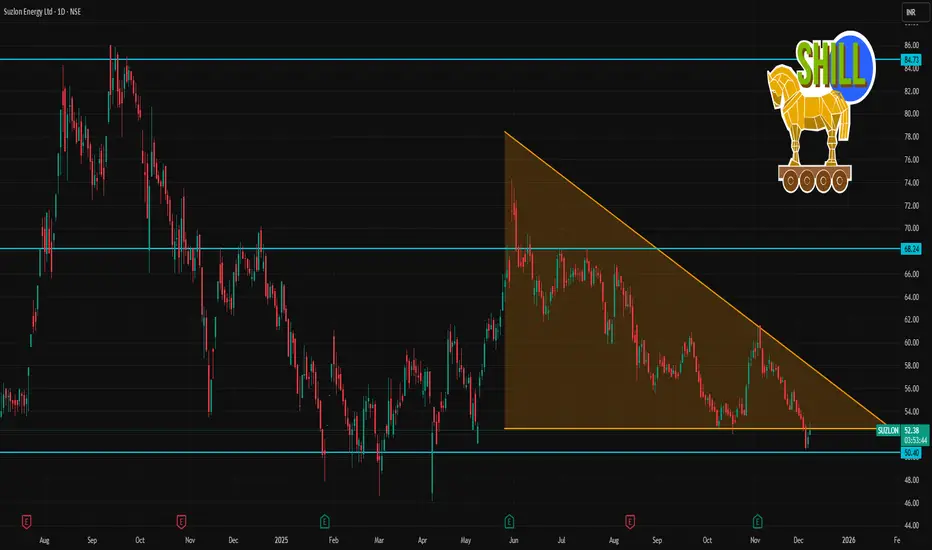
SUZLON 1 Day Time Frame 📈 Current Price & Range
Last close / recent quote: ~ ₹ 52.80–₹ 52.85.
Today’s intraday range (low → high): ₹ 51.89 → ₹ 53.00.
⚠️ Technical Bias / What It Suggests Short‑Term
Price is hovering near ₹ 52.8–53 region, just above immediate support — suggests a SHORT‑TERM indecision / consolidation.
Unless price clears ₹ 53.7 – 54 convincingly (with volume), upside may remain limited.
On downside, a breakdown below ₹ 51.0 – 50.9 could accelerate toward ₹ 49.5 – 50.1.
🧮 What to Watch / Confirmations
A sustainable daily close above ~ ₹ 54.5–55 could tilt bias bullish (towards ~₹ 56 zone).
A break + close below ~ ₹ 50.9 — especially on higher volume — may open path toward ~ ₹ 49.5 – 50 zone.
Watch intraday volume & market momentum — given SUZLON tends to be volatile, these often define short‑term swing direction.
Premium Chart Patterns Premium patterns help traders understand:
Smart money manipulation
Market structure transitions
Liquidity-based entries
Institutional imbalances
Reversal and continuation logic
They are more reliable than basic chart patterns because they reflect:
Actual institutional logic
Market psychology
Liquidity engineering
Price inefficiencies and corrections
Premium chart patterns are essential for traders who want to trade professionally and understand the true mechanics behind price movement.
Algo Trading & Backtesting1. What Is Algorithmic Trading?
Algorithmic trading (algo trading or automated trading) uses computer programs to execute buy and sell orders based on predefined rules. These rules are written using logic, mathematics, technical indicators, statistical models, or machine learning.
Key characteristics:
Speed: Algorithms execute trades in milliseconds.
Accuracy: Orders are placed exactly as coded, without emotional interference.
Consistency: Strategies run the same way every time.
Scalability: Algorithms can scan hundreds of stocks simultaneously.
Automation: Removes manual effort and human error.
Examples of algo rules:
Buy when the 50-day moving average crosses above the 200-day moving average.
Enter long if RSI < 30 and exit if RSI > 60.
Execute mean reversion when prices deviate from their statistical average.
Place a market-making order when bid-ask spread widens beyond a threshold.
Algo trading is used widely in equities, commodities, forex, crypto, futures, and options markets.
2. Why Algo Trading Matters
Algo trading is not just for institutions anymore. Retail traders now have access to powerful tools like NinjaTrader, TradingView Pine Script, Amibroker AFL, Python (Pandas, NumPy), Zerodha Streak, AlgoBulls, etc.
There are several advantages:
1. Eliminates emotions
Fear, greed, hesitation, revenge trading—algos remove them completely.
2. Enhances speed & efficiency
A computer can process multiple charts at once—no possibility for manual delays.
3. Reduces costs
Efficient execution reduces slippage, spreads, and missed opportunities.
4. Backtesting improves confidence
You know how your strategy performed historically before risking real capital.
5. Suitable for all market styles
Trending, scalping, intraday, swing trading, options strategies—algos cover everything.
3. Core Components of Algo Trading
1. Strategy Logic
The brain of the algorithm. Types include:
Trend-following strategies
Mean reversion models
Breakout systems
Arbitrage models
Options premium-selling/hedging algorithms
Machine learning predictive models
2. Data
The quality of the data determines the quality of your strategy.
Historical data (OHLC, volumes)
Real-time data (market feed)
Fundamental data
Tick/Orderbook data (advanced)
3. Programming Environment
Most common:
Python
TradingView Pine Script
Amibroker AFL
C++ (HFT level)
MetaTrader MQL
Proprietary platforms
4. Execution Engine
A platform that sends orders to the exchange via API.
5. Risk Management Module
Includes:
Stop-loss
Target
Position sizing (fixed lot, % of capital)
Max daily loss
Drawdown limits
Volatility filters
6. Monitoring & Optimization
Live dashboards help track:
Real-time P&L
Slippage
Latency
Execution errors
4. Backtesting – The Heart of Algo Trading
You cannot run an algorithm blindly. You must test it on past data to understand how it behaves. This process is called backtesting.
What Is Backtesting?
Backtesting is the simulation of a trading strategy on historical price data to evaluate its performance. It answers questions like:
Would the strategy have made money?
How much drawdown would it suffer?
What is the risk-reward ratio?
How consistent are returns?
How often does it win?
How Backtesting Works?
Step 1: Define the rules
Example strategy:
Buy when price closes above 20 EMA
Sell when price closes below 20 EMA
Risk 1% of capital per trade
Stop-loss = 1.5%
Target = 3%
Step 2: Select historical data
A minimum of:
2–5 years for intraday
5–10 years for swing
10–15 years for trend models
Step 3: Run the simulation
The software applies your rules on every candle historically.
Step 4: Analyze metrics
Some essential backtesting metrics:
✔ CAGR (Annual Return)
Measures yearly profit.
✔ Win Rate %
How many trades were profitable vs total bets.
✔ Profit Factor
Total gross profit ÷ total gross loss.
PF > 1.5 = Good; PF > 2 = Strong.
✔ Drawdown %
The maximum fall from peak equity.
Lower drawdown = safer strategy.
✔ Sharpe Ratio
Reward/risk ratio based on volatility.
✔ Average trade return
Shows how much each trade earns.
✔ Expectancy
Average win × win rate − average loss × loss rate.
Step 5: Optimize (carefully!)
Adjust parameters to improve performance, but avoid overfitting.
5. Types of Backtesting
1. Historical Backtesting
Runs strategy on past OHLC data.
2. Walk-Forward Testing
Split data into in-sample (training) and out-of-sample (testing).
3. Monte Carlo Simulation
Tests strategy performance across random variations.
4. Paper Trading / Forward Testing
Real-time simulation in live markets without real money.
6. Why Backtesting Can Mislead (Pitfalls)
Backtesting is powerful but dangerous if not done correctly.
1. Overfitting
Your strategy may perform well on history but fail in real markets.
2. Look-Ahead Bias
Using future data unknowingly, giving unrealistic results.
3. Survivorship Bias
Testing only stocks that survived, ignoring delisted ones.
4. Slippage & Transaction Costs
Real-world execution is worse than simulated execution.
5. Market Regime Changes
A strategy profitable during trending phases may fail during sideways markets.
Professional algo traders spend more time fixing biases than writing strategies.
7. Algo Trading Strategies Common in India
1. Trend-Following on NIFTY Futures
EMA crossover, Supertrend, Donchian breakout.
2. Options Selling Strategies
Short Straddle
Short Strangle
Iron Condor
Delta-neutral hedged selling
3. Mean Reversion in Bank Nifty
Price touches lower Bollinger Band → Buy.
4. Intraday Momentum
Breakout of previous day high/low.
5. Arbitrage Models
Cash–futures arbitrage, index arbitrage.
8. Tools & Platforms to Start Algo Trading
Beginner-Friendly
Zerodha Streak
Dhan Options Trader
Angel Algo
TradingView (Pine Script)
Intermediate
Python (using broker APIs)
Amibroker AFL
MetaTrader MQL
Advanced / Professional
QuantConnect
AlgoQuant
C++ HFT engines
Custom low-latency systems
9. Steps to Build a Profitable Algo Trading System
Step 1: Identify a market inefficiency
Find behaviors that occur consistently:
Monday gap filling
Tuesday volatility
Post-2:30 p.m. breakouts
Overnight momentum
Step 2: Create rules
Clear, unambiguous logic.
Step 3: Backtest
Use extensive and high-quality data.
Step 4: Evaluate metrics
Cut poor strategies early.
Step 5: Forward test
Test in real time without money.
Step 6: Deploy small capital
Scale only after long-term stability.
Step 7: Monitor & refine
Markets change → algos must evolve.
Conclusion
Algo trading and backtesting together form a powerful framework for systematic, disciplined, and scalable trading. Instead of relying on emotions or random decisions, traders build clear rules, test them against history, validate them in real-time, and automate execution to gain precision and consistency. With proper design, risk control, and continuous improvement, algorithmic trading can significantly enhance performance in equities, commodities, forex, indices, and options.
Part 1 Supprot and Resistance What Are Options?
Options are derivative contracts that give the trader a right, but not an obligation, to buy or sell an underlying asset at a pre-defined price (called the strike price) before or on a specific date (called the expiry).
There are two main types of options:
Call Option – gives the right to buy the underlying asset.
Put Option – gives the right to sell the underlying asset.
In options, the person who buys the contract is called the option buyer, and the one who sells (writes) the contract is the option seller or writer.
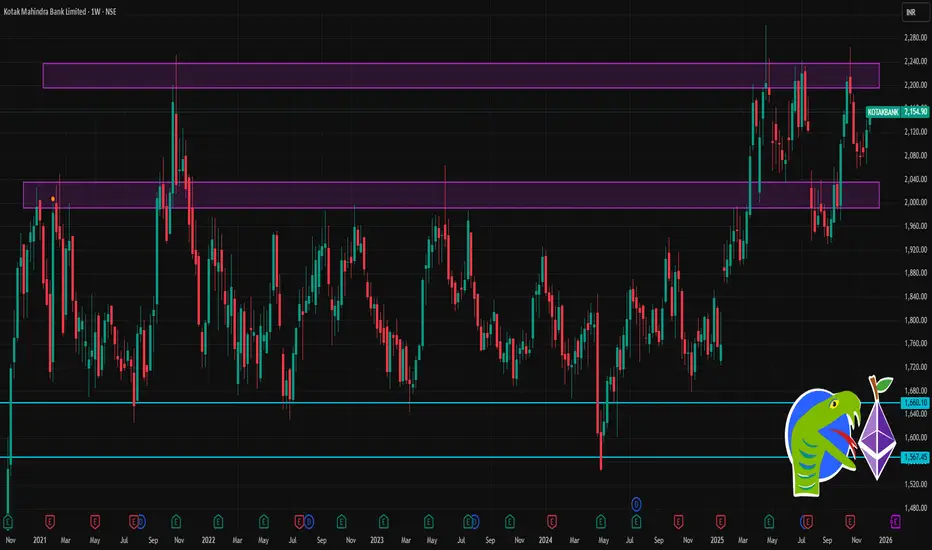
KOTAKBANK 1 Wek Time Frame 📊 Current snapshot
Recent closing price: ~ ₹ 2,154.90 on NSE.
52-week range: Low ~ ₹1,723.75, High ~ ₹2,301.90.
⚠️ What could change this near-term outlook
A close below ~₹ 2,090 could invalidate the bullish view and open up downside toward lower support zones.
Any sharp negative news (macroeconomy, banking sector, global markets) may lead to increased volatility — technical levels matter less during such events.
The stock is still a little below its 52-week high — upside might be limited unless there is fresh positive catalyst (earnings, regulatory change, etc.).
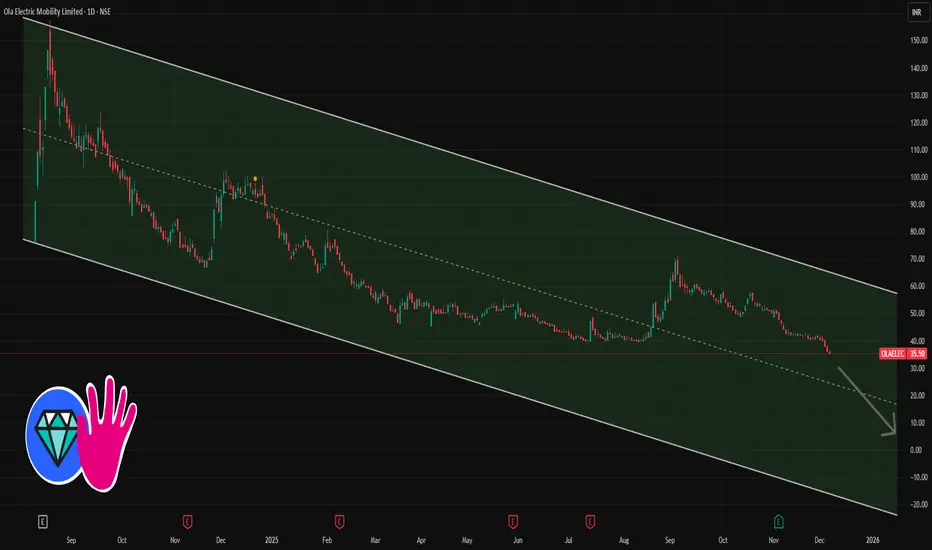
OLAELEC 1 Day Time Frame 📌 Ola Electric — Recent 1‑Day Snapshot
Metric / Info Value / Observation
“LTP” / Recent close (NSE) ₹ 35.50
Today’s trading range (approx) High ≈ ₹ 36.36, Low ≈ ₹ 34.80
52‑week range Low ₹ 34.80, High ₹ 100.40
Recent trend / momentum The stock recently hit fresh 52‑week / all‑time lows, with
heavy selling pressure and high volumes.
🔻 What’s the Technical/Market Context (for Today)
The stock is trading near its 52‑week low, meaning there’s likely limited downside (on a purely “price floor” basis) — but also minimal “margin of safety.”
The day’s high vs low shows modest intraday volatility (~ ₹1.5–2 range), indicating somewhat tight trading.
Given recent heavy selling and lack of clear rebound, the sentiment appears bearish in the short–term.
Because the share is significantly below its 52‑week high and all‑time high, expectations for a bounce would likely need strong positive trigger — e.g. corporate news, macro/EV‑sector tailwinds, or a shift in fundamentals.
TARIL 1 Week Time Frame 📊 Where TARIL stands now
As of 5 Dec 2025, TARIL shares are trading around ₹236.90 — close to a 52-week low.
Over the past week, the stock has dropped ~12.6%.
The 52-week high remains near ₹650 — so the stock is trading ~63–65% below its peak — implying a major drop over the last year.
📰 Recent Developments (that impact next week)
✅ Positive / Potentially Supportive
The company recently secured a new order worth ₹53.33 crore from Power Grid Corporation of India for HVDC converter transformer and related works — a sign that its business activity is ongoing.
Earlier, there was some relief in sentiment when the stock briefly rebounded (after a prior heavy fall) — showing that some value-buying continues.
⚠️ Negative / Risk-Related
TARIL’s Q2 FY26 results were weak: revenue was nearly flat, EBITDA and PAT margins shrank, and profit dropped YoY.
The stock saw a sharp crash (~30%) after combined pressure of weak earnings and regulatory/reputation concerns (earlier debarment by a major international lender) — which severely dented investor confidence.
Given the drop and volatility, there’s heightened risk that the share could slip further — especially if no fresh favourable orders or news emerge.
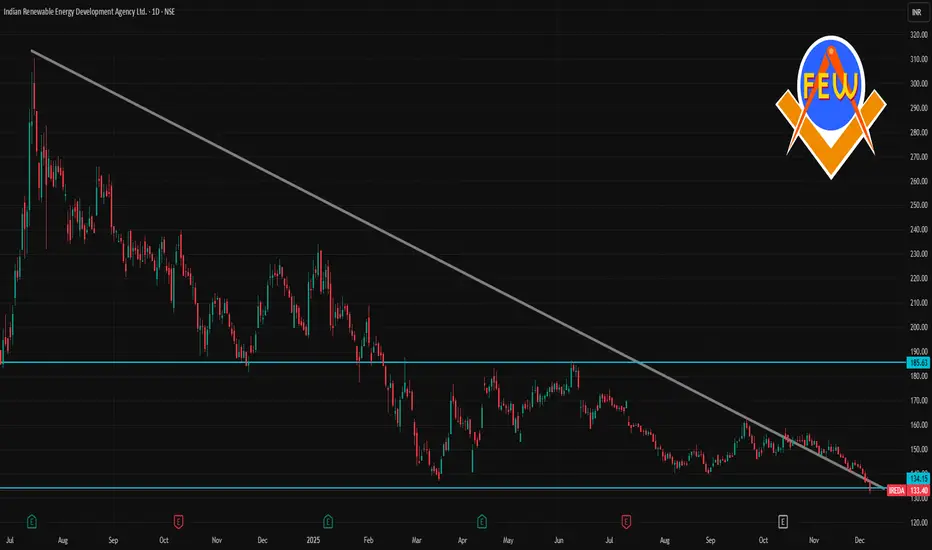
IREDA 1 Day Time Frame 📉 Today’s Price Action
Last traded price: ₹ 133.40
Day’s range: ₹ 132.00 – ₹ 137.29
Change vs previous close: – ₹ 3.35 (–2.45%)
📊 Key Context & Technical Snapshot
Metric / Indicator Value / Observation
52-week range ₹ 132.00 — ₹ 234.29
Relative valuation P/E ~ 21.7 ×
Market cap ~ ₹ 37,475 Cr
Recent momentum 1-week: –6.65%, 1-month: –11.66%
Volatility (ATR) ATR (5-day) ≈ ₹ 3.4
Interpretation (short-term / 1-day):
The stock is near its 52-week low zone — so the current level (~₹133) is close to its recent bottom band.
The drop today suggests selling pressure, but the intraday range shows some trading / bounce between ₹132–₹137.
Given the volatility (as indicated by ATR) and recent downward momentum, the stock looks “soft” in the very short term.
Candle Patterns Knowledge Candlestick Patterns + Indicators
Candles work superbly with key indicators:
Moving Averages (20/50/200)
Hammer above 50 EMA → powerful retracement
Bearish Engulfing below 20 EMA → continuation
RSI Divergence
Bullish pattern + RSI divergence = rock-solid reversal
Bearish pattern + bearish divergence = reliable entry
Bollinger Bands
Hammer at lower band
Shooting star at upper band
SME IPO BUZZ FOR HUGE PROFITS1. What Are SME IPOs — And Why the Buzz?
SME IPOs are public issues floated by Small and Medium Enterprises that list on specialized platforms like:
NSE SME (Emerge)
BSE SME
These platforms provide small companies a chance to raise capital and investors an opportunity to participate in early-stage growth stories.
Why SME IPOs Have Become a Hot Trend
Massive oversubscriptions
Many SME issues are oversubscribed 100x to even 800x, reflecting huge liquidity and demand.
High listing gains
Many SMEs deliver 50%–200% listing pop, significantly higher than mainboard IPO averages.
Cheaper valuations
SMEs often come with smaller balance sheets but high growth potential, offering attractive valuations.
Low float → High volatility → Big gains
Small supply of shares means demand pushes prices up quickly.
Improved regulation & transparency
SEBI and exchanges have strengthened compliance, improving investor confidence.
2. SME IPO Mechanics: How They Work
Understanding the framework helps in capturing big gains.
Minimum Investment Is Higher
Unlike mainboard IPOs, SME IPOs require:
Minimum lot size ₹1–2 lakh
At times, ₹3–4 lakh per lot
This filters out casual investors and builds stability in demand.
Two IRP Categories
Retail quota: 35%
NII/HNI quota: 15%
QIB quota: 50%
Oversubscription in NII and QIB is a major indicator of strength.
Listing Platform
SME companies initially list only on SME exchanges.
Migration to mainboard is possible after reaching certain thresholds.
3. Why SME IPOs Can Generate Huge Profits
Let’s break down the reasons SME IPOs outperform mainboard IPOs:
A. Low Market Cap = High Growth Headroom
SME companies usually operate with revenues of ₹10–200 crore.
Any increase in orders, capacity, or profit quickly reflects on stock price.
Example:
A ₹50 crore company that gets a ₹20 crore contract can see a massive re-rating.
B. Limited Supply of Shares
Most SME IPOs offer small issue sizes:
₹10–50 crore.
This scarcity creates strong listing demand.
C. Strong Promoter Skin-in-the-Game
Promoters in SMEs often hold 70%–80% stake even after listing, creating confidence:
They have real business incentive
They don’t dilute aggressively
They manage business directly
This often results in more predictable growth.
D. Anchor and Institutional Participation
In many recent SME IPOs:
Family offices
PMS funds
Category II AIFs
UHNI investors
buy big allocation beforehand.
This strengthens credibility and improves listing demand.
4. How to Identify High-Potential SME IPOs
Here’s a simple but powerful analysis checklist to spot upcoming multibagger SME issues.
1. Strong Financials (Revenue, PAT, Margins)
Look for:
Revenue growth: 20–40% YoY
Profit margins: 8–15%+
Low debt
Avoid companies with sudden spike in profits just before IPO — often a red flag.
2. Reasonable Valuations
Even a great business can perform poorly if priced aggressively.
Compare:
P/E ratio vs sector P/E
EV/EBITDA
Market cap vs revenue
Safer zone:
PE below 20, or discount to peers.
3. Use of IPO Proceeds
Prefer IPOs where funds are used for:
Expansion
Working capital
Technology upgrades
Debt reduction
Avoid IPOs raising money for general corporate purposes only.
4. Strong Lead Manager Track Record
Top SME merchant bankers:
Fedex
Hem Securities
Pantomath
Gretex
Swastika Investmart
Their IPOs often have stronger post-listing performance.
5. Subscription Demand
High demand indicates strong market interest.
Key benchmarks:
Retail 20x+
NII 50x+
Overall 100x+
This significantly increases listing gain probability.
5. Strategies to Earn Huge Profits from SME IPOs
Here are the top profit-making strategies smart traders use:
A. Listing Gain Strategy
This is the most popular.
Steps:
Apply for strong SME IPOs
Target 40–150% listing pop
Exit on listing day or within 1–3 days
This minimizes risk and gives quick returns.
B. Post-Listing Breakout Strategy
Some SME IPOs consolidate after listing and give massive breakouts.
Look for:
Volume breakout
Price above listing high
Strong market trend
These stocks can become 2x to 5x within months.
C. Anchor Investor Following
If large anchors participate, buying post-listing during consolidation often yields good results.
D. Sector-Based Investing
Focus on high-growth sectors:
Defence
EV manufacturing
Pharma API
Auto components
IT services
Infra and engineering
These sectors dominate SME multibagger lists.
E. Avoiding Weak SMEs
Avoid companies with:
Sudden jump in profits pre-IPO
High receivables
High debt
Related-party transactions
Filtering negatives is as important as chasing positives.
6. Risks Associated with SME IPOs (Must Know)
Even though SME IPOs offer huge profits, they also carry unique risks.
1. Low Liquidity
Post listing, many SME stocks have limited buyers/sellers.
This can create:
Sharp price swings
Difficulty in exit
2. Price Manipulation (In Some Cases)
Low float sometimes attracts speculative operators.
Hence, due diligence is crucial.
3. High Lot Size = High Capital Requirement
You must invest ₹1–3 lakh minimum — increases risk exposure.
4. Limited Historical Data
Many SMEs are young companies without long-term financial history.
7. How to Participate Smartly — Practical Roadmap
Follow this step-by-step success system:
Step 1: Track Upcoming SME IPOs
Use sources:
Exchange websites, IPO blogs, SEBI filings.
Step 2: Apply Only for High-Quality IPOs
Use the 5-point checklist above.
Step 3: Play for Listing Gains in Over-Subscribed Issues
If NII crosses 100x, listing gains are almost guaranteed.
Step 4: Avoid Greed — Book Profits
SME stocks can crash after hype fades.
Step 5: For Long-Term, Pick Only Fundamentally Strong SMEs
Companies with clear growth path can deliver 5x–10x returns.
8. The Future of SME IPOs in India
The SME IPO market is expected to grow dramatically due to:
Government MSME support
Manufacturing boom
Retail investor participation
Better regulations
Strong Indian economy
This segment may produce the next wave of midcap multibaggers.
Conclusion
SME IPOs in India are no longer a hidden corner of the stock market — they are now a powerful wealth-building platform. With strong oversubscriptions, attractive valuations, and booming investor interest, they offer excellent opportunities for huge profits.
However, success requires smart filtering, disciplined strategy, risk management, and knowledge of SME dynamics.
If approached correctly, SME IPOs can be one of the most rewarding segments for modern Indian investors.
Fundamental Analysis (FA) for Traders1. What Fundamental Analysis Really Means for Traders
Most traders think FA is only for investors. But FA helps traders by:
Filtering out weak or manipulated stocks
Increasing the probability of sustainable moves
Helping you ride bigger trends with confidence
Protecting you from collapses caused by poor financials
Aligning you with stocks that institutions, FII/DIIs prefer
When you combine FA + TA, your trading accuracy improves dramatically because FA tells you which stock, and TA tells you when to buy or sell.
2. Key Pillars of Fundamental Analysis
FA can be divided into three pillars:
A. Economic Analysis
This covers the bigger picture—GDP, inflation, interest rates, energy prices, government policies, and global macro events.
Rising interest rates → pressure on banks & NBFCs
Falling crude oil → benefits airlines, paints, chemicals
Strong GDP → boosts cyclicals like autos, cement, infra
Weak monsoon → negative for agro and FMCG
Understanding these factors helps a trader position themselves in the right sectors during market cycles.
B. Industry Analysis
Each industry has unique growth drivers and risks.
Examples—
IT depends on global demand and currency movement.
Banking depends on NPA trends, credit growth, interest rates.
Pharma depends on USFDA approvals and regulations.
Cement depends on infra spending and real estate demand.
A trader must know industry cycles because money flows from sector to sector in rotation. Identifying these rotations early is a huge edge.
C. Company Analysis
This is the deep analysis of the business itself.
Key components include:
Financial statements
Ratios
Profit trends
Debt strength
Cash flow
Competitive advantage
A trader should not study everything like an analyst—only the most actionable data.
3. Essential Financial Statements for Traders
1. Profit & Loss Statement (P&L)
Shows revenue, expenses, and net profit.
Important signals for traders:
Consistent revenue growth
Rising margins
Strong YoY profit growth
Stocks with surging profits often show strong price breakouts.
2. Balance Sheet
Shows assets, liabilities, and capital.
Check:
Debt-to-Equity ratio
Company’s liquidity
Strength of reserves
Low-debt companies move more steadily in uptrends.
3. Cash Flow Statement
More powerful than profit numbers because cash cannot be manipulated easily.
Focus on:
Operating cash flow (OCF)
Free cash flow (FCF)
Positive FCF stocks are safer for swing and positional trading.
4. Most Important Fundamental Ratios for Traders
You don’t need 50 ratios—only the ones that directly impact price momentum.
1. EPS (Earnings Per Share)
Higher EPS = better profitability.
Stocks with rising EPS attract buyers.
2. PE Ratio
Compares price to earnings.
Low PE → undervalued
High PE → overvalued or high-growth
For traders:
Compare PE to industry average, not absolute number.
3. PEG Ratio
PEG = PE / Earnings growth
Best for identifying fast-growing stocks at reasonable valuation.
4. ROE (Return on Equity)
Measures how efficiently a company uses shareholders’ money.
Strong companies have ROE > 15%.
5. ROCE (Return on Capital Employed)
Shows returns on both equity + debt.
High ROCE indicates efficient operations.
6. Debt-to-Equity Ratio
Keep D/E < 1 for stable trading opportunities (exceptions: banks, NBFCs).
7. Operating Margin & Net Margin
Higher margins = pricing power = sustainable trends.
5. Qualitative Factors Traders Must Consider
Not everything is numbers. The biggest market moves often come from qualitative shifts.
1. Management Quality
A trustworthy management creates wealth.
A poor management destroys it even with great products.
Signals of strong management:
Transparent communication
Good capital allocation
Consistent results
2. Competitive Advantage (Moat)
A moat gives the company protection against competitors.
Moats include:
Brand power
Patents
Distribution network
Customer loyalty
Cost leadership
A company with a strong moat trends better on charts.
3. Growth Drivers
Ask:
What will increase revenue in the next 3 years?
New product?
Export expansion?
Government policy support?
Growth drives trends—traders must trade growing businesses.
6. Events That Affect Traders in FA
Traders must focus heavily on event-driven fundamental analysis:
1. Quarterly Results
Results beat → stock gaps up and trends
Results miss → stock sells off sharply
Focus on:
Revenue growth
Operating margin
EPS
Guidance commentary
2. Corporate Actions
Bonus
Split
Dividend
Buyback
Mergers
These events often create strong short-term trading opportunities.
3. Promoter Buying/Selling
Promoter buying = bullish
Promoter selling = caution
4. FII & DII Activity
Institutional money drives long-term trends.
5. Government Policies
Examples:
PLI scheme → boosts manufacturing
Infra push → cement, steel bullish
EV policies → autos & batteries rise
7. How Traders Should Use FA Along With TA
FA + TA together create high-probability trades.
Here’s the ideal system:
Step 1: Use FA to Select the Stock
Filter strong companies using:
Profit growth
Low debt
High ROE/ROCE
Strong sector
Step 2: Use FA to Validate a Big Move
Check if a breakout is supported by:
Recent results
News flow
Strong guidance
Step 3: Use TA to Time Entries
Use:
Support/resistance
Trendlines
Breakouts
Moving averages
RSI/MACD
Step 4: Hold with FA Confidence
When you know the company is strong, you avoid panicking on small dips.
Step 5: Exit With TA
Use trailing stop-losses, breakdowns, or reversal patterns.
8. Example: How Traders Apply FA in Real Market
Suppose you spot a stock showing a breakout on the chart.
Before entering, check:
Last 3 years profit growth?
Is debt low?
Is the industry in an upcycle?
Any recent positive news?
Are FIIs buying?
If fundamentals support the breakout, your trade becomes safer and more powerful.
9. Why FA Matters for Short-Term and Long-Term Traders
Short-Term Traders
FA prevents you from trading weak, manipulated, or poor-quality companies.
Swing Traders
FA helps you ride large moves that last weeks or months.
Positional Traders
FA gives confidence to hold during volatility.
Options Traders
FA guides which stocks have stability, volume, and trend consistency.
10. Final Summary
Fundamental Analysis for traders is not about becoming a CA or analyst.
It is about understanding the business behind the chart so you can trade confidently, avoid traps, and follow strong trends.
With FA, you:
Trade strong sectors
Choose high-growth companies
Avoid junk stocks
Catch big moves supported by institutions
Reduce risk
Increase success probability
FA tells you WHAT to trade.
TA tells you WHEN to trade.
Together—they build a powerful trading system.
Part 8 Trading Master Class With ExpertsStrike Price
The strike price is the pre-decided level at which a call or put buyer can buy or sell the asset.
Example: If Nifty is trading at 22,000, you may choose from strikes like 21900, 22000, 22100, etc.
Expiry
Every option has a validity period. After that, it expires.
In India:
Index options (Nifty, Bank Nifty) have weekly expiries.
Stock options have monthly expiries.
Part 4 Learn Institutional TradingTrading Rules & Conditions Set by SEBI & Exchanges
a) KYC & Risk Disclosure
KYC and Risk Disclosure Documents (RDD) are mandatory before enabling F&O trading.
b) Contract Specifications
Every option contract has pre-defined:
Strike intervals
Lot size
Tick size
Expiry cycle (weekly/monthly)
c) No Guarantee of Profit
Exchanges emphasize that options are risky; brokers must warn traders.
d) No Insider Trading
Traders cannot use non-public information for trading.
e) Brokers Must Provide Transparency
Brokers need to show:
Margin reports
Contract notes
Daily ledger reports