Strategy Optimization for Trading 1. Understanding Strategy Optimization
At its core, strategy optimization is about enhancing decision-making frameworks. A strategy—whether in business, finance, or operations—defines how resources are allocated, risks are managed, and objectives are achieved. Optimization involves testing, analyzing, and fine-tuning these strategies to improve performance. It is iterative, data-driven, and involves balancing multiple factors, such as cost, risk, efficiency, and profitability.
For businesses, this may mean optimizing marketing campaigns, supply chain operations, or pricing models. For financial traders, it could involve refining trading algorithms, portfolio allocation, or risk management rules.
2. Key Objectives of Strategy Optimization
The primary objectives of strategy optimization include:
Maximizing Efficiency: Using resources, time, and capital more effectively to achieve objectives with minimal waste.
Minimizing Risk: Identifying and mitigating potential threats that could undermine strategic goals.
Enhancing Returns: Improving financial or operational outcomes by optimizing processes, decisions, and execution.
Adapting to Market Dynamics: Ensuring strategies remain relevant in changing economic, technological, or competitive environments.
Evidence-Based Decisions: Replacing guesswork with insights derived from data analysis, testing, and modeling.
Optimization is not a one-time activity; it is a continuous process that evolves with internal performance metrics and external market conditions.
3. Steps in Strategy Optimization
Strategy optimization involves a structured approach that can be broken down into several steps:
Step 1: Define Objectives
Clearly define the goals of the strategy. Objectives should be SMART—Specific, Measurable, Achievable, Relevant, and Time-bound. For example, a financial trading strategy may aim to maximize annual returns while keeping drawdowns below 10%.
Step 2: Data Collection and Analysis
Gather historical and real-time data relevant to the strategy. For businesses, this could be sales data, customer behavior metrics, or operational performance data. For traders, market price movements, volatility patterns, and macroeconomic indicators are crucial. Analytical tools like statistical models, machine learning, and visualization help identify trends and insights.
Step 3: Develop and Test Scenarios
Model multiple scenarios to evaluate how different strategies perform under varying conditions. Simulation techniques, backtesting (for trading), or A/B testing (for marketing campaigns) are effective ways to understand potential outcomes. Scenario analysis helps identify strengths, weaknesses, and sensitivities in a strategy.
Step 4: Parameter Optimization
Every strategy has parameters that influence its performance. For instance, in trading, parameters could be moving average periods, risk thresholds, or stop-loss levels. Adjusting these parameters systematically using optimization techniques such as grid search, genetic algorithms, or machine learning can significantly improve results.
Step 5: Risk Assessment
Optimization should not come at the expense of risk exposure. Evaluate the potential downsides of each optimized strategy using stress testing, Monte Carlo simulations, or sensitivity analysis. Risk-adjusted performance measures, like the Sharpe ratio in finance, help compare strategies fairly.
Step 6: Implementation
Once an optimized strategy is identified, implement it in a controlled and measurable way. Ensure alignment with organizational goals, stakeholder expectations, and operational capabilities. In trading, this may involve deploying an automated algorithm; in business, rolling out a refined marketing plan or operational process.
Step 7: Monitoring and Feedback
Optimization is iterative. Continuously monitor performance using key performance indicators (KPIs) and feedback loops. Metrics such as ROI, customer acquisition cost, win/loss ratio, or operational efficiency provide insights into whether the strategy is performing as intended. Adjustments should be made based on empirical evidence rather than assumptions.
4. Techniques and Tools for Strategy Optimization
Modern strategy optimization relies heavily on quantitative and qualitative tools:
Quantitative Techniques
Statistical Analysis: Identifying correlations, trends, and anomalies in historical data.
Backtesting: Testing strategies against historical data to measure hypothetical performance.
Monte Carlo Simulation: Modeling the probability of different outcomes in uncertain environments.
Optimization Algorithms: Using algorithms such as gradient descent, genetic algorithms, or particle swarm optimization to find optimal parameters.
Machine Learning Models: Leveraging predictive analytics for pattern recognition, forecasting, and decision-making.
Qualitative Techniques
Scenario Planning: Evaluating how strategies respond to potential market or operational disruptions.
Expert Judgment: Incorporating insights from industry experts or experienced practitioners.
SWOT Analysis: Identifying strengths, weaknesses, opportunities, and threats to refine strategies.
Software Tools
Business Intelligence Platforms: Tableau, Power BI for data visualization and insights.
Statistical Packages: R, Python (Pandas, NumPy, Scikit-learn) for modeling and analytics.
Trading Platforms: MetaTrader, NinjaTrader, or QuantConnect for backtesting and algorithm optimization.
Project Management Tools: Jira, Trello, or Asana for implementing and tracking strategy changes.
5. Best Practices for Effective Optimization
Focus on Core Objectives: Avoid over-optimization, which can lead to unnecessary complexity and diminishing returns.
Balance Risk and Reward: Optimal strategies should maximize performance without exposing the organization to unacceptable risks.
Use Data Wisely: Ensure data quality and relevance. Decisions based on poor or irrelevant data can mislead optimization efforts.
Iterate Continuously: Markets and business environments evolve; regular review and adjustment are critical.
Maintain Flexibility: Build strategies that can adapt to changes rather than rigid, one-size-fits-all approaches.
Document Processes: Maintain clear documentation for reproducibility, transparency, and learning from past outcomes.
6. Common Challenges in Strategy Optimization
Overfitting: Optimizing a strategy too closely to past data can reduce its effectiveness in real-world scenarios.
Incomplete Data: Lack of comprehensive or high-quality data can lead to biased or unreliable optimization.
Changing Market Conditions: Economic shifts, technological disruptions, or competitive pressures can render an optimized strategy obsolete.
Complexity Management: Highly optimized strategies may become too complex to implement or maintain effectively.
Behavioral Biases: Decision-makers may favor certain strategies due to cognitive biases rather than objective performance metrics.
Addressing these challenges requires a combination of rigorous analysis, continuous monitoring, and flexibility in implementation.
7. Applications of Strategy Optimization
Strategy optimization is applied across multiple domains:
Business
Marketing campaign optimization to improve ROI.
Supply chain optimization for cost reduction and efficiency.
Pricing strategies to maximize profitability and market share.
Finance
Portfolio optimization to balance returns and risks.
Trading strategy refinement using algorithmic and quantitative techniques.
Risk management strategies to minimize drawdowns and losses.
Operations
Production planning and resource allocation.
Inventory management and logistics optimization.
Workforce scheduling and efficiency improvements.
Technology
Machine learning model tuning for better predictions.
Software development strategies to optimize release cycles and quality.
IT infrastructure allocation for cost-effective performance.
8. Conclusion
Strategy optimization is a crucial practice for any organization or individual seeking sustainable growth, profitability, and efficiency. By combining data-driven analysis, risk assessment, scenario planning, and continuous monitoring, optimized strategies can significantly improve outcomes. The process requires a balance between ambition and pragmatism, leveraging both quantitative tools and qualitative insights. Ultimately, organizations and traders who master strategy optimization are better positioned to adapt to changing environments, capitalize on opportunities, and achieve long-term success.
Trendcontinuation
Market Rotations in the Indian Stock MarketIntroduction
Market rotation is a concept widely used by investors and traders to understand how different sectors perform at various stages of the economic cycle. It refers to the movement of capital from one sector or asset class to another, often driven by economic trends, interest rate changes, government policies, or global market dynamics. In the Indian context, understanding market rotations is crucial due to the market's sectoral diversity and the influence of both domestic and international factors.
The Indian stock market, represented mainly by indices like the Nifty 50 and BSE Sensex, consists of multiple sectors such as Banking, IT, Pharmaceuticals, FMCG, Energy, Metals, and Infrastructure. Each sector reacts differently to economic conditions, and rotations across these sectors present opportunities for investors to optimize returns and reduce risks.
1. Understanding Market Rotation
Market rotation is essentially about capital flow between sectors. Investors rotate funds based on valuation, growth potential, interest rates, and macroeconomic trends. For example, during economic expansion, cyclical sectors like Banking, Automobiles, and Capital Goods tend to outperform, while defensive sectors like FMCG and Pharmaceuticals are preferred during economic slowdowns.
In India, rotations are influenced by:
Domestic factors: GDP growth, inflation, RBI policy rates, fiscal policies, and political developments.
Global factors: Crude oil prices, global interest rates, foreign institutional investor (FII) flows, and geopolitical risks.
2. Types of Market Rotations
Sector Rotation:
Movement of funds between sectors based on macroeconomic trends. Example: Investors move from IT and Pharma (defensive) to Banking and Auto (cyclical) during economic expansion.
Style Rotation:
Rotation between investment styles such as growth stocks and value stocks, or between large-cap, mid-cap, and small-cap stocks.
Asset Class Rotation:
Movement between different asset classes, e.g., equities to bonds or gold, often triggered by interest rate changes or global uncertainty.
3. Importance of Market Rotations
Understanding market rotations is crucial for multiple reasons:
Maximizing Returns: By following rotation trends, investors can position themselves in sectors likely to outperform.
Risk Management: Rotation helps avoid overexposure to underperforming sectors.
Timing Investments: Helps investors decide when to exit a sector that has peaked and enter one with higher potential.
Portfolio Diversification: Enhances risk-adjusted returns by shifting between cyclical and defensive sectors according to market phases.
4. Economic Cycles and Sector Performance in India
Market rotations often mirror the economic cycle, which can be broadly divided into four phases:
Early Expansion:
Characterized by recovery from recession, rising industrial production, and corporate earnings growth.
Sectors to watch: Capital Goods, Metals, Infrastructure, Auto.
Example: Post-pandemic India (2021-22) saw significant rotation into capital-intensive sectors due to economic revival and government infrastructure push.
Late Expansion:
Economic growth continues, but inflationary pressures increase.
Sectors to watch: Banking, Finance, Consumer Discretionary.
Example: During periods of strong credit growth, NBFCs and private banks often outperform.
Early Contraction / Slowdown:
Economic growth slows; earnings decline; interest rates may rise to control inflation.
Sectors to watch: FMCG, Pharmaceuticals, Utilities.
Reason: Defensive sectors maintain stable cash flows even during slowdown.
Recession:
Economic contraction, high unemployment, low consumption.
Sectors to watch: Gold, FMCG, Pharma.
Reason: Investors move to safe-haven assets and defensive equities.
5. Key Indian Sectors and Their Rotation Patterns
Banking & Financials:
Highly sensitive to interest rate cycles and credit growth.
Outperform during economic expansion and low interest rates.
Rotation cue: RBI policy changes, credit demand, and NPA trends.
IT & Software Services:
Considered defensive due to global revenue streams and recurring contracts.
Perform steadily during slowdowns but may lag during domestic growth surges.
Pharmaceuticals & Healthcare:
Defensive sector; stable revenue even during recessions.
Gains rotation interest during global uncertainty or domestic slowdown.
FMCG & Consumer Staples:
Defensive; high demand regardless of economic cycles.
Attract capital during slowdown and high inflation periods.
Automobile & Capital Goods:
Cyclical; benefit from rising disposable income and industrial demand.
Rotation flows in during early and late expansions.
Energy & Metals:
Sensitive to commodity prices and global demand.
Rotate in when industrial growth accelerates and global commodity prices rise.
6. Drivers of Market Rotation in India
RBI Monetary Policy:
Interest rate hikes often lead to rotation into defensive sectors like FMCG and Pharma.
Rate cuts encourage capital flow into cyclical sectors like Banking and Auto.
Government Policies:
Infrastructure spending or PLI schemes can trigger rotation into Capital Goods, Metals, and Electronics sectors.
Global Events:
Oil price spikes, US Fed rate decisions, and geopolitical risks influence rotations between Energy, IT, and Gold.
Valuation & Earnings:
Overvalued sectors see outflows, while undervalued sectors attract capital.
Investors rotate based on relative performance and P/E ratios.
Foreign Institutional Investor (FII) Flows:
FIIs significantly impact Indian markets. Strong inflows can rotate sectors like Banking, IT, and Pharma, while outflows often trigger a move to safe-haven sectors.
7. Strategies for Investors
Identify Macro Trends:
Track GDP growth, inflation, interest rates, and government policies to anticipate sectoral performance.
Follow Institutional Activity:
Monitor FII and domestic institutional investor (DII) flows to spot potential rotations.
Technical & Fundamental Analysis:
Use charts and valuation metrics to identify sectors or stocks ready for rotation.
Diversification Across Sectors:
Maintain exposure to both cyclical and defensive sectors to reduce risk.
Timing and Discipline:
Avoid chasing momentum; enter sectors early in rotation trends and exit before they peak.
8. Practical Examples of Market Rotation in India
2014-2015: Expansion in infrastructure and capital goods due to government’s Make in India initiative; rotation from defensive sectors to cyclical sectors.
2020-2021: Post-COVID economic recovery saw rotation into IT, Pharma, and FMCG sectors initially, followed by Banking and Auto as domestic demand revived.
2022-2023: Rising interest rates triggered rotation from rate-sensitive Banking to defensive FMCG and Pharma sectors.
9. Challenges in Predicting Rotations
Market Sentiment: Emotional trading can distort rational rotations.
Global Correlations: International shocks (oil, interest rates, geopolitical risks) can abruptly change rotation patterns.
Lag in Economic Data: Market reacts faster than published economic indicators.
Sector Concentration Risks: Over-reliance on one sector can magnify losses if rotation timing is wrong.
10. Conclusion
Market rotation is a powerful concept for Indian investors and traders seeking to maximize returns while managing risk. By understanding economic cycles, sector-specific drivers, and investor behavior, one can anticipate where capital is likely to flow next. In India’s diverse and dynamic market, rotation between defensive and cyclical sectors, as well as across asset classes, provides ample opportunities for disciplined and informed investors.
Successful rotation strategies require macroeconomic awareness, monitoring of institutional flows, valuation analysis, and timing discipline. While no strategy is foolproof, integrating market rotation principles into investment decisions can significantly enhance portfolio performance over time.
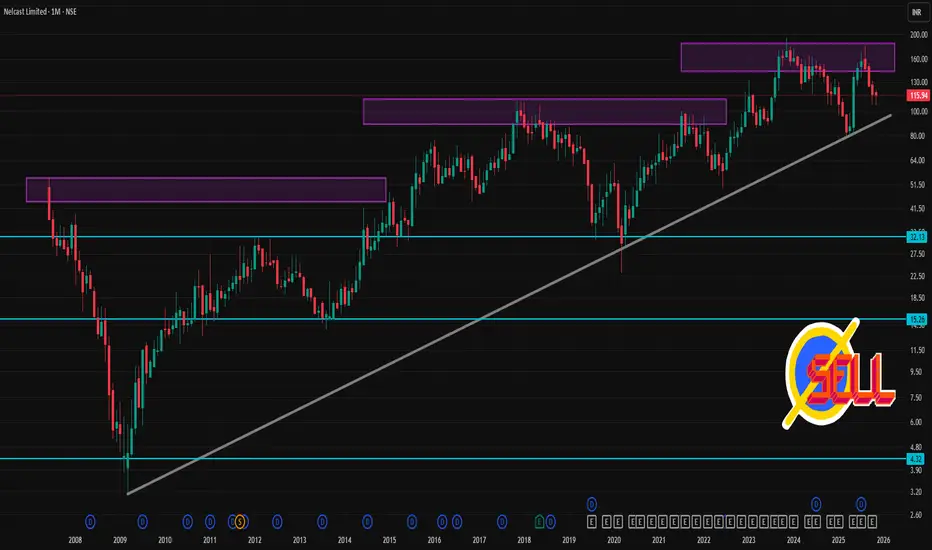
NELCAST 1 Month Time Frame 📌 Recent snapshot
As of 28 Nov 2025, Nelcast closed around ₹116.
Over the past 1 month, the stock has seen a ~ –9 % return.
The 52-week trading range: low ~ ₹78, high ~ ₹180.
✅ My View (with caution)
Nelcast seems fairly valued — perhaps a bit stretched relative to estimated intrinsic value. In short term (1 month), a range between ₹112–₹125 seems the most probable, unless there’s a sharp catalyst (good or bad).
If I were you — and purely for trading or short-term view — I’d watch for a dip toward ₹110–₹112 (as a possible “buy zone / entry”) and a rebound toward ₹124–₹125.
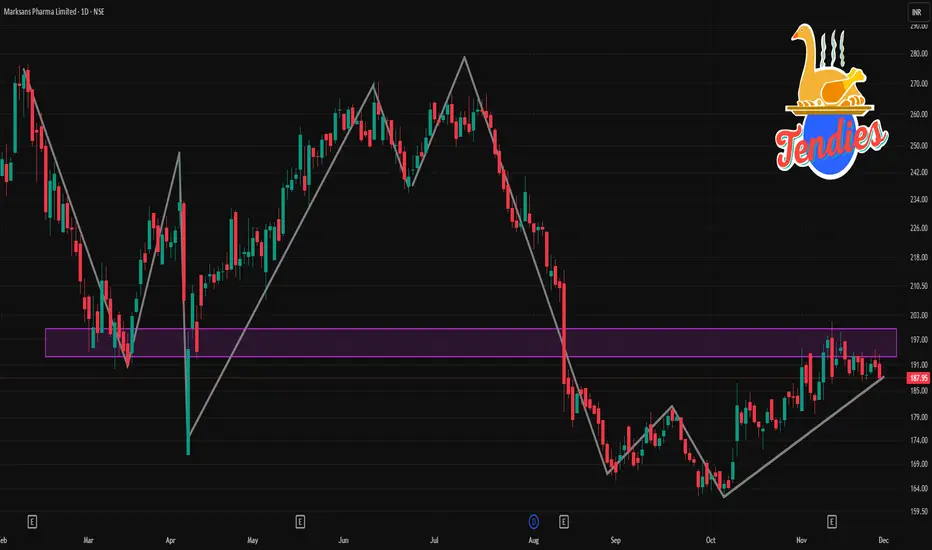
MARKSANS 1 Day time Frame 📌 Current Price & Broad Context
Latest share price: ≈ ₹187.95.
52-week range: Low ~ ₹162.00, High ~ ₹358.70.
Recent trend: The stock is significantly below its 52-week high; price has fallen roughly 25–45% over the past 6–12 months.
🧮 What to Watch / Combine with Other Views
Daily technicals show neutral-to-bearish bias, with some structural support around long-term moving average.
But longer-term fundamentals (company financials, order book, approvals, sector sentiment) could disrupt this — technicals are just one lens.
Because the stock is well below its 52-week high, there’s scope for rebound — but also risk: price could continue downward if sentiment remains weak.
For better clarity: it’s often helpful to check 1-week or 1-month charts along with volume, open interest (if derivatives), and any corporate/news events.
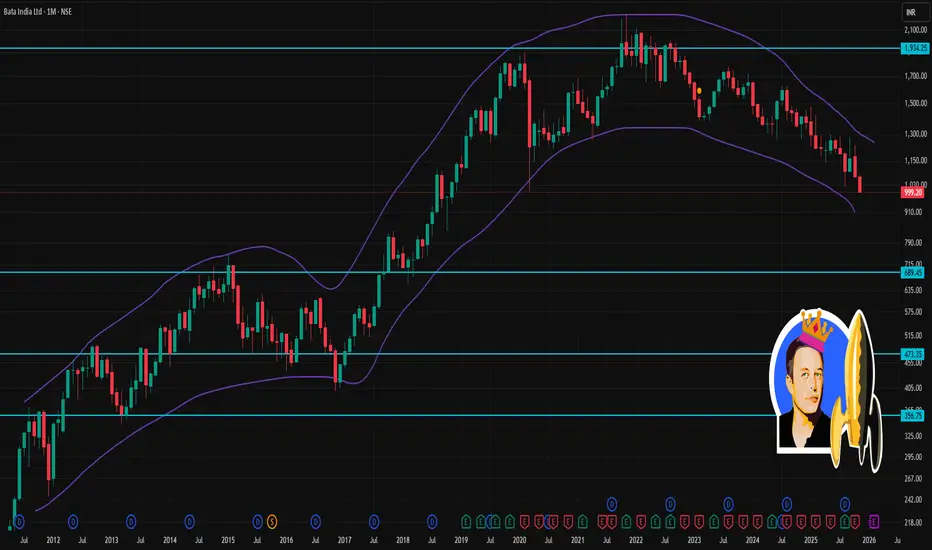
BATAINDIA 1 Month Time Frame 📌 Recent Price & Context
The stock has recently traded around ₹1,000–₹1,010 levels.
The 52-week high is ~₹1,479; 52-week low is ~₹996–₹1,005 (depending on the source) — so recent levels are close to the lower end of the 52-week range.
The stock has been under pressure lately, partly due to weak Q2 FY26 results which dragged sentiment.
⚠️ Key Risks & What’s Dragging the Stock
Weak recent financial performance — recent quarter’s poor results have weighed on sentiment.
Technical picture remains weak: price below all major moving averages, multiple sell signals on daily charts.
High volatility and lack of clarity on demand — any bounce may be shallow unless firm positive triggers come (e.g. good sales data, broader market up-move, sector tailwinds).
Part 4 Learn Institutional TradingParties Involved in an Options Contract
There are two sides to every options contract:
Option Buyer
Pays the premium.
Has limited risk (only the premium paid).
Has unlimited profit potential in call options and significant potential in puts.
Option Seller (Writer)
Receives the premium.
Has limited profit (only the premium collected).
Faces potentially unlimited risk in calls and large risk in puts.
Option sellers generally need higher margin because they take the greater risk.
Part 3 Learn Institutional Trading What Are Options?
An option is a contract that gives the buyer the right, but not the obligation, to buy or sell an underlying asset at a predetermined price—known as the strike price—before or on a specific date called the expiry.
There are two types of options:
Call Option – Gives the right to buy an asset.
Put Option – Gives the right to sell an asset.
The buyer of an option pays a fee called the premium, which is the price of the contract.
In India, stock options follow an American-style exercise, allowing early exercise, while index options are European-style, meaning they can only be exercised on expiry day.
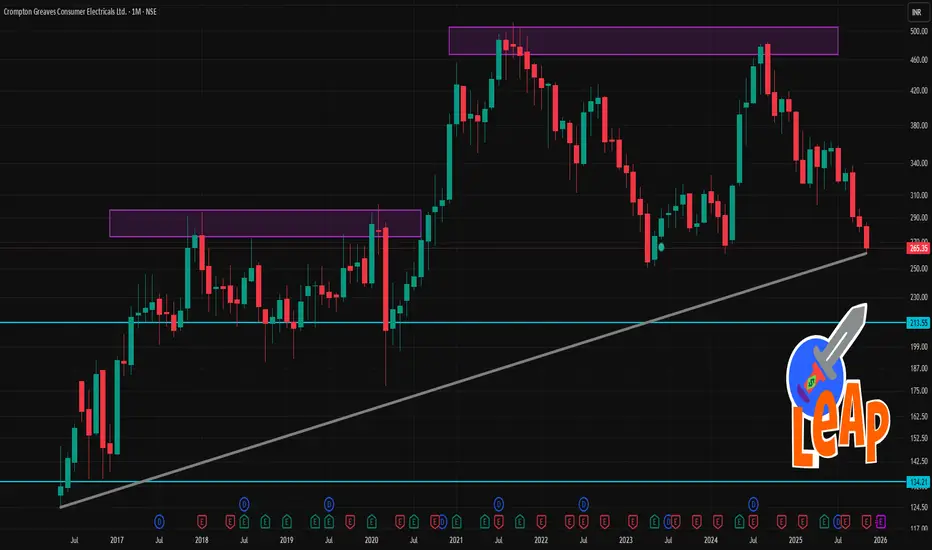
Crompton 1 Month Time Frame 📉 Recent context & background
The stock recently hit a fresh 52-week low — around ₹267.5–₹271.25.
Latest quarter (Q2 Sep-2025) saw a sharp profit drop: net profit fell ~43% YoY, with EBITDA margin under pressure due to commodity cost inflation and restructuring costs.
On the flip side, the company’s broader business mix (like pumps / small domestic appliances / solar-rooftop orders) and some analyst estimates still see potential for recovery.
🧭 What could move the price in next 1 month
Positive triggers: Any signs of margin recovery, easing of commodity inflation, good order wins (e.g. solar-segment orders or domestic appliance demand), supportive news or institutional interest.
Negative triggers: Continuation of margin pressure, weak demand in core categories, negative macro / interest-rate or inflation environment, or broader investor risk-off sentiment.
🎯 My Base-Case 1-Month Scenarios
Bearish to neutral scenario: Price may hover or drift around ₹260–₹285, possibly bouncing between support (₹265–₹270) and resistance (₹280–₹290).
Bullish/recovery scenario: If sentiment improves, stock could aim for ₹300–₹330 over the next 3–4 weeks — especially if company provides encouraging updates or sector environment improves.
Upside breakout scenario (less likely in short 1-month): A push toward ₹340 is possible only if there’s a strong catalyst (e.g., margin rebound, big orders, broadly bullish market) — but that feels optimistic for just 1 month.
Candle Pattern Knowledge Limitations and Best Practices
Candlestick patterns alone should not be used as the only basis for trades. They are best combined with:
Moving averages
RSI or MACD
Support/resistance levels
Volume analysis
Best Practices
Wait for confirmation before entering.
Avoid trading patterns in choppy, sideways markets.
Use stop-losses under key levels.
Combine with market structure for higher accuracy.
Premium Chart Patterns Why Premium Patterns Matter
Premium chart patterns add value because they simplify decision-making. They help traders:
Identify high-probability entry points
Set predefined stop-loss and target levels
Understand market structure
Build rules-based trading systems
Reduce emotional decision-making
Experienced traders combine patterns with support/resistance, volume, moving averages, and risk management to build robust strategies.
Part 2 Ride The Big Moves Option Trading in India (NSE)
Popular tradable contracts:
NIFTY 50 (weekly & monthly expiry)
BANK NIFTY (weekly expiry)
FINNIFTY (weekly expiry)
MIDCAP NIFTY
Stock Options
Lot sizes:
Nifty: 25
Bank Nifty: 15
Finnifty: 40 (subject to change by NSE)
Stock options have higher margins and different lot sizes.
Part 1 Ride The Big Moves Types of Option Trading Strategies
a. Bullish Strategies
Long Call – Buy CE
Bull Call Spread – Buy CE and Sell higher CE
Cash Secured Put – Sell PE with intention to buy shares
b. Bearish Strategies
Long Put – Buy PE
Bear Put Spread – Buy PE and Sell lower PE
Covered Call – Sell CE while holding shares
c. Neutral Strategies
Straddle – Buy both CE and PE
Strangle – Buy OTM CE and PE
Iron Condor – Sell CE & PE with hedges to capture premium
Butterfly Spread – Low risk, limited profit strategy
Neutral strategies are popular on weekly expiry days when markets stay range-bound.
Part 2 Intraday Trading Master ClassHow Option Sellers Operate
Option buyers pay premium and carry limited risk.
Option sellers (also called writers) collect premium and take unlimited risk.
Buyers need only premium (small capital).
Sellers need margin (large capital).
Example:
If a seller sells 20000 CE for ₹100 and the market rises sharply, their loss increases point-by-point.
Option selling is considered profitable for experienced traders because of:
Time decay (theta)
Market staying within a range
High probability strategies
But losses can be huge if hedging is not done properly.
Part 1 Intraday Trading Master ClassWhat Are Options?
Options are financial contracts that give you the right, but not the obligation, to buy or sell an underlying asset (like Nifty, Bank Nifty, a stock, etc.) at a fixed price within a specified time.
There are two types of options:
Call Option (CE) – Gives the right to buy
Put Option (PE) – Gives the right to sell
In India, all index and stock options are European style, which means they can be exercised only on expiry day, but they can be bought or sold (squared off) anytime before expiry.
PCR Trading Strategies How Option Prices Move (Option Greeks)
Option premiums move because of time, volatility, and market direction. The Greeks explain this movement.
1. Delta – Direction Sensitivity
Delta shows how much premium changes with a ₹1 move in the underlying.
Call delta: +0.3 to +1.0
Put delta: –0.3 to –1.0
Higher delta = faster premium movement.
2. Theta – Time Decay
Theta is the killer for option buyers.
As time passes, the premium loses value.
Sellers benefit from theta
Buyers suffer from theta
3. Vega – Volatility Impact
Higher volatility = higher option premiums.
Lower volatility = cheaper premiums.
4. Gamma – Acceleration of Delta
Gamma shows how fast delta changes.
Fast markets increase gamma dramatically.
Part 2 Master Candle Stick Patterns Key Terms in Options
Option trading revolves around certain essential terms that define risk, reward, and price movement.
Premium
The price you pay to buy an option.
For the buyer, premium = maximum loss.
Strike Price
The fixed level at which you buy (Call) or sell (Put) if you choose to exercise the contract.
Expiry
Every option expires weekly or monthly.
India has:
Weekly expiry: Nifty, Bank Nifty, Fin Nifty
Monthly expiry: All indices & stocks
Part 1 Master Candle Stick Patterns What Are Options?
Options are financial derivatives that give you the right, but not the obligation, to buy or sell an underlying asset at a predetermined price (called the strike price) on or before a certain date (called the expiry).
There are two main types:
1. Call Option
A Call Option gives you the right to buy the underlying asset at the strike price.
You buy a call when:
You expect the price to rise.
You want limited risk but unlimited profit potential.
2. Put Option
A Put Option gives you the right to sell the underlying asset at the strike price.
You buy a put when:
You expect the price to fall.
You want to hedge against downside.
In India (NSE), the underlying asset can be:
Index (Nifty, Bank Nifty, Fin Nifty)
Stocks (Reliance, TCS, HDFC Bank, etc.)
Common Mistakes Traders Make with OI Analysis1. Assuming Rising OI Always Means Trend Continuation
A widespread misconception is that rising OI always confirms the current price trend. This is not always true. OI increases whenever new positions are added, but it does not tell us whether those positions are long or short.
If price rises and OI rises, traders often assume “trend is strong.”
But this could be short sellers entering aggressively, expecting a reversal.
Similarly, a falling market with rising OI could represent fresh long build-up by contrarian traders.
Why this is dangerous:
Misreading this combination can trick traders into continuing with a trend that is near exhaustion.
Correct approach:
Always read OI along with volume, price action, and context rather than in isolation.
2. Ignoring the Impact of Expiry Week
During expiry week, OI behaves very differently. Many traders fail to adjust for this.
Positions are squared off.
New positions are not added in large numbers.
Premiums decay rapidly.
Large players use rollovers that distort OI patterns.
Hence, traditional OI interpretations—long buildup, short covering, etc.—often fail because traders misread expiry-related unwinding as trend reversal.
Correct approach:
During expiry, interpret OI with caution and focus more on price action and volume rather than OI signals alone.
3. Not Understanding Rollovers in Futures OI
Many beginners assume rising OI in the near-month futures means new positions are being built. Instead, what might actually be happening is:
Positions shifting from near-month to next-month contracts.
Hedging activity by institutions.
Calendar spreads that distort near-month OI data.
This mistake leads traders to overestimate trend strength.
Correct approach:
Study OI across all three series (near, next, and far) to understand rollover behavior properly.
4. Misinterpreting OI Changes Without Considering Volume
OI alone cannot confirm the strength of a move. Many traders rely only on OI changes without checking volume.
High OI + low volume = weak or misleading signal.
High volume + high OI = strong confirmation.
Low volume + decreasing OI during price rise often indicates a false breakout.
Volume validates OI. Ignoring it causes traders to enter trades without proper confirmation.
Correct approach:
Always combine OI with volume analysis for accurate interpretation.
5. Treating OI Spikes as Market Direction Indicators
Large spikes in OI sometimes occur because:
Institutions hedge large positions.
Market makers adjust exposure.
Spread trading activity increases.
Options sellers deploy neutral strategies like short straddles and strangles.
These do not indicate directional bias. Retail traders often mistake such spikes for bullish or bearish signals, resulting in incorrect directional trades.
Correct approach:
Identify whether the OI spike is due to directional positions or non-directional strategies (like option selling).
6. Misreading Options OI Without Understanding Option Selling
Options OI is heavily influenced by option writers, not buyers. Newer traders often assume:
Call OI rising → bullish
Put OI rising → bearish
In reality:
Call writers increase call OI when they expect resistance.
Put writers increase put OI when they expect support.
Hence call OI rising often signals resistance, not strength, while put OI rising signals support, not weakness.
Correct approach:
Always analyze OI from the perspective of option sellers, who dominate the market.
7. Forgetting That OI is a Lagging Indicator
OI does not update tick by tick. Many traders treat it like real-time data and make impulsive trades.
Because OI updates slowly:
Sudden intraday reversals may not immediately reflect in OI.
By the time OI suggests a trend is weakening, price may already have reversed.
Correct approach:
Use OI as a confirmation tool, not a primary signal generator.
8. Over-Reliance on OI Without Price Action
Some traders depend entirely on OI data and ignore charts altogether.
This can lead to:
Entering when price is in consolidation.
Missing out on key support/resistance levels.
Falling for traps created by short-term OI fluctuations.
OI cannot tell you the exact entry or exit point—price action provides that.
Correct approach:
Use OI to understand behind-the-scenes market behavior, but rely on price action for execution.
9. Not Accounting for Market Maker Adjustments
Market makers frequently adjust their books, making OI fluctuate without real directional intent.
Retail traders often mistake this for trend-building activity.
These adjustments occur due to:
Delta hedging
Neutral strategies
Risk balancing
Changes in implied volatility
This can create misleading OI buildups or unwinding.
Correct approach:
Interpret OI only after analyzing IV trends, premiums, and market structure.
10. Ignoring the Broader Market Environment
OI signals lose meaning in certain market conditions:
High volatility
Major news events
Budget or RBI announcements
Global market shocks
Overnight gaps
During these periods, traders still try to use OI to predict short-term moves and end up getting trapped.
Correct approach:
In high-event environments, reduce the weight of OI analysis and rely more on price structure and risk management.
11. Believing That OI is a Predictive Tool
Many traders expect OI to tell them in advance:
When a breakout will happen
Which way the market will move
How strong the move will be
But OI is not predictive—it only shows participation, not intention.
This belief causes false confidence and poor decision-making.
Correct approach:
Treat OI as a supporting indicator, not a forecasting tool.
12. Not Adjusting OI Interpretation for Different Instruments
OI behaves differently in:
Index options
Stock options
Futures
Weekly vs monthly expiries
Applying the same OI interpretation across all instruments is a major mistake. For example:
Stock options have lower liquidity → OI signals are weaker.
Index options have high liquidity → OI signals are more reliable.
Correct approach:
Know the nature of the instrument before applying OI analysis.
Conclusion
OI is extremely powerful, but only when interpreted correctly. Most traders misuse it by treating it as a direct prediction tool rather than a secondary confirmation metric. The key to avoiding mistakes is to use OI together with price action, volume, volatility, and overall market context. Understanding that OI represents participation—not direction—helps traders avoid false assumptions and make better-informed decisions.
Top-Performing Companies Across Different PLI CategoriesElectronics and Semiconductor Sector
The electronics and semiconductor sector is one of the most significant beneficiaries of the PLI scheme. India’s ambition to become a global electronics manufacturing hub has seen major players expand operations under the scheme.
Key Performing Companies:
Foxconn India: A global contract manufacturer, Foxconn has leveraged PLI incentives to expand smartphone assembly lines and component production in India, catering to both domestic demand and exports.
Wistron and Pegatron: These Taiwanese companies have aggressively increased manufacturing capacities, focusing on consumer electronics such as smartphones and laptops.
Lava International and Micromax: Indian brands have utilized PLI support to enhance their supply chains, localize manufacturing, and remain competitive against international players.
These companies have shown exceptional growth in production volumes and employment generation, highlighting the success of PLI in promoting electronics manufacturing.
Pharmaceuticals and Medical Devices
The pharmaceuticals and medical devices sector is a critical area of focus under the PLI scheme, especially in light of global demand for affordable and high-quality healthcare products.
Top Performers:
Sun Pharma: Leveraging PLI benefits, Sun Pharma has expanded its manufacturing of critical APIs (Active Pharmaceutical Ingredients) to meet both domestic and international demand.
Cipla and Lupin: These companies have enhanced production capacities in high-demand therapeutic segments such as cardiovascular, anti-infectives, and diabetes medications.
Trivitron Healthcare: A key player in medical devices, Trivitron has scaled up production of diagnostic and surgical equipment, supported by PLI incentives.
These companies’ performance demonstrates the PLI scheme’s potential in enhancing India’s self-reliance in healthcare and reducing dependence on imports.
Automobile and Auto Components
The PLI scheme has also targeted the automotive sector, particularly electric vehicles (EVs) and advanced automotive components.
Leading Companies:
Tata Motors: With a focus on EV production, Tata Motors has utilized PLI incentives to expand EV manufacturing, batteries, and related components.
Mahindra Electric: Mahindra Electric has capitalized on PLI support to boost EV innovation and production, aiming to increase domestic adoption.
Bosch India: As a leading auto components manufacturer, Bosch has invested in next-generation automotive technologies including EV systems, sensors, and power electronics.
These companies are not only benefiting from financial incentives but are also driving India’s transition to sustainable mobility and smart automotive solutions.
Textiles and Apparel
The textiles and apparel sector has seen a transformative impact under the PLI scheme, especially in enhancing value addition and export competitiveness.
Top Performing Companies:
Arvind Ltd: A leader in textiles, Arvind has leveraged PLI incentives to scale up high-end apparel production and integrate advanced technologies.
Welspun India: Focused on home textiles and high-quality fabrics, Welspun has expanded production capacities and strengthened its export footprint.
Raymond Ltd: With investments in innovative textiles and premium apparel, Raymond has utilized PLI support to modernize operations and maintain market leadership.
These companies illustrate how PLI incentives are fostering quality enhancement, higher employment, and export growth in India’s textile industry.
Food Processing Industry
The PLI scheme aims to boost India’s food processing sector, which has enormous potential due to the country’s agricultural base.
High Performers:
Amul (Gujarat Cooperative Milk Marketing Federation): Amul has expanded value-added dairy production with PLI support, ensuring higher efficiency and export readiness.
ITC Ltd: ITC has leveraged the PLI scheme to enhance processed food production, particularly ready-to-eat and packaged goods, for both domestic and international markets.
Parle Agro: PLI incentives have helped Parle Agro scale production lines for beverages and packaged foods, enhancing competitiveness and market share.
These companies demonstrate the PLI scheme’s ability to strengthen India’s food processing ecosystem, reduce wastage, and promote global competitiveness.
Advanced Chemistry Cell (ACC) and Battery Manufacturing
The rise of EVs and renewable energy has increased demand for advanced batteries. The ACC and battery manufacturing category under PLI aims to establish India as a hub for battery production.
Leading Companies:
Exide Industries: Exide has expanded lithium-ion and lead-acid battery manufacturing, leveraging PLI incentives to modernize plants and boost capacity.
Amara Raja Batteries: Focused on automotive and stationary energy storage solutions, Amara Raja has invested in R&D and production expansion.
Tata Chemicals: Diversifying into advanced battery materials, Tata Chemicals has used PLI support to strengthen supply chains for lithium and other key materials.
These investments are critical for India’s EV ambitions and energy transition goals.
Impact on Employment and Exports
The companies benefiting from the PLI scheme have not only scaled production but also created significant employment opportunities. Manufacturing facilities often require skilled and semi-skilled labor, providing job creation in tier-2 and tier-3 cities. Moreover, enhanced production capacities have boosted exports, enabling India to compete with global players in sectors like electronics, pharmaceuticals, textiles, and EV batteries.
Challenges and Future Outlook
Despite strong performance, companies face challenges such as supply chain constraints, competition from global manufacturers, and technology gaps. However, continued PLI support, combined with strategic investments, can help overcome these hurdles.
Looking ahead, sectors like electronics, EVs, advanced batteries, and pharmaceuticals are expected to continue leading under the PLI scheme. Companies that invest in innovation, technology localization, and skill development will likely emerge as the most successful beneficiaries.
Conclusion
The PLI scheme has been a game-changer for India’s manufacturing ecosystem, with top-performing companies across various sectors demonstrating its potential. From electronics and pharmaceuticals to automotive, textiles, and food processing, PLI incentives have enabled companies to scale production, enhance exports, and create employment. Companies like Foxconn, Sun Pharma, Tata Motors, Arvind Ltd, and Amul exemplify the transformative impact of the scheme. As India continues to focus on self-reliance and global competitiveness, the PLI scheme will remain a crucial driver of industrial growth and economic development.
Building a Strong Crypto Investment Strategy1. Understand the Market and Its Risks
Before investing, it’s crucial to understand what cryptocurrency is and how it operates. Crypto assets range from store-of-value coins like Bitcoin to smart-contract platforms like Ethereum and utility tokens designed for specific ecosystems. Each category carries different levels of risk and potential return.
Crypto markets are known for extreme price swings. A coin can rise or fall by 20–30% within hours. Investors must acknowledge this volatility and mentally prepare for sudden market movements. Additionally, the ecosystem is exposed to regulatory shifts, exchange hacks, and technological failures. Understanding these inherent risks helps shape realistic expectations and prevents emotional decision-making during market turbulence.
2. Define Your Investment Goals
Every strong investment strategy starts with clear and realistic goals. Ask yourself:
Are you investing for long-term wealth creation?
Do you want regular short-term gains through active trading?
Are you building a diversified digital-asset portfolio?
What is your risk tolerance—conservative, moderate, or aggressive?
Long-term investors typically prefer established cryptocurrencies with proven adoption. Short-term traders look for volatility and momentum. A clear goal helps determine the type of assets to choose, the timing of investments, and the level of engagement required.
3. Conduct Thorough Research (DYOR)
"Do Your Own Research" is a critical rule in the crypto world. Since markets are influenced by hype and speculation, many projects lack genuine utility or long-term viability. Good research should include:
Fundamental Analysis
Project utility – What problem does the crypto solve?
Technology and innovation – Does it offer scalable and secure architecture?
Team and developers – Are they credible and transparent?
Tokenomics – Supply, demand, inflation, burn mechanisms, and distribution.
Roadmap and partnerships – Future developments and real-world adoption.
Market Analysis
Current price trends
Trading volume and liquidity
Market capitalization (large-cap vs mid-cap vs small-cap assets)
Historical price movements
Sentiment Analysis
Monitoring news, social media trends, and community engagement helps gauge market mood. While hype should not drive decisions, sentiment can influence short-term movements.
Proper research protects investors from scams, overhyped tokens, and projects with weak fundamentals.
4. Diversify Your Portfolio
Crypto diversification is more than holding multiple coins. It means spreading investments across different categories to balance risk and return.
Ways to Diversify:
By market sector: Smart-contract platforms (ETH, SOL), payment coins (BTC, LTC), DeFi tokens, gaming/metaverse tokens.
By market cap: Large-cap assets for stability, small-caps for high growth potential.
By investment type: Spot holdings, staking assets, stablecoins, NFTs (optional), and even crypto-related stocks.
Diversification reduces the impact of a single asset collapsing and enhances long-term portfolio stability.
5. Decide on Investment Strategy: Passive vs Active
Your approach depends on time availability, experience, and goals.
Passive Investing
Suitable for long-term investors who prefer minimal involvement.
Buy and Hold (HODL): Purchasing strong projects and holding through volatility.
Dollar-Cost Averaging (DCA): Investing a fixed amount at regular intervals regardless of price.
Staking or Yield-earning: Earning passive income by locking tokens in networks.
Passive strategies reduce emotional interference and benefit from long-term market growth.
Active Investing
For experienced investors seeking higher returns with higher risks.
Swing trading: Capturing medium-term price swings.
Day trading / scalping: Frequent trades based on technical indicators.
Arbitrage: Profiting from price differences across exchanges.
Active investing requires market knowledge, discipline, and constant monitoring.
6. Apply Strict Risk Management
A strong crypto strategy is incomplete without robust risk management rules. Since the market is unpredictable, risk control determines long-term success more than profit targets.
Key Risk-Management Principles:
Never invest money you cannot afford to lose.
Allocate only a portion of your total portfolio to crypto (10–30% for most investors).
Set stop-loss and take-profit levels for every trade.
Avoid over-leveraged positions (high leverage increases liquidation risk).
Keep cash/stablecoins as reserves to buy dips.
Managing risk ensures you stay in the market long enough to benefit from future opportunities.
7. Use the Right Tools and Exchanges
Choosing safe and efficient platforms is essential. Look for exchanges with:
Strong security
High liquidity
Transparent fee structure
Good customer support
Use hardware wallets for long-term storage and avoid keeping large amounts on exchanges. Technical analysis tools like TradingView help identify trends, support/resistance zones, and market patterns. On-chain analytics platforms (Glassnode, Nansen) give deeper insights into market behavior.
8. Understand Taxation and Legal Requirements
Crypto regulations vary across countries and continue to evolve. Investors must understand:
How capital gains tax applies to crypto profits
How staking/yield income is categorized
Reporting requirements for crypto transactions
Ignorance of tax rules can lead to penalties later. A disciplined investor always remains compliant with existing laws.
9. Maintain Discipline and Emotional Control
Crypto markets test emotional strength. FOMO (fear of missing out), FUD (fear, uncertainty, doubt), greed, and panic selling are common psychological pitfalls. A strong strategy helps override emotional reactions.
Tips for Emotional Control:
Stick to your plan—avoid impulsive decisions.
Do not chase coins during sudden pumps.
Don’t panic if the market drops; re-evaluate logically.
Celebrate small, consistent gains rather than chasing massive returns.
Emotional discipline separates long-term winners from short-term speculators.
10. Keep Learning and Adapting
Crypto evolves faster than any other financial market. New technologies, regulations, and projects emerge constantly. Successful investors continuously update their knowledge.
Follow credible crypto analysts, developers, financial experts, and reputable news sources. Participate in communities, join AMAs, and stay informed about innovations like AI-driven trading tools, L2 solutions, CBDCs, and DeFi updates.
Conclusion
Building a strong crypto investment strategy requires a mix of knowledge, discipline, diversification, research, and emotional control. While the market offers enormous potential, it also presents significant risks. A successful investor understands both sides and navigates with a balanced, structured approach. By defining clear goals, conducting thorough research, managing risks intelligently, and adapting to market changes, you can develop a strategy that withstands volatility and achieves long-term financial growth.
Core Principles of Intraday Scalping Strategy1. Precision in Entry and Exit Timing
The heart of scalping lies in flawless timing. Since each trade aims to capture only a few ticks or points, even a slight delay can turn a winning trade into a losing one. Scalpers rely heavily on lower time frames such as the 1-minute, 3-minute, or 5-minute charts to pinpoint micro-trends and volatility spikes.
To achieve precision, traders often utilize tools such as:
Level 2 market depth
Order flow analysis
Volume-profile clusters
Price action patterns like micro pullbacks, breakouts, and retests
Perfect timing means entering before the move accelerates and exiting as soon as momentum shows signs of exhaustion. Overstaying in a position almost always leads to unnecessary risk.
2. Emphasis on Liquidity and Tight Spreads
Liquidity is the lifeblood of scalping. To get in and out quickly at favorable prices, a trader must operate in markets where buyers and sellers are constantly active. High liquidity reduces slippage, ensures tight bid-ask spreads, and allows traders to execute multiple positions efficiently.
In equities, scalpers usually pick:
High-volume large-cap stocks
Liquid index constituents
Instruments with narrow spreads
In forex or commodities, they prefer major pairs or index futures like NIFTY, BANKNIFTY, S&P500, gold, etc.
The tighter the spread, the easier it becomes for scalpers to break even and lock in small profits.
3. Risk Management Above Everything
Even though scalpers aim for small profits, the risk can escalate quickly if stops are not strictly executed. A single large loss can wipe out the gains of 20–30 successful scalps. Hence, risk management is not optional—it is the foundation.
Key risk principles include:
Fixed stop-loss orders for every single trade
Using smaller position sizes relative to capital
Defining daily maximum loss limits (stop trading after it hits)
Risk-to-reward ratios tailored for frequent exits, often 1:1 or even slightly lower, because the win rate compensates for it
Professional scalpers also avoid revenge trading and never compound losses by adding to a losing position.
4. High Win Ratio with Controlled Losses
Scalping depends on high trade accuracy. Unlike position trading where a few large wins can overcome many small losses, scalping thrives on consistency. A win-rate of 60–75% is typical among successful practitioners.
The core principle is simple:
Take small, consistent wins and cut losing trades instantly.
Losing trades must be kept extremely small, often exiting within seconds if the price does not move as expected. The edge lies not in the size of the profit but in the frequency and accuracy.
5. Reading Momentum and Micro-Trends
Momentum is everything in scalping. Traders must develop the ability to sense the strength of price movement in real time. This involves:
Watching consecutive green or red candles
Observing volume surges
Tracking sudden imbalances in buying or selling pressure
Identifying micro pullbacks and continuation setups
Momentum trading is especially effective during:
Opening market hours
Breakouts of key intraday levels
News releases
Strong trending sessions
Scalpers avoid sideways, choppy markets because the probability of whipsaws increases significantly.
6. Clear and Repeatable Strategy Setup
Successful scalpers do not improvise on the spot. They follow one highly refined setup or at most two. Their repeatable strategy might involve:
Breakout scalping
VWAP bounce/reversal scalping
Order-flow imbalance scalping
EMA crossover with momentum confirmation
Liquidity sweep and immediate reversal entry
The more precise and repetitive the setup, the quicker the execution. Scalpers aim for muscle-memory trading, where they instantly recognize setups with minimal hesitation.
7. Discipline and Emotional Stability
Scalping can be psychologically intense. Trades open and close within seconds. Markets can reverse rapidly, and rapid-fire decision-making can trigger emotional responses like fear, greed, and frustration.
Core psychological principles include:
Avoiding FOMO entries
Remaining patient until the perfect setup appears
Not increasing position size to recover losses
Maintaining calm during rapid market movements
Mental discipline is what separates consistent scalpers from impulsive traders who burn out quickly.
8. Technology and Speed of Execution
Since scalping requires ultra-fast entries and exits, traders depend on high-quality trading infrastructure:
Low-latency internet connection
High-performance trading platform
Hotkeys for quick order execution
Advanced charting tools
Direct market access (DMA) brokers when available
Even a one-second delay in order execution can significantly affect profitability.
9. Focus on Market Structure and Key Intraday Levels
Scalpers must understand the structure of the market at a micro level. Before trading, they identify key levels such as:
Previous day’s high/low
Opening range breakout (ORB) levels
VWAP and standard deviations
Fibonacci intraday zones
Fair value gaps (FVGs)
Supply and demand zones
Trading around these levels provides natural liquidity, momentum bursts, and clearer direction.
10. Small Profit Targets, but High Frequency
Scalpers aim for 0.1% to 0.5% price movements. The strategy works because trades are frequent. Instead of chasing a big move, they accept whatever the market offers quickly and consistently.
A typical scalper may aim for:
10–50 trades per session
5–10 points in index futures per trade
0.05–0.2% move in stocks
Frequent partial exits to secure gains
Small wins accumulate rapidly, resulting in steady returns.
11. Adaptability to Changing Market Conditions
Markets behave differently across sessions. Some days are trending strongly; others are range-bound or news-driven. A scalper must adapt:
Trade more aggressively in high momentum
Reduce size during consolidation
Avoid trading before major news if spreads widen
Block trading during highly unpredictable spikes
Adaptability is a key edge because scalping cannot be performed blindly.
12. Strict Trading Journal and Performance Review
Data is the scalper’s ultimate teacher. Keeping a detailed trading journal helps identify:
Win/loss patterns
Best performing setups
Error tendencies
Psychological weaknesses
Times of day with highest accuracy
Weekly reviews allow scalpers to continuously refine their strategy and improve execution.
Conclusion
Intraday scalping is a skill-based, high-concentration trading method that demands discipline, speed, and a systematic approach. Its core principles revolve around precision, risk management, liquidity, momentum reading, and psychological control. While the profits per trade are small, the cumulative gains can be significant when the strategy is executed consistently. By mastering these principles and maintaining emotional stability, traders can turn scalping into one of the most rewarding—yet challenging—forms of intraday trading.
NUVAMA 1 Day Time Frame 📈 Current Price & Setup
NUVAMA is trading around ₹7,480–7,550 lately.
Over the past 52 weeks the stock’s range is roughly ₹4,735 (low) to ₹8,508 (high).
🔎 Technical Outlook (1‑day timeframe)
On daily chart indicators (moving averages + oscillators), many third‑party sources mark NUVAMA as a “Strong Buy” today.
Short‑term technical bias appears bullish, with recent momentum favouring upside over downside.
⚠️ Important Considerations & Fundamentals
The company’s valuations appear relatively rich: the price‑to‑book (P/B) ratio is elevated.
Promoter pledge status is non‑trivial — as per recent data, a significant portion of promoter holding is pledged.
As always: on a 1‑day timeframe the stock can be volatile — technical signals are strong, but broader market conditions (macro, sector sentiment, news, flows) will matter a lot.
Best Timeframes for Candle PatternsCommon Mistakes Traders Make
Relying only on candle patterns without context
Trading patterns blindly without trend confirmation
Not waiting for candle close
Ignoring volume
Forcing patterns where there are none
Using too many candlestick rules
Candlestick patterns should be signals, not guarantees.