Part 9 Trading Master Class With Experts What Are Options?
Options are derivative contracts, meaning their value is derived from an underlying asset—most commonly stocks, indices (like Nifty or Bank Nifty), commodities, or currencies.
Every option has two key components:
Strike Price – The agreed price at which the trader can buy or sell the underlying asset.
Expiry Date – The date on which the option contract ends.
Options are of two types:
• Call Option (CE)
A call option gives the buyer the right, but not the obligation, to buy the underlying asset at the strike price before expiry.
You buy a call when you expect price to go up.
• Put Option (PE)
A put option gives the buyer the right, but not the obligation, to sell the asset at the strike price before expiry.
You buy a put when you expect price to fall.
The keyword is right, not an obligation—this makes options different from futures.
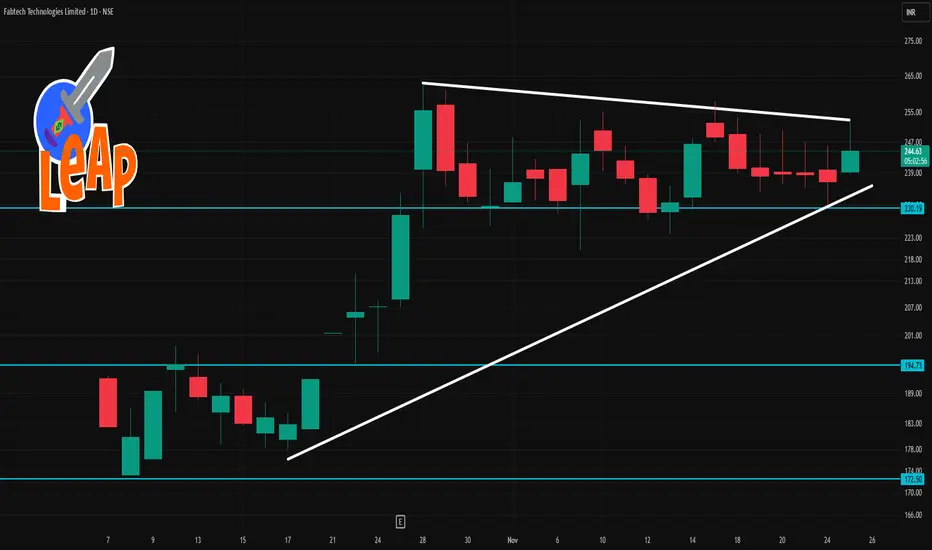
Trendcontinuation
IDBI 1 Week TIme Frame ✅ Key Levels
Support zone: ~ ₹99.30 and ~ ₹98.35.
Pivot / neutral price: ~ ₹100.94.
Resistance zone: ~ ₹101.89 and then ~ ₹103.53-₹104.48.
🎯 Watch-for This Week
A break above ~₹101.90 could unlock upside toward ~₹103.50/₹104.50.
A break below ~₹98.35 would signal increased weakness and could target support further down (~₹97 or lower) as per some longer-term charts.
Until one of these pivot points is decisively broken, expect the price to oscillate between ~₹99 and ~₹102.
ULTRACEMCO 1 Week Time Frame ✅ Current picture
1. The stock is trading around ₹11,650-11,700 in the NSE market.
2. Weekly indicators show caution: moving averages (20, 50, 100) are above the current price, signalling short‐term weakness.
3. According to weekly pivot‐levels from Moneycontrol:
Resistance around ₹11,865 – ₹12,115 (Classic)
Support around ₹11,501 – ₹11,365
4. Another source gives near-term support ~ ₹11,684 / ₹11,639 / ₹11,587, pivot ~ ₹11,736, resistance ~ ₹11,781 / ₹11,833.
5. Technically the sentiment is “Sell” on short‐term/higher timeframes: e.g., all major moving averages show “Sell” in investing.com.
6. Weekly MACD and RSI are showing mild bearish or neutral signals.
⚠️ Key caveats
These are purely technical levels for the very short term (≈ 1 week) and assume no major news/shock.
Market, sector (cement) and macro conditions (costs, demand) can sharply change the picture.
Strongest moving averages (100/200) are still significantly higher, signalling a broader weakness in trend.
MARUTI 1 Month Time Frame 📊 Key Metrics
Current price around ₹16,000 region.
One-month return: approximately –2.5% to –3%.
52-week high around ~₹16,660 and low around ~₹10,725.
🔍 Approximate Support & Resistance Levels (1-month timeframe)
From recent charts and technical data:
Immediate resistance: ~ ₹16,172 (R1), then ~ ₹16,368 (R2) and ~ ₹16,585 (R3)
Immediate support: ~ ₹15,759 (S1), then ~ ₹15,542 (S2) and ~ ₹15,346 (S3)
Pivot zone: ~ ₹15,955
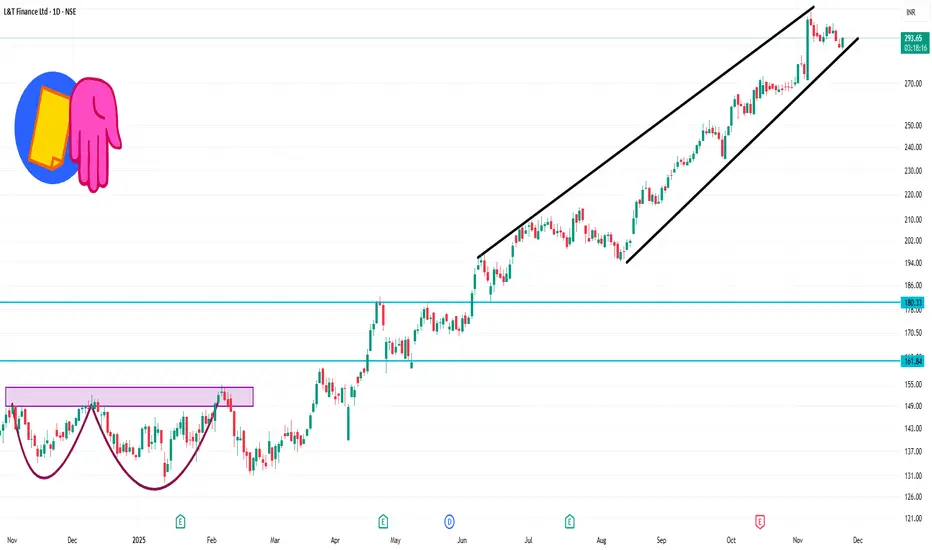
LTF 1 Day Time Frame 📊 Key Price Levels
Current price: ~ ₹ 289–294 per share.
Daily support zone: around ₹ 286–288.
Daily resistance zone: around ₹ 290–295+.
Pivot / central region: ~ ₹ 289.9 (~₹ 290).
✅ What to Watch
If price firmly rises above ~₹ 295, watch for the next resistance near ~₹ 300+ zone.
If price drops below ~₹ 286, support at ~₹ 280 & ~₹ 275 may come into play.
Volume and momentum—if breakout happens with strong volume, the move may have follow-through.
⚠️ Important Caveats
These levels are approximate and based on publicly available data. Market conditions can shift quickly.
Always combine technical levels with fundamentals, news, and broader market conditions.
Trading/investing carries risk—ensure your position size, stop-loss, and strategy align with your risk appetite.
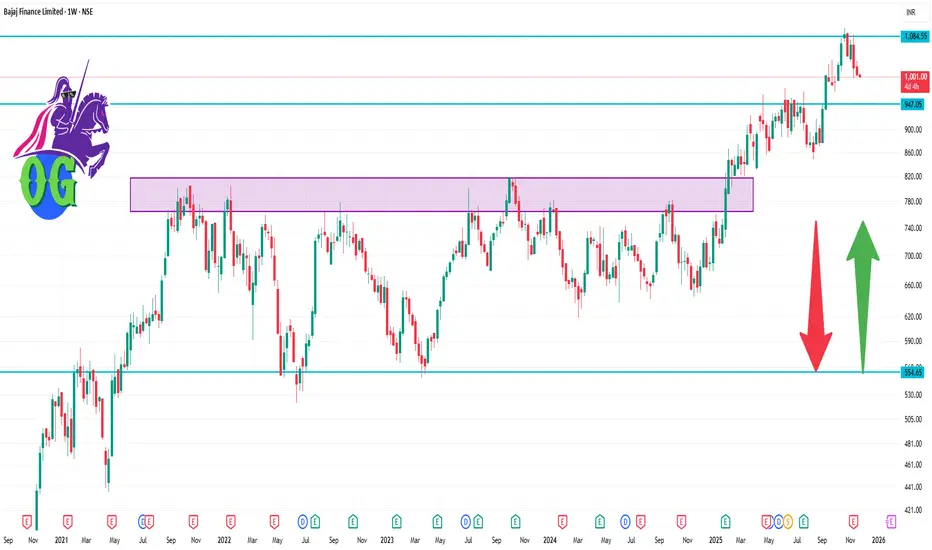
BAJFINANCE 1 Week Time Frame📊 Key Technical Levels
- Current price: ~ ₹1,004 (per Moneycontrol quote)
- Support zone:
~ ₹960-₹970 appears a meaningful near-term support (recent consolidation area)
If breakdown happens, a deeper support around ₹920-₹930 could become relevant
- Resistance zone:
~ ₹1,050-₹1,060 is the first hurdle (recent highs + psychological round number)
A stronger resistance around ₹1,100 (near the 52-week high ~₹1,102.50)
- Range estimate for week:
If neutral: ₹960-₹1,050
If bullish breakout: toward ₹1,100
If bearish breakdown: toward ₹920-₹930 or lower
Why Candlestick Patterns Matter in Trading🔸 Types of Candlestick Patterns
Candlestick patterns can be broadly classified into:
A. Single-Candle Patterns
Hammer
Hanging Man
Inverted Hammer
Shooting Star
Doji
Spinning Top
Marubozu
B. Double-Candle Patterns
Bullish Engulfing
Bearish Engulfing
Piercing Pattern
Dark Cloud Cover
Tweezer Top
Tweezer Bottom
Harami
Harami Cross
C. Triple-Candle Patterns
Morning Star
Evening Star
Three White Soldiers
Three Black Crows
Three Inside Up
Three Inside Down
Advanced-level Chart PatternWhy Chart Patterns Matter
Chart patterns help traders:
Identify trend reversal zones
Recognize trend continuation signals
Determine breakout points
Set entry, stop-loss, and target levels
Understand market behavior and crowd psychology
Most importantly, chart patterns simplify complex market data into visual structures, making decision-making easier.
Unlock India’s Derivatives Power1. The Rise of Derivatives in India
Derivatives—such as futures, options, and swaps—derive their value from underlying assets like stocks, indices, commodities, currencies, and interest rates. India’s derivatives journey began in the early 2000s when SEBI introduced index derivatives to modernize capital markets and reduce speculation in cash segments. Over time, the market matured, attracting domestic retail traders, institutional investors like mutual funds, FPIs, and corporate hedgers.
Today, the Indian derivatives market on the NSE and BSE records billions of dollars worth of contracts daily, with index options (especially Nifty and Bank Nifty) leading global volumes. The democratization of trading platforms, reduction of brokerage costs, and increased financial literacy have further strengthened participation.
2. Why Derivatives Matter for India’s Financial System
Unlocking India’s derivatives power requires recognizing the major roles derivatives play:
a. Risk Management
Derivatives allow traders and businesses to hedge against price volatility in stocks, commodities, interest rates, and currencies.
For example:
A gold importer hedges price movements using MCX gold futures.
A portfolio manager uses Nifty options to guard against market downturns.
This reduces uncertainties in business operations and enhances economic stability.
b. Price Discovery
Futures markets incorporate expectations about future prices, interest rates, demand changes, and macroeconomic events.
For example:
Rising crude oil futures may signal anticipated geopolitical tensions.
Falling index futures may reflect market caution before major policy announcements.
Thus, derivatives become a leading indicator for spot markets.
c. Liquidity Enhancement
The derivatives market trades massive volumes daily, which increases liquidity. High liquidity ensures:
Low transaction costs
Tight bid-ask spreads
Efficient entry and exit
This attracts even more participants, creating a virtuous growth cycle.
d. Leveraged Opportunities
Derivatives allow exposure to large positions with a small margin.
However, leverage is double-edged—working for and against traders. Proper risk discipline is essential.
3. Key Segments Driving India’s Derivatives Strength
a. Equity Derivatives
These dominate India’s markets.
Index Options
Nifty and Bank Nifty options are the backbone of derivatives trading.
Advantages:
Deep liquidity
Lower manipulation risk
Suitable for hedging and speculation
Single Stock Futures and Options
Used heavily by institutional players.
b. Currency Derivatives
India’s growing global trade and foreign investments make currency futures vital for:
Exporters hedging USD/INR or EUR/INR
Importers mitigating forex risk
Traders capturing arbitrage opportunities
c. Commodity Derivatives
MCX, NCDEX, and BEE provide platforms for commodity futures across:
Metals (gold, silver, aluminium)
Energy (crude oil, natural gas)
Agriculture (soybean, cotton, sugar)
This reduces volatility for farmers, industries, and logistics players.
d. Interest Rate Derivatives (IRD)
This segment supports:
Banks
NBFCs
Corporate treasuries
IRD helps stabilize bond markets and strengthen monetary policy transmission.
4. Technological Drivers Unlocking India’s Derivative Power
India’s derivatives boom is heavily powered by technology:
a. High-Speed Trading Platforms
Advanced order-matching engines on NSE and BSE allow microsecond-level execution.
b. Algorithmic and Quant Trading
AI and mathematical models enable:
Auto-trading systems
Statistical arbitrage
Options strategies like iron condors, butterflies, spreads
These bring efficiency and sophistication.
c. Mobile Trading Revolution
Retail participation surged due to:
Zero-commission brokers
Mobile trading apps
Real-time charts and indicators
This democratizes access to derivatives for small investors.
d. Big Data Analytics
Traders now rely on:
Options chain analytics
Market depth
Implied volatility indicators
Open interest interpretation
These help decode market sentiment.
5. How Policy and Regulation Support Derivative Market Growth
a. SEBI’s Robust Regulatory Framework
SEBI ensures transparency, limits manipulation, and protects investors through:
Strict margining systems
Daily settlement
Position limits
Surveillance mechanisms
b. Stock Exchanges’ Risk-Management Systems
NSE and BSE maintain:
Real-time risk monitoring
Market-wide circuit breakers
SPAN and peak margins
These prevent destabilizing events.
c. Government Initiatives
Reforms supporting derivatives growth:
Unified market regulator
Introduction of new derivative products
Increased FPI limits
Commodity market integration with mainstream markets
6. Retail Traders: The New Power in Indian Derivatives
Retail traders now form a major part of index options volume due to:
a. Low Capital Requirements
Options require very low capital at entry compared to futures.
b. Easy-to-use platforms
Everything from charting to algo tools is readily accessible.
c. Increasing financial education
YouTube channels, apps, and online courses fuel interest.
d. Popular intraday strategies
Like:
ATM/OTM straddle-strangle
Trend-following options
Breakout futures trading
Open interest analysis
Retail participation expands market depth and liquidity.
7. Challenges Before India Fully Unlocks Derivatives Power
India must overcome several hurdles:
a. Over-Speculation Risk
Excessive speculation in weekly options can lead to:
High losses for inexperienced traders
Market volatility
b. Low Understanding of Risks
Many traders jump into derivatives without:
Risk management
Position sizing
Stop-loss planning
Education is crucial.
c. Limited Institutional Depth
While retail dominates volume, institutional participation in options is still evolving.
d. Regulatory Overhang
Frequent rule changes (like margin norms) sometimes disrupt traders.
8. The Future: Where India’s Derivatives Market Is Heading
The next decade promises massive growth through:
a. Introduction of New Products
More sectoral index derivatives
Long-term options
Interest rate swaps
Commodity options expansion
b. Retail + Institutional Balance
A healthier mix of FPIs, DIIs, and retail will bring stability.
c. Global Integration
India may become a major derivatives hub like:
Chicago
London
Singapore
d. AI-Driven Derivatives Trading
AI systems will automate:
Strategy generation
Position management
Sentiment analysis
This transforms how derivatives are traded.
Conclusion
Unlocking India’s derivatives power is not just about trading; it is about strengthening the entire financial ecosystem. Derivatives offer tools for hedging, speculation, price discovery, and economic stability. With technological innovation, rising retail participation, strong regulation, and diversified product offerings, India is positioned to become a global leader in derivatives.
For traders, investors, businesses, and policymakers, understanding derivatives is essential for navigating and benefiting from India’s fast-evolving markets. As the country continues to grow economically and digitally, derivatives will play a central role in shaping the next era of financial empowerment.
Consumption Trends Unveiled1. Digital-First Consumer Behavior
One of the most significant modern trends is the shift toward digital-first consumption. With widespread internet accessibility and smartphone use, consumers increasingly prefer online channels for shopping, content consumption, financial transactions, and communication.
E-commerce has become a dominant retail model. Consumers now expect convenience, instant access to products, and seamless delivery systems. Online marketplaces are expanding rapidly due to personalized recommendations, competitive pricing, and wider product varieties. Additionally, social commerce—shopping directly through social media platforms—is gaining momentum, especially among younger generations who trust peer reviews and influencer endorsements.
Beyond retail, digital consumption includes streaming platforms for entertainment, digital banking, telemedicine, and online education. Every sector is witnessing a digital transformation as consumers adopt technology for efficiency, comfort, and lower costs.
2. Personalization and Customization
Modern consumers crave personalization. They want experiences, products, and services tailored specifically to their preferences. This trend is driven by AI-powered recommendation engines, data-driven marketing, and a deeper understanding of customer behavior.
Companies are using analytics to segment consumers based on browsing patterns, purchase history, lifestyle choices, and social media behavior. Personalized subscription boxes, curated shopping experiences, customized nutrition plans, and smart home devices that learn user habits are prime examples.
Moreover, consumers are increasingly involved in the creation process. Brands that offer customizable options—such as personalized shoes, tailored skincare, or adjustable meal plans—gain a competitive edge. Personalization not only enhances customer satisfaction but also builds strong brand loyalty.
3. Sustainability and Conscious Consumption
Environmental awareness is reshaping global consumption patterns. Today’s consumers, particularly Millennials and Gen Z, are more conscious of climate change, resource scarcity, and environmental impact. This has led to the rise of eco-friendly products, sustainable packaging, and ethical manufacturing.
Consumers prefer brands that adopt green practices, source responsibly, and maintain transparency in their supply chains. The shift toward plant-based foods, renewable energy products, slow fashion, and biodegradable items reflects this growing eco-conscious mindset.
Secondhand marketplaces, recycling initiatives, and circular economy models (where products are reused, refurbished, or recycled) are also becoming mainstream. As sustainability influences purchasing decisions, companies must adapt to remain relevant and trustworthy.
4. Health, Wellness, and Holistic Living
Health and wellness have evolved from niche trends to global consumption drivers. Consumers increasingly prioritize physical fitness, mental well-being, and preventive healthcare. This shift accelerated due to the pandemic, which heightened awareness of health risks.
Demand for nutrition-rich foods, organic products, immunity-boosting supplements, and wellness services has surged. Fitness apps, wearable devices, and virtual workout platforms have gained popularity due to convenience and personalization.
Mental health has also emerged as a key focus, with consumers seeking mindfulness apps, relaxation products, therapy services, and work-life balance solutions. The wellness economy has expanded to include sleep technology, ergonomic home products, and wellness tourism.
5. Experience-Driven Consumption
Another major trend is the shift from product ownership to experience-driven consumption. Consumers now value memorable experiences—travel, entertainment, dining, adventure, and cultural activities—over material possessions.
The “experience economy” is thriving:
Travel and tourism industries focus on curated, immersive experiences.
Restaurants emphasize unique concepts and ambiance.
Events, festivals, and pop-up activities attract large audiences.
Virtual reality and augmented reality are creating new entertainment formats.
Younger consumers especially prioritize experiences that reflect self-expression and social identity. Sharing experiences online amplifies this trend, as people seek activities that are “social media worthy.”
6. Rise of Subscription-Based Models
Subscription services have grown exponentially across various industries. Consumers prefer ongoing access over one-time purchases because subscriptions offer convenience, value, and regular upgrades.
Popular examples include:
Streaming platforms like Netflix and Spotify
Subscription boxes for beauty, fashion, and fitness
Cloud storage and software services
Meal kits and grocery subscriptions
Auto-subscription for household essentials
Businesses benefit from predictable revenue streams, while consumers enjoy flexibility, personalization, and frequent content or product updates.
7. Other Emerging Trends
The Sharing Economy
Consumers increasingly participate in shared consumption models, such as ride-sharing, coworking spaces, community rentals, and shared mobility solutions. This trend reduces ownership costs and supports sustainability.
Localism and Hyper-Localization
Many consumers prefer locally produced goods due to their freshness, authenticity, and community support. Pandemic-driven supply chain disruptions accelerated this trend.
Financial Consciousness
Economic uncertainty has made consumers more value-driven. They seek discounts, compare prices across platforms, and prioritize financial planning tools. Buy Now Pay Later (BNPL) services, digital wallets, and micro-investing platforms are growing.
8. Drivers Behind Changing Consumption Patterns
Several key forces are influencing modern consumption trends:
Technological Advancements
AI, machine learning, IoT, and big data have transformed how businesses understand and target consumers.
Demographic Shifts
A younger, tech-savvy generation is reshaping consumption priorities, while aging populations create demand for healthcare services and age-friendly products.
Globalization
Consumers have access to global brands, ideas, and experiences, leading to diverse preferences.
Socioeconomic Changes
Rising incomes in developing nations and middle-class expansion influence spending power and lifestyle aspirations.
Cultural Evolution
Social media, global trends, and peer influence redefine consumption norms and expectations.
9. Implications for Businesses and Markets
Understanding consumption trends is critical for companies to stay competitive. Businesses must:
Adopt digital-first strategies
Enhance personalization efforts
Focus on sustainability
Innovate new customer experiences
Strengthen e-commerce capabilities
Build trust through transparency
Offer flexible subscription or hybrid models
Companies that fail to recognize these changes risk losing relevance in an economy driven by dynamic consumer expectations.
Conclusion
Consumption trends today are shaped by a combination of technology, demographics, values, and global economic shifts. As consumers evolve, businesses must rethink their strategies, products, and services to meet emerging demands. The future will belong to organizations that understand their customers deeply, innovate continuously, and prioritize sustainability, personalization, and digital transformation.
Trading With AI Is Easy1. AI Simplifies Market Analysis
One of the biggest challenges in trading is understanding the market. Human traders spend hours studying charts, indicators, and historical data. AI solves this challenge by processing vast amounts of information within seconds. Machine learning algorithms can analyze:
Price trends
Volume patterns
Global news
Social media sentiment
Economic indicators
Historical correlations
This allows AI systems to provide a deeper and more accurate view of market conditions. Instead of manually reading dozens of charts, traders simply rely on AI-generated insights that highlight trends, warn of risks, and predict probable outcomes. This drastically reduces the time and effort required to make decisions.
2. AI-Powered Predictions Improve Accuracy
AI excels at recognizing patterns that humans often overlook. Advanced models such as neural networks observe millions of data points simultaneously and forecast price movements based on probability. Although AI cannot guarantee 100% accuracy, it significantly improves the reliability of predictions compared to traditional manual analysis.
For example:
AI can identify early signs of trend reversals before they appear clearly on charts.
Predictive algorithms can estimate the strength of momentum, volatility, and breakout potential.
Sentiment analysis tools can detect market mood shifts in real time.
These capabilities help traders make more informed decisions and avoid emotional pitfalls like fear, greed, and panic.
3. Automation Makes Trading Easier
AI's greatest advantage lies in automation. Automated trading—often called algorithmic trading—uses AI systems to execute trades without human intervention. Traders simply set the rules, and the AI executes them flawlessly. This leads to:
Faster order execution
Reduced slippage
Removal of emotional bias
Consistent performance
24/7 trading even when the trader is offline
Automated systems handle multiple indicators, timeframes, and markets simultaneously, something humans cannot manage manually. This makes trading easier and more efficient for both beginners and professionals.
4. AI Helps Eliminate Emotional Trading
Humans are naturally influenced by emotions such as fear, hope, and excitement. These emotions often lead to bad decisions—entering trades too early, exiting too late, or over-trading.
AI, on the other hand, is emotionless.
It operates purely on data and logic, ensuring:
Discipline
Consistency
Accuracy
Strict adherence to strategy
This helps traders avoid common psychological traps and maintain a stable, long-term approach.
5. AI Reduces the Learning Curve
For beginners, trading can feel overwhelming. Understanding technical indicators, chart patterns, and market fundamentals usually requires months of learning. AI tools simplify this process by offering:
Ready-made strategies
Automated signals
Visual dashboards
Clear buy/sell suggestions
Real-time risk assessment
Instead of learning everything manually, traders can rely on AI tools to guide them. This shortens the learning curve and makes trading accessible even to those without deep financial knowledge.
6. AI Enhances Risk Management
Risk management is the foundation of successful trading. Many traders fail not because their strategy is wrong, but because their risk management is weak. AI enhances risk control by:
Automatically adjusting position sizes
Setting optimal stop-loss and take-profit levels
Predicting potential drawdowns
Detecting high-risk market conditions
Avoiding trades during unpredictable volatility
AI’s ability to quantify and manage risk makes trading far safer and more predictable.
7. Real-Time Market Monitoring
Markets change quickly. A sudden news event can cause massive price movements. No human can monitor markets every second, but AI can. It constantly scans:
Charts
Data feeds
News
Economic calendars
Sentiment trends
AI then instantly alerts traders or automatically executes strategies. This ensures traders never miss opportunities or fail to react during major events.
8. AI Provides Personalized Trading Experience
Modern AI tools learn from each trader’s behavior. They adjust based on:
Trading style
Risk tolerance
Preferred markets
Timeframe selection
Past performance
This personalization creates a trading system that evolves over time and becomes smarter every day. Beginners get guidance, while experienced traders get advanced insights tailored to their strategies.
9. AI Supports All Markets
AI is not limited to one market. It works across:
Stocks
Forex
Cryptocurrencies
Commodities
Indices
Derivatives (options & futures)
The same AI engine can track global markets simultaneously, giving traders a diversified edge.
10. Backtesting and Strategy Optimization Become Easy
Before using a trading strategy, it must be tested. AI makes this easy by running backtests using years of historical data. It can simulate thousands of trades within minutes. Traders can instantly see:
Profit and loss potential
Drawdowns
Win rate
Strategy performance in different market conditions
AI can also fine-tune strategies by optimizing parameters automatically, producing better results over time.
11. Time-Saving and Efficient
Trading used to require hours of chart analysis daily. With AI:
Daily analysis takes seconds
Signals are instant
Trades can run automatically
Risk is calculated in real time
This allows traders to maintain their career, studies, or business while trading part-time or passively.
12. AI Levels the Playing Field
Earlier, only big institutions had access to advanced tools. Now AI technology is widely available through:
Trading platforms
Mobile apps
Cloud-based systems
Retail AI bots
Online broker tools
This gives small traders the same processing power previously available only to hedge funds.
Conclusion: Trading With AI Is Easier, Smarter, and More Accessible
AI does not eliminate all risks, and it does not guarantee profits. But it dramatically simplifies the entire process of trading by providing:
Deep market insights
Advanced predictions
Automated decision-making
Personalized strategies
Emotion-free execution
24/7 monitoring
Optimized performance
Trading will always involve uncertainty, but with AI, traders can navigate markets with far more confidence, clarity, and efficiency. AI has changed trading forever—making it easier, smarter, and more accessible for everyone.
Smart Money Secrets1. The Psychology Behind Smart Money Movement
Smart money rarely buys at the top or sells at the bottom. Instead, institutions accumulate positions slowly during periods of low volatility and distribute them quietly near tops. The retail crowd does the opposite—buy at tops out of fear of missing out (FOMO) and sell at bottoms due to panic.
Institutions exploit this behavior by:
Creating liquidity traps
Triggering stop-loss hunts
Pushing the price into zones where retail traders enter in the wrong direction
Fading false breakouts
Their goal is simple: buy from emotional sellers, and sell to emotional buyers.
Understanding this psychology is crucial because following smart money usually leads to high-probability trades, while following retail noise often leads to losses.
2. Liquidity: The Fuel of Smart Money
A core smart money secret is that price moves where liquidity exists, not where emotions point. Liquidity refers to regions where many orders are present—like stop losses, pending orders, and institutional blocks.
Smart money actively targets:
Stop loss clusters
Liquidity pools above swing highs
Liquidity pools below swing lows
Areas of imbalance and inefficiency
Example:
When many retail traders place stop losses below a support level, institutions may deliberately push the price below that level to trigger those stops, collect liquidity, and then reverse the price upward.
This phenomenon is called a liquidity grab.
3. Market Structure and Smart Money
Institutions trade based on market structure, not indicators. They analyze:
Higher highs and higher lows
Break of structure (BOS)
Change of character (CHoCH)
Fair value gaps (FVG)
Order blocks (OB)
When smart money wants to reverse a trend, they leave signals through these structural changes. Traders who understand the smart money model (SMM) can identify early trend reversals long before retail indicators show them.
4. Order Blocks – Smart Money Entry Zones
An order block represents a candle or zone where institutions placed significant buy or sell orders. After these zones are formed, price often returns to them to “mitigate” or rebalance institutional positions.
Types of order blocks:
Bullish Order Block: Last down candle before an upward expansion
Bearish Order Block: Last up candle before a downward expansion
When price returns to an order block:
Institutions re-enter or add to positions
High-probability trades form
Retail traders are often on the wrong side
Order blocks are one of the strongest smart money signals for entries.
5. Fair Value Gaps – Imbalances in Price
Smart money often causes rapid price moves that leave gaps between candles. These are called Fair Value Gaps (FVGs) or imbalance zones.
Why they form:
Large institutions place massive orders
Market doesn’t have enough liquidity to fill all levels
Price “jumps” leaving an imbalance
Smart money expects price to return to fill these gaps because they represent inefficiencies in the market. Traders use these zones for entry confirmations and profit targets.
6. Stop Hunts and Liquidity Sweeps
One of the biggest secrets in smart money behavior is stop hunting—a deliberate attempt to trigger retail stop losses.
Reasons for stop hunts:
To collect liquidity for institutional entries
To trap retail traders in the wrong direction
To create volatility before the actual move
Common patterns:
Price dips below a major support and shoots up
Price wicks above a resistance and falls sharply
Long wick candles near order blocks
Retail traders often perceive these as breakouts, but smart money uses them for liquidity collection.
7. Inducement – The Trap Before the Real Move
Inducement is a clever technique used by smart money to lure traders into false setups.
Example:
Price approaches a resistance level multiple times, making retail traders think a breakout is coming. Just before the real move happens:
Price sweeps the liquidity above resistance
Then reverses back into smart money’s direction
Inducement helps institutions create liquidity for their own trades.
8. Volume as a Smart Money Indicator
While price can be manipulated, volume rarely lies. Smart money activity is marked by:
High-volume candles at turning points
Volume spikes during liquidity sweeps
Decreasing volume during pullbacks (institutional accumulation)
Volume Profile and VWAP are tools many traders use to detect institutional footprints.
9. Smart Money and Algorithmic Trading
Modern smart money behavior is driven by algorithms operated by major institutions. These algorithms:
Scan liquidity zones
Execute orders at optimal prices
Analyze price inefficiencies
Prevent slippage
Algorithms follow rules based on order flow, not indicators. This is why price often moves in patterns consistent with smart money concepts, such as BOS, CHoCH, FVGs, and OB mitigations.
10. How Retail Traders Can Use Smart Money Secrets
To trade like smart money, retail traders should:
1. Follow Liquidity, Not Emotions
Identify where liquidity rests:
Equal highs
Equal lows
Swing points
Consolidation zones
These are areas institutions target.
2. Identify BOS and CHoCH
Break of structure reveals trend continuation.
Change of character signals trend reversal.
3. Use Order Blocks and FVGs for Entries
These are high-probability institutional zones.
4. Avoid Trading Breakouts Blindly
Most breakouts are manipulations. Wait for liquidity sweeps.
5. Understand Timing
Smart money moves often occur during:
London Session Open
New York Session Open
Major economic news
Avoid trading in the dead zones between sessions.
6. Stop Using Too Many Indicators
Indicators lag behind price. Smart money trades price action and liquidity.
11. Why Smart Money Secrets Matter
Following smart money helps traders:
Avoid bull and bear traps
Enter trades at institutional pricing
Improve risk-reward ratios
Understand why price moves
Gain confidence through structure-based trading
Instead of being manipulated by market makers, traders learn to trade with them.
Conclusion
Smart money secrets revolve around understanding how institutions operate—where they enter, where they exit, and how they manipulate liquidity. By analyzing market structure, order blocks, liquidity zones, BOS/CHoCH signals, and fair value gaps, traders gain deep insight into true market behavior. While retail traders often trade based on indicators and emotions, smart money trades based on liquidity and structure. Learning these principles allows any trader to align with institutional order flow, trade high-probability setups, and avoid common retail pitfalls.
Plan your trades and trade your plan1. Why Planning Matters in Trading
Trading without a plan is like entering a battlefield without a strategy. Markets are unpredictable, influenced by global events, economic data, institutional activity, and trader psychology. Without a plan, emotions such as fear, greed, and impatience take over, resulting in poor decisions.
A well-crafted trading plan helps you:
Reduce emotional decision-making
Identify high-probability setups
Manage risks professionally
Improve consistency
Evaluate and improve your performance over time
Planning creates a roadmap. Instead of reacting impulsively, you follow a set of rules designed specifically for your trading style and risk tolerance.
2. Define Your Trading Goals
Every trader must begin with clear goals. Ask yourself:
Do you want steady short-term gains or long-term wealth building?
Are you trading to supplement income or become a full-time trader?
What is your acceptable level of risk?
Setting goals helps determine the market you trade, your strategy, time commitment, and expectations. For example:
Intraday traders focus on daily volatility and need quick decisions.
Swing traders hold trades for days or weeks.
Positional traders rely more on long-term charts and fundamental strength.
Your trading plan should reflect your goals and lifestyle. If you cannot monitor markets all day, intraday trading is unsuitable; swing or positional trading is better.
3. Choose Your Market and Instruments
Planning involves knowing what you will trade:
Stocks
Indices (Nifty, Bank Nifty)
Commodities (Gold, Crude oil)
Forex
Crypto
Futures & Options
Each market behaves differently. For example, Bank Nifty is highly volatile and suits active traders, while large-cap stocks suit long-term positional trades. By focusing on a specific market, you develop familiarity and improve accuracy.
4. Develop a Strategy
Your trading plan must include a clear strategy with defined rules. A strategy answers:
When to enter
When to exit
How to manage risk
How to manage position size
For example, a simple breakout strategy may include:
Setup: Stock consolidates near resistance
Entry: Buy above breakout candle high
Stop-loss: Below consolidation zone
Target: 1:2 or 1:3 risk–reward ratio
Alternatively, a swing strategy might use:
Moving averages
RSI divergence
Candlestick confirmation
Support/resistance zones
The key is not the complexity of the strategy, but consistency in applying it.
5. Set Clear Entry and Exit Rules
No trade should be taken without predefined rules.
Entry Rules
An entry rule should be objective. Example:
Price closes above 20-day high
Volume is above average
RSI crosses above 50
Trend is supported by higher highs and higher lows
Entry should never be based on rumors, tips, or fear of missing out.
Exit Rules
A disciplined trader exits based on:
Pre-set stop-loss
Target levels
Trail stop-losses
Trend reversals
Exit rules prevent emotional decisions. Even if the market reverses, you stick to your plan.
6. Risk Management: The Heart of Planning
Risk management decides whether you survive in the market. Many traders lose money because they ignore this step.
Key Components of Risk Management
a) Stop-Loss
A stop-loss is mandatory for every trade. It limits the loss when the market moves against you.
b) Position Size
Never risk more than 1–2% of your capital on a single trade.
Example:
If your capital is ₹1,00,000, risk per trade should be ₹1,000–₹2,000.
c) Risk–Reward Ratio
A healthy risk–reward ratio (RRR) ensures long-term success.
Minimum acceptable ratio: 1:2
Meaning: If you risk ₹100, aim to earn ₹200
Good traders focus on trades with high RRR instead of trying to win every trade.
7. Market Analysis Before Entering
Before you take a trade, analyze:
a) Trend
Trade with the trend:
Uptrend → Look for long positions
Downtrend → Look for shorts or avoid longs
b) Support and Resistance
Identify levels where price is likely to react.
c) Volume Analysis
Volume confirms the strength of the move.
d) Chart Patterns
Double bottoms, flags, triangles, and head & shoulders provide high-probability setups.
e) Candlestick Patterns
Hammers, engulfing candles, and dojis offer confirmation signals.
8. Maintain a Trading Journal
A trading plan is incomplete without a trading journal. Record:
Date and time
Entry and exit
Stop-loss and targets
Reason for trade
Emotions before and after
Outcome and learnings
A journal reveals patterns in your behaviour—emotional trades, overtrading, revenge trading—and helps improve performance.
9. Avoid Emotional Trading
Emotions destroy consistency. Common emotional mistakes include:
Fear of missing out (FOMO)
Greed (holding too long)
Fear (exiting too early)
Revenge trading
Overconfidence after a winning streak
Your goal is to follow your plan, not your feelings. With a plan, you avoid impulse trades and maintain discipline.
10. Backtest and Practise Your Trading Plan
Before using real money, test your strategy on historical data. Backtesting helps determine:
Profitability
Accuracy
Maximum drawdown
Risk–reward performance
Paper trading (demo trading) strengthens confidence and skill before risking capital.
11. Review and Improve Your Plan Regularly
Markets evolve. A trading plan should be dynamic.
Review monthly or quarterly:
Win-loss ratio
Average return
Maximum loss
Psychological mistakes
Strategy performance
Adjust your plan when necessary. Improvements may include:
Better entries
Tighter stop-loss
Reduced position size
Using trailing stops
Focusing on fewer, higher-quality setups
12. Final Thoughts: Discipline Creates Success
A well-crafted trading plan is your foundation. Everything else—charts, indicators, and setups—comes secondary. A plan helps you stay consistent, disciplined, and focused. Remember:
You cannot control the market
You can control your behaviour
The most successful traders are not those with the most complex indicators, but those who follow their plan with discipline every single day.
Public Sector Banks in the Trading Market1. What Are Public Sector Banks?
Public Sector Banks are commercial banks where the Government of India holds majority ownership, usually above 51%. These banks operate under government oversight and play a vital role in:
Mobilizing public savings
Lending to priority sectors
Executing government welfare schemes
Providing financial inclusion
Supporting economic stability
Some major PSBs include:
State Bank of India (SBI) – India’s largest bank
Bank of Baroda (BoB)
Punjab National Bank (PNB)
Canara Bank
Union Bank of India
Indian Bank
Bank of India (BoI)
UCO Bank, Bank of Maharashtra, Central Bank of India, etc.
These banks collectively hold nearly two-thirds of India’s banking assets, giving them huge influence in stock market behaviour.
2. Importance of PSBs in the Trading Market
a) High Liquidity and Trading Volumes
PSB stocks like SBI, BoB, and PNB consistently appear in the NSE’s most-traded list, making them attractive for:
Intraday traders
Swing traders
Options traders
Institutional investors
Liquidity ensures narrower spreads, faster order execution, and stable price discovery.
b) Macro Indicators
PSBs reflect the health of:
Credit growth in the economy
Corporate borrowing trends
Housing and retail loan demand
Government capital expenditure
Stress in sectors like MSME or agriculture
Thus, traders use PSB performance to gauge broader market trends.
c) Interest Rate Impact
Bank profitability is heavily dependent on the interest rate cycle.
Rising rates → higher net interest margin (NIM) → PSBs rally
Falling rates → lower margins → PSBs correct
Therefore, PSB stocks move quickly after:
RBI monetary policy
Inflation data
Government bond yield changes
This makes them ideal for event-based trading.
3. How Public Sector Bank Stocks Behave
PSB stocks often show cyclical behaviour related to the broader economy.
a) Credit Demand Cycle
When corporate and retail loan demand is strong:
Bank lending grows
NIMs improve
Profitability increases
Stocks rally
During slowdowns, lending slows and PSBs weaken.
b) NPA (Non-Performing Assets) Influence
A major factor that affects PSB valuations is bad loans.
High NPAs = weak valuations
Lower NPAs = strong re-rating and investor confidence
Whenever PSBs report declining NPAs, stocks usually see multi-month rallies.
c) Government Recapitalization
PSBs sometimes require government capital infusion to strengthen balance sheets.
Announcements of recapitalization often cause:
Short-term volatility
Long-term stability
Such events attract traders seeking momentum.
4. Key Factors Traders Track in PSBs
1. RBI Monetary Policy
Interest rate hikes usually have a positive impact on PSBs initially but may impact loan growth later. The reverse is true for rate cuts.
2. Credit Growth Data
Higher loan growth = bullish sentiment.
3. NPA Trends
Quarterly results showing reduced NPAs cause strong buying.
4. Provisioning Coverage Ratio
Higher provisioning means lower future risk.
5. Government Policies
Schemes like:
Jan Dhan Yojana
Mudra loans
PM Kisan
Affordable housing subsidies
impact PSB balance sheets as these banks execute most government programs.
6. Bond Yield Movements
Bond yields impact treasury income. PSBs hold large government bond portfolios, so:
Falling yields → appreciate bond prices → higher profits
Rising yields → mark-to-market losses
This directly affects stock movements.
7. Global Market Sentiment
PSBs often move in line with:
US interest rate trends
Crude oil prices
Global risk appetite
Because they reflect India’s financial stability.
5. Why Traders Prefer PSB Stocks
✔ Volatility and Momentum
PSBs offer clear trending phases and sharp breakouts during periods of:
Economic expansion
NPA reduction
Privatization rumours
Monetary policy shifts
Their volatility works well for both intraday and swing trading.
✔ High Options Activity
PSBs like SBI and PNB have:
Liquid options
Tight premiums
Wide strike selections
This helps option sellers and buyers trade with confidence.
✔ Low Valuation Base
PSBs often trade at low price-to-book (P/B) ratios compared to private banks. So when re-rating happens, rallies are stronger and sustained.
✔ Strong Institutional Participation
FIIs and DIIs frequently invest in PSBs during bullish economic cycles. Their buying creates long uptrends.
6. Risks in Trading Public Sector Banks
PSBs carry unique risks that traders must consider.
1. High Exposure to Government Schemes
While beneficial for society, these schemes sometimes:
Reduce profitability
Increase operational costs
Lead to higher NPAs in certain sectors
2. Slow Decision-Making
Compared to private banks, PSBs may be slower to adapt to:
Digital banking
Fintech competition
Modern risk assessment systems
This can limit valuation expansion.
3. Vulnerability to Economic Stress
PSBs are more exposed to:
MSME distress
Agriculture stress
Infrastructure lending defaults
These risks cause periodic corrections.
7. Trading Strategies for Public Sector Banks
1. Event-Based Trading
Best events for trading PSBs:
RBI monetary policy
Union Budget
Quarterly results
NPA announcements
Government recapitalization news
Privatization rumours
Traders often take positions before or after these events.
2. Trend Following Strategies
PSBs tend to show long, clean trends. Traders use:
20/50/200 EMA crossovers
RSI breakout levels
Price-volume surge patterns
Trendline breakouts
Trending phases provide multi-week or multi-month opportunities.
3. Options Strategies
Popular strategies:
Bull call spread (during NPA improvement cycles)
Short straddle/strangle (during consolidation phases)
Protective put (around volatile policy announcements)
4. Pair Trading
Traders sometimes pair:
SBI vs Bank of Baroda
PNB vs Union Bank
Canara Bank vs Indian Bank
Based on relative strength comparisons.
8. Long-Term View of PSB Stocks
Historically, PSBs have delivered inconsistent long-term returns, but cycles of reform — such as:
Bank mergers
Digital transformation
NPA resolution
Government capital infusion
Interest rate cycles
have created powerful rally phases.
Investors who entered during undervalued periods often gained significantly over the long term.
Conclusion
Public Sector Banks are foundational pillars of India’s financial ecosystem. For traders, they offer a rare combination of:
High liquidity
Strong correlation with macroeconomic trends
Event-driven volatility
Clear trend opportunities
Attractive options trading potential
However, trading PSBs also requires careful monitoring of:
NPAs
RBI policies
Government decisions
Bond yields
Sector-wise economic health
Understanding these factors helps traders navigate PSB stocks effectively in both short-term and long-term market environments.
Part 8 Trading Master Class With ExpertsOptions Trading Styles in Markets
1. Intraday Option Trading
Fast movements
High leverage
Requires quick decision-making
2. Positional Options Trading
Holding for days or weeks
Less stressful than intraday
3. Weekly Expiry Trading (India-specific)
NIFTY & BANK NIFTY weekly options
Very popular among retail traders
Weekly options bring rapid time decay, which benefits option sellers but hurts buyers.
Part 7 Trading Master Class With Experts Non-Directional Strategies
Used when markets are expected to be sideways or volatile.
1. Straddle (Buy Call + Buy Put)
Profit from high volatility in any direction.
2. Strangle
Cheaper version of straddle, using OTM options.
3. Iron Condor
Sell OTM call and put spreads.
Used for stable markets to earn premium.
4. Butterfly Spread
Low-cost strategy for low volatility expectations.
These strategies help traders benefit from volatility, time decay, and neutral price movements.
Part 6 Learn Institutional TradingTypes of Options Strategies
Option strategies are divided into two broad categories:
- Directional Strategies
Used when you expect the market to move strongly in one direction.
1. Long Call
Profit from big upward moves.
2. Long Put
Profit from major downward moves.
3. Bull Call Spread
Buy call + Sell call (higher strike)
Reduces cost and risk.
4. Bear Put Spread
Buy put + Sell put (lower strike)
Candle Patterns Candlestick patterns are one of the most widely used tools in technical analysis. Originating from 17th-century Japanese rice trading, they provide visual information about market psychology, price momentum, and potential trend reversals. Each candlestick represents price movement during a specific time period—whether 1 minute, 1 hour, 1 day, or more. By studying candlestick patterns, traders try to anticipate whether buyers or sellers are gaining control and what the next move might be.
A candlestick consists of four key data points: open, high, low, and close. The body of the candle reflects the distance between the open and close, while the wicks (also called shadows) indicate the highs and lows. A bullish candle typically closes higher than it opens, while a bearish candle closes lower. When these candles form specific shapes or sequences, they become candlestick patterns.
Candlestick patterns fall into three major categories: bullish reversal, bearish reversal, and continuation patterns. Understanding each helps traders identify potential turning points and trend confirmations.
Premium Chart Pattern Understanding Chart Patterns
Every chart pattern represents crowd psychology—fear, greed, uncertainty, accumulation, or distribution. Institutional traders leave their footprint on charts, and patterns help retail traders align with their moves.
Patterns are formed across all time frames:
1-minute charts for scalping
5–15 minutes for intraday
1 hour for swing trading
Daily/weekly charts for positional trading
The bigger the time frame, the more reliable the pattern.
TRIDENT 1 Month Time Frame ✅ What we see
Fundamentals
Current price ~ ₹28.38.
Market cap ~ ₹14,462 cr, P/E ~32.8×, P/B ~3.15×.
ROE quite low (~8-10% range) and growth over past years has been muted.
52-week high ~ ₹40.20, 52-week low ~ ₹23.11.
Recent quarterly figures: sales up modestly; profits under pressure.
Technical / Price context
The share is nearer to its 52-week low than high, which may offer perceived value to some.
Some moving-average crossovers (per reports) flagged “sell signals” in short term.
Short-term return in past month has been very small (~0.64% 1-month return).
NETWORK18 1 Day Time Frame Current Price: ~ ₹ 45.04.
Day’s Range: ~ ₹ 44.89 (low) to ₹ 45.76 (high)
Key Support Level: Around ₹ 44.50-45.00 — if price breaks below this, further downside may open.
Key Resistance Level: Around ₹ 46.50-47.00 — if price breaks above this with volume, upside potential may resume.
52-week range: Low ~ ₹ 39.66, High ~ ₹ 85.39.
Smart Loss Management Guide in the Trading Market1. Why Loss Management Is More Important Than Profit-Making
Most new traders focus on making money and ignore risk control. But experienced traders know that your downside determines your survival. If capital is destroyed early, even a good trading system cannot help. Here’s why loss management matters:
Capital Preservation: If you lose 50% of your account, you need a 100% gain to recover. Avoiding deep drawdowns is essential.
Consistency Over Luck: A trader with average profits but disciplined risk control will outperform an aggressive trader without rules.
Uncertainty of Markets: Even the best strategies have losing streaks. Smart loss management keeps you disciplined during uncertain phases.
Simply put, losing small and winning medium-to-large is the essence of profitable trading.
2. Key Principles of Smart Loss Management
2.1 Risk Per Trade Rule
Professional traders follow a simple rule:
Risk only 1–2% of trading capital per trade.
This ensures that even after 10 losing trades in a row, your capital stays strong. A 1% rule means:
If your capital = ₹1,00,000
Max loss per trade = ₹1,000
This protects you from emotional decisions and ensures controlled drawdowns.
2.2 Position Sizing
Position size determines how much quantity you buy or sell. It must be based on:
Stop-loss distance
Capital
Risk per trade percentage
Formula:
Position Size = Risk Amount / Stop-Loss Distance
Example:
Capital = ₹1,00,000
Risk per trade = 1% = ₹1,000
Stop-loss = 5 points
Position size = 1000 / 5 = 200 quantity
This keeps your risk uniform across trades.
2.3 Placing Effective Stop-Loss Orders
Not all stop-losses are equal. Smart traders use:
Technical stop-loss: based on chart levels (support, resistance, swing high/low).
Volatility-based stop-loss: dynamic stops using ATR (Average True Range).
Time-based stop-loss: exit if trade doesn’t work within a fixed time window.
Avoid placing stops too close, which results in premature exits.
2.4 Avoiding Averaging Down
Many traders double their position when price goes against them thinking it will “bounce back”.
This is dangerous.
Averaging down increases exposure when your analysis is already wrong. Professional traders do the opposite—they scale out or exit.
2.5 Maintain Reward-to-Risk Ratio
Every trade must have a minimum Risk-to-Reward (RR) ratio of 1:2 or 1:3.
Example:
If risk = ₹1,000
Target should be ₹2,000 or ₹3,000
This ensures that even with a 40% win rate, you remain profitable.
3. Psychological Pillars of Smart Loss Management
Market losses are emotionally painful. Most poor decisions come from emotions like fear, hope, greed, and frustration. Smart traders master the psychology of loss.
3.1 Accept That Losses Are Normal
Every trader—beginner or expert—has losing trades. Accepting losses helps:
Reduce revenge trading
Maintain discipline
Focus on process, not outcome
3.2 Don’t Take Losses Personally
A losing trade is not a failure of your personality. It is simply part of the game. Traders who attach ego to trades often avoid closing losing positions, leading to bigger losses.
3.3 Control Overtrading
After a loss, many traders try to recover immediately. This emotional urge leads to irrational decisions. Smart loss management requires:
Stop trading after big loss
Follow pre-defined trade limits
Reset emotionally before next trade
3.4 Develop Emotional Discipline
The best loss management tool is self-control. This includes:
Sticking to stop-loss
Avoiding impulsive orders
Following a checklist before entering trades
Discipline converts a strategy into consistent profits.
4. Techniques for Smart Loss Management
4.1 Use Trailing Stop-Loss
Trailing stops help protect profits as the trade moves in your favor. For example:
If trade goes 20 points up, move stop-loss to breakeven
If trade goes 40 points up, trail stop to +20
This locks in gains and avoids giving back profits.
4.2 Hedging Positions
Advanced traders use hedging techniques like:
Options hedging (buying puts to protect long positions)
Futures hedging
Ratio spreads
Hedging reduces the impact of sudden volatility or news events.
4.3 Diversify Trades
Avoid putting all your capital into one trade or one sector. Diversification ensures:
Reduced exposure
Stable overall performance
Lower emotional pressure
But don't over-diversify; focus on 4–8 quality trades.
4.4 Use a Daily Loss Limit
Set a maximum daily loss that stops you from trading further.
Example:
Daily Max Loss = 3% of capital
If you hit that limit, stop trading for the day.
This prevents emotional breakdowns and unnecessary revenge trades.
4.5 Create a Trading Journal
Record:
Entry and exit
Stop-loss
Reason for trade
Emotional state
Reviewing your journal reveals patterns, mistakes, and ways to refine your strategy.
5. Common Mistakes to Avoid
5.1 Moving Stop-Loss Further Away
Traders sometimes shift stop-loss thinking the market will reverse. This is a mistake. A stop-loss must be respected at all times.
5.2 Trading Without a Defined Exit
A trade without a clear exit strategy becomes a gamble. Smart traders pre-plan both stop-loss and target.
5.3 Ignoring Market Conditions
A strategy that works in trending markets may fail in sideways markets. Loss management includes reducing position size during choppy or news-heavy environments.
5.4 Emotions-Based Position Sizing
Increasing lot size after a win or reducing after a loss emotionally disturbs risk management. Position size must always be formula-based.
6. Building Your Smart Loss Management System
Step 1: Define Your Risk Rules
Risk per trade, daily loss limit, maximum open trades.
Step 2: Create Position Sizing Formula
Based on stop-loss distance and capital.
Step 3: Pre-Plan Stop-Loss Levels
Technical, volatility-based, or time-based.
Step 4: Maintain a Journal
Track mistakes, patterns, and improvements.
Step 5: Maintain Emotional Discipline
Follow rules no matter what the market does.
7. Conclusion
Smart loss management is the foundation of profitable trading. Markets reward discipline, not emotion. By controlling risk, using effective stop-loss techniques, maintaining psychological discipline, and applying structured methods, traders protect their capital and grow consistently over time. Every successful trader understands that losses are unavoidable, but big losses are preventable. With a strong loss management system, you turn volatility from a threat into an opportunity and ensure you remain a long-term player in financial markets.