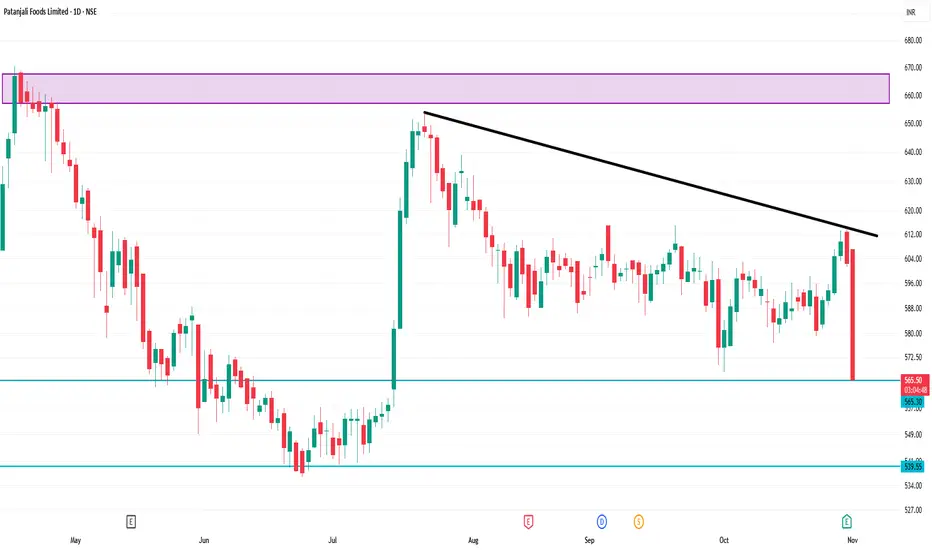
PATANJALI 1 Day Time Frame📊 Key levels to watch
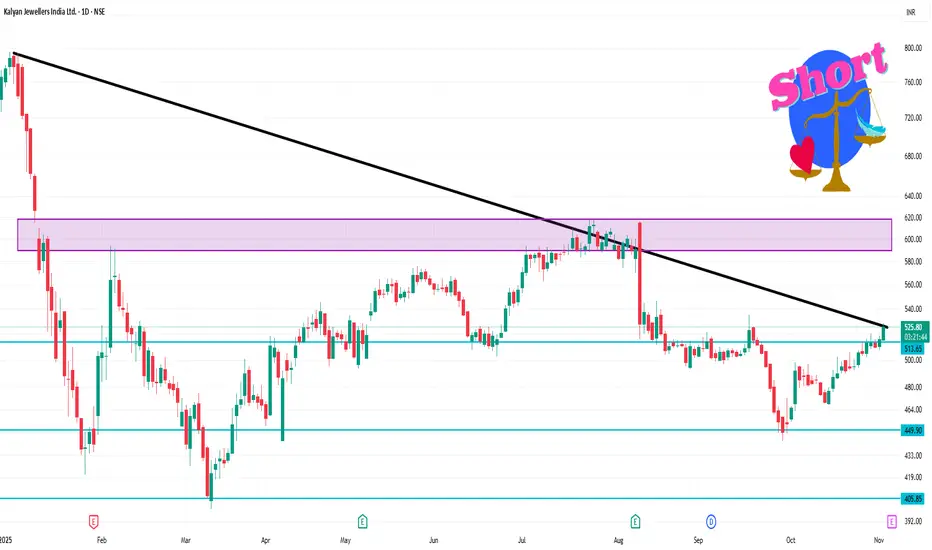
From the “pivot point” data available:
Pivot (approx): ₹ 571.62
First support level: ~ ₹ 562.84
Second support level: ~ ₹ 565.72
First resistance above pivot: ~ ₹ 574.64
Further resistance: ~ ₹ 577.52
So for the day, one might watch roughly ₹ 562-570 as support range and ₹ 574-578 as near-term resistance.
Trendcontinuation
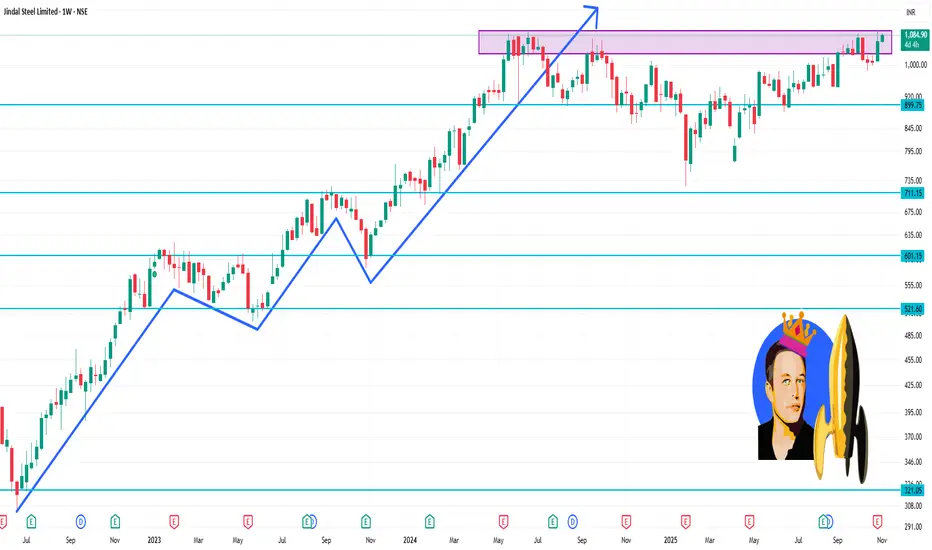
POWERGRID 1 Week Time Frame 🔍 Technical summary
The stock is trading around ₹ 288.50 (last quoted) on the NSE.
Short-term trend: the charts mark it as Neutral for the short term.
Key support level in the short term: ~ ₹ 280.25.
Key resistance level in the short term: ~ ₹ 293.30.
Volatility: Recent average daily range is modest — around ±1.3-1.6% of price (~₹4-5 on this stock) in a day.
✅ Summary
For the coming week, expect the stock to remain in a rangebound mode unless there is a surprise trigger. The most likely trading zone is ₹ 280 to ₹ 294, with the midpoint around ~₹ 288. A clear breakout above or breakdown below that zone would be noteworthy.
Advanced Hedging Strategies1. Understanding Advanced Hedging
At its core, hedging is a risk management technique that involves taking an offsetting position in a related asset to counterbalance potential losses. Advanced hedging, however, goes beyond simple protection. It focuses on optimizing risk-reward ratios, using derivatives combinations, and dynamically adjusting exposures according to market conditions. It is frequently used by institutional investors, hedge funds, multinational corporations, and sophisticated traders.
The aim is not just to eliminate risk but to control volatility, enhance returns, and maintain strategic flexibility.
2. Tools Used in Advanced Hedging
Before exploring the strategies, it’s important to understand the instruments used:
Options (Calls and Puts): Provide the right but not the obligation to buy or sell assets at a predetermined price.
Futures Contracts: Obligate both parties to transact at a set price on a future date.
Forwards: Customized agreements similar to futures but traded over the counter (OTC).
Swaps: Exchange of cash flows or financial instruments, commonly used to hedge interest rate or currency risks.
Exotic Derivatives: Include barrier options, binary options, and variance swaps, offering tailored risk exposures.
Advanced hedging strategies often combine several of these instruments into structured or synthetic positions.
3. Delta Hedging (Dynamic Hedging)
Delta hedging is a sophisticated options-based strategy that aims to neutralize the directional risk of an options position. “Delta” measures how much an option’s price changes relative to the underlying asset’s price.
For example, a trader holding a call option with a delta of 0.6 will hedge by selling 0.6 units of the underlying asset. As the asset price changes, the delta also changes, requiring continuous rebalancing — this is known as dynamic hedging.
Advantages:
Provides precise, real-time risk control.
Effective in managing volatility in fast-moving markets.
Challenges:
Requires constant monitoring and transaction costs.
Can lead to losses in extremely volatile or illiquid markets.
This strategy is common in options market-making, algorithmic trading, and institutional portfolio management.
4. Cross-Hedging
Cross-hedging occurs when the hedging instrument and the underlying asset are not identical but are correlated. This is often used when a direct hedge is unavailable or too costly.
For example, a jet fuel buyer might hedge fuel costs using crude oil futures since both prices move similarly. Similarly, a company exposed to a small currency may hedge through a major correlated currency.
Key to success: Correlation analysis. The hedge’s effectiveness depends on how closely the two assets move together.
Advantages:
Useful in illiquid or niche markets.
Provides flexibility in hedging complex exposures.
Limitations:
Imperfect correlation can lead to basis risk — the risk that the hedge and the asset move differently.
5. Interest Rate and Currency Swaps
Swaps are powerful tools in advanced hedging, especially for corporations and financial institutions exposed to interest rate or foreign exchange fluctuations.
Interest Rate Swaps: Allow companies to exchange fixed-rate payments for floating-rate ones, or vice versa.
Example: A firm with variable-rate debt may enter a swap to pay a fixed rate and receive a floating rate, stabilizing its interest expenses.
Currency Swaps: Used by multinational corporations to hedge exposure to exchange rate volatility in cross-border operations.
Benefits:
Long-term protection against rate or currency changes.
Can be customized to suit exposure duration and cash flow patterns.
Drawbacks:
Requires counterparties and involves credit risk.
Complex to price and monitor.
6. Options Combinations and Exotic Strategies
Professional traders often design options spreads or combinations for advanced hedging.
Examples include:
Collar Strategy: Combining a long position in the underlying with a protective put and a covered call. It limits both downside and upside risk.
Butterfly Spread: Involves multiple strikes to profit from low volatility while limiting risk.
Protective Put: Buying a put option to hedge a long position — a simple but powerful form of insurance.
Exotic Options: Barrier, Asian, or lookback options offer tailored protection and payoff structures for complex exposures.
These strategies allow cost-effective, precisely targeted, and conditional hedging.
7. Volatility Hedging
In turbulent markets, volatility becomes a risk of its own. Traders use volatility derivatives, such as VIX futures or variance swaps, to hedge exposure to market volatility.
For instance, during expected market turbulence, an investor might buy VIX futures or long volatility options to offset potential losses from market declines.
Advantages:
Protects against unpredictable volatility spikes.
Enhances portfolio stability in crisis periods.
Limitation:
Complex valuation and often expensive due to volatility premiums.
8. Tail Risk Hedging
Tail risk refers to extreme market events — low-probability but high-impact scenarios (like 2008’s financial crisis). Tail risk hedging involves using out-of-the-money (OTM) options or structured derivatives that pay off in extreme moves.
Hedge funds and institutional investors often dedicate a portion of their portfolio to such protection.
Examples:
Buying deep OTM puts on major indices.
Using credit default swaps (CDS) to hedge corporate bond risk.
Though costly during normal times, these hedges act as portfolio insurance during financial shocks.
9. Statistical and Quantitative Hedging
With the rise of algorithmic and quantitative finance, statistical hedging models use mathematics and machine learning to predict correlations and hedge dynamically.
Popular methods include:
Pairs Trading: Hedging two correlated assets (long one, short another).
Factor Hedging: Neutralizing exposure to risk factors like size, momentum, or value.
Machine Learning Models: Adaptive algorithms that adjust hedges in real-time using data patterns.
These quantitative strategies optimize efficiency and minimize human bias, often used by hedge funds and algorithmic trading systems.
10. Dynamic Portfolio Rebalancing
Advanced hedging isn’t static. It involves dynamic rebalancing — adjusting hedge ratios as market conditions evolve. Delta changes, volatility shifts, or interest rate movements may require frequent recalibration.
Portfolio managers often use Value at Risk (VaR) and stress testing to measure and fine-tune hedge effectiveness.
11. Strategic Considerations and Risks
While advanced hedging enhances risk control, it involves challenges:
Cost: Complex derivatives carry premiums and transaction fees.
Liquidity Risk: Some instruments may be difficult to exit in volatile markets.
Model Risk: Overreliance on quantitative models can lead to misjudgments.
Counterparty Risk: OTC contracts expose traders to default risk.
Therefore, successful advanced hedging requires continuous monitoring, robust analytics, and disciplined execution.
12. Conclusion
Advanced hedging strategies form the backbone of modern risk management. By intelligently combining instruments such as futures, options, swaps, and derivatives, investors can shield their portfolios from adverse market movements while maintaining exposure to potential gains. Whether through delta hedging, cross-hedging, volatility trades, or quantitative models, the essence of advanced hedging lies in precision, adaptability, and foresight.
Market Microstructure and Institutional Trading Strategies1. Introduction
Financial markets appear to be simple arenas where buyers and sellers exchange assets like stocks, bonds, or derivatives. However, beneath the surface lies a complex and dynamic framework known as market microstructure, which governs how trades occur, how prices are formed, and how information flows. Understanding this structure is crucial for institutional traders—large entities such as hedge funds, mutual funds, and investment banks—who move massive volumes of capital and rely on sophisticated strategies to minimize costs, manage risks, and exploit inefficiencies.
Market microstructure analysis goes beyond economics—it involves studying trading mechanisms, order types, liquidity dynamics, and the behavior of participants within electronic trading systems. Institutions, equipped with technology, algorithms, and data, use this knowledge to execute trades strategically and discreetly.
2. Defining Market Microstructure
Market microstructure refers to the study of the processes and outcomes of exchanging assets under explicit trading rules. It focuses on how a market operates rather than why it operates. It examines:
Trading mechanisms: How buyers and sellers interact (e.g., order-driven vs. quote-driven markets).
Price formation: How transaction prices reflect supply, demand, and information.
Information asymmetry: How private and public information affect prices and trading behavior.
Liquidity: How easily assets can be bought or sold without significantly impacting prices.
Transaction costs: The total cost of trading, including spreads, commissions, and slippage.
In modern financial markets, most trades occur electronically, through exchanges such as the NSE, BSE, NYSE, or NASDAQ, and also through dark pools and alternative trading systems (ATS). Each venue has unique microstructural characteristics that influence trade execution quality.
3. Core Components of Market Microstructure
a) Order Types and Book Dynamics
Orders are instructions to buy or sell. They can be market orders (executed immediately at the best available price) or limit orders (executed at a specified price or better).
The aggregation of limit orders forms the order book, showing real-time supply (asks) and demand (bids). The best bid and ask form the bid-ask spread, a key measure of market liquidity.
Institutional traders carefully analyze order book depth to detect hidden liquidity and avoid market impact.
b) Price Discovery and Efficiency
Price discovery is the process through which the market determines the fair value of a security based on new information and trading activity. A highly efficient market quickly incorporates information into prices. However, inefficiencies often exist due to human behavior, latency, or fragmented liquidity—creating opportunities for algorithmic exploitation.
c) Liquidity and Market Impact
Liquidity describes how easily large orders can be executed without moving prices. High liquidity lowers trading costs, while low liquidity leads to higher market impact—the adverse price movement caused by large trades. Institutions often break large orders into smaller ones to reduce this impact, a technique called order slicing.
d) Information Asymmetry
Not all market participants have equal access to information. Informed traders (e.g., institutions with research insights or advanced models) have an edge over uninformed traders. Market microstructure models like the Glosten-Milgrom or Kyle’s model explain how market makers set prices based on the likelihood of trading with informed participants.
4. Institutional Trading Landscape
Institutional traders dominate global markets, accounting for over 70% of total volume in major exchanges. Their goals differ from retail investors—they focus on minimizing execution costs, preserving anonymity, and optimizing returns through strategic execution.
The main categories of institutional players include:
Mutual funds and pension funds: Long-term investors prioritizing cost efficiency.
Hedge funds: Short-term and opportunistic traders using leverage and derivatives.
Proprietary trading desks: Institutions trading for their own profits.
High-frequency traders (HFTs): Using algorithms to exploit microsecond-level inefficiencies.
5. Institutional Trading Strategies
Institutional strategies are designed around execution quality, liquidity access, and market microstructure insights. Some key strategies include:
a) Algorithmic Trading
Algorithmic trading automates order execution using pre-programmed rules based on time, volume, or price. Algorithms minimize human error and allow precision in execution. Major algorithmic strategies include:
VWAP (Volume Weighted Average Price): Executes trades to match the day’s average traded price by volume.
TWAP (Time Weighted Average Price): Executes evenly over a set time period to reduce market impact.
POV (Percentage of Volume): Trades as a fixed percentage of total market volume.
Implementation Shortfall: Balances execution speed and price impact to minimize total trading costs.
These methods ensure discretion and reduce detection by other traders or algorithms.
b) Statistical Arbitrage
Statistical arbitrage exploits short-term mispricings between correlated securities. By using mathematical models and historical data, institutions identify temporary price divergences—for example, between two companies in the same sector—and trade to profit when prices revert to equilibrium.
c) Market Making and Liquidity Provision
Institutional market makers continuously quote buy and sell prices, profiting from the bid-ask spread while providing liquidity. In exchange, they bear inventory and adverse selection risks if trading against informed participants. Many HFT firms specialize in market making, balancing massive order flows across venues.
d) Dark Pool Trading
To avoid signaling their intentions, institutions use dark pools—private trading venues where large orders are executed anonymously. Prices are typically derived from public exchanges, but the details of participants and order sizes remain hidden. This reduces market impact and helps institutions accumulate or unwind positions quietly.
e) Smart Order Routing (SOR)
SOR technology scans multiple exchanges and trading venues simultaneously to find the best prices and liquidity. For example, if the same stock trades on NSE, BSE, and alternative systems, the router splits the order to achieve optimal execution based on latency, volume, and fees.
6. Role of Technology and High-Frequency Trading
The fusion of technology, speed, and data analytics has redefined institutional trading. High-frequency trading (HFT) algorithms now operate in microseconds, reacting to price changes faster than human perception. They exploit minuscule price discrepancies across markets or react to order book imbalances.
While HFTs improve liquidity and narrow spreads, they also raise concerns about market stability, flash crashes, and predatory behavior—where algorithms anticipate and exploit slower traders.
To stay competitive, institutions invest heavily in:
Co-location services (placing servers near exchange data centers).
Low-latency networks and fiber-optic cables.
Artificial intelligence and machine learning for predictive analytics.
7. Transaction Cost Analysis (TCA)
Every institutional trade generates explicit (fees, commissions) and implicit (spread, market impact, timing) costs. TCA is a systematic approach to measure and minimize these costs.
By comparing execution prices to benchmarks (like VWAP or arrival price), traders assess their execution performance and refine future strategies.
8. Regulation and Market Transparency
Market microstructure is heavily influenced by regulation, ensuring fairness and stability.
In India, SEBI enforces transparency, monitors algorithmic trading, and prevents manipulation. Globally, frameworks like MiFID II (Europe) and Reg NMS (U.S.) promote best execution and transparency across fragmented markets.
However, regulators must constantly adapt to technological advancements such as AI-driven trading and decentralized finance (DeFi).
9. Challenges and Evolving Trends
Institutional trading faces emerging challenges, including:
Data Overload: Massive real-time data streams require advanced analytics.
Latency Arbitrage: Millisecond advantages can create unfair competition.
Regulatory Complexity: Compliance across multiple jurisdictions increases costs.
AI and Quantum Trading: The next frontier involves predictive modeling and ultra-fast computation.
Trends like blockchain-based settlement, tokenized securities, and ESG-integrated trading models are reshaping the future of market microstructure.
10. Conclusion
Market microstructure provides the foundation for understanding how financial markets function at their most granular level. For institutional traders, mastering it is not optional—it’s essential.
By analyzing order flow, liquidity patterns, and execution mechanics, institutions craft strategies that optimize performance while minimizing costs and risks.
In an era where technology defines speed and information defines power, successful institutional trading lies at the intersection of data, discipline, and deep microstructural insight. The future belongs to those who can blend quantitative intelligence with strategic precision—turning market complexity into competitive advantage.
Trading Secrets in the Indian Market1. Understanding the Indian Market Dynamics
The first secret to successful trading in India is understanding the unique nature of its markets. The National Stock Exchange (NSE) and the Bombay Stock Exchange (BSE) dominate equity trading, while commodity and currency markets are handled by exchanges like the Multi Commodity Exchange (MCX) and NSE Currency Derivatives.
India’s markets are driven by a mix of domestic and foreign institutional investors (FIIs), retail investors, and algorithmic traders. Each group behaves differently, creating distinct patterns of price movement. For example, FIIs are often influenced by global macroeconomic trends, while retail investors react to domestic news and momentum. Recognizing which group is driving the market at any given moment helps traders align with the prevailing force rather than fight it.
2. Timing is Everything
In Indian trading, timing plays a crucial role. Unlike Western markets, Indian markets operate from 9:15 AM to 3:30 PM, with distinct phases:
Opening volatility (9:15–9:45 AM): News adjustments and overnight developments cause sharp movements.
Mid-session stability (11 AM–2 PM): Institutional participation increases, offering trend clarity.
Closing action (2:45–3:30 PM): Day traders square off positions, and short-term volatility often spikes.
Smart traders avoid jumping in at the opening frenzy unless they’re skilled scalpers. Instead, they wait for confirmation of trends in mid-session before entering trades. Many successful traders also track pre-open market data and FII-DII activity reports to anticipate the day’s direction.
3. The Secret of Volume Analysis
Volume is the footprint of smart money. In India, large institutions often accumulate or distribute shares quietly before big moves. Monitoring unusual volume spikes in less popular stocks can reveal where institutional money is flowing. Tools like the Volume Weighted Average Price (VWAP) and On-Balance Volume (OBV) help traders identify genuine accumulation versus false breakouts.
For example, if a mid-cap stock consistently trades with increasing volume and stable prices, it often signals stealth buying. Conversely, sudden volume surges after a long rally might indicate distribution — a cue for traders to be cautious.
4. News and Event Trading
The Indian market is highly news-sensitive. Announcements such as RBI policy decisions, GDP releases, corporate earnings, or even political events can cause dramatic swings. Experienced traders prepare in advance by maintaining an economic calendar and building strategies around volatility events.
For instance:
Before budget sessions, traders often position themselves in infrastructure and PSU stocks.
Before RBI rate announcements, banking and NBFC stocks are watched closely.
During election periods, volatility surges across indices, creating short-term trading opportunities.
A key secret is not to chase prices after the news breaks but to anticipate how the news will impact sentiment and position early with proper stop-losses.
5. The Role of Technical Analysis
While fundamental analysis explains why a stock should move, technical analysis shows when it will move. In India, many traders rely on technical tools like moving averages, RSI (Relative Strength Index), MACD (Moving Average Convergence Divergence), and Bollinger Bands.
However, the secret lies not in using too many indicators but in mastering a few. Seasoned traders combine price action with volume, trendlines, and support-resistance zones to create high-probability setups. The Indian market often respects round numbers and psychological levels — for example, Nifty 20,000 or Bank Nifty 45,000 — as traders set key positions there.
6. Institutional and FII Tracking
Foreign Institutional Investors (FIIs) play a massive role in market trends. When FIIs buy heavily, the market tends to rally; when they sell, corrections follow. Daily FII-DII data published by the NSE can reveal institutional sentiment.
The secret? Don’t react to one-day flows. Look for multi-day patterns. If FIIs have been net buyers for several sessions, it usually signals a bullish undertone. Retail traders can ride these institutional waves instead of betting against them.
7. Risk Management — The Hidden Power
No trading secret is more powerful than risk control. Even the best analysis fails without discipline. The Indian market, with its high intraday volatility, can wipe out profits quickly if traders neglect stop-losses.
Professional traders follow the 2% rule — never risk more than 2% of total capital on a single trade. They also use trailing stops to lock in profits as the market moves in their favor. Furthermore, diversification across sectors — IT, banking, energy, and FMCG — helps manage risk exposure during sector rotations.
8. Behavioral and Psychological Edge
Trading success in India is as much about psychology as analysis. The market thrives on fear and greed — both of which trap retail traders. The secret is to cultivate emotional discipline:
Don’t chase momentum after large moves.
Don’t panic sell during temporary dips.
Accept losses gracefully and learn from them.
Smart traders treat trading like a business — with records, reviews, and strategy adjustments. Maintaining a trading journal helps identify emotional biases and recurring mistakes.
9. Using Derivatives and Options Smartly
The derivatives segment — especially options trading — has exploded in India. Yet most retail traders lose money because they speculate without understanding volatility and time decay.
The secret is to use derivatives for hedging and strategic advantage. For example:
Buying calls on strong stocks before earnings.
Selling options in range-bound markets to earn premium decay.
Using spreads to limit risk while maintaining directional exposure.
Experienced traders track open interest (OI) data on NSE to gauge market sentiment. Rising OI with price increases signals bullish positions; falling OI indicates unwinding.
10. Learning from Market Leaders and Technology
The final secret is continuous learning and adaptation. India’s trading ecosystem evolves rapidly — with algo trading, smart order routing, and artificial intelligence now influencing prices. Staying updated with market trends, following top investors, and learning from their strategies gives traders a competitive edge.
Platforms like Zerodha Varsity, TradingView, and NSE Smart Trader offer resources to refine trading skills. Moreover, using algorithmic backtesting tools can help validate strategies before risking real capital.
Conclusion: Mastering the Indian Trading Arena
The Indian market offers immense opportunity — from booming IPOs to active derivatives and commodity trading. However, success isn’t about having inside information; it’s about mastering market behavior, timing, discipline, and strategy.
To summarize the secrets:
Study market dynamics and participant behavior.
Perfect your timing based on market phases.
Use volume to detect smart money.
Trade news with preparation, not emotion.
Keep technical analysis simple but effective.
Follow FII-DII data for institutional direction.
Protect your capital through strict risk management.
Develop emotional discipline and patience.
Use derivatives wisely for hedging and leverage.
Keep learning and adapt to technological advances.
Trading in the Indian market isn’t just about buying low and selling high — it’s about understanding why, when, and how prices move. Those who combine knowledge, discipline, and adaptability turn the market’s volatility into opportunity.
In the end, the greatest trading secret is simple: Consistency beats intensity. Small, disciplined wins every day compound into long-term success in India’s dynamic financial markets.
How to Catch Momentum Traders1. Understanding Momentum Trading
Momentum trading is based on a simple but powerful concept: “The trend is your friend.” Momentum traders look for assets that show strong upward or downward trends and enter trades expecting those moves to continue. They don’t rely much on fundamental analysis or long-term value; instead, they focus on price action, volume, and technical signals.
Momentum in markets occurs when a large number of traders and investors pile into a position, causing rapid price acceleration. This can be driven by positive earnings reports, macroeconomic news, market sentiment, or algorithmic activity. As long as the momentum persists, traders can capture substantial profits — but when it reverses, losses can be just as swift.
2. The Psychology Behind Momentum Traders
To catch momentum traders, one must first understand their psychology. Momentum traders are drawn to:
Speed: They prefer fast-moving markets.
Volatility: Higher volatility offers bigger profit potential.
Liquidity: They trade in assets where they can enter and exit easily.
Trends: They look for confirmation of existing price direction, not reversals.
They often use breakout strategies — buying when the price breaks above resistance or shorting when it falls below support. Their collective actions amplify market moves, creating self-reinforcing cycles. Recognizing this crowd behavior helps other traders anticipate momentum-driven surges or collapses.
3. Identifying Momentum Trades in Action
Catching momentum traders begins with identifying when they enter or exit markets. Certain indicators and patterns reveal their presence:
High Trading Volume: A sudden surge in volume signals institutional or retail momentum traders jumping in. Volume confirms the strength of a price move.
Breakouts: When price breaks above previous resistance levels with strong volume, it’s often the starting point of a momentum rally.
Price Acceleration: Rapid price increases or decreases without major pullbacks are typical of momentum trading.
Volatility Expansion: Momentum traders love volatility; rising average true range (ATR) often hints that they are active.
By watching these indicators, you can anticipate when momentum traders are likely entering or exiting, giving you an advantage.
4. Tools and Indicators to Catch Momentum Traders
Momentum traders rely heavily on technical indicators, and these same tools can help others catch their movements. Key ones include:
Relative Strength Index (RSI): Measures speed and change of price movements. Momentum traders often enter when RSI crosses above 50 or 70, signaling strong bullish momentum.
Moving Average Convergence Divergence (MACD): Identifies momentum shifts. A bullish crossover often indicates that momentum traders are entering.
Volume Oscillator: Highlights surges in volume that accompany price trends.
Rate of Change (ROC) and Momentum Indicators: Directly show how fast price is changing, helping identify momentum bursts.
Moving Averages (20-day or 50-day): Price consistently staying above a moving average signals continued momentum.
By monitoring these indicators in real-time, one can identify when momentum traders are likely to act — or when they might be exhausted.
5. Following the Money: Watching Institutional Flow
While many momentum traders are retail participants, large institutional players also engage in momentum strategies using algorithmic systems. To catch them, monitor order flow and market depth:
Order Book Data: Large buy or sell orders can signal where institutional momentum traders are accumulating or distributing positions.
Volume-Weighted Average Price (VWAP): Momentum traders often enter when price crosses above VWAP, showing market strength.
Dark Pool Activity: A sudden rise in dark pool trades can hint at institutional buildup before visible market momentum.
Understanding these flows can help you anticipate short-term trends before the broader market catches on.
6. Trading Strategies to Catch Momentum Traders
Once you’ve identified momentum activity, there are several ways to trade effectively around it:
A. Trade with the Momentum
This approach means joining the trend early and riding the wave. To do this:
Wait for confirmation via volume and breakout.
Use tight stop-losses to manage risk.
Scale out gradually as momentum matures.
For example, if a stock breaks above resistance with double average volume, entering shortly after confirmation can capture a strong upward move.
B. Fade the Momentum
Advanced traders sometimes trade against momentum when it looks overextended. Signs of exhaustion include:
RSI above 80 (overbought) or below 20 (oversold).
Divergence between price and momentum indicators (e.g., price rises but RSI drops).
Sharp reversal candles like shooting stars or bearish engulfing patterns.
Timing is critical; entering too early can lead to losses, as momentum can persist longer than expected.
C. Momentum Reversal Traps
Sometimes momentum traders push prices to extremes, creating opportunities for reversal setups. By waiting for false breakouts or sudden volume drop-offs, contrarian traders can profit when momentum collapses.
7. The Role of News and Sentiment
Momentum traders react swiftly to news — earnings, economic releases, political events, or even social media hype. Monitoring news feeds, Twitter sentiment, and Reddit or X (formerly Twitter) discussions can reveal where retail momentum might strike next.
Tools like Google Trends, social sentiment trackers, and alternative data feeds help anticipate “hot” assets before they explode in price. Momentum-driven rallies often start with strong emotional triggers — greed, fear, or excitement — amplified by online chatter.
8. Risk Management When Dealing with Momentum Traders
Catching momentum traders can be profitable, but it’s risky. Momentum trades reverse sharply, and being on the wrong side can cause steep losses. To manage risk:
Set stop-losses tightly to limit exposure.
Avoid chasing late moves — entering after most of the momentum has played out.
Use trailing stops to lock in profits while allowing room for trends to continue.
Diversify across assets to avoid concentrated momentum shocks.
Momentum markets can be emotional and unpredictable — discipline is essential.
9. Recognizing Momentum Exhaustion
Momentum cannot last forever. The key to catching traders is knowing when they’re about to exit. Warning signs include:
Diminishing volume after a strong run.
Price stagnation despite positive news.
Divergences in RSI or MACD indicating weakening trend strength.
Parabolic price rise followed by sharp pullbacks.
When these appear, momentum traders are likely reducing positions or reversing direction — a perfect signal for strategic counter-trades.
10. Combining Technical and Behavioral Insights
The most successful way to catch momentum traders is by merging technical analysis with behavioral understanding. Markets move not just because of charts but because of emotions — greed, fear, and herd behavior. Recognizing patterns of crowd psychology alongside price signals provides deeper insights.
For instance:
Fear-driven selling during bad news can create oversold momentum trades.
FOMO-driven rallies often signal near-term tops.
Algorithmic bursts create predictable short-term spikes.
By studying how traders react collectively, you can identify entry and exit points that align with — or exploit — momentum participants’ behavior.
Conclusion
Catching momentum traders isn’t about outsmarting them — it’s about understanding and timing them. Momentum trading shapes short-term market movements, and those who can identify when and where it happens gain a significant advantage.
The keys are:
Recognize technical signals like breakouts, volume surges, and volatility expansion.
Track order flow and institutional participation.
Manage risk carefully with stop-losses and profit-taking strategies.
Understand trader psychology — emotion fuels momentum.
In essence, markets are waves of energy created by collective behavior. Momentum traders ride those waves — and with the right tools, timing, and mindset, you can catch them before they crest or crash.
Carbon Credit and ESG Trading: A New Era of Sustainable Finance1. Understanding Carbon Credits
A carbon credit represents a permit that allows a company or organization to emit a certain amount of carbon dioxide (CO₂) or other greenhouse gases (GHGs). Typically, one carbon credit equals one metric ton of CO₂ equivalent (CO₂e). The concept emerged from the Kyoto Protocol (1997) and was further refined under the Paris Agreement (2015), both of which aimed to create global mechanisms to reduce emissions.
There are two primary carbon markets:
Compliance Markets: These are regulated by governments or international bodies. Entities are assigned emission caps, and if they exceed them, they must buy carbon credits from others who have reduced emissions below their limits.
Example: The European Union Emissions Trading System (EU ETS) is the world’s largest compliance carbon market.
Voluntary Markets: Here, companies or individuals purchase carbon credits voluntarily to offset their emissions, even if they are not mandated to do so.
Example: A corporation may offset its air travel emissions by investing in reforestation or renewable energy projects.
2. How Carbon Credit Trading Works
The carbon trading system operates under a “cap-and-trade” model:
Cap Setting: A governing body sets a limit (cap) on the total emissions allowed within a specific sector or region.
Allocation: Companies receive or purchase emission allowances.
Trading: Firms that emit less than their allowance can sell their surplus credits to others who exceed their limits.
Verification: Independent auditors verify emission reductions to ensure integrity and transparency.
This market-based approach incentivizes companies to invest in cleaner technologies, as reducing emissions can generate tradable credits and financial rewards.
3. Economic and Environmental Impact
Carbon trading creates an economic value for emission reductions, encouraging innovation in renewable energy, energy efficiency, and carbon capture. It aligns business incentives with environmental outcomes. By putting a price on carbon, it makes pollution a financial liability rather than an external cost.
Globally, the carbon market is expanding rapidly. The EU ETS, China’s National ETS, and California’s Cap-and-Trade Program together cover billions of tons of CO₂ annually. The voluntary carbon market also reached record highs, driven by corporate net-zero commitments and growing environmental awareness among consumers.
4. Challenges in Carbon Trading
Despite its promise, carbon trading faces challenges:
Lack of Standardization: Different countries and organizations follow varied methodologies for measuring and verifying carbon credits.
Greenwashing: Some companies use carbon offsets to appear sustainable without making real emission reductions.
Price Volatility: Carbon credit prices fluctuate due to regulatory changes and market sentiment.
Double Counting: Ensuring that emission reductions are not claimed by multiple parties remains a key concern.
To enhance credibility, organizations like Verra (VCS), Gold Standard, and Climate Action Reserve have established verification frameworks to certify carbon projects and improve transparency.
5. Introduction to ESG Trading
ESG trading refers to the practice of integrating environmental, social, and governance factors into investment decisions and portfolio management. ESG metrics assess how responsibly a company operates and how sustainable its business practices are in the long term.
Environmental factors include carbon emissions, renewable energy use, waste management, and resource conservation.
Social factors cover labor practices, human rights, diversity, and community impact.
Governance factors focus on corporate ethics, board structure, transparency, and compliance.
Investors increasingly view ESG performance as a proxy for risk management and long-term resilience, rather than mere philanthropy.
6. ESG Investing and Market Growth
ESG investing has grown exponentially over the past decade. Global ESG assets surpassed $40 trillion by 2025, reflecting a major shift in capital allocation. Institutional investors, sovereign wealth funds, and retail traders alike are demanding greater accountability and disclosure from companies.
Financial products linked to ESG include:
Green Bonds: Debt instruments financing environmentally friendly projects.
Sustainability-linked Loans: Interest rates tied to ESG performance targets.
ESG ETFs and Mutual Funds: Funds that invest in companies with strong ESG ratings.
Stock exchanges worldwide—such as the London Stock Exchange, Singapore Exchange, and Bombay Stock Exchange (BSE)—now require listed companies to disclose ESG data, ensuring transparency and comparability.
7. Carbon Credit and ESG Trading: The Connection
Carbon credit trading and ESG investing intersect in several ways:
Environmental Metrics: Carbon reduction is a key “E” metric in ESG scoring. Companies active in carbon markets often score higher on environmental performance.
Financial Innovation: ESG funds are increasingly integrating carbon offset credits into their portfolios or partnering with projects that generate verified credits.
Corporate Strategy: Firms that trade or retire carbon credits to offset emissions can strengthen their ESG profiles, attracting sustainable investors.
In essence, carbon trading contributes to quantifiable ESG outcomes, helping corporations demonstrate tangible progress toward net-zero goals.
8. Technological Advancements in Carbon and ESG Markets
Emerging technologies are transforming both carbon and ESG trading:
Blockchain: Ensures transparency and traceability in carbon credit issuance and trading, preventing fraud or double-counting.
AI and Data Analytics: Improve ESG scoring by analyzing vast datasets from sustainability reports, satellite imagery, and social media.
Tokenization: Digital carbon credits (like KlimaDAO and Toucan Protocol) are creating decentralized carbon markets, enabling small investors to participate.
Such innovations enhance accessibility, liquidity, and trust—key pillars for scaling sustainable finance.
9. Global Policy and Regulation
Governments and regulators are increasingly aligning policies to support carbon and ESG markets:
The Paris Agreement (2015) commits nations to limit global warming to below 2°C.
The Task Force on Climate-related Financial Disclosures (TCFD) promotes standardized climate reporting.
The EU Taxonomy defines what qualifies as a sustainable activity, guiding ESG investors.
India’s Perform, Achieve, and Trade (PAT) scheme and Carbon Credit Trading Scheme (CCTS) are local examples encouraging carbon efficiency.
As climate risks become financial risks, central banks and regulators are integrating sustainability criteria into their frameworks.
10. The Future of Carbon and ESG Trading
The future points toward convergence—where carbon markets and ESG frameworks reinforce each other to drive a sustainable economy. Companies with strong ESG credentials will have better access to carbon finance, and carbon-neutral portfolios will become mainstream.
Looking ahead, the focus will shift from offsetting emissions to reducing them at the source. Investors will increasingly demand measurable impact and verified sustainability data, making transparency a competitive advantage. Carbon credit prices are expected to rise as governments tighten emission caps, creating both opportunities and risks for traders and corporations.
Conclusion
Carbon credit and ESG trading represent the twin engines of sustainable capitalism. While carbon credits place a tangible price on environmental impact, ESG trading embeds sustainability into the financial DNA of markets. Together, they redefine how companies measure success—not merely in profit, but in purpose.
As the global economy moves toward decarbonization, those who integrate carbon efficiency and ESG principles early will not only protect the planet but also unlock new financial value in the green economy of the future.
Multi Commodity Exchange of India (MCX)1. Understanding MCX and Its Role
Founded in 2003, the Multi Commodity Exchange (MCX) is India’s leading commodity derivatives exchange, regulated by the Securities and Exchange Board of India (SEBI). It provides a transparent platform for price discovery and risk management in commodities. Traders, investors, producers, and importers use it to hedge against price volatility and gain exposure to commodities without physically owning them.
MCX primarily deals in futures contracts—agreements to buy or sell a commodity at a predetermined price and date. Recently, options trading on MCX has also gained momentum, giving traders flexibility to manage risks more effectively.
2. Why Trade on MCX?
Trading on MCX has several advantages that attract both individual and institutional investors:
Diversification: Commodity trading helps diversify portfolios beyond stocks and bonds.
Inflation Hedge: Commodities like gold and crude oil often move in tandem with inflation, protecting against purchasing power loss.
Transparency: Prices on MCX reflect real-time market conditions influenced by domestic and global factors.
Leverage Opportunity: Traders can control large positions with a relatively small margin.
Hedging Tool: Farmers, importers, and industrial users can hedge against price fluctuations.
3. Key Commodities Traded on MCX
MCX offers contracts across various sectors:
Bullion: Gold, Silver
Energy: Crude Oil, Natural Gas
Base Metals: Copper, Zinc, Lead, Nickel, Aluminium
Agri-commodities: Cotton, CPO (Crude Palm Oil), Mentha Oil, Cardamom
Each commodity has its own contract size, expiry date, and tick size (minimum price movement). Traders should familiarize themselves with these specifications before entering trades.
4. How MCX Trading Works
Trading on MCX resembles stock market trading but focuses on commodity futures. Here’s a simplified flow:
Select a Commodity: Choose based on research, volatility, and interest.
Analyze the Market: Study price charts, trends, and fundamentals.
Place an Order: Use a registered broker to execute buy/sell positions.
Monitor Margins: Maintain margin requirements to avoid liquidation.
Square Off or Roll Over: Close positions before expiry or shift to a future contract.
Contracts are cash-settled, meaning there’s no need for physical delivery unless specifically opted for.
5. Opening an MCX Trading Account
To start trading on MCX, follow these steps:
Select a SEBI-Registered Broker: Popular brokers include Zerodha, Angel One, Upstox, and ICICI Direct.
Open a Trading and Demat Account: Submit KYC documents—PAN, Aadhaar, bank proof, and photo.
Deposit Margin Money: Brokers may require an initial margin to start trading.
Get Access to Trading Platform: Use broker-provided software or apps for real-time trading.
6. Strategies for Successful MCX Trading
MCX trading is driven by both technical and fundamental factors. Here are essential strategies for consistent performance:
a) Technical Analysis
Use charts, price patterns, and indicators such as Moving Averages, RSI (Relative Strength Index), MACD, Bollinger Bands, and Fibonacci retracements to predict market trends and identify entry/exit points.
b) Fundamental Analysis
Monitor macroeconomic factors like global demand-supply dynamics, weather patterns, geopolitical tensions, inventory data, and currency fluctuations. For example, crude oil prices depend on OPEC decisions and global energy demand.
c) Trend Following Strategy
Commodities often show strong directional trends. Identifying and following these trends using moving averages or breakout patterns can be highly effective.
d) Range Trading
In less volatile periods, commodities tend to move within defined price ranges. Traders can buy at support levels and sell at resistance.
e) Hedging Strategy
Producers and consumers of commodities hedge to protect against price swings. For example, a jeweler may hedge gold prices by taking opposite positions in futures.
7. Risk Management in MCX Trading
Managing risk is the cornerstone of successful trading. Commodity markets can be volatile, and leverage amplifies both gains and losses. Key risk management principles include:
Use Stop-Loss Orders: Always set stop-loss levels to limit downside risk.
Position Sizing: Never risk more than 2–3% of your trading capital in one position.
Avoid Over-Leverage: High leverage can quickly wipe out your capital during volatile swings.
Diversify Across Commodities: Don’t put all your funds in a single commodity.
Regular Monitoring: Keep track of open positions and adjust based on market conditions.
8. Economic Factors Influencing MCX Prices
Commodity prices on MCX are affected by a mix of domestic and international forces:
Global Supply and Demand: For example, oil prices rise when global supply tightens.
Currency Fluctuations: Commodities priced in USD move inversely to the Indian rupee.
Government Policies: Export/import regulations, taxes, and duties can alter prices.
Inflation and Interest Rates: Higher inflation often drives commodity prices up.
Geopolitical Events: Wars, sanctions, or trade disruptions influence commodity flows.
9. Common Mistakes to Avoid in MCX Trading
Many beginners lose money in MCX trading due to emotional decisions and lack of planning. Avoid these mistakes:
Trading Without Research: Entering trades based on rumors or tips is risky.
Ignoring Stop-Loss: Not setting stop-loss levels leads to major losses.
Overtrading: Excessive trading often reduces profits due to high transaction costs.
Lack of Discipline: Successful trading requires patience and consistent strategy execution.
Neglecting Global News: Commodity markets are globally linked—always follow global updates.
10. Tips for Long-Term Success
To master MCX trading and build consistent profits:
Stay Educated: Continuously learn about commodity trends, technical tools, and new regulations.
Backtest Strategies: Analyze past performance before applying strategies in live markets.
Keep a Trading Journal: Record all trades—entry/exit, reason, and outcome—to identify strengths and weaknesses.
Focus on Select Commodities: Start with 2–3 commodities and gain expertise before expanding.
Control Emotions: Fear and greed are traders’ worst enemies; follow logic, not emotion.
Conclusion
Trading on the Multi Commodity Exchange (MCX) offers immense opportunities for wealth creation, diversification, and risk management—but it also demands discipline, analytical skill, and patience. A successful MCX trader treats the market as a profession, not a gamble. By combining technical insights, fundamental awareness, and strict risk control, traders can build a sustainable edge in India’s vibrant commodity markets.
Ultimately, the key to MCX success lies not just in predicting prices but in managing risks, understanding market behavior, and executing a consistent strategy. Whether you’re hedging business exposure or trading for profit, MCX offers a world of opportunities—if approached wisely and strategically.
Option Trading StrategiesFactors Affecting Option Prices (The Greeks)
Options are influenced by multiple variables, often referred to as Option Greeks. These measure the sensitivity of option prices to different factors:
Delta (Δ): Measures how much the option’s price changes with a ₹1 change in the underlying.
Gamma (Γ): Measures the rate of change of Delta; it indicates stability.
Theta (Θ): Represents time decay; how much the option loses in value per day.
Vega (ν): Measures sensitivity to volatility; higher volatility increases premium.
Rho (ρ): Measures sensitivity to changes in interest rates (less relevant for short-term options).
Understanding Greeks helps traders manage risk and hedging more effectively.
Divergence SecretsOption Premium and Its Components
The premium (price of an option) is determined by several factors. It consists of:
Intrinsic Value (IV): The real value if the option were exercised immediately.
For a call: IV = Spot Price – Strike Price (if positive).
For a put: IV = Strike Price – Spot Price (if positive).
Time Value (TV): The extra premium paid for the time left until expiry, reflecting the potential for price movement.
So,
Option Premium = Intrinsic Value + Time Value.
As the option nears expiry, the time value decays—a phenomenon known as time decay or Theta decay.
Part 2 Candle Stick PatternOption Writers and Their Role
Every option has a buyer and a seller (writer). The seller earns the premium but carries unlimited risk if the market moves against the position.
For example, if a trader sells a NIFTY 22,000 call and the index rises to 22,500, the seller must compensate the buyer for the 500-point move. Hence, writers usually require higher margin money and risk management discipline.
Part 1 Candle Stick PatternHow Option Trading Works
Let’s understand with an example:
Suppose NIFTY is trading at 22,000 points. A trader expects it to rise to 22,500 within a week.
He buys a NIFTY 22,000 call option for a premium of ₹100. The lot size is 50, so he pays ₹5,000 (₹100 × 50).
If NIFTY rises to 22,400 before expiry, the intrinsic value becomes 400 points (22,400 - 22,000).
Profit = (400 - 100) × 50 = ₹15,000.
If NIFTY stays below 22,000, the call expires worthless, and the trader loses ₹5,000 (the premium).
This illustrates the asymmetric risk-reward nature of options — the buyer’s loss is limited to the premium, but the profit potential is unlimited.
PCR Trading StrategesKey Components of an Option Contract
To understand option trading deeply, it’s essential to know its core components:
Underlying Asset: The financial asset on which the option is based (e.g., Nifty index, Reliance stock).
Strike Price: The fixed price at which the option holder can buy or sell the asset.
Premium: The price paid by the option buyer to the seller for acquiring the contract.
Expiry Date: The date on which the option contract ceases to exist.
Lot Size: Each option represents a set number of shares, known as a lot (e.g., NIFTY lot size is 50).
Part 12 Trading Master Class With Experts Types of Options
There are two main types of options:
Call Option – A call gives the buyer the right to buy the underlying asset at the strike price before expiration.
Traders buy calls when they expect the price of the underlying asset to rise.
Put Option – A put gives the buyer the right to sell the underlying asset at the strike price before expiration.
Traders buy puts when they expect the price of the underlying asset to fall.
Each option can also be American-style (exercisable anytime before expiry) or European-style (exercisable only on the expiry date). In India, most index options like NIFTY or BANKNIFTY are European-style.
Part 11 Trading Master Class With Experts What Are Options?
An option is a financial derivative contract that gives the holder the right, but not the obligation, to buy or sell an underlying asset (such as stocks, indices, or commodities) at a predetermined price (called the strike price) before or on a specific date (called the expiry date).
Unlike futures, which obligate both parties to transact, options provide flexibility. The buyer of the option pays a premium to the seller (writer) for this right.
Introduction to Option Greeks and Hedging1. Understanding the Concept of Option Greeks
Option Greeks are mathematical measures derived from the Black-Scholes model and other pricing models. Each Greek represents a different dimension of risk associated with holding an option position. Collectively, they help traders understand how their portfolio will behave when market variables change. The main Greeks are Delta, Gamma, Theta, Vega, and Rho.
These metrics provide traders with a structured approach to assess risk exposure. By interpreting these values, traders can anticipate potential losses or gains when market conditions shift, allowing them to make timely adjustments through hedging.
2. Delta (Δ): Sensitivity to Price Movement
Delta measures how much the price of an option changes in response to a ₹1 (or $1) change in the price of the underlying asset.
For call options, Delta ranges between 0 and +1.
For put options, Delta ranges between 0 and –1.
For example, if a call option has a Delta of 0.6, it means that for every ₹1 increase in the stock price, the option’s price will increase by ₹0.60.
Interpretation:
A Delta close to 1 (or –1) indicates the option behaves almost like the underlying asset.
A Delta near 0 means the option is far out-of-the-money and less responsive to price changes.
Use in Hedging:
Traders use Delta to create Delta-neutral portfolios. This means the portfolio’s overall Delta equals zero, making it immune to small price movements in the underlying asset. For instance, if a trader holds call options with a total Delta of +100, they can short 100 shares of the underlying asset to neutralize price risk.
3. Gamma (Γ): Rate of Change of Delta
While Delta measures how much an option’s price changes with the underlying, Gamma measures how much Delta itself changes with a ₹1 move in the underlying.
Gamma is highest for at-the-money options and lowest for deep in-the-money or out-of-the-money options.
Interpretation:
A high Gamma means the Delta changes rapidly, leading to higher price sensitivity.
A low Gamma means Delta changes slowly, making the position more stable.
Use in Hedging:
Gamma helps traders understand how stable their Delta hedge is. For instance, if you are Delta-neutral but have high Gamma exposure, even a small move in the stock price can make your portfolio Delta-positive or Delta-negative quickly. Active traders monitor Gamma to rebalance their hedges dynamically.
4. Theta (Θ): Time Decay
Theta represents the rate at which the value of an option declines as time passes, assuming other factors remain constant.
Options are wasting assets, meaning their value decreases as expiration approaches. Theta is usually negative for option buyers and positive for option sellers.
For example, if an option has a Theta of –0.05, it will lose ₹0.05 per day due to time decay.
Interpretation:
Short-term, out-of-the-money options have faster time decay.
Long-term options lose value slowly.
Use in Hedging:
Option sellers (like covered call writers) use Theta to their advantage, as they profit from the natural erosion of time value. On the other hand, buyers may hedge against Theta decay by selecting longer-dated options or adjusting their positions as expiration nears.
5. Vega (ν): Sensitivity to Volatility
Vega measures how much an option’s price changes for a 1% change in implied volatility (IV).
Volatility reflects the market’s expectation of how much the underlying asset will fluctuate. An increase in volatility generally raises option premiums, benefiting buyers and hurting sellers.
Example:
If an option has a Vega of 0.10, a 1% rise in implied volatility will increase the option’s price by ₹0.10.
Interpretation:
Options with more time to expiration have higher Vega.
At-the-money options are more sensitive to volatility changes than deep in/out-of-the-money options.
Use in Hedging:
Traders hedge volatility exposure by taking opposite positions in options with similar Vega but different expirations or strike prices. For example, calendar spreads and straddles are often used to manage Vega risk.
6. Rho (ρ): Sensitivity to Interest Rates
Rho measures how much an option’s price changes for a 1% change in interest rates.
For call options, Rho is positive — higher rates increase their value.
For put options, Rho is negative — higher rates reduce their value.
While Rho is less impactful in short-term trading, it can influence long-term options significantly, especially when central banks alter monetary policy.
7. Combining Greeks for Effective Hedging
A successful options trader doesn’t look at any single Greek in isolation. Each Greek interacts with others, influencing risk and reward simultaneously. For example:
A position may be Delta-neutral but still exposed to Gamma and Vega risks.
Theta decay may offset Vega gains in some situations.
Therefore, professional traders use multi-Greek hedging — balancing Delta, Gamma, and Vega together to minimize exposure to market fluctuations, volatility changes, and time decay.
8. Practical Hedging Strategies Using Option Greeks
Here are some common hedging approaches that rely on understanding and adjusting Greeks:
a. Delta Hedging
The most common form of hedging. Traders adjust their stock or futures positions to offset the Delta of their options portfolio. This ensures that small price moves in the underlying have minimal impact on total portfolio value.
b. Gamma Hedging
Used by professional traders to reduce the rate at which Delta changes. This typically involves adding options positions that balance out the portfolio’s Gamma exposure, keeping Delta more stable as prices move.
c. Vega Hedging
To manage volatility exposure, traders use spreads such as calendar or diagonal spreads. These involve buying and selling options with different expiration dates or strikes to neutralize Vega.
d. Theta Management
For option buyers, Theta is a cost that must be managed by timing trades or using longer expirations. For sellers, it is a profit mechanism — hence, they may hedge Delta exposure but keep Theta positive to benefit from time decay.
9. Real-World Example
Imagine a trader buys a NIFTY call option with a Delta of 0.5, Gamma of 0.03, Vega of 0.08, and Theta of –0.04.
If the NIFTY index rises by 100 points, the option’s price should increase by approximately 50 points due to Delta. However, because of Gamma, Delta itself will rise slightly, amplifying the next move.
If market volatility increases by 1%, the option gains another 8 points from Vega. But as time passes, the option loses 4 points per day due to Theta.
By analyzing these Greeks together, the trader can anticipate how the position will behave and decide whether to hedge using futures or additional options.
10. Importance of Greeks and Hedging in Risk Management
In modern trading, understanding Option Greeks is essential not only for speculation but for risk management. They transform options from gambling instruments into sophisticated financial tools.
Delta helps manage directional exposure.
Gamma ensures stability of hedging.
Theta highlights the cost of holding positions.
Vega monitors volatility risk.
Rho prepares for interest rate shifts.
Through hedging, traders can create positions that align with their risk appetite and market outlook. The goal is not to eliminate risk entirely, but to control and balance it.
Conclusion
Option Greeks are the heartbeat of options pricing and risk management. They allow traders to quantify and predict how market variables—price, time, volatility, and interest rates—affect their positions. Mastering these Greeks is the first step toward becoming a disciplined, professional trader.
By integrating Greeks into hedging strategies, traders can protect their portfolios from adverse movements, stabilize returns, and operate with confidence in volatile markets. In essence, Greeks transform options trading from speculation into a science of probability and precision — where managing risk is as important as chasing profits.
The Relationship Between Risk and Position Size1. Understanding Risk in Trading
Risk in trading refers to the potential for financial loss on a given trade or investment. Every time you enter a trade, you expose yourself to uncertainty — the market may move in your favor, but it can also move against you.
Traders quantify risk in several ways:
Monetary Risk: The amount of money that could be lost on a trade.
Percentage Risk: The portion of total account capital that could be lost if the trade fails.
Market Risk: The possibility of price movement against your position due to volatility, news, or macroeconomic factors.
For instance, if you have a ₹100,000 trading account and you risk ₹2,000 on a single trade, your risk per trade is 2% of your capital. Managing this risk percentage is fundamental to long-term survival in the markets.
2. What Is Position Size?
Position size determines how much of your total trading capital you allocate to a specific trade. It’s not just about how many shares or contracts you buy; it’s about how much money you’re willing to risk on that position.
For example, suppose you buy 100 shares of a stock at ₹500 with a stop-loss at ₹490. Your risk per share is ₹10, and the total risk on the trade is ₹1,000 (100 shares × ₹10). If your maximum risk per trade is ₹1,000, then your position size (100 shares) aligns perfectly with your risk tolerance.
Thus, position size acts as a bridge between your risk limit and market volatility.
3. The Risk-Position Size Equation
The core relationship between risk and position size can be summarized in one simple formula:
Position Size = Account Risk Amount / Trade Risk per Unit
Where:
Account Risk Amount = (Total account balance × Percentage of risk per trade)
Trade Risk per Unit = (Entry price − Stop-loss price)
Example:
Let’s say:
Account size = ₹200,000
Risk per trade = 2% (₹4,000)
Entry = ₹1,000, Stop-loss = ₹980 (₹20 risk per share)
Then:
Position Size = ₹4,000/ ₹20 = 200 shares
This means you can safely buy 200 shares of that stock while keeping risk under 2% of your capital.
4. Why Position Sizing Is Critical
Position sizing is one of the most effective tools for controlling risk and ensuring longevity in trading. Even if you have an excellent strategy, poor sizing can wipe out your account after just a few losing trades.
Here’s why it matters:
Capital Preservation: Proper position sizing ensures you never lose too much on a single trade.
Emotional Stability: Knowing your risk in advance helps reduce emotional stress during volatile market movements.
Consistency: By maintaining a fixed risk percentage per trade, your results become more predictable and controlled.
Compounding Growth: Smaller, consistent losses allow capital to compound over time rather than being eroded by large drawdowns.
5. The Role of Stop-Loss in Position Sizing
Stop-loss orders are essential in defining how much you risk per trade. Without a stop-loss, you can’t calculate your position size accurately because you don’t know where the trade is invalidated.
When traders set their stop-loss, they define:
The maximum loss per share/unit, and
The total amount they’re willing to lose on that trade.
For instance, a wider stop-loss (say ₹50 per share) means you must take a smaller position to maintain the same total risk. Conversely, a tighter stop-loss (₹10 per share) allows for a larger position. Thus, stop-loss distance directly affects position size.
6. Fixed Fractional Position Sizing
One of the most common risk management methods is Fixed Fractional Position Sizing, where you risk a fixed percentage (usually 1–2%) of your total account on every trade.
If your account grows, your risk amount grows proportionally; if your account shrinks, the amount you risk decreases automatically. This approach ensures you adapt to both profits and drawdowns dynamically.
Example:
Account Size 2% Risk per Trade ₹ Risk Amount Stop Loss (₹10) Position Size
₹100,000 2% ₹2,000 ₹10 200 shares
₹120,000 2% ₹2,400 ₹10 240 shares
₹80,000 2% ₹1,600 ₹10 160 shares
This method helps traders scale their positions safely as they grow their capital.
7. Risk-to-Reward Ratio and Position Size
While position size controls risk, the risk-to-reward ratio (R:R) determines whether a trade is worth taking. Traders typically look for trades where the potential reward outweighs the risk — often at least 1:2 or 1:3.
For instance, if your stop-loss is ₹10 below entry and your target is ₹30 above, your R:R is 1:3. Even with a 40% win rate, you can still be profitable because your winning trades yield more than your losses.
Position sizing ensures that even if you lose multiple trades in a row, your average loss remains small, while profitable trades make up for the setbacks.
8. The Psychological Connection
Traders often underestimate the psychological comfort that comes from correct position sizing. Over-leveraging — taking oversized positions relative to account size — leads to stress, fear, and impulsive decisions. On the other hand, trading too small may limit returns and confidence.
A well-calibrated position size:
Reduces fear of loss
Prevents emotional overreaction
Builds trading discipline
Psychologically, traders who respect their risk limits are more consistent because they are not emotionally attached to single trades — they think in terms of probabilities rather than outcomes.
9. Advanced Approaches to Position Sizing
Professional traders often use adaptive or dynamic position sizing models, which adjust based on volatility, performance, or confidence level.
Volatility-Based Position Sizing: Uses tools like Average True Range (ATR) to adjust position size. If volatility increases, position size decreases to maintain consistent risk.
Kelly Criterion: A mathematical model used to maximize long-term growth by balancing risk and return.
Equity Curve-Based Adjustments: Increasing risk slightly after winning streaks or reducing it during drawdowns to manage performance-based emotions.
These methods fine-tune the balance between aggression and safety.
10. The Balance Between Risk and Opportunity
The relationship between risk and position size is about finding equilibrium — taking enough risk to grow your capital but not so much that you blow up after a few losses.
Trading is not about avoiding risk entirely; it’s about controlling and pricing it intelligently. When position sizing is aligned with your risk tolerance, trading edge, and emotional stability, you achieve consistency — the key to long-term profitability.
Conclusion
The relationship between risk and position size defines the foundation of successful trading. Without proper position sizing, even the best strategies can fail due to uncontrolled losses. By managing risk per trade, setting disciplined stop-losses, and aligning position size with account capital, traders can survive drawdowns and thrive during profitable phases.
Ultimately, trading is not about predicting every move — it’s about managing uncertainty. Position sizing transforms that uncertainty into a controlled and measurable risk, giving traders the confidence and consistency needed to succeed in any market environment.
In short: Position sizing is not just a number — it’s your safety net, your strategy, and your survival plan.
Types of Trading Strategies1. Scalping Strategy
Scalping is one of the fastest trading styles, where traders aim to profit from small price movements within very short timeframes — sometimes just seconds or minutes. Scalpers make multiple trades throughout the day, capturing small gains that can accumulate into significant profits over time.
Key Features:
Very short-term trades (seconds to minutes).
High number of trades per day.
Focus on liquidity and tight spreads.
Heavy reliance on technical indicators such as moving averages, Bollinger Bands, and volume indicators.
Advantages:
Quick results and high trading frequency.
Reduced exposure to overnight risk.
Disadvantages:
Requires constant monitoring and quick decision-making.
High transaction costs due to frequent trades.
Scalping is best suited for highly experienced traders with fast execution systems and access to low transaction fees.
2. Day Trading Strategy
Day trading involves buying and selling financial instruments within the same trading day to capitalize on intraday price movements. Traders close all positions before the market closes to avoid overnight risks like unexpected news or global events.
Key Features:
Positions last from minutes to hours.
No overnight holdings.
Heavy use of technical analysis and intraday charts like 5-minute or 15-minute timeframes.
Common Tools Used:
VWAP (Volume Weighted Average Price)
Relative Strength Index (RSI)
MACD (Moving Average Convergence Divergence)
Support and resistance levels
Advantages:
Avoids overnight market gaps and risks.
Multiple opportunities within a single session.
Disadvantages:
High emotional and mental pressure.
Requires significant time and attention during market hours.
Day trading is popular among retail traders and professionals who thrive in fast-paced environments.
3. Swing Trading Strategy
Swing trading is a medium-term strategy that aims to capture price "swings" within a trend. Traders hold positions for several days to weeks, seeking to benefit from short-term momentum.
Key Features:
Time horizon: few days to a few weeks.
Combination of technical and fundamental analysis.
Focus on trend reversals and continuation patterns.
Tools & Indicators:
Trendlines and channels
Moving averages (20, 50, 200 EMA)
Fibonacci retracement levels
Candlestick patterns
Advantages:
Less time-intensive than day trading.
Opportunity to capture larger price moves.
Disadvantages:
Exposure to overnight or weekend risks.
Requires patience and discipline.
Swing trading is ideal for part-time traders who cannot monitor the market all day but still want to actively participate in trading opportunities.
4. Position Trading Strategy
Position trading is a long-term approach where traders hold positions for weeks, months, or even years. It relies more on fundamental analysis—such as company earnings, interest rate trends, or macroeconomic indicators—than on short-term price patterns.
Key Features:
Long-term holding period.
Minimal monitoring compared to short-term trading.
Focus on underlying market fundamentals.
Examples:
Buying undervalued stocks for long-term appreciation.
Holding commodities or currencies based on economic cycles.
Advantages:
Lower transaction costs.
Reduced stress and less market noise.
Disadvantages:
Capital gets locked for longer periods.
Market reversals can lead to larger drawdowns.
Position trading suits investors with patience and a long-term vision.
5. Momentum Trading Strategy
Momentum traders aim to capture profits by trading stocks or assets showing strong price movement in one direction with high volume. The idea is to “ride the wave” of momentum until signs of reversal appear.
Key Features:
Focus on assets with strong trend and volume.
Technical indicators like RSI, MACD, and moving averages are crucial.
Entry often occurs after a breakout from key levels.
Advantages:
Can generate large profits in trending markets.
Simple concept based on market psychology.
Disadvantages:
Reversal risk: momentum can fade suddenly.
Requires strict stop-loss management.
Momentum trading is effective in volatile markets where price trends are strong and sustained.
6. Breakout Trading Strategy
Breakout trading focuses on entering trades when price breaks through a predefined support or resistance level with strong volume. The idea is that once a key level is broken, price tends to continue moving in that direction.
Key Features:
Entry upon confirmed breakout (above resistance or below support).
Stop-loss often placed near the breakout point.
Works well in trending markets.
Advantages:
Early entry in new trends.
High reward potential when breakouts are strong.
Disadvantages:
False breakouts can lead to losses.
Requires confirmation with volume and momentum indicators.
Breakout traders often use chart patterns such as triangles, flags, or rectangles to identify setups.
7. Mean Reversion Strategy
The mean reversion concept assumes that prices will eventually revert to their historical average or “mean.” Traders look for assets that have deviated significantly from their average and place trades expecting a correction.
Key Tools:
Bollinger Bands
Moving Averages
Z-score or Standard Deviation
Example:
If a stock trades far above its average price, a trader might short it expecting a pullback; if it’s below average, they might go long.
Advantages:
Works well in range-bound markets.
Statistically driven and often systematic.
Disadvantages:
Ineffective during strong trending periods.
Risk of extended deviations before mean reversion happens.
Mean reversion is popular in algorithmic and quantitative trading systems.
8. Arbitrage Strategy
Arbitrage trading exploits price differences of the same or related assets across different markets or platforms. It involves buying an asset at a lower price in one market and selling it at a higher price in another.
Types of Arbitrage:
Spatial arbitrage: Same asset on different exchanges.
Statistical arbitrage: Price inefficiencies identified through algorithms.
Merger arbitrage: Trading based on corporate event outcomes.
Advantages:
Low risk when executed properly.
Often provides consistent, small profits.
Disadvantages:
Requires large capital and fast execution systems.
Opportunities are short-lived due to market efficiency.
Arbitrage is mostly used by institutional and algorithmic traders.
9. Algorithmic (Algo) Trading Strategy
Algorithmic trading uses computer programs to execute trades automatically based on pre-defined rules and market conditions. It eliminates emotional bias and can process vast amounts of data quickly.
Key Aspects:
Quantitative models and statistical analysis.
Uses technical indicators, price action, and AI-based decision systems.
Can include high-frequency trading (HFT).
Advantages:
Precision and speed.
Emotion-free and backtestable strategies.
Disadvantages:
Requires programming knowledge and infrastructure.
High risk of system errors or overfitting.
Algo trading dominates institutional markets and is increasingly popular among advanced retail traders.
10. News-Based or Event-Driven Trading Strategy
News-based traders take advantage of volatility caused by economic releases, earnings reports, or geopolitical events. They analyze how markets react to new information and place trades accordingly.
Examples of Events:
Central bank rate decisions.
Corporate earnings announcements.
Political elections or wars.
Advantages:
High volatility offers quick profit opportunities.
Based on real-time data rather than chart patterns.
Disadvantages:
Extremely risky due to unpredictability.
Slippage and widening spreads can occur during volatile events.
This strategy requires sharp analytical skills and real-time information access.
Conclusion
Each trading strategy has its own risk, reward potential, and time commitment. Scalping and day trading suit active traders seeking quick profits, while swing and position trading cater to those preferring a more relaxed pace. Momentum and breakout strategies thrive in trending markets, while mean reversion and arbitrage strategies work in stable or range-bound conditions.
The key to successful trading lies not in using the most popular strategy, but in finding one that fits your personality, capital, time, and risk appetite. Consistent discipline, risk management, and continuous learning form the foundation of every profitable trading strategy.
Top Big Tech Stocks Leading the Rebound1. Understanding the Big Tech Rebound
The Big Tech rebound can be attributed to a mix of macroeconomic stability, improving corporate earnings, and renewed investor appetite for growth-oriented stocks. Over the past year, inflation has started cooling, and the U.S. Federal Reserve has signaled a pause or potential cuts in interest rates, which directly benefits technology stocks. Lower interest rates make future earnings more attractive in discounted cash flow models, leading investors to reallocate funds toward growth sectors like technology.
Moreover, strong quarterly earnings and improved forward guidance from top tech firms have reinforced faith in their long-term profitability. The adoption of Artificial Intelligence (AI), cloud computing, and digital transformation across industries has provided these companies with new growth engines that extend beyond their traditional business models.
2. Key Factors Fueling the Rally
Several fundamental and structural factors are driving the Big Tech rebound:
Artificial Intelligence Boom:
AI remains the central growth story. Companies integrating AI tools into their ecosystems — from data analytics to automation — are seeing exponential growth in demand. Nvidia’s dominance in AI chips and Microsoft’s integration of AI into its software suite are prime examples.
Easing Interest Rate Pressure:
With inflation moderating, investors expect the U.S. Federal Reserve to adopt a less aggressive stance on rate hikes. This environment favors high-growth tech firms, as it lowers borrowing costs and supports capital investments.
Resilient Earnings Performance:
Despite macro challenges, Big Tech firms have maintained strong profit margins through cost optimization, efficient operations, and diversification of revenue streams.
Massive Cash Reserves and Buybacks:
Big Tech companies hold enormous cash reserves, allowing them to fund innovation, make acquisitions, and repurchase shares — all of which support stock prices.
Digital Transformation Trends:
Enterprises worldwide continue to migrate to cloud-based systems and AI-enhanced tools, reinforcing demand for services offered by Big Tech leaders.
3. Top Big Tech Stocks Leading the Rebound
Let’s explore the key players spearheading this resurgence:
a. Apple Inc. (AAPL)
Apple remains a cornerstone of the global technology market. Despite slower iPhone sales in certain regions, the company’s growing ecosystem of services — including Apple Music, iCloud, and Apple TV+ — has provided stable recurring revenue. The tech giant is also expanding into wearable devices and exploring opportunities in AI and mixed reality through its Vision Pro headset.
Apple’s share repurchase programs and strong brand loyalty continue to attract investors seeking stability and consistent returns. As supply chains normalize and product innovation continues, Apple’s long-term growth outlook remains robust.
b. Microsoft Corporation (MSFT)
Microsoft is arguably the biggest beneficiary of the AI revolution. Through its partnership with OpenAI, Microsoft has embedded AI capabilities into its Office 365 and Azure Cloud platforms, transforming productivity tools and enterprise software. Azure continues to be a major growth driver, accounting for a significant portion of revenue expansion.
The company’s diversification — spanning gaming (Xbox and Activision Blizzard acquisition), enterprise software, and AI-driven applications — provides resilience against economic cycles. Microsoft’s consistent earnings growth and forward-looking AI strategy have made it a market leader in the current rebound.
c. Alphabet Inc. (GOOGL)
Alphabet, Google’s parent company, has also staged a strong comeback. Its core advertising business, powered by YouTube and Search, remains highly profitable, while its Google Cloud segment continues to grow rapidly. The company is leveraging AI to enhance ad efficiency, content moderation, and user personalization.
Alphabet’s AI model, Gemini, positions it as a key player in the race for generative AI dominance. Additionally, Alphabet’s investments in autonomous driving (Waymo) and quantum computing illustrate its long-term innovation strategy.
d. Amazon.com Inc. (AMZN)
Amazon has rebounded strongly on the back of its cloud computing arm, Amazon Web Services (AWS), which remains a market leader. The company’s focus on cost optimization and automation has improved profit margins across its e-commerce operations. Amazon’s AI integration — from logistics and inventory management to Alexa’s generative capabilities — underscores its adaptability.
Additionally, Amazon’s ventures into advertising and streaming (Prime Video) provide new avenues for revenue growth. With the company returning to strong earnings growth, investors see Amazon as a key pillar of the Big Tech rally.
e. Nvidia Corporation (NVDA)
No discussion of the Big Tech rebound is complete without Nvidia. As the world’s leading designer of AI chips and GPUs, Nvidia is the driving force behind the current AI revolution. Its chips power data centers, machine learning models, and autonomous systems globally.
Nvidia’s market capitalization has skyrocketed as demand for AI accelerators from companies like Microsoft, Meta, and Amazon continues to soar. With expanding product lines and leadership in semiconductor innovation, Nvidia is arguably the biggest winner of the current tech boom.
f. Meta Platforms Inc. (META)
Meta has undergone a remarkable transformation. After facing challenges related to advertising slowdown and regulatory scrutiny, the company refocused its strategy under the “Year of Efficiency” initiative. Cost reductions, AI-driven advertising tools, and enhanced engagement on platforms like Instagram and Threads have reignited investor confidence.
While Meta continues to invest heavily in the metaverse and augmented reality, its near-term growth is largely driven by AI-powered ad targeting and short-form video content. The company’s improved margins and strategic execution have made it one of the best-performing Big Tech stocks this year.
g. Tesla Inc. (TSLA)
Tesla’s inclusion in the Big Tech narrative reflects its position at the intersection of technology and mobility. The company’s leadership in electric vehicles (EVs) and advancements in autonomous driving and AI-based energy solutions have made it a market disruptor.
Despite facing margin pressures due to global EV competition, Tesla’s focus on innovation, cost reduction, and energy storage diversification keeps it a critical component of the tech-driven growth story. With new product lines and expansion into energy grids, Tesla remains a vital part of the rebound theme.
4. Broader Market Impact
The Big Tech rally has far-reaching implications. These companies collectively represent over 25% of the S&P 500’s market capitalization, meaning their performance significantly influences the overall index movement. The rebound has restored investor confidence, leading to capital inflows not only into tech ETFs but also into sectors that benefit indirectly — such as semiconductors, software, and digital infrastructure.
Furthermore, global markets are mirroring the U.S. trend, with Asian and European tech firms also witnessing renewed demand as investors bet on the global AI and digitalization wave.
5. Risks and Considerations
While the Big Tech rebound is promising, investors should remain mindful of potential risks:
Regulatory Challenges: Governments worldwide are tightening scrutiny on data privacy, competition, and AI ethics.
Valuation Concerns: Elevated valuations may lead to volatility if earnings growth slows.
Global Supply Chain Risks: Semiconductor supply constraints and geopolitical tensions can impact operations.
Economic Slowdowns: Any resurgence in inflation or aggressive rate hikes could dampen tech valuations.
6. Conclusion
The rebound of Big Tech stocks marks a renewed era of innovation-driven growth. Companies like Microsoft, Nvidia, Apple, Amazon, and Alphabet are not just bouncing back — they are leading the world into the next phase of technological evolution powered by AI, cloud computing, and digital ecosystems.
For investors and learners alike, this rebound offers an important lesson: long-term technological innovation tends to prevail over short-term market fluctuations. As Big Tech continues to shape industries, drive productivity, and redefine the global economy, their leadership in this market rebound underscores their enduring influence in the financial and technological landscape.
Introduction to the US Federal Reserve and Its Monetary Policy1. Introduction
The United States Federal Reserve, commonly referred to as the Fed, is the central bank of the United States. Established in 1913 through the Federal Reserve Act, its creation marked a turning point in American financial history. The primary purpose of the Federal Reserve is to ensure economic stability, financial soundness, and monetary discipline. It manages the nation’s money supply and interest rates to promote sustainable economic growth, control inflation, and reduce unemployment.
Over time, the Fed has evolved into one of the most powerful financial institutions in the world, influencing not only the U.S. economy but also global markets through its monetary policy decisions.
2. Structure of the Federal Reserve System
The Federal Reserve operates through a unique decentralized structure that balances private and public interests. It comprises three key components:
a. The Board of Governors
Located in Washington, D.C., the Board of Governors consists of seven members appointed by the President and confirmed by the Senate. Each governor serves a 14-year term. The Board supervises and regulates the operations of the Reserve Banks, formulates monetary policy, and oversees the U.S. financial system.
b. Federal Reserve Banks
There are 12 regional Federal Reserve Banks, each serving a specific district. These banks act as operational arms of the central bank, implementing policies, supervising member banks, and conducting economic research. Examples include the New York Fed, Chicago Fed, and San Francisco Fed.
The Federal Reserve Bank of New York is particularly significant because it conducts open market operations and manages U.S. Treasury securities.
c. Federal Open Market Committee (FOMC)
The FOMC is the Fed’s main monetary policy-making body. It includes the seven members of the Board of Governors and five of the twelve regional bank presidents (on a rotating basis). The FOMC meets regularly to decide on interest rates and other policy actions aimed at achieving the Fed’s macroeconomic goals.
3. The Federal Reserve’s Primary Goals
The Federal Reserve’s actions are guided by a dual mandate, though many experts refer to it as a triple mandate due to its broader scope:
Maximum Employment – ensuring that as many people as possible have jobs without sparking excessive inflation.
Stable Prices – maintaining inflation around a target of 2%, which supports purchasing power and economic stability.
Moderate Long-term Interest Rates – promoting sustainable economic growth by ensuring borrowing costs remain balanced over time.
These goals aim to create a stable financial environment where businesses can invest, consumers can spend confidently, and the economy can grow steadily.
4. Tools of Monetary Policy
The Federal Reserve uses several instruments to implement its monetary policy. These tools influence liquidity, credit availability, and overall economic activity.
a. Open Market Operations (OMOs)
This is the most frequently used tool. The Fed buys or sells U.S. Treasury securities in the open market to regulate the supply of money.
When the Fed buys securities, it injects money into the economy, lowering interest rates (an expansionary move).
When it sells securities, it pulls money out, increasing rates (a contractionary move).
Through OMOs, the Fed maintains its federal funds rate target — the interest rate at which banks lend reserves to each other overnight.
b. Discount Rate
The discount rate is the interest rate the Fed charges commercial banks for borrowing funds directly from the Federal Reserve.
A lower discount rate encourages banks to borrow more, increasing the money supply.
A higher discount rate discourages borrowing, tightening liquidity.
This tool signals the Fed’s stance — whether it wants to stimulate or cool down the economy.
c. Reserve Requirements
Banks must hold a portion of deposits as reserves with the Fed. Adjusting these requirements directly affects how much banks can lend.
Lower reserve requirements increase lending capacity and money supply.
Higher reserve requirements restrict lending and reduce liquidity.
Although rarely changed today, this tool remains a powerful instrument in theory.
d. Interest on Reserves
Since 2008, the Fed has paid interest on excess reserves (IOER) held by banks. This gives the Fed another way to control short-term interest rates. By changing the IOER, the Fed can influence how attractive it is for banks to lend versus keeping reserves parked with the Fed.
5. Types of Monetary Policy
The Federal Reserve adopts different policy stances based on economic conditions.
a. Expansionary Monetary Policy
When the economy is slowing or unemployment is rising, the Fed lowers interest rates and increases money supply. The goal is to stimulate borrowing, spending, and investment.
Example: During the 2008 Global Financial Crisis and the 2020 COVID-19 pandemic, the Fed used aggressive expansionary measures, including near-zero interest rates and large-scale asset purchases (quantitative easing).
b. Contractionary Monetary Policy
When inflation is high or the economy is overheating, the Fed raises interest rates and tightens the money supply. This discourages borrowing and reduces spending, helping stabilize prices.
Example: In 2022–2023, the Fed increased rates rapidly to control inflation that had spiked due to pandemic-related disruptions and geopolitical tensions.
6. Quantitative Easing and Unconventional Policies
In extraordinary times when traditional tools lose effectiveness (like when rates are near zero), the Fed uses unconventional measures, mainly:
Quantitative Easing (QE): Large-scale purchases of long-term securities to inject liquidity and lower long-term interest rates.
Forward Guidance: Communicating future policy intentions to influence market expectations.
Operation Twist: Buying long-term bonds and selling short-term ones to flatten the yield curve.
These tools help maintain market confidence and encourage investment when the economy faces deep recessions.
7. Impact of Federal Reserve Policies
The Fed’s actions ripple through every corner of the economy and global markets.
On Consumers: Lower interest rates make mortgages, auto loans, and credit cheaper, encouraging spending.
On Businesses: Easier access to credit supports investment and expansion.
On Financial Markets: Fed rate cuts usually boost stock markets, while hikes can cause corrections.
On Currency: Higher interest rates attract foreign capital, strengthening the U.S. dollar; lower rates can weaken it.
On Global Economy: Since the dollar is a global reserve currency, Fed decisions affect capital flows, inflation, and growth worldwide.
For instance, when the Fed tightens policy, emerging markets often experience capital outflows, weaker currencies, and inflationary pressure.
8. Challenges Faced by the Federal Reserve
Despite its influence, the Fed faces significant challenges:
Balancing Inflation and Growth: Raising rates to control inflation may slow growth and increase unemployment.
Global Interdependence: Global shocks (like oil prices or wars) can limit the Fed’s control over domestic inflation.
Market Expectations: Investors often react sharply to Fed communications, making it vital for the Fed to manage expectations carefully.
Fiscal Policy Coordination: The Fed’s monetary actions must often align with government fiscal policy to achieve stable outcomes.
9. The Federal Reserve and Transparency
Modern central banking emphasizes communication and transparency. The Fed now releases meeting minutes, forecasts, and press conferences to explain its decisions. This approach enhances public trust and helps financial markets anticipate future moves.
The “dot plot”, for example, shows policymakers’ interest rate projections, guiding investors and economists about the Fed’s outlook.
10. Conclusion
The U.S. Federal Reserve stands at the heart of the American and global financial systems. Its decisions shape the flow of credit, influence inflation, guide employment levels, and impact global capital markets. Through its monetary policy tools, the Fed seeks to balance growth with stability — a complex task that requires constant adaptation to changing economic realities.
In essence, the Federal Reserve is not merely a financial regulator; it is the guardian of monetary confidence. By carefully calibrating interest rates and liquidity, it strives to maintain a stable economy where growth, employment, and price stability coexist — not just for the United States but for the interconnected global economy as a whole.
Fundamental Analysis and Technical Analysis for Traders1. Introduction to Market Analysis
Market analysis helps traders evaluate the future price movements of assets like stocks, commodities, or currencies. The goal is to determine whether to buy, sell, or hold a security.
Fundamental Analysis focuses on intrinsic value — the “true worth” of a company or asset based on its financial and economic data.
Technical Analysis focuses on market behavior — analyzing charts, price movements, and patterns to predict future trends.
Both methods are valuable, and many professional traders use a blend of the two to confirm their strategies.
2. Understanding Fundamental Analysis
Fundamental Analysis is based on the belief that every asset has an intrinsic value determined by underlying financial and economic factors. If the market price is below this value, the asset is considered undervalued (a buy signal). If it’s above, it’s overvalued (a sell signal).
a. Purpose of Fundamental Analysis
The main goal is to determine whether a security is trading at a fair price. It answers the question: “Is this asset worth investing in for the long term?”
b. Key Components of Fundamental Analysis
Economic Analysis
Traders study macroeconomic indicators such as GDP growth, inflation, interest rates, employment levels, and fiscal policies. For example, lower interest rates often encourage borrowing and investment, boosting corporate earnings and stock prices.
Industry Analysis
Each company operates within an industry that affects its performance. Analysts evaluate industry trends, competition, growth potential, and regulatory environment. For example, the renewable energy sector may have strong prospects due to global sustainability trends.
Company Analysis
This involves studying a company’s financial health, management efficiency, and competitive position. Key financial statements used include:
Income Statement – reveals profitability.
Balance Sheet – shows assets, liabilities, and equity.
Cash Flow Statement – measures cash generation and spending.
c. Key Ratios Used in Fundamental Analysis
Price-to-Earnings (P/E) Ratio: Compares a company’s current price to its earnings per share.
Earnings Per Share (EPS): Measures profit allocated to each share.
Price-to-Book (P/B) Ratio: Compares market value to book value.
Debt-to-Equity Ratio: Indicates financial leverage and risk.
Return on Equity (ROE): Measures profitability relative to shareholder equity.
By combining these indicators, traders estimate whether the stock’s current price reflects its actual performance and growth potential.
3. Understanding Technical Analysis
Technical Analysis focuses on studying price action and market psychology through charts and indicators. The key belief is that “price discounts everything” — meaning all fundamental factors are already reflected in the market price.
a. Purpose of Technical Analysis
TA helps traders identify trends, entry and exit points, and potential reversals. It answers the question: “When should I buy or sell?”
b. Core Principles of Technical Analysis
Price Discounts Everything:
All news, earnings, and expectations are already factored into the price.
Prices Move in Trends:
Markets tend to move in identifiable trends — upward (bullish), downward (bearish), or sideways (consolidation).
History Repeats Itself:
Market behavior is influenced by human psychology, and price patterns often repeat over time.
c. Tools and Techniques in Technical Analysis
Charts and Patterns
Line Charts: Simplest form, showing closing prices.
Bar Charts: Show open, high, low, and close (OHLC).
Candlestick Charts: Visual representation of price action using candles.
Common patterns include:
Head and Shoulders: Indicates a reversal trend.
Triangles: Signal continuation or breakout.
Double Top/Bottom: Suggest trend reversal.
Indicators and Oscillators
Moving Averages (MA): Smooth out price data to identify trends.
Relative Strength Index (RSI): Measures overbought or oversold conditions.
MACD (Moving Average Convergence Divergence): Detects momentum and trend reversals.
Bollinger Bands: Measure market volatility.
Volume Profile: Shows traded volumes at different price levels, identifying strong support and resistance zones.
Support and Resistance Levels
Support is where the price tends to stop falling; resistance is where it tends to stop rising. These levels guide traders in planning entries and exits.
4. Comparison Between Fundamental and Technical Analysis
Aspect Fundamental Analysis Technical Analysis
Objective Determines intrinsic value Identifies price trends
Approach Based on financial & economic data Based on charts & indicators
Time Horizon Long-term Short-term to medium-term
Data Used Earnings, assets, economic growth Price, volume, patterns
Focus “Why” the price moves “When” the price moves
Best for Investors Traders
Drawback Slow to react to market moves Can ignore fundamentals
Both methods complement each other. For example, a trader might use fundamental analysis to choose a strong stock and technical analysis to time the entry and exit.
5. How Traders Combine Both Approaches
Many professional traders use a hybrid approach, combining the best of both worlds:
Step 1: Use Fundamental Analysis to select fundamentally strong stocks or currencies with good long-term prospects.
Step 2: Apply Technical Analysis to find the right time to enter or exit trades.
For example, if a company reports rising profits and strong guidance (fundamental strength), but the stock price is currently in a consolidation phase, a trader may wait for a breakout above resistance (technical signal) before buying.
6. Advantages and Limitations
a. Fundamental Analysis
Advantages:
Ideal for long-term investors.
Helps identify undervalued or overvalued assets.
Focuses on financial strength and future potential.
Limitations:
Not effective for short-term trading.
Market prices can remain irrational despite strong fundamentals.
Time-consuming data collection.
b. Technical Analysis
Advantages:
Useful for short-term trading decisions.
Provides clear entry and exit signals.
Reflects real-time market sentiment.
Limitations:
Can give false signals in volatile markets.
Ignores fundamental value.
Requires discipline and experience to interpret correctly.
7. Practical Example
Imagine two traders analyzing Infosys Ltd.
Trader A (Fundamental Analyst): Examines the company’s quarterly earnings, strong IT sector growth, and healthy balance sheet. He believes the stock is undervalued and buys it for the long term.
Trader B (Technical Analyst): Studies price charts, notes a bullish crossover in the MACD, and buys for a short-term rally.
Both traders are profitable but have different objectives and strategies. This shows how FA and TA can coexist effectively.
8. Conclusion
Fundamental and Technical Analysis are two powerful yet distinct methods for understanding market movements.
Fundamental Analysis helps you understand what to buy by identifying assets with strong financial potential.
Technical Analysis helps you decide when to buy or sell by tracking market behavior and sentiment.
In essence, fundamentals tell the story, and technicals tell the timing. Successful traders often combine both — using fundamentals to choose quality assets and technicals to manage entry, exit, and risk. In today’s fast-moving markets, mastering both approaches gives traders a strategic edge and helps them make well-informed, confident trading decisions.
Market Structure and Price Action1. Introduction
In trading, understanding market structure and price action is like learning the grammar and vocabulary of the market’s language. Market structure defines the overall framework of how prices move — the trend, swing highs and lows, and turning points. Price action, on the other hand, tells the story of how buyers and sellers interact within that structure. Together, they form the foundation of technical trading and are essential for making informed decisions without relying solely on indicators.
2. What Is Market Structure?
Market structure is the framework that shows how price behaves over time. It represents the sequence of highs and lows that reveal whether a market is trending upward, downward, or moving sideways.
At its core, market structure is built on three phases:
Uptrend (Bullish Structure):
Characterized by Higher Highs (HH) and Higher Lows (HL).
Each swing high surpasses the previous one, and each retracement forms a higher low, showing strong buying pressure.
Downtrend (Bearish Structure):
Characterized by Lower Highs (LH) and Lower Lows (LL).
Prices fail to make new highs, and sellers dominate, pushing the market downward.
Range (Consolidation):
Occurs when price moves sideways within a fixed zone of support and resistance.
Buyers and sellers are in balance, often leading to accumulation or distribution before a breakout.
3. Phases of Market Structure
Markets typically move through repeating cycles. Understanding these helps traders anticipate potential trend reversals.
A. Accumulation Phase
Happens after a downtrend when price begins to stabilize.
Institutional traders start buying gradually without causing big price spikes.
Price moves sideways, forming a base or range.
Volume often increases slightly during this phase.
B. Mark-Up Phase
The market breaks above resistance, confirming an uptrend.
Retail traders begin to notice the strength, and buying accelerates.
Higher highs and higher lows form clearly.
Corrections are shallow as demand outweighs supply.
C. Distribution Phase
After a strong uptrend, large players start offloading positions.
Price forms a top or range — similar to accumulation but at higher levels.
Market shows exhaustion; volume may decline.
Often followed by a breakdown below support.
D. Mark-Down Phase
Price breaks below key support levels.
Sellers take control, leading to lower highs and lower lows.
Panic selling and bearish sentiment dominate.
The phase often ends when buyers start reaccumulating again — completing the cycle.
4. How to Identify Market Structure
To read market structure effectively:
Identify swing highs and swing lows.
Label the structure: HH, HL (uptrend) or LH, LL (downtrend).
Mark key zones: support, resistance, and break of structure (BOS).
Look for structural shifts: When a higher low breaks below a previous low, it signals a potential reversal.
Example:
If the market has been forming HH and HL but suddenly forms a Lower Low (LL) followed by a Lower High (LH) — that’s a shift in market structure from bullish to bearish.
5. What Is Price Action?
Price action is the study of price movement on a chart without using lagging indicators. It shows how market participants react to various price levels in real time.
Traders use candlestick patterns, support-resistance zones, and trendlines to interpret price action and anticipate future movement.
In essence, price action reflects market psychology — how greed, fear, and expectations manifest in price.
6. Key Elements of Price Action
A. Candlestick Behavior
Candlestick charts are the foundation of price action analysis.
Each candle shows the battle between buyers and sellers in a given period:
Bullish Candle: Buyers are stronger (close > open).
Bearish Candle: Sellers are stronger (close < open).
Important candle signals:
Pin Bar / Hammer: Reversal signal showing rejection of lower prices.
Engulfing Candle: Strong reversal sign where one candle engulfs the previous one.
Doji: Indecision or potential reversal area.
B. Support and Resistance
Price tends to react repeatedly at certain zones:
Support: A level where demand pushes prices up.
Resistance: A level where supply pushes prices down.
Price action traders look for breakouts, retests, and false breaks around these levels to find trade entries.
C. Trendlines and Channels
Drawing trendlines connecting swing highs or lows helps visualize structure.
A series of higher lows connected by a trendline confirms bullish control.
Similarly, parallel channels help identify overbought or oversold zones within a trend.
D. Market Rejection and Imbalance
When price moves sharply in one direction leaving a “gap” or imbalance, it signals strong institutional activity.
Traders often look for price to retrace to fill these imbalances before continuing the main trend.
7. Relationship Between Market Structure and Price Action
Price action and market structure are inseparable. Market structure provides the macro context — the overall direction — while price action gives the micro details for timing entries and exits.
For example:
In an uptrend, traders use price action to buy during pullbacks (at HLs).
In a downtrend, traders use price action to sell rallies (at LHs).
During range markets, price action helps identify breakouts or reversals at boundaries.
A price action setup has higher probability when it aligns with the market structure trend.
For instance, a bullish engulfing candle at a higher low within a bullish structure is more reliable than one forming randomly.
8. Tools and Techniques for Price Action Traders
Though price action trading avoids heavy indicators, some tools can enhance clarity:
Volume Profile: Reveals where most trading occurred — key areas of interest.
Order Blocks: Institutional zones where large orders were previously placed.
Fair Value Gaps (FVGs): Gaps showing inefficiency between buyers and sellers.
Liquidity Zones: Areas above highs or below lows where stop losses are accumulated.
These concepts, part of Smart Money Concepts (SMC), integrate price action with institutional market structure understanding.
9. Common Price Action Strategies
A. Break of Structure (BOS) Entry
When price breaks a previous high or low, traders wait for a retest to enter in the direction of the breakout.
B. Rejection from Key Zones
Look for reversal candlesticks (like pin bars) near support/resistance or order blocks.
C. Trend Continuation
After a pullback to a higher low (in an uptrend), wait for bullish confirmation candles to rejoin the trend.
D. Fakeout Strategy
When price briefly breaks support/resistance but fails to sustain, it traps traders and reverses sharply — an opportunity for contrarian entries.
10. The Psychology Behind Market Structure and Price Action
Every candle and structure shift represents the emotion of market participants.
Uptrends show confidence and optimism.
Downtrends reflect fear and panic.
Consolidations show indecision or accumulation.
Recognizing these emotional patterns helps traders align themselves with the smart money rather than reacting impulsively.
11. Importance for Traders
Mastering market structure and price action:
Eliminates dependence on lagging indicators.
Improves timing and accuracy of trades.
Provides clarity on trend direction and key zones.
Builds confidence through understanding why price moves.
Professional traders, institutional desks, and even algorithmic systems rely on structure and price movement — not random signals — because they reflect real market intent.
12. Conclusion
Market structure and price action form the core foundation of technical trading. Market structure shows the skeleton — the trend, phases, and key levels — while price action gives the heartbeat — how buyers and sellers interact within that framework.
By studying swing points, candlestick behavior, and the rhythm of higher highs and lows, traders can interpret the market’s language without confusion. Whether you trade intraday, swing, or positional setups, understanding structure and price action ensures you’re trading with the flow, not against it.