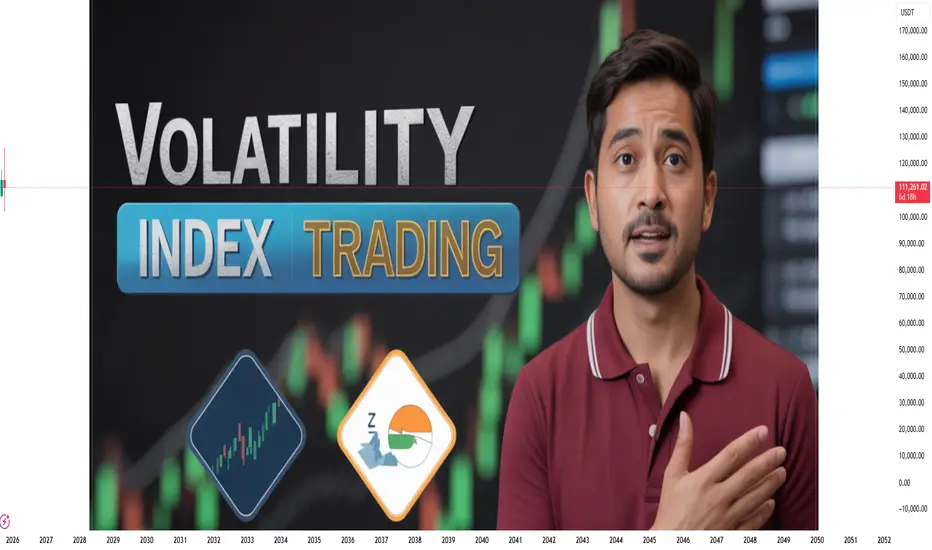
Introduction to Volatility Index TradingUnderstanding Volatility
Volatility is a statistical measure of the dispersion of returns for a given security or market index. It is often calculated using standard deviation or variance, indicating how much the price of an asset deviates from its average value over a period. There are two main types of volatility:
Historical Volatility (HV): Measures past price fluctuations of a security over a defined time period. It is backward-looking and often used to assess the past risk profile.
Implied Volatility (IV): Reflects the market’s expectation of future price movements, derived from the pricing of options contracts. It is forward-looking and integral to VIX calculations.
The VIX specifically captures implied volatility, giving traders a sense of expected market turbulence. High VIX readings indicate a volatile market environment with increased fear, while low readings suggest calm or complacency among investors.
The VIX – The Fear Gauge
Introduced by the Chicago Board Options Exchange (CBOE) in 1993, the VIX measures expected volatility over the next 30 days using a wide range of S&P 500 options. Its calculation is unique:
The VIX is based on the weighted prices of out-of-the-money calls and puts.
It estimates expected volatility in percentage terms on an annualized basis.
For instance, a VIX value of 20 implies an expected annualized volatility of 20%, roughly translating to a 5.8% monthly expected move in the S&P 500 (20% ÷ √12).
The VIX does not move linearly with market indices. Instead, it has an inverse correlation with the S&P 500. When markets fall sharply, fear rises, pushing the VIX higher. Conversely, when markets rally steadily, the VIX tends to decline.
Instruments for Volatility Trading
Volatility trading is not confined to the VIX itself. Traders can access volatility exposure through several instruments:
VIX Futures: Contracts that allow speculation on the future value of the VIX. They are cash-settled and are widely used for hedging or trading volatility directly.
VIX Options: Options on VIX futures provide leveraged exposure to volatility movements. They are complex instruments that require an understanding of the VIX’s unique behavior.
Exchange-Traded Products (ETPs): ETFs and ETNs track volatility indices or VIX futures. Examples include VXX and UVXY, which are designed to mimic VIX futures performance but are subject to daily rebalancing effects.
Volatility Swaps: Over-the-counter derivatives that allow traders to exchange fixed volatility for realized volatility. These instruments are mostly used by institutional traders.
Options on Stocks and Indices: Trading strategies using options can indirectly target volatility by exploiting changes in implied volatility levels.
Strategies in Volatility Trading
Volatility trading strategies are diverse and can be categorized into speculative, hedging, and arbitrage strategies:
1. Speculative Trading
Traders often speculate on market fear or complacency using the VIX:
Long VIX Futures or Calls: Investors buy VIX futures or call options expecting a spike in market volatility. This strategy pays off during market sell-offs or crises.
Short VIX Futures or Puts: Selling VIX futures or put options benefits when markets remain calm and volatility decreases.
Speculative trades require careful timing because volatility exhibits mean-reversion behavior—spikes are typically followed by declines, and prolonged periods of low volatility tend to precede sudden increases.
2. Hedging Strategies
Volatility instruments are crucial for hedging portfolios:
Portfolio Insurance: Investors holding large equity positions can buy VIX call options to protect against sudden market drops.
Tail Risk Hedging: This involves purchasing deep out-of-the-money VIX options to hedge against extreme events like financial crises.
Hedging reduces potential losses but comes at the cost of premiums, which can erode returns if volatility remains low.
3. Volatility Arbitrage
Volatility arbitrage exploits discrepancies between implied and realized volatility:
Long/Short Options: Traders buy underpriced options and sell overpriced ones, profiting when implied volatility converges with realized volatility.
Calendar Spreads: These involve taking positions in options with different expirations to profit from changes in implied volatility over time.
Arbitrage strategies require sophisticated modeling and constant monitoring of market conditions.
Key Concepts for VIX Traders
Volatility trading relies on several unique concepts that differ from traditional market trading:
Mean Reversion: Volatility tends to revert to a long-term average over time. Extreme spikes are typically temporary, which affects timing and strategy decisions.
Contango and Backwardation: VIX futures markets are often in contango (futures prices higher than spot VIX) or backwardation (futures lower than spot VIX). These conditions impact returns for products tracking VIX futures.
Implied vs. Realized Volatility: Traders monitor discrepancies between expected (implied) and actual (realized) volatility to identify trading opportunities.
Leverage and Decay: Many VIX-linked ETPs use leverage and daily rebalancing, which can lead to performance decay over long holding periods due to compounding effects.
Risks in Volatility Trading
While volatility trading offers opportunities, it also comes with significant risks:
High Leverage Risk: Many volatility instruments amplify gains and losses, requiring disciplined risk management.
Complexity Risk: VIX derivatives and ETFs can behave differently than spot volatility, and misinterpretation can lead to unexpected losses.
Market Timing Risk: Correctly predicting volatility spikes or declines is extremely challenging.
Liquidity Risk: Some instruments, particularly over-the-counter derivatives, may have limited liquidity.
Decay Risk: Leveraged volatility products are subject to time decay and volatility drag, eroding value in prolonged trends.
Because of these risks, volatility trading is generally suited for experienced traders and institutional investors, not beginners.
Practical Applications of Volatility Trading
Despite its complexity, VIX trading has practical applications:
Hedging Equity Portfolios: Using VIX calls or futures, investors can mitigate losses during market corrections.
Speculative Opportunities: Traders can profit from market fear spikes or periods of extreme complacency.
Diversification Tool: Volatility often moves independently of traditional asset classes, providing diversification benefits.
Market Sentiment Analysis: Monitoring the VIX helps gauge investor fear and sentiment, informing broader investment decisions.
Volatility in Market Crises
Historical market events highlight the importance of volatility trading:
2008 Global Financial Crisis: VIX spiked to over 80, reflecting extreme investor fear and market uncertainty.
COVID-19 Pandemic (2020): VIX surged above 80 during initial market panic, showcasing the critical role of volatility instruments for hedging and speculation.
These crises demonstrate that VIX trading is particularly relevant during periods of extreme market stress, providing both risk management tools and trading opportunities.
Conclusion
Volatility Index trading is a sophisticated domain of financial markets that goes beyond traditional buy-and-hold strategies. By providing insight into market fear and expected fluctuations, the VIX enables traders and investors to hedge risk, speculate on market sentiment, and diversify portfolios. Successful volatility trading requires a deep understanding of implied vs. realized volatility, market timing, derivatives mechanics, and risk management principles.
While opportunities in volatility trading are significant, they are accompanied by equally significant risks, particularly due to leverage, market unpredictability, and instrument complexity. Therefore, mastering VIX trading demands experience, discipline, and continuous monitoring of global market conditions.
In an era of increasing market uncertainty, understanding and trading volatility is not just an advanced financial skill—it is an essential tool for navigating the ever-changing landscape of global markets.
Trendcontinuation
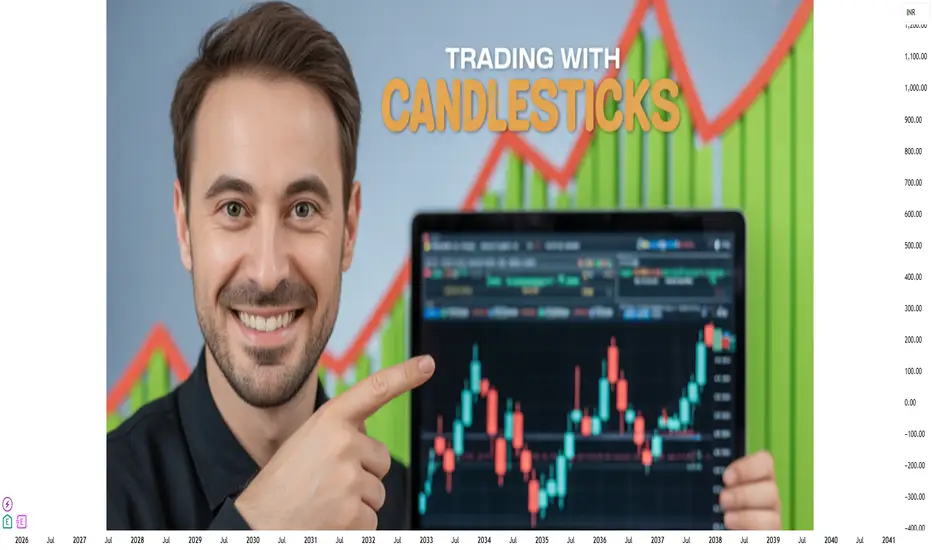
Trading with CandlesticksIntroduction
Candlestick trading is one of the most widely used and powerful methods in technical analysis. It provides a visual and psychological representation of price movement over a specific time frame. Originating in Japan in the 18th century, candlestick charts were first used by rice traders to predict price movements based on market emotions. Today, traders worldwide—from beginners to institutional professionals—use candlesticks to identify trends, reversals, and potential entry or exit points in financial markets, including stocks, forex, commodities, and cryptocurrencies.
Candlestick charts combine simplicity and depth, revealing not just price direction but also market sentiment, momentum, and volatility—all in one glance. Let’s explore in detail how candlestick trading works, its patterns, and strategies to apply it effectively.
1. What Are Candlesticks?
A candlestick represents the price action of an asset within a specific time frame (for example, 1 minute, 1 hour, 1 day, or 1 week). Each candlestick shows four key data points:
Open – The price at which the asset began trading during that period.
Close – The price at which it finished trading for that period.
High – The highest price reached during that period.
Low – The lowest price during that period.
These data points are displayed in a rectangular shape called the body, with thin lines extending above and below, known as wicks or shadows.
Bullish Candle: When the closing price is higher than the opening price (usually shown in green or white).
Bearish Candle: When the closing price is lower than the opening price (usually shown in red or black).
The length of the body and shadows helps traders understand market momentum and psychological pressure between buyers (bulls) and sellers (bears).
2. Anatomy of a Candlestick
To interpret a candlestick effectively, one must understand its components:
Long Body: Indicates strong buying or selling pressure.
Short Body: Suggests indecision or consolidation.
Long Upper Shadow: Sellers pushed the price down after buyers initially drove it up.
Long Lower Shadow: Buyers pushed the price up after sellers initially drove it down.
No Shadows (Marubozu): Represents strong conviction from either buyers or sellers throughout the session.
For example:
A bullish marubozu (long green candle without shadows) signals strong buying interest.
A bearish marubozu (long red candle) indicates strong selling pressure.
3. History and Origin of Candlestick Charts
Candlestick analysis dates back to the 1700s when Munehisa Homma, a Japanese rice trader, developed this technique to forecast rice prices. He realized that human emotions influenced market behavior, and by studying price patterns, he could predict future movements. His concepts of “bullish” and “bearish” sentiment still form the foundation of technical trading today.
Candlestick analysis was later introduced to Western markets by Steve Nison in the 1990s through his book “Japanese Candlestick Charting Techniques.” Since then, it has become a fundamental part of modern trading.
4. Advantages of Candlestick Trading
Candlestick charts offer several advantages over traditional bar or line charts:
Visual Clarity: Candles make it easy to identify patterns and reversals quickly.
Psychological Insight: Each candle shows who controls the market—buyers or sellers.
Works Across Markets: Effective in equities, forex, commodities, and crypto.
Combines Well With Other Tools: Traders often combine candlestick patterns with indicators like RSI, MACD, or moving averages for confirmation.
Time Flexibility: Works equally well across intraday, daily, or weekly charts.
5. Major Candlestick Patterns
Candlestick patterns are combinations of one or more candles that help predict market direction. They can be single, double, or triple candle patterns.
A. Single Candlestick Patterns
Doji:
Open and close prices are almost equal, forming a cross-like shape.
Indicates market indecision and potential reversal.
Types: Long-Legged Doji, Dragonfly Doji, Gravestone Doji.
Hammer:
Small body, long lower shadow.
Appears after a downtrend, signaling a potential bullish reversal.
Inverted Hammer:
Small body with a long upper shadow.
Suggests buyers are gaining strength after a downtrend.
Shooting Star:
Opposite of an inverted hammer; occurs at the top of an uptrend.
Indicates a potential bearish reversal.
Spinning Top:
Small body with long upper and lower shadows.
Reflects indecision, often preceding a breakout.
B. Double Candlestick Patterns
Bullish Engulfing:
A small red candle followed by a large green candle that completely engulfs it.
Suggests strong buying momentum and a possible uptrend.
Bearish Engulfing:
A small green candle followed by a large red candle that engulfs it.
Indicates potential downward reversal.
Piercing Pattern:
Appears after a downtrend; the second candle (bullish) opens lower but closes above the midpoint of the first candle.
Dark Cloud Cover:
Appears after an uptrend; the second candle (bearish) opens higher but closes below the midpoint of the first candle.
C. Triple Candlestick Patterns
Morning Star:
Three-candle bullish reversal pattern.
Consists of a bearish candle, a small indecisive candle (Doji or Spinning Top), and a strong bullish candle.
Evening Star:
Bearish version of the Morning Star; signals the end of an uptrend.
Three White Soldiers:
Three consecutive long green candles.
Confirms strong bullish sentiment and trend continuation.
Three Black Crows:
Three long red candles; a clear sign of bearish strength and trend reversal.
6. How to Trade Using Candlestick Patterns
To effectively trade with candlestick patterns, traders must combine pattern recognition with market context. Here’s a step-by-step guide:
Step 1: Identify the Trend
Before entering a trade, determine the overall trend using moving averages or trendlines.
Candlestick patterns are most reliable when traded in alignment with the broader trend.
Step 2: Spot a Reversal or Continuation Pattern
Look for patterns like hammers, engulfing candles, or stars near key support/resistance zones.
Confirm with volume—higher volume adds credibility to the pattern.
Step 3: Confirm With Indicators
Use indicators like RSI (for overbought/oversold conditions), MACD (for trend confirmation), or Bollinger Bands (for volatility signals).
Step 4: Plan Entry and Exit
For bullish patterns: Enter near the candle close or on the next candle’s breakout.
For bearish patterns: Enter when price breaks below the pattern low.
Set stop-loss below the pattern’s shadow (for long trades) or above it (for short trades).
Step 5: Manage Risk
Always use stop-loss orders.
Avoid over-leveraging.
Follow a risk-reward ratio of at least 1:2.
7. Combining Candlesticks with Support and Resistance
Support and resistance levels are critical in candlestick analysis:
Support: A price level where buying pressure is strong enough to prevent further decline.
Resistance: A level where selling pressure prevents price from rising.
When a candlestick reversal pattern appears near these levels (e.g., hammer at support or shooting star at resistance), the signal’s reliability increases significantly.
8. Candlestick Patterns and Market Psychology
Each candlestick tells a story about the battle between bulls and bears. Understanding this psychology helps predict the next move:
Long bullish candle: Buyers dominated the session.
Long bearish candle: Sellers controlled the market.
Doji: Both sides are uncertain; possible reversal ahead.
Engulfing pattern: Indicates a sudden shift in sentiment.
This emotional representation gives traders an edge in anticipating future price behavior.
9. Common Mistakes in Candlestick Trading
Ignoring Market Context:
Patterns are less reliable without trend confirmation.
Trading Every Pattern:
Not all patterns lead to reversals; combine with volume and indicators.
Neglecting Risk Management:
Even reliable patterns can fail; always use stop-loss.
Overcomplicating Charts:
Stick to key time frames and clear patterns—avoid chart clutter.
10. Modern Application of Candlestick Trading
With digital platforms and AI-based charting tools, traders now have access to automatic pattern recognition. Platforms like TradingView, MetaTrader, and ThinkorSwim help identify and validate candlestick formations in real time. Algorithms even analyze sentiment and probability to enhance decision-making.
However, human interpretation remains irreplaceable. The trader’s intuition, experience, and understanding of market psychology remain essential for success.
11. Example of a Practical Candlestick Setup
Scenario: Stock XYZ is in a downtrend and approaches a major support level.
You notice:
A long Hammer candle forms at support.
RSI shows oversold conditions (<30).
Volume spikes, suggesting buying interest.
Trade Plan:
Entry: On the next candle when price breaks above the hammer’s high.
Stop-Loss: Below the hammer’s low.
Target: 2x the risk or next resistance level.
This combination of candlestick, support, and indicator confirmation makes for a high-probability trade setup.
12. Advantages and Limitations
Advantages:
Quick visual analysis.
Applies to all asset classes.
Helps identify sentiment shifts early.
Limitations:
False signals during volatile markets.
Requires experience to interpret correctly.
Should be used with supporting tools, not in isolation.
Conclusion
Candlestick trading is a time-tested and psychologically rich method for understanding market behavior. It reflects the constant struggle between buyers and sellers, allowing traders to interpret emotions through price movements. Whether you’re trading stocks, forex, or crypto, mastering candlestick patterns helps you make informed decisions, manage risk, and anticipate market shifts.
However, no pattern guarantees success—discipline, context, and confirmation are key. When combined with sound risk management and fundamental analysis, candlestick trading becomes not just a charting method but a strategic framework for consistent and intelligent trading.
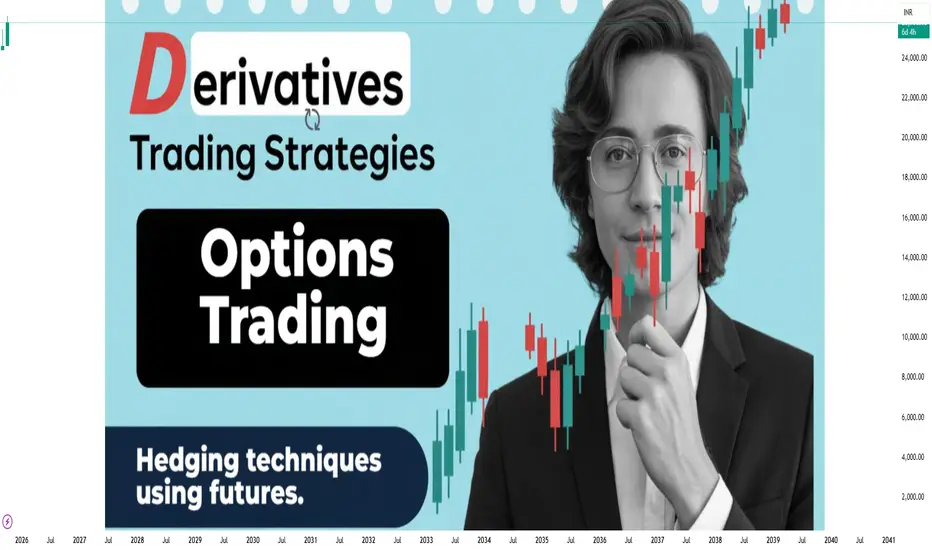
Derivatives Trading Strategies and Options TradingIntroduction
The world of financial markets extends far beyond simple buying and selling of stocks. One of the most dynamic and sophisticated areas is derivatives trading, which provides investors and institutions with tools to manage risk, speculate on price movements, and enhance portfolio performance. Among the various derivative instruments—such as forwards, futures, swaps, and options—options trading stands out as both versatile and powerful. Understanding derivatives and the strategies associated with options is essential for any trader or investor aiming to navigate complex global markets effectively.
Understanding Derivatives
Definition
A derivative is a financial instrument whose value is derived from an underlying asset or group of assets. The underlying asset could be equities, bonds, commodities, currencies, interest rates, or even market indices. Essentially, derivatives are contracts between two or more parties, where the value is linked to changes in the price of the underlying asset.
Purpose and Importance
Derivatives are used for three main purposes:
Hedging: To reduce or manage risk associated with price movements.
Speculation: To profit from anticipated market fluctuations without owning the underlying asset.
Arbitrage: To exploit price differences in different markets for the same or related assets.
Types of Derivatives
Forwards: Customized contracts between two parties to buy or sell an asset at a specified price on a future date.
Futures: Standardized contracts traded on exchanges, similar to forwards but with more liquidity and lower counterparty risk.
Options: Contracts that give the holder the right, but not the obligation, to buy or sell the underlying asset at a specific price before or at expiration.
Swaps: Agreements to exchange cash flows or financial instruments, often used to manage interest rate or currency exposure.
Fundamentals of Options Trading
What Are Options?
Options are derivative contracts that provide the right (not the obligation) to buy or sell an underlying asset at a predetermined price, known as the strike price, within a specified period. The buyer pays a premium to the seller (writer) for this right.
There are two basic types of options:
Call Option: Gives the holder the right to buy the asset.
Put Option: Gives the holder the right to sell the asset.
Key Terms in Options Trading
Strike Price: The fixed price at which the asset can be bought or sold.
Premium: The price paid by the option buyer to the seller.
Expiration Date: The date on which the option contract expires.
In-the-Money (ITM): When exercising the option is profitable.
Out-of-the-Money (OTM): When exercising the option would not be profitable.
At-the-Money (ATM): When the strike price equals the current market price.
Intrinsic Value: The difference between the current market price and the strike price (if positive).
Time Value: The portion of the premium attributable to the time remaining until expiration.
Participants in Options Market
Hedgers: Use options to protect against unfavorable price movements.
Speculators: Seek to profit from expected price changes.
Arbitrageurs: Exploit pricing inefficiencies between related securities.
Derivatives Trading Strategies
Traders use a wide variety of strategies with derivatives, depending on their market outlook, risk appetite, and investment objectives. Broadly, derivative strategies fall into three categories: hedging, speculation, and arbitrage.
1. Hedging Strategies
Hedging is a risk management strategy used to offset potential losses in one investment by taking an opposite position in a related derivative.
Example:
A wheat farmer worried about falling prices can sell wheat futures to lock in a selling price. Similarly, a gold trader anticipating volatility might buy put options to protect against price declines.
Popular Hedging Strategies:
Protective Put: Buying a put option to hedge against a decline in a stock’s price.
Covered Call: Selling call options on owned stock to generate income while holding the asset.
Futures Hedge: Using futures contracts to lock in prices for commodities or currencies.
2. Speculative Strategies
Speculators use derivatives to bet on price movements with the intent to profit. Because derivatives often involve leverage, they can amplify both gains and losses.
Examples:
Buying a call option to speculate that the price of a stock will rise.
Shorting a futures contract expecting that the underlying asset’s price will fall.
Common Speculative Strategies:
Long Call: Profit if the underlying asset’s price increases above the strike price.
Long Put: Profit if the underlying asset’s price decreases below the strike price.
Futures Long/Short: Taking long or short positions in futures contracts to benefit from anticipated price moves.
3. Arbitrage Strategies
Arbitrage involves exploiting price inefficiencies between markets or related securities. Traders simultaneously buy and sell equivalent assets to lock in risk-free profits.
Examples:
Cash-and-Carry Arbitrage: Buying the asset in the spot market and selling futures when futures prices are higher than the spot price.
Options Arbitrage (Put-Call Parity): Using mispricing between call and put options with the same strike price and expiry to earn risk-free returns.
Options Trading Strategies
Options trading provides flexibility for both risk management and profit generation. By combining calls and puts in various ways, traders can design strategies suited for bullish, bearish, or neutral market conditions.
Let’s explore the major categories of option strategies.
1. Basic Option Strategies
a. Long Call
Objective: Profit from a rise in the underlying asset’s price.
Mechanism: Buy a call option at a specific strike price.
Risk/Reward: Limited loss (premium paid); unlimited potential profit.
b. Long Put
Objective: Profit from a decline in the asset’s price.
Mechanism: Buy a put option.
Risk/Reward: Limited loss (premium); large profit potential if price falls sharply.
c. Covered Call
Objective: Generate income from owned stocks.
Mechanism: Hold a stock and sell a call option on it.
Risk/Reward: Income from premium; limited upside if stock price rises above strike price.
d. Protective Put
Objective: Protect against downside risk.
Mechanism: Buy a put option while holding the underlying asset.
Risk/Reward: Limits losses if price falls but costs the premium.
2. Intermediate Option Strategies
a. Bull Call Spread
Objective: Profit from moderate price increases.
Mechanism: Buy a call at a lower strike price and sell another call at a higher strike price.
Benefit: Reduces cost compared to a single long call.
b. Bear Put Spread
Objective: Profit from moderate declines.
Mechanism: Buy a put option and sell another put at a lower strike.
Benefit: Lower premium cost; limited profit and loss.
c. Straddle
Objective: Profit from high volatility (regardless of direction).
Mechanism: Buy a call and a put with the same strike and expiry.
Risk/Reward: High cost due to two premiums, but unlimited upside potential in volatile markets.
d. Strangle
Objective: Similar to a straddle but cheaper.
Mechanism: Buy out-of-the-money call and put options.
Benefit: Lower cost; profits if there is a big price movement either way.
3. Advanced Option Strategies
a. Butterfly Spread
Objective: Profit from low volatility (price staying near a target level).
Mechanism: Combine multiple calls or puts at different strikes to limit both gains and losses.
Benefit: Defined risk and reward, ideal for range-bound markets.
b. Iron Condor
Objective: Profit from low volatility and time decay.
Mechanism: Combine a bull put spread and a bear call spread.
Benefit: Generates steady income if price stays within a defined range.
c. Calendar Spread
Objective: Benefit from time decay and volatility differences.
Mechanism: Buy and sell options with the same strike but different expirations.
Use Case: Effective when expecting limited near-term movement but higher long-term volatility.
Risk Management in Derivatives and Options
While derivatives offer leverage and flexibility, they also introduce significant risks. Therefore, risk management is central to successful trading.
Major Risks Involved
Market Risk: Adverse price movements can lead to large losses.
Leverage Risk: Small changes in the underlying price can result in amplified gains or losses.
Liquidity Risk: Difficulty in exiting positions at fair value.
Counterparty Risk: Risk that the other party may default on contractual obligations.
Volatility Risk: Sudden changes in volatility can impact option premiums.
Risk Control Techniques
Position Sizing: Limiting exposure by controlling the size of each trade.
Stop-Loss Orders: Predefined exit points to limit losses.
Diversification: Spreading risk across different instruments or markets.
Delta Hedging: Offsetting directional risk in options portfolios by balancing long and short positions.
Applications of Derivatives and Options
Derivatives are integral to global financial systems. They serve various functions beyond speculation, including:
Hedging Foreign Exchange Exposure: Corporations hedge currency risk using futures and options.
Managing Commodity Prices: Farmers, miners, and oil companies lock in prices through derivatives.
Interest Rate Management: Financial institutions use swaps to stabilize borrowing costs.
Portfolio Enhancement: Investors use covered calls or protective puts to improve returns or reduce volatility.
Conclusion
Derivatives and options trading represent the most sophisticated and influential segments of modern finance. They offer opportunities for risk management, profit generation, and strategic flexibility, but also demand a deep understanding of market mechanics and disciplined risk control. Whether it is a multinational corporation hedging its currency exposure or a retail trader speculating on index options, derivatives remain an essential component of the global financial architecture.
However, derivatives are double-edged tools—capable of magnifying profits or catastrophic losses. Success in this arena requires not just financial capital but also intellectual discipline, strategic thinking, and continuous learning. In the ever-evolving world of finance, mastery of derivatives trading strategies and options trading is a gateway to both financial innovation and resilience.
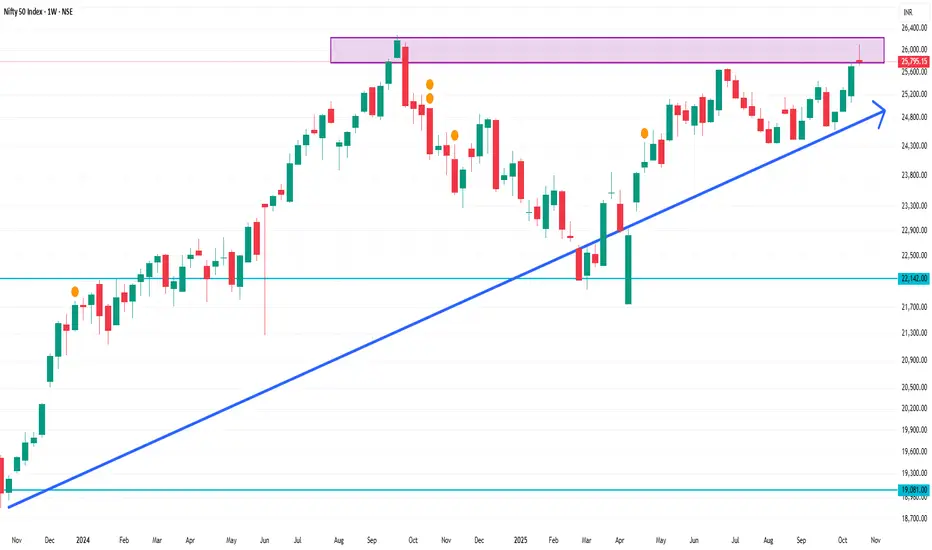
Nifty 50 1 Week Time Frame 📊 Weekly Support & Resistance Levels
Immediate Support: 25,700 – 25,650
A break below this level could lead to further declines towards 25,500 – 25,450.
Immediate Resistance: 25,950 – 26,000
Sustained trading above this range may push the index towards 26,200 – 26,250.
🔍 Technical Indicators
Pivot Points: Weekly pivot is around 25,974.00, with R1 at 26,238.20 and S1 at 25,517.30.
Fibonacci Levels: Retracement levels suggest support near 25,524.90 and resistance around 26,249.29.
RSI: Currently in a bullish zone, indicating sustained upward momentum.
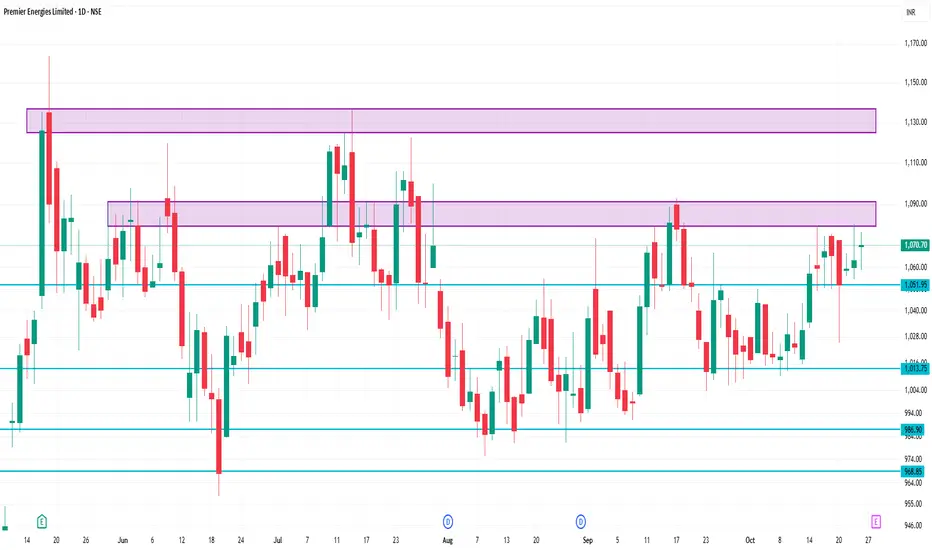
PREMIERENE 1 Day Time Frame 📊 Current Market Snapshot
Last Traded Price (LTP): ₹1,063.30
Day's Range: ₹1,058.70 – ₹1,076.00
52-Week Range: ₹774.05 – ₹1,388.00
Volume: 284,327 shares
VWAP: ₹1,066.52
Market Cap: ₹48,344 crore
P/E Ratio: 46.18 (sector average: 82.40)
Beta: 1.36 (indicating higher volatility)
Dividend Yield: 0.09%
Book Value per Share: ₹62.30
TTM EPS: ₹23.11
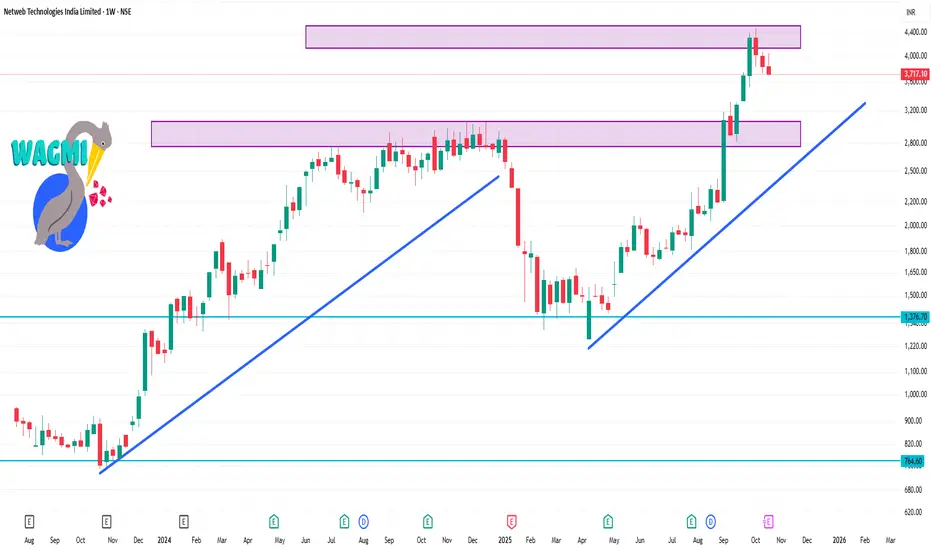
NETWEB 1 Week Time Frame 📉 Weekly Performance
Current Price: ₹3,743.70
1-Week Change: -2.19%
52-Week Range: ₹1,251.55 – ₹4,479.00
📌 Key Support & Resistance Levels
Immediate Support: ₹3,700
Immediate Resistance: ₹3,800
52-Week High: ₹4,479.00
52-Week Low: ₹1,251.55
🧠 Overall Technical Outlook
Trend: Bearish
Indicators: Majority suggest a sell or neutral stance
Market Sentiment: Weak, with potential for further downside if support levels are breached
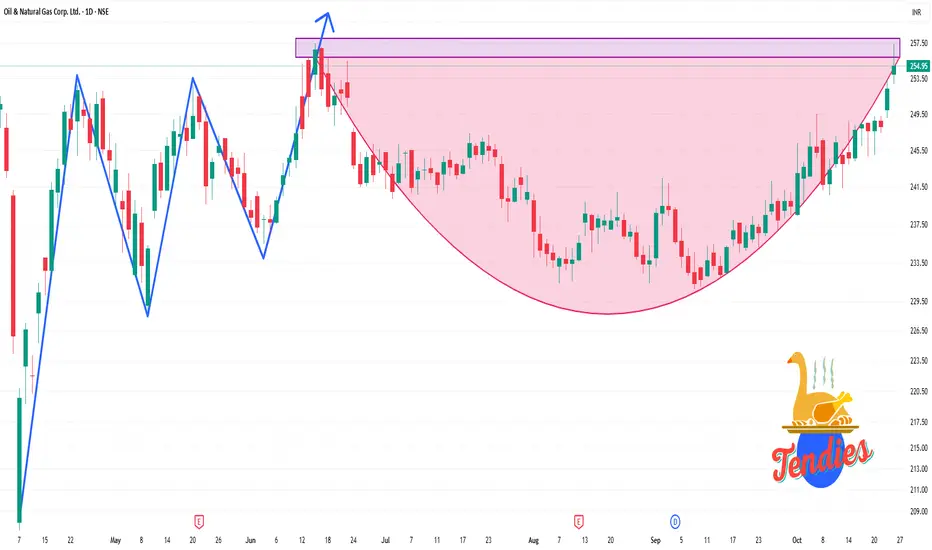
ONGC 1 Day Time Frame 📈 Current Price & Trend
Current Price: ₹256.09
Day Range: ₹252.85 – ₹257.40
52-Week Range: ₹205.00 – ₹274.35
Market Cap: ₹3.21 trillion
P/E Ratio: 8.92
Dividend Yield: 4.80%
Beta: 1.05 (suggesting average market volatility)
🔍 Technical Indicators (Daily Time Frame)
RSI (14-day): 75.67 – Indicates the stock is in overbought territory, suggesting caution.
MACD: 2.23 – A bullish signal, indicating upward momentum.
Moving Averages:
5-day: ₹255.04 – Bullish
50-day: ₹248.31 – Bullish
200-day: ₹241.55 – Bullish
DATAPATTNS 1 Hour Time Frame 🔄 Moving Averages
Exponential Moving Averages (EMA):
5-period EMA: ₹2,803.11 — neutral.
15-period EMA: ₹2,774.23 — mildly bullish.
50-period EMA: ₹2,715.07 — mildly bullish.
100-period EMA: ₹2,654.61 — mildly bullish.
Simple Moving Averages (SMA):
5-period SMA: ₹2,809.74 — mildly bullish.
20-period SMA: ₹2,749.70 — mildly bullish.
50-period SMA: ₹2,663.32 — mildly bullish.
200-period SMA: ₹2,394.97 — mildly bullish.
These moving averages indicate a generally bullish short-term trend.
📉 Support and Resistance Levels
Support Levels:
₹2,800: Recent intraday low.
₹2,750: Previous support zone.
Resistance Levels:
₹2,860: Recent intraday high.
₹2,900: Psychological resistance level.
Part 7 Trading Master Class Option Premium: What Determines the Price
The premium is what you pay (or receive) to enter an option contract. It is determined by several factors:
Intrinsic Value: The difference between the stock price and strike price, if favorable to the holder.
Time Value: The longer the time until expiration, the higher the premium — because there’s more opportunity for the stock to move.
Volatility: When a stock is more volatile, its options become costlier due to the higher probability of large price movements.
Interest Rates and Dividends: These also slightly affect option prices.
An option pricing model like Black-Scholes or Binomial helps estimate the fair premium based on these factors.
Part 6 Learn Institutional Trading Put Options Explained
A put option gives the buyer the right to sell the underlying asset at the strike price. Buyers of puts are bearish, expecting the price to fall. Sellers of puts are bullish or neutral, expecting the price to stay above the strike.
Example:
You buy an Infosys put option with a strike price of ₹1,600 for ₹40.
If Infosys drops to ₹1,500, your option is worth ₹100 (₹1,600 - ₹1,500).
Profit = ₹100 - ₹40 = ₹60 per share.
If Infosys remains above ₹1,600, your option expires worthless and you lose ₹40.
Put options are also used for hedging — protecting a stock portfolio from potential declines.
Part 4 Learn Institutional Trading Call Options Explained
A call option gives the buyer the right to purchase the underlying asset at the strike price. Buyers of calls are bullish, expecting the price to rise. Sellers (writers) of calls are bearish or neutral, expecting the price to stay below the strike.
Example:
You buy a Reliance Industries call option with a strike price of ₹2,400, paying a premium of ₹50.
If Reliance rises to ₹2,500, your option is worth ₹100 (₹2,500 - ₹2,400).
Your profit = ₹100 - ₹50 = ₹50 per share.
If the stock remains below ₹2,400, you lose the ₹50 premium.
Call options are often used to participate in upward moves without committing large amounts of capital.
Part 1 Ride The big Moves Introduction: The Power of Choice in the Market
Option trading is one of the most fascinating and flexible segments of the financial market. Unlike buying or selling shares directly, options give traders choices — the right, but not the obligation, to buy or sell an underlying asset at a specific price within a given time. This ability to control large positions with relatively small capital and manage risk precisely makes options attractive to both professional and retail traders.
An option is essentially a contract between two parties — a buyer and a seller — that derives its value from an underlying asset like a stock, index, commodity, or currency. Understanding how these contracts work and the logic behind their pricing helps investors make informed trading decisions.
BANKINDIA 1 Month View 📈 Monthly Pivot Levels (Standard)
Resistance (R1): ₹128.00
Resistance (R2): ₹132.59
Resistance (R3): ₹141.25
Support (S1): ₹119.34
Support (S2): ₹114.75
Support (S3): ₹106.09
These levels suggest that the stock is currently trading above its monthly pivot point of ₹119.34, indicating a bullish short-term outlook
🔄 Analyst Price Targets (12-Month Horizon)
Average Target: ₹137.33
High Estimate: ₹150.00
Low Estimate: ₹120.00
This range implies a potential upside of approximately 2.1% to 11.5% from the current price.
📊 Technical Indicators
Relative Strength Index (RSI): Currently in a neutral zone (between 45 and 55), indicating balanced momentum.
Moving Averages: The stock is exhibiting a "Strong Buy" signal based on moving average indicators.
How to Avoid Breakout Traps in the Trading Market1. Understanding Breakout Traps
A breakout trap occurs when the price of an asset moves beyond a key technical level, such as support, resistance, or a trendline, but fails to sustain the breakout. This leads to a reversal in the opposite direction, often catching traders who entered the trade on the initial breakout off guard.
Breakout traps can be classified into:
Bullish traps: Price breaks above resistance but then reverses downward. Traders buying on the breakout suffer losses.
Bearish traps: Price breaks below support but then reverses upward. Traders selling or shorting the market face losses.
Why Breakout Traps Happen
Breakout traps often occur due to:
Market manipulation: Large institutional traders sometimes push prices beyond levels to trigger stop-loss orders or attract retail traders.
Lack of volume confirmation: A breakout with weak volume is more likely to fail. Genuine breakouts are usually accompanied by high trading volume.
Overextended markets: When prices are already in an overbought or oversold condition, breakouts are prone to failure.
False news or rumors: Sudden news events can cause price spikes that quickly reverse once the market digests the information.
2. Key Technical Levels and Breakout Identification
To avoid breakout traps, traders must accurately identify key levels where breakouts are likely.
Support and Resistance
Support: The price level where demand is strong enough to prevent the price from falling further.
Resistance: The price level where selling pressure overcomes buying interest, preventing the price from rising.
Breakouts are confirmed when the price closes beyond these levels with sustained momentum. A breakout that does not close beyond these levels or lacks follow-through can be a trap.
Trendlines and Channels
Uptrend: Connecting higher lows provides support levels.
Downtrend: Connecting lower highs provides resistance levels.
Breakouts through trendlines are particularly prone to traps if the move is shallow or lacks momentum.
Chart Patterns
Patterns like triangles, rectangles, and flags often produce breakouts. However, these patterns can also generate false signals if the breakout is not supported by volume or broader market conditions.
3. Strategies to Avoid Breakout Traps
Avoiding breakout traps requires a combination of technical analysis, risk management, and patience. Here are key strategies:
a. Confirm with Volume
A strong breakout is often accompanied by high trading volume. Low-volume breakouts are suspicious and may indicate a lack of conviction.
Practical Tip:
Look for a volume increase of at least 30–50% above average on breakout days.
In the absence of significant volume, wait for confirmation before entering.
b. Wait for a Retest
One of the most reliable ways to avoid a trap is to wait for the price to retest the breakout level:
After breaking resistance, the price often returns to test the previous resistance as support.
After breaking support, the price may retest it as resistance.
Entering on the retest increases the probability that the breakout is genuine.
c. Use Multiple Timeframes
Breakouts are more reliable when confirmed across multiple timeframes:
Short-term breakouts on a 5-minute chart may be traps if the daily chart does not confirm the trend.
Combine long-term and short-term charts to filter false signals.
d. Analyze Market Context
Understanding the broader market trend is critical:
Breakouts aligned with the overall trend have a higher success rate.
Breakouts against the major trend are often traps.
For example, in a strong uptrend, bullish breakouts are more reliable; bearish breakouts may be false signals.
e. Use Indicators to Confirm Breakouts
Certain technical indicators can help confirm breakout strength:
Relative Strength Index (RSI): Avoid breakouts when RSI is in extreme overbought/oversold conditions.
Moving Averages (MA): Look for breakouts above key moving averages (e.g., 50-day, 200-day) as confirmation.
MACD: Positive MACD crossovers can support bullish breakout validity, while negative crossovers support bearish breakout strength.
f. Monitor Order Flow and Liquidity
Institutional traders often influence breakout behavior:
Watch the order book for large sell or buy orders near key levels.
Low liquidity levels can exaggerate price spikes and cause traps.
g. Set Proper Risk Management
Even with all precautions, false breakouts can occur. Proper risk management is essential:
Use stop-loss orders just below the breakout support (for bullish trades) or above resistance (for bearish trades).
Consider position sizing carefully to limit losses if the breakout fails.
h. Beware of News and Events
Major news, earnings, or geopolitical events can trigger spikes that appear as breakouts. These are often volatile and short-lived.
Avoid trading breakouts immediately after major news releases unless you have a clear strategy.
4. Common Patterns of Breakout Traps
Understanding typical breakout trap patterns can help traders recognize potential risks:
Fake Break Above Resistance
Price temporarily rises above resistance.
Reverses quickly, trapping traders who entered long.
Often occurs when the market is overextended or volume is weak.
Bear Trap
Price breaks below support briefly.
Reverses upward, catching short sellers.
Common near trend reversals or in strong uptrends.
False Breakout in Ranges
In range-bound markets, price may briefly cross support/resistance without forming a trend.
Traders often mistake this for a breakout, leading to losses.
5. Psychological Factors Behind Breakout Traps
Trader psychology plays a crucial role in breakout traps:
Fear of Missing Out (FOMO): Traders rush into breakouts without confirmation, increasing the likelihood of entering a trap.
Overconfidence in Patterns: Over-reliance on chart patterns without considering market context can lead to false trades.
Herd Behavior: Following mass trades without independent analysis often results in being trapped in false breakouts.
Being aware of these psychological pitfalls can improve discipline and reduce susceptibility to traps.
6. Examples of Avoiding Breakout Traps
Example 1: Bullish Breakout with Low Volume
Resistance at ₹100
Price moves to ₹102 on low volume
Price quickly falls back to ₹98
Lesson: Wait for volume confirmation or retest before buying
Example 2: Bear Trap in an Uptrend
Support at ₹150
Price breaks ₹148 briefly, triggering short positions
Price rebounds to ₹155
Lesson: Trade with the trend and confirm with higher timeframes
7. Combining Strategies for Maximum Safety
Avoiding breakout traps is most effective when combining multiple strategies:
Confirm breakout with volume and indicators.
Check the trend and multiple timeframes.
Wait for retests or consolidation after the breakout.
Implement strict risk management with stop-losses and position sizing.
Avoid trading purely based on news spikes.
By layering these techniques, traders can significantly reduce the risk of being caught in a false breakout.
8. Conclusion
Breakout trading offers substantial profit opportunities, but false breakouts or breakout traps remain a persistent challenge. Avoiding these traps requires a combination of technical analysis, market awareness, and disciplined trading psychology. Key steps include:
Confirming breakouts with volume and indicators.
Waiting for retests before entering trades.
Aligning trades with the broader market trend.
Using multiple timeframes for confirmation.
Applying proper risk management with stop-losses.
Ultimately, avoiding breakout traps is less about finding perfect signals and more about reducing risk, being patient, and trading with discipline. By following these strategies, traders can improve their success rate, protect their capital, and build confidence in breakout trading strategies.
Advanced Hedging Techniques in Financial MarketsIntroduction to Hedging
Hedging refers to taking an investment position that offsets potential losses in another position. In financial terms, it is akin to insurance: it reduces exposure to various risks including market risk, currency risk, interest rate risk, credit risk, and commodity price risk. The primary goal of hedging is not to generate profit, but rather to stabilize financial outcomes and protect portfolios from volatility.
While traditional hedging methods are straightforward—such as purchasing a put option to protect a stock holding—advanced techniques are more nuanced and multi-layered, often involving combinations of instruments and dynamic adjustments based on market conditions.
Key Principles of Advanced Hedging
Advanced hedging is grounded in several principles:
Risk Identification and Quantification: Before implementing a hedge, it is crucial to identify the type and magnitude of risks. This involves calculating Value-at-Risk (VaR), sensitivity to market factors (Delta, Gamma, Vega), and scenario analysis.
Hedge Effectiveness Measurement: Advanced hedges are monitored to ensure they effectively reduce risk without excessive cost. Metrics like hedge ratio, basis risk, and correlation analysis are used.
Dynamic Adjustments: Unlike static hedges, advanced techniques often require constant rebalancing as market conditions and exposures change.
Cost-Efficiency: Hedging involves costs—premium payments, margin requirements, or opportunity costs. Advanced techniques seek to optimize protection while minimizing these costs.
Integration with Corporate Strategy: Hedging is not an isolated financial exercise but part of the organization’s overall financial and operational strategy.
Advanced Hedging Techniques
1. Option-Based Hedging Strategies
Options are versatile derivatives that provide the right—but not the obligation—to buy or sell an asset at a predetermined price. Advanced option strategies allow for precise hedging of complex portfolios.
a. Protective Puts
A protective put involves buying a put option on an asset already owned. It provides downside protection while allowing upside potential.
Advanced variants may involve deep out-of-the-money puts for low-cost hedges or laddered puts at different strike prices to create a cost-effective risk floor.
b. Collars
A collar strategy combines buying a protective put and selling a covered call on the same asset. This limits both downside risk and upside potential.
It is widely used by corporations to hedge stock holdings or anticipated cash flows.
c. Option Spreads
Spreads involve multiple option positions on the same or related assets.
Examples:
Vertical Spread: Buying a call at one strike price and selling a call at a higher strike price.
Calendar Spread: Buying a long-term option while selling a short-term option to hedge time decay.
These spreads can reduce hedging costs and fine-tune risk exposure.
2. Delta, Gamma, and Vega Hedging
Sophisticated hedging involves managing the Greeks, which are measures of sensitivity of options and derivatives to various market factors.
Delta Hedging: Adjusts a portfolio to be neutral to small price movements of the underlying asset. Typically involves buying or selling the underlying asset to offset option exposure.
Gamma Hedging: Protects against large movements in the underlying by adjusting delta dynamically.
Vega Hedging: Reduces risk from volatility changes. Vega hedging is essential for portfolios heavily reliant on options, particularly in turbulent markets.
These techniques are particularly valuable for institutional traders and hedge funds, where complex derivative portfolios need constant monitoring and adjustment.
3. Cross-Hedging
Cross-hedging occurs when a direct hedge is unavailable, and an asset is hedged using a correlated instrument. For instance:
An airline might hedge fuel costs using crude oil futures rather than jet fuel contracts.
Cross-hedging requires advanced statistical techniques to measure correlation and potential basis risk, which is the risk that the hedge does not perfectly offset the exposure.
This method is often employed in commodities, currencies, and emerging market assets.
4. Dynamic Hedging
Unlike static hedges, dynamic hedging involves continuous adjustment of positions based on market movements and changing exposures.
Common in options trading where delta changes as the underlying asset price fluctuates.
Requires real-time market monitoring and algorithmic execution.
Often combined with quantitative models to calculate optimal hedge ratios at any point in time.
Dynamic hedging is highly effective but computationally intensive and costly if not automated.
5. Structured Products for Hedging
Structured products are customized financial instruments designed to achieve specific risk-return objectives. They combine derivatives, debt, and equity to provide:
Capital protection: Ensuring principal is preserved while participating partially in market upside.
Customized exposure: Targeting specific market conditions or asset classes.
Yield enhancement: Generating income through embedded options or derivatives.
For example, a company exposed to currency risk might invest in a structured note that pays interest based on a currency basket while protecting against adverse moves in a single currency.
6. Volatility Hedging
Volatility hedging protects against unexpected market swings rather than directional price changes. Techniques include:
VIX Futures: Hedging equity portfolios against market volatility spikes.
Straddles and Strangles: Options strategies that profit from large price moves in either direction, effectively hedging against high volatility events.
This approach is critical for portfolios with high sensitivity to uncertainty and shocks.
7. Hedging with Interest Rate Swaps and Credit Derivatives
Advanced fixed-income hedging involves derivatives such as:
Interest Rate Swaps (IRS): Companies use swaps to convert floating-rate debt into fixed-rate debt, stabilizing interest costs.
Credit Default Swaps (CDS): Provide protection against counterparty or sovereign default risk.
These techniques allow organizations to hedge balance sheet risks and maintain financial stability even in adverse economic environments.
8. Hedging Using Quantitative Models
Sophisticated investors use quantitative and algorithmic models to identify hedging opportunities:
Value-at-Risk (VaR) Models: Measure the potential loss in a portfolio over a given time frame under normal market conditions.
Stress Testing and Scenario Analysis: Simulate extreme market events and optimize hedges accordingly.
Optimization Algorithms: Determine the most cost-effective hedge by balancing risk reduction and capital efficiency.
9. Global and Multi-Asset Hedging
For multinational corporations and global investors, risks are not confined to a single market:
Currency Risk: Hedging via forwards, futures, or options in multiple currencies.
Interest Rate Risk: Using swaps or futures to manage exposure across multiple countries.
Commodity and Equity Risks: Coordinating hedges across correlated markets to ensure comprehensive protection.
Multi-asset hedging requires integrated risk management systems and sophisticated monitoring tools.
Challenges and Considerations in Advanced Hedging
Cost of Hedging: Advanced hedges can be expensive due to premiums, transaction costs, and margin requirements.
Complexity and Expertise: Implementing these strategies requires high-level knowledge of derivatives, financial modeling, and regulatory frameworks.
Model Risk: Quantitative approaches rely on assumptions; incorrect models can lead to under-hedging or over-hedging.
Liquidity Risk: Some derivatives used in advanced hedges may be illiquid, making it difficult to enter or exit positions.
Regulatory Constraints: Hedging strategies must comply with financial regulations, accounting standards, and reporting requirements.
Real-World Examples
Airline Fuel Hedging: Airlines like Southwest use a combination of futures, options, and collars to hedge fuel costs while minimizing expenses.
Global Corporations and Currency Risk: Companies like Apple and Microsoft hedge international currency exposure using forwards and options, ensuring stable revenues despite exchange rate fluctuations.
Hedge Funds: Quantitative hedge funds implement delta-gamma-vega hedging across complex option portfolios to neutralize risk while exploiting small inefficiencies in the market.
Conclusion
Advanced hedging techniques extend far beyond simple forward contracts and protective options. They involve a combination of derivative instruments, quantitative modeling, dynamic adjustments, and strategic integration into an organization’s financial framework. By employing these techniques, corporations, institutional investors, and hedge funds can mitigate risks associated with market volatility, interest rate changes, currency fluctuations, and other financial uncertainties.
While the complexity, cost, and technical expertise required are high, the benefits include enhanced risk management, improved financial stability, and optimized capital usage. In today’s volatile global markets, mastering advanced hedging is not just an option—it is a necessity for any sophisticated investor or financial manager seeking to protect value while strategically navigating uncertainty.
Introduction and Types of CryptocurrencyIntroduction to Cryptocurrency
Cryptocurrency is a type of digital or virtual currency that relies on cryptography for security and operates independently of a central authority, such as a government or bank. Unlike traditional fiat currencies, cryptocurrencies are decentralized, primarily running on blockchain technology, which ensures transparency, immutability, and security of transactions.
The concept of cryptocurrency emerged as a response to the limitations of traditional financial systems, such as centralization, lack of transparency, and inefficiencies in cross-border payments. Cryptocurrencies allow for peer-to-peer transactions without intermediaries, potentially lowering transaction costs and increasing accessibility for global users.
The first and most famous cryptocurrency is Bitcoin, created in 2009 by an anonymous person or group known as Satoshi Nakamoto. Bitcoin introduced the concept of a decentralized digital ledger, known as the blockchain, which records all transactions in a secure, transparent, and tamper-proof manner. Since then, thousands of cryptocurrencies have been developed, each with unique features and purposes.
Key Features of Cryptocurrencies
Decentralization: Cryptocurrencies are generally not controlled by any central authority. Instead, they rely on distributed ledger technology (blockchain), where multiple participants verify and record transactions.
Security: Cryptography ensures that transactions are secure and that coins cannot be easily duplicated or manipulated.
Anonymity and Privacy: Many cryptocurrencies allow users to transact with pseudonymous addresses, providing some level of privacy.
Transparency: Public blockchains allow anyone to view transactions, enhancing trust among participants.
Limited Supply: Many cryptocurrencies, like Bitcoin, have a fixed maximum supply, making them resistant to inflation.
Global Access: Cryptocurrencies can be sent and received across borders quickly and often with lower fees than traditional banking methods.
Types of Cryptocurrencies
Cryptocurrencies can be categorized based on their purpose, technology, and use cases. Here are the main types:
1. Bitcoin and Its Forks
Bitcoin (BTC) is the original cryptocurrency and is primarily used as a store of value and a medium of exchange. Its limited supply (21 million coins) makes it comparable to digital gold. Bitcoin’s blockchain is highly secure but relatively slower in processing transactions.
Over time, several Bitcoin forks emerged. Forks occur when a blockchain splits into two due to differences in protocol or updates. Key forks include:
Bitcoin Cash (BCH): Created to address Bitcoin’s scalability issues by increasing block size, allowing more transactions per block.
Bitcoin SV (BSV): Focuses on restoring the original Bitcoin protocol with emphasis on large-scale enterprise usage.
2. Altcoins (Alternative Coins)
Altcoins are cryptocurrencies other than Bitcoin, often created to improve upon Bitcoin’s limitations or serve specific functions. They include:
a. Ethereum (ETH)
Ethereum introduced smart contracts, programmable contracts that execute automatically when certain conditions are met. Its blockchain supports decentralized applications (DApps) and decentralized finance (DeFi) platforms. ETH is used to pay for transactions and computational services on its network.
b. Ripple (XRP)
Ripple focuses on facilitating fast and low-cost cross-border payments for banks and financial institutions. Unlike Bitcoin, XRP transactions are extremely fast and centralized, as Ripple Labs controls its ledger to some extent.
c. Litecoin (LTC)
Litecoin is often referred to as “silver to Bitcoin’s gold.” It has faster transaction confirmation times and a different hashing algorithm (Scrypt).
d. Cardano (ADA)
Cardano is a proof-of-stake blockchain that focuses on security, sustainability, and scalability. It emphasizes a research-driven approach for developing smart contracts and decentralized applications.
e. Polkadot (DOT)
Polkadot enables interoperability between different blockchains, allowing them to communicate and share information securely.
3. Stablecoins
Stablecoins are cryptocurrencies designed to maintain a stable value by pegging them to traditional assets, such as the US Dollar, Euro, or gold. They are widely used for trading, remittances, and as a hedge against market volatility. Examples include:
Tether (USDT)
USD Coin (USDC)
Dai (DAI) – A decentralized stablecoin pegged to the US Dollar using smart contracts.
Stablecoins are popular in crypto trading because they allow users to move in and out of volatile markets without converting back to fiat currencies.
4. Utility Tokens
Utility tokens provide access to a product or service within a blockchain ecosystem. They are not primarily designed as a currency but as a tool within a specific platform. Examples include:
Binance Coin (BNB): Used to pay for transaction fees and participate in Binance’s ecosystem.
Chainlink (LINK): Enables smart contracts to securely interact with external data sources.
5. Security Tokens
Security tokens represent ownership of real-world assets, such as stocks, bonds, or real estate, on the blockchain. They are regulated and often subject to securities laws. Security tokens bridge the gap between traditional finance and the blockchain world.
6. Governance Tokens
Governance tokens give holders voting rights in decentralized platforms. They enable communities to participate in decision-making, protocol upgrades, and funding proposals. Examples include:
Uniswap (UNI)
Aave (AAVE)
7. Meme Coins and Community Tokens
These cryptocurrencies are often created as jokes or to build communities around specific themes. While some have gained massive popularity, they are generally highly speculative. Examples include:
Dogecoin (DOGE)
Shiba Inu (SHIB)
Conclusion
Cryptocurrencies are revolutionizing the financial world by introducing decentralized, secure, and transparent systems. They provide alternatives to traditional banking, enable borderless transactions, and create opportunities for innovation in finance, governance, and technology.
The cryptocurrency ecosystem is diverse, ranging from the pioneering Bitcoin to smart contract platforms like Ethereum, stablecoins, and niche tokens such as meme coins and governance tokens. Understanding these different types is crucial for anyone interested in investing, trading, or building applications within the crypto space.
As the technology continues to evolve, cryptocurrencies will likely play an increasingly significant role in reshaping global finance, offering both opportunities and challenges for users, regulators, and institutions alike.