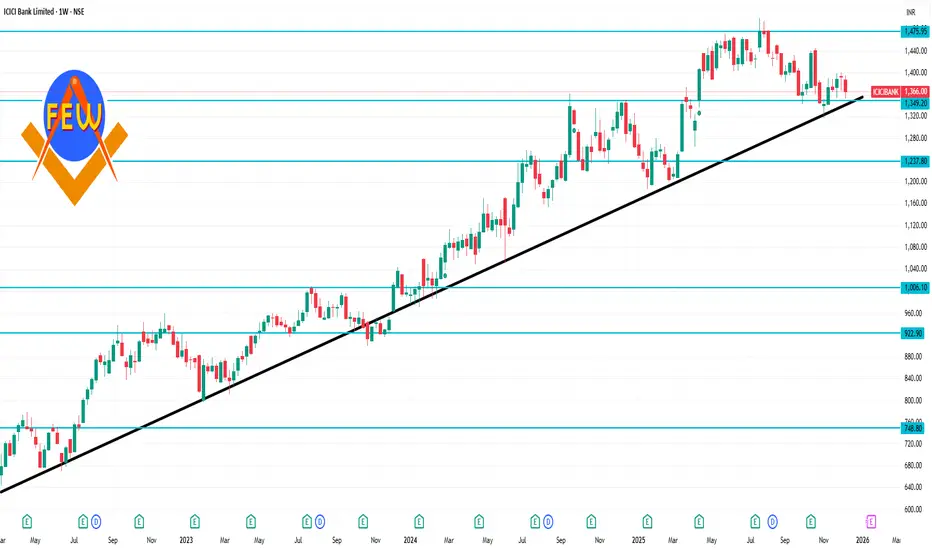
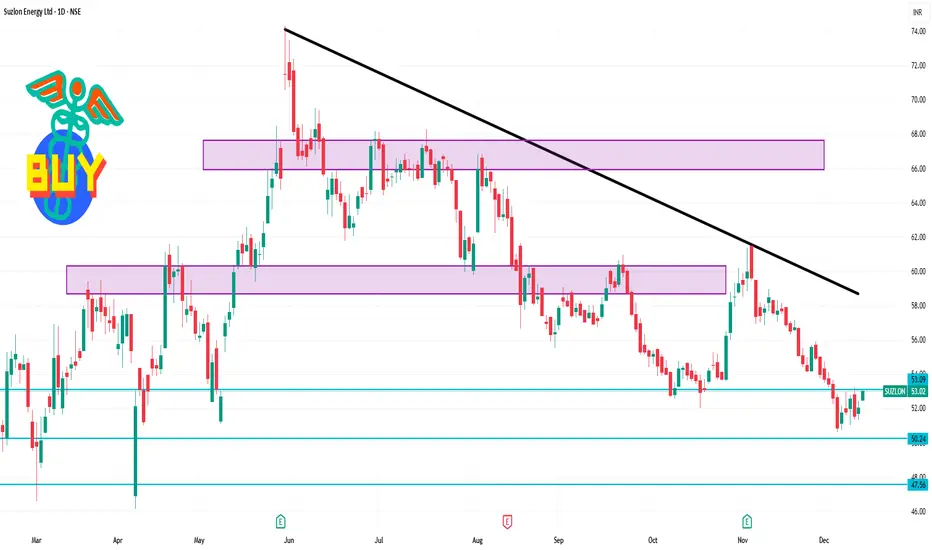
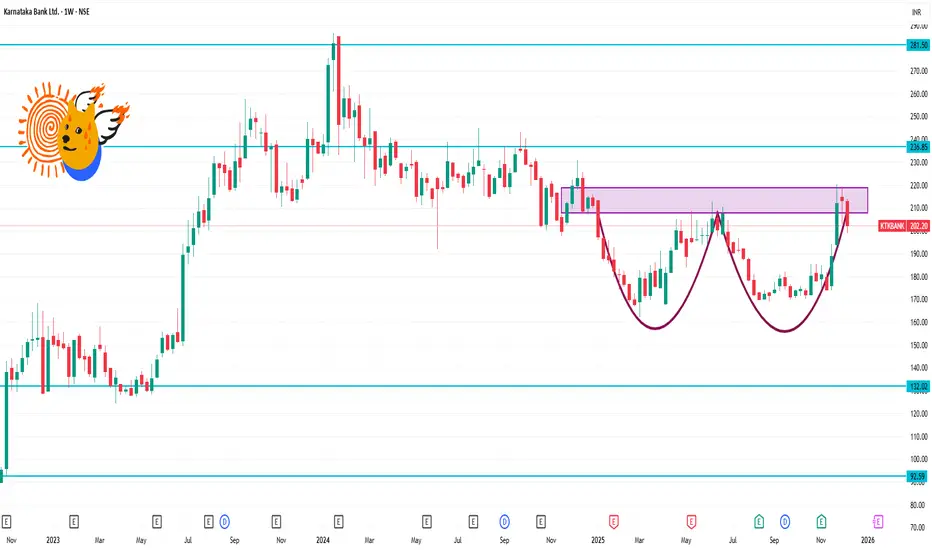
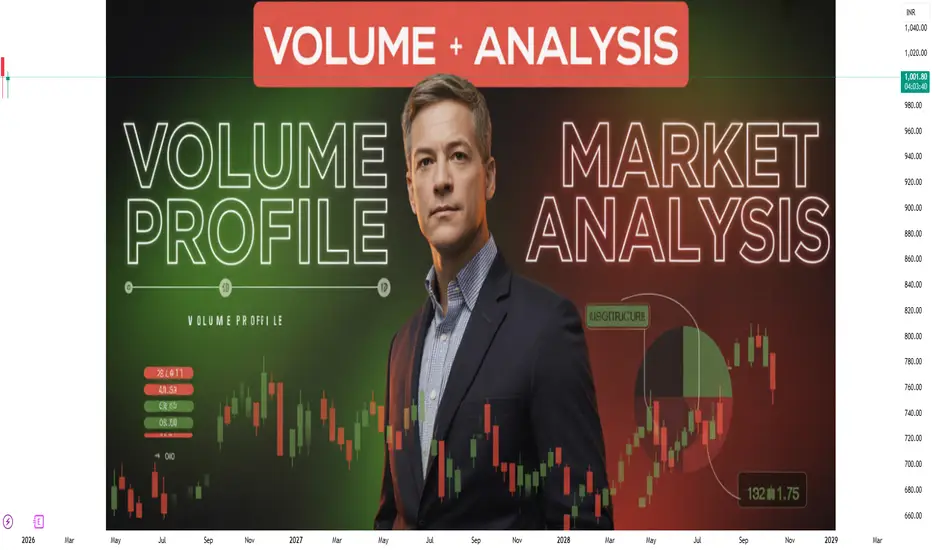
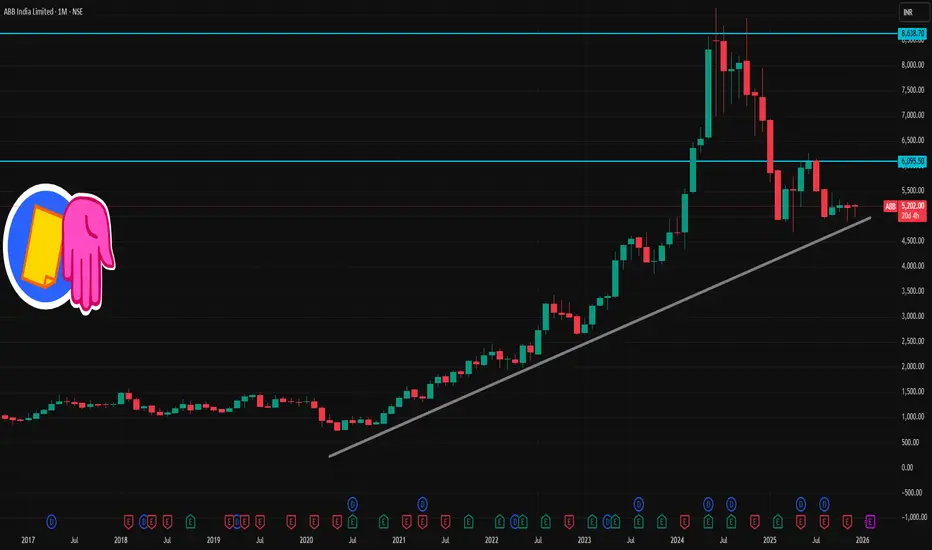
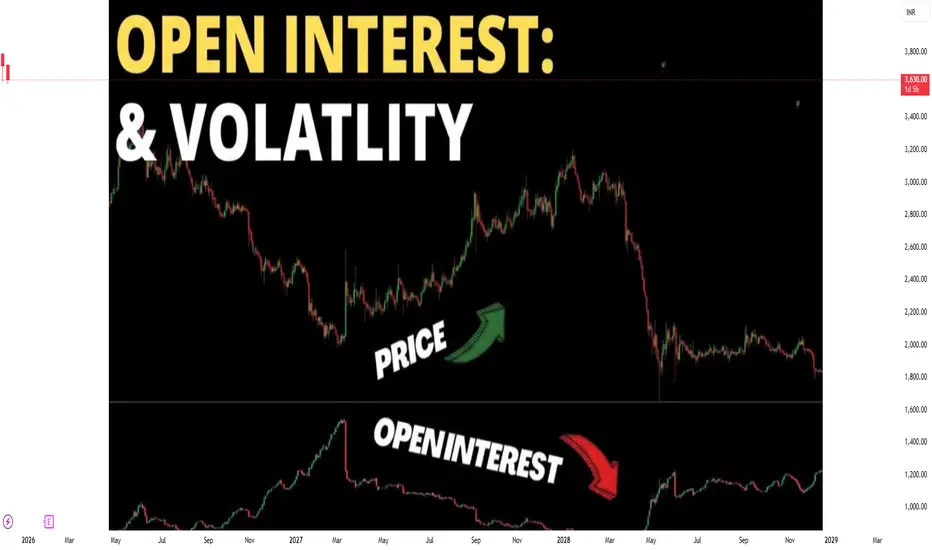
Candle Patterns Explained Doji Candle – Indicates market indecision where opening and closing prices are almost equal.
Hammer Candle – A bullish reversal signal appearing after a downtrend with a long lower wick.
Shooting Star – A bearish reversal pattern with a small body and a long upper shadow at the top of an uptrend.
Bullish Engulfing – A large bullish candle fully engulfs the previous bearish candle, signaling potential trend reversal upward.
Bearish Engulfing – A large bearish candle fully engulfs the previous bullish candle, hinting at a possible downward reversal.
Trendcontinuationpatterns
Part 7 Trading Master Class With Experts Types of Option Strategies
Option trading is not just about buying calls or puts; it involves strategic combinations to profit under various market conditions. Some popular strategies include:
a) Bullish Strategies
Bull Call Spread: Buying a lower strike call and selling a higher strike call.
Bull Put Spread: Selling a higher strike put and buying a lower strike put.
b) Bearish Strategies
Bear Call Spread: Selling a lower strike call and buying a higher strike call.
Bear Put Spread: Buying a higher strike put and selling a lower strike put.
c) Neutral Strategies
Iron Condor: Selling one call and one put at close strikes while buying further out-of-the-money options.
Straddle: Buying both a call and put at the same strike to profit from big moves in either direction.
Strangle: Buying a call and a put at different strikes to benefit from volatility.
These strategies allow traders to earn consistent returns by managing risk rather than relying purely on market direction.
Part 6 Learn Institutional Trading
Option Greeks
Option traders use “Greeks” to measure how different factors affect the price of an option:
Delta: Measures how much the option price changes with a ₹1 change in the underlying.
Gamma: Measures the rate of change of Delta.
Theta: Measures time decay – how much value an option loses each day as expiry approaches.
Vega: Measures sensitivity to volatility.
Rho: Measures sensitivity to interest rates.
Understanding Greeks helps traders manage risk and make informed decisions.
Part 3 Learn Institutional Trading How Option Trading Works
When you trade options, you’re speculating on how the price of the underlying asset will move within a specific time frame. Here’s how it works for both types of options:
a) Call Option Example
Suppose Reliance stock is trading at ₹2,500. You buy a Call Option with a strike price of ₹2,520, paying a premium of ₹20.
b) Put Option Example
You buy a Put Option on Reliance with a strike price of ₹2,480 and pay a ₹15 premium.
Crypto Assets Secrets: The Hidden Dynamics of Digital Wealth1. The Foundational Secret: Blockchain is the Core
The first and most fundamental secret of crypto assets lies in the technology that powers them — the blockchain. Unlike traditional financial systems controlled by banks or governments, blockchain is a decentralized digital ledger that records transactions securely, transparently, and permanently. Each transaction is verified through a consensus mechanism, ensuring trust without intermediaries.
What makes this technology revolutionary is its immutability and transparency. Every coin or token can be traced to its origin, which eliminates fraud and enables a new form of digital ownership. Investors who understand blockchain’s technical structure — from proof-of-work (PoW) to proof-of-stake (PoS) — gain insights into which crypto projects are sustainable versus those that are purely speculative.
2. The Scarcity Secret: Supply Mechanisms Define Value
Another major secret behind crypto value lies in tokenomics — the economic design of a cryptocurrency. Bitcoin, for example, has a fixed supply of 21 million coins, making it deflationary. This limited availability fuels demand, positioning Bitcoin as a “digital gold.”
In contrast, many altcoins use different supply models — such as inflationary tokens or tokens with burning mechanisms. Understanding supply dynamics, such as halving events, staking rewards, and token burns, can provide an edge. Long-term investors often look for assets with a balanced token supply and strong utility, as these tend to appreciate in value over time.
3. The Adoption Secret: Utility Drives Sustainability
While many cryptocurrencies emerge daily, few achieve lasting success. The secret to survival in the crypto market is real-world utility. Coins that solve genuine problems — such as Ethereum’s smart contracts, Chainlink’s decentralized oracles, or Ripple’s cross-border payment systems — tend to achieve mainstream adoption.
Utility also extends into DeFi platforms, NFT marketplaces, and metaverse ecosystems. Projects that integrate their tokens into actual services or decentralized applications (dApps) create intrinsic demand. The secret is to identify projects where use cases and network effects fuel organic growth rather than mere hype.
4. The Liquidity Secret: Market Depth and Whale Control
Liquidity — the ease of buying or selling an asset without drastically affecting its price — is a critical yet often overlooked secret of crypto trading. Cryptocurrencies with high liquidity (like Bitcoin and Ethereum) are more stable and less prone to manipulation. In contrast, low-liquidity altcoins can experience extreme volatility due to the influence of whales — large holders who can manipulate prices with a few transactions.
Smart traders monitor order books, volume profiles, and whale wallet movements to predict short-term market fluctuations. Tools like on-chain analytics (Glassnode, Santiment, Nansen) reveal where big money is flowing, offering insight into potential price trends before they hit mainstream awareness.
5. The Psychological Secret: Fear and Greed Index
Crypto markets are driven more by emotion than fundamentals. The Fear and Greed Index, which tracks market sentiment, often predicts price movements better than technical indicators. Extreme fear signals potential buying opportunities, while extreme greed suggests a bubble.
Successful traders understand that patience and discipline are their greatest assets. They use emotional intelligence to avoid panic-selling during downturns or over-leveraging during bull runs. The secret lies in contrarian thinking — buying when others are fearful and selling when others are euphoric.
6. The Timing Secret: Market Cycles and Halving Events
Crypto markets move in predictable cycles, often tied to Bitcoin halving events (which occur approximately every four years). These events reduce the number of new Bitcoins entering circulation, historically triggering bull markets as scarcity increases.
Understanding the crypto cycle — accumulation, expansion, euphoria, and correction — gives traders an edge. The secret is to accumulate during bear markets when prices are undervalued and to take profits strategically during euphoric phases. Experienced investors don’t chase trends; they anticipate them through cycle analysis and macroeconomic awareness.
7. The DeFi Secret: Earning Passive Income
Decentralized Finance (DeFi) has unlocked a secret layer of wealth generation in crypto: passive income. Through staking, yield farming, and liquidity mining, investors can earn rewards without actively trading. For example, staking Ethereum 2.0 provides returns of 4–6% annually, while liquidity providers in decentralized exchanges like Uniswap or PancakeSwap earn transaction fees.
However, the secret to success in DeFi lies in risk management — avoiding projects with unaudited smart contracts or unsustainable yields. Genuine DeFi opportunities combine transparency, security, and innovation to create long-term income potential.
8. The Security Secret: Custody and Privacy
Many investors underestimate the importance of security. The crypto space is rife with hacks, phishing attacks, and rug pulls. The secret here is self-custody — storing crypto in hardware wallets (like Ledger or Trezor) instead of centralized exchanges.
Private key management is crucial. “Not your keys, not your coins” is a golden rule — meaning that if an exchange holds your keys, they control your assets. Using multi-signature wallets, two-factor authentication (2FA), and cold storage ensures protection against digital theft. Privacy coins like Monero and Zcash also provide enhanced confidentiality for transactions, appealing to users who value financial anonymity.
9. The Innovation Secret: Layer 2, Web3, and AI Integration
The next wave of crypto innovation revolves around scalability and interoperability. Layer 2 solutions such as Polygon, Arbitrum, and Optimism are solving Ethereum’s high gas fee and congestion issues. These projects are crucial to the long-term scalability of the blockchain ecosystem.
Simultaneously, the emergence of Web3 — the decentralized internet — is redefining data ownership and monetization. AI integration into blockchain is another secret growth area, where artificial intelligence can enhance smart contracts, fraud detection, and algorithmic trading. Investors who identify early-stage projects in these emerging sectors gain significant advantages.
10. The Regulatory Secret: Compliance Determines Longevity
While decentralization is a key appeal, regulation is the ultimate test for a cryptocurrency’s survival. Governments worldwide are developing frameworks for crypto taxation, anti-money laundering (AML), and investor protection. The secret here is that regulated compliance breeds legitimacy.
Projects that adapt to evolving laws — such as stablecoins backed by audited reserves or exchanges with proper licensing — tend to attract institutional investment. Understanding the regulatory landscape helps investors separate credible projects from high-risk ventures that might face legal challenges.
11. The Institutional Secret: Big Money Shapes the Market
Since 2020, major financial institutions have entered the crypto space, adding liquidity and credibility. Firms like BlackRock, Fidelity, and Grayscale have introduced Bitcoin ETFs and custody services. The secret is to watch institutional behavior — accumulation patterns, ETF flows, and custody adoption — as these signal market direction.
Institutional involvement also bridges the gap between traditional finance (TradFi) and decentralized finance (DeFi), paving the way for mass adoption. Investors who align with institutional trends rather than retail speculation often achieve more consistent returns.
12. The Education Secret: Knowledge Outperforms Hype
Ultimately, the greatest secret in crypto is education. Markets reward those who understand blockchain fundamentals, on-chain analytics, risk assessment, and macroeconomics. Many retail investors lose money due to lack of research and herd mentality.
Continuous learning — through whitepapers, developer updates, and reputable crypto analysts — is the real key to long-term success. The crypto world evolves rapidly, and only informed participants can adapt to its volatility and innovation.
Conclusion
Crypto assets are more than speculative digital tokens; they represent a paradigm shift in how the world perceives money, value, and trust. The “secrets” of crypto lie not in hidden tricks but in understanding its core principles — decentralization, scarcity, utility, and innovation. By mastering the fundamentals of blockchain technology, emotional discipline, market cycles, and security, investors can navigate this digital revolution wisely.
In essence, success in crypto isn’t about timing the market; it’s about understanding the market — its psychology, technology, and evolving potential. Those who embrace this knowledge stand to uncover not just financial rewards, but also a front-row seat to the future of global finance.
Candle Patterns Understanding the Basics of a Candlestick
Each candlestick represents the price movement of an asset within a specific time period — it could be one minute, one hour, one day, or even one week.
A candlestick consists of four main components:
Open – the price at which the asset started trading for the period.
Close – the price at which the asset finished trading for that period.
High – the highest price reached during the period.
Low – the lowest price reached during the period.
The body (the thick part of the candle) shows the range between the open and close prices.
If the close is higher than the open, the candle is bullish (usually green or white).
If the close is lower than the open, it’s bearish (usually red or black).
The thin lines above and below the body are called wicks or shadows, showing the highest and lowest traded prices.
Real Knowledge Premium Charts 🔶 What Are Premium Chart Patterns?
Premium chart patterns are advanced price structures that go beyond basic formations like triangles or flags. They reveal institutional activity, market psychology, and volume–price alignment.
These patterns often indicate major breakouts, reversals, or continuation trends — giving traders an edge when combined with volume profile, market structure, and confirmation indicators.
TCS 1 Month Time Frame 📊 1-Month Price Overview
On ~12 Nov 2025, TCS was trading at around ₹3,116.
Over the past month, highs in the ~₹3,120 range and lows around ~₹2,943.10 were observed.
The 1-month return is modest: about +2.9% according to one source.
Volatility: According to sector data, the beta over the last month is very low (~0.04) – indicating relatively low sensitivity in that timeframe.
✅ Key Levels
Support zone: ~₹2,940 to ~₹2,970 looks like a recent low range where the stock found some footing.
Resistance zone: ~₹3,090 to ~₹3,120 is a range where the stock has struggled to significantly break above in the past few weeks.
If those break:
A break above ~₹3,120 with conviction could open up upward move potential.
A break below ~₹2,940 may signal more downside risk in the near term.
Option Chain: Powerful Tools for Traders and Investors1. What is an Option Chain?
An option chain, also known as an option matrix, lists all the available call and put options for a specific security. Each row represents an individual option contract with its strike price, expiry date, premium, and other key metrics. It helps traders compare multiple options to make informed decisions about trading strategies.
For example, on the NSE (National Stock Exchange of India), you can view the option chain for NIFTY 50, Bank NIFTY, or any stock. It displays both Call Options (CE) on the left and Put Options (PE) on the right.
2. Basic Terms in an Option Chain
a. Call Option (CE)
A Call Option gives the buyer the right, but not the obligation, to buy the underlying asset at a predetermined price (strike price) before or on the expiration date. Buyers of calls expect the underlying price to rise, while sellers (writers) of calls expect it to stay the same or fall.
b. Put Option (PE)
A Put Option gives the buyer the right, but not the obligation, to sell the underlying asset at a predetermined strike price before or on expiration. Buyers of puts expect the underlying asset’s price to fall, while sellers expect it to stay the same or rise.
c. Strike Price
The strike price is the price at which the option holder can buy (for a call) or sell (for a put) the underlying asset. Option chains list multiple strike prices around the current market price of the asset.
Example:
If NIFTY is trading at 22,000, the option chain may show strikes like 21,900, 22,000, 22,100, etc.
d. Expiry Date
The expiry date (or expiration date) is the date when the option contract ceases to exist. In India, options can have weekly or monthly expiries.
Weekly options expire every Thursday.
Monthly options expire on the last Thursday of the month.
After expiry, the option either becomes worthless (out-of-the-money) or is settled for profit/loss (in-the-money).
e. Option Type
Each contract specifies whether it is a Call (CE) or Put (PE). Traders choose the type based on their market outlook:
Bullish traders buy Calls or sell Puts.
Bearish traders buy Puts or sell Calls.
3. Option Chain Data Columns Explained
Each row in an option chain contains various data points. Let’s decode them one by one.
a. Last Traded Price (LTP)
The Last Traded Price is the most recent price at which the option contract was traded. It indicates the current market value or premium of the option.
Example:
If NIFTY 22,000 CE LTP = ₹120, that means the last buyer paid ₹120 for that call option.
b. Change and % Change
This shows how much the premium has moved compared to the previous trading session.
Change = LTP today – LTP yesterday
% Change = (Change / Previous LTP) × 100
It helps traders track intraday momentum and volatility.
c. Bid Price & Ask Price
Bid Price: The highest price a buyer is willing to pay.
Ask Price: The lowest price a seller is willing to accept.
The difference between them is the Bid-Ask Spread, which shows liquidity—narrow spreads indicate higher liquidity.
d. Bid Quantity & Ask Quantity
These represent how many contracts traders are willing to buy or sell at the bid or ask price.
Example:
If Bid Quantity = 1,200, it means traders want to buy 1,200 contracts at the bid price.
e. Open Interest (OI)
Open Interest is one of the most important metrics in an option chain. It represents the total number of outstanding (open) option contracts that have not been settled yet.
Rising OI indicates new positions being created.
Falling OI means positions are being squared off.
Interpretation Example:
Price ↑ and OI ↑ → Strong trend continuation (bullish).
Price ↓ and OI ↑ → Bearish trend strengthening.
Price ↑ and OI ↓ → Short covering.
Price ↓ and OI ↓ → Long unwinding.
f. Change in Open Interest
This shows how much the OI has changed compared to the previous session. It helps identify whether traders are entering new positions or exiting existing ones.
g. Volume
Volume indicates the number of option contracts traded during the day.
High volume shows active trading and high liquidity.
h. Implied Volatility (IV)
Implied Volatility reflects the market’s expectation of future volatility in the underlying asset.
High IV → Expensive premiums (greater uncertainty).
Low IV → Cheaper premiums (stable markets).
Traders use IV to assess whether options are overpriced or underpriced.
i. LTP vs. IV Relationship
If IV rises, option premiums generally increase (even if the underlying doesn’t move).
If IV falls, premiums tend to decline.
j. Intrinsic Value and Time Value
Each option premium consists of:
Intrinsic Value: The actual value if the option were exercised now.
Time Value: The extra value based on time to expiry and volatility.
Example:
If NIFTY = 22,100 and Call Strike = 22,000,
then Intrinsic Value = 100 (22,100 – 22,000).
4. In-the-Money (ITM), At-the-Money (ATM), Out-of-the-Money (OTM)
a. For Call Options:
ITM: Strike < Current Price
ATM: Strike ≈ Current Price
OTM: Strike > Current Price
b. For Put Options:
ITM: Strike > Current Price
ATM: Strike ≈ Current Price
OTM: Strike < Current Price
Traders often focus on ATM and nearby strikes, as they have higher liquidity.
5. Option Chain Analysis Techniques
a. OI Analysis
By comparing Call OI and Put OI, traders can estimate support and resistance levels:
High Call OI → Resistance zone (sellers active).
High Put OI → Support zone (buyers active).
b. Put-Call Ratio (PCR)
PCR = Total Put OI / Total Call OI
PCR > 1 → More Puts, bullish sentiment.
PCR < 1 → More Calls, bearish sentiment.
Traders use PCR as a contrarian indicator when extreme values appear.
c. Max Pain Theory
The Max Pain point is the strike price where the combined loss for option buyers is maximum and sellers benefit most.
At expiry, the underlying price often gravitates toward this level due to hedging and unwinding activity.
6. Real-World Example (NIFTY Option Chain)
Suppose NIFTY = 22,000, and we analyze the option chain:
Strike Call OI Put OI CE LTP PE LTP
21,900 25,000 10,000 160 70
22,000 30,000 28,000 120 120
22,100 45,000 20,000 80 160
Interpretation:
Strong Call OI at 22,100 → Possible resistance.
Strong Put OI at 22,000 → Possible support.
Market range: 22,000–22,100.
7. Advanced Option Chain Terms
a. Delta
Measures how much an option’s price moves for every ₹1 change in the underlying.
Call Delta: 0 to +1
Put Delta: 0 to –1
Example: Delta = 0.5 means the premium moves ₹0.50 for every ₹1 move in the asset.
b. Theta
Represents time decay—how much the option loses in value each day as expiry nears.
c. Gamma
Shows the rate of change of Delta. High Gamma means Delta will change rapidly with price movements.
d. Vega
Measures sensitivity of an option’s price to changes in volatility. High Vega means the option is more affected by IV changes.
e. Rho
Represents sensitivity of option price to interest rate changes.
8. Conclusion
Understanding option chain terms is essential for anyone involved in derivatives trading. The data helps traders:
Gauge market sentiment (bullish or bearish).
Identify support/resistance zones through OI.
Track volatility via IV.
Recognize trading opportunities through volume and price changes.
A skilled trader doesn’t just read numbers — they interpret the psychology behind them. With consistent analysis, the option chain becomes not just a data sheet, but a strategic roadmap for profitable trading decisions in dynamic markets like India’s NSE.
Trading with Automated Systems1. Introduction to Automated Trading Systems
An automated trading system (ATS) is a computer program that follows pre-defined instructions to execute trades in the financial markets. These instructions—based on price, time, indicators, or mathematical models—allow traders to open and close positions automatically without manual input. The main objective of automation is to improve consistency and remove the psychological barriers that often affect manual trading decisions.
The system can operate across multiple asset classes such as equities, commodities, forex, derivatives, and cryptocurrencies. It can analyze multiple charts simultaneously, detect trading opportunities, and place trades within milliseconds—something human traders cannot match.
2. How Automated Trading Works
Automated trading is based on algorithms—sets of rules or formulas that define how and when trades are made. The process usually involves several steps:
Strategy Development:
Traders define a strategy using technical indicators (like moving averages, RSI, MACD) or statistical models (like mean reversion, momentum, or arbitrage).
Coding the Algorithm:
Once the rules are defined, they are coded into a trading platform (such as MetaTrader, NinjaTrader, or Python-based systems) using programming languages like MQL, Python, or C++.
Backtesting:
The system is tested on historical market data to evaluate its performance, profitability, drawdown, and accuracy.
Optimization:
Parameters are adjusted to improve the system’s performance while avoiding “overfitting,” where the model works only for historical data but fails in live markets.
Execution:
Once tested, the system is deployed for live trading. It monitors the market continuously and executes trades automatically when the defined conditions are met.
Monitoring and Maintenance:
Even though the system is automated, traders must monitor its performance to ensure technical stability and make adjustments when market conditions change.
3. Key Components of Automated Trading Systems
Automated systems rely on several essential components for successful operation:
Trading Algorithm: The heart of the system, it defines when to buy or sell based on predefined rules.
Market Data Feed: Provides real-time price, volume, and order book information.
Execution Engine: Places orders in the market and ensures fast, accurate execution.
Risk Management Module: Sets stop losses, take profits, and position sizing limits to control exposure.
Backtesting Engine: Tests strategies on historical data to evaluate performance.
Broker API: Connects the system to the trading platform for real-time order execution.
Each component must work in harmony to ensure the system performs efficiently, reliably, and safely.
4. Advantages of Automated Trading
1. Speed and Efficiency:
Algorithms can process vast amounts of data and execute trades in milliseconds. This speed is crucial in markets where price fluctuations happen within seconds.
2. Emotion-Free Trading:
Human emotions—fear, greed, and impatience—often lead to mistakes. Automated systems eliminate these factors, ensuring decisions are made purely based on logic and data.
3. Consistency and Discipline:
Since the system follows rules without deviation, it ensures trading consistency and discipline.
4. Backtesting Capability:
Traders can test their strategies on past data before risking real capital, allowing them to refine and validate their approaches.
5. Diversification:
Automated systems can trade multiple assets simultaneously, spreading risk across different instruments and markets.
6. 24/7 Operation:
In global markets like forex and crypto, automated systems can operate continuously without breaks, capturing opportunities even when traders are offline.
5. Risks and Challenges in Automated Trading
Despite its benefits, automated trading also has potential drawbacks:
1. Technical Failures:
Power outages, internet disruptions, or server failures can interrupt trade execution, leading to losses.
2. Over-Optimization:
Traders may “curve fit” their strategies to historical data, creating systems that perform well in testing but fail in real-time markets.
3. Market Volatility:
Sudden market shifts or black swan events can cause large losses if the system cannot adapt quickly.
4. Lack of Human Judgment:
Automated systems follow logic blindly and may miss contextual market information or news events that impact price movements.
5. Cost and Complexity:
Developing and maintaining advanced trading algorithms requires technical skills and can be expensive due to data feeds, servers, and platform costs.
6. Latency and Slippage:
Even minor execution delays can cause slippage—where trades occur at a slightly different price than expected, impacting profitability.
6. Types of Automated Trading Strategies
Trend-Following Systems:
These strategies identify and trade in the direction of prevailing market trends using indicators like moving averages and breakouts.
Mean Reversion Strategies:
They assume prices will revert to their average level after deviation and trade accordingly.
Arbitrage Strategies:
Exploit price differences between assets or markets to earn risk-free profits.
Scalping Strategies:
Involve executing a large number of trades to capture small price movements.
High-Frequency Trading (HFT):
Uses powerful computers to execute thousands of trades per second, capitalizing on minute price inefficiencies.
News-Based Trading:
Algorithms analyze economic reports or sentiment data to make quick trades based on market reactions.
Machine Learning-Based Trading:
AI-driven models learn from data patterns to predict price movements and adjust dynamically to market changes.
7. Platforms and Tools for Automated Trading
There are several platforms designed for algorithmic trading:
MetaTrader 4/5: Widely used in forex, supports automated trading through Expert Advisors (EAs).
NinjaTrader: Suitable for futures and equities with advanced charting tools.
Interactive Brokers API: Offers professional-grade access for institutional traders.
TradingView (with Pine Script): Enables custom strategy scripting and backtesting.
Python and R: Common programming languages used for custom algorithm development.
QuantConnect, AlgoTrader, and MetaStock: Cloud-based or hybrid solutions for quantitative traders.
8. Risk Management in Automated Systems
No trading system is perfect, and risk management is crucial. Automated systems should integrate the following controls:
Stop-Loss Orders: Automatically limit losses if prices move unfavorably.
Take-Profit Orders: Lock in profits once a target is achieved.
Position Sizing: Allocate capital proportionally to reduce exposure.
Diversification: Spread investments across assets to mitigate systemic risk.
Periodic Review: Regularly monitor system performance and adjust parameters as needed.
Proper risk control ensures long-term survival even when markets behave unpredictably.
9. The Future of Automated Trading
The future of automated trading is being shaped by artificial intelligence (AI), machine learning (ML), and big data analytics. These technologies allow systems to adapt dynamically, detect hidden patterns, and evolve based on market conditions. Quantum computing may further transform trading by enabling complex computations in real time.
Furthermore, decentralized finance (DeFi) and blockchain-based platforms are introducing smart contract trading bots, expanding automation beyond traditional financial markets. As technology evolves, automation will become more accessible, transparent, and efficient.
10. Conclusion
Automated trading systems have transformed financial markets by combining data analytics, computing power, and strategic precision. They allow traders to operate with discipline, efficiency, and emotion-free execution. However, automation is not a “set-and-forget” solution—it demands rigorous testing, constant monitoring, and sound risk management.
When used wisely, automated trading enhances performance, minimizes human errors, and provides a competitive edge in a fast-moving global marketplace. As technology continues to evolve, the integration of AI, machine learning, and blockchain will make automated trading even more intelligent, adaptive, and powerful—reshaping how both retail and institutional investors participate in the financial world.
Part 6 Institutional Trading Option Trading in India
In India, option trading is available on major exchanges like NSE and BSE, primarily for:
Equity Options (Stocks)
Index Options (NIFTY, BANK NIFTY, FINNIFTY)
Contracts are settled in cash, and trading happens in defined lot sizes. Most retail traders prefer index options due to liquidity and low margin requirements.
PCR-basedTradingOption Pricing
Option prices are influenced by several factors, known collectively as the “Greeks.” These variables determine how an option’s value changes with respect to different market conditions.
Delta (Δ): Measures how much an option’s price changes for a ₹1 change in the underlying asset.
Gamma (Γ): Measures the rate of change of Delta.
Theta (Θ): Represents time decay — how much an option loses value as it nears expiry.
Vega (ν): Sensitivity to changes in volatility.
Rho (ρ): Sensitivity to changes in interest rates.
The Black-Scholes model is commonly used to estimate theoretical option prices by combining these factors.
Advanced Chart Patterns in Technical Analysis1. Introduction to Advanced Chart Patterns
In trading, patterns repeat because human behavior is repetitive. Fear, greed, and hope drive market movements, and these emotions get imprinted in price charts. Advanced chart patterns are an extension of classical technical formations, combining structure, volume, and momentum to forecast price trends. Mastering them helps traders differentiate between false breakouts and genuine opportunities.
Advanced patterns generally fall into two main categories:
Continuation Patterns – Indicating a pause before the prevailing trend continues.
Reversal Patterns – Signaling the end of a trend and the beginning of a new one.
2. Head and Shoulders (Reversal Pattern)
The Head and Shoulders pattern is one of the most reliable reversal signals. It indicates a change in trend direction — from bullish to bearish (standard form) or from bearish to bullish (inverse form).
Structure:
Left shoulder: A price rise followed by a decline.
Head: A higher peak than the left shoulder, followed by another decline.
Right shoulder: A lower rise, followed by a breakdown through the neckline.
Neckline: Connects the lows between the shoulders and serves as a key breakout level.
Once the price breaks below the neckline, it confirms a bearish reversal. The target is estimated by measuring the distance from the head to the neckline and projecting it downward.
Inverse Head and Shoulders works similarly but in the opposite direction — signaling a bullish reversal after a downtrend.
3. Cup and Handle Pattern
The Cup and Handle is a bullish continuation pattern resembling a teacup. It was popularized by William O’Neil in his book How to Make Money in Stocks.
Formation:
Cup: A rounded bottom, showing a gradual shift from selling to buying.
Handle: A short pullback or consolidation that follows the cup, forming a downward-sloping channel.
When the price breaks above the handle’s resistance with strong volume, it often signals a continuation of the prior uptrend.
Target: The depth of the cup added to the breakout point.
This pattern is often seen in growth stocks and long-term bullish markets.
4. Double Top and Double Bottom
These patterns are classic but essential to advanced technical traders due to their reliability and frequency.
Double Top:
Appears after a strong uptrend.
Price makes two peaks at similar levels separated by a moderate decline.
A breakdown below the “neckline” confirms a bearish reversal.
Double Bottom:
Appears after a downtrend.
Two troughs form around the same level with a peak in between.
A breakout above the neckline signals a bullish reversal.
Volume confirmation is crucial — rising volume on the breakout adds credibility to the pattern.
5. Flag and Pennant Patterns
Flags and Pennants are short-term continuation patterns that often appear after a strong price movement, known as the “flagpole.”
Flag: Forms as a small rectangular channel sloping against the main trend.
Pennant: Appears as a small symmetrical triangle following a sharp move.
These patterns typically consolidate the market before the next strong move in the same direction.
Breakout Rule:
When price breaks in the direction of the previous trend, accompanied by high volume, it confirms continuation.
Target Projection:
Length of the flagpole added to the breakout point.
6. Wedge Patterns
Wedges are advanced chart patterns signaling either continuation or reversal depending on their position and direction.
Rising Wedge:
Forms when price makes higher highs and higher lows, but the slope narrows upward.
Typically appears in an uptrend and indicates weakening bullish momentum — a bearish reversal signal.
Falling Wedge:
Forms with lower highs and lower lows converging downward.
Usually appears in a downtrend, indicating a potential bullish reversal.
Volume generally declines during formation and expands during breakout, confirming the move.
7. Symmetrical, Ascending, and Descending Triangles
Triangles represent consolidation phases and serve as reliable continuation patterns.
Symmetrical Triangle:
Characterized by converging trendlines with no clear direction bias.
Breakout direction typically follows the prior trend.
Ascending Triangle:
Horizontal resistance with rising support.
Usually forms during an uptrend, signaling bullish continuation.
Descending Triangle:
Horizontal support with declining resistance.
Typically bearish, indicating continuation of a downtrend.
Triangles are volume-sensitive patterns — declining volume during formation and surge during breakout strengthens reliability.
8. Rectangle Pattern
A Rectangle or Trading Range represents a period of indecision between buyers and sellers.
Formation: Price oscillates between horizontal support and resistance.
Interpretation:
Breakout above resistance → bullish signal.
Breakdown below support → bearish signal.
Traders often trade within the rectangle until a confirmed breakout occurs, using stop-losses near the opposite boundary.
9. Diamond Pattern
The Diamond Top is an advanced reversal pattern that forms after a prolonged uptrend. It begins as a broadening formation (wider price swings) and ends with a narrowing triangle — resembling a diamond shape.
Indicates distribution and market exhaustion.
Once price breaks below the support line, it confirms a bearish reversal.
This pattern is rare but highly reliable when spotted correctly.
10. Harmonic Patterns (Advanced Category)
Harmonic patterns use Fibonacci ratios to predict potential reversals with high precision. These include Gartley, Bat, Butterfly, and Crab patterns.
Gartley Pattern: Indicates retracement within a trend, typically completing at the 78.6% Fibonacci level.
Bat Pattern: Uses deeper retracement levels (88.6%) to identify precise turning points.
Butterfly Pattern: Suggests a reversal near 127% or 161.8% Fibonacci extensions.
Crab Pattern: Known for extreme projections (up to 224% or more), signaling deep retracements.
These patterns require advanced understanding of Fibonacci tools and are used by professional traders for precision entries.
11. Rounding Bottom and Top
Rounding Bottom:
Gradual shift from bearish to bullish sentiment.
Indicates long-term accumulation before a breakout.
Typically seen in major trend reversals in large-cap stocks.
Rounding Top:
Slow shift from bullish to bearish sentiment.
Represents distribution and is often followed by a sustained downtrend.
These patterns form over long durations (weeks or months) and are reliable for positional traders.
12. Broadening Formation
Also known as a megaphone pattern, it shows increasing volatility and investor uncertainty.
Formation: Two diverging trendlines — one ascending, one descending.
Meaning: Early sign of market instability; may precede major reversals.
Trade Setup: Enter once a confirmed breakout occurs beyond the pattern boundaries.
13. Volume and Confirmation in Chart Patterns
Volume plays a critical role in confirming pattern validity. Key principles include:
Decreasing volume during consolidation or pattern formation.
Increasing volume during breakout, confirming institutional participation.
False breakouts often occur on low volume, trapping retail traders.
Combining volume indicators (like OBV or Volume Oscillator) with pattern analysis enhances accuracy.
14. Practical Application and Risk Management
Even the most reliable patterns fail without proper risk management and confirmation strategies.
Wait for breakout confirmation with candle close beyond key levels.
Use stop-loss slightly below support or above resistance.
Combine patterns with momentum indicators like RSI or MACD for confirmation.
Avoid overtrading; focus on quality setups with clear symmetry and volume validation.
15. Conclusion
Advanced chart patterns bridge the gap between price action and trader psychology. They help traders interpret market behavior and anticipate future movements with a structured approach. Patterns like the Cup and Handle, Head and Shoulders, and Wedges reveal not just the direction but also the strength and conviction of trends.
Mastering these patterns requires practice, discipline, and confirmation through indicators and volume. When used correctly, advanced chart patterns empower traders to make informed, high-probability decisions — transforming random price data into profitable trading opportunities.
AI and Machine Learning in Stock Market Forecasting1. Introduction to AI and Machine Learning in Finance
Artificial Intelligence refers to the simulation of human intelligence in machines that can learn, reason, and make decisions. Machine Learning, a subset of AI, involves algorithms that improve automatically through experience. In finance, AI and ML are used to analyze market data, forecast trends, and automate trading strategies.
Unlike traditional statistical models that rely on fixed mathematical relationships, ML models adapt dynamically to changing market conditions. This adaptability makes them particularly useful in forecasting stock prices, where patterns are non-linear, complex, and influenced by multiple interacting variables.
2. Traditional Methods vs. AI-Based Forecasting
Traditional stock market forecasting techniques — such as fundamental analysis, technical analysis, and econometric models — depend heavily on historical data and human interpretation. These models often assume linear relationships and static patterns, which may not hold true in volatile markets.
In contrast, AI and ML models can process:
Large volumes of structured and unstructured data
Non-linear dependencies
Real-time information updates
For example, a traditional regression model may struggle to account for sudden market shocks, whereas an ML algorithm can learn from data anomalies and adapt to new market behaviors through continuous learning.
3. Machine Learning Techniques in Stock Market Forecasting
AI-driven forecasting utilizes various ML algorithms, each suited for different kinds of financial predictions:
a. Supervised Learning
Supervised learning algorithms are trained using labeled historical data — for example, past stock prices and associated indicators — to predict future values. Common models include:
Linear and Logistic Regression
Support Vector Machines (SVM)
Random Forests
Gradient Boosting Machines (XGBoost, LightGBM)
These algorithms can forecast future price movements, classify stocks as “buy,” “hold,” or “sell,” and identify potential risks.
b. Unsupervised Learning
In unsupervised learning, algorithms detect hidden patterns in data without labeled outcomes. Techniques like K-Means Clustering and Principal Component Analysis (PCA) are used to:
Identify stock groupings with similar behavior
Detect anomalies or unusual trading activities
Segment markets based on volatility or performance trends
c. Deep Learning
Deep Learning models, particularly Recurrent Neural Networks (RNNs) and Long Short-Term Memory (LSTM) networks, are highly effective in time-series forecasting.
These models capture temporal dependencies — such as how past price movements influence future prices — and are capable of handling sequential data efficiently.
For instance, an LSTM model can analyze years of price history, trading volume, and sentiment data to forecast the next day’s closing price.
d. Reinforcement Learning
Reinforcement Learning (RL) is a powerful AI approach where algorithms learn optimal trading strategies through trial and error. The system receives rewards for profitable trades and penalties for losses, gradually learning to maximize returns.
RL is increasingly used in algorithmic trading systems that make autonomous buy/sell decisions based on real-time market data.
4. Data Sources for AI-Based Forecasting
AI and ML models rely on diverse data sources to generate accurate predictions:
Historical Market Data: Price, volume, volatility, and returns over time.
Fundamental Data: Earnings, balance sheets, and macroeconomic indicators.
Alternative Data: News sentiment, social media trends, Google searches, and even satellite imagery.
Technical Indicators: Moving averages, RSI, MACD, and Bollinger Bands.
By integrating structured (numerical) and unstructured (text, images) data, AI models can capture market sentiment and detect emerging trends that traditional models may overlook.
5. Applications of AI and ML in Stock Forecasting
a. Price Prediction
Machine learning models are used to forecast short-term and long-term price movements. Algorithms such as LSTMs and Random Forests analyze time-series data to predict next-day or next-week stock prices.
b. Sentiment Analysis
Natural Language Processing (NLP), a branch of AI, interprets financial news, analyst reports, and social media content to gauge market sentiment.
For example, a surge in negative news sentiment about a company may signal an upcoming drop in its stock price.
c. Portfolio Optimization
AI systems analyze correlations among different assets and optimize portfolios to maximize returns while minimizing risk. Tools like Markowitz’s modern portfolio theory can be enhanced by machine learning models that adapt dynamically to market volatility.
d. High-Frequency Trading (HFT)
In high-frequency trading, AI algorithms execute thousands of trades per second based on micro-movements in prices. ML models process real-time market data streams and make ultra-fast trading decisions with minimal human intervention.
e. Risk Management and Anomaly Detection
AI systems monitor trading patterns to identify abnormal behavior, potential fraud, or risk exposure. These models help financial institutions comply with regulations and safeguard investor assets.
6. Benefits of AI and ML in Forecasting
Accuracy and Efficiency: AI models can analyze vast datasets quickly and produce precise forecasts.
Adaptability: They adjust to evolving market dynamics without manual recalibration.
Automation: Reduces human error and enables algorithmic trading.
Sentiment Integration: Incorporates behavioral and psychological aspects of markets.
Continuous Learning: Models improve over time as they process more data.
AI thus empowers traders, analysts, and institutions to make data-driven decisions and respond rapidly to market changes.
7. Challenges and Limitations
Despite their promise, AI and ML in stock forecasting face certain limitations:
Data Quality Issues: Inaccurate or biased data can mislead models.
Overfitting: ML models may perform well on training data but fail in real-world scenarios.
Black-Box Nature: Many AI models lack transparency in how they generate predictions, posing trust issues.
Market Unpredictability: Events like political crises, pandemics, or natural disasters can disrupt models trained on historical data.
Ethical and Regulatory Concerns: Use of AI-driven trading can lead to market manipulation or flash crashes if not monitored.
Hence, human oversight remains essential even in AI-based systems.
8. Future of AI and ML in Financial Forecasting
The future of AI in finance lies in hybrid models — combining human expertise with machine intelligence. Emerging technologies such as Quantum Computing, Explainable AI (XAI), and Federated Learning will further enhance forecasting capabilities.
Moreover, integration of blockchain data, real-time global sentiment, and predictive analytics will make AI-driven models more robust and transparent.
In the coming years, AI systems are expected to play a central role not just in forecasting but also in risk management, compliance automation, and personalized investment advice through robo-advisors.
9. Conclusion
AI and Machine Learning have transformed the way investors, institutions, and analysts approach the stock market. From pattern recognition and sentiment analysis to autonomous trading and portfolio optimization, these technologies offer powerful tools for understanding and predicting market behavior.
While challenges such as data quality, overfitting, and transparency remain, continuous advancements in AI research promise more reliable and interpretable forecasting systems. Ultimately, the combination of human insight and AI-driven analytics represents the future of intelligent investing — where data, algorithms, and human judgment work hand in hand to navigate the ever-changing financial markets.
Option Trading: Basic UnderstandingHow Options Work
Each option represents a contract between a buyer and a seller. The buyer pays a premium to the seller (also called the writer) in exchange for certain rights:
The call option buyer has the right to buy the asset at the strike price.
The put option buyer has the right to sell the asset at the strike price.
If the market moves in favor of the buyer, they can exercise the option to make a profit. If the market moves against them, they can simply let the option expire, losing only the premium paid.
Example:
Suppose a trader buys a call option on ABC Ltd. with a strike price of ₹100, expiring in one month, for a premium of ₹5.
If ABC’s price rises to ₹120, the trader can buy the stock at ₹100 and sell it at ₹120, making ₹20 profit minus the ₹5 premium = ₹15 net profit.
If ABC’s price stays below ₹100, the trader will let the option expire and lose only the ₹5 premium.
This limited loss and unlimited profit potential make call options attractive for bullish traders.
RADICO 1 Day Time Frame 🔍 Current price snapshot
Recent price: ~ ₹3,220 on the NSE.
The stock has its 52-week high around ~ ₹3,423 and 52-week low around ~ ₹1,845.
📈 Key technical levels (1-day frame)
Based on available pivot / support/resistance data:
Pivot (daily): ~ ₹2,831.17.
Immediate supports: ~ ₹2,777.77 (S2) and ~ ₹2,800.93 (S1).
Immediate resistances: ~ ₹2,884.57 (R2) and ~ ₹2,907.73 (R3).
Using another source: Support ~ ₹3,143.31 and ~ ₹3,125.26; Resistance ~ ~₹3,219.81 & ~₹3,249.03.
ADANIENT 1 Day Time Frame ✅ Important Levels
From the pivot-point and support/resistance calculations:
Pivot (Classic) ≈ ₹ 2,448.43
Resistance levels: ≈ ₹ 2,466.16 (R1) / ₹ 2,493.93 (R2)
Support levels: ≈ ₹ 2,420.66 (S1) / ₹ 2,402.93 (S2)
🧭 What to watch in the near term
a) If price breaks above ₹2,466-2,493 and holds above, that could shift bias upward and open a test of higher resistance levels.
b) If price slips below ₹2,420-2,402, further downside risk is likely, and next support zones would become relevant.
c) Given the bearish MA structure and weak momentum, the path of least resistance right now appears downward (unless strong buying emerges).
Trading Psychology and Emotional Discipline1. Understanding Trading Psychology
Trading psychology refers to the mental and emotional aspects that influence trading decisions. Every trade triggers a mix of emotions — fear, greed, hope, frustration, or excitement. These emotions can cloud judgment, making traders deviate from their plans.
Even the most skilled analysts can fail if they cannot manage their reactions to profit and loss.
In simple terms, trading psychology is about how a trader’s mindset affects their actions — when to enter, hold, or exit a trade. It shapes how traders respond to risk, uncertainty, and outcomes.
2. The Role of Emotions in Trading
The two most dominant emotions in trading are fear and greed, and both can significantly distort rational thinking.
Fear:
Fear makes traders avoid taking trades even when the setup is perfect. It can also make them close profitable trades too early to “lock in” small gains, fearing the market might reverse. In other cases, fear of loss leads to hesitation and missed opportunities.
Greed:
Greed drives traders to chase trades even after a big rally or to overtrade in hopes of bigger profits. It makes them ignore risk management rules and hold onto winning positions for too long, waiting for unrealistic targets.
Hope and Regret:
Hope often keeps traders stuck in losing positions, expecting the market to turn around. Regret, on the other hand, can paralyze decision-making, as traders fear repeating past mistakes.
Understanding these emotional triggers is the first step toward controlling them.
3. Importance of Emotional Discipline
Emotional discipline is the ability to stick to your trading plan regardless of emotional highs or lows. It is what separates consistent traders from impulsive ones.
Discipline helps traders:
Follow their strategy without deviation.
Accept losses calmly and move on.
Avoid revenge trading after a losing streak.
Take profits as planned without overextending trades.
Maintain patience to wait for high-probability setups.
Without discipline, even the best system can fail. With it, an average strategy can yield consistent returns.
4. Common Psychological Mistakes Traders Make
Overconfidence:
After a few profitable trades, traders may start believing they can’t go wrong. Overconfidence leads to oversized positions and ignoring stop-losses — often ending in big losses.
Revenge Trading:
When a trader tries to “get back” at the market after a loss, they act emotionally rather than logically. Revenge trades are impulsive and usually result in further damage.
Confirmation Bias:
Traders tend to seek information that supports their existing view, ignoring contrary evidence. This bias prevents them from seeing warning signs.
Loss Aversion:
The pain of losing is psychologically stronger than the pleasure of gaining. Many traders avoid taking small losses, turning them into larger ones.
Herd Mentality:
Following others blindly — whether social media, news, or trading groups — causes traders to abandon their analysis and act out of fear of missing out (FOMO).
Lack of Patience:
Impatient traders force trades just to “stay active.” However, successful trading often requires waiting — sometimes for days — for the right setup.
5. Building a Strong Trading Mindset
Developing the right mindset takes practice and self-awareness. Here are some key principles:
Accept Uncertainty:
Every trade has an element of uncertainty. You can control your risk, but not the outcome. Accepting this truth reduces emotional stress.
Focus on Process, Not Profits:
Professionals concentrate on executing their plan correctly rather than obsessing over results. Consistency in following the process naturally leads to consistent profits.
Detach Emotionally from Money:
Traders should see capital as “trading inventory,” not as personal wealth. Emotional attachment to money causes hesitation and poor decision-making.
Maintain Realistic Expectations:
Trading is not a get-rich-quick game. Expecting overnight success creates pressure and forces impulsive trades.
Stay Present and Mindful:
Be fully aware during trading hours — not daydreaming about profits or losses. Mindfulness improves focus and reduces emotional reactions.
6. Practical Ways to Strengthen Emotional Discipline
Create and Follow a Trading Plan:
Define your entry, exit, stop-loss, and risk parameters before every trade. Once the plan is in place, follow it strictly. This removes guesswork and emotion from decisions.
Use Stop-Loss and Position Sizing:
Always use a stop-loss to protect capital. Limit each trade’s risk to a small percentage (usually 1–2% of total capital). This prevents emotional panic when trades go wrong.
Keep a Trading Journal:
Record every trade along with the reason for entry and exit, as well as your emotional state. Reviewing your journal regularly helps identify emotional patterns and mistakes.
Take Breaks After Losses:
If you experience multiple losing trades, step away. Emotional recovery is vital before returning to the market.
Meditation and Mental Training:
Many successful traders practice meditation, visualization, or breathing exercises to stay calm and focused.
Avoid Overtrading:
More trades don’t always mean more profit. Stick to quality setups that fit your trading edge.
Set Daily Profit and Loss Limits:
Predetermine a maximum loss or gain for the day. Once reached, stop trading. This prevents emotional spiral trading.
Review and Reflect Regularly:
Analyze your performance weekly or monthly to understand what works and what doesn’t — both technically and psychologically.
7. The Role of Confidence and Patience
Confidence and patience go hand in hand in trading psychology.
Confidence comes from preparation, back-testing, and knowing your system works. Patience ensures you wait for setups that match your strategy instead of forcing trades.
A confident trader doesn’t fear missing out. They know opportunities are endless. Patience ensures discipline, and discipline ensures profitability.
8. The Growth Mindset in Trading
Adopting a growth mindset means treating losses as learning opportunities rather than failures. Each mistake reveals a behavioral pattern to fix.
A trader with a growth mindset:
Reviews trades objectively.
Seeks feedback and self-improvement.
Avoids blaming the market.
Understands that consistency builds over time.
The market rewards those who keep improving rather than those who chase perfection.
9. Conclusion
Trading psychology and emotional discipline are the backbone of long-term trading success. Charts, indicators, and systems can be learned quickly, but mastering one’s mind takes continuous effort.
The best traders are not those who win every trade but those who manage their emotions through every win and loss. By developing awareness, controlling fear and greed, following a well-defined plan, and maintaining discipline, a trader can achieve stability and confidence — the true edge in the market.
Retail Participation Surge via GIFT Nifty & Offshore Derivatives1. Understanding GIFT Nifty: India’s Gateway to Global Trading
The GIFT Nifty, previously known as the SGX Nifty, is a derivative contract based on the Nifty 50 Index, now traded on the India International Exchange (India INX) and the NSE International Exchange (NSE IX), both operating within the GIFT City (Gujarat International Finance Tec-City) in Gandhinagar, Gujarat.
Initially, foreign investors traded Indian index derivatives through the Singapore Exchange (SGX) under SGX Nifty futures. However, in 2023, these contracts migrated to GIFT City under the International Financial Services Centre (IFSC) framework. This move brought trading closer to home while maintaining global accessibility and regulatory efficiency.
The key goal was to make India a global hub for financial services, allowing domestic and international investors to access Indian markets in a transparent, well-regulated, and tax-efficient manner.
2. The Rise of Retail Participation
Retail investors — individual traders investing with their personal capital — have become a dominant force in India’s equity and derivative markets. With the success of discount brokers, digital trading platforms, and the pandemic-era liquidity boom, Indian retail participation in equities reached historic highs.
However, the launch and global accessibility of GIFT Nifty has now extended this participation to international derivative markets. Retail traders who previously traded only on domestic exchanges like NSE and BSE are now able to gain exposure to Nifty futures and options in an international jurisdiction.
Several factors have contributed to this retail surge:
Ease of access via digital platforms and international brokers linked to GIFT City.
Tax benefits under IFSC regulations, including zero capital gains tax for non-residents.
Extended trading hours, allowing participation even when domestic markets are closed.
Low transaction costs and minimal regulatory hurdles for offshore trading accounts.
This convergence has allowed retail investors to trade round-the-clock, hedge positions efficiently, and participate in a globally aligned Indian derivative ecosystem.
3. Offshore Derivatives: Opening Global Avenues for Retail Traders
Offshore derivatives are financial instruments linked to Indian assets but traded outside the domestic market. They provide exposure to Indian equities, indices, or debt without requiring direct ownership of the underlying securities.
Historically, instruments like Participatory Notes (P-Notes) were used by institutional investors. But with GIFT Nifty and IFSC-listed derivatives, even retail traders can participate indirectly in the offshore segment.
Retail access to offshore derivatives offers key advantages:
Diversification: Traders can access multiple markets — from Nifty and Sensex indices to global indices like S&P 500 or FTSE — within a single account.
Leverage benefits: Offshore platforms often provide higher leverage, enhancing speculative and hedging opportunities.
Hedging currency risk: With the availability of USD-denominated contracts at GIFT City, traders can protect against INR fluctuations.
Global exposure: Investors can trade Indian instruments while benefiting from international market standards and liquidity.
4. GIFT City as a Catalyst for Retail Globalization
The establishment of GIFT City IFSC has been pivotal in enabling retail and institutional participation alike. Designed as a global financial hub, it offers infrastructure comparable to international centers like Dubai or Singapore.
GIFT City’s role includes:
Hosting NSE IX and BSE INX, where international versions of Indian indices are traded.
Providing foreign currency settlements, primarily in USD, reducing conversion risks.
Offering tax neutrality and regulatory clarity under IFSCA (International Financial Services Centres Authority).
Attracting both foreign brokers and Indian fintech platforms to serve global retail clients.
For retail traders, GIFT City bridges the gap between domestic markets and global derivatives, creating a seamless ecosystem that encourages participation beyond India’s borders.
5. The Technology Revolution Driving Retail Entry
The surge in retail participation via GIFT Nifty and offshore derivatives is inseparable from the technological revolution in trading. Online trading apps, global brokerage tie-ups, and API-based trading solutions have made it effortless for individuals to access IFSC exchanges.
Innovations such as:
Algorithmic trading and copy trading tools,
Seamless onboarding through digital KYC, and
Integration with global payment systems
have lowered entry barriers and increased transparency.
Moreover, educational content and social media trading communities have empowered retail investors to understand global derivatives and execute sophisticated strategies, including hedging and arbitrage between NSE and GIFT Nifty prices.
6. Extended Market Hours: A New Opportunity Window
One of the defining advantages of GIFT Nifty is its longer trading window. Unlike domestic exchanges, which close by 3:30 PM IST, GIFT Nifty operates from 6:30 AM to 11:30 PM IST, overlapping both Asian and European trading sessions.
This feature allows:
Pre-market trend analysis based on global cues.
Hedging during US market hours when significant macroeconomic data is released.
24-hour access to Indian index movement, which appeals to global retail traders.
Extended hours also enhance liquidity and price discovery, as retail and institutional traders react in real-time to international events.
7. Regulatory Framework & Safeguards
The International Financial Services Centres Authority (IFSCA) governs all activities at GIFT City, ensuring that retail participation occurs within a secure and transparent framework.
Key safeguards include:
Investor protection norms aligned with global standards.
KYC/AML compliance to prevent misuse of offshore accounts.
Transparent margining and settlement processes under international oversight.
This ensures that even as participation widens, market integrity and financial stability remain uncompromised.
8. The Broader Impact on India’s Financial Ecosystem
The retail surge through GIFT Nifty and offshore derivatives has several macro-level benefits:
Increased liquidity: Higher participation enhances market depth and efficiency.
Global visibility: India strengthens its position as an emerging hub for international financial services.
Capital inflows: Offshore participation channels global capital back into Indian markets.
Financial innovation: The expansion encourages the development of new derivative products and cross-border instruments.
This growth aligns with India’s vision of “Viksit Bharat 2047”, where financial markets play a central role in economic globalization.
9. Challenges & the Road Ahead
Despite its promise, the surge in retail participation also brings challenges:
Risk of over-leverage: Many retail traders may lack sufficient understanding of derivative risks.
Regulatory coordination: Balancing domestic SEBI rules and IFSC frameworks requires ongoing alignment.
Market volatility: Increased speculative activity can cause sharp price movements in index futures.
To sustain growth responsibly, financial literacy, risk management tools, and investor education programs must evolve in parallel.
10. Conclusion
The surge in retail participation via GIFT Nifty and offshore derivatives symbolizes India’s integration into the global trading ecosystem. GIFT City has emerged as a transformative gateway, enabling both Indian and global traders to access Indian markets seamlessly.
For retail participants, this marks the dawn of a new era — one defined by borderless access, extended hours, tax efficiency, and technological empowerment. As participation deepens and regulation strengthens, India’s financial markets are poised to become a global benchmark for inclusivity, innovation, and international connectivity.
In essence, GIFT Nifty and offshore derivatives are not just instruments of trading; they are symbols of India’s financial maturity, bridging local ambition with global opportunity.
What Are Cryptocurrencies? A Simplified Overview1. The Basic Definition: What Is a Cryptocurrency?
A cryptocurrency is a digital or virtual form of money that uses cryptography (a method of securing information) to ensure secure transactions. Unlike traditional currencies such as the rupee, dollar, or euro — which are issued and controlled by governments or central banks — cryptocurrencies operate on decentralized networks, usually based on blockchain technology.
This means no single authority, like a bank or government, controls cryptocurrency. Instead, users themselves verify and record transactions through computer networks spread across the globe.
In short: Cryptocurrency = Digital Money + Cryptography + Decentralization
2. The Birth of Cryptocurrency: A Revolution in Digital Money
The idea of digital money isn’t entirely new. Efforts to create online currencies started as early as the 1980s and 1990s. But these early systems failed because they depended on a central authority, which made them vulnerable to fraud and manipulation.
The real breakthrough came in 2009, when a mysterious individual (or group) under the name Satoshi Nakamoto introduced Bitcoin — the first successful decentralized cryptocurrency.
Bitcoin solved two major problems that earlier attempts couldn’t:
Double-spending problem – ensuring digital money couldn’t be copied or spent twice.
Trust problem – enabling users to transact without needing to trust a middleman or central authority.
The launch of Bitcoin marked the beginning of a new financial era — one where money could move freely and securely on the internet.
3. How Cryptocurrencies Work
At the heart of every cryptocurrency lies a technology called the blockchain.
Think of a blockchain as a public digital ledger — a kind of record book that’s accessible to everyone but can’t be changed or tampered with.
Here’s how it works step by step:
Transaction Creation:
When someone sends cryptocurrency to another person (say, sending Bitcoin to a friend), that transaction is broadcast to a network of computers.
Verification:
These computers (called nodes) verify the transaction details — ensuring the sender actually has enough funds and that there’s no duplication.
Block Formation:
Verified transactions are grouped together into a “block”.
Blockchain Addition:
Once verified, this block is added to the existing chain of previous transactions — forming a continuous and secure “blockchain”.
Immutability:
Once a block is added, it cannot be altered. This makes blockchain systems highly secure and transparent.
Every participant in the network can view the transactions, but nobody can modify them. This creates a trustless system, meaning people don’t need to trust each other — they only need to trust the system’s mathematics and cryptography.
4. Mining: The Backbone of Cryptocurrency Creation
Most cryptocurrencies (like Bitcoin) are “mined” rather than printed. Mining refers to the process of using powerful computers to solve complex mathematical problems that validate transactions and create new coins.
When miners solve these problems, they add new blocks to the blockchain.
As a reward for their effort and energy, they receive new cryptocurrency coins.
This process not only issues new coins into circulation but also keeps the network secure and decentralized.
However, mining requires significant computing power and electricity. As a result, it has raised environmental concerns, leading newer cryptocurrencies to adopt more energy-efficient methods such as Proof of Stake (PoS) instead of Proof of Work (PoW) used by Bitcoin.
5. Types of Cryptocurrencies
While Bitcoin was the pioneer, thousands of other cryptocurrencies have since emerged, each with unique purposes and features. Some popular examples include:
Bitcoin (BTC):
The original and most valuable cryptocurrency. Often referred to as “digital gold”.
Ethereum (ETH):
Introduced the concept of smart contracts — programmable digital agreements that execute automatically when conditions are met.
Ripple (XRP):
Designed to make international payments faster and cheaper, especially for banks and financial institutions.
Litecoin (LTC):
A lighter, faster version of Bitcoin, often used for smaller transactions.
Cardano (ADA) and Solana (SOL):
Focus on scalability and energy efficiency for decentralized applications (DApps).
Stablecoins (like USDT, USDC):
These are cryptocurrencies pegged to stable assets like the US dollar to reduce volatility.
Meme coins (like Dogecoin, Shiba Inu):
Created for fun or community engagement, though some gained massive popularity.
The cryptocurrency ecosystem continues to expand, with coins serving purposes from gaming and supply chain management to healthcare and finance.
6. Why Are Cryptocurrencies So Popular?
Several reasons explain why cryptocurrencies have gained such massive popularity worldwide:
Decentralization and Independence:
People are drawn to the idea of money that isn’t controlled by banks or governments.
High Return Potential:
Early investors in Bitcoin and other cryptocurrencies saw extraordinary gains, inspiring millions to invest.
Transparency and Security:
Blockchain records are public and cannot be altered, which increases trust.
Borderless Transactions:
You can send money across countries instantly, with minimal fees and no need for conversion.
Financial Inclusion:
Cryptocurrencies can provide banking access to people in remote areas who lack traditional financial infrastructure.
Technological Innovation:
Blockchain technology opened the door for smart contracts, NFTs, and decentralized finance (DeFi), reshaping industries.
7. Risks and Challenges of Cryptocurrencies
Despite their promise, cryptocurrencies also come with significant challenges and risks:
Volatility:
Prices of cryptocurrencies can fluctuate dramatically. Bitcoin, for example, can gain or lose thousands of dollars in a single day.
Regulatory Uncertainty:
Governments worldwide are still developing laws to regulate crypto trading, taxation, and consumer protection.
Security Risks:
While blockchains are secure, cryptocurrency exchanges and wallets can be hacked if users are careless.
Environmental Concerns:
Mining consumes large amounts of electricity, raising questions about sustainability.
Lack of Understanding:
Many people invest without fully understanding the technology, leading to poor financial decisions.
Scams and Fraud:
Fake coins, Ponzi schemes, and rug pulls have caused investors to lose billions globally.
These issues show that while crypto offers freedom and innovation, it also demands responsibility, education, and regulation.
8. The Role of Blockchain: The Foundation of Crypto
Blockchain is the real hero behind cryptocurrencies. It ensures transparency, security, and decentralization.
Each block in the blockchain contains:
A list of transactions
A timestamp
A unique code (hash)
A reference to the previous block
This interconnected system prevents tampering and creates a permanent record of all transactions.
Beyond cryptocurrencies, blockchain is now being adopted in industries like:
Banking (for fast settlements)
Supply Chain Management (to track goods)
Healthcare (for secure patient data)
Voting Systems (to prevent fraud)
Real Estate (for transparent ownership records)
This shows that blockchain’s potential goes far beyond digital money — it can revolutionize how trust and information are managed in society.
9. The Legal and Regulatory Landscape
Different countries view cryptocurrencies differently:
El Salvador became the first nation to adopt Bitcoin as legal tender in 2021.
India, the U.S., and the European Union allow crypto trading but are working on stricter rules for taxation and anti-money laundering.
Some countries like China have banned crypto transactions altogether.
In India, the government does not recognize crypto as legal tender but allows its trading and taxes it at 30% on profits, similar to gambling or speculative income. This reflects a cautious but open approach.
Over time, global regulation is expected to bring more clarity, investor protection, and institutional participation in the crypto market.
10. The Future of Cryptocurrencies
The future of cryptocurrencies is still being written. Some believe crypto will replace traditional banking systems, while others see it as a speculative bubble. However, one thing is certain — the underlying technology is here to stay.
Here are a few emerging trends shaping the future:
Central Bank Digital Currencies (CBDCs):
Many countries are launching their own digital versions of national currencies (like India’s Digital Rupee) to combine the benefits of crypto with government control.
Decentralized Finance (DeFi):
Platforms allowing people to lend, borrow, and trade without banks are gaining massive popularity.
Tokenization of Assets:
Real-world assets like real estate, gold, or art are being represented digitally through blockchain tokens.
Mainstream Adoption:
Companies like Tesla, PayPal, and Visa are integrating cryptocurrencies into their payment systems.
Regulated Crypto Ecosystems:
With better laws and security, institutional investors (like mutual funds and pension funds) are entering the market, bringing legitimacy and stability.
Despite challenges, crypto continues to evolve, pushing the boundaries of how we define money and value.
11. The Human Side: A Shift in Financial Power
Beyond technology, cryptocurrencies represent a philosophical and social shift.
For centuries, financial systems have been controlled by powerful intermediaries — banks, governments, and corporations. Crypto challenges this by empowering individuals directly.
It promotes:
Financial freedom
Transparency
Equal access
Innovation through collaboration
In this sense, cryptocurrencies are not just a new asset class — they symbolize a movement toward democratizing finance.
12. Conclusion: The Evolution of Money
Cryptocurrencies began as a simple idea — to create digital money independent of centralized control. In just over a decade, they have transformed into a global financial revolution influencing technology, policy, and economics.
They are more than an investment trend; they represent the next evolution of how humans exchange value, trust systems, and manage wealth. Yet, as with all powerful innovations, they require understanding, caution, and responsibility.
As the world continues to embrace digital transformation, cryptocurrencies will likely play an essential role — whether as alternative investments, technology enablers, or the foundation of the next-generation financial system.
Arbitrage as the Invisible Hand of Market BalanceUnderstanding the Concept of Arbitrage and Why Cross-Market Opportunities Exist.
Introduction: The Timeless Appeal of Arbitrage
In the world of finance and trading, arbitrage is one of the oldest and most reliable concepts for making profits with minimal risk. The idea is simple yet powerful — taking advantage of price discrepancies for the same asset across different markets or instruments. Arbitrageurs act as the balancing agents of the financial ecosystem. By exploiting small differences in prices, they help maintain market efficiency and price stability.
While it might sound straightforward — buy low here, sell high there — in practice, arbitrage is an intricate process driven by technology, timing, and global financial linkages. Cross-market arbitrage, in particular, shows how interconnected today’s world is, where an event in New York or London can instantly impact prices in Mumbai or Singapore.
Let’s delve deeper into what arbitrage means, its types, and why cross-market opportunities continue to exist despite the rise of advanced trading systems and AI-driven algorithms.
1. What is Arbitrage?
Arbitrage is the practice of simultaneously buying and selling an asset in different markets to profit from the difference in price. The key here is simultaneity — both transactions occur at the same time to lock in a risk-free profit.
In essence, arbitrage ensures that the law of one price holds true: an identical asset should have the same price across all markets. When this is not the case, arbitrageurs step in, quickly exploiting the gap until prices converge again.
Example:
Suppose shares of Company X trade at ₹1,000 on the National Stock Exchange (NSE) and ₹1,005 on the Bombay Stock Exchange (BSE). A trader can buy on NSE and sell on BSE simultaneously, earning ₹5 per share in profit before transaction costs. While this seems small, when executed at scale with automation, such trades can generate significant returns.
2. The Core Principle: The Law of One Price
At the heart of arbitrage lies the law of one price, which states that in an efficient market, identical assets should trade for the same price when exchange rates, transaction costs, and other frictions are considered.
If gold is priced at ₹6,000 per gram in India and $70 per gram in the U.S., and the exchange rate is ₹85 per dollar, then ₹6,000/₹85 = $70.5 per gram — nearly identical. Any meaningful difference would invite traders to move gold (physically or virtually) from one market to another until prices align.
However, real-world markets aren’t always perfectly efficient, which gives rise to temporary price imbalances — and hence, arbitrage opportunities.
3. Types of Arbitrage in Financial Markets
Arbitrage comes in several forms, each suited to different asset classes and market structures. Below are the most common:
a) Spatial (Geographical) Arbitrage
This is the classic form of arbitrage where an asset is bought in one location and sold in another. Common examples include commodities, currencies, or stocks listed on multiple exchanges.
b) Temporal Arbitrage
This occurs when traders exploit price differences across time periods. For instance, buying a stock today and selling a futures contract for delivery next month when the future price is higher.
c) Statistical Arbitrage
Here, traders use quantitative models to identify mispriced securities based on historical relationships. It’s not purely risk-free but relies on probability and mean reversion.
d) Triangular Arbitrage (Currency Markets)
In the forex market, triangular arbitrage involves exploiting discrepancies among three currency pairs. For instance, if EUR/USD, USD/GBP, and EUR/GBP don’t align mathematically, a trader can profit by cycling through the three conversions.
e) Merger or Risk Arbitrage
This form occurs during corporate events such as mergers or acquisitions. Traders speculate on price movements between the target company’s current price and the offer price.
f) Cross-Market Arbitrage
This involves exploiting price differences for the same or related assets across different markets or asset classes — such as spot and futures, or equity and derivatives markets.
Cross-market arbitrage is increasingly important in today’s globalized, interconnected trading landscape.
4. Understanding Cross-Market Arbitrage
Cross-market arbitrage happens when traders take advantage of price differences for the same security, index, or commodity across multiple exchanges or platforms — often across borders.
For example, if Reliance Industries trades at ₹2,500 on the NSE but ₹2,507 on the Singapore Exchange (SGX) as a derivative instrument, an arbitrageur could buy the cheaper one and sell the higher-priced version, profiting from the spread until prices converge.
This form of arbitrage often occurs between:
Spot and futures markets (cash-and-carry arbitrage)
Domestic and international exchanges
Equity and derivative markets
Cryptocurrency exchanges across countries
The profit margins may be narrow, but in high-volume or algorithmic environments, these trades can yield consistent gains.
5. Why Do Cross-Market Opportunities Exist?
If markets are efficient, one might wonder — why do such price differences exist at all? Theoretically, arbitrage should eliminate inefficiencies quickly. However, several real-world frictions allow opportunities to emerge and persist, at least temporarily.
Let’s explore the main reasons:
a) Market Segmentation
Not all investors have access to all markets. Regulatory barriers, currency restrictions, or exchange-specific membership requirements can create segmented markets, allowing the same asset to trade at different prices.
For instance, Chinese A-shares often trade at higher valuations on mainland exchanges compared to Hong Kong-listed H-shares of the same company due to limited investor access in mainland markets.
b) Currency Exchange Rates
When assets are priced in different currencies, exchange rate movements can create temporary mispricing. Even slight discrepancies in forex rates can lead to arbitrage between markets.
c) Liquidity Differences
Some markets are more liquid than others. Lower liquidity can lead to price delays or inefficiencies, allowing faster traders to exploit differences between high-liquidity and low-liquidity venues.
d) Information Asymmetry
Not all markets react to information simultaneously. If news reaches one market faster, prices there adjust sooner, creating short-lived arbitrage opportunities elsewhere.
e) Transaction Delays and Infrastructure Gaps
Even in an era of high-frequency trading, minor lags in data transmission or order execution can result in tiny but exploitable differences between exchanges.
f) Demand and Supply Imbalances
Cross-market demand differences — due to institutional orders, fund flows, or hedging needs — can push prices temporarily away from equilibrium, creating room for arbitrage.
g) Regulatory and Tax Factors
Different tax structures, capital controls, or transaction charges across countries can cause effective price differences for the same asset.
6. How Arbitrage Helps Maintain Market Efficiency
Arbitrage isn’t just about making profits — it plays a crucial stabilizing role in the global financial system.
Whenever arbitrageurs exploit price gaps, their actions force prices back toward equilibrium. For example, buying in the cheaper market increases demand (raising the price) while selling in the expensive market increases supply (lowering the price). This self-correcting mechanism ensures that prices remain aligned across regions and instruments.
In this sense, arbitrage acts as a natural regulator of market inefficiencies, contributing to:
Price uniformity
Efficient capital allocation
Market liquidity
Reduced volatility
7. The Role of Technology in Arbitrage
In earlier decades, arbitrage required manual observation, phone calls, and physical trade execution. Today, it’s dominated by algorithms and high-frequency trading (HFT).
Modern arbitrageurs use advanced systems to:
Track price discrepancies in microseconds
Execute simultaneous trades across exchanges
Manage massive volumes with minimal latency
Technological advancements such as co-location (placing servers near exchange data centers), API connectivity, and AI-driven analytics have transformed arbitrage from human-driven intuition to machine-executed precision.
However, this also means that arbitrage opportunities now close much faster — often within milliseconds — requiring traders to invest heavily in technology.
8. Risks and Challenges in Arbitrage
While arbitrage is considered “risk-free” in theory, in reality, several factors can turn it risky:
Execution Risk: Prices may change before both sides of the trade are completed.
Latency Risk: Delays in order processing can erase profits.
Transaction Costs: Fees, taxes, and slippage can turn a profitable trade into a loss.
Regulatory Restrictions: Some countries restrict cross-border or high-frequency trading.
Currency Risk: Exchange rate fluctuations can alter effective profits.
Thus, while arbitrage is low-risk compared to speculative trading, it demands precision, capital, and infrastructure to succeed consistently.
9. Real-World Examples of Cross-Market Arbitrage
a) NSE–BSE Price Differentials
Large-cap Indian stocks often trade simultaneously on both exchanges. Automated systems constantly scan for minute price differences to execute cross-exchange arbitrage.
b) SGX–Nifty Futures Arbitrage
For years, the SGX Nifty index futures in Singapore traded slightly differently than Indian NSE Nifty futures. Arbitrageurs would buy in one market and sell in the other, balancing the two indices.
c) Cryptocurrency Exchanges
Crypto markets, being decentralized and fragmented, often exhibit significant cross-exchange price differences. For instance, Bitcoin might trade at a premium in South Korea compared to the U.S. — known as the “Kimchi Premium.”
10. The Future of Arbitrage in a Globalized Market
As technology continues to advance and global connectivity deepens, traditional arbitrage margins are shrinking. However, new forms of arbitrage are emerging, especially with the rise of:
Digital assets and tokenized securities
Decentralized finance (DeFi) platforms
Algorithmic and machine-learning-based trading strategies
Cross-market inefficiencies will likely persist in newer, evolving markets where regulatory fragmentation, liquidity gaps, and data asymmetry continue to exist.
In other words, while arbitrage profits might be slimmer, the scope of opportunities is expanding — not disappearing.
Conclusion
Arbitrage is more than just a trading strategy — it’s a mechanism that keeps the global financial system efficient and interconnected. By seizing fleeting opportunities born from imperfections, arbitrageurs ensure that prices reflect true value across geographies and instruments.
Cross-market opportunities exist because no market is perfectly efficient. Differences in time zones, liquidity, regulation, and information flow continuously create temporary imbalances. For traders equipped with speed, strategy, and precision, these moments translate into consistent profits — and for the broader system, into greater market harmony and stability.
In a world that trades 24/7 across borders, arbitrage will always find a way — adapting to new technologies, instruments, and markets — remaining one of the purest expressions of financial logic and opportunity.