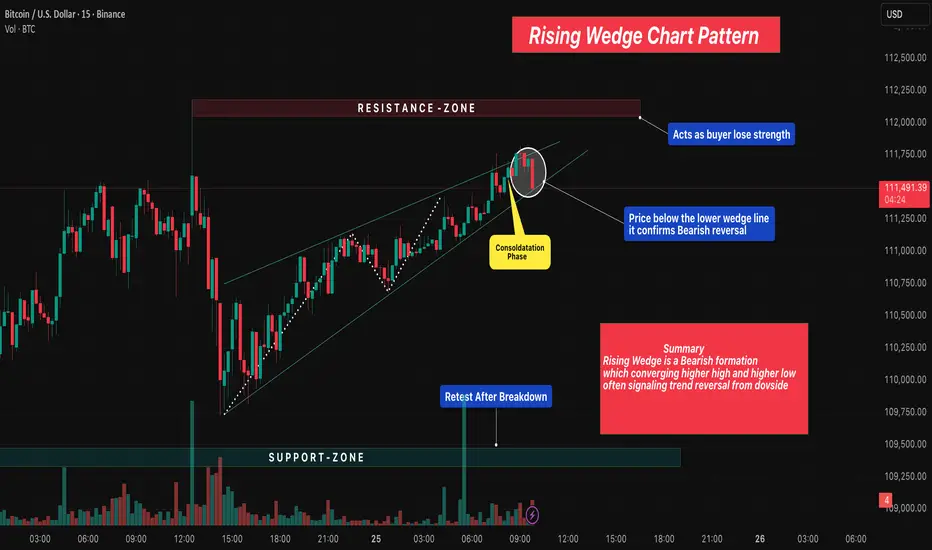
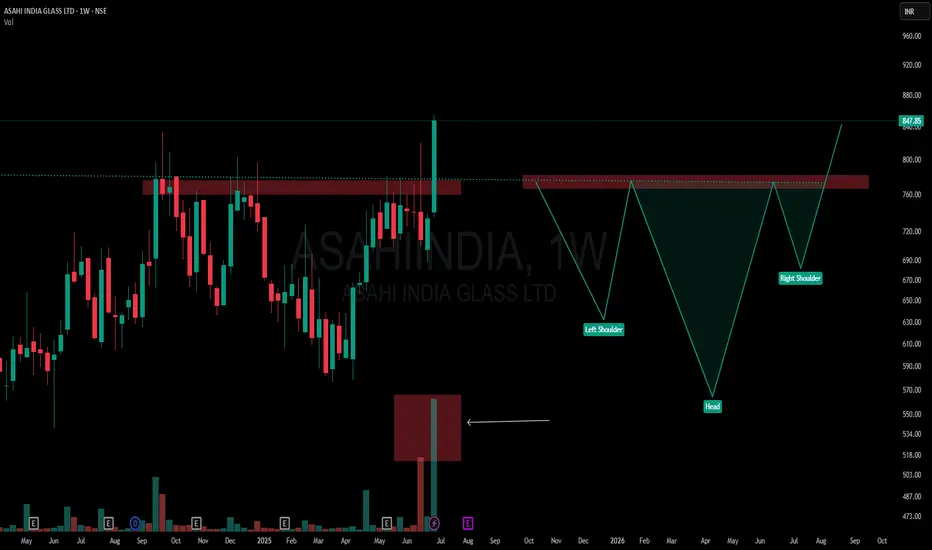
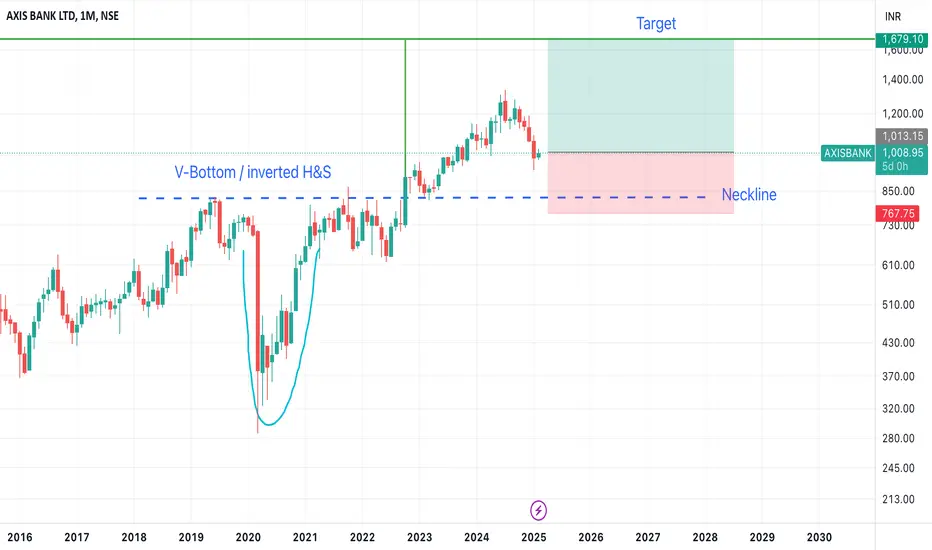
W-patterns
As 'Above' so 'Below' - the harmony of natureIn this real world, there is various philosophy that tries to explain the "As above, so below" harmony is the great law of nature but none can prove this law hence it's still a hypothesis.
The law of nature works on everything and the stock market is not untouched by nature.
I am not here to give a lecture on this law of nature but to prove how this harmony of nature is preserved in the stock market and to share my research work on 'Stock-et' science which is equally difficult as 'Rocket' science.
Many of you have heard of these famous patterns:-
'Head and Shoulder'
'Cup and Handle'
'Rounding Top/Bottom'
'Flag/Pennant'
'Double Top/Bottom'
Do you all observe some correlation among them?
They all are candlestick patterns that either decide reversal or continuation, if this was your observation then probably you are correct but I wasn't indicating this.
Let me explain to you what kind of relationship I was talking about.
How do we estimate the target of these patterns? To the target level, we first measure the depth of the pattern i.e. how deep it's below the breakout level.
As its depth is below so will the height above.
Now, I think you all can draw how this law of nature is respected here in the candlestick pattern or more precisely in the stock market.
Let’s have an example to be more sound:-
The above chart describes how the CUP pattern works following this law of nature.
The stock after the breakout rallied non-stop to attain the e height of +94% which was the depth of the cup pattern.
After attaining the target or say 'equilibrium' stock witnessed a jerk, not before that.
This proves how the market preserves "As above, so below" harmony, the great law of nature.
Still not convinced then look to another example,
This is the vice-versa of the previously explained example, here stock attains the depth of -17% i.e. ' equilibrium' after forming a Head and Shoulder pattern with a height of shoulder +17%.
This proves how the market preserves "As below, so above" harmony, the great law of nature.
Now let's look at this concept with different dimensions i.e. dimensions of mathematics, physics, and chemistry.
Don’t be afraid I'm not going to talk about 'rocket' science but 'stock-et' science.
[list [
In math, we all have read negative and positive cancels out i.e. (-3+3=0) same in candlestick patterns if the stock has a pattern depth of then the pattern target would be +30% to attain '0' or say 'equilibrium'.
In physics, we all have read that negative charges neutralize the positive charge to attain 'equilibrium' same in the stock market.
In chemistry, we all have read that all chemical changes occur in nature to attain 'equilibrium' i.e. two elements share their electrons to attain 'stability' (H2O, here two hydrogen molecules share their 1 electron with 6 electrons of oxygen to attain equilibrium) this same happens in markets all market movements occur to attain 'stability'.
Generally, people have fantasies about 'Rocket' science but we traders have fantasies about 'Stock-et' science.
Please drop comments on whether you have a fantasy for any of the above science.
Also, let me know how many of you believe that the stock market doesn't work on speculation but has its science
let's call it 'Stock-et' science.
Elliotical Approach to US30 Short.Hello Traders!
1. The US30 market is on the verge of completing its 2nd wave of Wave C of the complex correction as originally published in a prior idea (link attached).
2. We see an ending diagonal forming in the 1hr tf at the moment.
3. Also, wave 4 often divides an impulse into harmonic ratios. There can be that possibility with the division of 61.8% and 38.2% (total 100%). We take this possibility into picture because we also have the retracement level of 78.6% of wave 1 at almost the same level.
4. What is an invalidation level ? It is the level at which are analysis will have been wronged. So, in this case, if US30 market goes above 34950, our analysis will be wronged and we will have to look for a new picture. That's how accurate Elliot Wave Theory is!
5. Clearer targets will be available when we have a clear impulse down.
Do use proper risk management.
Happy Trading!
Profits,
Market's Mechanic.
My Approach to USDJPY Long.Hello Traders!
1. I see a potential head and shoulder on the USDJPY chart.
2. It's still a pattern in the making and hence makes it a bit of a risky trade but definitely worth a shot as the market stands on a major support on the daily TF and has been consolidating in the region for quite some time now.
3. Also, as per my trade, we are entering at the very low of the zone, thus reducing our risk significantly .
Do use proper risk management.
Happy Trading!
Profits,
Market's Mechanic.
Target 1 and 2 achieved in Colagte | 5.5% MoverThis idea is a follow-up to Colgate.
You can check the Link to Related Ideas ( Detailed analysis done in 22nd Aug Video )
Disclaimer: The information provided is for educational purposes only. Our intention is not to give any financial advice, don't take any decision without consulting your financial advisor.
BOROSIL LTD - Long Terms BullishBOROSIL LTD - Short term bearish trend
1. Now at the primary trend, it's a positive sign...
2. It breaks the Falling wedge pattern now...
3. Strong support at 272, if it breaks another support at 240
4. Target will be 412 if it breaks with an open and close candle above 295
Educational purpose...
INDUSIND BANK: Head and Shoulder THEORY:
This pattern forms after an extensive upside rally. It consists of a left shoulder, a head, and a right shoulder. The left shoulder is formed after a big bull rally in which the volumes are quite large.
At the end of the left shoulder, a minor correction takes place on the downside which happens on the low volumes comparatively the starting of the left shoulder. After this, again an up move can be seen on large volumes forming a head whose top is above the left shoulder following a correction on lower volumes & completing the head.
The completion of the head must be below the top of the left shoulder. If the prices fall down below the low of the left shoulder then too this pattern remains intact. In the end, the right shoulder is formed usually on smaller volumes comparatively the previous two rallies.
Now if you connect the bottoms of the left shoulder, head & the right shoulder there will be a formation of the ‘Neckline‘. This line will act as a decision line. If the prices break this neckline & give closing below the line, this will be the confirmation of the breakdown of the H&S pattern.
However, it has been noticed that after breaking of the neckline the prices again attracted towards this neckline. We say this phenomenon as a retest of the neckline which will add some more confidence while trading this pattern.
After retesting if the prices again come down this will be the final confirmation of the downside movement of the price as shown below.
The bookish target of this pattern is taken as the vertical price range from the top of the head to the neckline & the bookish Stop loss should be the top of the right shoulder. However this stop loss can be big, so it is advised to keep a stop loss of 4-5% of the price range above the neckline.
BULLISH HARAMI PATTERN IN INFY.As one can see, there is a bullish harami pattern in nifty which means one can go long in INFY keeping the stoploss below mother red candle low or 1400 as per your risk appetite, with a target of 1540 which is almost 1:2 RR.
Be quick and agile in booking your profits as this is still in a downtrend and the global scenario is still the same.
There is positive RSI divergence as well, which indicates there is a slowdown in selling.
Flag Pattern (Flag and Pole Pattern)A flag pattern is a trend continuation pattern, appropriately named after it’s visual similarity to a flag on a flagpole. Flag patterns can be bullish or bearish.
1. Flagpole: A line extending up from this break to the high of the flag/pennant forms the flagpole. The flagpole is the distance from the first resistance or support break to the high or low of the flag. The sharp advance (or decline) that forms the flagpole should break a trend line or resistance/support level.
2. Flag: A flag is a small rectangle pattern that slopes against the previous trend. If the previous move was up, then the flag would slope down. If the move was down, then the flag would slope up. The price action just needs to be contained within two parallel trend lines.
3. Break: For a bullish flag, a break above resistance signals that the previous advance has resumed. For a bearish flag, a break below support signals that the previous decline has resumed.
4. Volume: Volume should be heavy during the advance or decline that forms the flagpole. Volume contracts during the flag's formation and expands right after the resistance/support breakout.
5. Target: The length of the flagpole can be applied to the resistance break or support break of the flag to estimate the advance or decline.