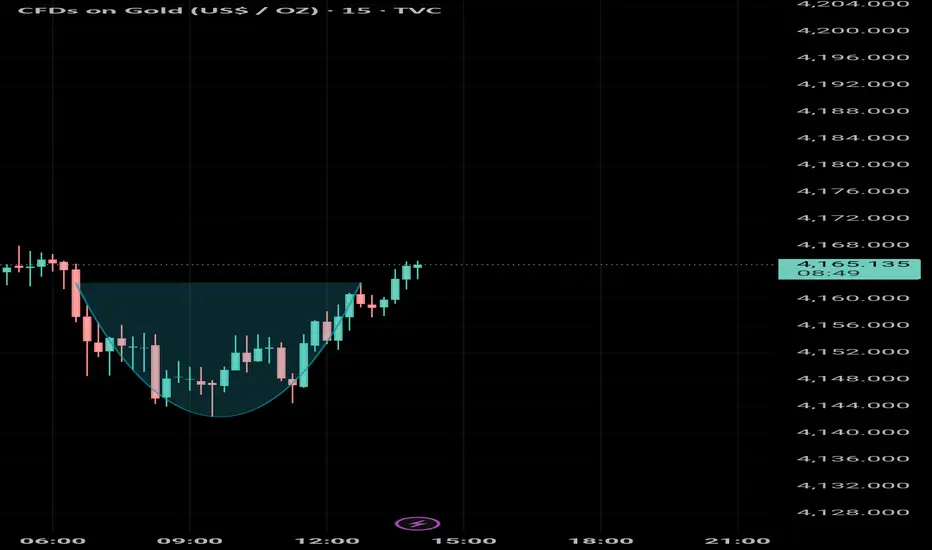
GOLD broke out of the H4 trendline — real breakout or trap? Hello Traders! 👋
Gold has broken out of the H4 descending trendline, boosted by geopolitical tension and a weaker USD.
But the real question is: Is this a true breakout or just FOMO before a drop?
Here are the key zones I’ll be watching today:
BUY Zones (SL 10 – TP 10)
• 4165 – 4155
• 4170 – 4175
• 4140 – 4145
• 4110-4108
• 4099-4096
SELL Reaction Zones (SL 10 – TP 10)
• 4200 – 4203
• 4212 – 4215
• 4230-4035
• 4245 – 4247
👉 If price breaks below 4133, the trendline fails → potential sell-continuation setup.
📌 Bias: BUY is the main play — SELL only for short reaction scalps.
💬 What do YOU think — real breakout or classic bull trap? Drop your thoughts below!
❤️ Let’s discuss & grow together!
Futures market
GOLD XAU/USD – Testing Supply Zone! Possible Pullback SetupGold extended its bullish momentum but is now showing signs of exhaustion as it tests the 4190–4200 supply zone, where price has reacted previously.
I’ll be watching for potential short opportunities near 4185, as long as 4194 remains a protective upside barrier.
If sellers step in, possible downside targets are:
🔽 4178
🔽 4172
🔽 4168
Structure remains valid as long as the 4194 zone holds. A breakout above may invalidate the pullback idea and open the door for further bullish continuation.
⚠️ Disclaimer:
This is a technical analysis idea for educational purposes only, not financial advice. Always manage risk and follow your own trading plan.
Your feedback drives our content and keeps everyone trading smarter. Let’s make those pips together! 🚀
Happy Trading,
– The InvestPro Team
XAUUSD – SHORT-TERM TREND STILL UNCERTAIN, WAIT FOR PRICE TO ...XAUUSD – SHORT-TERM TREND STILL UNCERTAIN, WAIT FOR PRICE TO RETURN TO LIQUIDITY ZONES
1. Fundamental Analysis
In today’s session, gold is holding a mild pullback after touching its highest level in nearly two weeks.
Market sentiment has turned slightly more risk-on, causing capital to move away from safe-haven assets. This reduces short-term demand for gold and triggers profit-taking.
However, the Fed’s dovish expectations continue to keep the USD weak, which remains a supporting factor for gold in the medium term. Lana views the current phase mainly as a technical correction and prefers waiting for price to reach key liquidity zones before taking action.
2. Technical Analysis
On the H1 timeframe, after a strong upside move, price is slowing down and showing a confirmation of downward pressure from the upper resistance zone.
The rising trendline beneath is still holding the overall structure, suggesting the broader trend remains intact, but momentum is fading and the market is entering a more indecisive phase.
Below the price, the FVG demand zones around 4113–4111 and the deeper 4085–4088 represent liquidity areas where Lana expects buyers may step back in.
Above the price, the 4194–4196 zone is a key resistance area, aligned with supply and upper liquidity, suitable for a correction sell setup if price retests it.
3. Key Price Zones to Watch
Upper liquidity / major resistance:
• 4194 – 4196
Lower liquidity / support & FVG zones:
• 4113 – 4111: first demand zone, near the rising trendline
• 4085 – 4088: deeper FVG zone, stronger support if correction extends
4. Trade Setups
SELL: 4194 – 4196
SL: 4200
TP: 4175 – 4160 – 4122 – 4105
BUY: 4113 – 4111
SL: 4105
TP: 4133 – 4155 – 4170 – 4190
BUY: 4085 – 4088
SL: 4080
TP: 4095 – 4110 – 4133 – 4150 – 4185
👉 Follow Lana on TradingView to get the earliest gold analysis updates. 💛
XAUUSD Outlook: Recent Gains Have Been Quite Steady!The market outlook for XAUUSD remains clearly optimistic. The latest price movement has shown a steady recovery, pushing towards the upper boundary of the newly forecasted price channel. This presents another excellent opportunity to get involved.
The market may be in the early stages of a strong new bullish leg. We could also see some consolidation or a short-term pullback before continuing towards the upper boundary, but I believe the second scenario is more likely.
My target would be 4,350.
Gold Trading Strategy for 28th November 2025Trade plan (15-minute close rules)
Long (Buy) Plan 🟢
Entry: place a buy order after a 15-min candle closes above $4170 (you may use a market order on the next candle open or a buy-stop just above the high).
Primary targets:
Target 1: $4182 — partial take profit (TP1). 🎯
Target 2: $4195 — add/scale out or move stop to breakeven (TP2). 🎯🎯
Target 3: $4210 — final target (TP3). 🎯🎯🎯
Suggested stop placement:
Conservative: place stop just below the low of the breakout 15-min candle (preferred — price-action based). ⛔
Alternative fixed buffer: $10–$15 below entry (choose based on volatility and your timeframe). ⛔
Short (Sell) Plan 🔴
Entry: place a sell order after a 15-min candle closes below $4143. (Enter market on next open or use a sell-stop just below the low.)
Primary targets:
Target 1: $4132 — TP1. 🎯
Target 2: $4119 — TP2. 🎯🎯
Target 3: $4105 — TP3. 🎯🎯🎯
Suggested stop placement:
Conservative: stop just above the high of the breakdown 15-min candle. ⛔
Alternative fixed buffer: $10–$15 above entry.
Avoid averaging into shorts if price returns above the breakdown candle high — better to re-evaluate.
Risk management & rules (non-negotiable)
Always use a stop. Never trade without one. ⛔
Size to risk: keep risk per trade ≤ 1–2% of account (adjust to your plan). 📊
DISCLAIMER (must read) ⚠️
This is educational / informational only and not financial advice. Trading precious metals involves significant risk and you can lose more than your initial capital. Always do your own research and consider consulting a licensed financial advisor before trading. The trade rules above are based on technical levels you provided and general risk principles — they do not guarantee profit.
Update 3: GOLD BUY POINTS Buy point:
4148
4140
Target : 4172 - 4205
entry are valid only when you see 5 min CHoCH any candle touch a the zone and then any minor support breaks then punch a trade with Close base Sl on top and Vice versa
Sell side only when : if this triangle give breakout and then sell at 4168 and book near at 4145 and then again plan for a buy just play the move..
these are the points of reversal i already published this if you dont want to buy then just check the analysis tomorrow night
Crude Oil Resistance Breakout – Retest & Buy OpportunityCrude Oil has broken above a key resistance zone, which had previously acted as a strong supply area multiple times. After the breakout, the price is now approaching the same zone for a potential retest.
If the retest holds as support and bullish candles appear, it can confirm buyer strength and provide a high-probability long setup.
📌 Trade Plan:
Buy Zone: On retest of the breakout level
Confirmation: Bullish rejection candle / strong bounce from support
Targets:
TP1: Recent swing high
TP2: Next resistance level for extended move
Stop Loss: Below the retest support zone
📈 Idea Logic:
The resistance has flipped into support, indicating shift in market structure from range to bullish momentum. A successful retest offers a safer and more reliable entry.
GOLD 1H | PDH/PDL Compression Breakout • Cup & Handle + Rising WGOLD 1H – ICT + Price Action Analysis
Price is currently compressing between PDH (Previous Day High) and PDL (Previous Day Low) forming a rising wedge inside a broader cup & handle pattern.
🔹 Cup formation shows accumulation
🔹 Handle retest confirming buyers stepping in
🔹 Rising wedge indicates volatility squeeze
🔹 Price staying above PDL = bullish protection
🔹 PDH breakout expected if liquidity stays intact
Divergence Secrets Tips for Successful Option Trading
Always use stop-loss
Track IV and IV percentile
Learn market structure (trend, range, breakout)
Avoid buying options in low IV environments
Avoid selling options in highly trending markets
Maintain proper risk-to-reward
Never hold naked options till expiry if inexperienced
Focus on quality setups, not quantity
USD Stunned: Buy Gold at the Adjustment Bottom!1. Fundamentals Quick Take
US Data: Positive (Jobless Claims 216K, lowest in 7 months, Durable Goods +0.5%).
Fed Policy: Extremely Dovish. Fed officials hint at a 25bps rate cut as early as December.
Impact: Low interest rate expectations push DXY down: Strong support for Gold.
2. Technical Outlook - H1
Trend: Strong Uptrend.
Position: Price is below Resistance/Supply (CP Zone - around 4,175 - 4,195). High likelihood of short-term adjustment.
Strategy: Focus on BUY (Long) at strong Demand/Support zones, do not Short based on short-term reactions.
Ideal Long Zone: Around 4,129 or 4,096.
Conclusion: Wait for price to adjust to the Demand zone to enter Long orders following the main trend, based on the USD's decline momentum from Fed signals.
#XAUUSD #Gold #Fed #DXY #TradingView
Gold may continue rising — Trading around 4,150–4,200 range📊 Market outlook:
• Spot gold is currently around 4,150 USD/oz.
• It is up roughly +0.20% (≈ +8 USD) over the past 24 hours.
• The rise is supported by expectations that the Federal Reserve (Fed) may cut interest rates soon, making non-yielding assets like gold more attractive.
📉 Technical view (short-term):
• Support zone: ~ 4,130 – 4,140 USD/oz — watch for a retracement bounce.
• Resistance zone: ~ 4,180 – 4,200 USD/oz — a breakout could trigger further gains.
• In a low-interest environment and with ongoing macro uncertainties, gold remains a safe-haven asset — bullish bias continues.
📌 Interpretation:
• In the short term, gold is likely to rise further if expectations of rate cuts remain strong.
• If U.S. economic data comes in stronger and the Fed turns hawkish → a minor correction is possible.
• Current bias: upside, but sensitive to U.S. economic data and Fed signals.
💡 Trading Strategy:
🔺 BUY XAU/USD: 4,135 – 4,132
🎯 TP: 40 / 80 / 200 pips
🛑 SL: 4,129
🔻 SELL XAU/USD: 4,185 – 4,188
🎯 TP: 40 / 80 / 200 pips
🛑 SL: 4,192
XAU/USD: Gold Stagnates, Poised for a Strong Surge📊 Market Structure
Gold is moving in a tight accumulation phase (compression) between two important zones:
• OB Support: 4,130 – 4,126
• Resistance – Small Supply: 4,148 – 4,166
The previous trend remains a strong uptrend (clear BoS sequence from 4,089), and currently, the price is retesting the newly formed peak-bottom structure.
The BUY side is still in control as long as the price stays above:
• 4,130 – Main OB Support
• 4,104 – Discount FVG
• 4,089 – Key Low Confirming Trend
If gold holds these zones, the next targets will be the upper liquidity levels:
• 4,166
• 4,181
• 4,207
• 4,243
💎 Key Technical Zones
• OB Support 1: 4,130 – 4,126
• FVG Zone: 4,104 – 4,089 (best discount)
• Deep Bearish OB: 4,060 – 4,045 (if price drops sharply)
• Upper Liquidity Targets: 4,166 → 4,181 → 4,207 → 4,243
🎯 Trading Plan (Priority BUY)
1️⃣ BUY 1 – Retest OB 4,130
When the price touches the OB support zone 4,130 – 4,126 and shows a bounce signal (rejection / engulfing).
• Entry: 4,130 – 4,126
• SL: below 4,115
• TP1: 4,166
• TP2: 4,181
• TP3: 4,207
• TP4: 4,243
→ Quick setup, good RR, trend aligned.
2️⃣ BUY 2 – Discount FVG 4,104 – 4,089
This is the best BUY zone if the market drops sharply before rising.
• Entry: 4,104 – 4,089
• SL: 4,070
• TP1: 4,166
• TP2: 4,181
• TP3: 4,207
• TP4: 4,243
→ Strong confluence: FVG + fibo discount + key liquidity.
3️⃣ BUY 3 – Deep Accumulation at Bearish OB Shift
• Entry: 4,060 – 4,045
• SL: 4,020
• TP: 4,104 → 4,166 → 4,207
→ Only activate if “flush liquidity” appears.
🎯 SELL Scalp (secondary – not priority)
Only SELL when there is a clear rejection reaction at:
• 4,166 – first liquidity sweep zone
• 4,181 – strong reaction zone
• 4,207 – main bearish OB
• 4,243 – large liquidity peak
• SL: 10–15 USD
• TP: 4,148 → 4,130
→ For scalpers only, not a main setup.
🧠 Vincent’s View
The market structure remains completely bullish. The market is accumulating energy in a narrow range before breaking strongly to the upper liquidity targets.
As long as gold stays above 4,089 – the uptrend remains dominant.
“Patience builds the entry – liquidity completes the move.” ⚜️
⏰ Timeframe: 1H
✍️ Analysis by: Captain Vincent
Advantages of Algorithmic Trading for Retail InvestorsIntroduction
In the modern financial markets, technology has revolutionized trading, making it more accessible, efficient, and sophisticated. Algorithmic trading, often referred to as algo-trading or automated trading, is a prime example of this transformation. It involves using computer algorithms to execute trades based on predefined rules for price, volume, timing, and other market conditions. While algorithmic trading was initially the domain of institutional investors and hedge funds due to its complexity and technological requirements, retail investors are increasingly adopting these strategies. The rise of accessible trading platforms, advanced analytical tools, and educational resources has empowered individual investors to leverage algorithmic trading effectively. Understanding the advantages of algorithmic trading can help retail investors optimize their strategies, manage risk, and enhance profitability.
1. Speed and Efficiency
One of the most significant advantages of algorithmic trading for retail investors is speed. Financial markets are highly dynamic, with prices fluctuating within milliseconds. Human traders, regardless of their experience, cannot match the speed of a computer executing trades. Algorithms can instantly analyze market data, identify trading opportunities, and execute orders at the optimal price. This efficiency allows retail investors to capitalize on short-term price movements and market inefficiencies that would otherwise be missed.
Moreover, algorithmic trading reduces the impact of manual errors such as delays in order placement, incorrect entries, or missing trading signals. By automating the execution process, retail investors can achieve consistency and precision that is difficult to maintain manually.
2. Elimination of Emotional Bias
Emotions are a significant challenge for retail traders. Fear, greed, and overconfidence can lead to poor decision-making, resulting in losses. Algorithmic trading helps eliminate emotional bias by relying on pre-programmed rules. Decisions are made based on data and logic, not psychology. For instance, an algorithm can stick to a stop-loss strategy even when the market is highly volatile, preventing panic selling or impulsive buying.
This psychological discipline is crucial for retail investors who may lack the experience to manage stress during market swings. By removing emotions from trading, algorithms help investors maintain a systematic and disciplined approach, ultimately improving long-term performance.
3. Backtesting and Strategy Optimization
Another key advantage for retail investors is the ability to backtest trading strategies. Backtesting involves applying an algorithm to historical market data to evaluate its performance before deploying it in real-time markets. This allows investors to understand potential returns, risks, and drawdowns associated with a strategy.
Backtesting provides valuable insights that enable retail investors to optimize trading strategies. Algorithms can be fine-tuned to improve profitability, minimize risk, and adjust to different market conditions. This scientific and data-driven approach is particularly beneficial for retail investors, who may have limited capital and need to maximize efficiency.
4. Diversification of Trading Strategies
Algorithmic trading allows retail investors to manage multiple strategies simultaneously. Algorithms can monitor different markets, securities, and timeframes concurrently—something that is impossible for a human trader to achieve effectively. This diversification reduces overall risk and increases opportunities for profit.
For example, a retail investor can simultaneously run algorithms for trend following, mean reversion, and arbitrage strategies across equities, commodities, and forex markets. Diversification through automation ensures that an investor’s portfolio is not overly reliant on a single market or approach, thereby enhancing risk-adjusted returns.
5. Lower Transaction Costs
Contrary to popular belief, algorithmic trading can help retail investors reduce transaction costs. Algorithms can execute trades at optimal prices, taking advantage of market liquidity and minimizing slippage. High-frequency trading (HFT) algorithms, for instance, can split large orders into smaller trades to prevent price impact, ensuring the investor pays less than they might in manual trading.
Additionally, automated trading reduces the need for constant monitoring of the markets, which lowers the opportunity cost associated with manual trading. Retail investors can focus on research and strategy development rather than spending hours tracking price movements and executing trades manually.
6. Consistency in Strategy Execution
Consistency is vital for long-term trading success. Human traders often deviate from their strategies due to emotions, fatigue, or external influences. Algorithms, however, execute trades with absolute consistency according to predefined rules. This ensures that strategies are implemented exactly as intended, eliminating human error and maintaining a disciplined trading routine.
Consistency also allows retail investors to measure the performance of strategies accurately. By executing trades uniformly, investors can identify strengths and weaknesses in their approach and make informed adjustments without the noise introduced by inconsistent human behavior.
7. Access to Advanced Trading Techniques
Algorithmic trading provides retail investors with access to advanced trading techniques that were previously exclusive to institutional players. Strategies such as statistical arbitrage, pairs trading, and machine learning-based prediction models are now within reach due to modern trading platforms and affordable technology.
Retail investors can leverage algorithms to analyze large datasets, detect patterns, and execute complex strategies that would be impossible manually. This democratization of sophisticated tools levels the playing field, allowing individual traders to compete more effectively with larger institutions.
8. Risk Management and Control
Effective risk management is essential in trading, and algorithmic trading offers enhanced risk control mechanisms. Algorithms can be programmed to follow strict risk parameters, such as position sizing, stop-loss limits, and maximum daily loss thresholds. This ensures that retail investors avoid catastrophic losses and maintain capital preservation.
Moreover, algorithms can monitor multiple risk factors in real-time and adjust positions automatically. For instance, if volatility spikes, an algorithm can reduce position sizes or temporarily halt trading to prevent exposure to excessive risk. Such proactive measures are difficult to implement manually, particularly for retail investors with limited resources.
9. Time-Saving Benefits
For retail investors who balance trading with full-time jobs or other responsibilities, algorithmic trading offers significant time-saving advantages. Once a trading algorithm is developed and deployed, it can operate continuously without constant supervision. Retail investors no longer need to sit in front of screens for hours or react to every market fluctuation.
Automated trading allows investors to spend more time on research, strategy refinement, and portfolio analysis, rather than the mechanical task of order execution. This efficiency improves productivity and makes trading a more sustainable and enjoyable activity for retail participants.
10. Transparency and Record-Keeping
Algorithmic trading provides transparent and verifiable records of every trade executed. Each transaction is logged with precise time, price, and strategy details, making it easier for retail investors to track performance and audit their trading history. This transparency also aids in regulatory compliance and tax reporting.
Additionally, detailed records help investors analyze strategy effectiveness and identify patterns of success or failure. Over time, this data-driven feedback loop enables continuous improvement and more informed decision-making.
Conclusion
Algorithmic trading offers retail investors a host of advantages that were once limited to institutional players. By providing speed, efficiency, emotional discipline, strategy optimization, diversification, lower costs, and advanced techniques, algorithms empower individual traders to navigate complex financial markets more effectively. Enhanced risk management, consistent execution, and time-saving benefits further make algorithmic trading an indispensable tool for modern retail investors.
While algorithmic trading requires a learning curve, access to technology, and proper strategy development, the potential benefits far outweigh these challenges. As platforms and tools continue to evolve, retail investors are increasingly positioned to leverage algorithmic trading to achieve disciplined, efficient, and profitable trading outcomes. In a market where speed, data, and precision are critical, algorithmic trading is no longer an advantage—it is a necessity for retail investors seeking to compete at the highest level.
Building a Quarterly Results Trading Checklist1. Pre-Earnings Preparation: Setting the Foundation
Before any earnings are announced, traders must prepare. Preparation removes guesswork and gives clarity. Key factors include:
a. Identify High-Impact Companies
Not all results move the market equally. Focus on:
Large-cap companies
Sector leaders
Companies with a history of large earnings-day volatility
Stocks with heavy FII/DII ownership
Companies with recent major news (M&A, regulatory changes, product launches)
These stocks typically see stronger price reactions.
b. Know the Earnings Date
Many traders get caught off guard because they miss the exact results-announcement timing. Check:
Whether results are announced before market, during market, or after market close
If management commentary or concall is on the same day or the next day
Timing helps you plan intraday or positional trades better.
c. Study the Previous Quarter’s Performance
Review the last 2–3 earnings releases. Note:
Revenue growth trends
Margins (EBITDA, PAT)
Management guidance accuracy
Market reaction to previous results
Surprise elements (positive or negative)
This helps form expectations about whether the upcoming result can challenge or follow historical patterns.
d. Analyze Expectations (Street Estimates)
Quarterly results trading is more about expectations vs. reality than actual performance. Expectations come from:
Analyst projections
Bloomberg/Refinitiv consensus
News flow
Channel checks
Management guidance
If expectations are too high, even decent results can cause the stock to fall.
2. Fundamental Metrics to Watch in Results
Quarterly results contain dozens of data points, but traders should focus on the most high-impact ones. These include:
a. Revenue Growth
Shows overall demand. Compare YoY and QoQ growth:
YoY reveals long-term momentum
QoQ signals near-term growth consistency
b. Profit Margins
Margins show operational efficiency. Key margins:
Gross margin
EBITDA margin
PAT margin
Expanding margins often result in bullish moves.
c. Profit After Tax (PAT)
A company may show revenue growth but shrinking profits due to higher costs. Such divergences significantly impact stock direction.
d. Guidance and Commentary
Often more important than the numbers themselves. Traders watch:
Next quarter revenue outlook
Margin guidance
CapEx plans
Industry demand expectations
Management tone (optimistic, neutral, cautious)
Negative guidance can tank the stock even if the reported numbers are strong.
e. Segment-Wise Performance
Multi-segment companies like Reliance, Tata Motors, or IT companies require detailed segment analysis:
Which segment grew/dropped?
Is the core business performing well?
Are new initiatives gaining traction?
This helps identify future revenue drivers.
3. Technical Checklist Before Trading Results
Fundamentals show what happened; technicals show how traders positioned themselves before results.
a. Identify Key Support and Resistance Levels
Mark:
Major swing high and low
20-, 50-, 200-day moving averages
Trendline support
Supply zones
These levels help shape entry and exit plans.
b. Assess Pre-Earnings Momentum
Check if the stock is:
Running up before results (a sign of high expectations)
Consolidating (indecision)
Selling off (low investor confidence)
Stocks that run too fast ahead of earnings often correct even on good results.
c. Volume Analysis
Higher volumes before results indicate:
Institutional positioning
Potential for large post-earnings moves
Smart money activity
d. Volatility Check
Recent volatility helps determine:
Lot sizes
Stop-loss width
Position sizing
Whether to take a trade at all
If volatility is extreme, avoid leveraged positions.
4. Crafting the Trading Strategy
Once fundamentals and technicals are studied, create actionable trade plans using this checklist.
a. Decide Your Trading Style
You can trade quarterly results in three ways:
Pre-Earnings Positional Trade
Based on expectation buildup
Suitable only for high-conviction setups
Post-Results Intraday Trade
Safer
Trade only after numbers are out
Post-Results Positional Trade
Based on guidance
Ideal for capturing multi-week moves
Choose one based on risk tolerance.
b. Define Entry Trigger
Triggers can include:
Breakout above resistance
Breakdown below support
High-volume candle
Reversal candle after a knee-jerk reaction
A rule-based entry prevents emotional decisions.
c. Set Stop-Loss and Target Levels
Risk management is the spine of the checklist. For results trading:
Keep wider stops due to volatility
Use position sizing to manage risk
Avoid averaging down
Use ATR-based stops for best results.
d. Avoid Trading Immediately at Results Time
The first 5–10 minutes after results are volatile and full of fake moves. Let the market:
Absorb data
Form a stable direction
Build volume confirmation
Then act.
5. Psychology and Behavior Checklist
Earnings trading requires strong emotional control.
a. Don’t Chase the First Spike
The initial price spike is often wrong. Wait for confirmation.
b. Avoid Bias
If you "like" the company, you may misread the results. Let the data dictate the trade.
c. Stick to the Plan
Do not:
Increase position size impulsively
Trade without stop-loss
Overtrade because of excitement
A structured checklist reduces psychological stress.
6. Risk Management Checklist
Earnings trading can flip sharply. Risk control is crucial.
a. Never Trade Full Capital
Limit exposure to:
2–5% of total capital for intraday
5–10% for positional
b. Use Hedging When Needed
Hedging tools:
Options (buying calls/puts)
Straddles/strangles
Futures for protection
For unpredictable companies, hedge or avoid.
c. Avoid Illiquid Stocks
Low-volume stocks widen spreads and increase slippage.
7. Post-Results Evaluation Checklist
After the trade, analyze performance to refine your strategy.
a. Review What Happened
Document:
Were expectations correct?
Did the stock reaction match your analysis?
Was your entry/exit well-timed?
b. Update Your Earnings Database
Maintain a simple log:
Company name
Estimate vs. actual results
Market reaction
Volatility levels
Over time, this builds pattern recognition.
c. Identify Mistakes
Mistakes commonly include:
Entering too early
Ignoring guidance
Trading on gut feeling
Correct them in the next cycle.
Conclusion: Why a Quarterly Results Checklist Matters
Quarterly results bring both opportunity and chaos. Without a checklist, traders rely on emotions and incomplete information, leading to inconsistent outcomes. A well-designed checklist—combining fundamentals, technicals, psychology, and risk management—creates a structured, rule-based approach. It helps identify winning trades, avoid traps, and build long-term trading consistency.
By following this 1000-word guide, you can build a reliable earnings-season trading framework that maximizes profit potential while protecting your capital.
Gold H1 - Can Gold reject 4167 and fall to 4133 today?🟡 XAUUSD – Intraday Smart Money Plan | by Ryan_TitanTrader (27/11)
📈 Market Context
Gold is trading inside an intraday consolidation after a strong H1 displacement. The session is now primed for liquidity engineering before the next leg.
Key narrative drivers traders must respect today:
• Stronger USD expectations continue to shape risk sentiment
• Institutional desks frequently exploit sweep zones during consolidation
• Range-bound conditions favor fakeouts → displacement → expansion mechanics
• Headlines around U.S. monetary tone amplify intraday volatility
The current chart highlights balanced liquidity both above and below structure, supporting a two-way SMC playbook.
🔎 Technical Framework – Smart Money Structure (H1)
Market is holding a rising channel, but internally ranging — a typical liquidity map scenario:
• Buy-side liquidity pocket: 4180 → 4182 (premium extreme)
• Sell-side liquidity pool: 4110 → 4133 (discount extreme / origin zone)
• Internal equilibrium zone: 4150–4170 chop region (no-trade area)
We expect this sequence:
Sweep → CHoCH/BOS → Displacement → Retest → Expansion.
🎯 Trade Plans for Today
🔴SELL GOLD 4180–4182 | SL 4190
Thesis: Premium liquidity sweep above local highs before downside displacement.
Activation rules:
• Price sweeps 4182 liquidity
• Bearish CHoCH/MSS + BOS down on M5–M15
• Imbalance retest / FVG entry after structure break
Targets:
• 4167 (nearest reaction)
• 4150 (equilibrium raid)
• 4135–4133 (discount retest)
🟢 BUY GOLD 4135–4133 | SL 4125
Thesis: Sell-side liquidity sweep into the origin zone before upside impulse.
Activation rules:
• Price taps 4133 pool (sweep below structure)
• Bullish CHoCH/MSS + BOS up on M5–M15
• FVG fill / bullish rejection wick confirmation
Targets:
• 4155+
• 4167 (reclaim zone)
• 4180+ (premium raid target)
⚠️ Risk Management
• Do NOT trade inside 4150–4170 without clear displacement
• Wait for CHoCH + BOS before execution
• Treat the upper and lower zones as liquidity traps, not trend entries
• Reduce size during news spikes unless structure confirms
• SL = wave invalidation, no averaging in chop
📝 Summary
Gold is in accumulation/redistribution mode. Desks may:
• Run buy-side liquidity at 4182, then displace down → retest discount
or
• Sweep sell-side liquidity at 4133, confirm CHoCH up → expand with impulse
Today is a liquidity session, not early trend chasing. Execute only after confirmation.
📍 Follow @Ryan_TitanTrader for daily Smart Money updates.
XAUUSD – Waiting for Trend Confirmation Around the 4,160–4,170..XAUUSD – Waiting for Trend Confirmation Around the 4,160–4,170 Zone
At the moment, gold has not shown a clearly defined medium-term trend. Price is moving around an important resistance zone, so instead of predicting direction early, I prefer waiting for price reaction at key levels before taking action.
The main focus today is the 4,160–4,170 area – where the market will decide whether to continue the uptrend or start a deeper correction.
🎯 Scenario 1 – SELL at 4,162–4,165 (Priority if No Clear Breakout)
Sell: 4.162 – 4.165
SL: 4.173
TP: 4.140 – 4.122 – 4.110 – 4.100
The 4.162–4.165 zone on H1 is a strong resistance area combining Fibonacci confluence, previous supply, and proximity to the short-term rising trendline.
If price taps this zone and shows weakness (upper-wick rejection, reversal candle, low volume confirmation), I prefer taking a short-term sell toward 4.140, with deeper targets at the liquidity cluster around 4.110–4.100.
Risk for this scenario is capped at 1–2% per trade. Do NOT hold the position if price closes above 4.173.
⭐ Scenario 2 – BUY on Break Above 4,170 (Trend Continuation Confirmation)
Buy: 4.171 – 4.173 (only after a clean breakout)
SL: 4.163
TP: 4.188 – 4.200 – 4.215
If price breaks decisively above 4.170 and sustains above it, that confirms buyers are still in control.
In this case, I switch my bias to buying the breakout, targeting the next resistance zones around 4.200–4.215, and possibly higher if momentum remains strong.
Note: Only buy if the breakout is genuine — strong candle body closing above 4.170, not a stop-hunt wick that pulls back immediately.
1. Fundamental Outlook
The DXY continues slipping below 99.50, now near 99.45, showing sustained weakness as markets increase expectations for a December Fed rate cut.
Easier monetary conditions generally support gold because the opportunity cost of holding gold is reduced.
However, U.S. initial jobless claims have dropped to the lowest level since April, showing the labour market is still resilient.
This creates a mixed environment: rate-cut expectations support gold, but strong economic data may cause sudden volatility around news releases.
Overall, fundamentals lean slightly bullish for gold, but not strongly enough to ignore potential technical pullbacks.
2. Technical Structure
On the H1 chart, after a strong rally, gold is now consolidating right below the 4.160–4.170 resistance.
The 4.162–4.165 region is a confluence zone:
• horizontal resistance
• previous supply
• area where strong selling pressure appeared earlier
The 4.140 level is the “correction confirmation level” — if price breaks and closes below it, the market will likely aim for the major liquidity area around 4.110–4.100, where many Buy-side stop losses are clustered.
The current structure allows for both long and short setups, but each scenario requires clear price confirmation at the 4.160–4.170 zone.
3. Market Sentiment & Action Plan
Both buyers and sellers are watching the same price zone — 4.160–4.170.
This makes it a high-liquidity area where stops for both sides may get swept before the market shows its real direction.
If price rejects strongly from this zone, it could be a sign of late buyers being flushed out.
If buyers hold price above 4.170, trapped short positions may fuel a short squeeze toward higher resistance zones.
My plan: I do not enter mid-range. I wait for clear signals:
• Sell at 4.162–4.165 if reversal confirmation appears.
• Buy at 4.171–4.173 after a confirmed breakout and hold above the zone.
• Always use a hard stop-loss. No widening stops if price goes against the trade.
If price breaks both zones without giving clear signals, I stay out and wait for a new structure instead of forcing a prediction.
I always read feedback to improve how I share these analyses in future posts.
XAU/USD – Gold Holds Above Key Support as Pullback Stays LimitedGold remains capped below its two-week high during the Asian session, but the downside is clearly limited.
Market sentiment is shaped by:
A weaker USD as dovish Fed expectations gain traction
Rising probability of rate cuts in upcoming meetings
Improving global risk sentiment amid hopes of progress in Russia–Ukraine negotiations
Even though Gold is retracing, the bigger picture remains bullish as long as price holds above key support zones.
📊 Technical Outlook – MMF Trading Style (M30/H1)
Price is currently consolidating below the resistance cluster 4,156 – 4,170, retracing into multiple demand zones.
Key Levels to Watch
Support 1: 4,131 – 4,137
Support 2: 4,115 – 4,118
Support 3 (major liquidity): 4,083 – 4,090
Main Resistance: 4,170 – 4,193
Market structure shows a clean zigzag pullback, suggesting a potential bullish continuation once liquidity is collected below.
🎯 MMF Intraday Trading Plan
Scenario 1 – Buy the Dip (Primary Bias)
Best trade today: Buying retracements into demand.
BUY: 4,115 – 4,118
SL: 4,103
TP: 4,131 → 4,156 → 4,170
BUY (extended liquidity sweep): 4,083 – 4,090
SL: 4,070
TP: 4,118 → 4,145 → 4,170 – 4,193
Reason: Fibo confluence + strong demand + liquidity zone = high-probability reversal area.
Scenario 2 – Short-Term SELL (Scalp Only)
Only valid if price rejects strongly at resistance.
SELL: 4,156 – 4,170
SL: 4,177
TP: 4,145 → 4,131
This is not the main bias today.
⚜️ MMF Trading View
Gold is forming a healthy pullback—not, at this stage, a bearish reversal.
As long as price stays above 4,08x, the bullish structure remains intact.
“In Gold, the goal isn’t chasing the breakout — it’s waiting for price to return to value.”
Today’s focus: Prefer BUY setups on retracement – SELL only for quick scalps.
XAUUSD – H1 uptrend channel, short-term downside risk increasingXAUUSD – H1 uptrend channel, short-term downside risk increasing Brian – Prioritize short selling at the channel peak, wait to buy back at lower support
I. Strategy Summary Gold is trading in an uptrend channel on H1, but the rise around 4.160 shows signs of weakening, increasing short-term correction risk.
Preferred Scenario: Short sell at the channel peak 4.162–4.164, targeting support areas 4.145 – 4.130 – 4.115 – 4.100.
After the correction, the 4.100–4.080 area may become the foundation for the next rise in the larger trend.
Important price areas to watch: 4.139 – 4.127 – 4.110 – 4.088.
II. Macro Context & News 27/11
02:00 – Fed releases Beige Book This document updates the Fed branches' assessment of the US economic situation.
Describing slower growth, cooling price pressures will further reinforce expectations that the Fed will soon cut interest rates → supporting gold.
Conversely, if the Beige Book describes the economy as still “resilient,” the market may temporarily slow down pricing in rate cuts → causing a short-term adjustment for gold.
19:30 – ECB releases October meeting minutes
If the minutes lean towards the scenario of keeping high interest rates longer, the EUR may be supported, indirectly affecting the USD and gold inflows.
However, the impact is usually not as strong as US data, mainly affecting the overall risk-on/risk-off sentiment.
General Context: Gold has surpassed 4.160 USD/oz as the market increasingly expects the Fed to cut interest rates as early as December, reducing the appeal of interest-bearing assets and increasing the allure of gold – a non-yielding asset. This creates a support foundation for the medium-term uptrend, but after a hot rise, technical adjustments on H1 are normal.
III. Technical Structure – H1 uptrend channel
The price is within the H1 uptrend channel, with rising peaks and troughs, but the upper area near 4.160 coincides with:
The upper boundary of the price channel. The “Sell POC” area on the chart – where liquidity and sell orders are concentrated.
Preferred scenario on the chart: The price may slightly rebound to the POC area 4.162–4.164, then be rejected and slide to the important support area around 4.110 before extending the adjustment down to 4.100–4.080.
The lower trendline of the uptrend channel also acts as a short-term buy area if a clear candle reaction appears.
Notable price areas on H1: Resistance: 4.162–4.164 (channel peak + POC). Intermediate support: 4.139 – 4.127 – 4.110. Deep support: 4.088 – 4.080 – 4.100 (area that may form the bottom for the next rise).
IV. Trading Plan 1. Preferred Scenario – Short sell at the channel peak Idea: Short sell when the price rebounds to the upper boundary of the H1 uptrend channel and POC 4.162–4.164, expecting a correction to support.
Sell: 4.162–4.164 SL: 4.168 TP targets: TP1: 4.145 TP2: 4.130 TP3: 4.115 TP4: 4.100
This is a counter-move order in the uptrend channel, only targeting a short-term correction, not a major trend reversal scenario.
2. Supplementary Scenario – Short buy at support trendline Idea: When the price hits the lower trendline of the H1 uptrend channel and a nice candle reaction appears, consider a short-term buy according to the channel, prioritizing areas:
4.139 – 4.127 – 4.110 – 4.088
Specific Entry/SL levels will depend on the actual price reaction at the trendline, but the general principle:
Buy close to the trendline,
SL placed below the immediate support area,
TP aimed at the middle of the channel or the nearest resistance.
V. Risk Management & Notes
Do not open new positions right before or at the time of the Beige Book and ECB minutes release, as volatility may suddenly increase, widening spreads.
The sell order at 4.162–4.164 is a short-term counter-trend order in the uptrend channel, requiring moderate volume and strict adherence to SL 4.168.
If the price clearly breaks and holds above the 4.170 area, the H1 correction scenario weakens – in that case, stay out, wait for a new structure instead of trying to maintain a sell view.
Elliott Wave Analysis XAUUSD – 27/11/20251. Momentum
D1:
D1 momentum is contracting and preparing to reverse. We need to wait for today’s daily candle to close to confirm the reversal signal. If confirmed, the market may enter a downward phase lasting around 4–5 days.
H4:
H4 momentum continues to decline and is approaching the oversold zone. This indicates that the current downward move is weakening, and a corrective bounce is likely once H4 momentum reverses in the oversold area.
H1:
H1 momentum is also decreasing and moving toward the oversold zone. Therefore, we expect a mild bounce once H1 momentum turns upward.
________________________________________
2. Wave Structure
D1:
The wave structure on H4 remains unchanged from previous analysis. The key difference is that D1 momentum has now contracted and shows signs of reversal, strengthening the scenario of a continuation of the purple Y wave. The completion of this Y wave will likely align with the moment D1 momentum descends into the oversold zone and reverses.
H4:
On the H4 timeframe, the blue ABC corrective structure is close to completion, and the market is currently in the final stage of wave C.
Based on H4 momentum reversal cycles, a series of lower highs and lower lows suggests that the ABC structure is likely complete and price is in the final phase of wave Y.
H1:
On H1, a 5-wave black structure is forming. In yesterday’s analysis, I presented two scenarios and explained the characteristics of each. With D1 momentum now reversing, I am leaning toward the scenario where the 5 black waves represent the C wave of the blue structure.
Yesterday’s targets for wave 5 (black) and wave C (blue) were truncated — price only reached 4173.8 and failed to touch 4184. Since then, the market has been moving sideways within a wide range.
Key observations:
• Price rose but failed to break the 4173.8 high.
• Price later dropped near 4137.
• RSI showed bearish divergence from wave 3 (black): price made higher highs while RSI made lower highs → suggesting wave 5 likely completed as an Ending Diagonal.
At this stage, I want to see price break below 4137 before H4 momentum reverses upward. This would provide additional confirmation that the ABC corrective structure has completed.
The 4058 zone continues to be a strong liquidity area to look for sell entries under the assumption that wave 5 has finished.
________________________________________
3. Trading Plan
Sell Zone: 4158 – 4160
SL: 4178
TP1: 4081
TP2: 4020
TP3: 3958