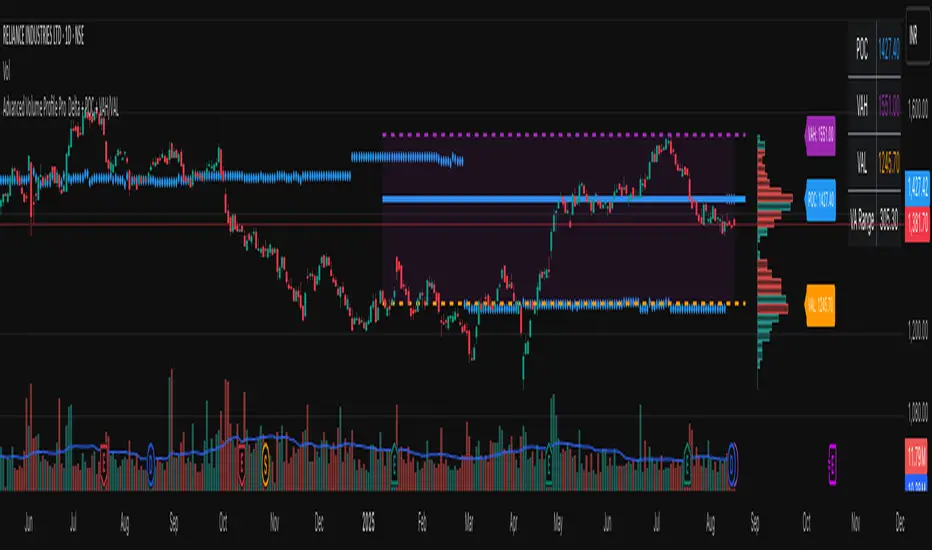
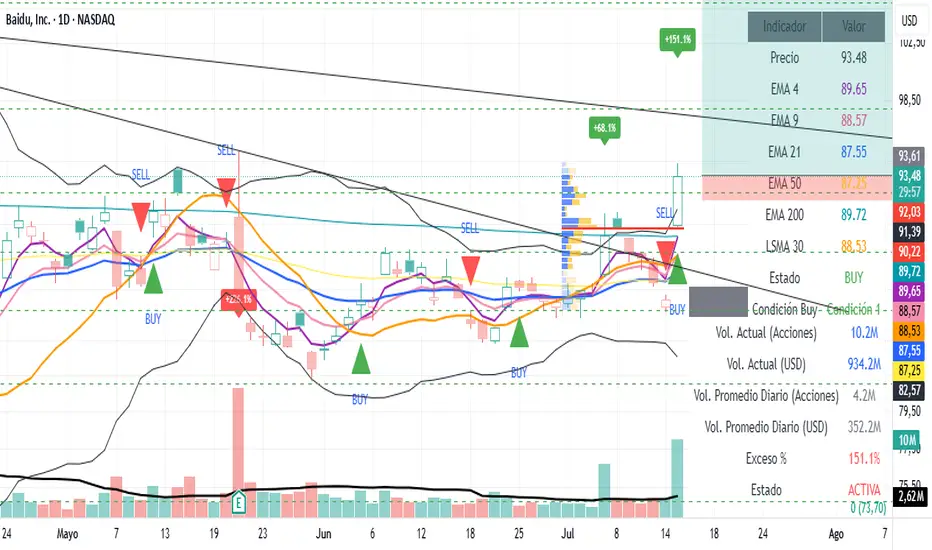
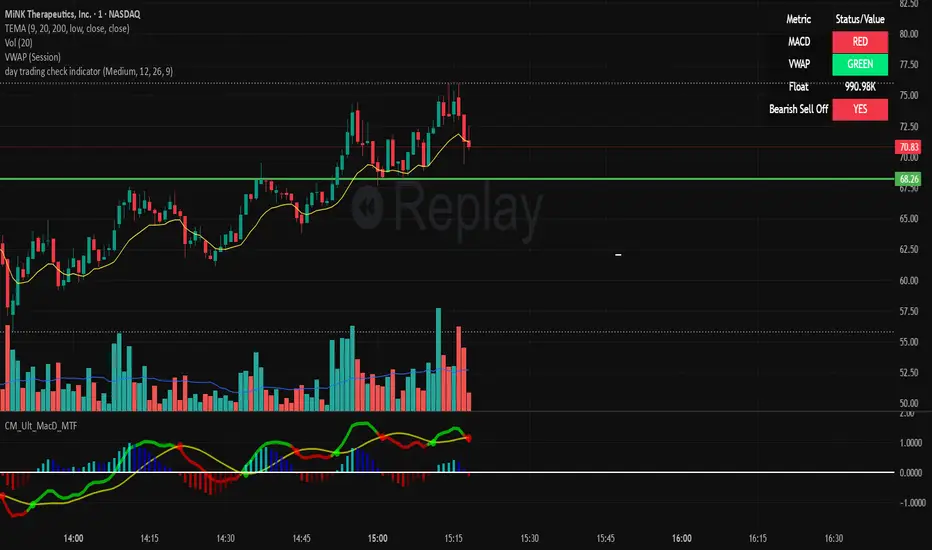
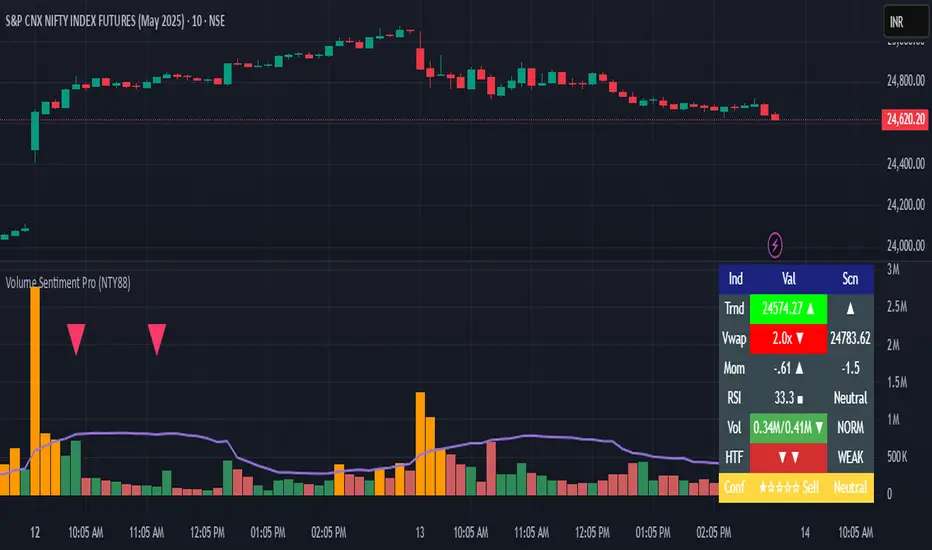
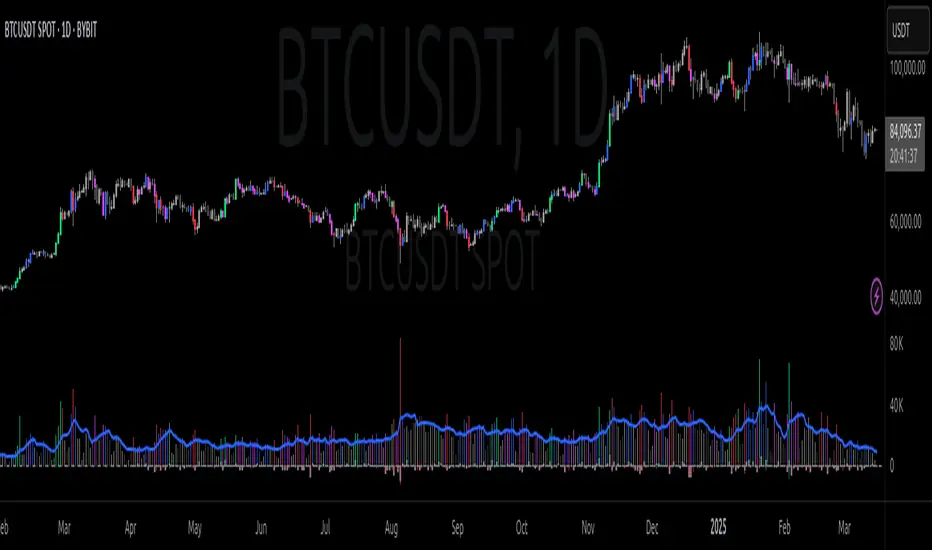
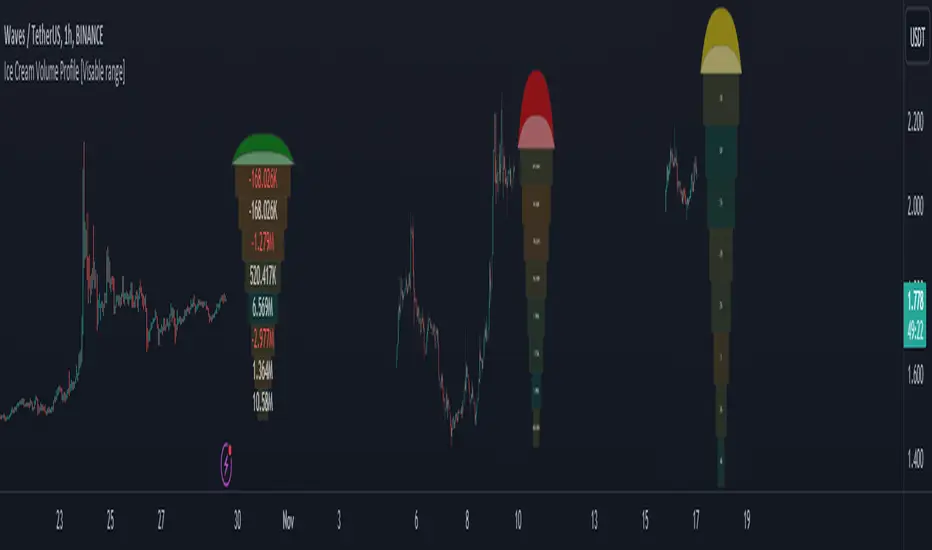
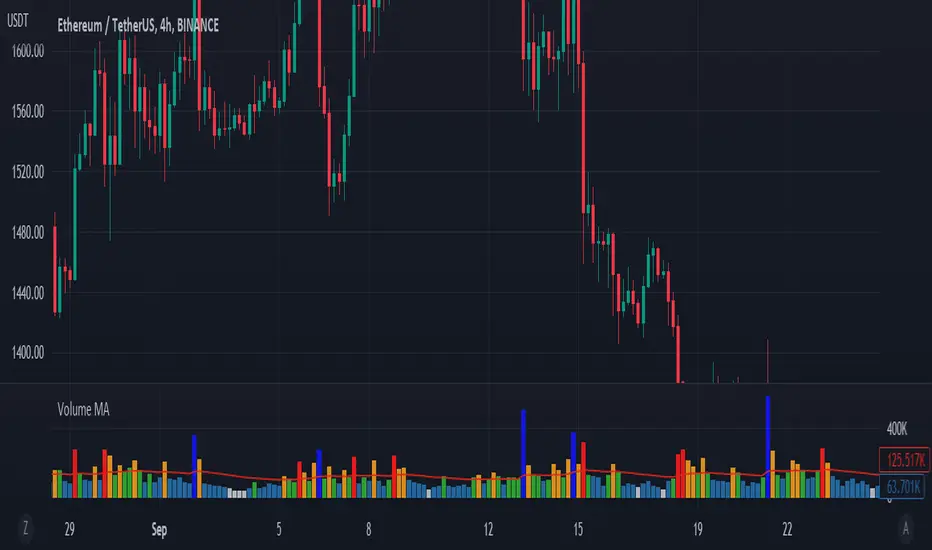
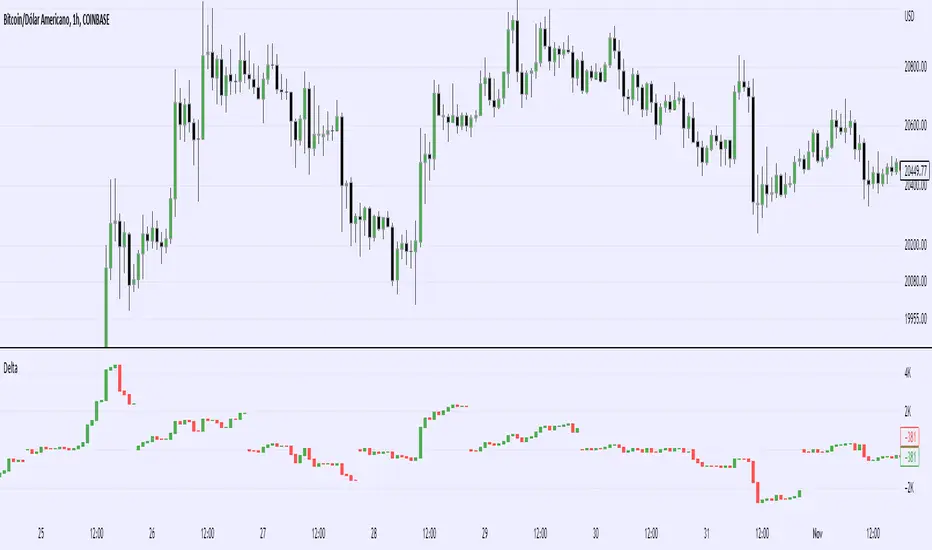
Accumulation FTD Bullsish SwingTradingThis script detects an “ACCVOL 1‑day” price/volume setup using two variants based on two different Simple Moving Averages (SMA), and then prints only two labels on the chart: “AD” and “B” (no visual distinction between the SMA variants).
How it works:
On each new bar, the script searches for a “key day” located 3 to 13 bars back.
A setup is validated when multiple conditions align, including: a minimum current-day percentage gain (default 1.24%), volume strength (volume rising vs. prior day and above a volume SMA, default 50), and a structural price pattern around the key day (bullish key day, specific “higher lows” sequence between the key day and today, and the day after the key day being bearish).
The SMA filter differs by case: for each tested key day, the close must be below the selected SMA (Case 1 uses SMA #1 length, default 5; Case 2 uses SMA #2 length, default 10). Each case can be enabled/disabled and its SMA length can be adjusted independently in the settings.
When a setup triggers, the script places:
- “AD” on the key day (n bars ago), and
- “B” on the current bar.
Priority is kept “as-is”: the script checks n = 3, then 4, then 5… up to 13, and it will plot only one AD/B pair per current bar (the first match in that 3→13 order), even if multiple matches occur.
Important note (signal selection):
This indicator can produce many signals, and you should not take them all. In practice, signals tend to be more meaningful when they occur after a drawdown of at least 10%, rather than during extended strength.
Risk management (example):
As a general risk framework (not financial advice), a common approach is to place a stop loss roughly 6% to 8% below the most recent meaningful swing low. Adjust this to the instrument’s volatility and your position sizing rules.
Recommended confirmations (mix with 2 indicators):
To improve signal quality, consider combining this script with two confirmation tools:
1. Chaikin Money Flow (CMF) set to CMF Length = 50 and a 50‑period SMA on the CMF.
2. The Volume Pressure Indicator.
Signals are often more reliable when:
CMF is above its moving average, and
The Volume Pressure oscillator is also above its moving average.
Market regime warning:
There can be many false signals during bear markets, so applying stricter filters and confirmations is strongly recommended.
Best use case:
This indicator is designed to be particularly effective for swing trading on stocks and various ETFs, where you look for a post-drawdown rebound supported by improving volume/flow conditions.
Pine Script® indicator