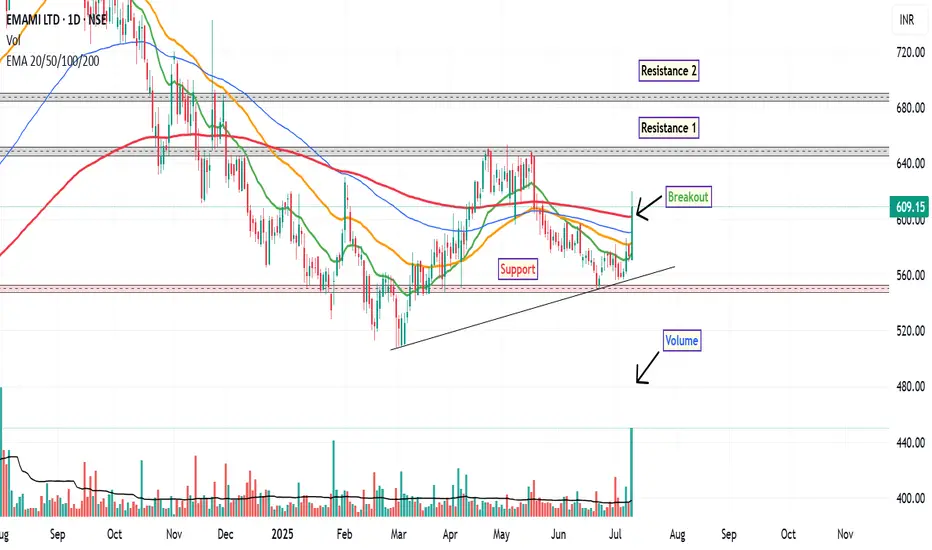
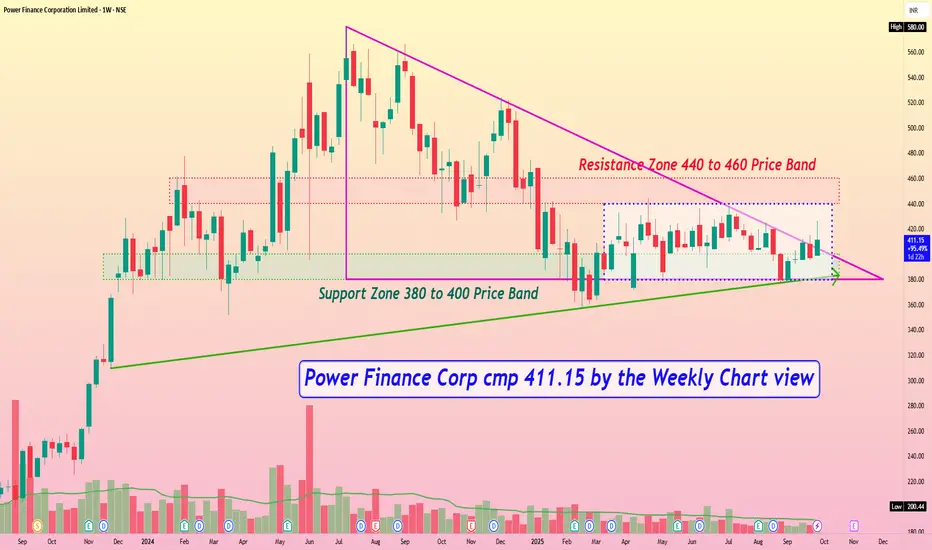
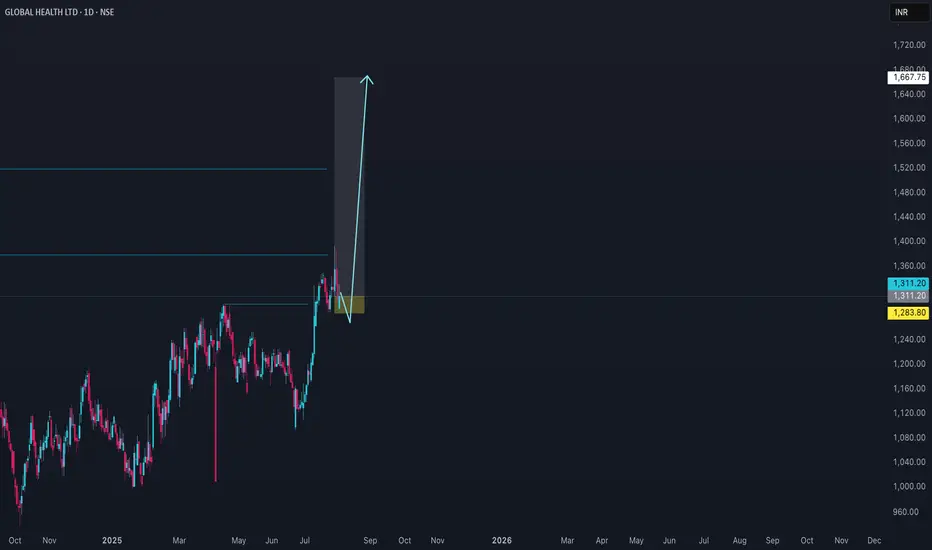
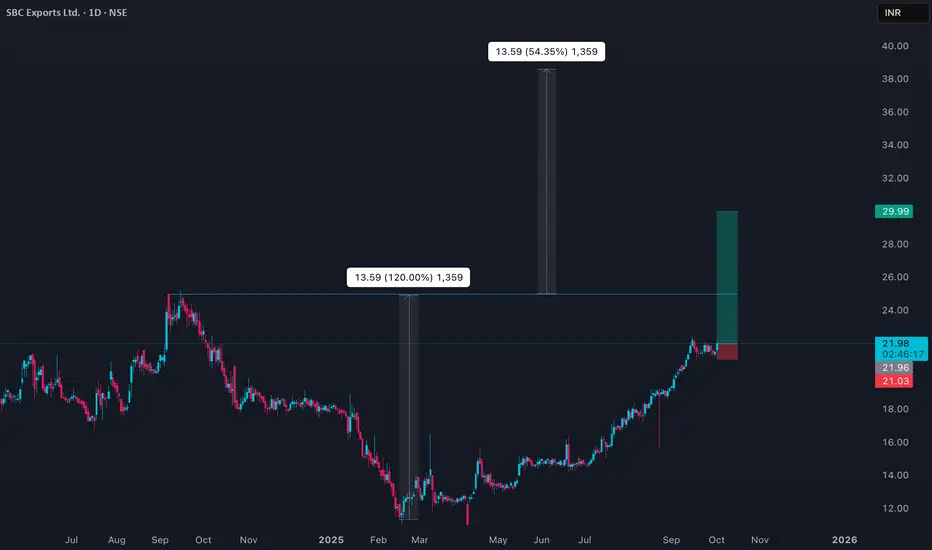
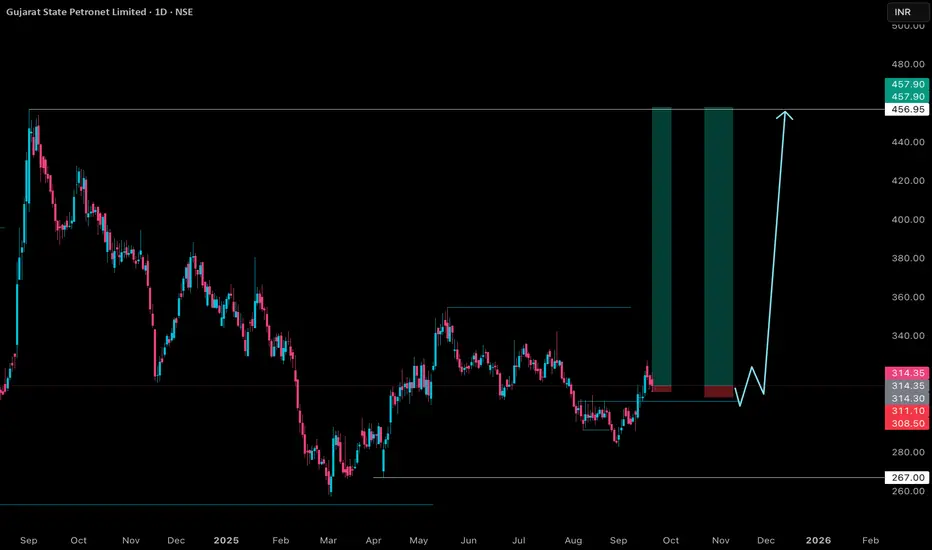
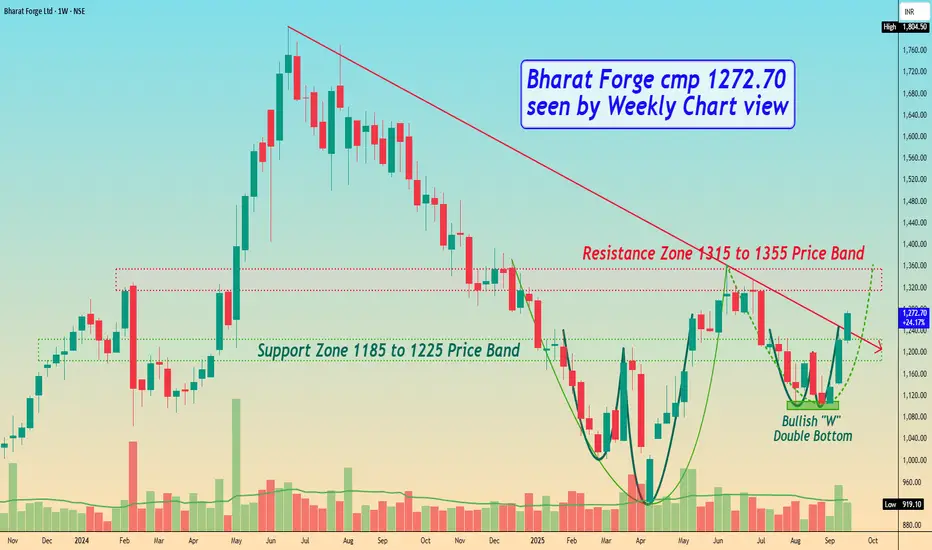
Refex Price ActionAs of July 31, 2025, Refex Industries is trading near ₹448, showing strong bullish momentum with recent gains of about 10% in the last day. The stock has held well above key support levels near ₹400–₹430, indicating solid buyer interest. It has a market capitalization close to ₹5,800 crore.
Fundamentally, Refex Industries carries a price-to-earnings ratio around 33 and a price-to-book ratio above 4, which suggests a premium valuation supported by solid profitability—the return on equity stands near 30%. Technically, the stock trades above short- and medium-term moving averages such as the 5-day, 10-day, and 20-day SMAs, with some resistance expected around ₹450–₹465. Breaking above this level could open further upside potential toward ₹480–₹500. Volume trends in recent sessions confirm the strength of the price move, and the relative strength index (RSI) indicates room for further upside before becoming overbought.
In summary, Refex Industries exhibits strong upward price action backed by healthy fundamentals and volume support. Key levels to watch include support near ₹400–₹430 and resistance at ₹450–₹465, with the near-term outlook remaining constructive on sustained momentum.
Bullishsetup
NIACL Price ActionAs of July 30, 2025, New India Assurance Company Ltd (NIACL) stock closed near ₹204, showing a strong recovery with a sharp rally of around 17% in a single day fueled by robust Q1 earnings and positive market sentiment. The stock bounced back from earlier volatility and support levels near ₹170, with technicals indicating bullish momentum supported by moving average crossovers.
NIACL’s recent financial performance has been impressive with an 80% surge in net profit year-on-year and a 13% growth in gross written premiums, reflecting strong industry position and operational gains. Its market capitalization stands near ₹33,676 crore with a price-to-earnings ratio around 32 and a price-to-book ratio about 1.2, suggesting valuation in line with sector averages but on the higher side.
While the stock has faced some volatility and a one-year decline near 27%, it has gained nearly 19% over the past three months, driven by improved underwriting efficiency and investment income stability. Analysts remain cautiously optimistic about its near-term upside potential, assuming continued operational improvements and support at key price levels.
In summary, NIACL currently presents a turnaround profile with renewed earnings strength, improving fundamentals, and constructive technical signals, making it an interesting candidate for medium-term investors willing to tolerate some volatility.
GVT&D Price ActionGE Vernova T&D India Ltd (GVT&D) has experienced a significant surge, with its stock price around ₹2,597 as of July 30, 2025. Over the past year, the stock delivered an impressive return of about 61%. Over three years, the returns are even more dramatic, exceeding 2,100%. However, the broader financials reveal a company with mixed metrics.
The stock’s high price-to-earnings (P/E) ratio and price-to-book value suggest it is currently overvalued compared to peers and the market average. Analyst forecasts for the next 12 months range between ₹2,005 and ₹3,000, with a consensus target near ₹2,450. Most analysts continue to view the stock favorably and assign it a “strong buy” outlook, though with caution about its rich valuation.
GVT&D’s profitability stands out; it has shown robust growth in both operating profit and earnings per share recently. Return on equity has climbed above 40% in the past year, indicating efficiency in generating returns for shareholders. The company is also almost debt-free and maintains stable cash flows, which reduces financial risk.
Volatility for GVT&D is slightly higher than the market average, but price movement has been relatively stable, with no extreme swings in recent months. Still, investors should be aware that such high past returns may not be sustainable, especially with modest sales growth and valuation multiples well above industry norms.
In summary, GVT&D remains a high-performing and highly-valued stock in the Indian power equipment sector, with strong recent momentum, robust profitability, and a largely positive market outlook—albeit with potential risk due to elevated pricing and slower sales growth compared to its historic surge.
Gallantt price ActionGallantt Ispat Ltd has shown notable price momentum in 2025, with the stock trading in the ₹524–₹555 range and reaching an all-time high of ₹568.65 in late June. Over the past year, the stock has delivered strong returns, nearly doubling from its 52-week low. The last three and six months have seen particularly robust gains, though the past month has included some profit booking and mild declines.
On the financial front, Gallantt Ispat reported a full-year net income of over ₹400 crore for FY25, almost doubling from the previous year. Revenue growth has been steady, but the latest quarter saw a sequential decline in profit after tax, reflecting higher expenses and some variability in operational efficiency. The company’s earnings per share for the year also improved significantly.
Recent quarters have seen an increase in non-operating income, which has contributed to profit growth but raises questions about the sustainability of these gains if operating performance does not keep pace. The company is trading at a high valuation relative to its book value, and its return on equity over the last three years has been moderate.
Technically, the stock has found support near ₹520 and faces resistance at its recent high. Sustained movement above this level could lead to a fresh breakout, while a drop below support may prompt further consolidation. Overall, Gallantt Ispat remains in a positive trend but is subject to volatility and the need for continued operational improvement to justify its elevated valuation.
HIRECT Price ActionAs of late July 2025, Hind Rectifiers Ltd (HIRECT) is trading in the range of ₹1,330 to ₹1,340. The stock has shown moderate volatility over the past month, reaching a recent high of about ₹1,369 and dipping to lows near ₹1,296. Over the past quarter, HIRECT experienced a strong rally but has recently entered a consolidation phase, with fluctuating daily gains and losses.
The 52-week price range spans from a low near ₹706 to a high around ₹1,591, indicating substantial price appreciation in the past year. Market capitalization is approximately ₹2,280 crore, placing the stock in the small- to mid-cap industrials segment.
From a trading and liquidity perspective, HIRECT sees steady turnover and sufficient volume for typical medium-sized trades. The recent trend shows the stock holding above key support levels, suggesting underlying investor confidence, though near-term momentum has softened compared to the earlier part of the year.
Fundamentally, the company is characterized by stable financial strength and a reputation for high growth, but it is currently priced at a premium relative to earnings and book value. Shareholding patterns remain stable, with significant promoter ownership, which adds to stability but can somewhat limit free float.
Overall, HIRECT displays a strong long-term growth trend with recent price consolidation. It is best suited for investors seeking exposure to Indian engineering and electrification themes, who are comfortable with some volatility and moderate valuation risk as the company sustains premium multiples.
Welspun Price ActionWelspun Corp is trading near ₹924.55 after a strong rally, gaining over 7% in today’s session. The company delivered a consolidated net profit of ₹350 crore in Q1 FY26, up 41% year-on-year, with revenue rising to ₹3,551 crore. Improved operating margins and higher pipe sales contributed to this performance. The current price-to-earnings ratio is around 12–13, indicating reasonable valuation within its sector. Market capitalization stands above ₹24,300 crore. The stock has outperformed the sector over recent months and is showing renewed bullish momentum. Welspun Corp maintains robust fundamentals with a healthy order book, strong return on equity, and benefits from sector tailwinds in infrastructure and pipeline projects. Near-term outlook is positive, though investors should remain aware of volatility following sharp price movements.
455-Day Counter Trendline | From Breakdown to V-RecoveryThis weekly chart of Jio Fin Services Ltd illustrates a multi-phase price structure over 455 days:
🔹 Initial Rally — Kicks off from a defined accumulation base (grey zone), marking the start of a strong impulse leg.
🔹 Consolidation Phase — Price enters a descending triangle formation just below a historical resistance band.
🔹 Breakdown — Clean breakdown from the triangle pattern sends price sharply downward.
🔹 V-Shaped Recovery — A strong reaction off the original base zone leads to a sharp reversal.
🔹 Back to the 455-Day Counter Trendline — Price now tests the long-standing counter trendline, which has remained intact throughout.
📌 This chart demonstrates how historical price structures—especially well-defined base formations and trendline resistances—continue to act as critical reference points for future price action.
🛠️ No predictions here. Just a structured breakdown of price behavior and major decision zones traders are often drawn to.
"BTC’s Liquidity Grab: Is the Bull Ready to Charge?"🧠 Key Observations:
Break of Structure (BOS):
Multiple BOS levels confirm shifts in market structure from bullish to bearish and back.
The latest BOS near the support zone suggests a possible shift from bearish to bullish trend.
Support & Resistance Zones:
Resistance marked near the 120,241 level, which is also the target zone.
Support is clearly respected around the 114,898 level with price reacting strongly near the equal lows.
Liquidity Hunt:
Price swept the sell-side liquidity below the equal lows around 114,000 and bounced.
This indicates smart money might have collected liquidity before pushing the price higher.
Bearish FVG (Fair Value Gap):
A bearish imbalance around the 117,000 zone acted as a resistance during the previous rally.
Price might revisit this area for a mitigation before continuation to the upside.
Volume Profile (left side):
High volume nodes indicate significant trading interest in that region, confirming key price acceptance zones.
🎯 Expected Move:
If price sustains above the support zone and confirms bullish intent with higher highs, we may see a move towards the target at 119,637 – 120,241 zone.
📌 Conclusion:
Market has potentially formed a liquidity grab and BOS, signaling a bullish reversal. If this structure holds, BTCUSD could target the resistance area. However, if the price breaks below 114,000 again, it might invalidate this bullish setup.
INDIANB Price ActionAs of July 24, 2025, Indian Bank (INDIANB) is trading around ₹639, showing strong momentum after recovering from recent declines. The stock is close to its 52-week high of approximately ₹658, indicating a robust upward trend in the public sector banking space.
The bank has demonstrated consistent financial growth, with a 14% year-on-year increase in both deposits and advances, currently standing above ₹63,000 crore and ₹53,000 crore respectively. Total business volume grew to over ₹1.16 lakh crore. Net profit for the last financial year increased by 11% to around ₹1,124 crore.
Asset quality has improved, with gross non-performing assets (NPA) reducing to 3.09% and net NPA to 1.25%. The provision coverage ratio is strong at 78%, reflecting prudent risk management. Net interest margin (NIM) is stable at approximately 3.6%, supporting healthy core profitability. The cost-to-income ratio is near 48%, indicating moderate operational efficiency.
Return on assets (ROA) and return on equity (ROE) stand around 1.55% and 12.6% respectively, highlighting solid returns relative to asset base and shareholder equity. Capital adequacy ratios remain comfortable under Basel III norms.
Technically, Indian Bank’s stock is trading above major moving averages (5, 20, 50, 100, 200 days), confirming positive price momentum. Year-to-date, the stock has delivered over 21% returns, outperforming many peers in the public sector banking segment.
Overall, Indian Bank presents a strong growth and stability profile with improving asset quality, stable margins, and expanding business volumes, making it an attractive candidate in the public banking sector for medium to long-term investors.
City Union Bank Price ActionAs of July 2025, City Union Bank (CUB) continues to demonstrate steady growth and operational strength. The stock is supported by robust business expansion and stable profitability.
The bank’s annual financials for FY 2025 show a 14% year-on-year growth in both deposits and advances, with deposits rising to over ₹63,500 crore and advances to approximately ₹53,000 crore. Total business crossed ₹1.16 lakh crore. Net profit for the year reached ₹1,124 crore, up 11% from the previous year. The return on assets (ROA) stands at 1.55%, while return on equity (ROE) is 12.63%, indicating efficient use of both assets and capital.
Asset quality remains healthy and improved, with gross non-performing assets (NPA) at 3.09% and net NPA at 1.25%, both lower than the previous year, while the provision coverage ratio is strong at 78%. The bank’s net interest margin is stable at 3.6%, reflecting consistent core banking profitability.
The cost-to-income ratio is 47.8%, at the higher end of the management’s guidance, reflecting ongoing investments in retail expansion. Capital adequacy (CRAR) remains robust at 23.75%, providing ample buffer for future growth.
Overall, CUB combines above-industry growth, improving asset quality, solid margins, and prudent capital management. The stock’s outlook is supported by management’s consistent delivery across business and profitability metrics, though investors should monitor sector-wide risks and the impact of retail investment costs on near-term efficiency.
CHEMFAB Price ActionAs of late July 2025, Chemfab Alkalis Ltd is trading near ₹789 with recent price movements signaling some short-term recovery after a significant correction from the past year’s highs. The stock’s 52-week range is ₹650 to ₹1,230, reflecting substantial volatility over the past twelve months.
Chemfab’s market capitalization stands close to ₹1,130 crore, classifying it as a small-cap chemical manufacturer. The company specializes in basic inorganic chemicals and PVC-O pipes, mainly serving industries that require chlor alkali products.
Financially, recent results show net sales of about ₹92 crore for the March 2025 quarter, a year-on-year increase of roughly 12%. Despite this sales growth, profitability is under pressure, with negative trailing earnings; the latest EPS is around –₹4.8, resulting in a negative P/E ratio. The price-to-book ratio is almost 3, indicating the stock is priced at a premium to its book value. Return on capital employed and return on equity remain low, consistent with current profit margins.
In recent months, the stock’s price trend has been weak, down nearly 17% over six months and over 5% for the past three months, despite a near 7% rise in the last week. Liquidity and trade volumes are moderate and typical for its peer group.
Key risks include limited profit momentum, historically low return ratios, and high valuation multiples given the negative earnings. However, the company maintains a stable balance sheet, low financial leverage, and gradual growth in its core segment.
Chemfab Alkalis is best suited for investors interested in turnaround or deep value plays within the specialty chemicals sector, but caution is warranted because of volatile earnings and the stock’s premium to book value even amid operational challenges.
# ADVENZYMES Price Analysis (July 2025)Current Price and Trading Pattern
Advanced Enzyme Technologies Ltd (ADVENZYMES) is trading near ₹335 in late July 2025. The price range for recent sessions is ₹331–₹346, with daily swings generally limited to 1–2%. Trading volumes are average for its segment, indicating steady, if unspectacular, investor interest. The 52-week price band extends from a low of ₹258 to a high of almost ₹571, showing that the stock has experienced significant volatility and a substantial correction from last year’s peak.
## Performance Overview
- **1-Month:** The stock has been consolidating, exhibiting minimal directional bias and relatively stable prices.
- **6-Month:** There has been a notable decline, significantly underperforming its sector benchmarks. The price remains below important moving averages, indicating sustained technical weakness.
- **12-Month:** ADVENZYMES has declined approximately 30% over the past year, in marked contrast to the modest gains seen in broader equity indices.
## Financials and Valuation
- **Market Capitalization:** Approximately ₹3,750–3,800 crore.
- **Earnings per Share (TTM):** About ₹11.7.
- **P/E Ratio:** Nearly 28, somewhat below the specialty chemicals sector average, likely reflecting recent challenges in growth and profitability.
- **P/B Ratio:** Close to 2.6.
- **Dividend Yield:** Roughly 1.5–1.6%, with an interim dividend of ₹4 per share recently declared.
## Business Health
ADVENZYMES is a leading manufacturer of enzymes and probiotics with global clients across healthcare, food processing, and specialty industrial markets. The latest financial results show minor revenue growth but declining net profits and operating margins, primarily due to increased costs and a shift in the product mix. Earnings per share have reached multi-quarter lows, prompting concern about operational efficiency and cost management.
## Shareholder Structure
- **Promoters:** Hold about 43% of shares.
- **Institutional Investors (FII/DII):** Approximately 26%.
- **Retail/Public:** The remaining shares.
## Risk and Volatility
- The stock is roughly three times as volatile as major market indices, making it a high-beta investment.
- Liquidity is sufficient for the usual investment sizes, but price performance has lagged sector peers over the past year.
## Technical and Sector Comparison
ADVENZYMES is trading below its major short-, medium-, and long-term moving averages, highlighting a bearish trend. In comparison, the specialty chemicals sector has had mild positive momentum, which makes ADVENZYMES a notable underperformer in its peer group.
## Outlook
The company’s fundamentals remain sound from a market positioning perspective, bolstered by a track record of dividend payment and global reach. However, the recent deterioration in revenue growth, margins, and earnings clouds the short-term outlook. The technical setup stays negative, and further consolidation or downside is possible unless there is clear operational improvement or sector-wide momentum. Investors should keep a close watch on margin trends, revenue acceleration, and cost control initiatives as signals for recovery.
GBPJPY Breakout Retest-Bullish Continuation in PlayGBPJPY showing potential breakout continuation after reclaiming a key intraday resistance zone.
Retest confirmation occurred near 198.72 support-turned-demand.
SignalPro structure highlights:
📍Clear high-probability buy signal
🟨 Caution label earlier flagged trend shift risk
📦 Liquidity Control Box now acting as base
Target set at 199.970 with defined risk below recent structure low.
Key Observations:
Breakout aligned with momentum recovery after multiple failed sell attempts.
Risk-to-reward is favorable for potential trend continuation toward upper liquidity levels.
🔍 Timeframe: 15-min
⚙️ Tool Used: Leola Lens SignalPro
📘 For learning use only – not financial advice.
Dixon Price ActionDixon Technologies' latest share price is ₹15,960 as of July 18, 2025. The stock recently declined about 0.92% from its previous close of ₹16,107, though it has gained over 11% in the past month. It remains range-bound between strong support near ₹15,300 and resistance around ₹16,000 to ₹16,100. The stock holds a bullish weekly MACD crossover signal that historically has led to an average 11.62% price gain within seven weeks.
Technically, the price is above key short- and medium-term moving averages, indicating an overall positive trend, but it faces immediate resistance near ₹16,100–₹16,200 which must be cleared for further upside. On the downside, the critical support level lies near ₹15,300. With a PE ratio near 88 and a robust return on equity of over 36%, the company shows strong fundamentals. The upcoming quarterly results meeting on July 22, 2025, will be closely watched by investors for confirmation of growth momentum.
In summary, Dixon Technologies is consolidating near current levels after recent gains, supported by strong fundamentals and sector tailwinds. A decisive breakout above resistance could lead to new highs, while failure to hold support may invite short-term weakness.
Syngene International Price Action## Current Price and Trend Overview
- The stock is currently trading near ₹657, having pulled back considerably from its 52-week high close to ₹961, but still above the 52-week low around ₹600.
- Price movement has been mixed, with recent gains of about 2% over the last week but a decline of nearly 10% in the past three months. Over six months, the stock is down close to 20%. The longer-term gain (three-year basis) is about 5%.
- The stock remains within a broad horizontal range, with prices fluctuating between about ₹600 and ₹735 in recent months. Price volatility is moderate.
## Technical and Market Structure
- A short-term bounce occurred from a May low, but overall momentum remains sideways. Both short- and long-term moving averages are generally positive, offering some technical support.
- Key support levels are seen at ₹645–₹650, with stronger support near ₹600. Immediate resistance is around ₹670–₹680; a break above could indicate further upward momentum.
## Valuation and Financial Perspective
- The price-to-earnings (P/E) ratio is in the mid-50s, relatively high for the sector, signaling a premium valuation.
- Price-to-book (P/B) value is above 5, suggesting the company trades at more than five times its book value.
- Market capitalization is about ₹26,500 crore, making Syngene a significant but not leading player in its industry.
- Return on equity is modest at around 12%, and dividend payout remains low relative to profits.
## Recent Performance Factors
- Promoter holding is stable, which is generally regarded as a sign of confidence.
- The latest quarterly earnings showed a minor upside surprise, with earnings per share coming slightly above market expectations.
- Revenue is expected to show a steady uptrend in the coming quarters, but overall growth rates have moderated compared to earlier years.
## Outlook and Sentiment
- The prevailing sentiment is cautious, with the stock recently upgraded by some analysts from “Hold” to “Buy Candidate,” based largely on improved moving average signals and a rare technical “Golden Star” event that often precedes positive moves.
- Option chain analysis indicates a wide range, reflecting indecision among market participants.
- Analysts’ 12-month price targets generally center around ₹712, with a bullish scenario up to ₹825 and a downside floor near ₹570.
## Summary
- Syngene International’s share price is consolidating with no clear breakout, but several technical and fundamental factors are turning slightly positive.
- Upside potential exists if key resistance levels are crossed, while failure to hold current support could lead to further downside.
- The stock remains in focus for longer-term investors looking for stable growth in the contract research and biopharma segment, though near-term trading is likely to remain range-bound unless a new catalyst emerges.
JINDALSTEL Price ActionJindal Steel & Power Limited (JINDALSTEL) is currently trading around ₹950 after a modest rebound in the last trading session. Over the past year, the stock has ranged from a high of ₹1,074 to a low of approximately ₹723, reflecting significant volatility. Much of July 2025 has seen the stock consolidating within the ₹932–₹950 zone after registering strong gains earlier in the year.
Jindal Steel & Power is among India’s leading steel producers and is active in both mining and the power sector, with operations that span internationally. The company holds a market capitalization close to ₹97,000 crore.
From a financial perspective, revenue growth has moderated, averaging about 6% compounded annually over five years, with a slight decline observed in the recent trailing twelve months. Profit growth has slowed as well, and return on equity is near 8% for the past year. The operating profit margin remains stable just under 20%, but is below the company’s multi-year peak levels. The stock trades at a price-to-earnings ratio in the higher twenties, reflecting a valuation premium that is partly attributed to its business diversification and international reach.
Recently, the resignation of CFO Mayank Gupta, effective mid-July 2025, may create some near-term uncertainty in investor sentiment. On the positive side, the promoters have increased their stake by about 1% in the recent quarter—a sign of internal confidence.
On the technical chart, ₹950 serves as both a support and resistance level. Sustained movement above this could pave the way toward retesting the 52-week highs, while a drop below this area could invite further downward consolidation to the ₹930 or lower levels.
In summary, Jindal Steel & Power continues to be fundamentally sound within the steel sector, despite softer growth figures and current price consolidation. Investors should watch for potential breakouts near current levels, keep an eye on management transitions, and monitor broader sector trends for further cues.
Dhani Price Action## Current Price & Trend
- The latest trading price is approximately ₹65, significantly below its 52-week high near ₹110 and well above its 52-week low of about ₹47.
- The stock has seen a meaningful recovery off its lows, gaining over 40% from the bottom, but remains down nearly 40% from its recent peak.
- In the last month, momentum has turned negative with a price decline of more than 7%, and the past week also shows a small drop.
- Over a three-month window, there was a modest gain, but performance over the past six months remains negative with a double-digit decline.
## Financial Performance & Valuation
- The company recently returned to modest profitability after a streak of quarters with losses, posting small but consecutive net profits in recent reports.
- Revenue rebounded in the latest quarter after earlier declines, showing signs of business recovery.
- Key valuation indicators remain weak: the price-to-earnings ratio is currently negative, reflecting cumulative prior losses, and price-to-book is around 1.4, a typical range for this peer group.
- Market capitalization is about ₹4,000 crore, which gives the stock a mid-tier standing within the financial sector.
- Return on equity remains negative, highlighting continued pressure on core profitability.
## Ownership & Sentiment
- Promoter shareholding has been steady, and there was a recent increase in foreign institutional investor interest, while retail participation declined slightly.
- Market sentiment appears tentative, with recent trading volume and price moves reflecting cautious investor attitudes.
## Strengths & Risks
- The return to profitability in recent quarters is a promising sign, especially as revenues are stabilizing.
- However, the company’s long-term performance record has been mixed, with prior years marked by substantial losses and depressed cash flows.
- The current valuation in relation to earnings and book value suggests the market is waiting for clearer signs of sustainable growth.
- The share price remains highly sensitive to quarterly results and shifts in sector confidence.
## Outlook
- The medium-term trend is neutral to mildly negative, with no immediate catalysts for a breakout.
- Upside potential exists if the company can deliver consistent profits and further revenue growth.
- Investors should monitor for continued turnaround in earnings, while being alert to the possibility of renewed volatility given the stock’s historical swings.
BDX: Technical ViewThe stock of BDX currently exhibiting a notable technical setup, with key levels identified on the chart.
Support Level: The price has shown consistent buying interest on ascending trend line , indicating a strong base. This level has been tested multiple times, confirming its significance.
Resistance Level: The next major resistance is located at $207 , which has historically acted as a ceiling for price movement. A breakout above this level could open the path for further upside momentum.
Disclaimer:
The information provided in this technical analysis is for informational and educational purposes only and should not be construed as financial or investment advice. It is an interpretation of historical price data. Market dynamics can change, and past performance is not indicative of future results. All trading and investment activities involve risk. Always conduct your own thorough due diligence and consult with a qualified financial advisor before making any investment decisions.
KSOLVES: Upside PotentialThe stock of KSOLVES is currently exhibiting a notable technical setup, with key levels identified on the chart.
Support Level: The price has shown consistent buying interest around 311 indicating a strong base. This level has been tested multiple times, confirming its significance.
Breakout Level: A potential breakout is observed near 366 . A decisive close above this level, accompanied by increased volume, could signal the beginning of a bullish trend continuation or reversal, depending on the broader context.
Resistance Level: The next major resistance is located at 418 , which has historically acted as a ceiling for price movement. A breakout above this level could open the path for further upside momentum.
Disclaimer: The information provided in this technical analysis is for informational and educational purposes only and should not be construed as financial or investment advice. It is an interpretation of historical price data and technical indicators. Market dynamics can change, and past performance is not indicative of future results. All trading and investment activities involve substantial risk. Always conduct your own thorough due diligence and consult with a qualified financial advisor before making any investment decisions.
Garuda: Riding the Momentum WaveFrom February to late May 2025, the stock of GARUDA was trading in a sideways consolidation range, roughly between ₹100 (support) and ₹115-₹120 (resistance). The recent powerful green candles have shattered the upper boundary of this range. Also, the most significant event on the daily chart is the decisive breakout from a descending trendline that had capped prices. Also, LL and HH formation observed on daily chart.
The breakout was accompanied by a significant spike in volume ( 862.88K shares ), which is substantially higher than the average volume during the consolidation period. High volume on a breakout lends strong credibility to the move.
The RSI is at a strong 69.20 . It is in bullish territory and rising, indicating strong buying momentum. It is approaching the overbought region (>70), but is not there yet, leaving room for further upside before becoming extended.
If the stock consolidates above the ₹120-₹121 support level. Buyers step in on any minor dip till ₹118 , and the price then continues its upward trajectory towards the resistance targets of ₹129 and subsequently ₹149 .
Disclaimer: This technical analysis is for informational purposes only and should not be considered as financial advice. Trading in the stock market involves risk. Always conduct your own research and consult with a qualified financial advisor before making any investment decisions.
SIGNPOST: Potential Trend ReversalFollowing a significant corrective phase initiated in January 2025, SIGNPOST is now exhibiting a confluence of technical signals that suggest a potential reversal in trend. A noteworthy catalyst appears to be the recent institutional activity, substantiated by a bullish shift in price action, key moving average reclamations, and strengthening momentum indicators.
The most compelling recent development has been the report of bulk deals on Monday and Tuesday of this week. Such large-volume transactions often indicate institutional interest and can act as a catalyst for a shift in market sentiment. This event appears to have marked a local price floor, leading to a sharp upward thrust and suggesting a potential absorption of selling pressure. This influx of significant volume provides a strong foundation for the bullish hypothesis.
The price has now achieved consecutive closes above both its 20-day and 50-day EMAs. These moving averages are critical medium-term trend indicators. By moving above these levels, which previously acted as dynamic resistance during the downtrend, the price action indicates a material change in character. These EMAs may now be observed to act as the first line of dynamic support during any potential pullbacks or periods of consolidation.
Momentum oscillators are also corroborating the bullish price action, indicating a potential underlying shift in market control. The RSI has advanced sharply to a reading of 67. It is important to note that this level indicates strong bullish momentum and is approaching overbought territory, not oversold. A sustained reading above 60 typically signifies a robust and healthy trend is in place.
The MACD has registered a bullish crossover, with the MACD line moving above the Signal line. This is further supported by a positive and expanding histogram, which visually confirms that bullish momentum is accelerating.
The technical developments suggest the current price level is of significant interest. The recent price action indicates a potential shift in sentiment, making the present zone a noteworthy point for observation. The ₹269 price level appears to be the next significant technical hurdle. This area may correspond with prior price structure and could act as a potential zone for profit-taking or consolidation. The ₹181 level serves as a key area of underlying support. A decisive break below this level would potentially undermine the current bullish structure and suggest that the reversal attempt has failed.
Disclaimer: The information provided in this stock analysis is for informational and educational purposes only and should not be construed as financial advice. Always seek the advice of a qualified financial advisor or do own research before making any investment decisions.
LUXIND Price Analysis## Current Price & Recent Performance
- The latest share price is around ₹1,468.
- Over the past year, the stock is down nearly 25%, showing underperformance.
- In the last five years, returns are positive but modest, with periods of pronounced volatility.
- The 52-week range spans from a low near ₹1,211 to a high close to ₹2,493, highlighting large swings in price.
- Short-term momentum remains soft, with one-month and three-month returns relatively flat.
## Valuation & Financial Metrics
- LUXIND is currently valued at a price-to-earnings ratio close to 27, which is above broader market averages but not extreme for its sector.
- The price-to-book ratio sits at about 2.5, marking a premium to historical levels for textile manufacturers.
- Debt is low, and the latest dividend yield is minimal, suggesting the company retains most profits for growth.
- Price-to-sales and enterprise value-to-EBITDA ratios point to average to modestly expensive relative valuation.
- Discounted cash flow analysis and fair value models indicate the stock is somewhat overvalued at current prices.
## Growth, Profitability & Fundamentals
- Revenue growth has averaged approximately 10% annually in recent years with some acceleration recently observed.
- Earnings trends have been inconsistent, with a decline over the past five years but a robust rebound in the latest reporting periods.
- Net profit margins remain steady, roughly 6%, and operating expense control is demonstrated by low interest and employee cost ratios.
- Return on equity is below 10%, which is modest and signals room for efficiency improvement.
## Market Sentiment & Analyst View
- Most short- and medium-term forecasts suggest neutral to mildly positive technical momentum, with occasional buy signals from technical models.
- Longer-term analyst price targets vary, but consensus expects limited upside in the near future given current valuation levels.
- Projected earnings per share and revenue growth remain solid, with the company expected to improve performance metrics over the next few years.
- Intrinsic value estimates based on fundamental analysis suggest the stock trades above its calculated fair value, raising some caution for new investors.
## Key Takeaways
- LUXIND stands out for disciplined cost management and stable margins, but faces pressure from subdued industry growth and relatively high valuation metrics.
- While the business remains fundamentally sound and growth is projected to continue, the stock may be fully priced at current levels.
- Short-term price action could stay range-bound unless there is a significant change in sector sentiment or a positive surprise in earnings.
- Investors may consider waiting for a more attractive entry point if focusing on value, while growth-oriented investors might monitor for signals of a sustained earnings recovery.
ANANTRAJ Price Action
## Current Price & Performance
- Last close was ₹607.20.
- Over the past week, the stock is up more than 10%, showing strong short-term momentum.
- Over the past year, it has gained nearly 25%, but suffered a sharp 32% drawdown over six months.
- The 52-week price ranged from ₹376.15 to ₹947.90, reflecting high volatility.
## Valuation and Metrics
- ANANTRAJ trades at a high valuation, with price-to-earnings and price-to-book ratios above typical industry averages.
- Its market capitalization puts it among the stronger players in the real estate sector.
- Key valuation multiples such as PE and EV/EBITDA are elevated, indicating investors are paying a premium for expected growth.
- The stock’s PEG ratio suggests its growth is reasonably in line with its price.
## Analyst Sentiment and Targets
- Most analysts rate the stock as a strong buy, highlighting strong upside potential with target prices higher than the current market price.
- The consensus one-year price targets suggest potential returns ranging between 24% and 49% from current levels.
## Technical & Fundamental Observations
- Compared to sector peers, its PE is lower than certain high-flyers but remains above the overall industry average, making it expensive by historical standards.
- Return on equity has hovered around 8.5% recently, with efficient operating and employee costs supporting margins.
- A modest dividend has recently been declared.
- A slight increase in promoter holding indicates management confidence.
## Risk Factors
- Substantial volatility in recent months may raise concerns for risk-averse investors.
- Both intrinsic value models and relative measures suggest the shares may be overvalued by over 20% at current prices.
- While momentum and sentiment are positive, valuation risk remains a key factor for new investors.
## Conclusion
ANANTRAJ is benefiting from strong momentum and positive sentiment, with analysts forecasting further upside. However, current valuation levels are high, and investors should carefully weigh the potential for price appreciation against the risk of overvaluation and ongoing volatility. Consider both the fundamental strengths and the elevated price multiples before making an investment decision.