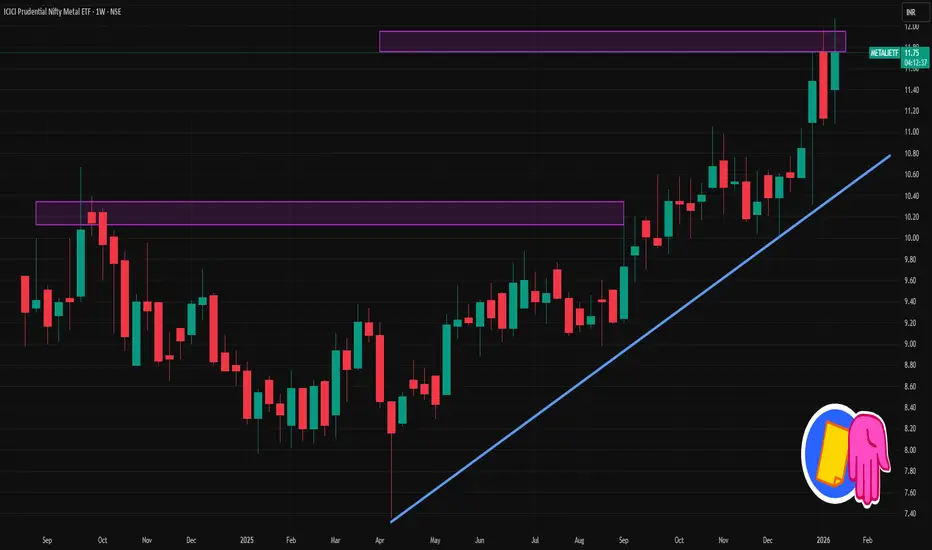
Two Powerful Approaches to Understanding Financial MarketsTechnical Analysis vs Fundamental Analysis
In the world of trading and investing, decision-making is driven by analysis. Among the many methods available, technical analysis and fundamental analysis stand out as the two most widely used and debated approaches. Both aim to identify profitable opportunities in financial markets, yet they differ significantly in philosophy, tools, time horizon, and interpretation of market behavior. Understanding the strengths, limitations, and appropriate use of each method is essential for traders and investors seeking consistency and clarity in their strategies.
Understanding Technical Analysis
Technical analysis is the study of price movements, volume, and market patterns to forecast future price behavior. It is based on the belief that all available information—economic, political, and psychological—is already reflected in the price. Therefore, instead of focusing on why a price moves, technical analysts focus on how it moves.
At its core, technical analysis relies on charts and indicators. Traders examine historical price data to identify trends, support and resistance levels, chart patterns, and momentum signals. Common tools include moving averages, Relative Strength Index (RSI), MACD, Bollinger Bands, Fibonacci retracements, and candlestick patterns.
One of the foundational principles of technical analysis is that price trends tend to repeat due to human psychology. Fear, greed, hope, and panic create recognizable patterns over time. For example, breakouts, pullbacks, and reversals often occur in similar ways across different markets and time frames.
Technical analysis is especially popular among short-term traders, such as intraday traders, scalpers, and swing traders. These participants need precise entry and exit points, which technical tools provide. Since technical analysis can be applied to any tradable instrument—stocks, forex, commodities, cryptocurrencies, or indices—it is highly versatile.
However, technical analysis has limitations. Indicators are often derived from past prices, which means they can lag in fast-moving markets. False breakouts and whipsaws can lead to losses if risk management is poor. Additionally, technical analysis does not directly account for major fundamental events such as earnings surprises, policy changes, or geopolitical shocks.
Understanding Fundamental Analysis
Fundamental analysis focuses on evaluating the intrinsic value of an asset by examining economic, financial, and qualitative factors. The goal is to determine whether an asset is undervalued, fairly valued, or overvalued compared to its current market price.
In stock markets, fundamental analysis involves studying a company’s financial statements, including revenue, profit, cash flow, debt, and margins. Key metrics such as earnings per share (EPS), price-to-earnings (P/E) ratio, return on equity (ROE), and growth rates play a crucial role. Beyond numbers, analysts also assess management quality, competitive advantage, industry position, and long-term business sustainability.
In other markets, such as forex or commodities, fundamental analysis revolves around macroeconomic indicators. Interest rates, inflation, GDP growth, trade balances, central bank policies, and global supply-demand dynamics are central to valuation.
Fundamental analysis is most commonly used by long-term investors and positional traders. These market participants believe that, over time, prices will converge toward intrinsic value. For example, an investor may buy shares of a fundamentally strong company during temporary market weakness and hold them for years.
The strength of fundamental analysis lies in its ability to identify long-term wealth creation opportunities. It helps investors stay aligned with economic reality and business performance rather than short-term market noise.
However, fundamental analysis also has drawbacks. Markets can remain irrational longer than expected, meaning undervalued assets may stay undervalued for extended periods. Fundamental data is often released quarterly or monthly, making it less useful for short-term timing. Additionally, interpreting fundamentals requires assumptions about future growth, which may not always materialize.
Key Differences Between Technical and Fundamental Analysis
The most important difference between the two approaches lies in their focus. Technical analysis focuses on price behavior and market action, while fundamental analysis focuses on underlying value and financial strength.
Another major distinction is time horizon. Technical analysis is generally used for short- to medium-term trades, whereas fundamental analysis is better suited for medium- to long-term investments.
The data used also differs. Technical analysts rely on charts, indicators, and price history, while fundamental analysts study financial statements, economic reports, and industry trends.
In terms of decision-making, technical analysis emphasizes timing—when to enter and exit—while fundamental analysis emphasizes selection—what to buy or sell.
Which Is Better: Technical or Fundamental Analysis?
The debate over which approach is superior has existed for decades, but the reality is that neither is universally better. Their effectiveness depends on the trader’s goals, personality, and market conditions.
Short-term traders often prefer technical analysis because price movements and momentum matter more than long-term value in the near term. Long-term investors tend to rely on fundamental analysis because business performance and economic growth drive returns over time.
Many successful market participants adopt a hybrid approach, combining both methods. For example, an investor may use fundamental analysis to identify strong companies and then apply technical analysis to time entries and exits. This combination helps align value with market timing, reducing risk and improving consistency.
Conclusion
Technical analysis and fundamental analysis represent two different lenses through which financial markets can be understood. Technical analysis interprets market behavior through price and patterns, making it ideal for timing and short-term strategies. Fundamental analysis evaluates intrinsic value and economic strength, making it essential for long-term investment decisions.
Rather than viewing them as opposing philosophies, traders and investors should see them as complementary tools. Mastering both provides a deeper, more balanced understanding of markets, enabling better decisions across different market phases. In a complex and ever-changing financial world, the ability to adapt and integrate multiple perspectives is often the true edge.
Course
Thematic and Sectoral Rotation TradingRiding Market Cycles with Strategic Precision
The financial markets do not move in a straight line. They evolve through cycles driven by economic growth, interest rates, inflation, government policies, technological innovation, and investor psychology. Within these cycles, leadership constantly shifts from one sector to another and from one powerful theme to the next. Thematic and sectoral rotation trading is a strategy that seeks to identify these shifts early and allocate capital to the areas of the market most likely to outperform at a given phase of the cycle. Instead of focusing on individual stock stories alone, this approach looks at the bigger picture, aligning trades with macroeconomic trends and structural changes in the economy.
Understanding Sectoral Rotation Trading
Sectoral rotation trading is based on the idea that different sectors perform better at different stages of the economic cycle. The economy typically moves through phases such as recovery, expansion, peak, slowdown, and recession. Each phase creates a favorable environment for specific industries.
For example, during an economic recovery, sectors like banking, real estate, automobiles, and capital goods often lead because credit growth picks up and consumer demand improves. In the expansion phase, IT services, consumer discretionary, and industrials may outperform as corporate profits grow. During periods of high inflation or uncertainty, defensive sectors such as FMCG, pharmaceuticals, and utilities tend to attract investor interest because of stable earnings. Sectoral rotation traders study these patterns and shift capital accordingly, aiming to stay invested in market leaders rather than laggards.
This approach reduces the risk of being stuck in underperforming sectors during unfavorable cycles. Instead of predicting which single stock will do well, traders focus on which sector has the wind at its back.
What is Thematic Trading?
Thematic trading goes a step beyond sectoral rotation. While sectors are broad classifications like banking, IT, or energy, themes are cross-sectoral narratives driven by long-term structural changes. A single theme can impact multiple industries simultaneously.
Examples of themes include digital transformation, renewable energy, electric vehicles, infrastructure development, defense manufacturing, China-plus-one supply chain shift, financial inclusion, and consumption growth in emerging markets. These themes often play out over several years rather than months. Thematic traders aim to identify these powerful narratives early and invest in companies that are direct or indirect beneficiaries.
Unlike sectoral rotation, which is more closely linked to economic cycles, thematic trading is driven by structural shifts that may continue even during economic slowdowns. For instance, digitization and automation can continue regardless of short-term GDP fluctuations.
The Role of Macroeconomics and Policy
Both thematic and sectoral rotation trading rely heavily on macroeconomic analysis. Interest rates, inflation, fiscal spending, monetary policy, and global economic trends act as triggers for rotation. In the Indian market, government policies play a particularly important role. Budget allocations, production-linked incentive (PLI) schemes, infrastructure spending, and reforms in banking or energy can create strong sectoral and thematic tailwinds.
For example, a rising interest rate environment may hurt rate-sensitive sectors like real estate but benefit banks through improved net interest margins. Similarly, a government push toward renewable energy can create a multi-year theme benefiting solar, wind, power equipment, and green financing companies. Traders who understand these macro-policy linkages gain a significant edge.
Time Horizon and Trading Style
Sectoral rotation trading is usually medium-term in nature, ranging from a few weeks to several months. Traders actively rebalance portfolios as leadership changes. Thematic trading, on the other hand, often suits positional or long-term investors who are willing to stay invested for years while tolerating short-term volatility.
However, both strategies can be adapted for trading if supported by technical analysis. Many traders combine top-down analysis (macro and sector/theme identification) with bottom-up analysis (stock selection and technical timing). This hybrid approach helps in entering themes and sectors at optimal points rather than chasing momentum blindly.
Tools Used in Rotation Trading
Successful thematic and sectoral rotation traders use a combination of tools:
Relative strength analysis to compare sector performance against benchmark indices
Sector indices and ETFs to track broad sector movements
Economic indicators such as PMI, inflation data, interest rates, and GDP growth
Technical indicators like moving averages, trendlines, and momentum oscillators
Earnings trends and valuations to avoid overpaying for popular themes
Relative strength is especially critical. A sector may be fundamentally strong, but if it is underperforming the broader market, capital is likely flowing elsewhere. Rotation trading is ultimately about capital flow analysis.
Advantages of Thematic and Sectoral Rotation Trading
One of the biggest advantages of this approach is alignment with market leadership. Markets reward sectors and themes where institutional money flows. By positioning in these areas, traders increase the probability of outperforming the benchmark.
Another advantage is diversification with direction. Instead of spreading capital randomly across stocks, traders diversify across high-conviction sectors or themes, reducing unsystematic risk while maintaining focus. This strategy also helps traders avoid emotional attachment to stocks and encourages a dynamic, adaptive mindset.
Risks and Challenges
Despite its advantages, thematic and sectoral rotation trading is not without risks. Themes can become overcrowded, leading to sharp corrections once expectations peak. Sectoral leadership can also change abruptly due to unexpected macro events such as geopolitical tensions, policy reversals, or global financial shocks.
Timing is another major challenge. Entering a theme too early can lead to long periods of underperformance, while entering too late can expose traders to sharp drawdowns. This is why discipline, risk management, and continuous review are essential.
The Indian Market Perspective
In India, thematic and sectoral rotation trading has gained popularity due to strong retail participation and clear policy-driven narratives. Sectors like PSU banks, infrastructure, defense, renewables, and manufacturing have shown how powerful rotations can be when aligned with economic and political trends. Indian markets are particularly sensitive to liquidity conditions and foreign institutional investor flows, making rotation strategies highly relevant.
Conclusion
Thematic and sectoral rotation trading is a sophisticated yet practical approach that bridges macroeconomic understanding with market execution. It encourages traders and investors to think beyond individual stocks and focus on where growth, capital, and narratives are converging. When executed with proper research, timing, and risk management, this strategy can help market participants stay ahead of cycles, capture leadership trends, and build sustainable performance over time. In a world of ever-changing markets, the ability to rotate intelligently is not just a skill—it is a necessity.
Part 12 Trading Master Class Call Option Explained
A Call Option gives the buyer the right to buy the underlying asset at a fixed price (strike price) before or on expiry.
Example:
If NIFTY is trading at 22,000 and you buy a 22,200 Call Option, you expect the market to move up.
If NIFTY goes to 22,400 → You profit
If NIFTY stays below 22,200 → Option may expire worthless
Maximum loss = Premium paid
Profit potential = Unlimited
Call options are generally used when traders are bullish on the market.
Risk Management & Money Management1. Understanding Risk Management in Trading
Risk management is the practice of identifying, assessing, and controlling the amount of loss you are willing to tolerate in a trade. It answers a simple question:
👉 “How much can I afford to lose if this trade goes wrong?”
Professional traders know that losing trades are unavoidable. What matters is how big those losses are.
1.1 Key Elements of Risk Management
1. Position Sizing
Position sizing means deciding how many shares/lots/contracts to trade based on your account balance and risk tolerance.
Most traders risk 1% to 2% per trade.
Example:
If your capital = ₹1,00,000
Risk per trade = 1% = ₹1,000
If SL difference is ₹5, quantity = ₹1,000 ÷ 5 = 200 shares.
This ensures no single trade damages your account.
2. Stop-Loss Placement
A stop-loss is a predefined price where you exit automatically if the trade goes against you.
Stop-loss keeps emotions out of the decision.
Three ways to set SL:
Technical SL – based on chart levels (support/resistance, trendline, swing highs).
Volatility SL – using ATR to adapt SL to market conditions.
Money-based SL – based on a fixed rupee or percentage loss.
A trade without SL is gambling.
3. Risk-to-Reward Ratio (RRR / R:R)
The RRR tells how much you stand to gain versus how much you risk.
General rule: Take trades only with RRR ≥ 1:2.
Examples:
You risk ₹1,000 → try to make ₹2,000.
You risk 10 points → target 20 points.
Even with a 40% win rate, a 1:2 RRR can make you profitable.
4. Avoiding Over-Leveraging
Leverage increases buying power—but also increases risk.
Beginners blow up accounts due to excessive leverage in futures/options.
Risk management says:
✔ Use leverage only when you understand risk
✔ Never use full margin
✔ Reduce position size during high volatility events (Fed meet, RBI policy, Budget, elections)
5. Diversification
Do not put all capital into one trade or one sector.
If you trade equities: diversify across sectors.
If you trade F&O: avoid multiple trades highly correlated with each other.
Example:
Bank Nifty long + HDFC Bank long → same directional risk.
6. Probability & Expectancy
Great traders think in probabilities, not predictions.
Expectancy = (Win% × Avg Win) – (Loss% × Avg Loss)
If expectancy is positive, long-term profitability is possible even with fewer winning trades.
2. Understanding Money Management in Trading
Money management is broader than risk management.
It focuses on:
👉 “How do I grow my account safely, steadily, and sustainably?”
Money management includes capital allocation, compounding, profit withdrawal strategy, and exposure limits. It is the long-term engine that helps traders survive for years.
2.1 Key Elements of Money Management
1. Capital Allocation
Avoid using all capital for trading.
Recommended:
Active Capital: 50% (for trading)
Buffer Capital: 30% (emergency, margin calls, drawdowns)
Long-term Investments: 20%
This protects you from unexpected drawdowns or market crashes.
2. Exposure Control
Exposure refers to how much of your capital is at risk across all open trades.
Examples:
Equity traders should avoid more than 20–30% exposure to a single sector.
Derivative traders must avoid multiple positions in the same direction.
For small accounts, 1–2 open trades at a time are ideal.
3. Scaling In & Scaling Out
Scaling techniques help manage profits better.
Scaling In:
Enter partially and add if the trade goes in your favour.
Example: 50% quantity at breakout → 50% on retest.
Scaling Out:
Book partial profits to secure gains.
Example: Book 50% at target 1 → trail SL → exit remaining at target 2.
Scaling reduces overall risk.
4. Compounding Strategy
Money management encourages growth through compounding.
Avoid jumping position sizes drastically.
Increase sizes only after:
✔ Consistent profitability for 20–30 trades
✔ Stable win rate (50–60%)
✔ Maximum drawdown below 10%
Slow compounding beats emotional overtrading.
5. Profit Withdrawal Strategy
Traders should withdraw part of their profits monthly.
Example:
70% reinvest
30% withdraw as real income
This protects you from reinvesting everything and losing it later.
6. Maximum Drawdown Control
Drawdown is the decrease from the peak equity curve.
A good trader keeps drawdown below 10–20%.
If drawdown exceeds limit:
✔ Reduce position size
✔ Stop trading for 1–2 days
✔ Re-evaluate strategy & psychology
This prevents account blow-ups.
3. Psychological Role in Risk & Money Management
Emotions can destroy even a perfect trading system.
Poor discipline leads to revenge trading, overtrading, removing stop losses, and taking oversized positions.
To stay disciplined:
Follow your trading plan
Accept losses as business expense
Do not chase profits
Maintain a trading journal
Review every trade weekly
Consistency comes from discipline—not predictions.
4. Practical Framework for Risk & Money Management
Here’s a step-by-step real-world plan:
Step 1: Define risk per trade
Risk 1% of capital per trade.
₹1,00,000 capital → ₹1,000 max risk.
Step 2: Decide stop-loss level
Use technical or volatility-based SL.
Example: SL = ₹10 away.
Step 3: Calculate position size
Position size = Risk ÷ SL
= 1000 ÷ 10
= 100 shares
Step 4: Set risk–reward
Aim for 1:2.
Target = 20 points.
Step 5: Avoid correlated trades
Do not buy Reliance + BPCL + IOC (same sector risk).
Step 6: Track overall exposure
Keep exposure under 25–30%.
Step 7: Handle profits wisely
Withdraw monthly profits.
Do not increase lot size until consistent.
Step 8: Manage drawdowns
If account falls 10–15%, reduce size by 50%.
Do not increase until account recovers.
5. Why Risk & Money Management Determine Long-Term Success
Most traders lose money not because they lack strategy, but because:
❌ They risk too much
❌ No SL or wide SL
❌ Overtrade after losses
❌ Use 10x–25x leverage blindly
❌ Increase lot size emotionally
❌ Chase market noise
Winning traders do the opposite:
✔ They limit losses
✔ Protect capital
✔ Aim for high RRR
✔ Stay patient
✔ Grow capital slowly
✔ Follow system like a business
Trading success is 10% strategy, 20% psychology, and 70% risk & money management.
Final Words
Risk Management keeps you alive,
Money Management helps you grow.
Together, they form the backbone of professional trading. The markets reward traders who think long term, manage risk smartly, and treat trading as a business—not a gamble. If you master these two pillars, even an average strategy can become consistently profitable.
Futures & Options (F&O) Trading1. What Are Derivatives?
A derivative is a contract whose value “derives” from an underlying asset such as:
Stocks
Indices (Nifty, Bank Nifty)
Commodities (Gold, Crude Oil)
Currencies (USD/INR)
Derivatives allow traders to take positions on the future price of an asset without owning it. The main types of derivatives are Futures and Options.
2. Futures Trading
2.1 What Is a Futures Contract?
A Future is a legally binding agreement to buy or sell an asset at a predetermined price on a future date.
Example:
A Nifty Futures contract expiring in January obligates you to buy or sell Nifty at an agreed price on the expiry date.
2.2 Key Features of Futures
Obligation
Both parties must fulfill the contract on expiry (unless squared off).
Standardized Contracts
Exchanges predetermine lot sizes, expiry dates, and contract specifications.
Mark-to-Market (MTM)
Daily profits and losses are settled automatically based on price movement.
Margin-Based Trading
You don’t pay full contract value — only ~10–15% margin is required.
High Leverage
Because of margin, returns (and losses) can be amplified.
2.3 How Futures Trading Works
Suppose Bank Nifty is at 49,000.
You buy a Bank Nifty Future at 49,100.
If Bank Nifty rises to 49,500, your profit is:
Lot size × 400 points
(Example: If lot size = 15 → profit = 400 × 15 = ₹6,000)
If Bank Nifty falls to 48,700, you incur a loss.
Thus, futures trading is a pure directional bet.
2.4 Why Traders Use Futures
Speculation on price movement
Hedging existing stock positions
Arbitrage opportunities
High liquidity, especially in index futures
3. Options Trading
Options are more flexible than futures. They provide rights, not obligations.
3.1 What Is an Option?
An Option is a contract that gives the buyer the right, but not the obligation, to buy or sell an asset at a preset price (strike price) before expiry.
There are two types:
Call Option (CE) → Right to buy
Put Option (PE) → Right to sell
Options come in two roles:
Option Buyer (pays premium, limited risk)
Option Seller / Writer (receives premium, unlimited risk)
3.2 Call Options (CE)
A Call Option buyer expects the price to rise.
Example:
You buy Nifty 22000 CE for ₹100 premium.
If Nifty moves above 22000 + 100 = 22100, you start profiting.
If Nifty stays below 22000, your maximum loss = premium paid (₹100 × lot size).
3.3 Put Options (PE)
A Put Option buyer expects the price to fall.
Example:
You buy Bank Nifty 49000 PE for ₹150 premium.
If Bank Nifty drops below 49000 – 150 = 48850, you profit.
Loss is limited to premium paid if the market moves up.
4. Option Greeks (Quick Understanding)
Options pricing is influenced by:
Delta – direction sensitivity
Theta – time decay
Vega – volatility sensitivity
Gamma – acceleration of delta
Rho – interest rate impact (low impact in India)
For beginners:
Buyers lose money due to Theta (time decay).
Sellers earn money from Theta, but face unlimited risk.
5. Expiry, Lot Size, and Margin
Expiry
F&O contracts come with fixed expiry dates:
Weekly expiry – Index options (Nifty, BankNifty, etc.)
Monthly expiry – Stock options & futures
Lot Size
Each contract has a fixed lot size. Example:
Nifty lot = 25
Bank Nifty lot = 15
Reliance lot = 250
Margin
Futures require margin (~10–20% of contract value).
Option buyers pay premium only.
Option sellers need large margin because risk is unlimited.
6. F&O Strategies
6.1 Futures Strategies
Long Future (bullish)
Short Future (bearish)
Hedging (using futures to protect holdings)
6.2 Options Strategies (Beginner to Advanced)
Beginners
Long Call
Long Put
Protective Put (hedging)
Covered Call (safe premium strategy)
Intermediates
Bull Call Spread
Bear Put Spread
Iron Butterfly
Straddle
Strangle
Advanced
Iron Condor
Calendar Spread
Ratio Spreads
Delta-neutral strategies (used by professional traders)
7. Why F&O Trading Is Popular in India
High Leverage → Higher Profit Potential
Low Capital Requirement
Weekly Profits from Index Options
Huge Liquidity in Nifty & Bank Nifty
Perfect Tool for Hedging Stock Portfolio
8. Risks in F&O Trading
F&O provides opportunities, but it also carries high risk, especially for beginners.
8.1 Leverage Risk
Small price movements can cause big losses.
8.2 Time Decay in Options
Option buyers lose money if price doesn’t move quickly.
8.3 Volatility Crush
Premium collapses after major events (election, budget).
8.4 Unlimited Losses for Sellers
Option writers face unlimited losses if market moves sharply.
8.5 Liquidity Risk
Stock options may have low liquidity → high slippage.
8.6 Psychological Pressure
Fast price movements create stress, leading to impulsive decisions.
9. Best Practices for Successful F&O Trading
1. Never Trade Without a Stop-Loss
Controls losses and preserves capital.
2. Position Sizing Is Key
Avoid putting entire capital in one trade.
3. Understand Greeks Before Doing Complex Option Strategies
4. Avoid Over-Leveraging
5. Backtest & Practice on Paper Trades
6. Trade Only Liquid Contracts
Index options are safer than illiquid stock options.
7. Hedge Your Positions
Professional traders always hedge.
8. Keep Emotions in Check
Discipline matters more than strategy.
10. F&O Example for Better Understanding
Let’s say Nifty is at 22,000.
Scenario 1: Long Future
Buy Nifty Future at 22,050
Lot size 25
Market moves to 22,250
Profit = 200 × 25 = ₹5,000
But if market falls to 21,900:
Loss = 150 × 25 = ₹3,750
No limit unless stop-loss applied
Scenario 2: Buy a Call Option (22,100 CE @ ₹80)
Total cost = 80 × 25 = ₹2,000
If Nifty moves to 22,300:
Intrinsic value = 200
Profit = (200 – 80) × 25 = ₹3,000
If Nifty stays below 22,100:
Loss = ₹2,000 (limited)
Scenario 3: Sell a Call Option (22,300 CE @ ₹60)
If Nifty stays below 22,300:
Profit = premium earned = ₹1,500
If Nifty shoots up to 22,800:
Loss = (500 – 60) × 25 = ₹11,000
Loss is unlimited. Hence selling options requires skill & hedging.
11. Who Should Trade F&O?
Suitable for:
Experienced traders
People who understand price action & volatility
Hedgers
Option sellers with adequate capital
Not suitable for:
Beginners with no risk management
People trading emotionally
Traders who cannot monitor markets
12. Conclusion
Futures & Options (F&O) trading is a powerful segment of the market that offers leverage, flexibility, and opportunities for hedging and speculation. Futures provide high leverage and mandatory execution, while options offer rights with limited risk for buyers and premium income for sellers. Successful F&O trading requires understanding of contract specifications, market psychology, volatility, Greeks, and strict risk management.
If traded responsibly, F&O can enhance returns and provide sophisticated strategies. If traded without knowledge or discipline, it can lead to large losses. The key is education, practice, and risk control.
Part 10 Trade Like InstitutionsBear Put Spread – Best for Mild Downtrend with Controlled Risk
Same concept but for bearish conditions.
How it works
Buy a lower strike put.
Sell a farther out-of-the-money put.
When to use
Expect small to moderate fall.
Want low risk and fixed cost.
Risk and reward
Risk: Limited to net debit (premium).
Reward: Limited but predictable.
Example
Buy Bank Nifty 49,000 PE at ₹150
Sell 48,800 PE at ₹70
Net premium = ₹80
Max profit = 200 – 80 = ₹120
PSU & Infrastructure RallyIntroduction
The Indian stock market often moves in cycles—sometimes technology stocks lead, sometimes consumption stocks take the front seat, and sometimes financials dominate the headlines. In recent years, one of the strongest and most eye-catching trends has been the rally in Public Sector Undertakings (PSUs) and Infrastructure stocks.
This rally has surprised many investors. For decades, PSU stocks were treated as “slow movers,” known for dividends but not for sharp price appreciation. Infrastructure companies also had their share of challenges—debt burdens, project delays, and regulatory hurdles. Yet, from 2020 onwards, both these sectors have staged a powerful comeback, creating significant wealth for investors.
In this essay, we will break down the reasons behind the PSU & Infrastructure rally, the role of government policies, investor psychology, macroeconomic conditions, and future outlook. We will also examine challenges, risks, and strategies investors can consider.
1. Understanding PSU & Infrastructure Sectors
1.1 What are PSUs?
Public Sector Undertakings (PSUs) are companies where the Government of India holds a majority stake (usually above 51%). These companies were originally created to control strategic industries, ensure employment, and provide services to the public.
They operate across sectors:
Energy & Oil: ONGC, Oil India, IOC, BPCL, HPCL.
Banking & Financials: SBI, Bank of Baroda, PNB, LIC.
Power & Utilities: NTPC, Power Grid, NHPC, SJVN.
Defence & Engineering: HAL, BEL, BEML, Cochin Shipyard.
Infrastructure-linked: IRCTC, IRFC, RVNL, NBCC.
For a long time, PSU stocks were considered "value traps." Investors believed these companies were controlled by government decisions rather than pure profit motives. But things have started to change.
1.2 What is the Infrastructure Sector?
The infrastructure sector includes companies involved in building and maintaining physical systems like roads, railways, airports, ports, bridges, housing, water supply, and energy projects.
Key players include:
Construction companies: L&T, NCC, KNR Construction.
Railways & Transport: RVNL, IRCON, IRFC.
Power & Energy Infrastructure: NTPC, Adani Transmission, Power Grid.
Cement & Steel (linked to infra growth): UltraTech Cement, JSW Steel.
Infrastructure is often called the backbone of the economy. A country’s GDP growth depends heavily on the quality of its infrastructure.
2. Why Are PSU & Infrastructure Stocks Rallying?
The rally is not a coincidence. Several structural, policy-driven, and global factors are working together. Let’s break them down:
2.1 Government Push on Capital Expenditure (Capex)
One of the biggest drivers is the Indian government’s consistent increase in infrastructure spending.
In Union Budgets (2022–2025), capital expenditure has grown at double-digit rates.
The government has allocated massive funds for roads, highways, railways, and renewable energy.
The National Infrastructure Pipeline (NIP) plans ₹111 lakh crore investment in infrastructure between 2019 and 2025.
Programs like Gati Shakti, Smart Cities Mission, and Bharatmala are boosting construction activity.
This creates a multiplier effect: cement demand rises, construction companies get more projects, railway stocks gain, and PSU banks benefit by financing these projects.
2.2 Revival of PSU Banks
PSU banks, once seen as weak due to Non-Performing Assets (NPAs), have staged a dramatic recovery.
Bad loans have reduced significantly.
Credit growth is at record highs (double-digit growth in 2023–25).
PSU banks are reporting all-time high profits.
With financial health improving, investors’ confidence in PSUs has returned.
Since banks are the backbone of financing infrastructure projects, their revival further fuels the rally.
2.3 Defence & Strategic Importance
Global geopolitical tensions have increased defence spending worldwide. India, too, is focusing on self-reliance in defence (Atmanirbhar Bharat).
Companies like HAL, BEL, Mazagon Dock, Cochin Shipyard have seen massive order inflows.
Defence PSUs are reporting strong earnings and full order books for the next decade.
The export market is also opening up—India is now exporting defence equipment to friendly nations.
This has turned defence PSUs into multi-baggers in recent years.
2.4 Disinvestment & Privatisation Story
For years, the government has been trying to monetise and privatise PSU assets.
Strategic sales like Air India have boosted sentiment.
LIC IPO brought renewed attention to PSU space.
The market believes future disinvestments (BPCL, Shipping Corporation, etc.) can unlock hidden value.
This narrative has created speculative interest, which supports price rallies.
2.5 Dividend Yield Attraction
Many PSU companies offer very high dividend yields (4–8%), much higher than bank deposits.
In times of global uncertainty, foreign investors look for safe, stable income—PSUs fit this profile. When combined with growth in earnings, dividend-paying PSUs become doubly attractive.
2.6 Railways & Infra Boom
Railway-linked stocks like RVNL, IRCON, IRFC, RailTel have been some of the biggest gainers.
Indian Railways is undergoing modernization at an unprecedented scale.
Projects like Vande Bharat trains, electrification, freight corridors, and station redevelopment are attracting massive investments.
These companies are reporting record order books.
This has triggered a railways mini-rally within the broader infrastructure rally.
2.7 Global Factors
Global trends are also playing a role:
China+1 Strategy: Many global companies are diversifying away from China, boosting demand for Indian infrastructure.
Commodity Cycle: Steel, cement, and energy cycles support infra companies’ growth.
Geopolitical Risks: Investors view India as a safe growth story compared to volatile markets.
3. Investor Psychology Behind the Rally
The PSU & Infrastructure rally is not just about fundamentals—it’s also about changing perceptions.
Earlier: Investors believed PSUs = inefficient + slow-moving.
Now: Investors see them as undervalued, dividend-paying, and backed by government growth plans.
Retail investors, especially in India, have driven momentum. With railway and defence PSUs showing 10x to 20x returns in a few years, fear of missing out (FOMO) has pulled in more buyers.
4. Risks & Challenges in PSU & Infra Rally
No rally is risk-free. Investors must remain aware of challenges:
Government Interference – PSU companies may prioritize social objectives over profits.
Cyclical Nature – Infra and PSU rallies depend heavily on government spending; if budgets tighten, growth may slow.
Execution Delays – Infra projects face land acquisition, legal, and environmental delays.
Global Slowdown – If global demand weakens, exports and commodity-linked infra stocks may suffer.
Valuation Concerns – Many PSU stocks have already rallied 200–500%. At some point, valuations may look stretched.
5. Future Outlook
Despite risks, the outlook for PSU & Infrastructure remains structurally positive:
India aims to become a $5 trillion economy—this is impossible without strong infra.
The government’s focus on Make in India, Atmanirbhar Bharat, and Defence exports supports PSU companies.
Digital infrastructure (5G rollout, Smart Cities) creates new opportunities.
Renewable energy push (solar, wind, hydro) benefits power PSUs like NTPC, NHPC.
In short, this is not just a short-term rally—it is a structural growth story with long-term potential.
6. How Investors Can Approach This Rally
For investors, the key is to approach with strategy and caution:
Focus on Leaders – Instead of chasing every PSU, stick to strong companies with robust fundamentals (SBI, NTPC, BEL, HAL, RVNL, L&T).
Look for Long-Term Themes – Defence, railways, power transmission, renewable energy are structural stories.
Dividend + Growth Combo – PSUs with both high dividend yields and growth potential are safer bets.
Avoid Overvaluation – Don’t enter after massive rallies; wait for corrections.
Diversify – Mix infra PSUs with private players (like L&T, Adani Ports) to reduce risk.
7. Case Studies of Recent Winners
7.1 Hindustan Aeronautics Ltd (HAL)
Once ignored, HAL is now a defence giant with export opportunities.
Stock has given 10x returns in 5 years.
7.2 Rail Vikas Nigam Ltd (RVNL)
Benefited from railway modernization.
Stock surged over 20x from 2020–2025.
7.3 SBI & Other PSU Banks
Recovered from NPAs.
Posting record profits, stock prices doubled/tripled.
7.4 NTPC & Power Grid
Benefiting from India’s massive renewable energy targets.
Stable dividend + growth.
These examples show why the rally has captured public attention.
8. Conclusion
The PSU & Infrastructure Rally is one of the most defining themes in the Indian stock market in recent years. What began as a quiet recovery in undervalued PSU banks and infra companies has turned into a full-blown rally fueled by:
Government capex push,
Defence modernization,
Railway expansion,
Revival of PSU banks,
Strong dividend yields,
Disinvestment hopes.
The rally has redefined investor sentiment towards PSUs, turning them from neglected assets into market favorites.
That said, investors must remain mindful of risks—government policies, project delays, or global slowdowns can temporarily derail the momentum.
But structurally, the story remains strong: India’s journey to a $5 trillion economy cannot happen without PSU & infrastructure growth. For long-term investors, this space offers both stability and growth potential—a rare combination.