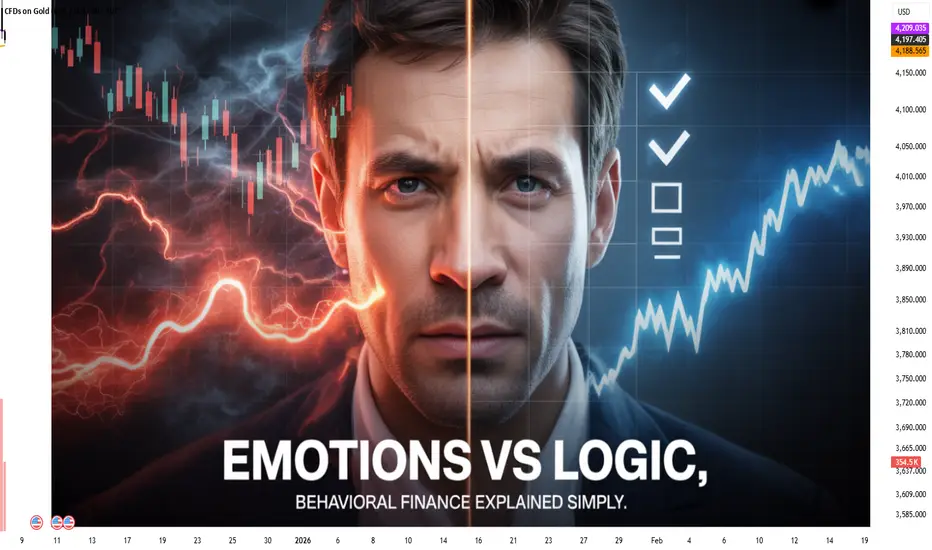
Emotions vs Logic – Behavioral Finance Explained Simply!Hello Traders!
Every chart you see, every candle formation, and every market move is ultimately a reflection of human behavior.
Markets rise when emotions rise… and they fall when emotions collapse.
Understanding the battle between emotion and logic is one of the most important skills a trader can learn, because this battle is happening inside your mind every single day.
1. What Is Behavioral Finance?
Behavioral finance studies how human emotions influence financial decisions.
It explains why people buy high, sell low, panic too early, and hold losses for too long.
It also explains why logic disappears the moment money is involved.
In simple words:
Behavioral finance tells you why traders do what they shouldn’t do.
2. Emotions That Impact Your Trades
Fear: Makes you exit early or avoid good trades.
Greed: Makes you overtrade and increase position sizes.
Hope: Makes you hold losing trades longer than you should.
Regret: Makes you chase missed entries and force bad setups.
These emotions don’t just influence decisions, they completely override logic when not controlled.
3. Why Logic Fails in Real Time Trading
You may know the strategy, but your instinct takes over the moment money is at risk.
Your brain reacts to losses the same way it reacts to physical pain.
Overconfidence after wins leads to careless decisions.
Fear after losses leads to hesitation and self-doubt.
The market is logical.
Your mind is not, unless trained.
4. How Logic Actually Helps You Trade Better
Logic keeps your risk fixed and predictable.
Logic follows a plan even when emotions are screaming the opposite.
Logic doesn’t chase candles or revenge-trade.
Logic helps you treat trading as a process, not a lottery.
Logic doesn’t eliminate emotions, it protects you from acting on them.
5. Simple Ways to Shift From Emotional to Logical Trading
Use a predefined plan for entries, exits, and stop losses.
Risk a fixed percentage every trade to avoid panic.
Take fewer, high-quality trades instead of reacting to every move.
Keep a journal to track emotional decisions and patterns.
Consistency grows when emotional impulse decreases.
Rahul’s Tip:
You don’t need to remove emotions, you just need to stop letting them press the buttons.
Once you learn to pause, breathe, and follow your plan, logic automatically becomes stronger than impulse.
Conclusion:
The market doesn’t reward intelligence, it rewards emotional control.
Every trader knows what they should do, but only disciplined traders actually do it.
Master your emotions first, and the charts will start making sense like never before.
If this post helped you understand the emotional side of trading, like it, share your thoughts, and follow for more deep psychology insights!
Emotionsvslogic
Trading Mindset: Mastering the Battle Between Emotions and LogicHello Traders!
In today’s post, we’re going to dive deep into one of the most crucial factors in trading: Trading Mindset . As traders, the biggest battle we face is the constant clash between emotions and logic . This battle can determine whether you succeed or fail in the market. Let's explore this fight and how to navigate it effectively.
The Emotional Trader:
Emotions can lead traders to make irrational decisions based on fear , greed , or frustration . These emotions can lead to impulsive actions that harm long-term profitability.
Fear: Fear often leads traders to exit a trade too early, locking in small profits. Fear of losses can result in hesitation, missing out on opportunities even when the market is in a favorable position. This fear can also lead to avoiding trades altogether.
Greed: Greed pushes traders to hold onto winning positions for longer than necessary, hoping for higher profits. While it might work occasionally, it often leads to larger losses when the market reverses unexpectedly.
Frustration: After a losing trade, frustration can cloud a trader’s judgment. In a bid to recover, traders may start revenge trading—taking unplanned and impulsive positions to "get back" the lost money. This often results in deeper losses.
The Logical Trader:
The logical trader, on the other hand, uses patience, discipline, and risk management to drive their actions. They focus on strategy rather than reacting to short-term market fluctuations.
Patience: The logical trader understands that trading isn’t about instant rewards. They wait for the right setups that fit their strategy, taking their time to ensure they’re making calculated moves. This patience is key to managing emotions.
Risk Management: A crucial part of trading logic is managing risk. The logical trader sets clear stop losses , calculates position size, and never risks more than they are willing to lose. They understand that losing is part of the game, but managing losses is what keeps them in the game long-term.
Discipline: Discipline in trading means sticking to your plan, no matter what the market is doing. A trader with strong discipline follows their strategy, ignores the noise, and avoids making emotional decisions.
Key Takeaways:
Mastering emotions is essential. Traders who can manage their fear, greed, and frustration make better, more rational decisions. Emotional control is the key to long-term success.
Logic and strategy are the backbone of successful trading. It’s not about making quick decisions or chasing the market—it’s about having a clear plan and executing it consistently.
Consistency and discipline are the true markers of successful traders. A trader who consistently follows a strategy and manages emotions can weather both market highs and lows.
Conclusion:
Trading is not just about reading charts and making decisions based on market data. It's about managing your mindset . The battle between emotions and logic is ongoing, but understanding how to balance both will make you a much better trader. Emotions can cloud judgment, but with the right mindset, you can make logical decisions that lead to success.