Colgate cmp 2166.30 by Weekly Chart viewColgate cmp 2166.30 by Weekly Chart view
- Support Zone 1910 to 2050 Price Band
- Resistance Zone 2200 to 2350 Price Band
- Stock was making Lower High Lower Lows since last week of Sept 25
- Stock seems attempting uptrend from Support Zone over the last 2 weeks
- Volumes seemingly seen increasing over past few weeks by demand base buying
- Stock Price seems coming out of Bearish Falling Price Channel taking a Bullish momentum
Priceactionanalysis
#NIFTY Intraday Support and Resistance Levels - 27/01/2026A gap-up opening near the 25200 zone in Nifty indicates an attempt by the market to stabilize after recent selling pressure, but the broader structure still suggests a range-bound to weak undertone unless key resistance levels are decisively crossed. The gap-up itself is not a confirmation of trend reversal; instead, it places the index right at an important decision-making area, where both buyers and sellers are active. The initial 30 minutes of trade will be critical to judge whether the gap sustains or starts filling.
From a technical perspective, the 25250–25300 region is acting as a major intraday resistance. This zone has previously seen supply and rejection, which means any upside move without volume support may struggle here. A reversal long setup becomes valid only if Nifty sustains above 25250, with follow-through buying. In such a case, upside targets can be projected towards 25350, 25400, and 25450+, where partial profit booking is advisable due to overhead supply and previous breakdown levels.
On the downside, 25200–25150 is the immediate support band. Failure to hold above this level, especially if the gap starts getting filled, can invite fresh selling pressure. A breakdown below 25200 opens up a short-selling opportunity, with downside targets around 25100, 25050, and 25000. These levels are psychologically and technically important, and price reactions here should be watched closely for potential intraday bounces.
If selling momentum intensifies and Nifty breaks below 24950, it would signal continuation of the broader bearish structure. Below this level, the index may slide towards 24850, 24800, and 24750, where stronger demand zones are placed. These lower levels can act as temporary support, but trend reversal should only be considered after clear price confirmation and structure change.
Overall, the market is showing a gap-up within a corrective or consolidation phase, not a confirmed bullish trend yet. Traders should remain level-driven, avoid chasing the opening move, and wait for price acceptance above resistance or breakdown below support. Tight stop-losses, partial profit booking, and disciplined risk management are essential, as volatility and false breakouts are likely around the current zone.
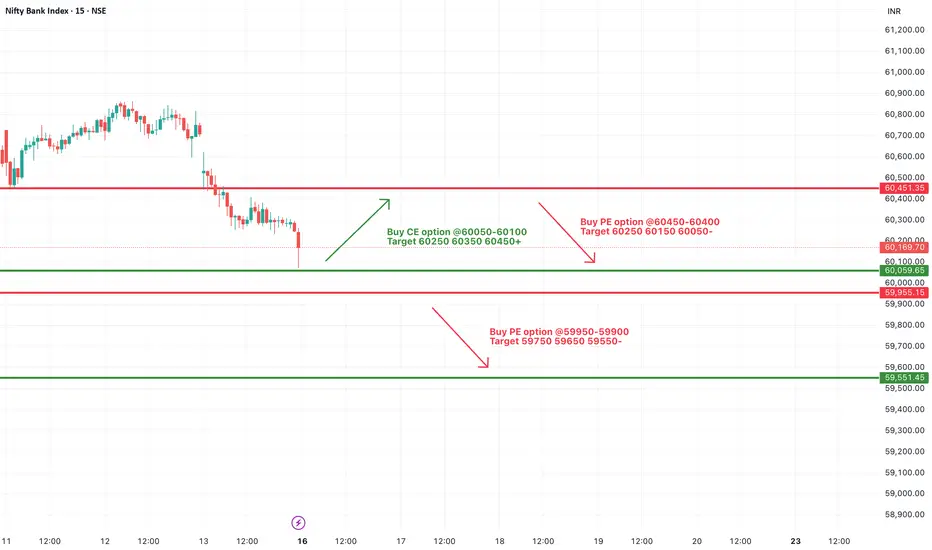
#BANKNIFTY PE & CE Levels(28/01/2026)A gap-up opening in Bank Nifty indicates a positive start to the session, supported by short-covering and fresh buying interest from lower levels. The index has opened above the immediate intraday support zone, which suggests that bulls are attempting to regain control after recent consolidation. However, despite the gap-up, the market is still trading within a broader range, so confirmation through price sustain is crucial before assuming a strong trending move.
From a technical structure point of view, the 59050–59100 zone is acting as a major demand and decision area. Holding above this region keeps the bullish bias intact for the intraday session. If Bank Nifty sustains above 59050, buying Call options becomes favorable, with upside targets placed near 59250, followed by 59350, and then 59450+. These levels correspond to previous supply zones and minor swing highs, where profit booking or partial exit should be considered due to potential resistance.
A stronger bullish continuation will only be confirmed if the index manages to break and sustain above 59550. Above this level, momentum buying can accelerate, opening the path towards 59750, 59850, and eventually 59950+, which is a major resistance area marked by previous rejections. This zone is critical, as failure to cross it decisively may again push the index back into consolidation or minor correction.
On the downside, 59450–59400 is the first intraday support. A breakdown below this zone may trigger short-term weakness, making Put options attractive with targets around 59250, 59150, and 59050. If selling pressure increases and Bank Nifty slips below 58950, the structure turns weaker, and further downside targets open up towards 58750, 58650, and 58550, which are stronger demand zones from where bounce-back attempts can emerge.
Overall, the gap-up opening reflects positive sentiment, but the market is still trading near crucial resistance bands. Traders should avoid chasing the gap and instead focus on price acceptance above key levels. A sustained move above resistance confirms bullish strength, while rejection from higher zones can quickly lead to a pullback. Maintaining strict stop-losses, booking partial profits near targets, and trading strictly based on levels will be essential due to expected volatility around these zones.
#BANKNIFTY PE & CE Levels(27/01/2026)A gap-up opening is expected in Bank Nifty, indicating a positive start to the session after recent consolidation near lower support zones. However, despite the gap-up, the broader structure still suggests cautious bullishness rather than a strong trending move, as price remains below major higher-timeframe resistance levels. Early volatility can be expected as the market reacts to the gap, and the first 15–30 minutes will be crucial to understand whether the gap sustains or gets filled.
From a technical perspective, the 59050–59100 zone is acting as a key intraday resistance-cum-decision area. If Bank Nifty manages to sustain above 59050, it can trigger a short-term bullish continuation. In such a scenario, CE positions can be considered, with upside targets placed near 59250, followed by 59350 and 59450+. These levels coincide with previous breakdown areas and supply zones, so partial profit booking is advised as price approaches each target.
On the downside, 58950–58900 remains an important intraday support. Any failure to hold above this zone, especially if the gap starts filling, may invite fresh selling pressure. A rejection from resistance or sustained trading below 58950 can open the path for PE trades, with downside targets around 58750, 58650, and 58550. This makes the current zone a classic sell-on-rise area unless buyers show strong follow-through.
If Bank Nifty breaks below 58450, the structure will weaken further, indicating continuation of the broader downtrend. Below this level, bearish momentum may accelerate towards 58250, 58150, and 58050, where stronger demand is expected. These lower levels could act as temporary bounce zones, but trend reversal should only be considered after confirmation.
Overall, the market setup suggests a gap-up within a range-bound to mildly bearish structure. Traders should avoid aggressive positions at the open and instead wait for price confirmation above resistance or below support. Focus on level-based trading, disciplined stop losses, and partial profit booking, as intraday whipsaws are likely. A clear directional move will emerge only after Bank Nifty decisively breaks out of the current consolidation range.
Next week: Will gold listen to the Fed… or the White House?🔎 Context
Next week could be highly volatile as monetary policy and geopolitics converge.
Donald Trump signaled a potential 100% tariff on Canadian goods if Canada moves closer to trade deals with China—raising trade-war risks.
At the same time, military assets are being deployed en masse around Iran, heightening concerns that tensions could escalate.
👉 Safe-haven flows may return, with gold potentially opening the week gap-up and early buying.
🧠 Quick take
Primary trend: Bullish
At elevated prices: a short, sharp shakeout is possible to absorb liquidity
No top/bottom calls—watch price reactions at key zones
📌 Key levels to watch
🟢 Supports: 4920–4900 | 4890–4882 | 4850–4830 | 4660–4640
🔴 Observation resistances: 5006–5030–5090 | 5110–5115 | Current ATH
🎭 Weekly scenarios (reference only)
Early week: Gap-up / early push
Pre-FOMC: Chop & liquidity sweep
Then: Deep shakeout or base-building and continuation
👉 Distribution at the top—or just a pause before the next leg higher?
Cummins India cmp 3930.40 by Daily Chart viewCummins India cmp 3930.40 by Daily Chart view
- Support Zone 3885 to 3965 Price Band
- Resistance Zone 4165 to 4250 Price Band
- Support Zone reversal observed for stock price
- Volumes need to increase to push price on upside trend
- Price consolidation seen within 3885 to 4110 since mid Jan 2026
Dhampur Bio Organics cmp 95.76 by Daily Chart viewDhampur Bio Organics cmp 95.76 by Daily Chart view
- Support Zone 75 to 85 Price Band
- Resistance Zone 95 to 105 Price Band
- Resistance Zone holding strong since a year from January 2025
- Head & Shoulders around Support Zone and last Rounding Bottom
- Heavy Volumes surge seen last week Friday by demand based buying
- Bullish Rounding Bottoms with good consolidation around Support Zone
- Falling Resistance Trendlines Breakout with Rising Support Trendline been respected
BPCL - Double TopBPCL is forming a Double Top which is has neckline of 345.
Delivery Based Selling Strategy:
Sell below 345,
Keep SL on high of 23rd Jan candle, which is 361.
Targets are 320-300.
Option Buying Strategy
So, for the option trading in this stock, you can choose any PUT option on BPCL, mark high of 21st Jan candle in option, once it breaks it just buy and keep SL below same day's low.
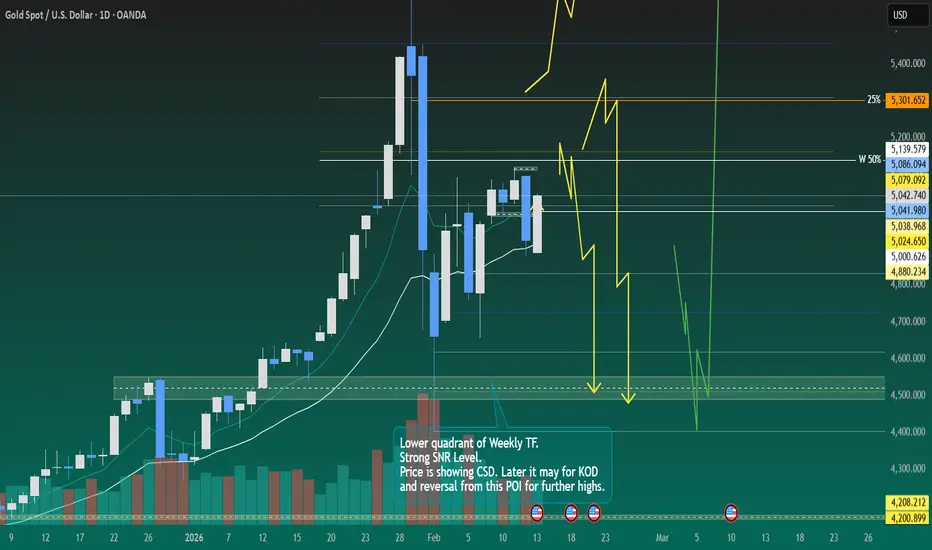
Weekly analysis of XAUUS/Gold with buy and sell scenarios...Gold has reached to Level 2 as we analysed few weeks back.
Gold has created a strong weekly momentum candle showing positive sentiment. But there is divergence with volume. Candle is strongest amongst last four weekly candles while volume is lowest. On daily time frame there are consecutive 5 buy candles. RSI is also over 80 and oversold All these brings a caution
So, price may take a pause or pull back to adjust pricing. Now we need to be cautious and plan for rangebound pull back.
1. Price has created higher highs in lower time frames and created micro structures.
2. Now price may pull back with some delivery change in lower time frames.
3. Still, we should be positive till delivery changes at 4H/1H TF.
4. Most probably price will take liquidity of FVG/RDRB level and create MSS/CISD/TS/iFVG in LTF.
5. Price should show rejection/reversal in respective LTF (4H/1h/15m) at FVG zone.
6. Take the trade only once clear entry model i.e. turtle soup. iFVG break, CDS or MSS happens on LTF
All these combinations are signalling a high probability and high RnR trade scenario.
Note – if you liked this analysis, please boost the idea so that other can also get benefit of it.
Also follow me for notification for incoming ideas.
Also Feel free to comment if you have any input to share.
Disclaimer: This analysis is for educational purposes only and does not constitute investment advice. Please do your own research (DYOR) and check with your financial advisor before making any trading decisions.
Weekly Analysis of BTC - Detailed Another week and price still moved as expected in same range. No major view change since last prediction for long term trades.
Further short-term view.
Week is closed bearish and may target recent draw on liquidities of ~84K. Price may move in choppy mode for some time. So, the best idea is to look for small trade rather than long swing trades.
As the market in rangebound/Choppy, so we should keep eye on both side Opps but focus on down side as next high-level draw on liquidity is at downside.
Refer previous details below for larger perspective…
We analysed three weeks back that BTC would be in range for some time before taking any further move, And BTC is following same analysis and trapped within a small range since then. BTC prediction of last week also worked perfectly well and market kept in consolidation mode itself. BTC is still in consolidation zone and may spend some more days. It may develop ABC pattern or reversal at identified daily FVG level, if price has to change its delivery and take turn from here. This zone is kind of make or break. If price is not able to sustain and breakdown, then it may witness ~65-70K levels as well.
We hope for reversal from this level as price is developing the pattern at higher time frame.
1. Price has taken liquidity or 82K and almost touched 80K.
2. It has inversed 1Day FVG and now price is consolidating in the range between EMAs.
3. We may expect price retracement till 1D iFVG and then reversal.
4. Before to that we may see sweep of 92900 (1D CISD) level and then a retracement short trade till 1D FVG
5. Most probably price will take liquidity of FVG/RDRB level and create MSS/CISD/TS/iFVG in LTF.
6. Price should show rejection/reversal in respective LTF (5m/15m) at FVG zone.
7. Take the trade only once clear entry model i.e. turtle soup. iFVG break, CDS or MSS happens on LTF
All these combinations are signalling a high probability trade scenario.
Note – if you liked this analysis, please boost the idea so that other can also get benefit of it.
Also follow me for notification for incoming ideas.
Also Feel free to comment if you have any input to share.
Disclaimer: This analysis is for educational purposes only and does not constitute investment advice. Please do your own research (DYOR) and check with your financial advisor before making any trading decisions.
Nifty weekly analysis - Detailed Last week Nifty had strong downfall of ~3% because of various factors including global events and selling of FIIs. Week closed with a strong bearish candle with heavy volume showing further downside pressure targeting near draw on liquidity of ~24600. This level has highest volume, which will act as magnet for price.
Order flow is also downside creating lower highs.
Currently price is inside weekly price imbalance zone and at a psychological number of 25000. So, we can expect a pause at this level for few days. So next week may go in range bound mode to bearish.
Over all sentiments are bearish until there is a big positive change appears in global politics.
Critical points ……………….
• Support zone: 24,580–25,050
• Resistance zone: 25,550–25,600
• Bias: Range-bound to mildly bearish for the coming week.
1. If breakout support with volume we may see 24600 levels soon.
Note – if you liked this analysis, please boost the idea so that other can also get benefit of it.
Also follow me for notification for incoming ideas.
Also Feel free to comment if you have any input to share.
Disclaimer: This analysis is for educational purposes only and does not constitute investment advice. Please do your own research (DYOR) and check with your financial advisor before making any trading decisions.
Bank Nifty spot 58473.10 by Daily Chart view - Weekly UpdateBank Nifty spot 58473.10 by Daily Chart view - Weekly Update
- Support Zone 57665 to 58250 for Bank Nifty
- Resistance Zone 58850 to 59350 for Bank Nifty
- Since a while the indicative Support and Resistance Zone are just an eyewash as they hardly sustain by the unprecedented Geo-Political happenings
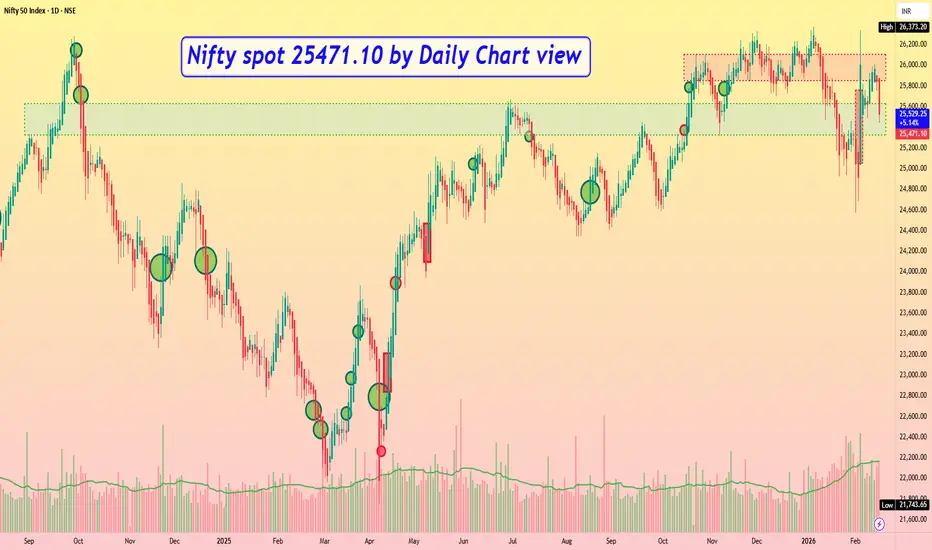
UJJIVANSFB: Testing IPO High with Triple Top, Chart of the MonthFrom IPO Highs to Recovery: Is Ujjivan Small Finance Bank Finally Breaking Out After Six Years? After Posting Robust Q3 FY26 Numbers with asset quality improving and Micro Finance Cycle Turning Back. Let's Analyze in "Chart of the Month"
As per the Latest SEBI Mandate, this isn't a Trading/Investment RECOMMENDATION nor for Educational Purposes; it is just for Informational purposes only. The chart data used is 3 Months old, as Showing Live Chart Data is not allowed according to the New SEBI Mandate.
Disclaimer: "I am not a SEBI REGISTERED RESEARCH ANALYST AND INVESTMENT ADVISER."
This analysis is intended solely for informational purposes and should not be interpreted as financial advice. It is advisable to consult a qualified financial advisor or conduct thorough research before making investment decisions.
Price Action:
- Current Price: ₹63.06
- 52-Week High: ₹68.00
- 52-Week Low: ₹13.90
- Distance from All-Time High: Approaching IPO highs after prolonged consolidation
Volume Spread Analysis:
Volume Characteristics:
- Base Period (2020-2023): Subdued volumes indicating consolidation
- Breakout Period (2024-present): Notable volume expansion
- Recent spike visible in January 2026 showing institutional participation
- Current volume: 442.36M (significantly above 20-day average of 271.01M)
- Volume surge of 63% suggests strong conviction in the breakout
Volume-Price Relationship:
- Price advance accompanied by rising volume - bullish confirmation
- No negative divergences observed
- Accumulation visible during base formation with sporadic volume spikes
Base Formation & Major Patterns:
Rounding Bottom Pattern (2020-2025):
- The stock has carved out a massive rounding bottom base spanning approximately 5 years
- The blue curved trendline marks the U-shaped recovery trajectory
- Base Formation Period: Mid-2020 to Late-2024
- Base Depth: From ₹65-68 levels down to ₹13.90 (approximately 80% decline)
- This extended consolidation suggests thorough distribution at lower levels and strong accumulation
Cup and Handle Formation:
- A textbook cup & Handle pattern is visible in the 2019-2025 period
- Left rim formed in early 2024 at ₹65
- Cup bottom at ₹30-35 range (2024-2025)
- Right rim currently forming at ₹63-68 levels
- Handle consolidation occurred during late 2025
Support & Resistance Levels:
Major Resistance Zones:
- R1 (Immediate): ₹65.00-68.00 (IPO highs)
- This level may act triple top resistance (2020, 2024, 2026)
- Critical breakout zone - sustained move above this unlocks higher targets
- R2 (Psychological): ₹70.00
- R3 (Extension Target): ₹85-90 (measured move from base)
Major Support Levels:
- S1 (Immediate): ₹55.00-58.00 (recent breakout zone)
- S2 (Strong): ₹45.00-48.00 (rounding bottom neckline)
- S3 (Critical): ₹30.00-35.00 (2024-2025 lows, base support)
Trend Analysis:
Long-Term Trend:
- The stock was in a prolonged downtrend from 2020 to 2022
- Transitioned into consolidation/basing phase from 2022 to 2024
- Currently attempting to reverse into an uptrend as of late 2025/early 2026
Medium-Term Trend:
- Strong uptrend established from November 2024 onwards
- Higher highs and higher lows pattern intact
- Moving along the upper channel of the rounding bottom
Short-Term Momentum:
- Explosive momentum in January 2026 (+19% move)
- Stock attempting to reclaim IPO highs for the second time
- Price action suggests breakout on cards from 6-year consolidation
Key Technical Observations:
Breakout Attempt #2
- This is the "2nd time to break IPO Highs"
- First attempt in early 2024 failed, leading to a correction
- Current attempt appears stronger with better fundamentals and volume support
- Risk of triple top failure exists if price fails at ₹65-68 zone again
Risks & Triple Top Persistence:
- The ₹65-68 zone has proven to be formidable resistance over 6 years
- Three distinct peaks at this level (2020, 2024, 2026) create triple top risk
- A decisive close above ₹68 with sustained volume would negate this pattern
- Failure here could lead to another correction toward ₹45-48 support
Fundamental & Sectoral Backdrop:
Recent Financial Performance (Q3 FY26):
Profitability Metrics:
- Net Profit: ₹186 crore (up 71% YoY from ₹109 crore)
- Sequential Growth: 53% QoQ from ₹121.72 crore in Q2 FY26
- Nine-Month Performance: ₹411 crore (down 36% YoY) - signals recovery from challenging period
- Net Interest Income: ₹1,000 crore (all-time high, up 12.8% YoY)
- Interest Earned: ₹1,752 crore (all-time high, up 16.12% YoY)
Balance Sheet Growth:
- Gross Loan Book: ₹37,057 crore (up 21.6% YoY)
- Total Deposits: ₹42,223 crore (up 22.4% YoY)
- Disbursements: ₹8,293 crore (highest ever quarterly disbursements)
- Credit-Deposit Ratio: 88% (healthy and stable)
- CASA Ratio: 27.3% (up from 25.1% YoY)
Asset Quality Improvement:
- Gross NPA: 2.45% (improved from 2.68% in December 2024)
- Current position better than historical average of 4.84%
- Portfolio at Risk (PAR): 3.98% (down from 4.44% QoQ and 5.36% YoY)
- Provisions: ₹195 crore (down from ₹235 crore in Q2, signaling improvement)
- Micro banking collection efficiency: 99.70% (December 2025)
Business Strategy & Positioning:
Portfolio Diversification:
- Shift from unsecured microfinance to secured lending
- Secured portfolio: ₹17,829 crore (up 48.8% YoY), now 48.1% of total book
- Growth in housing loans, MSME finance, gold loans, vehicle loans, and agri loans
- Microfinance exposure reducing as part of risk mitigation strategy
Target Market:
- Focus on financially underserved segments
- Mass market banking for economically active poor customers
- Operating since 2005 (as NBFC), became Small Finance Bank in 2017
- Strong presence in rural and semi-urban markets
Growth Drivers:
- Record quarterly disbursements driven by all-around performance
- Unsecured and secured products both contributing
- Digital transformation initiatives underway
- Branch network expansion supporting deposit mobilization
Key Concerns:
- Nine-month profit decline of 36% YoY raises sustainability questions
- Non-operating income constituted 121% of PBT in Q3 (concerning dependency)
- Stretched valuations with limited margin for error
- Success hinges on sustaining Q3 momentum
Small Finance Bank Sector Outlook:
Industry Growth Trajectory:
- SFB sector growing at 20-25% CAGR
- Total advances projected to exceed ₹2 trillion by FY26
- Deposits reached ₹3.15 lakh crore in FY25
- Expected to grow to ₹3.77 lakh crore in FY26
Regulatory Environment:
- RBI reduced priority sector lending norms from 75% to 60% in June 2025
- Provides greater flexibility for credit diversification
- Pathway to universal banking license for qualifying SFBs
- AU Small Finance Bank received approval for universal bank transition they can do it too
Sector Challenges:
- Asset quality stress in microfinance portfolios across sector is Improving
- GNPA in microfinance segment spiked to 6.8% in FY25 from 3.2% in FY24
- High operating costs (5.5% of assets vs 2% for broader banking sector)
- Net Interest Margins declining sector-wide (from 7.4% to 6.6%)
- Modest CASA ratios (26.2% average) leading to higher cost of funds
- Return on Assets dropped from 2.1% to 1.0% in FY25 across SFBs
Competitive Landscape:
- Competition from commercial banks, fintech lenders, NBFCs
- Pressure on margins due to intense competition
- Need for continuous digital transformation
- Branch-intensive operating model with mandated rural presence
Microfinance Industry Trends:
Market Size & Growth:
- Microfinance sector loan portfolio: ₹3.48 lakh crore (as of December 2024)
- Expected to reach ₹5 lakh crore by FY27
- Serving over 8 crore clients across India
- Sector contributes 2-3% to India's GVA
Recent Developments:
- 80% growth in loan disbursals in recent periods
- Digital transformation accelerating across industry
- Focus on financial literacy programs
- RBI regulatory changes providing operational flexibility
- Asset quality challenges persist with over-leveraging concerns
Risk Factors:
- Vulnerable to regional economic shocks
- Weather-dependent borrower segments
- Competition from traditional banks entering microfinance space
- Regulatory compliance requirements
- Portfolio concentration risks in certain geographies
Risk Assessment:
Technical Risks:
- Triple top pattern risk at ₹65-68 resistance zone
- Failure to decisively break IPO highs could trigger profit booking
- Potential pullback to ₹48-55 support if breakout fails
- Overextended short-term momentum
Fundamental Risks
- Sustainability of Q3 profit recovery remains unproven
- High reliance on non-operating income
- Microfinance asset quality pressures sector-wide
- Operating cost structure higher than traditional banks
- Modest CASA ratio impacting cost of funds
Sector Risks:
- Regulatory changes impacting business model
- Competition intensifying from multiple fronts
- Economic slowdown could impact borrower repayment capacity
- Regional concentration exposing to local risks
Bull Case Scenario:
- Successful breakout above ₹68
- Strong Q3 FY26 results indicate operational turnaround
- Asset quality improvement trajectory well-established
- Secured lending mix improving risk profile
- Potential universal banking license in future
- Sectoral tailwinds from financial inclusion drive
Bear Case Scenario:
- Failure at ₹65-68 resistance for third time
- Nine-month profit decline raises sustainability concerns
- Sector-wide margin compression continues
- Asset quality deterioration in microfinance segment
- High operating costs pressuring profitability
- Regulatory headwinds or policy changes
My 2 Cents:
NSE:UJJIVANSFB presents an interesting technical setup the stock is at a critical juncture - attempting to break out from a 6-year consolidation. Success above ₹68 could unlock significant upside, while failure creates triple top risk. The fundamental improvement supports the technical breakout attempt, but sustainability remains a key question mark given the nine-month profit decline.
Full Coverage on my Mid-Week Newsletter coming Wednesday.
Keep in the Watchlist and DOYR.
NO RECO. For Buy/Sell.
📌Thank you for exploring my idea! I hope you found it valuable.
🙏FOLLOW for more
👍BOOST if you found it useful.
✍️COMMENT below with your views.
Meanwhile, check out my other stock ideas on the right side until this trade is activated. I would love your feedback.
As per the Latest SEBI Mandate, this isn't a Trading/Investment RECOMMENDATION nor for Educational Purposes; it is just for Informational purposes only. The chart data used is 3 Months old, as Showing Live Chart Data is not allowed according to the New SEBI Mandate.
Disclaimer: "I am not a SEBI REGISTERED RESEARCH ANALYST AND INVESTMENT ADVISER."
This analysis is intended solely for informational purposes and should not be interpreted as financial advice. It is advisable to consult a qualified financial advisor or conduct thorough research before making investment decisions.
APLAPOLLO : VCP Breakout with Fundamental ConfirmationInitiated a long position in APLAPOLLO following a high-conviction breakout from a multi-month Volatility Contraction Pattern (VCP). Although the price is currently extended from the 20- and 50-day EMAs, the structural strength of the breakout suggests the beginning of a fresh leg in the uptrend.
From a fundamentals perspective, the company continues to deliver strong and consistent sales and EPS growth, reinforcing its positioning as a proxy for India’s infrastructure-led growth cycle.
To manage the risk associated with being extended from the moving averages, I’ve opted for a wider stop-loss, allowing room for short-term volatility or a potential retest of the breakout zone. This approach gives the trade sufficient breathing space while the moving averages gradually catch up to price.
From a broader market standpoint, the recent ~10% correction in ITC following the government’s cigarette tax announcement has created temporary index-level pressure on the Nifty 50. However, this has triggered a clear sectoral rotation rather than broad-based weakness. Capital is rotating out of regulatory-impacted FMCG names and into high-growth industrial leaders like APL Apollo.
Given its insulation from regulatory shocks and its direct linkage to domestic capex growth, APL Apollo is exhibiting strong relative strength even as the broader market remains range-bound.
Initiated the position with 1% risk.
📢📢📢
If my perspective changes or if I gather additional fundamental data that influences my views, I will provide updates accordingly.
Thank you for following along with this journey, and I remain committed to sharing insights and updates as my trading strategy evolves. As always, please feel free to reach out with any questions or comments.
Other posts related to this particular position and scrip, if any, will be attached underneath. Do check those out too.
Disclaimer : The analysis shared here is for informational purposes only and should not be considered as financial advice. Trading in all markets carries inherent risks, and past performance is not indicative of future results. It’s essential to conduct your own research and assess your risk tolerance before making any investment decisions. The views expressed in this analysis are solely mine. It’s important to note that I am not a SEBI registered analyst, so the analysis provided does not constitute formal investment advice under SEBI regulations.
BPCL : Trading the Confluence of Price Action & Macro TailwindsThe stock has been consolidating within a defined range over the past few weeks and has recently started forming a solid base. While the breakout volume isn’t a classic “God-candle,” price action continues to hold firmly above key moving averages, which is a constructive sign. That said, the price is somewhat extended from the EMAs, increasing the probability of a mean-reversion move. Hence, the stop loss needs to be placed wider rather than just below the basing structure.
The conviction behind this trade comes largely from the current Goldilocks macro environment we’re witnessing in early 2026. With global crude prices remaining comfortably low, BPCL is benefiting from strong marketing margins across petrol and diesel, supporting near-term earnings visibility.
On the fundamental side, a major catalyst is the Government’s LPG compensation package. BPCL is expected to receive a significant share of the ₹30,000 crore payout allocated to OMCs, which materially improves cash flows in H2 FY26. This inflow also acts as a strong deleveraging trigger, further strengthening an already improving balance sheet that has seen a steady decline in debt-equity levels over recent quarters.
So took this position with 1% risk on the net capital.
📢📢📢
If my perspective changes or if I gather additional fundamental data that influences my views, I will provide updates accordingly.
Thank you for following along with this journey, and I remain committed to sharing insights and updates as my trading strategy evolves. As always, please feel free to reach out with any questions or comments.
Other posts related to this particular position and scrip, if any, will be attached underneath. Do check those out too.
Disclaimer : The analysis shared here is for informational purposes only and should not be considered as financial advice. Trading in all markets carries inherent risks, and past performance is not indicative of future results. It’s essential to conduct your own research and assess your risk tolerance before making any investment decisions. The views expressed in this analysis are solely mine. It’s important to note that I am not a SEBI registered analyst, so the analysis provided does not constitute formal investment advice under SEBI regulations.
Biocon: Range to Trend Expansion in ProgressBiocon’s weekly chart highlights a well-structured range-bound consolidation transitioning into a rising trend. Over the past several quarters, the stock has repeatedly faced supply near the upper resistance zone around 400–420, as marked by multiple rejections. This clearly establishes a strong overhead resistance where sellers have historically dominated.
On the downside, price action has respected a rising support trendline, forming higher lows over time. Each dip toward this support zone has attracted fresh buying interest, indicating accumulation at lower levels. This combination of flat-to-rising resistance and rising support reflects improving demand strength and a gradual tightening of price structure.
The recent pullback toward the support area near 360–370 is technically healthy rather than bearish. Such retracements often act as retest phases, allowing the market to absorb supply before attempting the next directional move. As long as Biocon holds above this rising support, the broader bullish structure remains intact.
A decisive weekly close above the resistance band (420+) would confirm a breakout from this prolonged consolidation. Post-breakout, the chart opens room for a strong upside expansion, with projected targets gradually extending toward the 460–500 zone based on the height of the prior range and trend continuation principles.
From a risk perspective, the setup stays valid while price sustains above the rising trendline. A breakdown below this support would delay the bullish thesis and could push the stock back into consolidation. Until then, Biocon remains in a favorable positional structure, where patience around support and confirmation near resistance can offer high-quality risk–reward opportunities for medium- to long-term traders and investors.
#NIFTY Intraday Support and Resistance Levels - 23/01/2026A flat opening is expected in Nifty 50, indicating continuation of the ongoing consolidation after the recent sharp sell-off and recovery attempts. The index is currently trading in a well-defined range, where buyers and sellers are both active near key levels, resulting in choppy price action. This kind of opening usually suggests that the market is waiting for fresh triggers and confirmation before committing to a directional move, especially after multiple volatile sessions.
From a technical standpoint, the 25250–25300 zone is acting as an important intraday support and decision-making area. If Nifty manages to sustain above 25250, it signals short-term strength and opens the door for a reversal-based long trade. In such a case, upside targets can be expected near 25350, followed by 25400 and 25450+, where previous supply zones are placed. However, traders should note that this upside is likely to face resistance near 25450, which remains a strong hurdle unless there is a clear breakout with volume.
On the downside, the 25450–25400 zone continues to behave as a strong resistance area. Any rejection or failure to sustain above this region can trigger selling pressure again. Short positions can be considered near 25450–25400 with a cautious approach, aiming for pullbacks towards 25350, 25300, and 25250. This makes the upper range a selling-on-rise zone rather than a breakout-buying zone, unless price decisively closes above resistance.
If Nifty breaks and sustains below 25200, the structure may turn weak once again. A breakdown below this level can accelerate downside momentum towards 25100, 25050, and 25000, which are important psychological and technical supports. Any sharp move into these lower levels could invite temporary bounces, but overall sentiment would remain cautious as long as the index trades below the major resistance zones.
Overall, the broader view suggests a range-bound market with mild bearish undertones, where aggressive trades should be avoided. Traders are advised to focus on level-based trades, book partial profits quickly, and keep strict stop-losses. Patience will be key, as a clear directional move is likely to emerge only after Nifty breaks out decisively from this consolidation range.
#BANKNIFTY PE & CE Levels(23/01/2026)A flat opening is expected in Bank Nifty, indicating a pause after the recent volatile swings and suggesting that the market is entering a short-term consolidation phase. Price action over the last few sessions clearly shows sharp intraday moves on both sides, followed by quick pullbacks, which reflects indecision and lack of strong directional conviction among participants. This kind of structure usually favors level-based trading rather than aggressive trend-following trades, especially during the first half of the session.
From a technical perspective, the 59050–59100 zone is acting as a crucial intraday pivot and demand area. As long as Bank Nifty holds above this region, the bias remains mildly positive with scope for a gradual upside move. Sustained trading above 59100 can trigger fresh long interest and short covering, which may push the index towards 59250, followed by 59350 and 59450+. However, this upside is likely to be slow and grindy, not impulsive, unless there is a strong breakout candle with volume confirmation above the higher resistance.
On the flip side, the 59450–59400 zone continues to behave as a strong supply and selling area. Any rejection from this region, especially if the price forms long upper wicks or fails to sustain above it, can invite renewed selling pressure. In such a scenario, PE buying near 59450–59400 becomes valid, with downside targets towards 59250, then 59150, and 59050. This makes the 59400–59500 band a critical area where traders should be extremely cautious and avoid chasing breakouts without confirmation.
If selling pressure intensifies and Bank Nifty breaks decisively below 59050, the structure may again turn weak. A breakdown below this support can open the gates for a deeper correction towards 58950–58900, and further down to 58750, 58650, and 58550. These lower levels are strong higher-timeframe supports, so any sharp fall into these zones could again attract bounce-based buying, keeping volatility elevated.
Overall, the broader trend still leans sideways to mildly bearish, with repeated failures near resistance and limited follow-through on rallies. Traders should focus on support-resistance reactions, avoid overtrading during choppy moves, and wait for clear confirmation before committing to large positions. A disciplined approach with strict risk management will be crucial, as Bank Nifty is likely to remain range-bound with sudden spikes on either side during the session.
NIFTY – Bearish Structure Playing Out as AnticipatedIn my previous posts, I had clearly highlighted the possibility of a trend shift and warned that the ongoing price action could resolve to the downside. Over the last few sessions, price has started to play out exactly along those lines.
1. Bearish crossover (mini death cross)
A bearish crossover between the short-term and medium-term moving averages has now occurred. This was already anticipated and mentioned in earlier posts, and it marks a loss of bullish momentum after the ATH zone.
2. Clean breakdown below key support
Price has decisively broken below an important support and trendline structure. This confirms the bearish bias and strengthens the view that the broader market is under distribution rather than accumulation.
3. Next immediate support zone
The marked zone below acts as the next immediate support, where we may expect temporary consolidation or a technical bounce. However, unless there is strong follow-through buying, this should be treated cautiously.
4. Caution on bullish moves
Any signs of bullishness from here are likely to be temporary retracements, which may eventually trigger further sell-offs.
➡️ Avoid fresh swing longs until overall market sentiment turns favorable.
➡️ Existing positions should be managed with strict stop-losses and disciplined risk management.
The market is behaving in line with what was discussed earlier. Until structure changes and strength is proven, the risk remains on the downside. Patience and capital protection are more important than chasing trades in such phases.
📢📢📢
If my perspective changes or if I gather additional fundamental data that influences my views, I will provide updates accordingly.
Thank you for following along with this journey, and I remain committed to sharing insights and updates as my trading strategy evolves. As always, please feel free to reach out with any questions or comments.
Other posts related to this particular position and scrip, if any, will be attached underneath. Do check those out too.
Disclaimer : The analysis shared here is for informational purposes only and should not be considered as financial advice. Trading in all markets carries inherent risks, and past performance is not indicative of future results. It’s essential to conduct your own research and assess your risk tolerance before making any investment decisions. The views expressed in this analysis are solely mine. It’s important to note that I am not a SEBI registered analyst, so the analysis provided does not constitute formal investment advice under SEBI regulations.
#NIFTY Intraday Support and Resistance Levels - 22/01/2026A gap-up opening is expected in Nifty, indicating a short-term relief bounce after the recent sharp decline and high volatility seen over the last few sessions. This gap-up suggests that buying interest has emerged near the lower demand zones, but the broader trend still remains weak and corrective, so traders should stay cautious and avoid assuming a full trend reversal too early. The market structure clearly shows lower highs and lower lows on the higher timeframe, which means the current upside move should be treated as a pullback within a downtrend unless key resistance levels are reclaimed with strong follow-through.
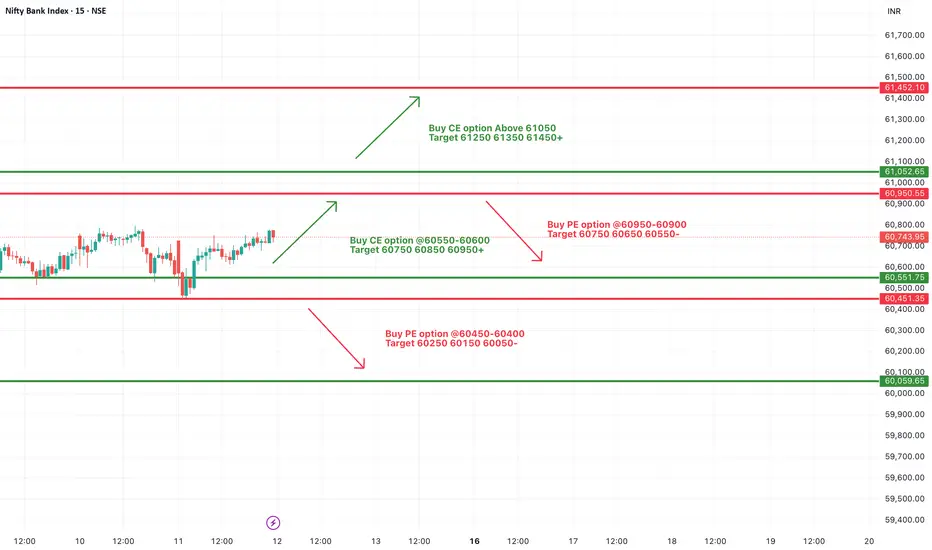
From a price-action perspective, the 25250–25300 zone is acting as an important reversal and decision-making area. If Nifty manages to sustain above 25250, it may attract short-covering and fresh buying, leading to a gradual upside move towards 25350, followed by 25400 and 25450+. This move will largely depend on whether the gap-up is defended in the first 30–45 minutes of trade. A strong bullish candle with volume confirmation above this zone would support a reversal long setup, but traders should trail profits aggressively as overhead supply is still heavy.
On the downside, the 25200–25250 range remains a critical resistance-turned-supply zone. Any rejection from this area, especially if accompanied by weak candles or long upper wicks, can invite selling pressure. In such a scenario, short positions near 25250–25200 may push the index back towards 25100, then 25050, and potentially 25000. If selling intensifies and Nifty breaks decisively below 24950, the downside could extend further towards 24850, 24800, and even 24750, confirming bearish continuation.
Overall, while the gap-up opening brings short-term positivity, the broader bias remains cautious to bearish unless Nifty sustains above higher resistance levels. Traders should focus on level-based trading, avoid chasing the gap, and wait for confirmation near key zones before taking positions. Intraday volatility is expected to remain high, making risk management and disciplined execution far more important than aggressive directional bets.
#BANKNIFTY PE & CE Levels(22/01/2026)A slightly gap-up opening is expected in Bank Nifty, indicating a mild positive sentiment after the recent sharp sell-off and recovery from lower levels. However, despite the gap-up bias, the broader structure still reflects high volatility and a weak-to-range-bound trend, so traders should avoid aggressive directional bets at the open and wait for price confirmation around key levels.
Market Structure & Price Context
Bank Nifty has witnessed a strong bearish impulse in the previous sessions, followed by a sharp bounce from the lower demand zone near 58,550–58,450. This bounce looks more like a technical pullback rather than a confirmed trend reversal. The index is now trading below major resistance zones, suggesting that upside may remain capped unless key levels are decisively reclaimed.
The slightly gap-up opening is likely to test nearby resistance areas quickly. If the gap sustains with follow-through buying, short-term upside moves are possible; otherwise, selling pressure may re-emerge from higher levels.
Key Resistance Zones (Sell on Rise / Short Bias Areas)
- 59,450–59,500: This is a crucial supply zone and previous breakdown area. Any move towards this level without strong volume confirmation may face selling pressure.
- Above 59,450, if price shows rejection or bearish candles, PE buying / short trades can be considered with targets around 59,250 → 59,150 → 59,050.
- A decisive breakout and sustain above 59,500 would weaken the bearish bias and open the door for a larger pullback.
Reversal Buy Zone (Intraday / Short-term Bounce Setup)
- 59,050–59,100 is an important reversal demand zone.
- If Bank Nifty holds above this zone and shows bullish confirmation (strong candles, higher low formation), a reversal Buy CE setup is possible.
- Upside targets for this move are 59,250 → 59,350 → 59,450+.
- This trade should be treated as a counter-trend or pullback trade, so strict stop-loss discipline is essential.
Breakdown & Bearish Continuation Levels
- Below 58,950–58,900, selling pressure may increase again.
- PE buying below 58,950–58,900 can be planned with targets at 58,750 → 58,650 → 58,550.
- A further breakdown below 58,450 would confirm bearish continuation and may drag the index towards 58,250 → 58,150 → 58,050 in the coming sessions.
Trading Approach for the Day
- Expect initial volatility due to the slightly gap-up opening.
- Avoid trading immediately at the open; let the first 15–30 minutes define direction.
- Focus on level-based trades, not emotional entries.
- Prefer sell-on-rise strategy near resistance unless the index shows strong acceptance above 59,500.
- Keep position sizes light and trail profits aggressively due to fast intraday swings.
Overall View
The broader trend remains bearish to sideways, with the current gap-up likely to be a relief move rather than a trend change. Clear directional strength will only emerge if Bank Nifty sustains above major resistance or breaks decisively below key supports. Until then, disciplined, level-driven trading with strict risk management is the best approach.
#NIFTY Intraday Support and Resistance Levels - 21/01/2026A flat opening is expected in Nifty, indicating continued consolidation after the recent sharp decline and volatile price action near lower demand zones. The index has shown strong selling pressure from higher levels and is now hovering close to a critical support area, suggesting that the market is at an important decision point. Early trade is likely to remain range-bound with heightened volatility, as both buyers and sellers assess whether the recent support will hold or break further.
On the support side, the immediate demand zone is placed around 25,250–25,200. This area has already witnessed a sharp reaction, indicating short-term buying interest and the possibility of a technical bounce. If Nifty manages to hold above 25,250, a reversal long setup may come into play with upside targets of 25,350, 25,400, and 25,450+. Any pullback followed by strong bullish candles or higher low formation near this zone can be used as a confirmation for intraday or short-term long trades, keeping strict stop-losses below the support.
On the upside, the immediate resistance lies near 25,450–25,400, which is a previous breakdown zone. Sustaining above this level is crucial for bulls to regain control. Failure to cross this resistance may again attract selling pressure, keeping the index trapped in a sideways-to-bearish structure. Hence, profit booking is advised near resistance levels for long positions, and fresh longs should be considered only on a decisive breakout with volume confirmation.
On the downside, a clear break below 25,200 would weaken the structure further and open the door for fresh short trades. In such a scenario, downside targets are placed at 25,100, 25,050, and 25,000, which are the next major psychological and technical support levels. Below 25,000, the selling momentum can accelerate, so traders should be cautious and trail profits aggressively in short positions.
Overall, the broader trend remains bearish with short-term consolidation, and today’s flat opening suggests a wait-and-watch approach during the initial phase of the session. Traders should focus on level-based trading, avoid chasing moves, and strictly follow risk management. Directional clarity is expected only after a confirmed breakout above resistance or a breakdown below the key support zone.
[INTRADAY] #BANKNIFTY PE & CE Levels(21/01/2026)A flat opening is expected in Bank Nifty, indicating indecision after the recent sell-off and rejection from higher levels. The index is currently trading below its immediate resistance zone, reflecting weak momentum and cautious sentiment among market participants. Early trade is likely to remain volatile but range-bound, as both buyers and sellers wait for confirmation near the marked support and resistance levels before committing to fresh positions.
On the upside, the key resistance zone is placed near 59,550–59,600. If Bank Nifty manages to sustain above 59,550, it can trigger a buy-on-breakout setup with upside targets of 59,750, 59,850, and 59,950+. A move above this zone would indicate short-covering and fresh buying interest, potentially leading to a recovery rally towards the upper resistance band near 59,950. Long trades should be considered only after clear acceptance above resistance with stable price action.
On the downside, the immediate support is seen around 59,450–59,400. Failure to hold this level can invite fresh selling pressure, making buy PE options favorable for downside moves. In such a case, targets are placed at 59,250, 59,150, and 59,050, where partial profit booking is advisable. A stronger breakdown below 58,950–58,900 would further weaken the structure and open deeper downside targets near 58,750, 58,650, and 58,550, which are major demand zones and potential bounce areas.
Overall, the broader structure suggests a sell-on-rise and range-trading strategy unless a decisive breakout above resistance occurs. Traders should avoid aggressive positions during the initial flat phase and instead focus on level-based trades with strict stop-loss management. Scalpers and intraday traders can capitalize on moves near support and resistance, while positional traders should wait for a confirmed directional breakout before taking larger exposure.