Bitcoin's Death Cross is Here: A crash with a message to all!BITSTAMP:BTCUSD has just delivered one of its most significant reality ✔ checks of the year — the recent crash wasn’t simply a dip; it was a multi-layered market unwind that exposes the current fragility of the crypto ecosystem.
📉 Current Bitcoin Situation: “From Euphoria to Uncertainty”
Bitcoin’s trend shifted rapidly over the past few weeks.
Spot ETFs that once fueled relentless upside have significantly slowed inflows, with some days printing net outflows as retail enthusiasm cooled and institutions trimmed exposure.
Meanwhile:
Over billions in long liquidations hit in some days.
Funding flipped aggressively negative
Sentiment turned from greed → hesitation
High beta alts saw steeper collapses, showing risk-off behavior
This wasn’t random volatility — it was a controlled flush triggered by structural weakness.
🔥 Why Bitcoin Crashed: The Real Story
🔹 Technical Factors
BTC lost a major support cluster after multiple failed attempts to hold the mid-range.
Open interest was overheated, creating the perfect setup for a liquidation cascade.
Price rejected sharply from a supply zone that aligns with the weekly imbalance.
☠️ Death Cross on Daily Time Frame: Now Confirmed
The 50 SMA crossing below the 200 SMA is not a “doom event” by itself…
But historically, Bitcoin rarely ignores this signal, especially when paired with weakening momentum and fading liquidity.
⚠ The last major Death Cross?
2022’s brutal bear continuation, which led to several months of grinding downside before any meaningful reversal.
The current structure looks uncomfortably similar:
Lower highs printing consistently
Loss of trend strength
Distribution patterns on higher time frames
Declining demand from smart money inflows
This isn’t fearmongering — it’s observation.
🔹 Fundamental + Macro Factors
ETF inflow cooldown = reduced demand pressure
Miners started selling into strength to stabilize income post-difficulty adjustment
Global markets leaned risk-off due to macro tightening
Whales began distributing quietly (confirmed by on-chain inflow spikes into exchanges)
When technical fragility meets fundamental slowdown, crashes are not accidents — they’re consequences.
🐋 Whales Are Selling: “When the quiet money moves, the market reacts loud.”
On-chain data over the last week showed:
Increase in exchange inflows from large wallets
Spot distribution from old long-term holders
ETF issuers are reducing inventory during downswings
This behavior is classic:
Whales distribute during periods of retail excitement…
Retail panics during whale exits…
And the crash becomes a self-fulfilling cycle.
📅 4–6 Week Forecast: “Chop, Pain & Opportunity”
Over the next month or so, the market will likely experience:
Sideways-to-down structure
Failed rally attempts near the 50 SMA
Whip-saw price action due to low conviction
Accumulation pockets are forming quietly
BITSTAMP:BTCUSD needs to reclaim the 50 SMA with strength before a clean trend resumes.
Until then, volatility ≠ strength.
🎯 Conclusion: Re-Investment Zones & Smart Accumulation
Crashes are emotional for most, but strategic for the prepared.
This is not a call to rush.
It’s a reminder:
Smart money enters when sentiment collapses.
Dumb money enters when sentiment peaks.
Analyze. Prepare. Don’t chase.
🧩 Comment down below 👇 and let’s talk about how to overcome it — build awareness together as traders, not competitors.
If this Idea gave you valuable information, then please boost it, and follow for more practical trading!
Happy Trading & Investing!
Team @TradeWithKeshhav ⚡
Psychology
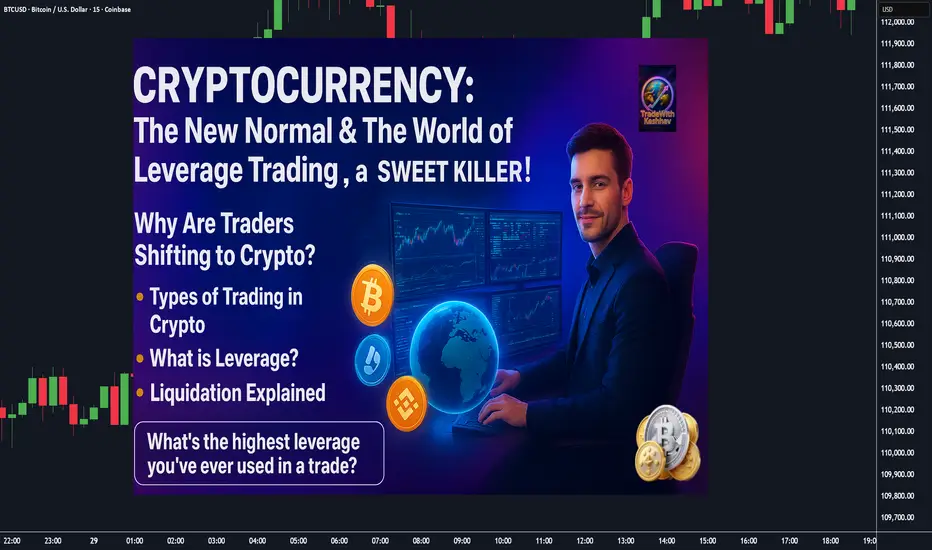
Cryptocurrency : The New Normal & The World of Leverage Trading.📌 Cryptocurrency: The New Normal & The World of Leverage Trading ⚔️ ( A Sweet Killer! )
🌍 Why Are Traders Shifting to Crypto? COINBASE:BTCUSD BITSTAMP:ETHUSD COINBASE:SOLUSD
✔️ Lower capital required compared to stocks
✔️ Fewer gaps (24/7 market = no overnight gap-up/down shockers)
✔️ High leverage opportunities (control bigger trades with smaller margin)
✔️ Global accessibility (Binance, Bybit, OKX, CoinDCX, Mudrex etc.)
📊 Types of Trading in Crypto
💠 **Spot Trading** → In India, 30% tax on capital gains ( check according to your country ).
💠 **Options & Futures** → Taxed as *Business Income* ( like F&O in stocks ). No flat 30% rule.
⚡ What is Leverage?
👉 Leverage means using *small capital* to control a *large trade size* , because the exchange lends you money.
Think of it like **margin trading** in stocks — but much more aggressive.
🔹 Example 1 : Normal Trade style ( No Leverage )
suppose you have 💰 Capital = ₹10,000
Bought BTC at Price = ₹10,000,000
* You can buy 0.001 BTC ( 10000 ➗ 10,000,000 ).
* If BTC rises 10% → Profit = ₹1,000 (+10%)
* If BTC falls 10% → Loss = ₹1,000 (-10%)
👉 Risk & reward move in proportion to your capital.
🔹 Example 2 : Leverage Trade style ( 10x Leverage )
suppose you have 💰 Capital = ₹10,000
opted Leverage = 10x
New Trade Size ( margin ) = ₹1,00,000 ( you can now utilize this margin amount for trading )
* You can buy 0.01 BTC ( 10000 ➗ 10,000,000 ).
* If BTC rises 10% → Profit = ₹10,000 (+100% return)
* If BTC falls 10% → Loss = FULL ₹10,000 ( Liquidation 🚨 )
👉 A 10% move = your account will be blown.
🔹 Example 3:
suppose you have 💰 Capital = ₹10,000
opted Leverage = 50x (Extreme ⚠️)
New Trade Size ( margin ) = ₹5,00,000 ( you can now utilize this margin amount for trading )
* You can buy 0.05 BTC ( 50000 ➗ 10,000,000 ).
* If BTC rises just 2% → Profit = ₹10,000 (+100% return)
* If BTC falls just 2% → FULL ₹10,000 loss ( Liquidation 🚨 )
* If BTC rises just 10% → Profit = ₹50,000 (+500% return)
* If BTC falls just 10% → FULL ₹10,000 loss ( Liquidation 🚨 )
👉 Tiny moves in high volatile asset class = jackpot or wipeout/blown.
⚔️ Key Takeaways :
1️⃣ Leverage multiplies profits 💸 but also multiplies losses too💀 ( a sweet killer! )
2️⃣ Crypto is *highly volatile* (10–20% daily moves are common) → High leverage is extremely risky, if not managed well.
3️⃣ Beginners should **never use more than 2x–3x leverage**
👉 In simple words: **Leverage is a double-edged sword ⚔️**
Used wisely → You’re a king 👑
Used recklessly → You’re broke 🥀
🚘 Liquidation Explained ( ex: Car Analogy )
Imagine you pay ₹10,000 to rent a car worth ₹1,00,000. (That’s 10x leverage).
* The car is in your hands, but ₹90,000 still belongs to the owner of car (exchange).
* If the damage goes beyond your ₹10,000 margin → the owner takes back the car immediately.
👉 That’s liquidation: when your loss = your margin.
🔹 Case 1: Normal Trade style ( No Leverage )
Margin = ₹10,000 → Buy BTC.
If BTC drops 10% → Loss = ₹1,000.
You still have ₹9,000 left.
✅ No liquidation. Just a normal loss.
🔹 Case 2: 10x Leverage Trade style
Margin = ₹10,000
New Trade Size ( margin ) = ₹1,00,000
* BTC rises 10% → Profit = ₹10,000 (+100%)
* BTC falls 10% → Margin wiped = Liquidation 🚨
🔹 Case 3: 20x Leverage Trade style
Margin = ₹10,000
New Trade Size = ₹2,00,000 ( margin )
* BTC rises 5% → Profit = ₹10,000 (+100% return)
* BTC falls 5% → Margin wiped = Liquidation 🚨
👉 Just 5% against you = Account gone.
🔹 Case 4: 50x Leverage Trade style (High-Risk Zone ⚠️)
Margin = ₹10,000
New Trade Size = ₹5,00,000 ( margin )
* BTC rises 2% → Profit = ₹10,000 (+100% return)
* BTC falls 2% → FULL ₹10,000 loss = Liquidation 🚨
👉 Just 2% against you = Blown account = Game over.
🎯 Final Word
Leverage = Power ⚡
But in crypto’s volatile world, it’s also a **trap for the impatient**.
* Smart traders use small leverage.
* Impulsive traders burn out with high leverage.
💬 Question for you: What’s the **highest leverage** you’ve ever used in a trade? Drop it below 👇 (Be honest—we’ve all been tempted!)
If this Idea gave you a value information then please, Boost it, share your thoughts in comments, and follow for more practical trading!
Happy Trading & Investing!
@TradeWithKeshhav and team
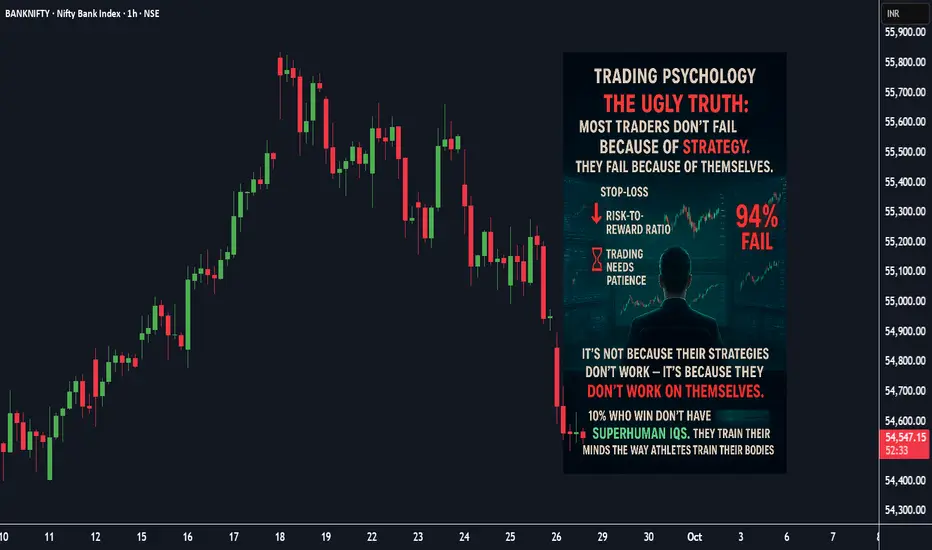
Psychology, Why 90% of Traders Fail (And How to Be the 10%)⚡ The ugly truth: Most traders don’t fail because of strategy. They fail because of *themselves* . It’s NOT bad strategies, it’s bad psychology.
📉 Here’s the real story 👇:
We know about stop-losses.
We know about risk-to-reward.
We know patience matters.
Imagine this: You’ve planned your trade. Price goes against you. Suddenly, your brain whispers:
👉 “Just hold a little longer.”
👉 “Double your position, you’ll recover.”
👉 “Skip the stop-loss this time, it’ll bounce back, praying it turns back.”
NSE:COFORGE
Sound familiar?
That inner voice has blown more accounts than any chart pattern ever did.
🧠 “It’s not because their strategies don’t work—it’s because *they don’t work on themselves*.
✅ The 10% who wins don’t have superhuman IQs . They *train their minds* the way athletes train their bodies.
Here’s how you can upgrade yourself today :
1️⃣ **Detach From Money** → Don’t measure success by today’s P&L.
Measure it by *following your plan*. Consistency is the real wealth.
2️⃣ **Write Your Rulebook 📘** → Define your entries, exits, and risk rules. Print it. Stick it near your screen.
No match = no trade. (Yes, it’s boring. That’s why it works.)
3️⃣ **Journal Your Trades** → Every. Single. Trade. Wins and losses. How did you feel?
Why do you enter?
after doing this, you’ll start to * see your patterns * —and they’ll expose your weaknesses too..
🎯 Success in trading isn’t about predicting/beating the market. It’s about controlling *yourself*, beating your own impulses.
💬 Question for you: Which habit is killing your trades?
NSE:MARUTI
If you could fix just ONE habit right now:— what would it be?
Which one would change your results the most?
1️⃣ Overtrading 🔂
2️⃣ Revenge Trading ⚔
3️⃣ Ignoring Risk ⚠
4️⃣ chasing losses 🏃➡️
5️⃣ No 📘rulebook/📰Journal
💬 Comment below ⬇️
I'll post my new content accordingly.
Happy Trading and Investing!
Regards:
@TradeWithKeshhav
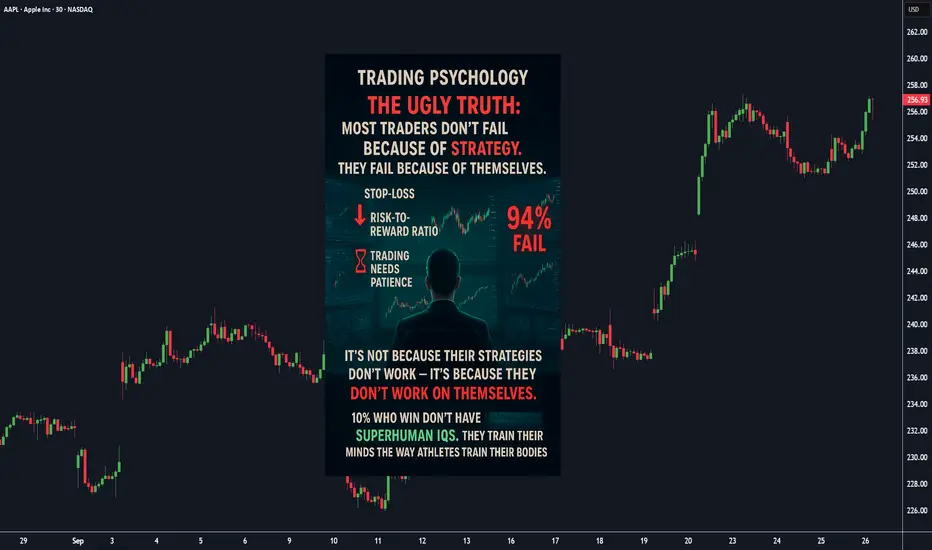
Psychology, Why 90% of Traders Fail (And How to Be the 10%)⚡ The ugly truth: Most traders don’t fail because of strategy. They fail because of *themselves* . It’s NOT bad strategies, it’s bad psychology.
📉 Here’s the real story 👇:
We know about stop-losses.
We know about risk-to-reward.
We know patience matters.
Imagine this: You’ve planned your trade. Price goes against you. Suddenly, your brain whispers:
👉 “Just hold a little longer.”
👉 “Double your position, you’ll recover.”
👉 “Skip the stop-loss this time, it’ll bounce back, praying it turns back.”
NASDAQ:GOOGL
Sound familiar?
That inner voice has blown more accounts than any chart pattern ever did.
🧠 “It’s not because their strategies don’t work—it’s because *they don’t work on themselves*.
✅ The 10% who wins don’t have superhuman IQs . They *train their minds* the way athletes train their bodies.
Here’s how you can upgrade yourself today :
1️⃣ **Detach From Money** → Don’t measure success by today’s P&L.
Measure it by *following your plan*. Consistency is the real wealth.
2️⃣ **Write Your Rulebook 📘** → Define your entries, exits, and risk rules. Print it. Stick it near your screen.
No match = no trade. (Yes, it’s boring. That’s why it works.)
3️⃣ **Journal Your Trades** → Every. Single. Trade. Wins and losses. How did you feel?
Why do you enter?
after doing this, you’ll start to * see your patterns * —and they’ll expose your weaknesses too..
🎯 Success in trading isn’t about predicting/beating the market. It’s about controlling *yourself*, beating your own impulses.
💬 Question for you: Which habit is killing your trades?
NASDAQ:MSFT
If you could fix just ONE habit right now:— what would it be?
Which one would change your results the most?
1️⃣ Overtrading 🔂
2️⃣ Revenge Trading ⚔
3️⃣ Ignoring Risk ⚠
4️⃣ chasing losses 🏃➡️
5️⃣ No 📘rulebook/📰Journal
💬 Comment below ⬇️
I'll post my new content accordingly.
Happy Trading and Investing!
Regards:
@TradeWithKeshhav
AI Trading Psychology1. The Role of Psychology in Traditional Trading
Before AI, trading was primarily a human-driven endeavor. Every market move reflected the collective emotions of thousands of participants. Understanding traditional trading psychology provides the foundation for how AI modifies it.
Key Psychological Factors in Human Trading
Fear and Greed: Fear leads to panic selling; greed fuels bubbles. Together, they explain much of market volatility.
Loss Aversion: Traders hate losing money more than they enjoy making money. This leads to holding losing trades too long and selling winners too early.
Overconfidence: Many traders believe their analysis is superior, leading to risky positions and underestimating market uncertainty.
Herd Behavior: People often follow the crowd, especially in uncertain conditions, which creates manias and crashes.
Confirmation Bias: Traders seek information that supports their views and ignore contradictory evidence.
Example
During the 2008 financial crisis, fear spread faster than rational analysis. Even fundamentally strong stocks were sold off because investor psychology turned negative. Similarly, the Dot-com bubble of 2000 was fueled more by collective greed and hype than by realistic fundamentals.
In short, psychology is central to markets. AI trading challenges this dynamic by removing emotional decision-making from the execution layer.
2. How AI Transforms Trading Psychology
AI changes trading psychology in two major ways:
On the trader’s side, by reducing the emotional burden of decision-making.
On the market’s side, by reshaping collective behavior through algorithmic dominance.
AI’s Strengths in Overcoming Human Weaknesses
No emotions: AI doesn’t panic, doesn’t get greedy, and doesn’t second-guess itself.
Data-driven: It relies on massive datasets instead of gut feelings.
Consistency: It sticks to strategy rules without deviation.
Speed: It reacts in milliseconds, often before human traders even notice market changes.
Example
High-frequency trading (HFT) firms use algorithms that can execute thousands of trades per second. Their strategies rely on speed and mathematics, not human intuition. The psychological edge comes from removing human hesitation and inconsistency.
The Psychological Shift
For traders, using AI means learning to trust algorithms over instinct. This is not easy, because humans are naturally emotional and skeptical of machines making high-stakes financial decisions. The new psychological challenge is not just controlling one’s emotions but balancing trust and oversight in AI systems.
3. Human-AI Interaction: Trust, Fear, and Overreliance
One of the most important psychological dimensions of AI trading is human trust in technology. Traders must decide how much autonomy to give AI.
Trust Issues
Overtrust: Believing AI is infallible, leading to blind reliance.
Undertrust: Constantly interfering with AI decisions, which undermines performance.
Fear of the Unknown
Many traders feel anxious about “black-box AI” models like deep learning, where even developers cannot fully explain why the system makes certain decisions. This lack of transparency creates psychological unease.
Overreliance
Some traders outsource their entire decision-making process to AI. While this removes emotional interference, it also creates dependency. If the system fails or encounters unseen market conditions, the trader may be ill-prepared to respond.
Example
The 2010 Flash Crash showed the danger of overreliance. Algorithms created a cascade of selling that temporarily erased nearly $1 trillion in market value within minutes. Human oversight was slow to react because many traders trusted the machines too much.
This highlights a paradox: AI reduces human psychological flaws but introduces new psychological risks related to trust, dependence, and control.
4. Cognitive Biases in AI Trading
Although AI itself is not emotional, the humans designing and using AI systems bring their own biases into the process.
Designer Bias
AI reflects the assumptions, goals, and limitations of its creators.
For example, if a model is trained only on bullish market data, it may perform poorly in bear markets.
User Bias
Traders may interpret AI outputs selectively, aligning them with pre-existing beliefs (confirmation bias).
Some traders only follow AI signals when they match their own intuition, which defeats the purpose.
Automation Bias
Humans tend to favor automated suggestions over their own judgment, even when the machine is wrong. In trading, this can lead to dangerous blind spots.
Anchoring Bias
If an AI system provides a target price, traders may anchor to that number instead of re-evaluating based on new data.
In essence, AI does not eliminate psychological biases; it shifts them from direct decision-making to the way humans interact with AI systems.
5. Emotional Detachment vs. Emotional Influence
AI offers emotional detachment in execution. A machine doesn’t panic-sell during volatility. But human emotions still play a role in how AI systems are used.
Benefits of Emotional Detachment
Prevents irrational trades during panic.
Maintains discipline in following strategies.
Reduces stress and fatigue from constant monitoring.
The Emotional Influence Remains
Traders still feel anxiety when giving up control.
Profit or loss generated by AI still triggers emotional reactions.
Traders may override AI decisions impulsively, especially after losses.
Example
A retail trader using an AI-based trading bot may panic when seeing consecutive losses and shut it down prematurely, even if the system is statistically sound in the long run. Here, psychology undermines the benefit of AI’s discipline.
6. AI’s Psychological Impact on Market Participants
AI does not only affect individual traders—it changes the psychology of entire markets.
Increased Efficiency but Reduced Transparency
Markets with high algorithmic participation move faster and more efficiently. However, the lack of transparency in AI strategies creates uncertainty, which increases anxiety among traditional traders.
Psychological Divide
Professional traders with AI tools feel empowered, confident, and competitive.
Retail traders without access often feel disadvantaged and fearful of being exploited by machines.
Market Sentiment Acceleration
AI can amplify psychological extremes:
Positive sentiment spreads faster due to automated buying.
Negative sentiment cascades into rapid sell-offs.
This leads to shorter cycles of fear and greed, creating more volatile but efficient markets.
7. Ethical and Behavioral Implications
AI trading psychology extends into ethics and behavior.
Ethical Questions
Should traders use AI to exploit behavioral weaknesses of retail investors?
Is it ethical for algorithms to manipulate order books or engage in predatory strategies?
Behavioral Shifts
Younger traders may grow up trusting AI more than human intuition.
Traditional investors may resist, clinging to human-driven analysis.
This divide reflects not just technological adoption but also psychological adaptation to a new era of finance.
8. The Future of AI Trading Psychology
Looking ahead, AI trading psychology will continue to evolve.
Human-AI Symbiosis
The best outcomes will likely come from a hybrid approach:
AI handles execution and data analysis.
Humans provide judgment, ethical oversight, and adaptability.
Enhanced Transparency
To build trust, future AI systems may integrate explainable AI (XAI), allowing traders to understand the reasoning behind decisions. This will reduce anxiety and increase confidence.
Education and Adaptation
As traders become more familiar with AI, the psychological barriers of fear and mistrust will decline. Training in both technology and behavioral finance will be essential.
Market Psychology Evolution
Over time, collective market psychology may shift. Instead of being dominated by fear and greed of individuals, markets may increasingly reflect the programmed logic and optimization goals of algorithms. However, since humans still control AI design, psychology will never fully disappear—it will just manifest differently.
Conclusion
AI trading psychology is a fascinating blend of traditional behavioral finance and modern technological adaptation. While AI removes human emotions from execution, it introduces new psychological dynamics: trust, fear, overreliance, and ethical dilemmas.
The key insight is that psychology doesn’t vanish with AI—it transforms. Traders must now master not only their own emotions but also their relationship with algorithms. At the same time, AI reshapes the collective psychology of markets, accelerating cycles of fear and greed while creating new layers of uncertainty.
In the future, the traders who succeed will not be those who fight against AI, but those who learn to integrate human intuition with machine intelligence, balancing emotional wisdom with computational power.
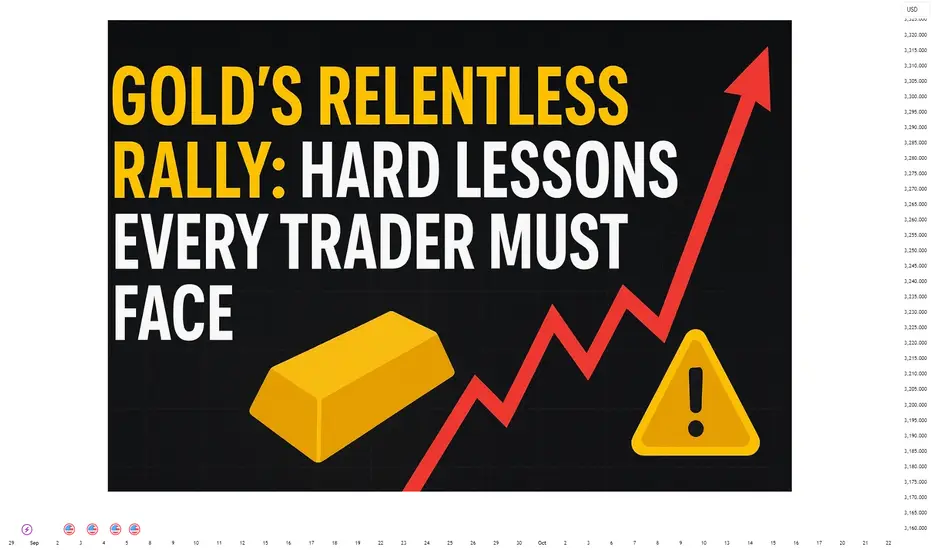
Gold’s Relentless Rally – A Lesson for Every TraderIn the past week, Gold surged strongly without any meaningful pullback, leaving many traders who were holding sell positions trapped. Without a retracement based on technical analysis, countless accounts went into heavy drawdown – some even facing complete wipeouts.
👉 What happened here?
Markets don’t always follow textbook technicals.
In volatile phases, traders often let losing trades run, ignoring their Stop-Loss.
This “hope mindset” is exactly what destroys capital faster than anything else.
💡 The key lesson for us all:
Risk management is not optional – it’s the foundation of survival in trading. A single trade without an SL may not seem dangerous, but over time, it’s the biggest reason traders lose their hard-earned money.
The market will always be unpredictable. But these are the moments where discipline and patience separate serious traders from those who get punished by the market.
🔑 MMFlow Insight for Indian Traders:
Markets don’t owe us profits. They reward only those who respect risk, stay calm, and stick to their trading rules. Protect your capital first – opportunities will always come.
👉 Stay disciplined. Respect your stop. Trade smart, trade safe.
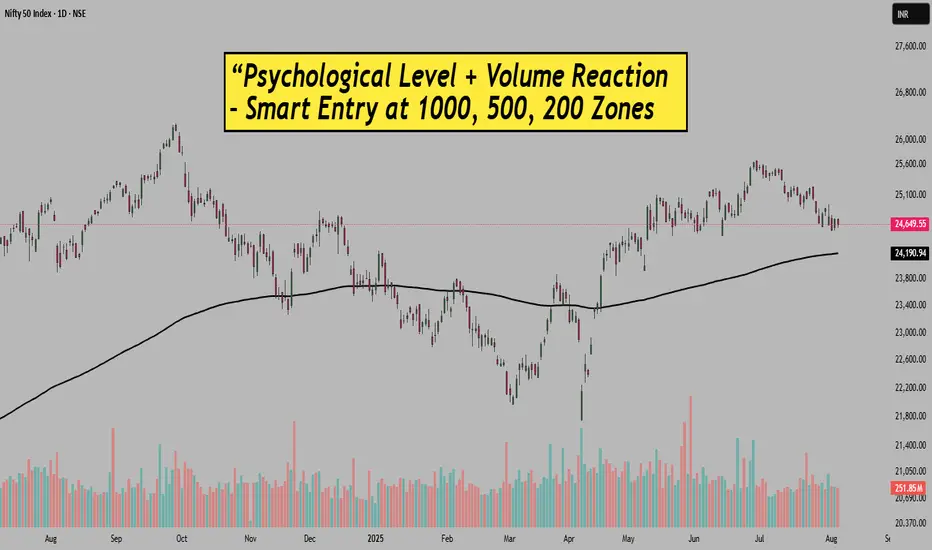
Psychological Level+Volume Reaction–Smart Entry at 1000-500 ZoneHello Traders!
Ever noticed how the market behaves around round numbers like 1000, 200, 500 levels?
There’s something powerful about these zones, not just technically, but psychologically too.
These are the levels where large participants often step in… and smart traders take entry.
Today’s post will help you understand how psychological price levels work — and how to combine them with volume confirmation for better intraday or swing setups.
Why Psychological Levels Matter
Round numbers attract attention:
Levels like 24500, 25000, 25500 in Nifty or BankNifty act as magnets. Institutions, algos, and even retail traders tend to place orders around these levels.
Buyers or sellers take control at these points:
Price often pauses or reverses here, as it becomes a battleground of supply and demand. Especially if this level is also a previous support/resistance zone.
Self-fulfilling behavior of traders:
Because everyone expects a reaction near these zones, price actually reacts. This creates great opportunities if you can enter with the right confirmation.
Volume Confirmation Makes It Powerful
Look for unusual volume near these zones:
Let’s say Nifty hits 24600 and suddenly you see a volume spike on a bullish candle — that’s not coincidence. That’s your cue.
Price rejection with volume is key:
Wick-based candles, engulfing patterns, or inside bars rejecting psychological levels with volume boost often lead to clean intraday moves.
Consolidation + Breakout works best:
If price consolidates near these psychological zones with low volume and breaks out with high volume, it often creates strong directional moves.
Rahul’s Tip:
Instead of randomly entering trades, mark round levels like 24500/24750 on your charts.
Then wait patiently, combine volume + price action and let the trade come to you.
Most false moves get filtered out when you use this setup with discipline.
Conclusion:
These psychological levels are used by big players to trap retail traders, but if you learn to read reactions at these levels, you can trade smarter.
No need to chase. Just observe, react, and manage risk.
What’s your experience with psychological levels? Have they helped your trades?
Share your thoughts in comments.
If this post helped, do like, follow and share with your trader friends.
SHORT OPPORTUNITY ON GBPJPYWe can short GBPJPY if it comes to my mark black zone as when market comes here it will comes with buyers liquidity available at downside so as soon as we can see market has broke trendline on 15min time frame and form some "M" type structure in lower time frame that can be 5min we can go for a short side scalp.
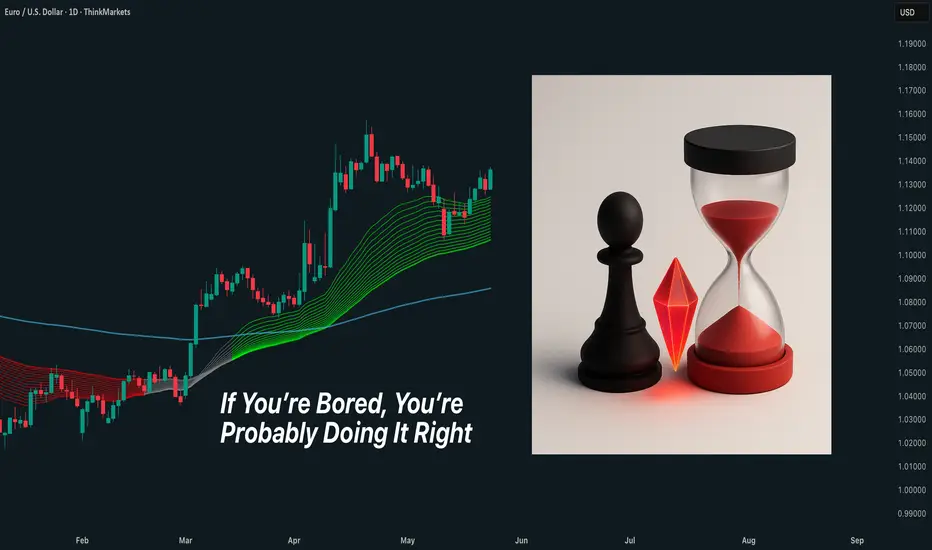
If You’re Bored, You’re Probably Doing It RightYou think trading should be exciting?
That every day should feel like a high-stakes chess match?
That if it doesn’t feel intense, something’s wrong?
Nope.
Good trading is boring.
Systematic.
Repetitive.
Unemotional.
You take your setup. You size properly. You respect your stops. You move on.
Same rules. Same routine. Same process.
It’s not sexy. But it’s stable.
The truth?
The more exciting your trading feels, the more likely you’re slipping.
Overleveraging. Overtrading. Overreacting.
Boredom isn’t a bug. It’s a feature.
It means you’re not chasing.
You’re not forcing.
You’re following your edge — and letting the numbers do the heavy lifting.
You don’t need adrenaline.
You need consistency.
Get comfortable with boredom. That’s where the money is.
Boredom is not your enemy — it’s your ally.
Stay patient, stay consistent.
Charts & Grit
FOMO vs Discipline – Real Reason Traders Blow Accounts!Hello Traders!
Ever jumped into a trade just because it was flying — only to see it reverse the moment you entered? That’s FOMO (Fear of Missing Out) in action. And if you're not careful, it’s one of the fastest ways to blow up your account. Today, let’s break down the difference between FOMO-driven trades and Disciplined trades , and why only one will help you survive in this game.
FOMO Trading – The Trap Most Fall Into
Chasing Green Candles: You see a big breakout and jump in without a plan or proper setup.
No Stop-Loss, Just Hope: You enter based on emotion, not analysis — and hope the market will favor you.
Revenge Mode On: After a loss, you double your next position to "recover" faster.
Result: A few big red trades later, your account is wrecked.
Disciplined Trading – The Only Way to Last Long-Term
Defined Entry & Exit: You wait for your setup, confirm with structure or volume, then take the trade.
Stop-Loss is a Must: Risk is pre-decided, and you’re okay walking away from a losing trade.
Patience > Urgency: You sit out when the market is unclear, and strike only when odds are in your favor.
Result: Smaller, more consistent wins — and capital stays protected.
Rahul’s Tip
Markets will test your emotions every day. The trader who waits for the right pitch — like in cricket — is the one who survives. You don’t need to catch every move. You just need to catch the right one.
Conclusion:
FOMO makes you act fast, Discipline makes you act smart. In trading, slow and steady doesn’t just win the race — it helps you stay in the race . Train your mind to follow your system, not your emotions.
Which side are you currently on — FOMO or Discipline? Drop your thoughts in the comments! Let’s talk.
GOLD – Unshaken Through Chaos - 50 new all-time highs🟡 GOLD – Unshaken Through Chaos | A Structural Bull Run Backed by Global Repricing
Gold isn’t just rallying — it’s sending a message.
Over the past 12 months, gold has set over 50 new all-time highs, a breakout sequence unmatched in over a decade. This is now officially the longest bullish streak in 12 years, and the third longest in modern history, only behind the volatile 1979–1980 period — a time when the global economy was grappling with runaway inflation, stagnant growth, and widespread unemployment.
But what makes this current bull cycle unique is not just the price action, but the structural shift behind the move.
📈 The Numbers Speak for Themselves:
YTD 2024 performance: +16%
12-month gain: +39%
Price range: From ~$1,200 to nearly $1,600/oz
3rd consecutive bullish year
These gains are not speculative pumps — they are a response to systemic instability. The macro backdrop is screaming uncertainty:
Sticky, structural inflation
Slowing global economic growth
Real interest rates still hovering around zero or negative
Geopolitical risk escalating in nearly every region of the world
This isn’t a short squeeze. It’s a capital migration.
🏦 The Central Bank Bid: The Silent Giant
What separates this rally from past cycles is who’s buying.
Unlike the 2011 gold run — driven heavily by retail FOMO and speculative ETF flows — today’s surge is institutionally anchored.
The strongest force in the current trend? Central banks.
Led by China, Russia, Turkey, and several BRICS nations, central banks have been accumulating gold at a record pace, shifting reserves away from USD exposure and hedging long-term geopolitical and economic risks. This isn't just diversification — it's a statement of monetary sovereignty.
Their consistent demand is forming a strong floor under price, insulating gold from violent retracements even during short-term corrections.
🔍 The Psychology of this Bull Market
This isn’t the kind of rally that fades on CPI noise.
The capital flow is defensive, not aggressive.
Funds are rotating into gold not to chase yield, but to preserve value. In times when fiat devaluation, sovereign debt instability, and political fragmentation are on the rise — gold doesn’t just shine, it leads.
The market is re-pricing systemic risk.
Investors are no longer reacting to inflation headlines. They are positioning for longer-term fragility in global monetary policy. That’s why even when inflation prints soften temporarily, gold still holds ground.
📌 What Comes Next?
Yes, technically, a pullback is healthy — even expected.
Extended breakouts are often followed by short-term consolidations. But the medium- to long-term structure remains intact.
Gold is not in a bubble. It’s in rotation.
In a world full of uncertainty, inflation volatility, and central bank crossfire — gold remains the most trusted asset for capital protection. And this rally? It’s not the end of something.
It’s just the beginning of a new monetary cycle.
— AD | Money Market Flow
📢 Join our community of serious traders.
Let’s grow, learn, and win together inside the MMFlow Trading Channel.
Tap in and be part of the flow.
WHY DO 97% OF TRADERS LOSE MONEY IN THE MARKET?🧠 WHY DO 97% OF TRADERS LOSE MONEY IN THE MARKET?
And what should you truly prepare before you begin?
You’ve probably heard this one before:
“97% of traders lose money.”
Not because they’re not smart.
Not because they lack a good strategy.
But because they enter the market with the wrong mindset and unrealistic expectations.
❌ The market is not a gold mine — not for everyone
Many people step into trading thinking:
“Forex is a money printer. Anyone can just come in and take what they want.”
But here’s the truth:
👉 The market doesn’t hand out profits. It takes money from the unprepared and gives it to the disciplined.
It doesn’t care about your dreams — it only respects your readiness.
💸 You will lose money — and it will sting
Even if you believe your strategy is solid, it will fail at some point.
And when it does, the price you pay is real money — your own money.
And because it’s your hard-earned money, you’ll feel the pain. You’ll get emotional.
You’ll want to get it back. You’ll enter trades impulsively.
And that’s exactly when the market will drag you by the nose.
⚠️ The biggest mistake: thinking a good strategy is enough
Most new traders believe:
“Once I have a working strategy, I’ll be consistently profitable.”
But the truth is:
Every strategy fails sometimes
The market doesn’t follow your logic
A bad entry isn’t what ruins you — refusing to cut the loss is
🧘♂️ So what should you actually prepare before trading?
If you’re about to start trading — or afraid to fail early — make sure to prepare:
✅ A solid foundation of knowledge
✅ A mindset that accepts loss without losing control
✅ The ability to say: “It’s okay to lose a trade — I just need to survive long enough to learn and grow.”
📌 Other people’s strategies won’t make you profitable
Yes, I often share my outlooks, plans, and even potential entry zones.
But always remember:
My view is just a perspective — not a guarantee of success.
Trading is personal.
You’ll only become consistently profitable when:
You trust in a system you’ve practiced yourself
You take trades because you see the logic, not because someone else agrees with you
🔄 Trading is a process: Try – Fail – Learn – Repeat
I’ve lost. I’ve been stubborn. I’ve gotten emotional.
And I learned:
You don’t need to win all the time.
You just need to survive your losses and come back smarter.
A stop-loss isn’t failure.
It’s the most mature decision you can make in a chaotic environment.
🤝 I won’t promise that you’ll make money
The knowledge I share — the views I post —
may not make you rich.
But I believe:
They can help you avoid losing money needlessly.
Don’t believe anyone 100% — not even me.
Take what you learn, test it, and turn it into your own conviction.
That’s how you grow.
❤️ Final thoughts
Trading isn’t a game of prediction — it’s a test of psychology.
You don’t have to be the best trader.
You just need to protect your capital, protect your mindset, and keep showing up.
Wishing you all a peaceful weekend with your loved ones.
Tomorrow, we return to the market — sharper, calmer, and more disciplined.
The market will always be there. The real question is: will you still be here to trade it next month, next year?
— AD | Money Market Flow
The Inside Out InvestorThere is a common misconception that investing in stocks is always stressful and emotionally overwhelming. Many people think that this activity is only available to extremely resilient people or crazy people. In fact, if you know the answers to three key questions, investing becomes a rather boring activity. Let me remind you of them below:
1. Which stocks to choose?
2. At what price should the trade be made?
3. In what volume?
As for me, most of the time, I'm just in waiting mode. First, I wait for the company's business to start showing sustainable growth dynamics in profits and other fundamental indicators. Then, I wait for a sell-off of strong company shares at unreasonably low prices. Of course, this requires a lot of patience and a positive outlook on the future. That's why I believe that being young is one of the key advantages of being a beginner investor. The younger you are, the more time you have to wait.
However, we still have to get to this boring state. And if you've embarked on this long journey, expect to encounter many emotions that will test your strength. To help me understand them, I came up with the following map.
Next I will comment on each of its elements from left to right.
Free Cash horizontal line (from 0% to 100%) - X axis
When you first open and fund a brokerage account, your Free Cash is equal to 100% of the account. Then it will gradually decrease as you buy shares. If Free Cash is 0%, then all your money in the account was invested in shares. In short, it is a scale of how much your portfolio is loaded with stocks.
Vertical line Alpha - Y axis
Alpha is the ratio of the change in your portfolio to the change in an alternative portfolio that you do not own but use as a reference (in other words, a benchmark). For example, such a benchmark could be an ETF (exchange-traded fund) on the S&P500 index if you invest in wide US market stocks. Buying an ETF does not require any effort on your part as a manager, so it is useful to compare the performance of such an asset with the performance of your portfolio and calculate Alpha. In this example, it is the ratio of your portfolio's return to the return of the S&P 500 ETF. At the level where Alpha is zero, there is a horizontal Free Cash line. Above this line is positive Alpha (in which case you are outperforming the broader market), below zero is negative Alpha (in which case your portfolio is outperforming the benchmark). Let me clarify that the portfolio yield includes the financial result for both open and closed positions.
Fear of the button
This is the emotion that blocks the sending of an order to buy shares. Being captivated by this emotion, you will be afraid to press this button, realizing that investing in shares does not guarantee a positive result at all. In other words, you may lose some of your money irretrievably. This fear is absolutely justified. If you feel this way, consider the size of your stock investment account and the percentage amount you are willing to lose. Remember to diversify your portfolio. If you can't find a balance between account size, acceptable loss, and diversification, don't press the button. Come back to her when you're ready.
Enthusiasm
At this stage, you have a high share of Free Cash, and you also have your first open positions in stocks. Your Alpha is positive. You are not afraid to press the button, but there is a certain excitement about the future result. The state of enthusiasm is quite fragile and can quickly turn into a state of FOMO if Alpha moves into the negative zone. Therefore, it is critical to continue learning the chosen strategy at this stage. A journey of a thousand miles begins with a single step.
FOMO
FOMO is a common acronym used to describe a psychological condition known as fear of missing out. In the stock market, this manifests itself as fear of missing out. This condition is typical for a portfolio with a high proportion of Free Cash and negative Alpha. As the benchmark's return outpaces your portfolio's return, you will be in a nervous state. The main worry will be that you didn't buy the stocks that are currently the growth leaders. You will be tempted to deviate from your chosen strategy and take a chance on buying something on the off chance. To get rid of this condition, you need to understand that the stock market has existed for hundreds of years, and thousands of companies trade on it. Every year, new companies emerge, as well as new investment opportunities. Remind yourself that you are not here for one million dollar deal, but for systematic work with opportunities that will always be there.
Zen
The most desirable state of an investor is when he understands all the details of the chosen strategy and has effective experience in its application. This is expressed in positive Alpha and excellent mood. Taking the time to manage your portfolio, developing habits and a disciplined approach will bring satisfaction and the feeling that you are on the right track. At this stage, it is important to maintain this state, and not to chase after thrills.
Disappointment
This stage is a mirror of the Zen state. It can develop from the FOMO stage, especially if you break your own rules and invest on luck. It can also be caused by a sharp deterioration in the condition of a portfolio, which was doing well in the Zen state. If everything is clear in the first case, and you just need to stop acting weird , then in the second situation you should remember why you ended up in a state of Zen. Investments are always a series of profitable and unprofitable trades. However, losing trades cannot be considered a failure if they were made in accordance with the principles of the chosen strategy. Just keep following the accepted rules to win in the long run. Also remember that Mr. Market is crazy enough to offer prices that seem absurd to you. Yes, this can negatively affect your Alpha, but at the same time provide opportunities to open new positions according to the chosen strategy.
Euphoria
Another way out of the Zen state is called Euphoria. This is typical dizziness from success. At this stage you have little Free Cash, a large share of stocks in your portfolio and phenomenally positive Alpha. You feel like a king and lose your composure. That is why this stage is marked in red. In a state of euphoria, you may feel like everything you touch turns to gold. You feel the desire to take a risk and play for luck. You don't want to close positions with good profits. Furthermore, you think you can close at the highs and make even more money. You are deviating from the chosen strategy, which is fraught with major negative consequences. It only takes a few non-systemic decisions to push your Alpha into the negative zone and find yourself in a state of disappointment. If your ego doesn't stop there, the decline may continue.
Tilt
A prolonged state of disappointment or a rapid fall of Alpha from the Euphoria stage can lead to the most negative psycho-emotional state called Tilt. This term is widely used in the game of poker, but can also be used in investments. While in this state, the investor does everything out of strategy, his actions are chaotic and in many ways aggressive. He thinks the stock market owes him something. The investor cannot stop his irrational actions, trying to regain his former success or get out of a series of failures in the shortest possible time. This usually ends in big losses. It is better to inform your loved ones in advance that such a condition exists. Don't be embarrassed by this, even if you think you are immune to such situations. A person in a state of tilt withdraws into himself and acts in a state of affect. Therefore, it is significant to bring him out of this state and show that the outside world exists and has its own unique value.
Now let's talk about your expectations, as they largely determine your attitude towards investing. Never turn your positive expectations into a benchmark. The stock market is an element that is absolutely indifferent to our forecasts. Even strong companies can fall in price if there is a shortage of liquidity in the market. In times of crisis, everyone suffers, but the most prepared suffer the least. Therefore, the main task of a smart investor is to work on himself until the moment he presses the coveted button. There will always be a chance to do this. As I said, the market will not disappear tomorrow. But to use this chance wisely, you need to be prepared. This means that you should have an answer to all three questions above. Then you will definitely catch your Zen.
10 tricks for developing discipline or here was WarrenIf you asked me, what is the most valuable trait an investor should have, I would call it the ability to follow your own rules. In other words, it is discipline. A novice investor can learn quickly, know all the features of the chosen strategy from A to Z, but it is unlikely that he will succeed without this trait. So, Warren Buffett called persistence your engine, and discipline the guarantee of a successful future.
Imagine that you have sailed to an unusually beautiful island with the goal of finding a treasure chest. To achieve this, you have a map with a description of all the paths and turns that you need to take to reach your goal. However, after the first 100 meters of the path you understand that this island has a huge number of amazing plants, ripe fruits, and curious animals. All this is very interesting and attractive for you: firstly, you want to take a photo of a beautiful flower, secondly, try a tropical fruit, thirdly, play with a funny monkey. “Why not? This is a great chance!” you think. After a while, having enjoyed the life of the island, you realize that it is already evening, and it is easier to spend the night somewhere under a palm tree and continue the search for treasure tomorrow, during daylight hours. “That’s a smart idea!” you note and begin to prepare a place to sleep.
In the morning, you wake up in a good mood, you are greeted by familiar flowers, fruits and a cheerful parrot. Since you already know all this, you decide to continue following the map to find the treasure today and sail on. The path is easy for you: the entire route is marked in advance, you just follow these instructions. So, here you are. At the roots of the largest palm tree, under many branches, there should be a treasure chest hidden. You clear away the branches, and here your expectation collides with a shocking reality. Instead of a chest, you see a hole, where at the bottom, with a wooden stick, is written: “Warren was here”.
In this example, Warren had the same map as you. Moreover, he arrived on the island much later. The only difference is his model of achieving the goal. He understood that exploring the island was not a priority for him right now. Warren would be happy to return there, but this time with the goal of relaxing, perhaps on his brand-new ship. And while he came to the island to look for treasure, he is looking for it. Everything else, despite all its attractiveness, is for him a risk of not achieving the goal.
I also think of my stock investing strategy as a map that helps me understand where I should turn in any given situation. The only thing that makes me follow the route is discipline. Unfortunately, I can't put the stock market on pause or ignore corporate news - they all require my attention. If I choose this path, I follow it. In other words, if I am not going to follow the recommendations of my map, then why did I choose this path?
However, how difficult it is to look calmly at temptations. A man is not a robot. So we need some tricks that can help us with discipline. I think that in this regard, the most brilliant invention of mankind was and remains the alarm clock. No matter how much we sleep, when the alarm rings, we wake up. The most disciplined people even set several alarms to make sure they wake up! On the one hand, it irritates us like crazy, on the other hand, have you ever thought about how well it helps us relax? After all, there is no longer a need to wake up and determine the time by the brightness of the sun from the window - now we have an alarm clock! It turns out that discipline can be associated with pleasant things.
By the way, on TradingView, such a brilliant invention is “Alerts”. I wrote about this function in the article: “A pill for missed opportunities” . I will only add that the alert system can be applied not only to the stock price, but also to the indicators that you use on the chart, as well as to a whole watch list. So, make a list of companies you want to keep an eye on. Then set alerts when a certain condition related to price or indicator value is reached. And finally, wait calmly. Yes, this is what will take up all your time - waiting. And believe me, it takes a lot of discipline to just wait.
To develop this trait, I recommend creating habits that are organically linked to your strategy. For example, to decide about a deal, I constantly refer to news about the selected companies. It is significant for me to understand whether critical events have arisen that could influence my decision to open or close a position. However, regularly reading corporate news can hardly be called a fascinating activity for everyone. This is not looking at memes at all. Therefore, below I will give a few tricks that will help make this (and not only this) activity systemic:
1. Set your alarm for 1 hour before the stock market opens. Let this signal remind you that it is time to study the news on companies that have already been bought or are very close to being bought.
2. Make access to news as convenient as possible. Install the TradingView app on your phone, tablet, home computer or laptop. Don't have problems accessing information in any situation: if you are lying on the couch, sitting at the table or walking in the park.
3. Start with small steps. For example, start by reading only the headlines of news stories, rather than the entire story at once. Gradually increase the amount of incoming information. In one full hour, you can easily gather all the information you need to get a complete picture before the market opens.
4. Use modern technologies. For example, reading news from your voice assistant. This is convenient if you are on the move.
5. Combine your habit with another direction you are developing. For example, if you are learning a foreign language, practice reading the news in that language.
6. Organize public attention to your habit. For example, agree with your wife that for every time you skip a habit, you take her to a new restaurant (I think the most effective method for married men). Chat with like-minded people and/or post your thoughts on the news on social networks. The extra attention will motivate you to keep doing it.
7. Add a little joy to your news reading habit. If you like freshly squeezed juice, place a glass of it next to you. After the work you've done, be sure to thank yourself. For example, a delicious dessert or watching one episode of your favorite TV series.
8. Formulate your goal as follows: not to be someone who understands everything, but to be someone who never misses a single event.
9. Separately, I would like to draw attention to keeping a diary of your operations. This is an essential document that will help you track your progress - your Track Record. At the same time, it is one of the systemic habits. I recommend adding to Track Record information about cash transactions, trades, taxes, dividends, conditions that prompted you to open or close a position in shares. You can organize such a diary in any spreadsheet to calculate some of the metrics using formulas.
Below, I will present the metrics that I use in my Track Record. All data in it will be provided as an example only.
10. And finally, I think it is significant to visualize your achievements not only in electronic form, but also to have a physical embodiment of your results. For example, these can be empty glass flasks where you can put coins or balls corresponding to certain actions: opening a position, closing a position with a profit, closing a position with a loss, paying dividends. One flask - one year. Such an installation will look beautiful in your room or office and will remind you of what you have finally achieved. You might even have some interesting stories to tell to curious guests who notice this piece of furniture.
Top 3 Swing Trading Ideas for Jan 31, 2025!🚀 Top 3 Swing Trading Ideas for Jan 31, 2025! 🚀
📢 Disclaimer: The 3 stocks discussed here are for educational purposes only. 📚💡
✅ First, learn how to trade, then focus on earning! 💰📈
💬 Got a stock in mind? Drop a comment, and I'll reply! 🔍📊
#LearnBeforeYouEarn #StockMarket
Scanner scans - SPARCGot a 2% tgt with Nestle but got stopped out with JSW Steel on my last trades.
SPARC is a new one on the scanner, so lets see how it goes.
Tried to get again (though not fresh on scanner) on RHIM and Syrma.... Got stopped out on same day on RHIM but Syrma is holding...lets see how it goes on Monday.
Testing out scanner - RHIMAfter I stopped F&O altogether as I was not able to get a handle on it and generate consistent returns, I had decided to focus on cash market. For that I had created a simple scanner which would show up stocks which have come up above their weekly high but are still below their 50 day MA. Details of what stocks came up and how they and I performed is what all the video is about. Watch it to see my journey.
Day 37: Day Trading JournalDay 37: After a gap of about 15 days during which I was not trading, and trying to figure out if I can find a better algo strategy or trying to find out if manual trading is better. Since the algo that I had deployed was doing good in paper trade but real trade is a way different battle since the market gives you the worst of price at both times - entry and exit, it resulted in a breakeven after a month, now I decided to focus on my manual trading instead.
I realised that when trading manually, decision making is very complex and cannot be fit in a simple algorithm even when I am looking at just one indicator. The brain actually analyses many different things without even we realising. Most of the time, brain picks up correct entry signals. I tested out my strategy by paper trading and backtesting on different stocks than which I normally follow and I found that the strategy is good and I do good and I am profitable in that. The issue however arises when real money is involved as the most difficult part to master i.e. our emotions, are not involved in backtesting or paper trading. We need to trade live only for that and build that mindset. Nothing else can prepare me for that, so its all real trade for me now, very small positions but rigorously testing the same strategy on different stocks untill I have mastered the emotions.
Day 36: Day Trading JournalDay 36 : Today, I put a halt on algo trading as well as day trading. After algo day trading for @14 days, I realised that I was not making profit, whatever profit had accrued was taken away by market. So I went back to my algo backtesting and stress tested it for worst case conditions and that actually came very close to my real time trading. Then I realised that day trading is not gonna make money.
So I have decided to stop day trading and figure out a way to trade swing, now to see whether to follow the hourly chart or the daily chart and if any rule can be applied to it. For the next few days I will focus on trying to find that, meanwhile any trade I do manually will be a swing (holding overnight) to see how it goes.
Day 35 of Live algo Day Trading JournalDay 35: Not much movement today. Remained negative during the day.
I am increasingly getting this feeling that intraday is not worth pursuing. The time market is open is very less, the first half hour or the full hour goes just in trying to figure out where the market wants to go and by the time you think what you'd like to do, it stalls and gets into a range. By the time it ends, the market timings are over and everybody wants to pack up. Where is the time to chase any strategy, where is the time for any strategy to develop.
I think I will try looking for a swing trading strategy and see if that is profitable or not.
Progress/Setback : Nothing much on both counts, will have to explore more.