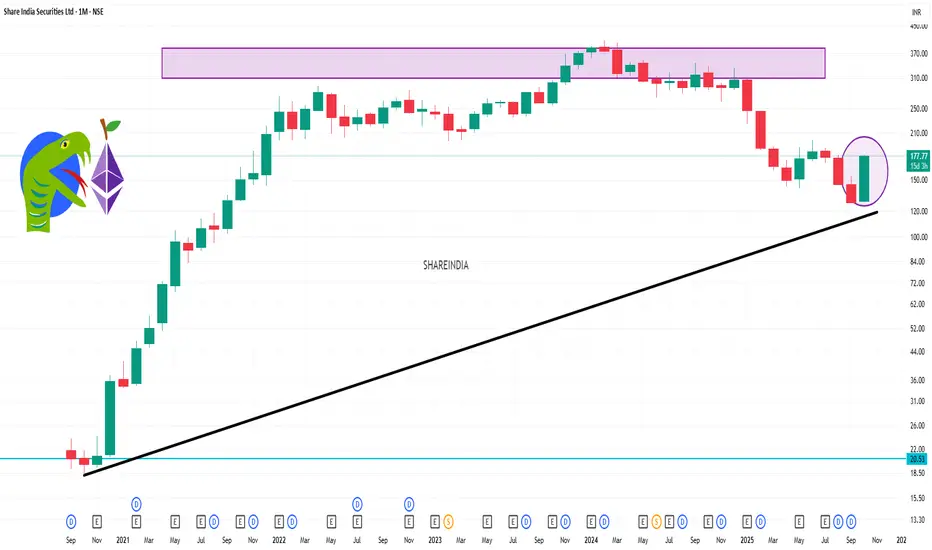
SHAREINDIA 1 Month Time frame 1-month technical outlook for Share India Securities Ltd indicates a bearish trend, with the stock trading at ₹178.65.
📉 1-Month Technical Overview
Price Change: The stock has declined by approximately 2.95% over the past month.
Technical Indicators: According to TradingView's technical analysis, the 1-month rating indicates a "sell" signal, suggesting a prevailing downtrend.
Market Sentiment: On Moneycontrol, 100% of user sentiments recommend selling, reflecting a bearish outlook among retail investors.
Tradingforex
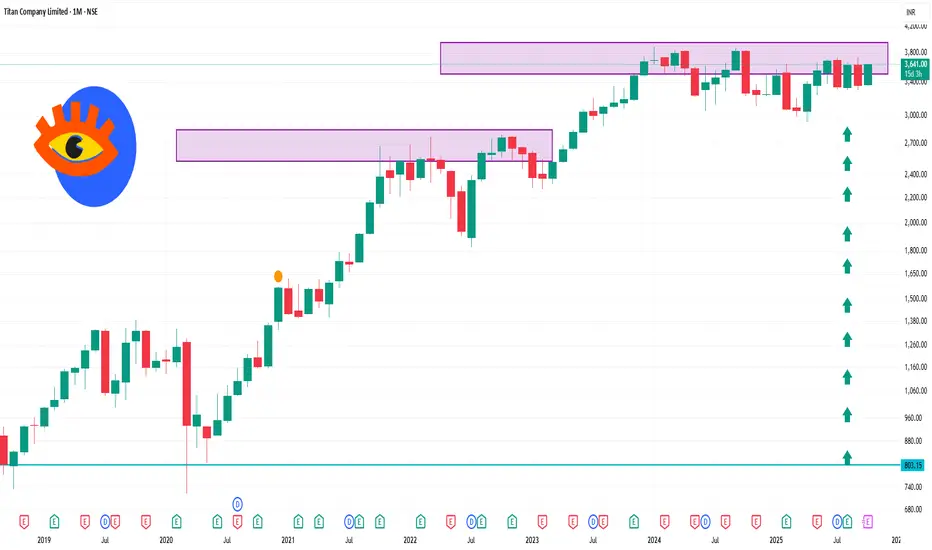
TITAN 1 Month Time Frame Titan Company Ltd is trading near ₹3,636.50, approaching its 52-week high of ₹3,740.
📊 1-Month Technical Overview
Price Performance: The stock has seen a modest decline of approximately 0.20% over the past month.
Technical Indicators:
Relative Strength Index (RSI): The RSI is currently in the neutral zone, indicating balanced buying and selling pressures.
Moving Averages: The stock is trading above its short-term moving averages, suggesting a positive short-term trend.
Stochastic Oscillator: The stochastic indicator is in the bullish zone, indicating potential upward momentum.
Commodity Channel Index (CCI): The CCI is above zero, signaling a bullish trend.
Rate of Change (ROC): The ROC is positive, further confirming bullish momentum.
Money Flow Index (MFI): The MFI is above 50, indicating healthy buying activity.
Support and Resistance Levels:
Support: ₹3,189.25
Resistance: ₹3,559.25
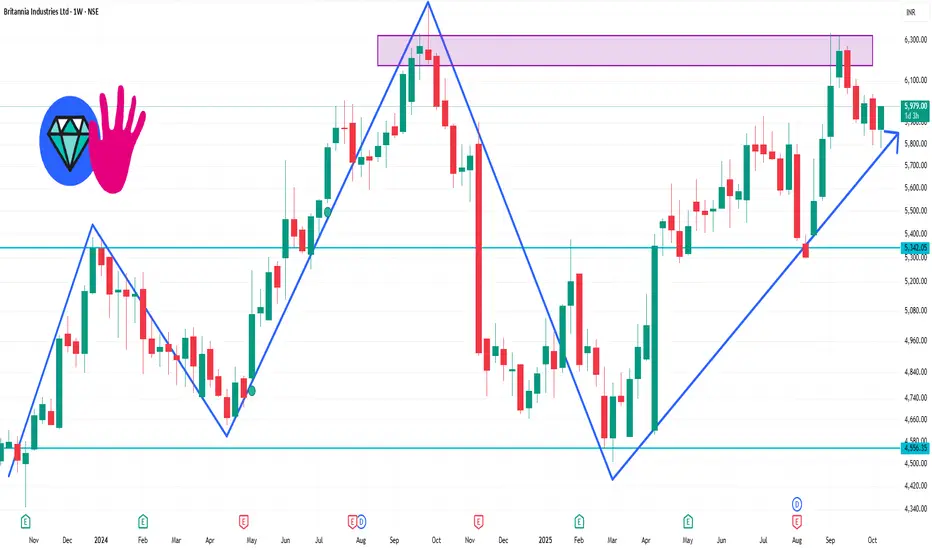
BRIT 1 Week TIme Frame 📊 Technical Indicators (Weekly)
Relative Strength Index (RSI): 41.73 — Indicates a neutral stance, neither overbought nor oversold.
Moving Average Convergence Divergence (MACD): -25.66 — Suggests a bearish trend, with the MACD line below the signal line.
Average Directional Index (ADX): 20.38 — Points to a weak trend, implying indecision in the stock's movement.
Commodity Channel Index (CCI): -132.30 — Reflects a mildly bullish condition, though caution is advised.
Williams %R: -84.06 — Indicates a mildly bullish position, suggesting potential upward movement.
📈 Price Action & Trend
Weekly High: ₹5,953.00
Weekly Low: ₹5,782.00
Current Price: ₹5,800.50
Weekly Return: +1.47%
The stock has shown resilience, trading above its 200-day simple moving average (SMA), which is considered a positive long-term indicator.
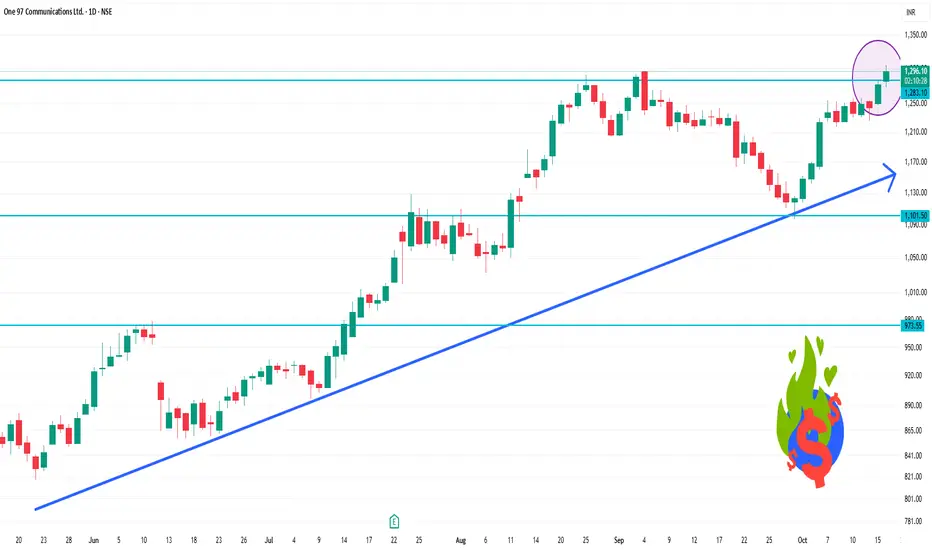
PAYTM 1 Day Time Frame 📊 Current Price Data
Last Traded Price: ₹1,301.70 (+1.91%)
Day’s Range: ₹1,273.00 – ₹1,304.90
52-Week Range: ₹651.50 – ₹1,304.90
Volume: 2,701,923 shares traded
Market Cap: ₹81,633 crore
P/E Ratio (TTM): 272.93
P/B Ratio: 5.43
Dividend Yield: 0.00%
🧠 Sentiment & Outlook
Short-Term: Neutral trend; awaiting confirmation of breakout or breakdown.
Mid-Term: Bullish; potential for upward movement if resistance levels are broken.
Long-Term: Bullish; strong support at lower levels suggests potential for sustained growth.
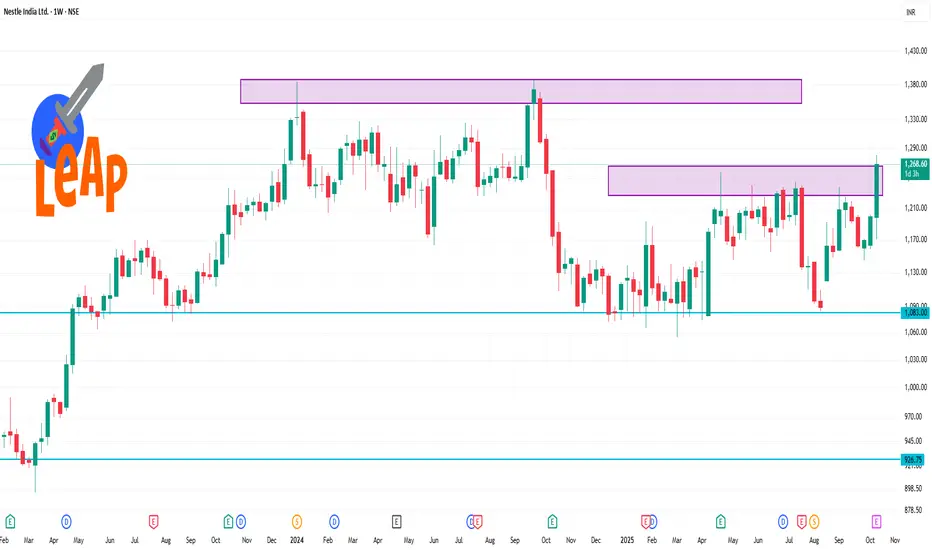
NESTLEIND 1 Week Time Frame📊 1-Week Performance Snapshot
Current Price: ₹1,264.90
1-Week Change: +6.5%
52-Week Range: ₹1,055.00 – ₹1,281.20
Day’s Range: ₹1,216.50 – ₹1,275.60
Volume: 1.61 million shares
📈 Technical Indicators
Relative Strength Index (RSI): Approximately 70.37, nearing overbought territory
Moving Average Convergence Divergence (MACD): Around +9.76, indicating bullish momentum
Support Level: ₹1,216.50 (recent low)
Resistance Level: ₹1,275.60 (recent high)
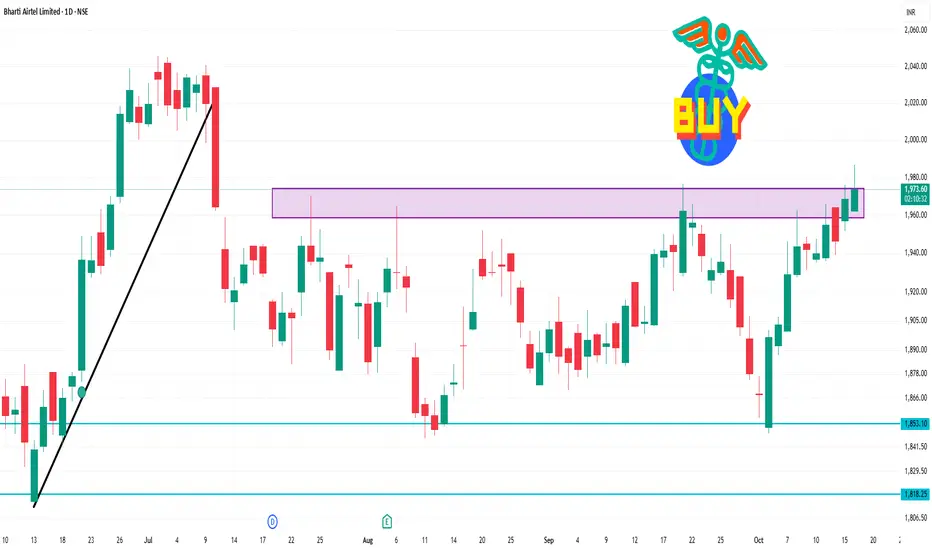
BHARTIARTL 1 Day Time Frame Bharti Airtel Limited is trading at ₹1,973.50, reflecting a 0.31% increase from the previous close.
Technical Analysis Overview (1-Day Time Frame):
Trend: Neutral to mildly bullish
Support Levels: ₹1,900 – ₹1,895
Resistance Levels: ₹1,920 – ₹1,925 and ₹1,950 – ₹1,960
Key Technical Indicators:
Moving Averages: All major moving averages (20-day, 50-day, 200-day) are bullish, indicating upward momentum.
Relative Strength Index (RSI): At 55.9, suggesting a neutral stance, neither overbought nor oversold.
Commodity Channel Index (CCI): At -214.32, indicating a bullish condition.
Momentum Oscillator: Positive, reinforcing the bullish outlook.
Average Directional Index (ADX): At 20.28, suggesting a neutral trend strength.
Part 9 Trading Master ClassOption Expiry and Settlement
Every option contract has a fixed expiry date, after which it becomes invalid. In India, for example, index options like NIFTY and BANKNIFTY expire weekly or monthly, while stock options usually have monthly expiries.
There are two types of settlements:
Cash Settlement: The difference between the strike and market price is credited or debited in cash (used in index options).
Physical Settlement: The actual delivery of stocks occurs (used in stock options in India).
Understanding expiry cycles is crucial, as price movements near expiry can become highly volatile due to time decay and traders closing positions.
Part 8 Trading Master ClassOption Greeks – The Key Metrics
Option pricing is influenced by several mathematical variables known as Option Greeks:
Delta: Measures how much the option price moves for every ₹1 change in the underlying asset.
Theta: Measures time decay — how much the option loses value daily as expiry nears.
Vega: Measures sensitivity to volatility; higher volatility increases premium.
Gamma: Tracks how much delta changes when the underlying price moves.
Rho: Measures sensitivity to interest rate changes.
Professional traders rely on these Greeks to manage risk and adjust positions according to market conditions.
Part 7 Trading Master Class Understanding Option Premium and Its Factors
The option premium is the price a trader pays to buy an option. It consists of two parts — intrinsic value and time value.
Intrinsic Value is the difference between the current price of the underlying asset and the strike price. For example, if a stock trades at ₹110 and the call strike is ₹100, the intrinsic value is ₹10.
Time Value reflects the potential for the option to gain more value before expiry. The longer the time to expiry and the higher the volatility, the greater the time value.
As expiry nears, time value decreases — a phenomenon known as time decay (theta). Understanding how premium behaves helps traders make better entry and exit decisions.
Part 6 Institutional Trading enefits and Risks of Option Trading
Benefits:
Limited risk for buyers (only the premium is at risk).
High leverage with a small capital requirement.
Can be used for hedging against stock price movements.
Risks:
Option sellers face unlimited risk if the market moves against them.
Time decay reduces option value as expiry approaches.
Requires good understanding of volatility and market trends.
Part 4 Institutional Trading Types of Option Trading Strategies
Option traders use different strategies depending on their market view:
Bullish Strategies: Buying Call Options, Bull Call Spreads.
Bearish Strategies: Buying Put Options, Bear Put Spreads.
Neutral Strategies: Iron Condor, Straddle, Strangle — for when the trader expects low volatility.
These strategies help balance risk and reward, allowing traders to profit even in sideways markets.
Part 3 Institutional Trading How Option Trading Works
Option trading involves two participants — the buyer and the seller (writer).
A buyer pays a premium to gain the right to trade.
A seller receives the premium but must fulfill the obligation if the buyer exercises the option.
For example, if you buy a Call Option for a stock at ₹100 with a premium of ₹5, and the stock rises to ₹120, you can buy it at ₹100 and make a profit (₹15 net after premium). If the stock stays below ₹100, you simply let the option expire, losing only the ₹5 premium.
Part 2 Ride The Big Moves Key Components of Option Contracts
Every option has specific terms that determine its value and use:
Underlying Asset: The stock, index, or commodity the option is based on.
Strike Price: The pre-decided price at which the buyer can buy or sell the asset.
Premium: The price paid to purchase the option.
Expiry Date: The date when the option contract ends.
Lot Size: The number of shares per contract (e.g., 50 shares for NIFTY options).
The value of an option depends on factors such as the market price of the asset, time left to expiry, and volatility. These factors influence whether the option is in-the-money (ITM), at-the-money (ATM), or out-of-the-money (OTM).
Part 1 Ride The Big Moves What is Option Trading?
Option trading is a type of derivatives trading where the value of the contract is based on an underlying asset, such as a stock, index, or commodity. An option gives the trader the right, but not the obligation, to buy or sell the underlying asset at a fixed price (called the strike price) before or on a specific date (called the expiry date). There are two main types of options — Call Options and Put Options.
A Call Option gives the right to buy the asset.
A Put Option gives the right to sell the asset.
Traders use options for hedging risks, speculating on price movements, or earning income through premiums.
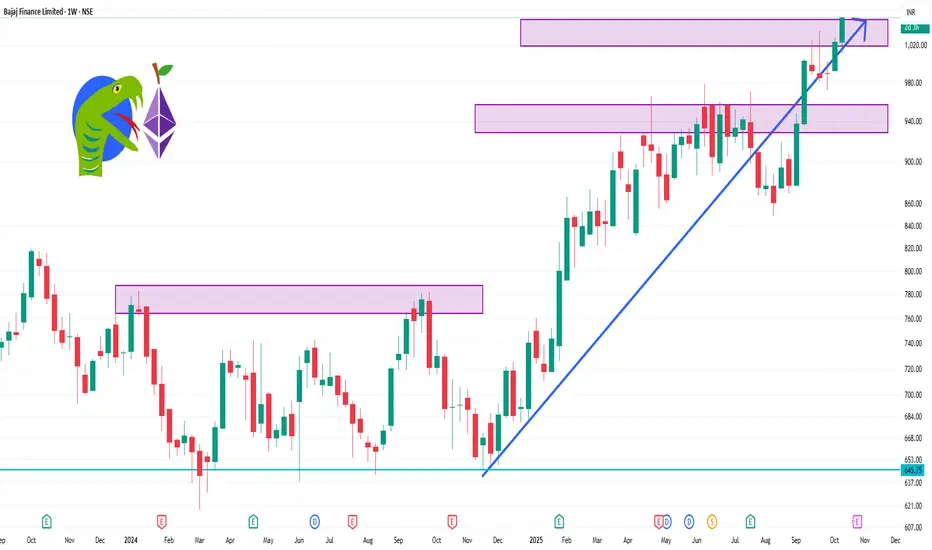
BAJFINANCE 1 Week Time Frame 📈 Weekly Technical Levels
Resistance Levels: ₹1,036.75 (short-term), ₹1,023.85 (mid-term)
Support Levels: ₹1,009.85 (short-term), ₹938 (mid-term), ₹816.86 (long-term)
These levels suggest that the stock is trading above its key support zones, indicating a potential continuation of the uptrend.
🔧 Key Technical Indicators
RSI (14): 66.57 — approaching overbought territory, but still room for upward movement.
MACD: 20.92 — indicates bullish momentum.
ADX (14): 31.50 — suggests a strong trend.
Supertrend: ₹973.61 — currently bullish.
Parabolic SAR: ₹982.79 — supports the bullish trend.
Stochastic Oscillator: 84.34 — near overbought levels, indicating potential for a pullback.
Commodity Channel Index (CCI): +131.56 — suggests the stock is overbought.
These indicators collectively point towards a strong bullish trend, though caution is advised as some indicators approach overbought conditions.
COALINDIA 1 Day Time Frame 📊 Intraday Support & Resistance Levels
Immediate Support: ₹383.05 – ₹383.35
Immediate Resistance: ₹384.03 – ₹387.12
Pivot Point: ₹384.03
📈 Technical Indicators
Relative Strength Index (RSI): Approximately 45–55, indicating a neutral to slightly bullish trend.
Moving Average Convergence Divergence (MACD): Currently showing a bearish crossover, suggesting a potential downward momentum.
50-Day Simple Moving Average (SMA): ₹385.10
200-Day SMA: ₹385.70
🔍 Market Context
The Indian stock market opened higher on Wednesday, October 15, 2025, snapping a two-day losing streak. The Sensex and Nifty tracked gains in global markets, with PSU banks and realty stocks leading the rally.
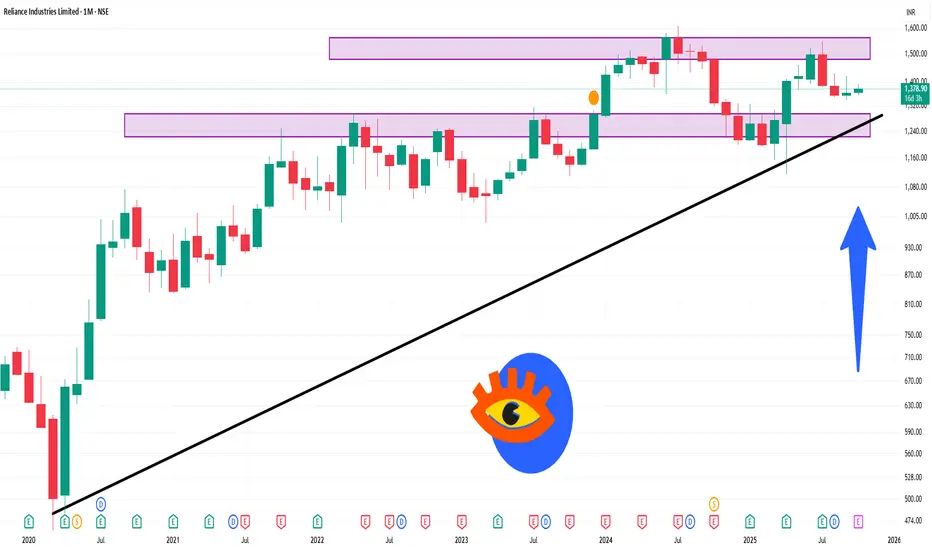
RELIANCE 1 Month Time Frame📊 Monthly Pivot Levels (October 2025)
Based on monthly pivot point analysis, key technical levels are as follows:
Pivot Point: ₹1,375.53
Resistance Levels: ₹1,410.47 (R1), ₹1,456.93 (R2), ₹1,491.87 (R3)
Support Levels: ₹1,329.07 (S1), ₹1,294.13 (S2), ₹1,247.67 (S3)
The pivot point of ₹1,375.53 indicates a neutral sentiment. Trading above this level may suggest bullish momentum, while trading below it could indicate bearish pressure.
📈 Technical Indicators Summary
RSI (14-day): Approximately 50.55, indicating a neutral market condition.
MACD: 0.190, suggesting a mild bullish trend.
Moving Averages: Neutral outlook with equal buy and sell signals across various timeframes.
LT 1 Day Time Frame 📈 Current Price Snapshot
Current Price: ₹3,827.25
Day's Range: ₹3,744.30 – ₹3,841.40
52-Week Range: ₹2,965.30 – ₹3,963.00
Market Cap: ₹5.27 lakh crore
Volume: 1,160,071 shares
The stock is trading near its 52-week high, reflecting strong bullish momentum.
📊 Technical Indicators
Relative Strength Index (RSI): Approximately 70, indicating the stock is in overbought territory.
Moving Averages:
50-Day MA: ₹3,650
200-Day MA: ₹3,500
MACD: The MACD line is above the signal line, confirming upward momentum.
Pivot Points:
Support: ₹3,744
Resistance: ₹3,841
The stock is trading above its moving averages, indicating a strong bullish trend.
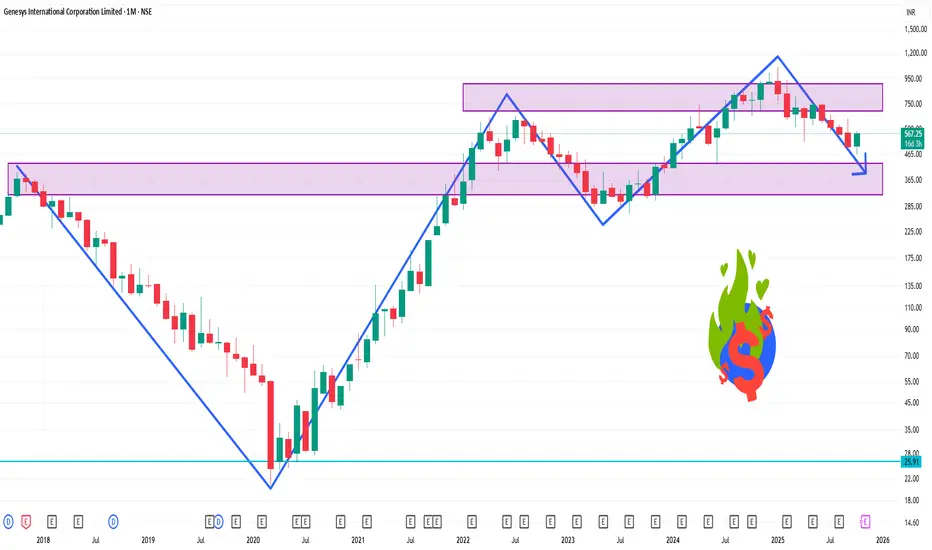
GENESYS 1 Month Time Frame 📉 1-Month Performance
Price Change: The stock has declined by approximately 15.81% over the past month.
INDmoney
Recent Trend: Despite the monthly decline, the stock experienced a significant uptick today, closing at ₹575.55, up from ₹479.65.
📊 Technical Indicators (1-Month View)
Relative Strength Index (RSI): The RSI is at 23.10, indicating that the stock is in the oversold territory and may be due for a rebound.
Moving Averages
20-Day Exponential Moving Average (EMA): ₹526.60 (suggests a sell signal as the current price is below this level).
50-Day EMA: ₹565.84 (also indicates a sell signal).
100-Day EMA: ₹608.98 (further confirming the downtrend).
MACD: The Moving Average Convergence Divergence (MACD) is at -28.90, suggesting a bearish trend.
Pivot Points:
Resistance Levels: R1: ₹491.28, R2: ₹505.12, R3: ₹513.33.
Support Levels: S1: ₹469.23, S2: ₹461.02, S3: ₹447.18.
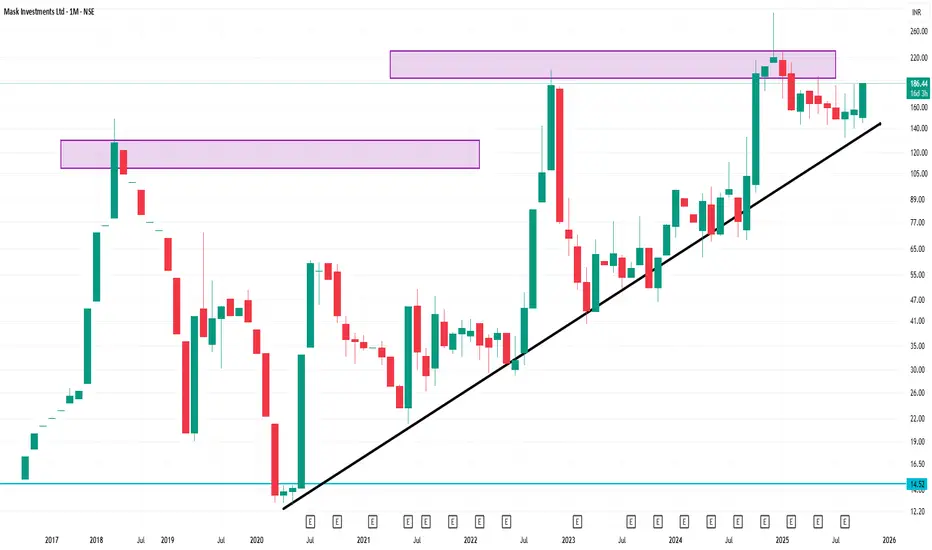
MASKINVEST 1 Month Time Frame 📈 1-Month Performance Overview
Closing Price (Sept 15, 2025): Approximately ₹151.64
Closing Price (Oct 15, 2025): ₹186.44
Price Change: +₹34.80
Percentage Gain: +22.9%
📊 Technical Insights
TradingView's technical analysis indicates a Buy signal for Mask Investments Ltd over a 1-month timeframe.
🔍 Additional Metrics
52-Week High: ₹292.46
52-Week Low: ₹103.14
Market Capitalization: Approximately ₹56.89 crore
P/E Ratio: 21,071.17
P/B Ratio: 0.48
LODHA 1 Day View 📈 Current Price & Trend
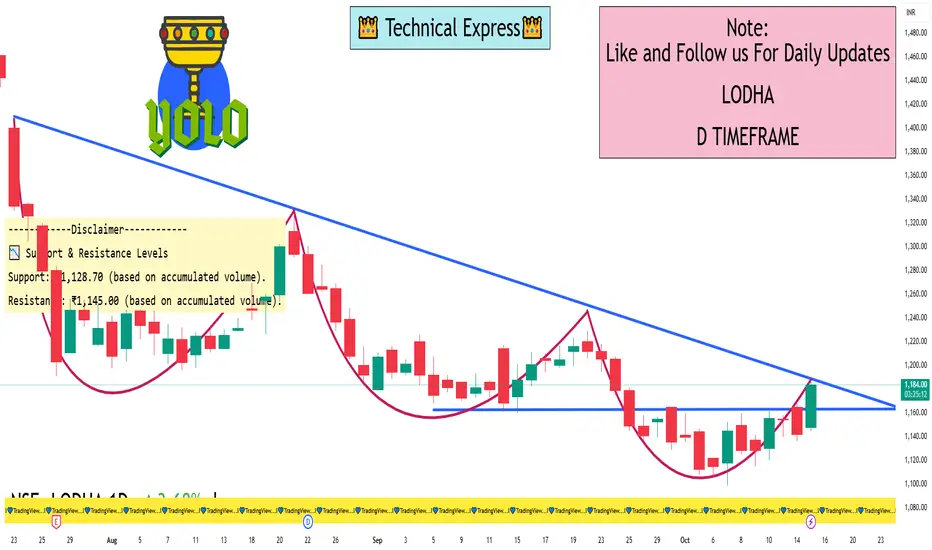
Current Price: ₹1,184.90
Day's Range: ₹1,136.50 – ₹1,168.00
Previous Close: ₹1,142.00
Price Change: +₹42.90 (+3.77%)
The stock has shown a positive movement today, indicating a potential short-term bullish trend.
🔍 Technical Indicators
RSI (14-day): Approximately 51, suggesting a neutral momentum with no immediate overbought or oversold conditions.
MACD: Currently below the signal line, indicating a bearish short-term momentum.
Moving Averages:
Short-term (14-day): Currently above the long-term (200-day) moving average, suggesting a bullish short-term trend.
Long-term (200-day): The price is trading below the long-term moving average, indicating a bearish long-term trend.
Stochastic Oscillator: Reading between 45 and 55, suggesting a neutral market condition.
📌 Support & Resistance Levels
Support: ₹1,128.70 (based on accumulated volume)
Resistance: ₹1,145.00 (based on accumulated volume)
📊 Trading Outlook
The stock is expected to trade within a range of ₹1,126.95 to ₹1,157.05, with a potential move of ±2.67% from the last closing price.
⚠️ Risk & Outlook
Risk: Medium, with average daily volatility of approximately 2.77%.
Outlook: The stock is showing a neutral to slightly bullish short-term outlook, with mixed signals from various indicators. Traders should monitor key support and resistance levels around ₹1,128.70 and ₹1,145.00, respectively.
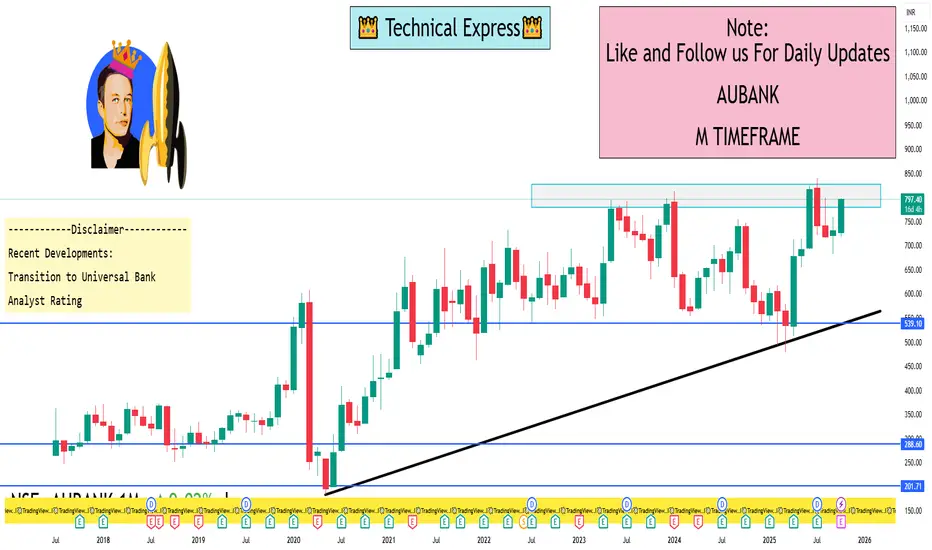
AUBANK 1 Month View 1-Month Price Range (Sep 15 – Oct 15, 2025):
High: ₹798.75
Low: ₹694.85
Closing Price on Oct 15: ₹791.90
Over the past month, the stock has gained approximately 8.55%.
Recent Developments:
Transition to Universal Bank: AU Small Finance Bank has received in-principle approval from the Reserve Bank of India to transition into a universal bank, allowing it to expand its services and operations under a broader regulatory framework.
Analyst Rating: Jefferies has initiated coverage with a "Buy" rating and a target price of ₹910, suggesting a potential upside of 19%.
Position Sizing for Different Trading Strategies1. Why Position Sizing Matters
Position sizing directly affects risk management. Even a profitable strategy can lead to account depletion if positions are too large relative to your capital. Conversely, if positions are too small, your returns will be suboptimal. Proper position sizing ensures that no single trade can jeopardize your entire trading account.
Key reasons position sizing matters:
Risk Control: Limits losses on any single trade.
Consistency: Ensures uniform risk exposure across trades.
Psychological Comfort: Helps traders manage emotions and stick to their strategy.
Maximizing Returns: Optimizes capital usage without taking excessive risk.
2. Core Concepts in Position Sizing
Before diving into strategy-specific sizing, understanding core concepts is essential:
2.1 Risk per Trade
This is the percentage of your total capital you are willing to risk on a single trade. Commonly, traders risk 1–3% per trade, depending on their risk tolerance.
2.2 Stop Loss
Stop loss defines the price at which you will exit a trade to prevent further losses. It directly influences position size: the closer the stop, the larger the position you can take, and vice versa.
2.3 Volatility
More volatile assets require smaller positions, as they are prone to larger price swings. Measures like Average True Range (ATR) help determine an appropriate position size relative to market volatility.
2.4 Account Size
Your total trading capital determines the absolute value of positions. Traders with smaller accounts may use tighter risk management rules to avoid blow-ups.
2.5 Reward-to-Risk Ratio
The potential reward compared to the risk taken affects sizing decisions. Higher reward-to-risk ratios may justify larger position sizes.
3. Position Sizing Methods
Several mathematical methods help determine the ideal position size:
3.1 Fixed Dollar Risk
You risk a fixed amount of money per trade regardless of the asset. For example, a trader risking $100 per trade will always limit losses to $100, whether trading a volatile stock or a low-volatility ETF.
3.2 Fixed Fractional
This method risks a fixed percentage of capital on each trade, which adjusts with account growth or decline. It is widely used due to its simplicity and adaptability.
Example:
With $50,000 capital and a 2% risk, the maximum loss per trade is $1,000. If the risk per share is $5, the position size is $1,000 ÷ $5 = 200 shares.
3.3 Volatility-Based Position Sizing
Adjusts position size according to market volatility. Higher volatility → smaller position size, lower volatility → larger position size. Tools like ATR are commonly used.
4. Position Sizing for Day Trading
Day traders enter and exit positions within the same day, often making multiple trades daily. Because trades are short-term and volatility can be high, risk management is crucial.
Typical Risk per Trade: 0.5–1% of account
Stop Loss: Tight, often based on intraday support/resistance or ATR
Position Size Method: Fixed fractional or volatility-based
Example:
If a trader has $100,000 and risks 1% ($1,000) per trade, with a $2 intraday stop, the position size is $1,000 ÷ $2 = 500 shares.
Key Tips for Day Traders:
Avoid over-leveraging during volatile sessions
Use intraday ATR for adjusting position size dynamically
Focus on liquidity to ensure smooth entry and exit
5. Position Sizing for Swing Trading
Swing traders hold positions from a few days to weeks to capture medium-term price moves. Risk is usually higher than day trading because positions are exposed to overnight and weekend gaps.
Typical Risk per Trade: 1–2% of account
Stop Loss: Wider than day trading, set based on technical levels
Position Size Method: Fixed fractional with ATR adjustment
Example:
A swing trader with $50,000 account risks 2% ($1,000). If the stop loss is $5 per share, the position size is 200 shares. For a stock with higher volatility (stop loss $10), the position size reduces to 100 shares.
Key Tips for Swing Traders:
Factor in overnight risk and earnings events
Adjust positions for volatility spikes
Diversify positions across sectors to reduce correlated risk
6. Position Sizing for Trend Following
Trend followers aim to ride long-term trends, often holding positions for weeks or months. These traders are willing to tolerate larger drawdowns in exchange for higher profits.
Typical Risk per Trade: 1–3%
Stop Loss: Wide, based on trend-defining support/resistance
Position Size Method: Volatility-based or fixed fractional with trailing stops
Example:
For a $100,000 account, a trend follower might risk 2% ($2,000) per trade. Using ATR for volatility measurement, a higher ATR reduces position size to prevent excessive risk during volatile trends.
Key Tips for Trend Followers:
Use volatility-adjusted stops to avoid getting stopped out prematurely
Scale into positions as trend strength confirms
Monitor correlation to avoid overexposure in the same market
7. Position Sizing for Scalping
Scalping involves making dozens or hundreds of trades per day to exploit small price movements. Risk per trade is tiny, but leverage and trade frequency increase overall risk.
Typical Risk per Trade: 0.1–0.25%
Stop Loss: Very tight, often a few ticks or cents
Position Size Method: Fixed fractional with tight risk controls
Example:
A scalper with $50,000 may risk 0.2% ($100) per trade. If stop loss is $0.10, the position size is $100 ÷ $0.10 = 1,000 shares/contracts.
Key Tips for Scalpers:
Execution speed and tight spreads are crucial
Monitor cumulative risk across multiple trades
Avoid trading during illiquid or volatile news events
8. Position Sizing for Options Trading
Options offer leverage, which makes position sizing critical. Option traders often risk a percentage of the premium or account rather than the underlying stock price.
Typical Risk per Trade: 1–3%
Stop Loss: Based on option premium or underlying price movement
Position Size Method: Fixed fractional or risk-defined based on delta
Example:
If a trader has $50,000 and risks 2% ($1,000) per trade on call options costing $5 each, they could buy 200 contracts.
Key Tips for Options Traders:
Factor in implied volatility changes
Avoid allocating too much capital to high-risk out-of-the-money options
Consider position delta to manage exposure to the underlying asset
9. Adjusting Position Size Based on Market Conditions
Market conditions influence position sizing significantly:
High Volatility: Reduce position size to limit risk
Low Volatility: Increase position size cautiously
Correlated Assets: Adjust sizes to prevent overexposure
Economic Events: Reduce exposure during major announcements
Dynamic position sizing is a hallmark of professional traders, allowing them to adapt to changing market environments without compromising risk control.
10. Common Mistakes in Position Sizing
Even experienced traders make mistakes with position sizing:
Ignoring Risk: Taking trades without defining risk can lead to catastrophic losses.
Overleveraging: Using excessive leverage magnifies small losses.
Inconsistent Sizing: Risking different percentages randomly undermines risk management.
Neglecting Volatility: Treating volatile assets the same as stable ones leads to oversized positions.
Not Scaling: Failing to adjust position size as account grows or shrinks.
Avoiding these mistakes is essential for long-term success.
11. Tools and Software for Position Sizing
Modern traders often rely on tools to calculate position size automatically:
Trading Platforms: MetaTrader, ThinkorSwim, NinjaTrader
Risk Calculators: Many online calculators allow inputs for account size, stop loss, and risk per trade
Excel Sheets: Customizable for advanced traders using multiple strategies
These tools save time and prevent errors in manual calculation.
12. Psychological Benefits of Proper Position Sizing
Position sizing is not only about numbers; it also affects trader psychology:
Confidence: Knowing risk is controlled reduces stress.
Discipline: Helps traders stick to strategy without emotional interference.
Consistency: Prevents revenge trading after losses.
A trader who masters position sizing often experiences steadier account growth and lower emotional volatility.
13. Summary and Best Practices
Position sizing is a cornerstone of risk management and long-term trading success. Key takeaways:
Determine your risk per trade relative to account size.
Adjust size based on stop loss, volatility, and trading strategy.
Use fixed fractional, volatility-based, or Kelly criterion methods.
Day traders use tight stops and small risks, swing traders use moderate risk and wider stops, trend followers rely on volatility-based sizing, and scalpers use very small per-trade risk.
Avoid common mistakes like ignoring volatility, overleveraging, or inconsistent sizing.
Employ tools and calculators to ensure accuracy.
Remember that position sizing protects both capital and mental composure.
By combining the right strategy with disciplined position sizing, traders can survive losses, ride profits, and grow their accounts consistently over time.
Conclusion:
Position sizing is the unsung hero of successful trading. It is what separates consistent traders from those who rely solely on prediction and luck. Whether you are a day trader, swing trader, trend follower, scalper, or options trader, understanding and applying proper position sizing can dramatically improve your risk-adjusted returns. Mastering this skill is not optional—it is essential for long-term profitability and trading survival.