ZUARI 1 Week Time Frame 📊 Current Price Snapshot
The stock is trading around ₹330‑₹331 (approx) recently — showing strength above many moving averages.
📈 Weekly Time Frame – Key Levels
🔹 Support (Weekly)
₹303 – ₹305 — First major support zone (short‑term weekly) based on classic pivot & S2/S1 cluster.
₹300 – ₹302 — Secondary support (previous weekly pivot levels).
₹295 – ₹298 — Broader weekly support if deeper correction occurs.
📍 Important: These support levels align with pivot calculations and moving averages clustered below the current price.
🔺 Resistance (Weekly)
₹314 – ₹316 — Immediate resistance cluster seen on pivot and classic weekly resistance area.
₹318 – ₹320 — Next upside zone — breakout above this adds bullish reinforcement.
₹324 – ₹326+ — Higher weekly resistance if momentum sustains.
📍 Pivot calculations (classic & Fibonacci) place weekly R1 ~318, R2 ~324 and R3 near ~326‑329 zone.
📊 Moving Averages & Oscillators (Weekly Context)
Price above 20, 50, 100 & 200‑day EMAs indicating weekly bullish bias.
RSI ~57‑69 range — showing strength but not extreme overbought across short‑term weekly context.
Some oscillators show near‑neutral to bullish signals — supportive of upside continuation if resistance levels break.
Tradinggold
Institutional Trading Win: Big Money Dominates Financial MarketsIntroduction: Understanding Institutional Trading Power
Institutional trading refers to market activity conducted by large organizations such as mutual funds, hedge funds, pension funds, insurance companies, investment banks, and sovereign wealth funds. These institutions control massive pools of capital and operate with sophisticated strategies, advanced technology, and deep market access. When institutions “win” in the market, it is not by chance—it is the result of structural advantages, superior information flow, disciplined execution, and long-term planning. Understanding how institutional trading works is crucial for grasping modern market dynamics and for retail traders aiming to align with smart money rather than trade against it.
Who Are Institutional Traders?
Institutional traders represent entities that manage money on behalf of clients or beneficiaries. Their primary objective is not short-term speculation but consistent returns with controlled risk. Unlike retail traders, institutions must adhere to mandates, regulations, and risk frameworks. Examples include:
Mutual funds managing public investments
Hedge funds employing aggressive alpha-seeking strategies
Pension funds focused on long-term capital preservation
Banks and proprietary desks providing liquidity and market-making
Their sheer size means their trades can move markets, influence price trends, and define support and resistance zones.
Capital Advantage: Size That Shapes Markets
The most obvious institutional advantage is capital. Institutions trade in volumes that far exceed retail participation. This allows them to accumulate positions over time, absorb market volatility, and withstand temporary drawdowns. Large capital enables:
Position scaling across multiple price levels
Long-term holding without emotional pressure
Strategic accumulation during low-volatility phases
Because of this, institutions often create the very trends that retail traders attempt to follow.
Information Edge and Research Depth
Institutional wins are driven by superior research. Institutions employ teams of economists, analysts, quants, and sector specialists. Their research covers:
Macroeconomic trends (inflation, interest rates, GDP)
Corporate fundamentals (earnings, balance sheets, cash flow)
Sector rotation and inter-market analysis
Policy decisions and global capital flows
This depth of analysis allows institutions to position themselves well before information becomes mainstream.
Technology and Algorithmic Execution
Modern institutional trading relies heavily on technology. Algorithms help institutions execute large orders without disturbing the market. Instead of placing one large order, they break it into smaller chunks using:
VWAP (Volume Weighted Average Price)
TWAP (Time Weighted Average Price)
Iceberg and dark pool executions
This stealth execution enables institutions to enter and exit positions efficiently while minimizing slippage and detection.
Market Structure Knowledge and Liquidity Control
Institutions understand market microstructure better than any participant. They know where liquidity resides—near highs, lows, round numbers, and breakout zones. Retail traders often place stop-loss orders in predictable areas, and institutions use these zones to build positions.
This leads to phenomena like:
False breakouts
Stop-loss hunting
Liquidity sweeps before trend continuation
What appears as manipulation is often institutional positioning driven by liquidity needs.
Psychological Discipline and Risk Management
Institutional trading success is built on discipline. Decisions are rule-based, not emotional. Risk management is central to every trade, including:
Defined maximum loss per position
Portfolio diversification across assets
Hedging using derivatives
Scenario-based stress testing
Retail traders often focus on entry points, while institutions focus on risk first, return second. This mindset difference is a key reason institutions win consistently.
Time Horizon Advantage: Patience Beats Speed
Institutions trade across multiple time horizons—intraday, swing, positional, and long-term. Unlike retail traders chasing quick profits, institutions are patient. They may hold positions for months or years if the macro thesis remains intact.
This patience allows institutions to:
Ride major trends
Ignore short-term noise
Benefit from compounding
Markets reward patience, and institutions are structured to wait.
Institutional Footprints in Price Action
Even without access to proprietary data, institutional activity leaves footprints on charts. These include:
Strong volume spikes at key levels
Consolidation before big moves
Breakouts followed by retests
Sustained trends with shallow pullbacks
Smart retail traders learn to read price action and volume to align with institutional flows rather than predict tops and bottoms.
Why Retail Traders Often Lose Against Institutions
Retail traders usually lose not because markets are unfair, but because they lack structure. Common mistakes include:
Overleveraging
Emotional trading
Chasing breakouts without confirmation
Ignoring higher time-frame trends
Institutions exploit these behavioral patterns, intentionally or unintentionally, as part of normal market functioning.
How Retail Traders Can Benefit from Institutional Wins
Retail traders cannot compete with institutions, but they can follow institutional direction. Strategies include:
Trading with the trend, not against it
Using higher time-frame levels
Focusing on liquidity zones
Being patient with entries and exits
When retail traders align their trades with institutional momentum, probabilities improve significantly.
Conclusion: Institutional Trading Wins Define Market Reality
Institutional trading wins are not about beating retail traders—they are about capital efficiency, discipline, and strategic execution. Institutions shape market trends, control liquidity, and define price direction through informed decision-making and advanced infrastructure. For anyone participating in financial markets, understanding institutional behavior is no longer optional—it is essential.
Markets move not on opinions, but on capital. And institutional capital, when deployed intelligently, almost always wins in the long run.
Part 4 Learn Institutional Trading Advantages of Options
1. Limited Risk for Buyers
Risk is capped at premium paid.
2. Leverage
You control large positions with small capital.
3. Flexibility
Trade direction, volatility, or time.
4. Income Generation
Option sellers earn steady premium income.
5. Hedging Capability
Protect long-term investments through puts.
A Complete Guide to High-Speed Intraday TradingScalping Bank Nifty is one of the most popular intraday trading approaches in the Indian stock market. Bank Nifty, being a highly volatile index comprising major banking stocks, offers frequent price movements that attract short-term traders. Scalping focuses on capturing small but consistent profits by entering and exiting trades within minutes, sometimes even seconds. This strategy demands discipline, speed, and a deep understanding of market behavior.
Understanding Bank Nifty Scalping
Bank Nifty scalping is a form of intraday trading where traders aim to profit from small price fluctuations during market hours. Unlike positional or swing trading, scalping does not rely on large trends. Instead, it capitalizes on momentum bursts, liquidity zones, and short-term imbalances between buyers and sellers. Because Bank Nifty has high volume and tight bid-ask spreads, it is well-suited for this approach.
Scalpers usually trade Bank Nifty futures or options, especially weekly options, due to their liquidity and fast price movements. The goal is not to catch the entire move but to take a small portion repeatedly throughout the day.
Why Bank Nifty Is Ideal for Scalping
Bank Nifty stands out for scalping due to its volatility and responsiveness to market news, interest rate expectations, and global cues. Banking stocks react quickly to changes in bond yields, RBI announcements, and global financial trends. This creates sharp intraday moves, which are ideal for scalpers.
Another reason is liquidity. High liquidity ensures smooth order execution with minimal slippage, which is crucial when trades last only a few minutes. Scalping depends heavily on precision, and Bank Nifty provides that environment better than many other indices.
Time Frames Used in Bank Nifty Scalping
Scalpers typically use very small time frames such as 1-minute, 3-minute, or 5-minute charts. These charts help identify quick entry and exit points. Higher time frames like 15-minute or 30-minute charts are often used only to understand the broader intraday trend or key support and resistance levels.
The opening hour of the market (9:15 AM to 10:30 AM) is especially important for Bank Nifty scalping, as volatility and volume are usually highest during this period. The last hour of trading can also offer good scalping opportunities.
Key Indicators for Bank Nifty Scalping
Scalping relies on a limited number of fast-reacting indicators rather than complex setups. Commonly used indicators include moving averages such as 9 EMA and 20 EMA, which help identify short-term trend direction. When price stays above these averages, scalpers look for buy setups; when below, sell setups are preferred.
Other popular tools include VWAP (Volume Weighted Average Price), which acts as an intraday equilibrium level. Price behavior around VWAP often provides high-probability scalping trades. Oscillators like RSI or Stochastic are also used to spot short-term overbought or oversold conditions, but they must be interpreted carefully in fast markets.
Support and Resistance in Scalping
Support and resistance levels play a critical role in Bank Nifty scalping. These levels can be derived from previous day high and low, opening range, pivot points, or round numbers. Scalpers look for quick reversals or breakouts at these zones.
For example, if Bank Nifty approaches a strong resistance level with weakening momentum, a short scalp may be planned with a tight stop-loss. Conversely, a clean breakout with volume can offer a momentum scalp in the direction of the breakout.
Role of Price Action
Price action is the backbone of successful scalping. Candlestick patterns such as inside bars, pin bars, and strong momentum candles help scalpers read market intent. Instead of predicting, scalpers react to what price is doing in real time.
In Bank Nifty, fake breakouts and sudden spikes are common. Reading price action helps traders avoid traps and align with institutional moves. Scalping is less about being right and more about managing risk while following price behavior.
Risk Management in Bank Nifty Scalping
Risk management is the most important aspect of scalping. Since scalpers take multiple trades in a single session, even small losses can accumulate quickly if not controlled. A strict stop-loss is non-negotiable. Most scalpers risk a very small portion of their capital on each trade.
Risk-reward ratios in scalping are usually modest, such as 1:1 or 1:1.5, but consistency matters more than large wins. Overtrading, revenge trading, and increasing position size after losses are common mistakes that must be avoided.
Psychology and Discipline
Scalping Bank Nifty is mentally demanding. Traders must make quick decisions and accept frequent small losses as part of the process. Emotional control is essential, as hesitation or fear can lead to missed entries or poor exits.
Discipline in following a predefined trading plan separates successful scalpers from unsuccessful ones. Patience is required to wait for high-probability setups, even though opportunities appear frequently. Scalping is not about trading all the time, but about trading the right moments.
Common Mistakes to Avoid
One common mistake is trading without a clear setup. Because Bank Nifty moves fast, beginners often enter trades impulsively. Another mistake is ignoring market conditions. On low-volatility or range-bound days, scalping becomes more challenging and requires adjusted expectations.
Using excessive leverage is also risky. While leverage can amplify profits, it can magnify losses even faster. Successful scalpers focus on longevity and capital protection rather than chasing quick money.
Conclusion
Scalping Bank Nifty is a powerful intraday trading strategy for those who understand market structure, price action, and risk management. It offers frequent opportunities but demands high discipline, focus, and emotional control. With the right mindset, proper tools, and consistent practice, traders can develop a structured approach to Bank Nifty scalping.
However, scalping is not suitable for everyone. It requires screen time, quick execution, and the ability to handle pressure. For traders willing to invest time in learning and refining their skills, Bank Nifty scalping can become a consistent and rewarding trading style in the Indian stock market.
Momentum Trading SecretsHow Traders Capture Powerful Market Moves
Momentum trading is one of the most popular and effective trading styles in financial markets. It is based on a simple but powerful idea: stocks, indices, or other assets that are moving strongly in one direction tend to continue moving in that direction for some time. Momentum traders do not try to predict bottoms or tops; instead, they ride the strength of an existing trend and exit when momentum weakens. Below is a detailed explanation of momentum trading secrets, strategies, and mindset, explained in depth.
1. Understanding the Core Concept of Momentum Trading
Momentum trading focuses on price strength, not valuation. Unlike value investors who look for underpriced stocks, momentum traders look for assets that are already performing well. The logic behind this approach is rooted in market psychology. When prices rise, more traders notice the move, news coverage increases, and buying pressure intensifies, creating a self-reinforcing cycle.
Momentum can exist in:
Stocks
Indices (like Nifty or Bank Nifty)
Commodities
Currencies
Cryptocurrencies
The key secret is recognizing that price action reflects collective market belief, and momentum traders align themselves with that belief rather than fighting it.
2. Identifying High-Momentum Stocks and Assets
One of the biggest secrets of successful momentum trading is stock selection. Not all assets move with strong momentum. Traders often scan the market for:
Stocks making new 52-week highs
Assets breaking above key resistance levels
Strong volume expansion alongside price movement
Sectors showing relative strength compared to the broader market
Momentum traders often focus on sector leadership. For example, if banking or IT stocks are outperforming the market, chances are that the strongest momentum trades will be found within those sectors.
3. Role of Volume: The Fuel Behind Momentum
Price alone is not enough. Volume is the fuel that confirms momentum. A price breakout with low volume may fail, while a breakout with high volume often signals strong institutional participation.
Key volume-based insights include:
Rising prices + rising volume = healthy momentum
Rising prices + falling volume = weakening momentum
Sudden volume spikes often indicate the start of a new momentum phase
Experienced momentum traders always check volume before entering a trade. This is one of the most overlooked but powerful secrets.
4. Technical Indicators That Reveal Momentum
Momentum trading heavily relies on technical analysis. Some of the most commonly used indicators include:
Relative Strength Index (RSI): Helps identify strong momentum when RSI stays above 60–70 during an uptrend.
Moving Averages: Price staying above short-term and medium-term moving averages indicates strength.
MACD: Confirms momentum shifts and trend continuation.
Rate of Change (ROC): Measures how fast price is moving.
The real secret is not using too many indicators but understanding how price behaves around them. Indicators should support price action, not replace it.
5. Entry Timing: Buying Strength, Not Weakness
A common mistake beginners make is trying to buy at the lowest price. Momentum traders do the opposite: they buy strength. Typical momentum entries occur:
On breakouts above resistance
After short consolidations in an uptrend
On pullbacks to moving averages within a strong trend
Patience is critical. Momentum traders wait for confirmation rather than guessing. Entering too early often leads to false breakouts and losses.
6. Risk Management: Protecting Capital Is the Real Secret
Momentum trading can generate large profits, but it also comes with sharp reversals. This is why risk management is the biggest secret behind long-term success.
Key principles include:
Always using stop-loss orders
Risking only a small percentage of capital per trade
Exiting quickly when momentum fails
Never averaging down on losing momentum trades
Successful traders understand that small losses are part of the game, but big losses are unacceptable.
7. Riding Winners and Letting Profits Run
Momentum traders differ from short-term scalpers because they allow winners to grow. Once momentum is established, the goal is to stay in the trade as long as the trend remains intact.
This often involves:
Trailing stop-losses
Partial profit booking
Holding positions until momentum indicators weaken
One of the biggest secrets is emotional discipline. Many traders exit winning trades too early due to fear, while momentum traders trust their system and let the market reward them.
8. Market Psychology and Crowd Behavior
Momentum trading works because markets are driven by human emotions like fear and greed. When prices rise, fear of missing out (FOMO) pushes more participants to buy. When prices fall, panic accelerates selling.
Understanding crowd psychology helps traders:
Avoid chasing extended moves blindly
Recognize exhaustion points
Stay calm during pullbacks
Momentum traders do not react emotionally; they react systematically.
9. Adapting Momentum Strategies to Market Conditions
Momentum does not work equally well in all market phases. Strong trending markets favor momentum strategies, while sideways or choppy markets reduce their effectiveness.
Smart momentum traders:
Reduce position size during volatile periods
Avoid overtrading in range-bound markets
Focus on fewer, high-quality setups
Adaptability is a hidden secret that separates consistent traders from inconsistent ones.
10. Discipline and Consistency: The Ultimate Momentum Secret
The final and most important secret is discipline. Momentum trading success does not come from one big trade but from repeating the same process over and over.
This includes:
Following predefined rules
Maintaining a trading journal
Reviewing mistakes regularly
Staying patient and focused
Momentum trading rewards those who are consistent, emotionally stable, and process-driven.
Conclusion
Momentum trading is not about predicting the future; it is about aligning with the present strength of the market. By focusing on strong price moves, confirming them with volume, managing risk carefully, and maintaining emotional discipline, traders can unlock the true potential of momentum strategies. The real secrets are not hidden indicators or complex systems, but clarity, patience, and discipline. When applied correctly, momentum trading can become a powerful tool for consistent growth in any market environment.
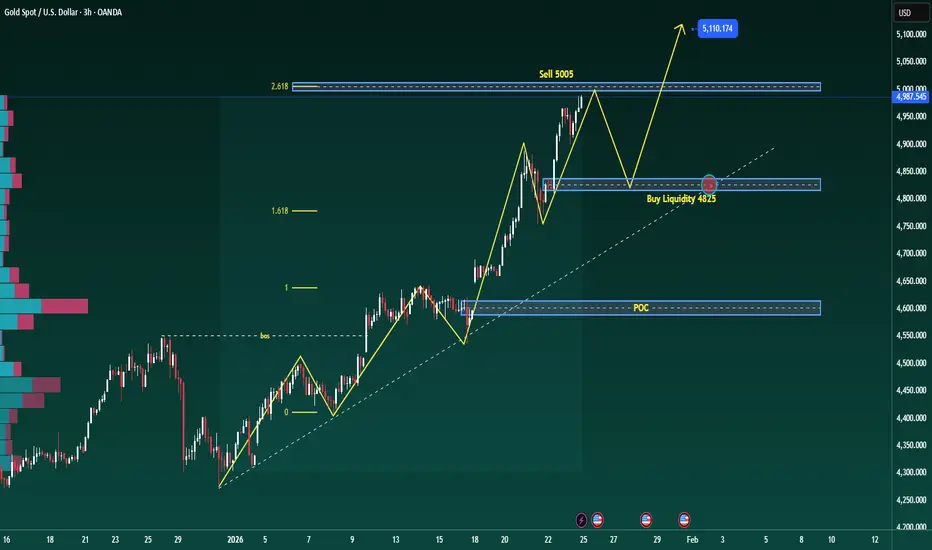
XAUUSD (H4) – Weekly Outlook (Dec 22–26)Buy the dip inside the channel, watch for a short-term correction after Wave 5
Strategy summary for next week
On the H4 chart, gold is still trading inside a mid-term rising channel. However, the wave structure suggests Wave 5 is likely finished, so next week I’m focusing on two main ideas:
Mid-term BUY bias, but only if price pulls back to a better liquidity area.
Short-term SELL correction, triggered only with confirmation (break below 4309) on the lower timeframe.
1) Technical view: Uptrend channel holds, but a correction is likely
Price is currently in the upper half of the channel → not an ideal spot to chase buys.
The chart highlights two key liquidity areas:
Liquidity Sell Zone near 4433 (upside target, only valid if price builds a clean path higher).
Strong Liquidity around 4254 (the area where I want to reload mid-term buys).
Meaning: The channel is still the main framework, but if Wave 5 has finished, a pullback/correction is normal before the next directional leg.
2) Mid-term plan (priority): BUY at channel liquidity
✅ Buy zone: 4250 – 4255
SL: 4240
Expectation: A rebound back toward the channel’s midline, and if momentum returns, continuation toward 4433.
Logic: This is the “better price” area aligned with the channel structure + key liquidity. Risk-reward is far cleaner than buying at the highs.
3) Short-term plan: SELL the correction only after confirmation
Because Wave 5 looks completed, a corrective sell is valid — but I only want to sell after the market confirms on the lower timeframe:
✅ Bearish confirmation: break below 4309
After the break, prefer a sell on retest (no chasing).
A realistic correction target is a move back toward the 425x liquidity zone.
Note: This is a short-term correction trade and doesn’t conflict with the mid-term buy bias.
4) Fundamentals next week: Holiday liquidity = more sweeps
Dec 22–26 includes multiple European holidays, which often means thin liquidity: price may not trend hard, but it can still wick and sweep stops.
Geopolitical risk remains elevated: Israeli officials plan to brief Trump on potential new strikes on Iran — this can trigger sudden safe-haven flows into gold.
Action: Trade smaller, trade cleaner, and avoid getting trapped in abnormal volatility.
5) Execution checklist
Mid-term BUY: wait for 4250–4255, SL 4240.
Short-term SELL: only activate if 4309 breaks, then sell the retest on lower TF.
No FOMO in a low-volume holiday week.
Which scenario are you leaning into next week: buying 425x, or waiting for a 4309 breakdown to sell the correction?
XAUUSD (D1) – Weekly OutlookLana focuses on buying discounted zones, preparing for a possible ABC correction 💛
Quick summary
Higher timeframe (Daily): The main uptrend remains intact and structurally strong
Elliott Wave: Gold likely completed Wave 5, with a potential ABC corrective phase ahead to complete the cycle
Liquidity: Christmas week and year-end positioning may cause thin liquidity and irregular price movements
Plan: No chasing. Lana waits for price to reach key buy zones at 4250 and 4205
Market context for next week
Next week’s trading activity may slow down due to the Christmas holiday and preparations for the year-end. Thinner liquidity often leads to sharp, irregular moves and liquidity sweeps. At the same time, ongoing geopolitical tensions continue to support gold, while USD weakness adds further tailwinds. Because of this, Lana prefers a zone-based approach rather than trying to predict exact tops or bottoms.
Technical view on D1
On the Daily chart, gold still shows a solid bullish foundation. However, from an Elliott Wave perspective, price appears to be finishing the final impulsive wave (Wave 5). After a Wave 5 completion, a corrective ABC structure is common, allowing the market to rebalance before the next major move.
For Lana, a correction is not bearish—it’s an opportunity to look for higher-probability buys at discounted levels instead of chasing price at elevated zones.
Key levels Lana is watching
1) Primary buy zone: 4250
This level previously acted as a strong resistance and was decisively broken. Liquidity remains concentrated in this area, making it a favorable zone to look for buying opportunities if price pulls back.
2) Long-term buy zone: 4205 (POC from Volume Profile)
This is a major Point of Control where price previously accumulated heavily. If the ABC correction extends deeper, this zone becomes a key area for longer-term positioning.
Trading plan for next week (overview)
Early in the week, Lana will observe lower timeframes to confirm entries.
Priority is given to pullbacks toward 4250; deeper corrections may offer opportunities near 4205.
With thin holiday liquidity, Lana plans to:
reduce position size
keep stop losses clearly defined
scale out profits once price reacts from the zones
Lana’s note 🌿
Holiday weeks often bring fewer clean setups but more unexpected liquidity grabs. Lana will stay patient, trade selectively, and focus only on price levels that truly make sense.
This is Lana’s personal market view, not financial advice
Demat Account Secrets: The Hidden Mechanics That Smart Investors Use to Build Wealth
A Demat (Dematerialized) account is often introduced as a basic requirement for investing in stocks, mutual funds, ETFs, bonds, and other securities. Most investors see it as a simple storage place—an electronic locker that holds shares instead of physical certificates. However, behind this seemingly simple function lie several powerful “secrets” that experienced investors and traders quietly use to improve efficiency, reduce costs, manage risk, and grow wealth more intelligently. Understanding these hidden aspects of a Demat account can transform the way you participate in financial markets.
1. The Demat Account Is Not Just Storage—It’s a Control Center
The first secret is that a Demat account is not merely a holding account; it is the central control system of your entire investment life. Every buy, sell, corporate action, pledge, or transfer flows through it. When used wisely, it allows investors to track portfolio performance, monitor asset allocation, and maintain long-term discipline. Smart investors regularly analyze their Demat holdings to rebalance portfolios, identify overexposure to a single sector, and plan tax-efficient exits.
2. One Investor, Multiple Demat Accounts—A Strategic Advantage
Many investors assume they are allowed only one Demat account. In reality, you can open multiple Demat accounts (with different brokers or the same broker) as long as they are linked to the same PAN. Advanced investors use this to separate long-term investments from short-term trading, high-risk strategies from conservative holdings, or even family goals such as retirement and children’s education. This separation improves clarity, reduces emotional decision-making, and helps maintain discipline.
3. Cost Structures Can Quietly Eat Your Returns
A major Demat account secret lies in understanding hidden and visible costs. Annual Maintenance Charges (AMC), transaction fees, DP charges, pledging fees, and off-market transfer charges vary from broker to broker. Many beginners focus only on brokerage but ignore DP charges, which are applied every time shares are sold. Over time, these small costs compound and reduce net returns. Smart investors compare total cost structures and periodically review whether their Demat account still suits their trading or investing style.
4. Corporate Actions Are Silent Wealth Builders
Dividends, bonus shares, stock splits, rights issues, and mergers all reflect automatically in a Demat account. The secret is that many investors ignore these entries, while experienced investors track them carefully. Bonus shares and splits can significantly increase quantity holdings without additional investment. Rights issues often allow purchase of shares at discounted prices. Monitoring corporate actions helps investors unlock additional value that is often overlooked.
5. Demat Accounts Enable Collateral Power
One of the most underutilized features of a Demat account is pledging securities as collateral. Long-term investors can pledge shares or ETFs to get margin for trading or liquidity for short-term needs without selling their investments. This allows them to remain invested while still accessing funds. However, this power must be used cautiously, as excessive leverage can amplify losses. The secret is disciplined collateral usage—not blind borrowing.
6. Seamless Diversification Beyond Equity
Modern Demat accounts are gateways to multiple asset classes. Apart from equities, they support mutual funds, bonds, government securities, sovereign gold bonds (SGBs), REITs, InvITs, and ETFs. Investors who understand this use a single Demat account to build a diversified, multi-asset portfolio. This reduces reliance on any one market and smoothens long-term returns, especially during volatile phases.
7. Tax Efficiency Starts at the Demat Level
Every transaction in a Demat account is recorded and reported, making it the foundation of tax planning. Capital gains—short-term or long-term—are calculated based on Demat transaction history. Smart investors use this data to plan holding periods, harvest losses to offset gains, and time exits efficiently. Keeping Demat statements organized simplifies income tax filing and reduces the risk of errors or notices.
8. Power of Nomination and Transmission
A crucial but often ignored secret is the nomination facility in Demat accounts. Proper nomination ensures smooth transfer of securities to legal heirs without lengthy legal procedures. In the absence of nomination, families may face delays, documentation challenges, and emotional stress. Responsible investors update nominations regularly, treating the Demat account as an important part of estate planning.
9. Technology, Alerts, and Automation
Modern Demat platforms offer advanced tools such as price alerts, corporate action notifications, portfolio analytics, and automated investment features. Most investors barely scratch the surface of these tools. Those who master them gain a significant edge by reacting faster to market changes, tracking performance metrics, and avoiding emotional decisions. Automation, such as SIPs in ETFs or mutual funds through Demat, ensures consistency and discipline.
10. Security Is a Personal Responsibility
While brokers and depositories provide strong security systems, investors play a vital role in protecting their Demat accounts. Two-factor authentication, strong passwords, regular monitoring of transaction alerts, and avoiding phishing links are essential practices. Experienced investors treat Demat security with the same seriousness as bank security, knowing that a single lapse can be costly.
11. Long-Term Mindset Beats Frequent Churning
One of the deepest secrets of Demat account success is behavioral, not technical. Data shows that excessive buying and selling—enabled by easy Demat access—often reduces returns due to costs and emotional decisions. Investors who use their Demat account as a long-term wealth-building tool, rather than a constant trading machine, tend to outperform over time.
Conclusion
A Demat account is far more powerful than it appears on the surface. It is a financial command center that integrates investing, trading, tax planning, diversification, and risk management. The real “secrets” lie not in opening the account, but in understanding its features deeply and using them strategically. Investors who respect costs, leverage corporate actions, maintain discipline, and prioritize security turn their Demat accounts into long-term wealth engines. In contrast, those who treat it casually often miss opportunities hiding in plain sight. Mastering these Demat account secrets is not optional—it is essential for anyone serious about financial growth in modern markets.
Mid-Cap TradingUnlocking Multi-Bagger Moves Through Strategy, Patience, and Discipline
Mid-cap trading has long been regarded as the sweet spot for investors and traders seeking multi-bagger returns—stocks that can grow two, three, five, or even ten times over a period of time. Positioned between large, stable blue-chip companies and highly volatile small-cap stocks, mid-cap companies offer a unique balance of growth potential and relative stability. When approached with the right framework, mid-cap trading can become one of the most powerful wealth-creation strategies in the equity market.
Understanding Mid-Caps and Their Multi-Bagger Potential
Mid-cap stocks typically belong to companies with a market capitalization that reflects a business in transition. These firms have already proven their business models, survived early-stage risks, and built a customer base, yet they are still far from saturation. This stage of corporate life is crucial because earnings growth can accelerate rapidly when market share expands, operating leverage kicks in, and new business segments mature.
Multi-bagger moves often emerge when a mid-cap company transitions into a large-cap. During this phase, valuation re-rating plays a critical role. As profits grow consistently, institutional investors begin accumulating the stock, analysts initiate coverage, liquidity improves, and the market starts assigning higher valuation multiples. This combination of earnings growth and multiple expansion is what fuels explosive price appreciation.
Why Mid-Caps Outperform Over Market Cycles
Historically, mid-cap stocks have outperformed large-caps over long market cycles because they combine scalability with innovation. Large companies grow slowly due to size constraints, while small companies face survival risks. Mid-caps sit in the middle—big enough to withstand economic shocks but agile enough to adapt, innovate, and expand aggressively.
Another reason for outperformance is information inefficiency. Many mid-cap companies are under-researched compared to large-caps. This creates opportunities for traders and investors who are willing to dig deeper into financial statements, management commentary, and industry trends. When the broader market eventually recognizes the company’s true potential, prices adjust sharply upward.
Identifying Mid-Caps with Multi-Bagger Potential
Successful mid-cap trading begins with stock selection. Not every mid-cap becomes a multi-bagger, and the key lies in identifying companies with sustainable growth drivers. Strong revenue and profit growth, improving return ratios (ROE and ROCE), manageable debt levels, and positive operating cash flows are foundational traits.
Equally important is management quality. Visionary and ethical leadership with a clear growth roadmap often separates average performers from extraordinary ones. Companies expanding capacity, entering new markets, launching innovative products, or benefiting from sectoral tailwinds tend to deliver outsized returns.
Sector trends also matter. Mid-caps operating in sunrise industries—such as renewable energy, specialty chemicals, defense manufacturing, digital infrastructure, healthcare, and niche financial services—often enjoy long growth runways. When company-specific execution aligns with favorable macro and sectoral trends, multi-bagger potential increases significantly.
Technical Timing in Mid-Cap Trading
While fundamentals identify what to buy, technical analysis helps decide when to buy. Mid-cap stocks often move in strong momentum phases punctuated by periods of consolidation. Breakouts from long bases, volume expansion, higher-high and higher-low structures, and relative strength versus benchmark indices are classic technical signs of an emerging multi-bagger.
Because mid-caps can be volatile, risk management is crucial. Traders often scale into positions rather than investing all at once, adding exposure as the trend confirms itself. Using trailing stop-losses protects capital while allowing profits to run—an essential principle in capturing large moves.
Holding Through Volatility: The Psychological Edge
One of the biggest challenges in mid-cap trading is holding onto winners. Multi-bagger stocks rarely move in a straight line. They experience corrections, profit-booking phases, and market-wide drawdowns. Weak hands exit early, while disciplined traders use volatility as a filter rather than a trigger to panic.
Emotional control plays a decisive role. Fear during corrections and greed during rallies can derail even the best analysis. Successful mid-cap traders develop the patience to hold quality stocks through temporary noise, focusing instead on long-term business performance and trend structure.
The Role of Institutions and Liquidity
A key phase in a mid-cap’s journey toward becoming a multi-bagger is institutional participation. As mutual funds, insurance companies, and foreign investors accumulate shares, liquidity improves and price movements become more directional. Tracking shareholding patterns and volume behavior can offer valuable clues about smart money involvement.
However, traders must also remain cautious. Overcrowded mid-cap trades can lead to sharp corrections if growth expectations fail to materialize. Continuous monitoring of earnings consistency and guidance is essential to avoid value traps.
Risk Management and Capital Allocation
Mid-cap trading is not about betting everything on a single idea. Diversification across sectors and themes helps reduce portfolio risk. Position sizing based on volatility and conviction ensures that no single stock can cause irreversible damage to capital.
Equally important is knowing when to exit. If fundamentals deteriorate, growth slows significantly, or the technical trend breaks decisively, disciplined exits preserve capital for better opportunities. Multi-bagger investing is as much about avoiding permanent losses as it is about chasing big gains.
Conclusion: Mid-Caps as Engines of Wealth Creation
Mid-cap trading offers one of the most compelling paths to multi-bagger returns in equity markets. It blends growth, opportunity, and manageable risk when approached with a structured process. By combining strong fundamental analysis, precise technical timing, sound risk management, and psychological discipline, traders can position themselves to capture extraordinary moves.
In essence, mid-cap multi-baggers are not found by chance—they are identified early, accumulated patiently, and held with conviction. For those willing to do the work and stay committed through market cycles, mid-cap trading can transform capital growth from incremental to exponential.
Small-Cap Trading PotentialsUnlocking High-Growth Opportunities with Calculated Risk
Small-cap trading refers to investing or trading in companies with relatively smaller market capitalization compared to large-cap and mid-cap stocks. In the Indian equity market, small-cap companies typically have a market capitalization below the top 250 listed companies. These stocks often operate in niche segments, emerging industries, or early growth phases, making them attractive for traders and investors seeking higher returns. However, small-cap trading is not just about chasing quick profits—it requires discipline, research, and a clear understanding of risk.
Why Small-Cap Stocks Offer High Potential
The primary appeal of small-cap stocks lies in their growth potential. Unlike large-cap companies that are already well-established and grow steadily, small-cap firms are still expanding their business models, market reach, and revenue streams. Even a moderate improvement in earnings, market share, or management efficiency can lead to sharp price appreciation. This asymmetric return potential—where upside can be significant compared to invested capital—is what attracts traders to small caps.
Small-cap stocks also benefit from lower institutional coverage. Many of these companies are under-researched, which creates pricing inefficiencies. Skilled traders who can identify strong fundamentals early may enter before institutional investors, mutual funds, or foreign investors step in. Once big money flows into a fundamentally strong small-cap stock, price movement can be fast and substantial.
Volatility: A Double-Edged Sword
Volatility is a defining characteristic of small-cap trading. Due to lower liquidity and fewer market participants, small-cap stocks tend to move sharply in both directions. News events, quarterly results, management commentary, or even rumors can cause significant price swings. For traders, this volatility creates opportunity, but it also increases risk.
Sharp corrections are common in small-cap stocks, especially during market-wide risk-off phases. When broader indices fall or global uncertainty rises, small caps are usually the first to face heavy selling. Therefore, traders must respect stop-losses and position sizing. Volatility rewards preparation but punishes emotional decision-making.
Liquidity and Volume Considerations
Liquidity is a critical factor in small-cap trading. Unlike large-cap stocks, where thousands of shares can be traded instantly, small caps may have limited daily volumes. This can result in higher bid-ask spreads and slippage during entry and exit. Traders should always analyze average daily volume before entering a position.
Stocks with improving volume trends are particularly attractive. Rising volume often signals growing interest and accumulation. A price breakout supported by strong volume is generally more reliable than a low-volume move. Liquidity management ensures that profits remain real and executable, not just theoretical.
Fundamental Triggers That Drive Small-Cap Rallies
Small-cap stocks often rally due to specific triggers rather than broad market trends. Earnings growth, debt reduction, capacity expansion, new product launches, regulatory approvals, government contracts, or sectoral tailwinds can act as powerful catalysts. Because the base size of these companies is small, even limited positive developments can significantly impact valuations.
Management quality also plays a crucial role. Transparent communication, ethical governance, and consistent execution build long-term confidence. Traders who track promoter holding patterns, pledging status, and insider activity gain valuable insights into the company’s future direction.
Technical Analysis in Small-Cap Trading
Technical analysis is especially effective in small-cap trading due to strong momentum phases. Breakouts from long consolidation ranges, trendline breakouts, moving average crossovers, and volume expansion are common setups. Many small-cap stocks move in clear impulsive waves, making them suitable for swing and positional trading.
However, false breakouts are also frequent. To avoid traps, traders should wait for confirmation—such as a strong close above resistance or follow-through buying in subsequent sessions. Combining technical patterns with fundamental strength improves the probability of success.
Risk Management: The Core of Sustainable Profits
The biggest mistake traders make in small-cap stocks is overexposure. Because prices are lower, traders often buy larger quantities, underestimating risk. Position sizing should always be based on risk per trade, not on price comfort. A strict stop-loss policy is non-negotiable.
Diversification within small caps is also important. Concentrating capital in one or two stocks increases downside risk. Allocating capital across multiple setups reduces the impact of any single failure. Successful small-cap trading is less about predicting every winner and more about controlling losses when trades go wrong.
Market Cycles and Small-Cap Performance
Small-cap stocks perform best during bullish and risk-on market phases. When liquidity is abundant and investor confidence is high, money flows from large caps to mid and small caps in search of higher returns. This phase often leads to broad-based rallies across the small-cap universe.
During bearish or sideways markets, small caps tend to underperform. In such conditions, only fundamentally strong companies with earnings visibility sustain momentum. Understanding market cycles helps traders decide when to be aggressive and when to be defensive in small-cap trading.
Psychology and Discipline in Small-Cap Trading
Emotional control is essential. Rapid price movements can trigger greed during rallies and fear during corrections. Traders must avoid chasing stocks after extended runs and resist panic selling during temporary pullbacks. A predefined trading plan—covering entry, exit, and risk—keeps emotions in check.
Patience is another key psychological trait. Not every day offers a high-quality small-cap opportunity. Waiting for clear setups and strong confirmations separates professional traders from impulsive participants.
Conclusion: Balancing Opportunity and Risk
Small-cap trading offers immense potential for wealth creation, but it is not suitable for careless or uninformed participants. The combination of high growth potential, volatility, and limited liquidity demands a structured approach. Traders who combine solid fundamental analysis, disciplined technical execution, strict risk management, and emotional control can consistently benefit from small-cap opportunities.
In essence, small-cap trading is about identifying quality early, managing risk intelligently, and allowing growth stories to unfold. When approached with patience and discipline, small-cap stocks can become one of the most rewarding segments of the equity market.
Managing Losses and Drawdowns: The Psychology Behind DrawdownsUnderstanding Losses and Drawdowns
A loss is the negative outcome of an individual trade, while a drawdown refers to the peak-to-trough decline in an account’s equity over a period of time. Drawdowns can be shallow and short-lived or deep and prolonged. Every trading system, no matter how robust, experiences drawdowns due to changing market conditions, randomness, and uncertainty.
The problem is not the drawdown itself but how the trader reacts to it. Poor psychological responses often turn manageable drawdowns into catastrophic losses.
Why Drawdowns Hurt So Much Psychologically
Human psychology is not naturally suited for probabilistic environments like financial markets. Several deep-rooted psychological biases intensify the pain of drawdowns:
Loss Aversion
People feel the pain of losses roughly twice as strongly as the pleasure of gains. A 10% loss emotionally outweighs a 10% gain. During drawdowns, this bias magnifies fear and discomfort, pushing traders to make irrational decisions.
Ego and Identity Attachment
Many traders subconsciously link their self-worth to their trading performance. When losses occur, they don’t just feel financial pain—they feel personal failure. This emotional attachment makes it difficult to accept losses objectively.
Recency Bias
Traders tend to overweight recent outcomes. After a series of losses, the mind starts believing that losses will continue indefinitely, even if the strategy is statistically sound. This leads to abandoning good systems at the worst possible time.
Need for Control
Markets are uncertain, but the human brain craves control. Drawdowns expose the illusion of control, triggering anxiety and impulsive behavior such as overtrading, revenge trading, or excessive position sizing.
Common Psychological Mistakes During Drawdowns
Drawdowns often trigger destructive behaviors that worsen the situation:
Revenge Trading: Trying to recover losses quickly by taking oversized or low-quality trades.
System Hopping: Abandoning a strategy mid-drawdown and jumping to another, often just before the original strategy recovers.
Freezing: Becoming so afraid of further losses that the trader stops executing valid setups.
Risk Escalation: Increasing risk per trade to “get back to breakeven,” which usually deepens the drawdown.
These behaviors stem from emotional reactions rather than rational analysis.
Reframing Drawdowns as a Normal Cost
One of the most powerful psychological shifts is reframing drawdowns as a business expense rather than a failure. Just as a business has operating costs, trading has unavoidable drawdowns. The goal is not to eliminate drawdowns but to keep them within acceptable limits.
Professional traders expect drawdowns. They plan for them, measure them, and structure their risk management around them. When a drawdown occurs, it is seen as confirmation that the system is operating within normal statistical boundaries—not as a sign that something is broken.
Risk Management as Psychological Protection
Effective risk management is not just a mathematical tool; it is psychological armor.
Fixed Risk Per Trade: Limiting risk to a small percentage (e.g., 0.5–2%) ensures that no single trade can cause emotional or financial devastation.
Maximum Drawdown Limits: Predefining a maximum acceptable drawdown (for example, 10–15%) creates a safety net and reduces panic.
Position Sizing Discipline: Smaller position sizes reduce emotional pressure, making it easier to follow the plan consistently.
When risk is controlled, the mind remains clearer during losing streaks.
Building Psychological Resilience
Managing drawdowns requires emotional resilience, which can be developed over time:
Process Over Outcome Focus
Judge success by how well you followed your trading plan, not by short-term profits or losses. A well-executed losing trade is still a successful action.
Statistical Confidence
Deep understanding of your strategy’s historical performance—win rate, expectancy, and worst-case drawdowns—builds confidence during difficult periods. When you know what is “normal,” fear loses its power.
Journaling and Self-Awareness
Maintaining a trading journal that records not just trades but emotions helps identify psychological patterns. Awareness is the first step to control.
Emotional Detachment
Viewing trades as independent events rather than personal judgments reduces emotional volatility. You are not your P&L.
The Role of Patience and Time
Drawdowns often resolve not through action but through patience. Many traders fail because they cannot tolerate discomfort long enough for probabilities to play out. Markets reward discipline over time, not emotional reactions in the short term.
Understanding that recovery from a drawdown mathematically requires time and consistency helps align expectations with reality. A calm, patient trader is statistically advantaged over an emotionally reactive one.
Learning from Drawdowns Without Overreacting
Not all drawdowns are meaningless. Some indicate genuine issues such as changing market regimes or flawed execution. The key is objective analysis, not emotional reaction. Traders should review drawdowns calmly, asking:
Did I follow my rules?
Has market structure changed?
Is this within historical norms?
If the drawdown is normal, continue. If something is structurally wrong, make measured adjustments—never impulsive ones.
Conclusion
Managing losses and drawdowns is primarily a psychological challenge, not a technical one. Drawdowns test discipline, patience, confidence, and emotional control. They expose weaknesses in mindset more than flaws in strategy. Traders who survive and thrive are those who accept drawdowns as inevitable, manage risk intelligently, and maintain emotional stability during periods of stress.
Ultimately, success in trading is not about avoiding losses—it is about learning how to lose well. Those who master the psychology behind drawdowns transform adversity into endurance, and endurance into long-term profitability.
Divergence Secrets Risks That Affect Profitability
a) Time Decay Loss
Buyers suffer if price stays flat.
b) High Volatility Mispricing
Premiums may be expensive.
c) Liquidity Issues
Wide spreads reduce net profit.
d) Black Swan Events
Unexpected crashes may impact sellers severely.
e) Poor Risk Management
Over-leveraging reduces long-term profit.
Part 2 Candle Patterns Profit Potential in Buying Options
a) Unlimited Upside in Call Buying
Max profit can be extremely high if stock surges.
b) High Return on Small Investment
Low premium gives high leverage.
Example: ₹5,000 investment generating ₹25,000 profit.
c) Best for Momentum Trades
Short-term sharp moves create strong premium expansion.
d) Limited Risk
Maximum loss = premium paid.
This helps manage losses clearly.
e) News-Based Profit Opportunity
Earnings announcements
Budget events
Interest rate decisions
Part 1 Candle Stick Patterns Understanding What Option Trading Profits Mean
Option trading profits refer to the financial gains a trader earns by buying or selling options contracts.
These profits arise from correctly predicting price movement in the market.
Options are leveraged instruments, so small price moves can generate large returns.
Profit is calculated based on premium difference, time decay, volatility changes, and strike-to-spot movement.
Premium Chart Patterns CHART PATTERNS
Chart patterns are price formations created when the market moves in a particular shape. They reflect the ongoing battle between bulls and bears, and they help traders anticipate future movements. Chart patterns usually fall into three major categories:
Continuation Patterns
Reversal Patterns
Bilateral Patterns
Let’s begin with the major chart patterns.
Protecting Capital and Enhancing Long-Term SuccessSmart Loss Management
Smart loss management is one of the most critical yet often overlooked pillars of successful trading and investing. While most participants focus heavily on profits, strategies, and market timing, it is loss management that ultimately determines survival and consistency in financial markets. Markets are uncertain by nature, and losses are inevitable. The difference between successful and unsuccessful traders lies not in avoiding losses altogether, but in managing them intelligently. This guide explores the principles, techniques, psychology, and practical frameworks of smart loss management in detail.
Understanding the Importance of Loss Management
Loss management is the disciplined approach of limiting downside risk while allowing upside potential to grow. Capital preservation is the first rule of trading; without capital, opportunities become irrelevant. Even highly accurate strategies can fail if losses are allowed to grow unchecked. A single large loss can erase months or years of disciplined gains, whereas small, controlled losses keep a trader emotionally stable and financially solvent.
Smart loss management shifts the mindset from “how much can I make?” to “how much can I afford to lose?” This perspective creates consistency and resilience in volatile market environments.
Risk Per Trade: The Foundation of Smart Loss Control
One of the core principles of smart loss management is defining risk per trade. Professional traders typically risk only 1% to 2% of their total capital on any single trade. This approach ensures that even a series of consecutive losses does not significantly damage the trading account.
For example, if a trader has ₹10,00,000 in capital and risks 1% per trade, the maximum loss per trade is ₹10,000. Even ten losing trades in a row would result in only a 10% drawdown, which is psychologically and financially manageable. This disciplined approach protects traders from emotional decision-making and revenge trading.
Stop-Loss Strategy: Your First Line of Defense
A stop-loss is a predefined exit point where a losing position is automatically closed. It is not a sign of failure but a tool of professionalism. Smart loss management requires stop-loss placement based on logic, not emotions.
Stop-losses should be:
Technically valid (below support, above resistance, or beyond key indicators)
Volatility-adjusted (considering market noise and ATR levels)
Predefined before entry, not adjusted impulsively during a trade
Moving a stop-loss further away to “avoid loss” often leads to larger damage. Smart traders accept small losses quickly and move on to the next opportunity.
Position Sizing: Controlling Loss Before It Happens
Position sizing is a powerful but underused loss management tool. It determines how many units, shares, or lots to trade based on risk tolerance and stop-loss distance.
For instance, if a trader is willing to risk ₹5,000 on a trade and the stop-loss is ₹50 away from entry, the position size should be 100 units. This ensures that the loss remains fixed regardless of market volatility.
Smart position sizing aligns every trade with the trader’s risk rules, making loss management automatic rather than reactive.
Risk-to-Reward Ratio: Let Winners Pay for Losers
A smart loss management system works best when combined with favorable risk-to-reward ratios. A minimum ratio of 1:2 or 1:3 ensures that even if a trader is right only 40% of the time, they can still remain profitable.
For example:
Risk: ₹1
Reward: ₹3
Even with 4 losses and 2 wins, the net result remains positive
This approach reduces the emotional burden of losses and allows traders to stay confident even during drawdown phases.
Drawdown Control and Maximum Loss Limits
Smart loss management includes setting daily, weekly, or monthly loss limits. These limits act as circuit breakers to prevent emotional overtrading.
Examples:
Daily loss limit: Stop trading if losses exceed 2% in a day
Weekly loss limit: Pause trading after 5% drawdown
Maximum drawdown rule: Reduce position size after a defined loss threshold
These limits protect traders from emotional spirals and allow time for strategy review and mental reset.
Psychological Discipline in Loss Management
Losses trigger fear, frustration, and self-doubt. Without psychological control, even the best loss management rules fail. Smart loss management requires emotional acceptance of losses as part of the process.
Key psychological practices include:
Viewing losses as business expenses
Avoiding revenge trading after losses
Maintaining a trading journal to analyze mistakes objectively
Focusing on execution quality, not short-term outcomes
Emotionally mature traders respect losses and recover faster than those who fight the market.
Adapting Loss Management to Market Conditions
Markets go through different phases: trending, ranging, volatile, or uncertain. Smart loss management adapts accordingly.
In high volatility, widen stop-losses and reduce position size
In low volatility, tighten stops and maintain standard sizing
During news-driven markets, reduce exposure or avoid trading
Rigid loss rules without market context can be as harmful as no rules at all. Flexibility within discipline is the hallmark of smart traders.
Review, Learn, and Improve
Smart loss management is an evolving process. Regular review of losing trades helps identify:
Strategy flaws
Emotional mistakes
Poor timing or market selection
By analyzing losses, traders convert setbacks into learning opportunities. Over time, this feedback loop strengthens discipline and improves overall performance.
Conclusion: Loss Management Is the Real Edge
Smart loss management is not about avoiding losses—it is about controlling them intelligently. In trading and investing, profits take care of themselves when losses are managed well. Capital protection, disciplined risk control, emotional stability, and adaptability form the backbone of long-term success.
Traders who master loss management gain a powerful edge: the ability to stay in the game long enough for probabilities to work in their favor. In the end, it is not the biggest winner who survives the market, but the one who loses smartly and consistently.
Part 12 Trading Master ClassRisk Management in Option Trading
Option trading without risk control can be dangerous. Key risk management principles include:
Never risking more than a small percentage of capital per trade
Using defined-risk strategies like spreads
Avoiding naked option selling without sufficient capital
Being aware of event risks (results, RBI policy, global news)
Always knowing maximum profit and maximum loss before entering a trade
Part 11 Trading Master ClassRole of Time and Volatility
Two critical forces dominate option trading:
Time Decay (Theta):
As expiry approaches, the time value of an option erodes. Option sellers often benefit from this decay, especially in sideways markets.
Implied Volatility (IV):
IV reflects market expectations of future price movement. High IV means expensive options; low IV means cheaper options. Buying options in low IV and selling in high IV is a common professional approach.
Part 10 Trade Like Institutions Common Option Trading Strategies
Option trading allows traders to build strategies based on market outlook:
Directional Strategies
Long Call (Bullish)
Long Put (Bearish)
Neutral Strategies
Short Straddle
Short Strangle
Iron Condor
Hedging Strategies
Protective Put
Covered Call
Volatility-Based Strategies
Long Straddle (high volatility expectation)
Calendar Spreads (time-based)
Part 6 Learn Institutional TadingTypes of Options
There are two primary types of options:
Call Option
A call option gives the buyer the right to buy the underlying asset at the strike price before or on expiry. Traders buy call options when they expect the market to move upward.
Example:
If NIFTY is trading at 20,000 and you buy a 20,100 call option, you profit if NIFTY moves above 20,100 plus the premium paid.
Put Option
A put option gives the buyer the right to sell the underlying asset at the strike price. Traders buy put options when they expect the market to move downward.
Example:
If NIFTY is at 20,000 and you buy a 19,900 put option, you profit if the index falls below 19,900 minus the premium.
IDEA 1 Day Time Frame 📌 Current Price (Daily)
₹11.27–₹11.30 approx (trading near this level today)
📈 Daily Support & Resistance Levels (1-Day Time Frame)
🚀 Immediate Resistance
R1: ~₹11.44 — first resistance level for today
R2: ~₹11.64 — mid-term breakout zone
R3: ~₹11.81–₹11.85 — higher resistance, break above signals strength
Major Horizontal Resistance: ~₹11.80-₹12.00 — past multiple rejections zone
📉 Immediate Support
S1: ~₹11.07 — first line of support intraday
S2: ~₹10.90 — short-term support band
S3: ~₹10.70 — deeper support for stronger pullbacks
💡 Quick Summary (1-Day)
Level Type Price
Resistance 3 ~₹11.81 – ₹11.85
Resistance 2 ~₹11.64
Resistance 1 ~₹11.44
Current ~₹11.27 – ₹11.30
Support 1 ~₹11.07
Support 2 ~₹10.90
Support 3 ~₹10.70
Leveraged and Margin Trading: Opportunities and RisksUnderstanding Margin Trading
Margin trading refers to the practice of borrowing funds from a broker to trade financial assets. The trader contributes a portion of the total trade value, known as the initial margin, while the broker finances the remaining amount. The borrowed funds are secured against the trader’s existing capital or securities, which act as collateral.
For example, if a broker requires a 20% margin, a trader can control a ₹10,00,000 position by investing only ₹2,00,000 of their own money. The remaining ₹8,00,000 is borrowed. This structure allows traders to increase market exposure without committing the full capital upfront.
However, margin trading comes with obligations. Brokers impose a maintenance margin, which is the minimum equity that must be maintained in the account. If losses reduce the account balance below this level, the broker issues a margin call, requiring the trader to add funds or close positions. Failure to do so may result in forced liquidation.
What Is Leverage?
Leverage is the ratio that defines how much exposure a trader gets relative to their invested capital. Common leverage ratios include 2:1, 5:1, 10:1, or even 100:1 in certain markets like forex or crypto. A 10:1 leverage means that for every ₹1 invested, the trader controls ₹10 worth of assets.
Leverage itself is not a separate instrument; it is a feature embedded within margin trading, futures, options, CFDs, and other derivatives. It acts as a multiplier—both for profits and losses. A 5% favorable move in a highly leveraged position can double capital, but a 5% adverse move can wipe it out entirely.
Applications Across Different Markets
Equity Markets
In stock markets, margin trading allows investors to buy shares by paying only a portion of their value. Regulators often cap leverage in equities to protect retail participants. In India, for example, margin requirements are strictly regulated by SEBI to control excessive speculation.
Derivatives (Futures and Options)
Futures contracts are inherently leveraged instruments. Traders pay a small margin to control a large notional value. Options trading also involves leverage, particularly for option buyers who pay a limited premium for potentially large gains.
Forex Markets
Forex trading is one of the most leveraged markets globally. Traders often use leverage ratios such as 50:1 or 100:1. While this enables participation with small capital, it also makes forex trading extremely risky without strict risk controls.
Cryptocurrency Markets
Crypto exchanges offer very high leverage, sometimes exceeding 100x. Due to extreme volatility, leveraged crypto trading can result in rapid liquidations, making it suitable only for experienced traders.
Advantages of Leveraged and Margin Trading
Capital Efficiency: Traders can deploy capital across multiple opportunities instead of locking it into a single trade.
Enhanced Returns: Even small price movements can generate significant profits when leverage is used correctly.
Short Selling: Margin accounts allow traders to sell assets they do not own, enabling profit from falling markets.
Hedging Opportunities: Leverage can be used to hedge portfolios efficiently with smaller capital outlay.
Risks and Challenges
Despite its advantages, leveraged trading carries substantial risks:
Magnified Losses: Losses increase at the same rate as gains. A small unfavorable move can cause large drawdowns.
Margin Calls and Forced Liquidation: Sudden market volatility can trigger margin calls, forcing traders to exit positions at unfavorable prices.
Emotional Pressure: Leverage intensifies psychological stress, often leading to impulsive decisions.
Interest and Fees: Borrowed funds incur interest costs, which can erode profits over time.
Risk Management in Leveraged Trading
Successful leveraged trading is not about maximizing leverage but managing it wisely. Professional traders follow strict risk management rules:
Position Sizing: Limiting the percentage of capital risked on each trade.
Stop-Loss Orders: Automatically exiting losing positions before losses escalate.
Moderate Leverage: Using lower leverage even when higher leverage is available.
Diversification: Avoiding concentration in a single asset or trade.
Understanding Volatility: Adjusting leverage according to market conditions.
Regulatory Perspective
Regulators worldwide closely monitor margin and leverage usage to maintain market stability. Restrictions on leverage, mandatory margin requirements, and risk disclosures are designed to protect retail traders from catastrophic losses. Traders must be aware of the rules governing their specific market and broker.
Who Should Use Leveraged and Margin Trading?
Leveraged trading is best suited for experienced traders who:
Have a deep understanding of market mechanics
Can manage risk objectively
Maintain emotional discipline
Use well-defined trading strategies
For beginners, leverage should be approached cautiously, starting with minimal exposure until sufficient experience is gained.
Conclusion
Leveraged and margin trading are double-edged swords in the financial markets. They offer the potential for amplified profits, efficient capital use, and advanced trading strategies, but they also expose traders to significant risks and rapid losses. The difference between success and failure lies not in the availability of leverage, but in how responsibly it is used.
A disciplined approach—combining market knowledge, prudent leverage, and strong risk management—can transform leveraged trading from a speculative gamble into a professional trading tool. Ultimately, leverage should serve the trader’s strategy, not control it.
Thematic and Sectoral Rotation TradingRiding Market Cycles with Strategic Precision
The financial markets do not move in a straight line. They evolve through cycles driven by economic growth, interest rates, inflation, government policies, technological innovation, and investor psychology. Within these cycles, leadership constantly shifts from one sector to another and from one powerful theme to the next. Thematic and sectoral rotation trading is a strategy that seeks to identify these shifts early and allocate capital to the areas of the market most likely to outperform at a given phase of the cycle. Instead of focusing on individual stock stories alone, this approach looks at the bigger picture, aligning trades with macroeconomic trends and structural changes in the economy.
Understanding Sectoral Rotation Trading
Sectoral rotation trading is based on the idea that different sectors perform better at different stages of the economic cycle. The economy typically moves through phases such as recovery, expansion, peak, slowdown, and recession. Each phase creates a favorable environment for specific industries.
For example, during an economic recovery, sectors like banking, real estate, automobiles, and capital goods often lead because credit growth picks up and consumer demand improves. In the expansion phase, IT services, consumer discretionary, and industrials may outperform as corporate profits grow. During periods of high inflation or uncertainty, defensive sectors such as FMCG, pharmaceuticals, and utilities tend to attract investor interest because of stable earnings. Sectoral rotation traders study these patterns and shift capital accordingly, aiming to stay invested in market leaders rather than laggards.
This approach reduces the risk of being stuck in underperforming sectors during unfavorable cycles. Instead of predicting which single stock will do well, traders focus on which sector has the wind at its back.
What is Thematic Trading?
Thematic trading goes a step beyond sectoral rotation. While sectors are broad classifications like banking, IT, or energy, themes are cross-sectoral narratives driven by long-term structural changes. A single theme can impact multiple industries simultaneously.
Examples of themes include digital transformation, renewable energy, electric vehicles, infrastructure development, defense manufacturing, China-plus-one supply chain shift, financial inclusion, and consumption growth in emerging markets. These themes often play out over several years rather than months. Thematic traders aim to identify these powerful narratives early and invest in companies that are direct or indirect beneficiaries.
Unlike sectoral rotation, which is more closely linked to economic cycles, thematic trading is driven by structural shifts that may continue even during economic slowdowns. For instance, digitization and automation can continue regardless of short-term GDP fluctuations.
The Role of Macroeconomics and Policy
Both thematic and sectoral rotation trading rely heavily on macroeconomic analysis. Interest rates, inflation, fiscal spending, monetary policy, and global economic trends act as triggers for rotation. In the Indian market, government policies play a particularly important role. Budget allocations, production-linked incentive (PLI) schemes, infrastructure spending, and reforms in banking or energy can create strong sectoral and thematic tailwinds.
For example, a rising interest rate environment may hurt rate-sensitive sectors like real estate but benefit banks through improved net interest margins. Similarly, a government push toward renewable energy can create a multi-year theme benefiting solar, wind, power equipment, and green financing companies. Traders who understand these macro-policy linkages gain a significant edge.
Time Horizon and Trading Style
Sectoral rotation trading is usually medium-term in nature, ranging from a few weeks to several months. Traders actively rebalance portfolios as leadership changes. Thematic trading, on the other hand, often suits positional or long-term investors who are willing to stay invested for years while tolerating short-term volatility.
However, both strategies can be adapted for trading if supported by technical analysis. Many traders combine top-down analysis (macro and sector/theme identification) with bottom-up analysis (stock selection and technical timing). This hybrid approach helps in entering themes and sectors at optimal points rather than chasing momentum blindly.
Tools Used in Rotation Trading
Successful thematic and sectoral rotation traders use a combination of tools:
Relative strength analysis to compare sector performance against benchmark indices
Sector indices and ETFs to track broad sector movements
Economic indicators such as PMI, inflation data, interest rates, and GDP growth
Technical indicators like moving averages, trendlines, and momentum oscillators
Earnings trends and valuations to avoid overpaying for popular themes
Relative strength is especially critical. A sector may be fundamentally strong, but if it is underperforming the broader market, capital is likely flowing elsewhere. Rotation trading is ultimately about capital flow analysis.
Advantages of Thematic and Sectoral Rotation Trading
One of the biggest advantages of this approach is alignment with market leadership. Markets reward sectors and themes where institutional money flows. By positioning in these areas, traders increase the probability of outperforming the benchmark.
Another advantage is diversification with direction. Instead of spreading capital randomly across stocks, traders diversify across high-conviction sectors or themes, reducing unsystematic risk while maintaining focus. This strategy also helps traders avoid emotional attachment to stocks and encourages a dynamic, adaptive mindset.
Risks and Challenges
Despite its advantages, thematic and sectoral rotation trading is not without risks. Themes can become overcrowded, leading to sharp corrections once expectations peak. Sectoral leadership can also change abruptly due to unexpected macro events such as geopolitical tensions, policy reversals, or global financial shocks.
Timing is another major challenge. Entering a theme too early can lead to long periods of underperformance, while entering too late can expose traders to sharp drawdowns. This is why discipline, risk management, and continuous review are essential.
The Indian Market Perspective
In India, thematic and sectoral rotation trading has gained popularity due to strong retail participation and clear policy-driven narratives. Sectors like PSU banks, infrastructure, defense, renewables, and manufacturing have shown how powerful rotations can be when aligned with economic and political trends. Indian markets are particularly sensitive to liquidity conditions and foreign institutional investor flows, making rotation strategies highly relevant.
Conclusion
Thematic and sectoral rotation trading is a sophisticated yet practical approach that bridges macroeconomic understanding with market execution. It encourages traders and investors to think beyond individual stocks and focus on where growth, capital, and narratives are converging. When executed with proper research, timing, and risk management, this strategy can help market participants stay ahead of cycles, capture leadership trends, and build sustainable performance over time. In a world of ever-changing markets, the ability to rotate intelligently is not just a skill—it is a necessity.