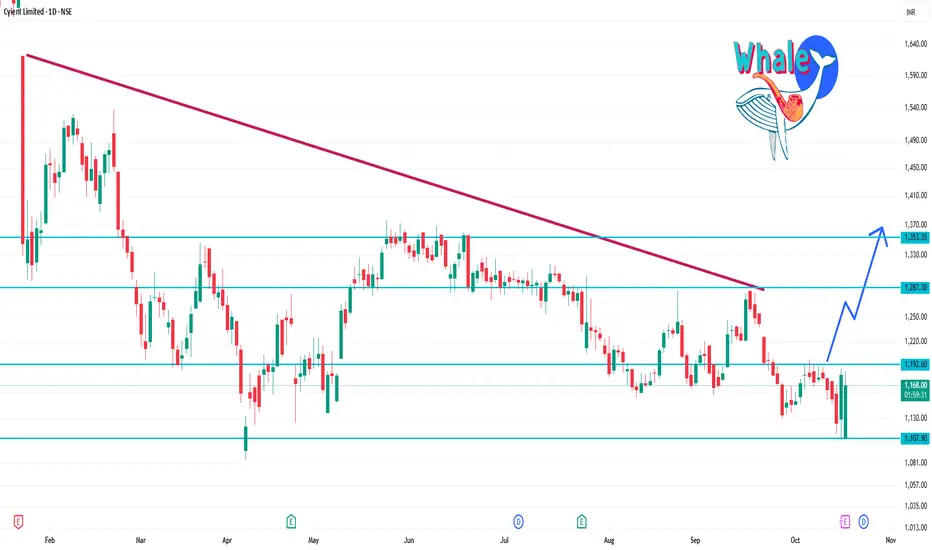
CYIENT 1 Day Time Frame 📈 Key Levels for the 1-Day Time Frame
🔹 Support Levels
Standard Pivot Point (S1): ₹1,158.30
Camarilla S1: ₹1,173.13
Demark Support: ₹1,143.50
🔹 Resistance Levels
Standard Pivot Point (R1): ₹1,210.20
Camarilla R1: ₹1,188.07
Demark Resistance: ₹1,225.00
🔍 Technical Analysis Summary
The stock is trading below its pivot points, with support levels at ₹1,158.30 and resistance at ₹1,210.20. The RSI suggests a bearish trend, and the increased trading volume indicates heightened market activity. Traders should monitor these levels closely for potential breakout or breakdown scenarios.
Tradinghub
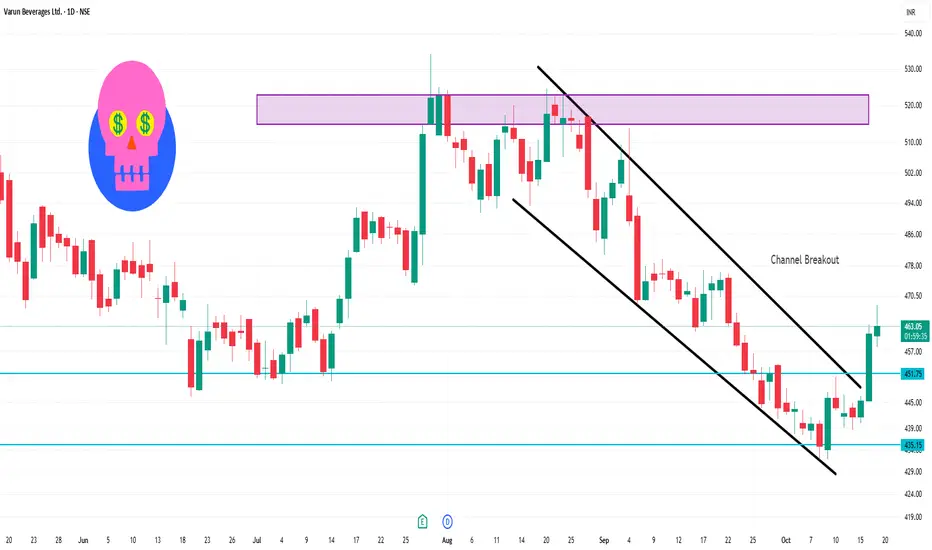
VBL 1 Day Time Frame 📊 Intraday Support & Resistance Levels
Support Levels:
Standard Pivot: ₹468.05
Camarilla Support: ₹459.64
Fibonacci Support: ₹456.70
Resistance Levels:
Standard Pivot: ₹474.80
Camarilla Resistance: ₹462.96
Fibonacci Resistance: ₹474.80
These levels are derived from various pivot point methods, including Standard, Camarilla, and Fibonacci, and are commonly used by traders to identify potential support and resistance zones during intraday trading.
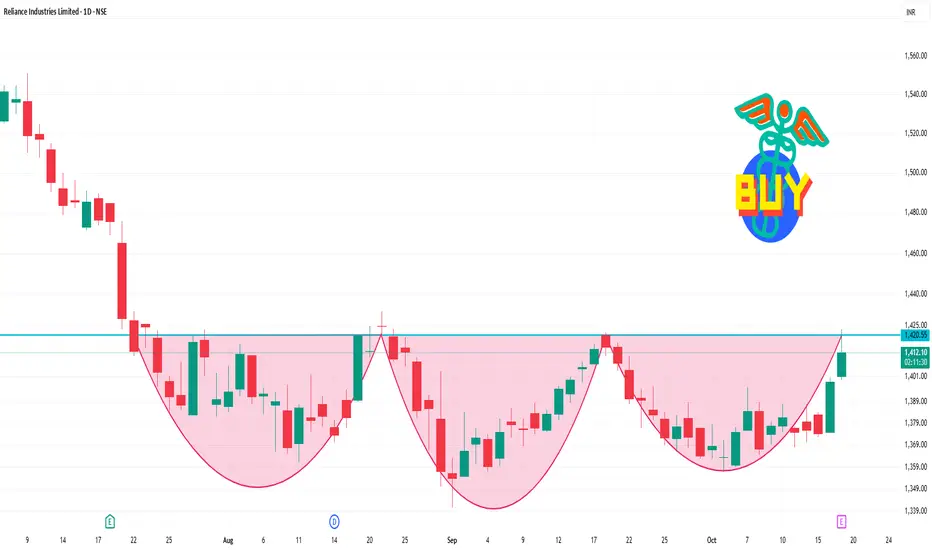
RELIANCE 1 Day Time Frame 📈 Daily Support & Resistance Levels
Immediate Support: ₹1,399.10
Key Resistance: ₹1,417.80
Pivot Point: ₹1,407.53
These levels are based on standard pivot point calculations and indicate that the stock is trading just below the immediate resistance level, suggesting potential for upward movement.
🔧 Technical Indicators
RSI (14-day): 62.51 — Neutral to slightly bullish
MACD: 0.730 — Positive momentum
Moving Averages:
5-day SMA: ₹1,373.00 — Buy signal
50-day SMA: ₹1,350.00 — Buy signal
200-day SMA: ₹1,300.00 — Buy signal
Stochastic Oscillator: 75.00 — Overbought, indicating potential for a pullback
Supertrend: ₹1,414.07 — Mildly bearish
Parabolic SAR: ₹1,357.52 — Mildly bullish
These indicators suggest a generally positive trend, with some caution due to overbought conditions.
Part 2 Ride The Big Moves Call Options Explained
A call option gives the holder the right to buy an asset at a predetermined price, known as the strike price, before the contract expires. Traders buy call options when they expect the asset’s price to rise. For example, if a stock trades at ₹100 and you buy a call with a ₹105 strike, you profit if the price surpasses ₹105 plus the premium cost. Call options are commonly used to leverage bullish expectations, offering high potential returns with limited risk exposure compared to directly purchasing the stock.
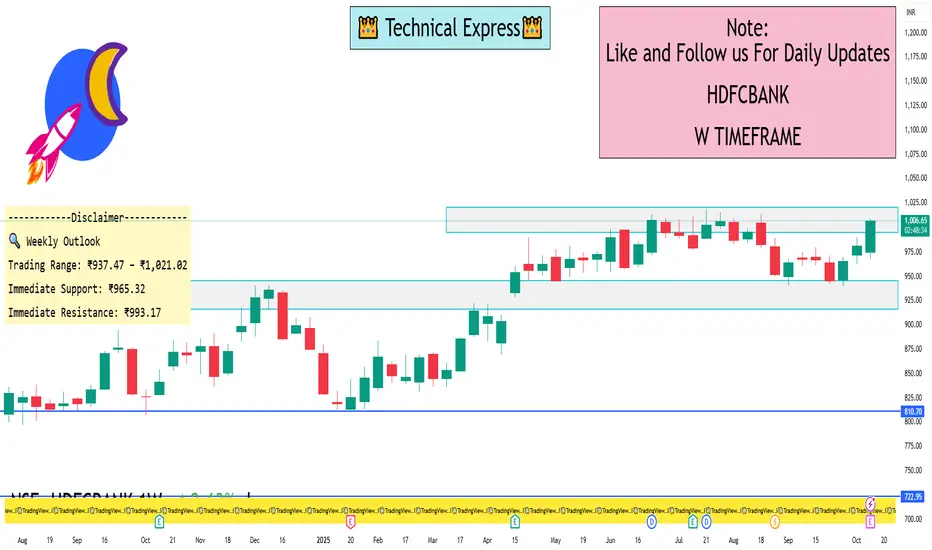
HDFC Bank 1 Week View 📈 Key Technical Levels for the Week
Resistance Levels:
R1: ₹1,005.43
R2: ₹1,021.02
R3: ₹1,034.00
Support Levels:
S1: ₹965.32
S2: ₹949.73
S3: ₹937.47
A close above ₹1,005.43 could indicate a breakout, while a drop below ₹965.32 may signal a potential reversal.
📊 Technical Indicators
RSI (14): 77.88 — Overbought, suggesting potential for a pullback.
MACD: Positive, indicating bullish momentum.
CCI: 202.29 — Overbought, aligning with the RSI reading.
ADX: 32.18 — Bullish trend strength.
The stock is trading above its 20-day and 50-day moving averages, indicating a bullish trend.
🔍 Weekly Outlook
Trading Range: ₹937.47 – ₹1,021.02
Immediate Support: ₹965.32
Immediate Resistance: ₹993.17
A close above ₹1,005.43 could lead to further gains, while a close below ₹965.32 may suggest a bearish reversal.
Types of Trading Strategies1. Technical Trading Strategies
Technical trading strategies rely on historical price and volume data to forecast future price movements. Traders using technical analysis focus on charts, indicators, and patterns. These strategies assume that all relevant information is already reflected in the price.
1.1 Trend Following Strategies
Trend following is based on the premise that prices tend to move in persistent trends. Traders identify upward or downward trends and align their trades with the direction of the trend.
Tools Used: Moving averages, trendlines, MACD, and Average Directional Index (ADX).
Example: A trader buys a stock when its 50-day moving average crosses above the 200-day moving average (golden cross) and sells when the reverse occurs (death cross).
1.2 Momentum Trading
Momentum trading involves identifying stocks or assets that are moving strongly in one direction and trading them in the same direction, anticipating the trend will continue.
Tools Used: Relative Strength Index (RSI), Moving Average Convergence Divergence (MACD), and volume analysis.
Example: Buying a stock with strong upward momentum after it breaks past a resistance level and selling when momentum slows.
1.3 Mean Reversion Strategies
Mean reversion strategies are based on the assumption that asset prices fluctuate around a stable mean or average. Traders look for overbought or oversold conditions and take positions expecting the price to revert to its mean.
Tools Used: Bollinger Bands, RSI, and standard deviation channels.
Example: If a stock’s price falls significantly below its 20-day moving average, a mean reversion trader may buy, expecting it to revert to the average.
1.4 Breakout Trading
Breakout strategies focus on assets that are breaking through established support or resistance levels. A breakout indicates the potential start of a new trend, often accompanied by high volume.
Tools Used: Support/resistance lines, price patterns like triangles or rectangles, and volume indicators.
Example: A trader buys a stock when it breaks above a previous high resistance level with significant trading volume.
1.5 Scalping
Scalping is a short-term strategy aimed at making small profits from minor price movements, often executed within seconds or minutes.
Tools Used: Real-time charts, level 2 quotes, order flow analysis, and very short-term indicators.
Example: A trader takes advantage of tiny spreads in highly liquid stocks to make dozens of trades per day.
2. Fundamental Trading Strategies
Fundamental trading strategies are based on analyzing an asset’s intrinsic value. Traders assess financial statements, economic indicators, and market conditions to identify mispriced securities.
2.1 Value Investing
Value investing seeks to buy undervalued stocks that are trading below their intrinsic value and hold them until the market corrects the price.
Tools Used: Price-to-Earnings (P/E) ratio, Price-to-Book (P/B) ratio, and Discounted Cash Flow (DCF) analysis.
Example: Buying a company with strong fundamentals but a temporarily low stock price due to market overreaction.
2.2 Growth Investing
Growth investing focuses on companies expected to grow faster than the overall market. Investors prioritize potential future earnings over current valuation.
Tools Used: Revenue growth, earnings growth, and market potential analysis.
Example: Investing in technology startups that have innovative products and high projected earnings growth.
2.3 Dividend Investing
Dividend investors focus on companies that regularly pay dividends. The strategy provides a stable income stream and long-term capital appreciation.
Tools Used: Dividend yield, payout ratio, and dividend growth history.
Example: Investing in well-established consumer goods companies with a strong dividend track record.
2.4 Economic Indicator-Based Trading
Some traders base decisions on macroeconomic factors such as GDP growth, inflation, unemployment, or interest rates.
Example: Buying government bonds during periods of falling interest rates to benefit from price appreciation.
3. Quantitative and Algorithmic Strategies
Quantitative strategies use mathematical models and algorithms to identify trading opportunities. These strategies rely heavily on data analysis, computing power, and statistical models.
3.1 Statistical Arbitrage
Statistical arbitrage involves exploiting pricing inefficiencies between correlated securities. Traders use statistical models to identify temporary mispricing.
Example: If two historically correlated stocks diverge, the trader may short the overperforming stock and buy the underperforming one, expecting convergence.
3.2 Algorithmic Trading
Algorithmic trading executes trades automatically based on pre-set rules, reducing emotional bias and increasing speed.
Tools Used: High-frequency trading platforms, quantitative models, and real-time market data feeds.
Example: An algorithm that executes trades when a stock crosses a specific moving average or price threshold.
3.3 High-Frequency Trading (HFT)
HFT uses extremely fast computers to exploit tiny price discrepancies, executing thousands of trades in milliseconds.
Example: Profiting from price differences between multiple exchanges for the same security.
4. Sentiment and Event-Driven Strategies
These strategies focus on market psychology and external events rather than technical or fundamental analysis.
4.1 News-Based Trading
Traders react to market-moving news, such as earnings announcements, geopolitical events, or economic data releases.
Example: Buying a stock immediately after a positive earnings surprise or selling after a negative announcement.
4.2 Social Sentiment Trading
This approach analyzes social media, forums, or news sentiment to gauge market sentiment.
Tools Used: Sentiment analysis algorithms, natural language processing (NLP), and trend monitoring tools.
Example: A surge in positive tweets about a company can trigger a buy signal for a sentiment trader.
4.3 Event-Driven Strategies
Event-driven strategies focus on corporate events like mergers, acquisitions, spin-offs, or bankruptcies.
Example: Buying stock in a company being acquired at a discount to the announced buyout price.
5. Hybrid Strategies
Many traders combine multiple approaches to diversify risk and improve returns. Hybrid strategies blend technical, fundamental, and sentiment-driven approaches.
5.1 Swing Trading with Fundamentals
Swing traders may combine chart patterns with fundamental catalysts to increase the probability of a successful trade.
Example: Buying a stock that is technically breaking out and has strong upcoming earnings.
5.2 Quantitative Trend Following
Some traders use quantitative models to identify trends and automate trades, merging trend-following principles with algorithmic execution.
6. Risk Management Across Strategies
Regardless of the strategy, risk management is a critical component. Traders typically use:
Stop-loss orders: Automatically exit a trade when it reaches a predetermined loss level.
Position sizing: Adjusting trade size based on risk tolerance.
Diversification: Spreading capital across multiple assets or strategies to reduce overall risk.
Leverage control: Avoiding excessive leverage that can amplify losses.
Effective risk management ensures that even a series of losing trades does not decimate capital, which is essential for long-term survival in trading.
7. Choosing the Right Strategy
The best trading strategy depends on a trader’s goals, market knowledge, and available resources:
Time Commitment: Scalping requires constant monitoring, whereas long-term value investing is more passive.
Risk Appetite: Aggressive strategies like high-frequency trading involve higher risk, while dividend investing is relatively conservative.
Market Type: Certain strategies work better in trending markets (trend following), while others excel in range-bound markets (mean reversion).
Skill Level: Quantitative and algorithmic strategies require coding and statistical skills, while fundamental analysis needs strong research capabilities.
8. Conclusion
Trading strategies are diverse and adaptable, ranging from purely technical to fundamental, quantitative, and event-driven approaches. Each has unique advantages and risks, and success often requires combining multiple strategies with disciplined risk management. Traders must continuously evaluate market conditions, adapt their strategies, and maintain emotional control to thrive in the dynamic world of trading. Understanding the wide spectrum of strategies empowers traders to align their approach with personal objectives, market conditions, and available resources, thereby enhancing both consistency and profitability.
Introduction to MCX Commodity Trading1. What is Commodity Trading?
Commodity trading refers to the buying and selling of raw materials or primary products, typically classified into two broad categories:
Hard Commodities: Natural resources that are mined or extracted, such as gold, silver, crude oil, and copper.
Soft Commodities: Agricultural products or livestock, including sugar, cotton, wheat, and coffee.
Unlike equities, commodities are traded for their intrinsic value and are influenced by supply-demand dynamics, geopolitical factors, and global economic trends. Trading commodities allows investors not only to profit from price movements but also to hedge against inflation and currency fluctuations.
2. Overview of MCX (Multi Commodity Exchange)
The Multi Commodity Exchange of India Limited (MCX) is the largest commodity derivatives exchange in India. Established in 2003, MCX provides a platform for trading commodity futures, ensuring transparency, liquidity, and regulatory oversight. Key features of MCX include:
Diverse Commodity Offerings: MCX trades in bullion, metals, energy, and agricultural commodities.
Futures Contracts: Investors primarily trade in futures contracts, which are standardized agreements to buy or sell a specific quantity of a commodity at a predetermined price on a future date.
Regulated Environment: MCX is regulated by the Securities and Exchange Board of India (SEBI), ensuring market integrity and investor protection.
Efficient Settlement System: MCX employs secure clearing and settlement mechanisms, reducing counterparty risk.
By providing a robust marketplace, MCX has played a critical role in bringing Indian commodity trading in line with global standards.
3. Understanding Commodity Futures
Unlike spot trading, where commodities are bought or sold for immediate delivery, futures contracts allow traders to speculate on price movements without necessarily owning the physical commodity. Key components of a futures contract include:
Contract Size: Defines the quantity of the commodity covered.
Expiry Date: The date on which the contract is settled.
Lot Size: Standardized unit of trading to maintain market uniformity.
Margin Requirement: Traders must deposit a percentage of the contract value as margin, which ensures commitment and reduces default risk.
Example:
If a trader buys a gold futures contract at ₹50,000 per 10 grams for delivery in June, the trader is obligated to purchase 10 grams of gold at that price in June. However, most traders close their positions before expiry to avoid physical delivery.
4. Categories of Commodities on MCX
MCX offers trading in several categories:
4.1 Bullion
Gold and Silver are the most traded commodities.
Prices are influenced by global demand, currency fluctuations, inflation, and geopolitical tensions.
4.2 Base Metals
Commodities such as copper, aluminum, zinc, and nickel.
Prices are affected by industrial demand, mining output, and global economic conditions.
4.3 Energy
Includes crude oil, natural gas, and other petroleum products.
Heavily influenced by global supply-demand, OPEC policies, and geopolitical factors.
4.4 Agricultural Commodities
Examples: Cotton, cardamom, chana, and sugar.
Influenced by monsoon patterns, crop yields, government policies, and international trade.
5. Participants in MCX Commodity Trading
Understanding the key players helps in interpreting market movements:
Hedgers: Typically producers or consumers of commodities who aim to reduce the risk of price fluctuations.
Example: A gold jeweler hedging against rising gold prices.
Speculators: Traders who seek to profit from price changes without intending to take physical delivery.
Arbitrageurs: Exploit price differences between commodities on different exchanges or in spot versus futures markets.
Institutional Investors: Banks, mutual funds, and hedge funds often participate to diversify portfolios.
6. Advantages of Trading on MCX
Trading on MCX provides multiple benefits:
Transparency: Prices and volumes are publicly available, reducing market manipulation.
Liquidity: High trading volumes make entering and exiting positions easier.
Hedging Opportunities: Producers and consumers can lock in prices, mitigating risk.
Leverage: Traders can control large contract values with relatively small margin deposits.
Diversification: Exposure to commodities reduces portfolio dependency on equities and bonds.
Price Discovery: MCX plays a key role in determining fair market prices through supply-demand mechanisms.
7. Risks in Commodity Trading
Despite its opportunities, commodity trading involves significant risks:
Market Risk: Prices can fluctuate sharply due to global events, weather, or policy changes.
Leverage Risk: While margin trading amplifies profits, it also magnifies losses.
Liquidity Risk: Some commodities may have lower trading volumes, making it difficult to exit positions.
Regulatory Risk: Changes in government policies, taxes, or import/export duties can impact prices.
Operational Risk: Technical glitches, delays, or errors in trading platforms may affect execution.
A prudent trader combines technical, fundamental, and geopolitical analysis to navigate these risks.
8. How to Start Trading on MCX
Step 1: Open a Trading Account
Investors need to open a commodity trading account with a registered broker. Required documents include PAN card, Aadhaar, bank proof, and KYC verification.
Step 2: Choose Commodities
Select commodities based on market research, risk appetite, and trading strategies.
Step 3: Deposit Margin
A minimum margin, defined as a percentage of the contract value, must be deposited to initiate trades.
Step 4: Place Orders
Orders can be placed using online trading platforms, specifying the quantity, contract month, and price.
Step 5: Monitor Positions
Regularly track market movements, news, and global events that influence commodity prices.
Step 6: Close Positions
Traders can either settle at contract expiry or close positions early to book profits or limit losses.
9. Trading Strategies for MCX Commodities
Successful trading involves strategy and discipline. Common approaches include:
9.1 Technical Analysis
Uses historical price patterns, charts, and indicators like moving averages, RSI, and MACD.
Helps identify entry and exit points.
9.2 Fundamental Analysis
Examines supply-demand factors, geopolitical events, government policies, and global trends.
Particularly important for agricultural commodities and energy markets.
9.3 Hedging
Aims to minimize potential losses for businesses exposed to commodity price fluctuations.
Example: A farmer selling wheat futures to secure prices before harvest.
9.4 Arbitrage
Exploits price differences between spot and futures markets or across exchanges.
Requires quick execution and access to multiple trading venues.
10. Factors Influencing Commodity Prices
Commodity prices are driven by multiple interrelated factors:
Global Economic Conditions: Growth or slowdown impacts industrial metals, energy, and demand for commodities.
Currency Movements: Commodities priced in USD are sensitive to exchange rate fluctuations.
Geopolitical Events: Wars, sanctions, and political instability can create volatility.
Weather and Climate: Agricultural commodities are heavily dependent on rainfall, monsoons, and climate change.
Government Policies: Subsidies, import/export restrictions, and price controls affect domestic prices.
Market Speculation: Traders’ sentiment and speculative positions can influence short-term price movements.
11. Regulatory Framework
MCX operates under SEBI regulations and follows strict compliance norms:
Position Limits: Prevent market manipulation by limiting maximum allowable contracts.
Margin Requirements: Ensure traders have sufficient funds to cover potential losses.
Contract Specifications: Standardize trading to maintain uniformity.
Dispute Resolution: Provides mechanisms for grievances and market disputes.
This robust framework enhances investor confidence and promotes fair trading.
12. Technology in MCX Trading
Modern commodity trading relies heavily on technology:
Online Trading Platforms: Allow seamless access to live market data and order execution.
Algorithmic Trading: High-frequency and automated trading based on pre-set rules.
Risk Management Systems: Track margin requirements, position limits, and real-time exposure.
Mobile Applications: Provide flexibility to trade and monitor positions on the go.
Technology has made MCX accessible to both retail and institutional traders.
13. Conclusion
MCX commodity trading offers an exciting avenue for diversification, profit-making, and hedging against market uncertainties. By understanding the nuances of futures contracts, market dynamics, and trading strategies, investors can navigate the complex world of commodities effectively. While risks exist, informed decision-making, disciplined strategies, and continuous learning can make commodity trading a rewarding endeavor.
For beginners, it is recommended to start with smaller positions, focus on learning market patterns, and gradually expand exposure. For professionals, leveraging advanced analytical tools and global insights can enhance profitability. Ultimately, MCX trading embodies a blend of knowledge, strategy, and market acumen, opening doors to opportunities that extend beyond traditional investment avenues.
Part 2 Support and ResistanceOptions in Portfolio Diversification:
Options help investors diversify and stabilize their portfolios by balancing risk and return. For instance, adding protective puts can shield against downside risk, while covered calls can generate steady income from owned stocks. These strategies reduce dependence on market direction and create non-linear payoffs, which can improve portfolio resilience during volatile periods. Options can also be used to replicate other financial positions or adjust exposure without buying or selling the underlying asset directly. This makes them powerful tools for strategic asset allocation, allowing investors to achieve customized financial goals with controlled levels of risk.
Part 1 Support and Resistance Role of Option Writers (Sellers):
Option writers, or sellers, play a crucial role in the options market. They create options contracts and earn a premium from buyers. In return, they take on the obligation to buy (for put options) or sell (for call options) the underlying asset if the buyer exercises the contract. While writers benefit from time decay—since options lose value as expiration nears—they also face significant risk, especially in uncovered (naked) positions. For example, a call writer could face unlimited losses if the asset’s price rises sharply. Hence, writing options demands careful risk assessment and margin management.
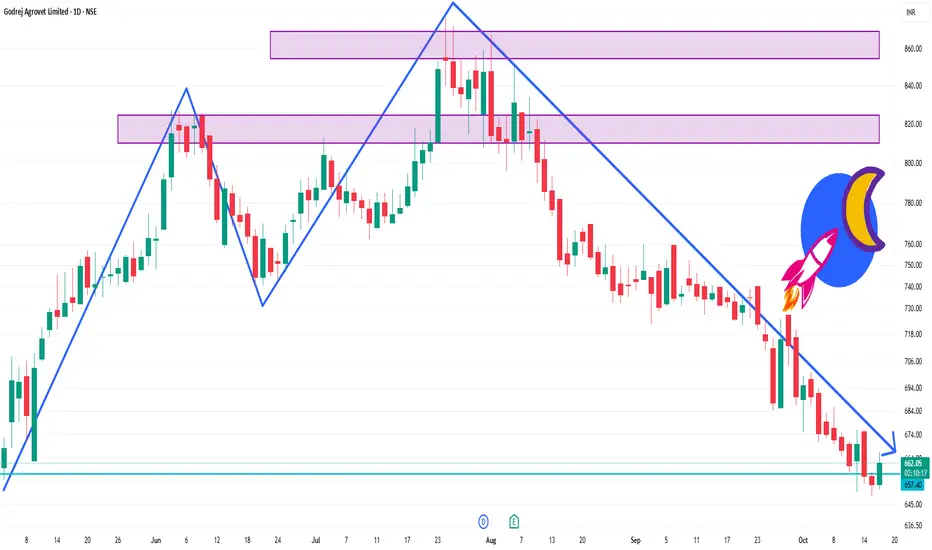
GODREJAGRO 1 Day Time Frame 📈 Intraday Support & Resistance Levels
Support Levels:
₹642.98 (S1)
₹647.97 (S2)
₹653.18 (S3)
₹637.77 (S4)
Resistance Levels:
₹658.17 (R1)
₹663.38 (R2)
₹668.37 (R3)
₹672.60 (R4)
These levels are based on standard pivot point calculations and are valid for intraday trading.
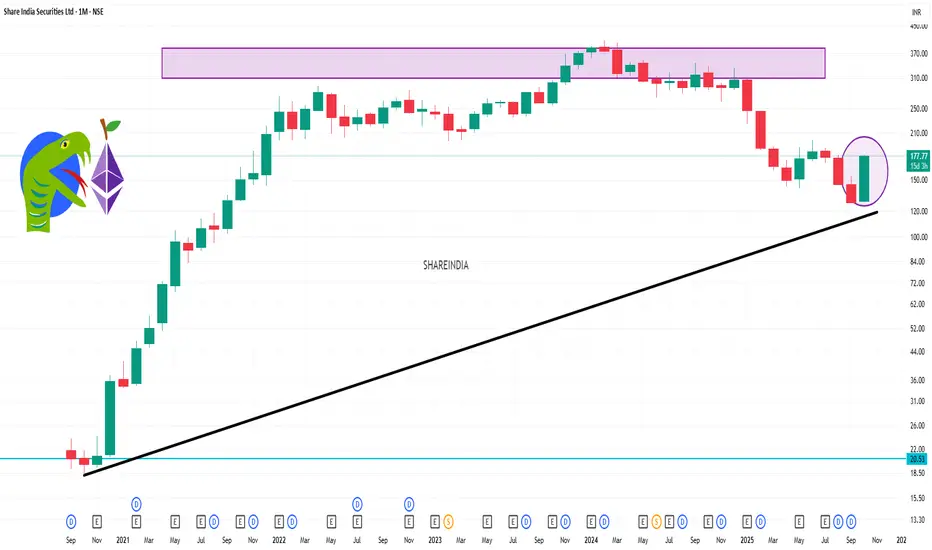
SHAREINDIA 1 Month Time frame 1-month technical outlook for Share India Securities Ltd indicates a bearish trend, with the stock trading at ₹178.65.
📉 1-Month Technical Overview
Price Change: The stock has declined by approximately 2.95% over the past month.
Technical Indicators: According to TradingView's technical analysis, the 1-month rating indicates a "sell" signal, suggesting a prevailing downtrend.
Market Sentiment: On Moneycontrol, 100% of user sentiments recommend selling, reflecting a bearish outlook among retail investors.
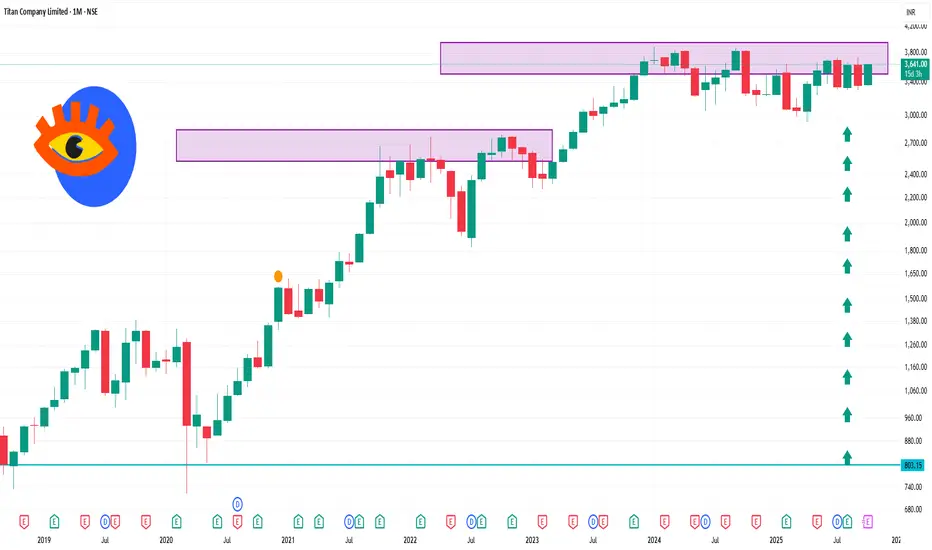
TITAN 1 Month Time Frame Titan Company Ltd is trading near ₹3,636.50, approaching its 52-week high of ₹3,740.
📊 1-Month Technical Overview
Price Performance: The stock has seen a modest decline of approximately 0.20% over the past month.
Technical Indicators:
Relative Strength Index (RSI): The RSI is currently in the neutral zone, indicating balanced buying and selling pressures.
Moving Averages: The stock is trading above its short-term moving averages, suggesting a positive short-term trend.
Stochastic Oscillator: The stochastic indicator is in the bullish zone, indicating potential upward momentum.
Commodity Channel Index (CCI): The CCI is above zero, signaling a bullish trend.
Rate of Change (ROC): The ROC is positive, further confirming bullish momentum.
Money Flow Index (MFI): The MFI is above 50, indicating healthy buying activity.
Support and Resistance Levels:
Support: ₹3,189.25
Resistance: ₹3,559.25
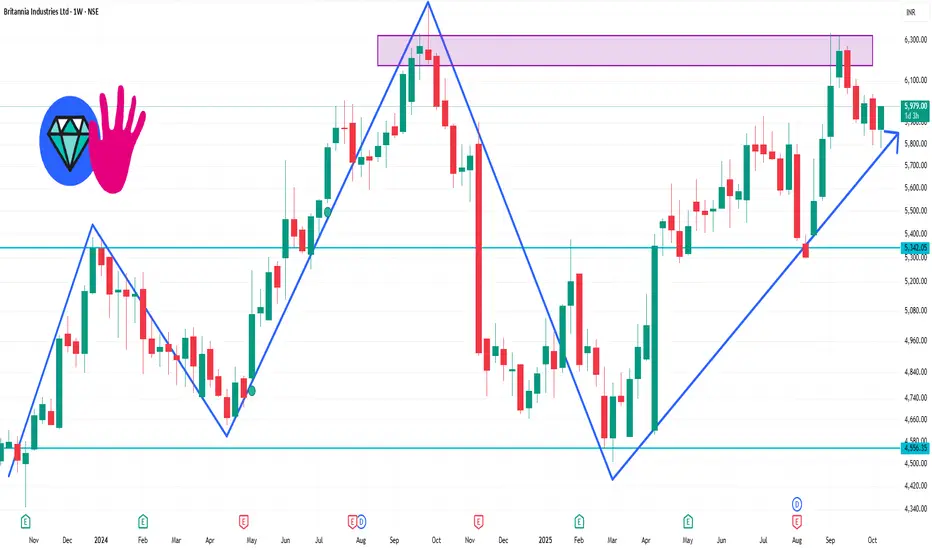
BRIT 1 Week TIme Frame 📊 Technical Indicators (Weekly)
Relative Strength Index (RSI): 41.73 — Indicates a neutral stance, neither overbought nor oversold.
Moving Average Convergence Divergence (MACD): -25.66 — Suggests a bearish trend, with the MACD line below the signal line.
Average Directional Index (ADX): 20.38 — Points to a weak trend, implying indecision in the stock's movement.
Commodity Channel Index (CCI): -132.30 — Reflects a mildly bullish condition, though caution is advised.
Williams %R: -84.06 — Indicates a mildly bullish position, suggesting potential upward movement.
📈 Price Action & Trend
Weekly High: ₹5,953.00
Weekly Low: ₹5,782.00
Current Price: ₹5,800.50
Weekly Return: +1.47%
The stock has shown resilience, trading above its 200-day simple moving average (SMA), which is considered a positive long-term indicator.
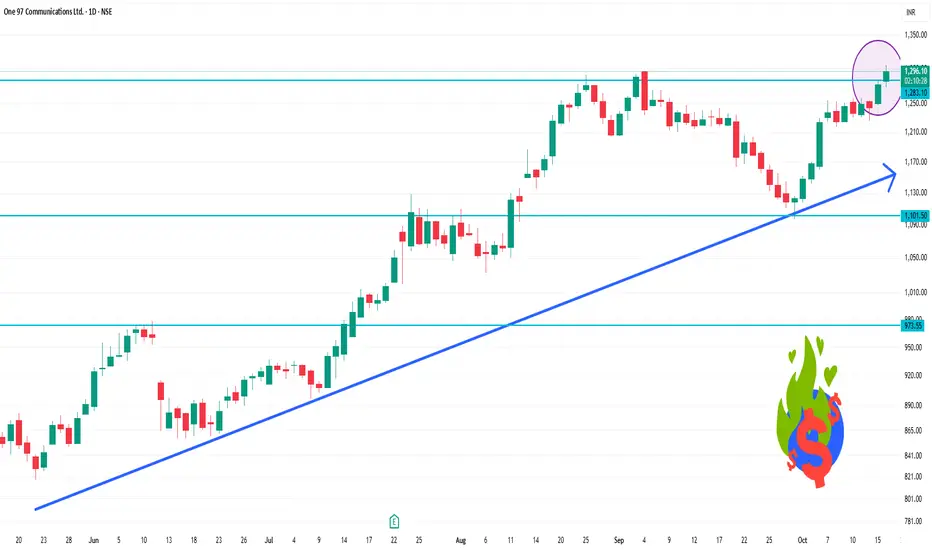
PAYTM 1 Day Time Frame 📊 Current Price Data
Last Traded Price: ₹1,301.70 (+1.91%)
Day’s Range: ₹1,273.00 – ₹1,304.90
52-Week Range: ₹651.50 – ₹1,304.90
Volume: 2,701,923 shares traded
Market Cap: ₹81,633 crore
P/E Ratio (TTM): 272.93
P/B Ratio: 5.43
Dividend Yield: 0.00%
🧠 Sentiment & Outlook
Short-Term: Neutral trend; awaiting confirmation of breakout or breakdown.
Mid-Term: Bullish; potential for upward movement if resistance levels are broken.
Long-Term: Bullish; strong support at lower levels suggests potential for sustained growth.
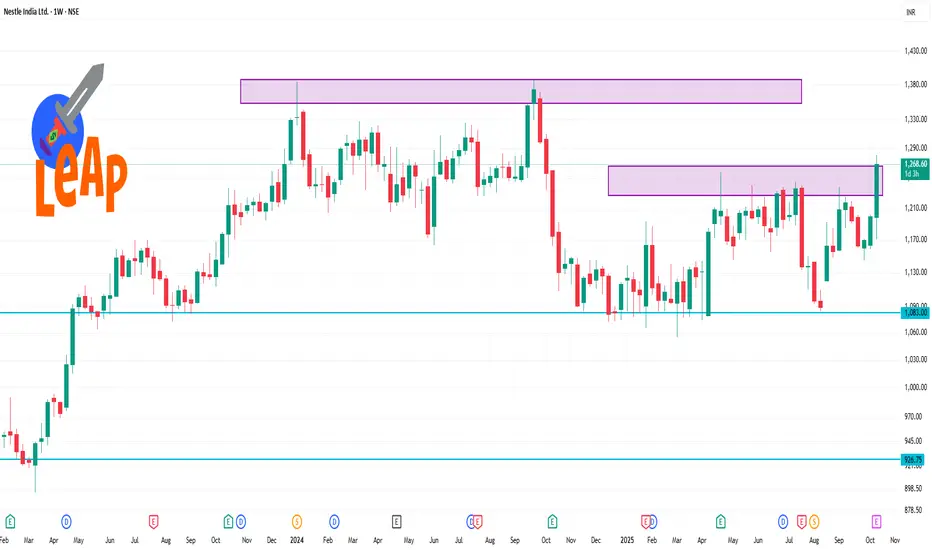
NESTLEIND 1 Week Time Frame📊 1-Week Performance Snapshot
Current Price: ₹1,264.90
1-Week Change: +6.5%
52-Week Range: ₹1,055.00 – ₹1,281.20
Day’s Range: ₹1,216.50 – ₹1,275.60
Volume: 1.61 million shares
📈 Technical Indicators
Relative Strength Index (RSI): Approximately 70.37, nearing overbought territory
Moving Average Convergence Divergence (MACD): Around +9.76, indicating bullish momentum
Support Level: ₹1,216.50 (recent low)
Resistance Level: ₹1,275.60 (recent high)
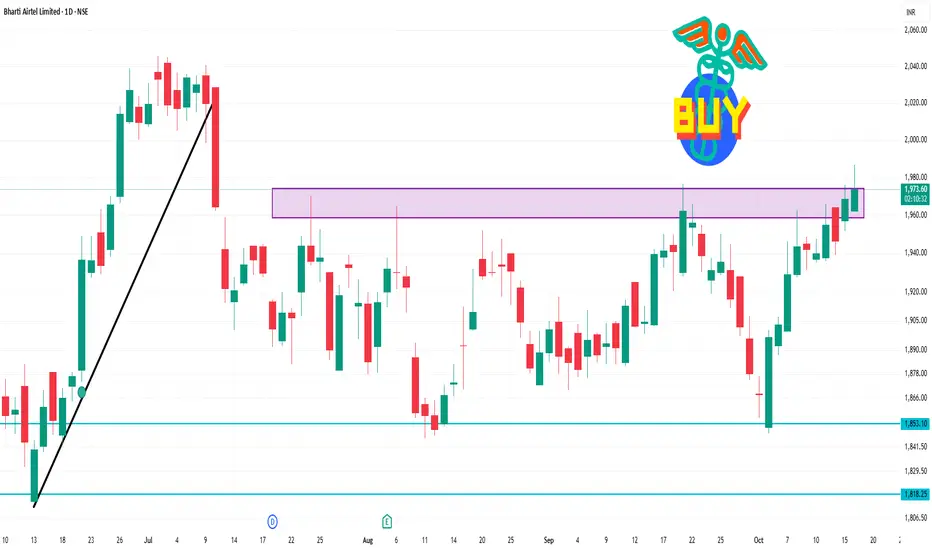
BHARTIARTL 1 Day Time Frame Bharti Airtel Limited is trading at ₹1,973.50, reflecting a 0.31% increase from the previous close.
Technical Analysis Overview (1-Day Time Frame):
Trend: Neutral to mildly bullish
Support Levels: ₹1,900 – ₹1,895
Resistance Levels: ₹1,920 – ₹1,925 and ₹1,950 – ₹1,960
Key Technical Indicators:
Moving Averages: All major moving averages (20-day, 50-day, 200-day) are bullish, indicating upward momentum.
Relative Strength Index (RSI): At 55.9, suggesting a neutral stance, neither overbought nor oversold.
Commodity Channel Index (CCI): At -214.32, indicating a bullish condition.
Momentum Oscillator: Positive, reinforcing the bullish outlook.
Average Directional Index (ADX): At 20.28, suggesting a neutral trend strength.
Part 8 Trading Master ClassOption Greeks – The Key Metrics
Option pricing is influenced by several mathematical variables known as Option Greeks:
Delta: Measures how much the option price moves for every ₹1 change in the underlying asset.
Theta: Measures time decay — how much the option loses value daily as expiry nears.
Vega: Measures sensitivity to volatility; higher volatility increases premium.
Gamma: Tracks how much delta changes when the underlying price moves.
Rho: Measures sensitivity to interest rate changes.
Professional traders rely on these Greeks to manage risk and adjust positions according to market conditions.
Part 1 Ride The Big Moves What is Option Trading?
Option trading is a type of derivatives trading where the value of the contract is based on an underlying asset, such as a stock, index, or commodity. An option gives the trader the right, but not the obligation, to buy or sell the underlying asset at a fixed price (called the strike price) before or on a specific date (called the expiry date). There are two main types of options — Call Options and Put Options.
A Call Option gives the right to buy the asset.
A Put Option gives the right to sell the asset.
Traders use options for hedging risks, speculating on price movements, or earning income through premiums.
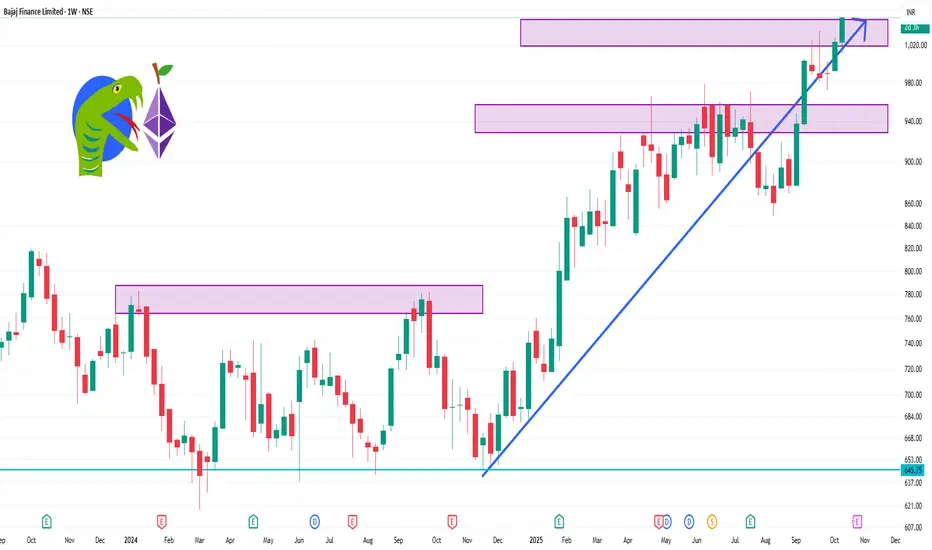
BAJFINANCE 1 Week Time Frame 📈 Weekly Technical Levels
Resistance Levels: ₹1,036.75 (short-term), ₹1,023.85 (mid-term)
Support Levels: ₹1,009.85 (short-term), ₹938 (mid-term), ₹816.86 (long-term)
These levels suggest that the stock is trading above its key support zones, indicating a potential continuation of the uptrend.
🔧 Key Technical Indicators
RSI (14): 66.57 — approaching overbought territory, but still room for upward movement.
MACD: 20.92 — indicates bullish momentum.
ADX (14): 31.50 — suggests a strong trend.
Supertrend: ₹973.61 — currently bullish.
Parabolic SAR: ₹982.79 — supports the bullish trend.
Stochastic Oscillator: 84.34 — near overbought levels, indicating potential for a pullback.
Commodity Channel Index (CCI): +131.56 — suggests the stock is overbought.
These indicators collectively point towards a strong bullish trend, though caution is advised as some indicators approach overbought conditions.
COALINDIA 1 Day Time Frame 📊 Intraday Support & Resistance Levels
Immediate Support: ₹383.05 – ₹383.35
Immediate Resistance: ₹384.03 – ₹387.12
Pivot Point: ₹384.03
📈 Technical Indicators
Relative Strength Index (RSI): Approximately 45–55, indicating a neutral to slightly bullish trend.
Moving Average Convergence Divergence (MACD): Currently showing a bearish crossover, suggesting a potential downward momentum.
50-Day Simple Moving Average (SMA): ₹385.10
200-Day SMA: ₹385.70
🔍 Market Context
The Indian stock market opened higher on Wednesday, October 15, 2025, snapping a two-day losing streak. The Sensex and Nifty tracked gains in global markets, with PSU banks and realty stocks leading the rally.
LT 1 Day Time Frame 📈 Current Price Snapshot
Current Price: ₹3,827.25
Day's Range: ₹3,744.30 – ₹3,841.40
52-Week Range: ₹2,965.30 – ₹3,963.00
Market Cap: ₹5.27 lakh crore
Volume: 1,160,071 shares
The stock is trading near its 52-week high, reflecting strong bullish momentum.
📊 Technical Indicators
Relative Strength Index (RSI): Approximately 70, indicating the stock is in overbought territory.
Moving Averages:
50-Day MA: ₹3,650
200-Day MA: ₹3,500
MACD: The MACD line is above the signal line, confirming upward momentum.
Pivot Points:
Support: ₹3,744
Resistance: ₹3,841
The stock is trading above its moving averages, indicating a strong bullish trend.
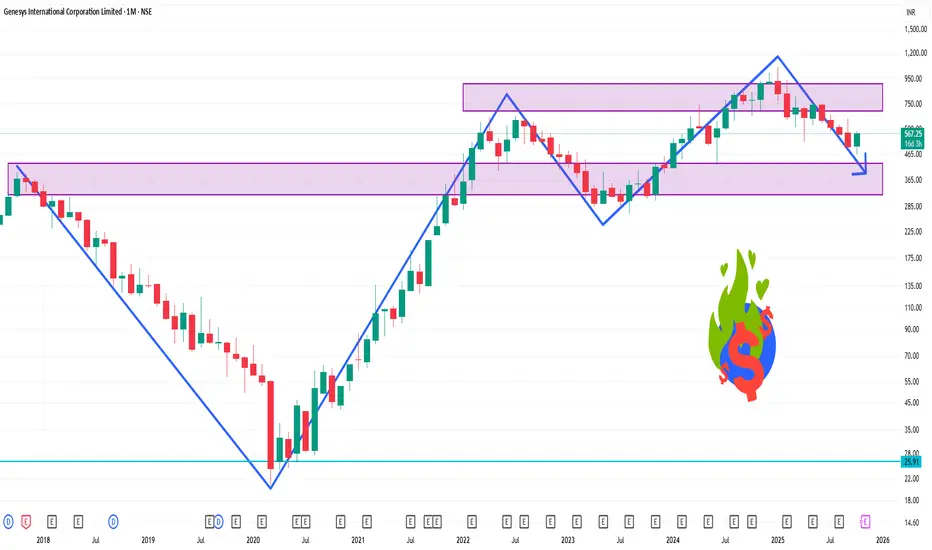
GENESYS 1 Month Time Frame 📉 1-Month Performance
Price Change: The stock has declined by approximately 15.81% over the past month.
INDmoney
Recent Trend: Despite the monthly decline, the stock experienced a significant uptick today, closing at ₹575.55, up from ₹479.65.
📊 Technical Indicators (1-Month View)
Relative Strength Index (RSI): The RSI is at 23.10, indicating that the stock is in the oversold territory and may be due for a rebound.
Moving Averages
20-Day Exponential Moving Average (EMA): ₹526.60 (suggests a sell signal as the current price is below this level).
50-Day EMA: ₹565.84 (also indicates a sell signal).
100-Day EMA: ₹608.98 (further confirming the downtrend).
MACD: The Moving Average Convergence Divergence (MACD) is at -28.90, suggesting a bearish trend.
Pivot Points:
Resistance Levels: R1: ₹491.28, R2: ₹505.12, R3: ₹513.33.
Support Levels: S1: ₹469.23, S2: ₹461.02, S3: ₹447.18.
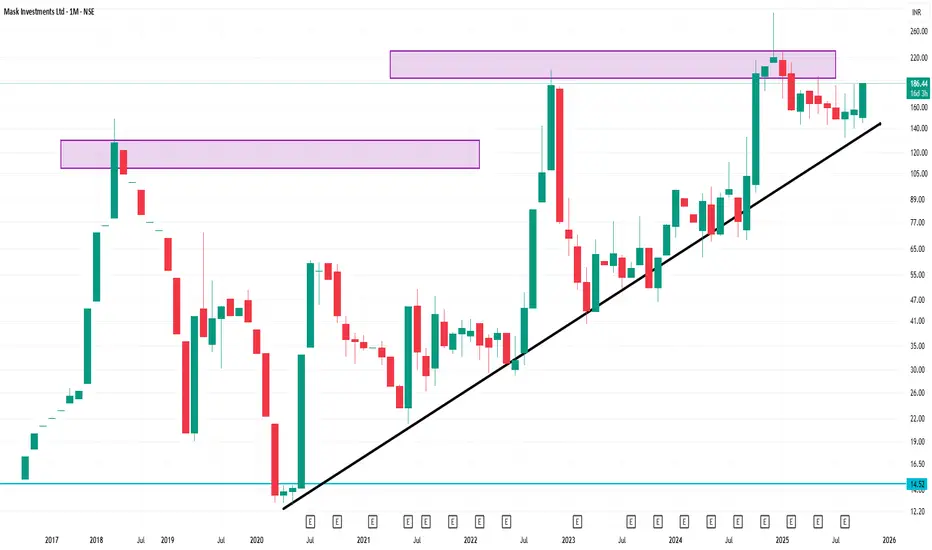
MASKINVEST 1 Month Time Frame 📈 1-Month Performance Overview
Closing Price (Sept 15, 2025): Approximately ₹151.64
Closing Price (Oct 15, 2025): ₹186.44
Price Change: +₹34.80
Percentage Gain: +22.9%
📊 Technical Insights
TradingView's technical analysis indicates a Buy signal for Mask Investments Ltd over a 1-month timeframe.
🔍 Additional Metrics
52-Week High: ₹292.46
52-Week Low: ₹103.14
Market Capitalization: Approximately ₹56.89 crore
P/E Ratio: 21,071.17
P/B Ratio: 0.48