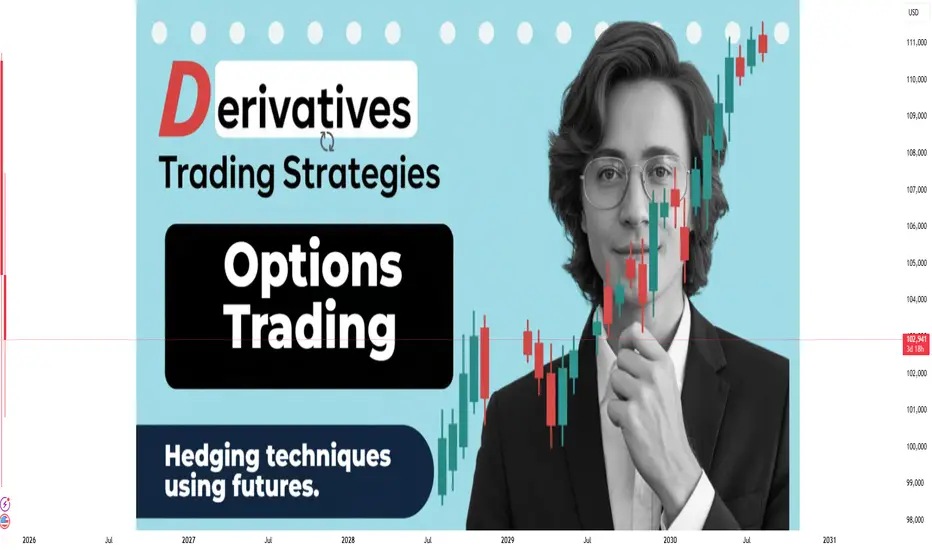
Derivatives Trading Strategies and Option Trading ExplainedUnderstanding Derivatives
A derivative is a financial contract whose value depends on the performance of an underlying asset. Common derivatives include:
Futures contracts: Agreements to buy or sell an asset at a future date at a predetermined price.
Forwards: Similar to futures but traded over-the-counter (OTC), meaning they are privately negotiated.
Options: Contracts that give the holder the right, but not the obligation, to buy or sell an asset.
Swaps: Agreements to exchange cash flows or other financial instruments.
Derivatives help investors manage price risk, hedge exposure, or profit from volatility. However, they also carry significant leverage, which can amplify both profits and losses.
Major Derivative Trading Strategies
1. Hedging Strategies
Hedging is a risk management approach used to protect against adverse price movements. For instance, a farmer expecting to sell wheat in three months can use futures contracts to lock in the selling price, ensuring stable revenue even if prices fall later. Similarly, companies dealing in foreign currencies use currency futures or options to protect themselves from exchange rate volatility.
Example:
A portfolio manager holding large equity exposure may use index futures to hedge against a potential market downturn. If the market falls, losses in the stock portfolio can be offset by gains in the futures position.
2. Speculative Strategies
Speculators use derivatives to profit from anticipated price movements. They take positions based on their market outlook without owning the underlying asset.
For example, if a trader expects oil prices to rise, they might buy oil futures to benefit from price appreciation. If the prediction is correct, the trader profits from the difference between the buying and selling price.
Speculative trades are risky but can offer high rewards due to leverage. However, they require careful risk control to avoid substantial losses.
3. Arbitrage Strategies
Arbitrage exploits price discrepancies of the same asset across different markets or forms. Traders buy the asset where it’s undervalued and sell it where it’s overvalued, locking in risk-free profits.
Example:
If a stock’s price in the cash market differs from its futures price beyond theoretical limits, an arbitrageur can simultaneously buy the stock and sell the future, profiting when prices converge.
4. Spread Trading
Spread trading involves taking offsetting positions in related derivatives to profit from the price difference between them rather than outright price movements. Examples include:
Calendar spreads: Buying and selling futures with different expiry dates.
Inter-commodity spreads: Trading between related commodities, like crude oil and heating oil.
Inter-market spreads: Exploiting price differences between similar assets on different exchanges.
These strategies reduce exposure to market direction and focus on relative performance.
Introduction to Option Trading
Options are among the most versatile derivative instruments. An option contract gives the buyer the right, but not the obligation, to buy or sell an asset at a predetermined price (called the strike price) before or at the contract’s expiration date.
There are two main types of options:
Call Option: Gives the holder the right to buy the underlying asset.
Put Option: Gives the holder the right to sell the underlying asset.
The seller (or writer) of the option has the obligation to fulfill the contract if the buyer chooses to exercise it. Option trading strategies range from simple directional bets to complex multi-leg structures designed to profit in various market conditions.
Key Components of Option Trading
Premium: The price paid by the option buyer to the seller for the contract.
Strike Price: The price at which the asset can be bought or sold.
Expiration Date: The date the option contract expires.
Intrinsic Value: The actual value if the option were exercised today.
Time Value: The additional value based on volatility and time remaining until expiration.
Options are influenced by factors such as volatility, interest rates, time decay, and the price of the underlying asset.
Option Trading Strategies
1. Directional Strategies
These strategies aim to profit from a forecasted price move.
a) Long Call
A trader buys a call option expecting the asset’s price to rise.
Profit: Unlimited as price increases.
Loss: Limited to the premium paid.
Example: Buying a call on Nifty at 22,000 strike if you expect it to rise above that level.
b) Long Put
Used when expecting a decline in price.
Profit: Rises as asset price falls.
Loss: Limited to the premium paid.
c) Short Call and Short Put
Writing calls or puts allows traders to collect premiums, but they face potentially unlimited loss if the market moves against them. These are generally used by experienced traders or those with a hedge in place.
2. Neutral Strategies
When traders expect little movement, they use strategies that benefit from time decay or low volatility.
a) Covered Call
The trader holds the underlying asset and sells a call option on it.
Generates income from the premium.
Ideal when expecting limited upside.
b) Iron Condor
Combines both call and put spreads to earn premium income when the asset stays within a range.
Profit: Limited to net premium received.
Loss: Limited if price breaks out of the range.
c) Butterfly Spread
Involves buying one in-the-money option, selling two at-the-money options, and buying one out-of-the-money option. It profits when prices remain stable around the middle strike.
3. Volatility Strategies
These strategies target changes in volatility rather than price direction.
a) Straddle
Buying both a call and put at the same strike price and expiry.
Profits from large price movements in either direction.
Loss occurs if the price remains stable (premium decay).
b) Strangle
Similar to a straddle but uses different strike prices for the call and put. It is cheaper but requires a larger move to profit.
c) Calendar Spread
Involves buying and selling options of the same strike but different expiration dates, betting on changes in time decay or volatility.
Risk Management in Derivative Trading
Derivatives and options can magnify returns but also amplify losses. Therefore, risk management is critical:
Position sizing: Limit exposure to a fixed percentage of total capital.
Stop-loss orders: Automatically exit losing positions.
Diversification: Spread trades across assets and maturities.
Hedging: Use options to protect portfolios against extreme moves.
Greeks management: Monitor option sensitivities—Delta (price movement), Theta (time decay), Vega (volatility), and Gamma (rate of Delta change)—to understand risk dynamics.
Conclusion
Derivatives and option trading represent a sophisticated domain within financial markets, offering vast opportunities for hedging, speculation, and income generation. While derivatives like futures and forwards help manage risk or exploit arbitrage opportunities, options add flexibility through their asymmetrical payoff structure. Mastering derivatives requires understanding market behavior, volatility, and strategic planning. When used responsibly, derivatives can protect portfolios and generate consistent returns. However, due to leverage and complexity, disciplined risk control and continuous learning are essential for long-term success.
Trendcontinuation
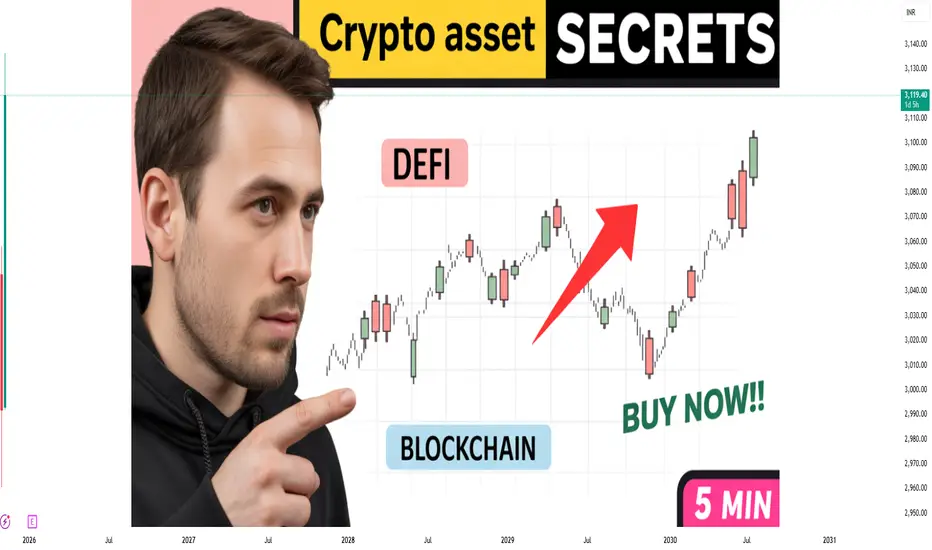
Crypto Assets Secrets: The Hidden Dynamics of Digital Wealth1. The Foundational Secret: Blockchain is the Core
The first and most fundamental secret of crypto assets lies in the technology that powers them — the blockchain. Unlike traditional financial systems controlled by banks or governments, blockchain is a decentralized digital ledger that records transactions securely, transparently, and permanently. Each transaction is verified through a consensus mechanism, ensuring trust without intermediaries.
What makes this technology revolutionary is its immutability and transparency. Every coin or token can be traced to its origin, which eliminates fraud and enables a new form of digital ownership. Investors who understand blockchain’s technical structure — from proof-of-work (PoW) to proof-of-stake (PoS) — gain insights into which crypto projects are sustainable versus those that are purely speculative.
2. The Scarcity Secret: Supply Mechanisms Define Value
Another major secret behind crypto value lies in tokenomics — the economic design of a cryptocurrency. Bitcoin, for example, has a fixed supply of 21 million coins, making it deflationary. This limited availability fuels demand, positioning Bitcoin as a “digital gold.”
In contrast, many altcoins use different supply models — such as inflationary tokens or tokens with burning mechanisms. Understanding supply dynamics, such as halving events, staking rewards, and token burns, can provide an edge. Long-term investors often look for assets with a balanced token supply and strong utility, as these tend to appreciate in value over time.
3. The Adoption Secret: Utility Drives Sustainability
While many cryptocurrencies emerge daily, few achieve lasting success. The secret to survival in the crypto market is real-world utility. Coins that solve genuine problems — such as Ethereum’s smart contracts, Chainlink’s decentralized oracles, or Ripple’s cross-border payment systems — tend to achieve mainstream adoption.
Utility also extends into DeFi platforms, NFT marketplaces, and metaverse ecosystems. Projects that integrate their tokens into actual services or decentralized applications (dApps) create intrinsic demand. The secret is to identify projects where use cases and network effects fuel organic growth rather than mere hype.
4. The Liquidity Secret: Market Depth and Whale Control
Liquidity — the ease of buying or selling an asset without drastically affecting its price — is a critical yet often overlooked secret of crypto trading. Cryptocurrencies with high liquidity (like Bitcoin and Ethereum) are more stable and less prone to manipulation. In contrast, low-liquidity altcoins can experience extreme volatility due to the influence of whales — large holders who can manipulate prices with a few transactions.
Smart traders monitor order books, volume profiles, and whale wallet movements to predict short-term market fluctuations. Tools like on-chain analytics (Glassnode, Santiment, Nansen) reveal where big money is flowing, offering insight into potential price trends before they hit mainstream awareness.
5. The Psychological Secret: Fear and Greed Index
Crypto markets are driven more by emotion than fundamentals. The Fear and Greed Index, which tracks market sentiment, often predicts price movements better than technical indicators. Extreme fear signals potential buying opportunities, while extreme greed suggests a bubble.
Successful traders understand that patience and discipline are their greatest assets. They use emotional intelligence to avoid panic-selling during downturns or over-leveraging during bull runs. The secret lies in contrarian thinking — buying when others are fearful and selling when others are euphoric.
6. The Timing Secret: Market Cycles and Halving Events
Crypto markets move in predictable cycles, often tied to Bitcoin halving events (which occur approximately every four years). These events reduce the number of new Bitcoins entering circulation, historically triggering bull markets as scarcity increases.
Understanding the crypto cycle — accumulation, expansion, euphoria, and correction — gives traders an edge. The secret is to accumulate during bear markets when prices are undervalued and to take profits strategically during euphoric phases. Experienced investors don’t chase trends; they anticipate them through cycle analysis and macroeconomic awareness.
7. The DeFi Secret: Earning Passive Income
Decentralized Finance (DeFi) has unlocked a secret layer of wealth generation in crypto: passive income. Through staking, yield farming, and liquidity mining, investors can earn rewards without actively trading. For example, staking Ethereum 2.0 provides returns of 4–6% annually, while liquidity providers in decentralized exchanges like Uniswap or PancakeSwap earn transaction fees.
However, the secret to success in DeFi lies in risk management — avoiding projects with unaudited smart contracts or unsustainable yields. Genuine DeFi opportunities combine transparency, security, and innovation to create long-term income potential.
8. The Security Secret: Custody and Privacy
Many investors underestimate the importance of security. The crypto space is rife with hacks, phishing attacks, and rug pulls. The secret here is self-custody — storing crypto in hardware wallets (like Ledger or Trezor) instead of centralized exchanges.
Private key management is crucial. “Not your keys, not your coins” is a golden rule — meaning that if an exchange holds your keys, they control your assets. Using multi-signature wallets, two-factor authentication (2FA), and cold storage ensures protection against digital theft. Privacy coins like Monero and Zcash also provide enhanced confidentiality for transactions, appealing to users who value financial anonymity.
9. The Innovation Secret: Layer 2, Web3, and AI Integration
The next wave of crypto innovation revolves around scalability and interoperability. Layer 2 solutions such as Polygon, Arbitrum, and Optimism are solving Ethereum’s high gas fee and congestion issues. These projects are crucial to the long-term scalability of the blockchain ecosystem.
Simultaneously, the emergence of Web3 — the decentralized internet — is redefining data ownership and monetization. AI integration into blockchain is another secret growth area, where artificial intelligence can enhance smart contracts, fraud detection, and algorithmic trading. Investors who identify early-stage projects in these emerging sectors gain significant advantages.
10. The Regulatory Secret: Compliance Determines Longevity
While decentralization is a key appeal, regulation is the ultimate test for a cryptocurrency’s survival. Governments worldwide are developing frameworks for crypto taxation, anti-money laundering (AML), and investor protection. The secret here is that regulated compliance breeds legitimacy.
Projects that adapt to evolving laws — such as stablecoins backed by audited reserves or exchanges with proper licensing — tend to attract institutional investment. Understanding the regulatory landscape helps investors separate credible projects from high-risk ventures that might face legal challenges.
11. The Institutional Secret: Big Money Shapes the Market
Since 2020, major financial institutions have entered the crypto space, adding liquidity and credibility. Firms like BlackRock, Fidelity, and Grayscale have introduced Bitcoin ETFs and custody services. The secret is to watch institutional behavior — accumulation patterns, ETF flows, and custody adoption — as these signal market direction.
Institutional involvement also bridges the gap between traditional finance (TradFi) and decentralized finance (DeFi), paving the way for mass adoption. Investors who align with institutional trends rather than retail speculation often achieve more consistent returns.
12. The Education Secret: Knowledge Outperforms Hype
Ultimately, the greatest secret in crypto is education. Markets reward those who understand blockchain fundamentals, on-chain analytics, risk assessment, and macroeconomics. Many retail investors lose money due to lack of research and herd mentality.
Continuous learning — through whitepapers, developer updates, and reputable crypto analysts — is the real key to long-term success. The crypto world evolves rapidly, and only informed participants can adapt to its volatility and innovation.
Conclusion
Crypto assets are more than speculative digital tokens; they represent a paradigm shift in how the world perceives money, value, and trust. The “secrets” of crypto lie not in hidden tricks but in understanding its core principles — decentralization, scarcity, utility, and innovation. By mastering the fundamentals of blockchain technology, emotional discipline, market cycles, and security, investors can navigate this digital revolution wisely.
In essence, success in crypto isn’t about timing the market; it’s about understanding the market — its psychology, technology, and evolving potential. Those who embrace this knowledge stand to uncover not just financial rewards, but also a front-row seat to the future of global finance.
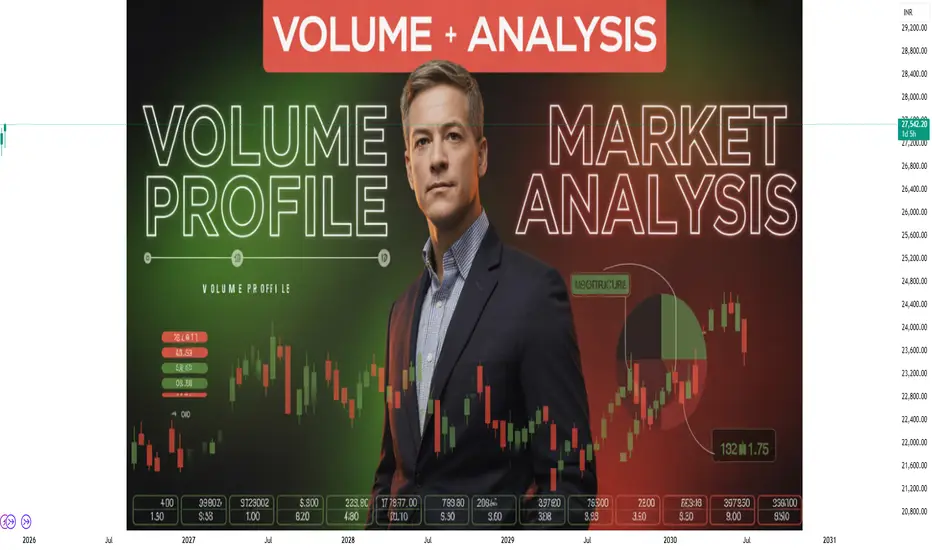
Volume Profile and Market Analysis1. Understanding Volume Profile
The Volume Profile is a histogram plotted on the price axis of a chart, showing the amount of traded volume at each price level during a specified period. Rather than displaying how much volume was traded per time unit (like a standard volume bar at the bottom of a chart), it shows where the majority of trading occurred within a price range.
This data allows traders to see which prices attracted the most attention from buyers and sellers, and which levels were quickly rejected. In essence, Volume Profile reveals the “market’s memory”—where the majority of market participants placed their bets.
2. Key Components of Volume Profile
To fully understand how to interpret Volume Profile, traders must become familiar with its key elements:
Point of Control (POC):
The price level with the highest traded volume during the selected period. It represents the fairest price—where buyers and sellers reached the greatest consensus.
Value Area (VA):
Typically, this covers about 70% of total traded volume and represents the range of prices considered “fair value” for the market. Prices outside this range are often seen as overbought or oversold.
Value Area High (VAH) and Value Area Low (VAL):
These boundaries mark the upper and lower limits of the Value Area. They act as important support and resistance levels.
High Volume Nodes (HVN):
Price zones where a large amount of trading occurred, indicating acceptance and stability. These levels often act as magnets for price.
Low Volume Nodes (LVN):
Price zones with very little trading activity, indicating rejection or imbalance. These often serve as breakout or reversal points.
3. Interpreting Volume Profile in Market Context
The market moves through cycles of accumulation, distribution, expansion, and contraction, and the Volume Profile helps visualize these phases:
Balanced Profile (D-shaped):
Indicates a period of consolidation where supply and demand are balanced. Price oscillates within a range around the POC, suggesting indecision. Breakouts from such zones often lead to strong directional moves.
Trending Profile (P-shaped or b-shaped):
A P-shaped profile shows a short-covering rally, where price moved upward and volume concentrated near the top of the profile. Conversely, a b-shaped profile indicates long liquidation—strong selling followed by stabilization at lower prices.
Double Distribution Profile:
This occurs when the market transitions between two value areas, indicating a shift in sentiment or a major fundamental change.
By reading these structures, traders can identify whether the market is in a state of balance (range-bound) or imbalance (trending), and adjust their strategies accordingly.
4. Volume Profile vs. Market Profile
Although they sound similar, Volume Profile and Market Profile are distinct:
Market Profile (developed by Peter Steidlmayer) organizes price and time data to show where the market spent the most time.
Volume Profile focuses purely on volume traded at each price level.
While Market Profile emphasizes time-based value areas, Volume Profile provides a clearer view of actual market participation, making it more precise for detecting liquidity zones and institutional activity.
5. Volume Profile in Different Market Types
a) In Forex Markets
Volume in spot forex is decentralized and not directly measurable like in stocks or futures. Traders often rely on tick volume as a proxy, using Volume Profile tools provided by brokers that aggregate order flow data. Volume analysis helps identify key price levels where large participants—such as banks or hedge funds—are active.
b) In Stock Markets
Volume Profile is particularly effective since exchanges record every share traded. Traders use it to find areas of institutional accumulation or distribution, often near earnings announcements, mergers, or economic reports.
c) In Futures and Commodities
Volume Profile is integral to futures trading because these markets are centralized. Traders often overlay Volume Profile with open interest and Cumulative Delta (buy vs. sell volume) to interpret real market intent.
6. Combining Volume Profile with Market Analysis
Volume Profile on its own is powerful, but when integrated into broader market analysis, it produces deeper insights.
a) Technical Analysis Integration
Support and Resistance:
VAH and VAL naturally act as strong support and resistance zones.
Breakouts:
Price breaking above VAH or below VAL with high volume often signals a continuation of the trend.
Trend Confirmation:
Aligning the slope of the profile with moving averages or trendlines helps confirm momentum.
b) Fundamental Analysis Connection
Fundamental events such as interest rate decisions, earnings reports, or geopolitical news can trigger high-volume shifts. By analyzing how the Volume Profile responds, traders can identify whether institutions are building or exiting positions in reaction to the news.
c) Sentiment and Order Flow
Volume Profile aligns naturally with order flow analysis—tracking buying and selling pressure at key price levels. Combining it with sentiment indicators (like COT reports or social sentiment data) helps validate whether retail traders or institutions dominate a move.
7. Institutional Trading and Volume Profile
Institutional players often execute trades at specific volume levels to mask their intentions. The Volume Profile reveals these footprints:
Accumulation Zones:
Large volumes at stable prices after a decline often indicate institutional buying.
Distribution Zones:
Heavy volume after an uptrend suggests institutions are offloading positions.
Liquidity Traps:
Price spikes into low-volume zones followed by rejections often represent false breakouts designed to trap retail traders.
By reading these patterns, retail traders can align with institutional behavior instead of being trapped by it.
8. Advantages of Volume Profile Analysis
Precision: Identifies key price levels where volume is concentrated.
Market Context: Reveals balance vs. imbalance zones.
Institutional Insight: Shows where large traders are active.
Support/Resistance Accuracy: More reliable than indicators based on time.
Adaptability: Works across all asset classes and timeframes.
9. Limitations of Volume Profile
Lagging Nature: It shows historical participation, not future intent.
Data Dependency: Requires accurate tick or trade data; less reliable in decentralized markets like spot forex.
Complex Interpretation: Needs context—volume alone can mislead without price action or trend confirmation.
Short-Term Noise: Small timeframes may show excessive detail that obscures meaningful levels.
10. Practical Application in Trading
A practical Volume Profile-based strategy might look like this:
Identify Balance Area: Observe where the majority of volume has occurred over recent sessions.
Mark VAH, VAL, and POC: These become your reference levels.
Wait for Imbalance: Watch for price breaking out of the value area with high volume.
Confirm with Price Action: Look for retests of VAH/VAL or the POC for potential entries.
Manage Risk: Use low-volume nodes or opposite side of the value area as stop-loss levels.
This method aligns trading decisions with institutional activity and real market structure rather than arbitrary indicators.
11. The Future of Volume and Market Analysis
As financial markets become increasingly algorithm-driven, volume-based analytics are evolving through machine learning, order book heatmaps, and real-time flow data visualization. These tools allow traders to not only see where the market has traded, but where orders are currently resting—providing predictive insight into potential price reactions.
Volume Profile remains the backbone of this new generation of trading tools, bridging the gap between traditional chart reading and data-driven market intelligence.
Conclusion
Volume Profile is more than a charting tool—it’s a framework for understanding the psychology of the market. By showing how volume is distributed across price levels, it uncovers the footprints of professional traders and institutions. When combined with technical, fundamental, and sentiment analysis, it allows traders to operate with greater precision, confidence, and understanding of market structure.
In a world of fast-moving markets and complex algorithms, mastering Volume Profile and integrating it into comprehensive market analysis is an essential skill for any serious trader seeking an edge in today’s global financial landscape.
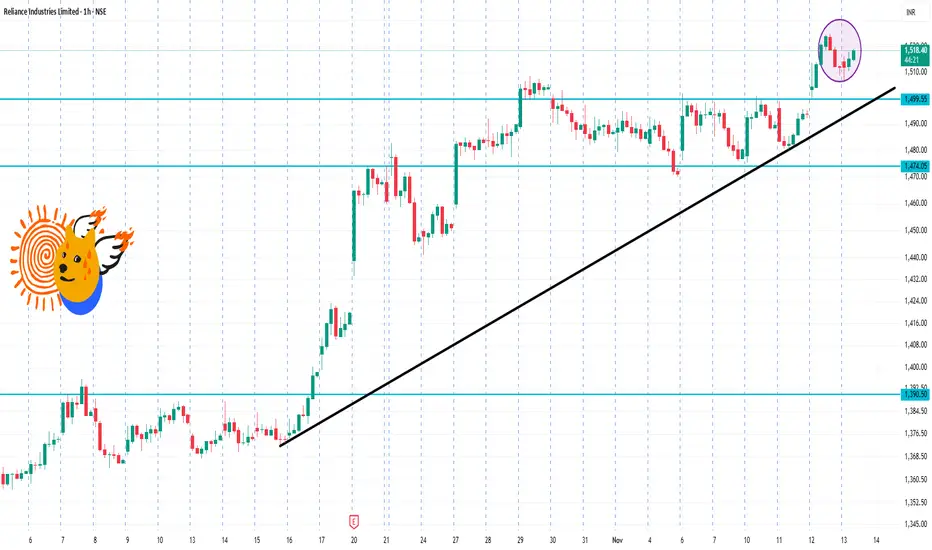
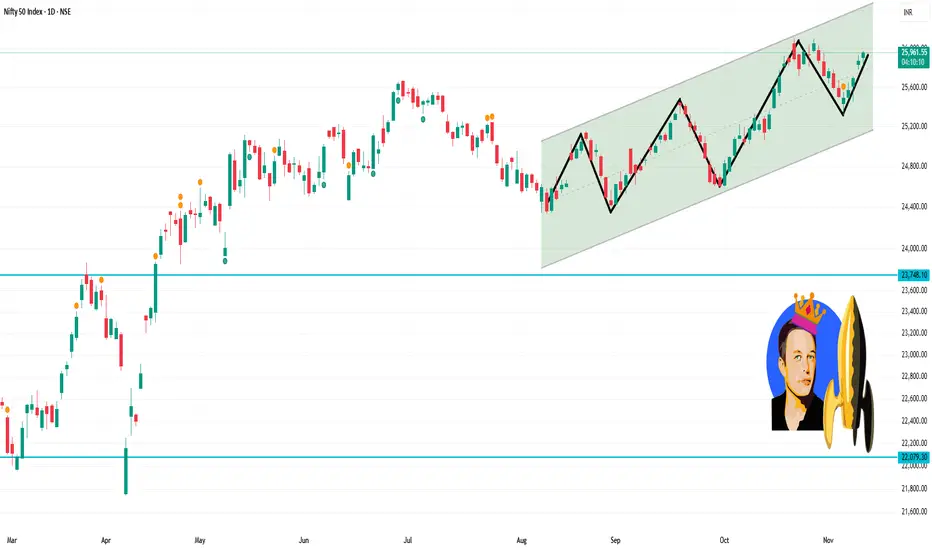
Nifty 50 1 Day Time Frame Current level: ≈ 25,876 INR.
Key resistance zone: ~26,000-26,100 INR.
Immediate support zone: ~25,500-25,600 INR.
📊 Key levels to watch today
Resistance (near-term): ~ 26,000-26,100 – a decisive breakout above this could open further upside.
Support (near-term): ~ 25,500-25,600 – if price falls below this, the structure could weaken.
Intermediate support: ~ 25,300-25,400 as a lower boundary in case of deeper pull-back.
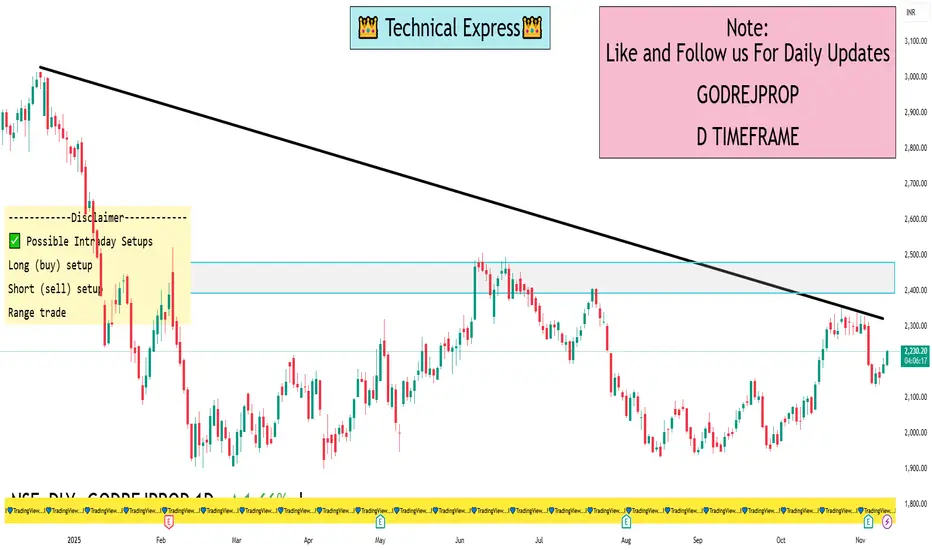
Candle Patterns Understanding the Basics of a Candlestick
Each candlestick represents the price movement of an asset within a specific time period — it could be one minute, one hour, one day, or even one week.
A candlestick consists of four main components:
Open – the price at which the asset started trading for the period.
Close – the price at which the asset finished trading for that period.
High – the highest price reached during the period.
Low – the lowest price reached during the period.
The body (the thick part of the candle) shows the range between the open and close prices.
If the close is higher than the open, the candle is bullish (usually green or white).
If the close is lower than the open, it’s bearish (usually red or black).
The thin lines above and below the body are called wicks or shadows, showing the highest and lowest traded prices.
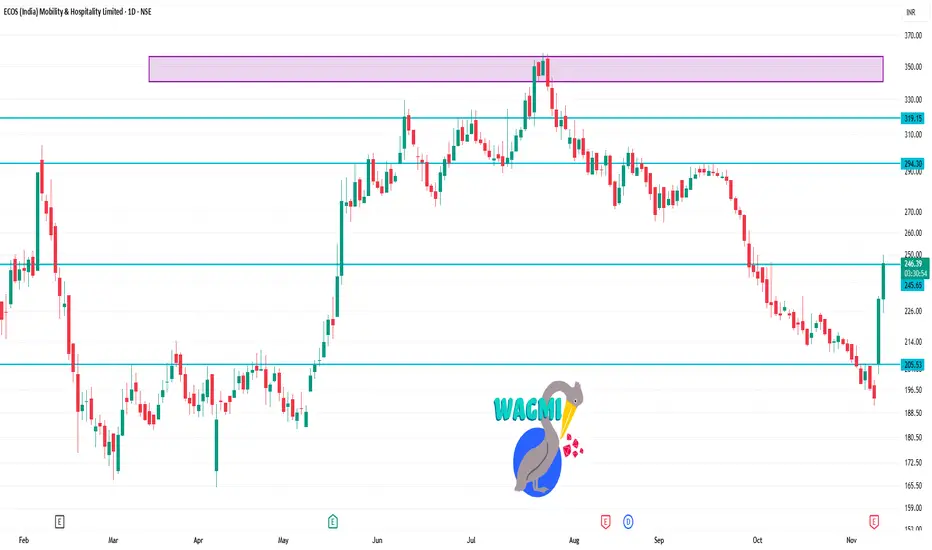
Real Knowledge Premium Charts 🔶 What Are Premium Chart Patterns?
Premium chart patterns are advanced price structures that go beyond basic formations like triangles or flags. They reveal institutional activity, market psychology, and volume–price alignment.
These patterns often indicate major breakouts, reversals, or continuation trends — giving traders an edge when combined with volume profile, market structure, and confirmation indicators.
PCR-Based Trading StrategiesFactors Affecting Option Prices
Option prices (or premiums) are influenced by several variables, collectively known as the Option Greeks:
Delta: Measures how much the option price changes for a ₹1 move in the underlying asset.
Gamma: Measures how much Delta changes with each ₹1 move in the underlying.
Theta: Measures time decay — how much the option loses value as expiry approaches.
Vega: Measures sensitivity to volatility — higher volatility increases option prices.
Rho: Measures sensitivity to interest rates (less relevant for short-term trades).
Among these, Theta (time decay) and Vega (volatility) play a major role in intraday and short-term trading.
Divergence Explained with ClarityOption Trading in India: Settlement and Expiry
In India, options are European-style, meaning they can only be exercised on the expiry date (unlike American options, which can be exercised anytime).
Most traders don’t hold options till expiry — they square off (buy or sell back) before expiry to realize profits or cut losses.
Expiry cycles:
Index Options (like NIFTY/BANK NIFTY): Weekly and Monthly expiries.
Stock Options: Monthly expiries only.
The settlement happens in cash; there’s no physical delivery for index options, while stock options can have physical settlement at expiry.
Part 1 How to Draw Accurate Support and Resistance LevelsThe Key Components of an Option Contract
Underlying Asset:
The financial instrument (e.g., stock or index) on which the option is based.
Strike Price:
The price at which the holder of the option can buy (for calls) or sell (for puts) the underlying asset.
Expiry Date:
The date on which the option contract expires. In India, options can be weekly or monthly.
Premium:
The price the buyer pays to purchase the option contract from the seller (also known as the writer). This premium is non-refundable.
Lot Size:
Each option contract represents a fixed quantity of the underlying. For example, one NIFTY option lot equals 50 units, while one BANK NIFTY option equals 15 units.
Part 2 Understanding the Master Candle ConceptWhat Are Options?
Options are derivative instruments, meaning their value is derived from an underlying asset. The underlying asset can be a stock, index, commodity, or currency.
There are two types of options:
Call Option:
Gives the buyer the right to buy the underlying asset at a specific price (called the strike price) before the expiry date.
Put Option:
Gives the buyer the right to sell the underlying asset at a specific price before the expiry date.
For example:
If you buy a NIFTY 50 call option at a strike price of 22,000, you are betting that the NIFTY will rise above 22,000 before expiry. If it does, your call option increases in value.
If you buy a NIFTY put option at 22,000, you’re betting the index will fall below 22,000 — and the value of your put option will rise as the index drops.
BAJFINANCE 1 Day time frame 🔍 Current Price Snapshot
Last quoted price: ₹1,012.30 (approx) on 12 Nov 2025.
Today’s intraday range: roughly ₹1,008.80 (low) to ₹1,017.70 (high).
52-week range: ~ ₹645.10 (low) to ~ ₹1,102.50 (high).
📌 Key Levels to Watch (1-day timeframe)
Resistance zone: Around ~ ₹1,100-₹1,105, near the 52-week high of ~ ₹1,102.50.
Support zone: Around ~ ₹1,000-₹1,020 — the current price area, with possible support below near ~ ₹990-₹1,000 if the price drifts downward.
If the stock breaks above ~ ₹1,100 with momentum, it may try to test higher levels. If it breaks down below ~ ₹1,000, watch for potential drop to next support zones (which could be ~ ₹950 or lower) though one would need to check historical intraday charts for those.
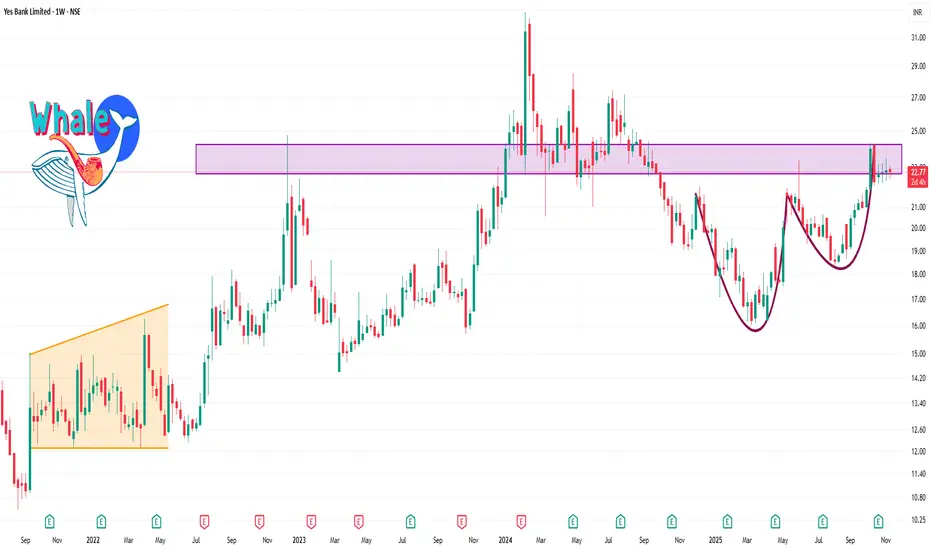
YESBANK 1 Week TIme Frame 📊 Key Technical Levels
Current price: ~ ₹22.70 (approx) per share.
52-week range: Low ~ ₹16.02, High ~ ₹24.30.
Recent support zone: around ₹22.00–₹22.50 appears to be a floor (given recent trades near ₹22.70)
Immediate resistance: near the recent highs ~ ₹24.00-₹24.30
If the price falls, next support might be around ₹20.50–₹21.00, given the lower circuit band was ~ ₹20.36.
✅ Short-term trading scenario
Bullish scenario: Enter (or hold) around ₹22.70 if momentum is positive and target ~₹25 with a stop-loss around ₹21.50.
Bearish scenario: If it breaks down below ~₹22.00 decisively, look for stop-loss trigger and potential target ~₹20.50 or lower.
Risk management is key: Because the price is relatively low and volatility can be higher, ensure stop-loss and position sizing are in line with your risk tolerance.
TCS 1 Month Time Frame 📊 1-Month Price Overview
On ~12 Nov 2025, TCS was trading at around ₹3,116.
Over the past month, highs in the ~₹3,120 range and lows around ~₹2,943.10 were observed.
The 1-month return is modest: about +2.9% according to one source.
Volatility: According to sector data, the beta over the last month is very low (~0.04) – indicating relatively low sensitivity in that timeframe.
✅ Key Levels
Support zone: ~₹2,940 to ~₹2,970 looks like a recent low range where the stock found some footing.
Resistance zone: ~₹3,090 to ~₹3,120 is a range where the stock has struggled to significantly break above in the past few weeks.
If those break:
A break above ~₹3,120 with conviction could open up upward move potential.
A break below ~₹2,940 may signal more downside risk in the near term.
TRENT 1 Day Time Frame 🎯 Key Current Levels
Last close (approx): ₹4,375.
Recent intraday traded range: High around ~₹4,396, Low around ~₹4,295.
52-week low: ~₹4,262.60; 52-week high: ~₹7,493.05.
✅ What to Watch During the Day
If price drops and holds above support ~₹4,260-4,220, it may bounce back — this is a potential intraday buyable support region (if other conditions align).
If price breaks below ~₹4,220 decisively (= strong volume, no immediate bounce), next support ~₹4,160 could come into play.
For upside: If price moves up and clears resistance around ~₹4,416-4,468 with good volume, it might test the nearer moving averages (~₹4,663) but that’s a larger move.
Be mindful of stock being in a weaker trend (below key moving averages) and recent earnings/growth concerns (which may limit upside) — fundamental headwinds matter too.
PAYTM 1 Week View 📊 Recent Price
The stock is trading at around ₹ 1,322 on the NSE.
The 52-week range is approximately: High ~ ₹ 1,353.80, Low ~ ₹ 651.50.
🎯 Short-Term (1-Week) Level Observations
Since the current level (~₹ 1,322) is very close to the recent 52-week high (~₹ 1,353.80), upside room is relatively limited unless there's strong catalyst.
If sentiment turns negative, nearby support to watch might be the recent consolidated zone around ₹ 1,300-₹ 1,280.
For a bullish breakout scenario: a sustained move above ~₹ 1,353 would be noteworthy and could prompt further upside momentum.
Bearish risk: if the price drops below support ~₹ 1,280, there could be a decline towards prior levels nearer the ₹ 1,250 zone or below.
⚠️ Important Caveats
The business fundamentals aren’t strong (loss-making, negative ROE/ROCE).
Technical levels alone don’t guarantee direction—market sentiment, macro, news will matter.
These are short-term levels; for longer-term investing you should look at company fundamentals, competitive context, etc.
CANFINHOME 1 Day View ✅ Current price
The stock is trading around ₹895.50-₹896.50.
On one site, the intraday range is shown as ~ ₹879.55 to ₹900.00.
52-week high around ~ ₹900.00 and low around ~ ₹558.50.
📉 Key support & resistance levels
Resistance zones
Around ₹900: This is near the 52-week high and recent intraday top.
A bit lower, some sources mark resistance at ~ ₹888-₹904.
Support zones
Close support zone around ₹872-₹856.
A stronger support bucket may lie around ₹781-₹789 (pivot / central point area).
Pivot / mid-levels
Central pivot point (daily) reported ~ ₹788.98.
🔍 My interpretation
Since the price is very close to its resistance (~₹900), the risk of a pull-back increases unless it breaks convincingly above that.
A break above ~₹900 with volume support could open higher levels (though evidence of those is weaker).
On the downside, should the price drop below ~₹872-₹856, the next meaningful support may be around the ~₹788 zone.
As always, major news, broader market trend, interest rates (given this is a housing finance company) will affect behaviour.
India’s IPO System:Securities and Exchange Board of India (SEBI)1. Understanding an IPO
An Initial Public Offering (IPO) is the process by which a privately held company offers its shares to the general public for the first time. Through an IPO, a company becomes publicly listed on a stock exchange, such as the National Stock Exchange (NSE) or the Bombay Stock Exchange (BSE). The primary goal of an IPO is to raise capital for expansion, reduce debt, fund research, or provide an exit opportunity for early investors and promoters.
An IPO marks a significant milestone in a company’s journey because it transitions from a private entity with limited ownership to a public entity with diverse shareholders. It also enhances the company’s visibility, credibility, and valuation in the market.
2. Regulatory Framework of the Indian IPO System
The IPO process in India is governed by SEBI, established in 1992, which regulates and ensures that companies follow strict norms before going public. SEBI’s guidelines protect investors’ interests and maintain transparency. Other regulatory bodies involved include:
Ministry of Corporate Affairs (MCA) – Oversees company law compliance.
Stock Exchanges (NSE/BSE) – Approve listing applications and trading permissions.
Registrar of Companies (ROC) – Records and validates company documents.
Depositories (NSDL/CDSL) – Facilitate electronic shareholding and transactions.
SEBI’s (Issue of Capital and Disclosure Requirements) Regulations, 2018 (ICDR) lay down the specific rules for disclosures, eligibility, and allotment in an IPO.
3. Types of IPO Issues in India
There are primarily two types of IPO issues based on pricing methods:
Fixed Price Issue:
The company sets a fixed price for each share in advance.
Investors know the share price before applying.
After closure, demand is revealed, and shares are allotted accordingly.
Book Building Issue:
The company sets a price band (e.g., ₹100–₹120).
Investors bid within the range, specifying the quantity and price they are willing to pay.
The final issue price is determined based on demand (cut-off price).
Most modern IPOs in India use this method due to market efficiency.
4. Eligibility Criteria for Companies
For a company to launch an IPO in India, SEBI mandates certain eligibility conditions:
Net Tangible Assets: Minimum of ₹3 crore in the preceding three years.
Net Worth: Minimum of ₹1 crore in the last three years.
Track Record: Positive operating profit for at least three out of the last five years.
Post-Issue Capital: Minimum ₹10 crore paid-up capital.
Promoter Contribution: Promoters must hold at least 20% of post-issue capital for one year.
If companies do not meet these conditions, they can still approach the market through alternative routes like the SME (Small and Medium Enterprises) Platform or offer for sale (OFS) mechanisms.
5. IPO Process in India
The IPO process involves several well-defined steps:
a. Appointment of Intermediaries
Companies hire financial and legal advisors, including:
Merchant bankers (lead managers)
Underwriters
Registrars to the issue
Auditors and legal consultants
These intermediaries help structure, price, and execute the IPO.
b. Due Diligence and Draft Red Herring Prospectus (DRHP)
The merchant banker prepares a Draft Red Herring Prospectus (DRHP), containing details like company background, financial statements, management, risks, and objectives of the issue.
SEBI reviews the DRHP to ensure full disclosure. After approval, it becomes the Red Herring Prospectus (RHP).
c. Marketing and Roadshows
Companies conduct roadshows to attract institutional and retail investors. The management team presents the company’s growth story, business potential, and financial performance.
d. Bidding and Allotment
In a book-building issue, bidding remains open for 3–5 working days.
Investors can bid through the Application Supported by Blocked Amount (ASBA) system, where funds remain blocked in their bank account until allotment.
Post-closure, the company determines the cut-off price and allots shares to investors.
e. Listing on the Stock Exchange
Once shares are allotted, they are credited to investors’ demat accounts.
The company’s shares are then listed on the NSE and/or BSE within six working days from the issue closure date (known as the T+6 timeline).
6. Categories of Investors in an IPO
SEBI divides investors into three main categories to ensure fair participation:
Qualified Institutional Buyers (QIBs):
Includes mutual funds, insurance companies, foreign portfolio investors (FPIs), and banks. They are allotted 50% of the issue size in book-built issues.
Non-Institutional Investors (NIIs):
High-net-worth individuals investing more than ₹2 lakh. Reserved quota is 15%.
Retail Individual Investors (RIIs):
Small investors investing up to ₹2 lakh. Reserved quota is 35%.
In some cases, an additional portion may be reserved for employees or shareholders.
7. Post-Listing Performance and Compliance
Once listed, companies must adhere to continuous disclosure norms, including quarterly results, corporate governance standards, and insider trading rules. SEBI and the stock exchanges monitor compliance to protect investors and maintain transparency.
Post-listing, share prices fluctuate based on demand, supply, and market perception, reflecting the company’s fundamentals and investor sentiment.
8. Role of Technology in India’s IPO System
India’s IPO ecosystem has become increasingly digitalized. Key advancements include:
ASBA system – Simplifies payment and ensures investor protection.
UPI integration – Allows retail investors to apply easily through mobile apps.
T+6 listing timeline – Reduces settlement time and enhances liquidity.
Online bidding platforms – Brokers and exchanges now offer real-time IPO bidding services.
These innovations have significantly increased retail participation in IPOs, especially among young investors.
9. Benefits of IPOs
For companies:
Access to large-scale capital for expansion.
Improved brand visibility and credibility.
Liquidity for existing shareholders and employees.
Easier access to debt financing post-listing.
For investors:
Opportunity to invest early in growing companies.
Potential for short-term listing gains.
Long-term wealth creation through equity growth.
10. Challenges and Risks
Despite its success, India’s IPO market faces certain challenges:
Market volatility – Global events can affect investor sentiment and pricing.
Overvaluation risk – Some IPOs are priced aggressively, leading to post-listing declines.
Information asymmetry – Retail investors may lack access to in-depth financial analysis.
Regulatory delays – SEBI’s scrutiny, while essential, can prolong the process.
However, ongoing reforms and improved investor education have made the system more resilient and transparent.
11. Recent Trends in the Indian IPO Market
A surge in tech-based IPOs (e.g., Zomato, Nykaa, Paytm).
Growing participation from retail and foreign investors.
Introduction of SME and startup platforms to support smaller firms.
Shift toward sustainable and ESG-compliant companies.
Pre-IPO placements and anchor investors strengthening price discovery.
12. Conclusion
India’s IPO system is a well-structured, transparent, and dynamic framework that bridges the gap between private enterprise and public capital. With the rise of digital platforms, regulatory reforms, and investor awareness, IPOs have become a cornerstone of India’s financial growth story. As India’s economy expands and more companies seek global exposure, the IPO ecosystem will continue to evolve, fostering innovation, inclusion, and wealth creation for millions of investors.
Option Chain: Powerful Tools for Traders and Investors1. What is an Option Chain?
An option chain, also known as an option matrix, lists all the available call and put options for a specific security. Each row represents an individual option contract with its strike price, expiry date, premium, and other key metrics. It helps traders compare multiple options to make informed decisions about trading strategies.
For example, on the NSE (National Stock Exchange of India), you can view the option chain for NIFTY 50, Bank NIFTY, or any stock. It displays both Call Options (CE) on the left and Put Options (PE) on the right.
2. Basic Terms in an Option Chain
a. Call Option (CE)
A Call Option gives the buyer the right, but not the obligation, to buy the underlying asset at a predetermined price (strike price) before or on the expiration date. Buyers of calls expect the underlying price to rise, while sellers (writers) of calls expect it to stay the same or fall.
b. Put Option (PE)
A Put Option gives the buyer the right, but not the obligation, to sell the underlying asset at a predetermined strike price before or on expiration. Buyers of puts expect the underlying asset’s price to fall, while sellers expect it to stay the same or rise.
c. Strike Price
The strike price is the price at which the option holder can buy (for a call) or sell (for a put) the underlying asset. Option chains list multiple strike prices around the current market price of the asset.
Example:
If NIFTY is trading at 22,000, the option chain may show strikes like 21,900, 22,000, 22,100, etc.
d. Expiry Date
The expiry date (or expiration date) is the date when the option contract ceases to exist. In India, options can have weekly or monthly expiries.
Weekly options expire every Thursday.
Monthly options expire on the last Thursday of the month.
After expiry, the option either becomes worthless (out-of-the-money) or is settled for profit/loss (in-the-money).
e. Option Type
Each contract specifies whether it is a Call (CE) or Put (PE). Traders choose the type based on their market outlook:
Bullish traders buy Calls or sell Puts.
Bearish traders buy Puts or sell Calls.
3. Option Chain Data Columns Explained
Each row in an option chain contains various data points. Let’s decode them one by one.
a. Last Traded Price (LTP)
The Last Traded Price is the most recent price at which the option contract was traded. It indicates the current market value or premium of the option.
Example:
If NIFTY 22,000 CE LTP = ₹120, that means the last buyer paid ₹120 for that call option.
b. Change and % Change
This shows how much the premium has moved compared to the previous trading session.
Change = LTP today – LTP yesterday
% Change = (Change / Previous LTP) × 100
It helps traders track intraday momentum and volatility.
c. Bid Price & Ask Price
Bid Price: The highest price a buyer is willing to pay.
Ask Price: The lowest price a seller is willing to accept.
The difference between them is the Bid-Ask Spread, which shows liquidity—narrow spreads indicate higher liquidity.
d. Bid Quantity & Ask Quantity
These represent how many contracts traders are willing to buy or sell at the bid or ask price.
Example:
If Bid Quantity = 1,200, it means traders want to buy 1,200 contracts at the bid price.
e. Open Interest (OI)
Open Interest is one of the most important metrics in an option chain. It represents the total number of outstanding (open) option contracts that have not been settled yet.
Rising OI indicates new positions being created.
Falling OI means positions are being squared off.
Interpretation Example:
Price ↑ and OI ↑ → Strong trend continuation (bullish).
Price ↓ and OI ↑ → Bearish trend strengthening.
Price ↑ and OI ↓ → Short covering.
Price ↓ and OI ↓ → Long unwinding.
f. Change in Open Interest
This shows how much the OI has changed compared to the previous session. It helps identify whether traders are entering new positions or exiting existing ones.
g. Volume
Volume indicates the number of option contracts traded during the day.
High volume shows active trading and high liquidity.
h. Implied Volatility (IV)
Implied Volatility reflects the market’s expectation of future volatility in the underlying asset.
High IV → Expensive premiums (greater uncertainty).
Low IV → Cheaper premiums (stable markets).
Traders use IV to assess whether options are overpriced or underpriced.
i. LTP vs. IV Relationship
If IV rises, option premiums generally increase (even if the underlying doesn’t move).
If IV falls, premiums tend to decline.
j. Intrinsic Value and Time Value
Each option premium consists of:
Intrinsic Value: The actual value if the option were exercised now.
Time Value: The extra value based on time to expiry and volatility.
Example:
If NIFTY = 22,100 and Call Strike = 22,000,
then Intrinsic Value = 100 (22,100 – 22,000).
4. In-the-Money (ITM), At-the-Money (ATM), Out-of-the-Money (OTM)
a. For Call Options:
ITM: Strike < Current Price
ATM: Strike ≈ Current Price
OTM: Strike > Current Price
b. For Put Options:
ITM: Strike > Current Price
ATM: Strike ≈ Current Price
OTM: Strike < Current Price
Traders often focus on ATM and nearby strikes, as they have higher liquidity.
5. Option Chain Analysis Techniques
a. OI Analysis
By comparing Call OI and Put OI, traders can estimate support and resistance levels:
High Call OI → Resistance zone (sellers active).
High Put OI → Support zone (buyers active).
b. Put-Call Ratio (PCR)
PCR = Total Put OI / Total Call OI
PCR > 1 → More Puts, bullish sentiment.
PCR < 1 → More Calls, bearish sentiment.
Traders use PCR as a contrarian indicator when extreme values appear.
c. Max Pain Theory
The Max Pain point is the strike price where the combined loss for option buyers is maximum and sellers benefit most.
At expiry, the underlying price often gravitates toward this level due to hedging and unwinding activity.
6. Real-World Example (NIFTY Option Chain)
Suppose NIFTY = 22,000, and we analyze the option chain:
Strike Call OI Put OI CE LTP PE LTP
21,900 25,000 10,000 160 70
22,000 30,000 28,000 120 120
22,100 45,000 20,000 80 160
Interpretation:
Strong Call OI at 22,100 → Possible resistance.
Strong Put OI at 22,000 → Possible support.
Market range: 22,000–22,100.
7. Advanced Option Chain Terms
a. Delta
Measures how much an option’s price moves for every ₹1 change in the underlying.
Call Delta: 0 to +1
Put Delta: 0 to –1
Example: Delta = 0.5 means the premium moves ₹0.50 for every ₹1 move in the asset.
b. Theta
Represents time decay—how much the option loses in value each day as expiry nears.
c. Gamma
Shows the rate of change of Delta. High Gamma means Delta will change rapidly with price movements.
d. Vega
Measures sensitivity of an option’s price to changes in volatility. High Vega means the option is more affected by IV changes.
e. Rho
Represents sensitivity of option price to interest rate changes.
8. Conclusion
Understanding option chain terms is essential for anyone involved in derivatives trading. The data helps traders:
Gauge market sentiment (bullish or bearish).
Identify support/resistance zones through OI.
Track volatility via IV.
Recognize trading opportunities through volume and price changes.
A skilled trader doesn’t just read numbers — they interpret the psychology behind them. With consistent analysis, the option chain becomes not just a data sheet, but a strategic roadmap for profitable trading decisions in dynamic markets like India’s NSE.
Trading Secrets in the Indian Market1. Understanding Market Structure
One of the most fundamental secrets of successful trading in India lies in mastering the market structure. The Indian market operates through multiple participants: retail traders, domestic institutional investors (DIIs), foreign institutional investors (FIIs), and algorithmic traders. Each group behaves differently, influencing price trends and volatility.
FIIs, for instance, often drive large movements due to their massive volumes, while DIIs provide stability by investing in long-term opportunities. Observing the data from NSE’s FII/DII activity reports can reveal the underlying sentiment of the market. Smart traders align their trades with institutional flow instead of going against it.
2. The Power of Technical Analysis
Technical analysis remains a key secret weapon for traders. Charts reveal the footprints of big players, showing where buying or selling pressure is concentrated.
Common tools like support and resistance, moving averages, candlestick patterns, and indicators such as RSI, MACD, and Bollinger Bands help traders anticipate price movements. However, the real secret lies in combining multiple signals for confirmation. For example, if a stock breaks above a resistance level with high volume and RSI crosses above 50, it indicates strong bullish momentum.
Professional traders also focus on price action trading, which eliminates noise and focuses on pure price movement — a strategy that works well in Indian stocks with high liquidity.
3. Fundamental Strength Matters
While short-term traders often focus on charts, long-term success in the Indian market is built on strong fundamentals. Knowing a company’s business model, revenue growth, debt levels, and profit margins can protect traders from speculative traps.
One secret many professionals use is the combination of technical and fundamental analysis — entering technically strong stocks that are also fundamentally solid. For instance, during bull markets, stocks like HDFC Bank, Infosys, or Reliance Industries often outperform because they have strong fundamentals along with technical confirmation.
4. Risk Management: The Hidden Key
Most traders lose not because of bad strategy, but due to poor risk management. The golden secret of trading is to protect capital first and aim for profit later.
A disciplined trader uses a stop-loss in every trade. The general rule is never risk more than 1–2% of total capital on a single trade. Moreover, position sizing ensures that even a series of losses doesn’t wipe out one’s account.
For instance, if your capital is ₹1,00,000, risking ₹1,000–₹2,000 per trade ensures survival through market volatility. As Warren Buffett famously said, “The first rule of investing is don’t lose money. The second rule is don’t forget rule number one.”
5. Market Psychology and Emotion Control
Another major secret lies in mastering one’s psychology. The Indian market, like any other, tests patience and emotions daily. Fear and greed drive most traders’ decisions — buying when prices soar and selling when panic hits.
Experienced traders, however, do the opposite. They follow a contrarian approach, buying when others are fearful and selling when others are greedy. For example, during market corrections, quality stocks often become undervalued — a golden opportunity for long-term positions.
Maintaining emotional balance through journaling, back-testing, and following a trading plan is essential for consistent performance.
6. Sector Rotation and Market Cycles
The Indian market operates in cycles — not all sectors move together. Understanding sector rotation is one of the least known but most powerful trading secrets.
At times, IT and pharma sectors perform well, especially when the rupee weakens, while banking and infrastructure rally during economic expansion. By tracking sector indices like NIFTY BANK, NIFTY IT, or NIFTY FMCG, traders can identify where money is flowing.
For instance, if NIFTY IT starts outperforming the benchmark NIFTY 50, traders can focus on stocks like TCS or Infosys for better risk-adjusted returns.
7. The Role of Volume and Open Interest
Volume and open interest (OI) provide deep insights into the strength of a trend. Increasing volume during a price rise signals strong buying interest, while high open interest in futures indicates active participation by large traders.
For example, in the derivatives market, if both price and open interest rise simultaneously, it indicates a long build-up. Conversely, rising OI with falling prices shows short build-up.
Smart traders monitor OI data from NSE to confirm the direction before entering trades, especially in index futures like NIFTY and BANKNIFTY.
8. The Secret of Compounding in Positional Trading
While day trading offers quick rewards, positional trading can yield exponential results through compounding. Holding fundamentally strong stocks for weeks or months allows traders to benefit from both price appreciation and dividend payouts.
For instance, investors who held Maruti Suzuki, HDFC Bank, or Infosys for several years witnessed multi-fold returns. The secret lies in letting profits run instead of booking gains too early — a habit that differentiates successful traders from inconsistent ones.
9. News, Events, and Economic Indicators
Another secret weapon is staying informed about macroeconomic and corporate events. In India, announcements like RBI policy decisions, GDP data, inflation rates, and quarterly corporate earnings influence short-term price movements.
Professional traders often anticipate these events and adjust their positions accordingly. For example, during the Union Budget or RBI policy week, volatility spikes — offering opportunities for both breakout and options traders.
10. Algorithmic and Automated Trading
In recent years, algorithmic trading has emerged as a major force in Indian markets. Many institutions and advanced retail traders use automated systems to execute trades based on predefined strategies.
The secret benefit is precision and discipline — algorithms remove emotional bias and can execute hundreds of trades per second. With platforms like Zerodha Streak and AlgoTest, even retail traders can now automate strategies based on indicators or price action, increasing their efficiency.
11. Patience and Discipline Over Prediction
A hidden truth most traders learn late is that discipline beats prediction. No one can predict the market perfectly, but consistent execution of a proven strategy yields results over time.
The best traders focus on probability, not certainty. They understand that losses are part of the game and use them as feedback to refine strategies. Maintaining discipline — following stop-losses, not overtrading, and adhering to trading plans — builds long-term success.
12. The Power of Continuous Learning
The Indian market evolves rapidly. New instruments like index options, ETFs, and sectoral funds constantly appear. Hence, continuous learning becomes a secret ingredient for staying ahead.
Top traders read books, follow market experts, and backtest new strategies regularly. They treat trading as a business, not a gamble — focusing on skill improvement rather than quick profits.
Conclusion
The “secrets” of trading in the Indian market are not hidden in mystery but in discipline, knowledge, and psychology. Success depends on understanding market behavior, managing risks, following technical and fundamental cues, and maintaining emotional balance.
The Indian stock market offers immense opportunities for those who approach it with strategy and patience. By applying these principles — reading institutional flow, following sector trends, using proper risk control, and embracing continuous learning — traders can move from random speculation to consistent profitability.
Ultimately, the biggest secret of trading is simple: there are no shortcuts — only systems, discipline, and experience.
Trading with Automated Systems1. Introduction to Automated Trading Systems
An automated trading system (ATS) is a computer program that follows pre-defined instructions to execute trades in the financial markets. These instructions—based on price, time, indicators, or mathematical models—allow traders to open and close positions automatically without manual input. The main objective of automation is to improve consistency and remove the psychological barriers that often affect manual trading decisions.
The system can operate across multiple asset classes such as equities, commodities, forex, derivatives, and cryptocurrencies. It can analyze multiple charts simultaneously, detect trading opportunities, and place trades within milliseconds—something human traders cannot match.
2. How Automated Trading Works
Automated trading is based on algorithms—sets of rules or formulas that define how and when trades are made. The process usually involves several steps:
Strategy Development:
Traders define a strategy using technical indicators (like moving averages, RSI, MACD) or statistical models (like mean reversion, momentum, or arbitrage).
Coding the Algorithm:
Once the rules are defined, they are coded into a trading platform (such as MetaTrader, NinjaTrader, or Python-based systems) using programming languages like MQL, Python, or C++.
Backtesting:
The system is tested on historical market data to evaluate its performance, profitability, drawdown, and accuracy.
Optimization:
Parameters are adjusted to improve the system’s performance while avoiding “overfitting,” where the model works only for historical data but fails in live markets.
Execution:
Once tested, the system is deployed for live trading. It monitors the market continuously and executes trades automatically when the defined conditions are met.
Monitoring and Maintenance:
Even though the system is automated, traders must monitor its performance to ensure technical stability and make adjustments when market conditions change.
3. Key Components of Automated Trading Systems
Automated systems rely on several essential components for successful operation:
Trading Algorithm: The heart of the system, it defines when to buy or sell based on predefined rules.
Market Data Feed: Provides real-time price, volume, and order book information.
Execution Engine: Places orders in the market and ensures fast, accurate execution.
Risk Management Module: Sets stop losses, take profits, and position sizing limits to control exposure.
Backtesting Engine: Tests strategies on historical data to evaluate performance.
Broker API: Connects the system to the trading platform for real-time order execution.
Each component must work in harmony to ensure the system performs efficiently, reliably, and safely.
4. Advantages of Automated Trading
1. Speed and Efficiency:
Algorithms can process vast amounts of data and execute trades in milliseconds. This speed is crucial in markets where price fluctuations happen within seconds.
2. Emotion-Free Trading:
Human emotions—fear, greed, and impatience—often lead to mistakes. Automated systems eliminate these factors, ensuring decisions are made purely based on logic and data.
3. Consistency and Discipline:
Since the system follows rules without deviation, it ensures trading consistency and discipline.
4. Backtesting Capability:
Traders can test their strategies on past data before risking real capital, allowing them to refine and validate their approaches.
5. Diversification:
Automated systems can trade multiple assets simultaneously, spreading risk across different instruments and markets.
6. 24/7 Operation:
In global markets like forex and crypto, automated systems can operate continuously without breaks, capturing opportunities even when traders are offline.
5. Risks and Challenges in Automated Trading
Despite its benefits, automated trading also has potential drawbacks:
1. Technical Failures:
Power outages, internet disruptions, or server failures can interrupt trade execution, leading to losses.
2. Over-Optimization:
Traders may “curve fit” their strategies to historical data, creating systems that perform well in testing but fail in real-time markets.
3. Market Volatility:
Sudden market shifts or black swan events can cause large losses if the system cannot adapt quickly.
4. Lack of Human Judgment:
Automated systems follow logic blindly and may miss contextual market information or news events that impact price movements.
5. Cost and Complexity:
Developing and maintaining advanced trading algorithms requires technical skills and can be expensive due to data feeds, servers, and platform costs.
6. Latency and Slippage:
Even minor execution delays can cause slippage—where trades occur at a slightly different price than expected, impacting profitability.
6. Types of Automated Trading Strategies
Trend-Following Systems:
These strategies identify and trade in the direction of prevailing market trends using indicators like moving averages and breakouts.
Mean Reversion Strategies:
They assume prices will revert to their average level after deviation and trade accordingly.
Arbitrage Strategies:
Exploit price differences between assets or markets to earn risk-free profits.
Scalping Strategies:
Involve executing a large number of trades to capture small price movements.
High-Frequency Trading (HFT):
Uses powerful computers to execute thousands of trades per second, capitalizing on minute price inefficiencies.
News-Based Trading:
Algorithms analyze economic reports or sentiment data to make quick trades based on market reactions.
Machine Learning-Based Trading:
AI-driven models learn from data patterns to predict price movements and adjust dynamically to market changes.
7. Platforms and Tools for Automated Trading
There are several platforms designed for algorithmic trading:
MetaTrader 4/5: Widely used in forex, supports automated trading through Expert Advisors (EAs).
NinjaTrader: Suitable for futures and equities with advanced charting tools.
Interactive Brokers API: Offers professional-grade access for institutional traders.
TradingView (with Pine Script): Enables custom strategy scripting and backtesting.
Python and R: Common programming languages used for custom algorithm development.
QuantConnect, AlgoTrader, and MetaStock: Cloud-based or hybrid solutions for quantitative traders.
8. Risk Management in Automated Systems
No trading system is perfect, and risk management is crucial. Automated systems should integrate the following controls:
Stop-Loss Orders: Automatically limit losses if prices move unfavorably.
Take-Profit Orders: Lock in profits once a target is achieved.
Position Sizing: Allocate capital proportionally to reduce exposure.
Diversification: Spread investments across assets to mitigate systemic risk.
Periodic Review: Regularly monitor system performance and adjust parameters as needed.
Proper risk control ensures long-term survival even when markets behave unpredictably.
9. The Future of Automated Trading
The future of automated trading is being shaped by artificial intelligence (AI), machine learning (ML), and big data analytics. These technologies allow systems to adapt dynamically, detect hidden patterns, and evolve based on market conditions. Quantum computing may further transform trading by enabling complex computations in real time.
Furthermore, decentralized finance (DeFi) and blockchain-based platforms are introducing smart contract trading bots, expanding automation beyond traditional financial markets. As technology evolves, automation will become more accessible, transparent, and efficient.
10. Conclusion
Automated trading systems have transformed financial markets by combining data analytics, computing power, and strategic precision. They allow traders to operate with discipline, efficiency, and emotion-free execution. However, automation is not a “set-and-forget” solution—it demands rigorous testing, constant monitoring, and sound risk management.
When used wisely, automated trading enhances performance, minimizes human errors, and provides a competitive edge in a fast-moving global marketplace. As technology continues to evolve, the integration of AI, machine learning, and blockchain will make automated trading even more intelligent, adaptive, and powerful—reshaping how both retail and institutional investors participate in the financial world.
Understanding the Master Candle ConceptOption trading is one of the most exciting and flexible segments of the financial markets. It allows traders to profit not only when prices rise, but also when they fall — and even when they stay relatively stable. In simple terms, an option is a financial contract that gives the buyer the right, but not the obligation, to buy or sell an underlying asset at a predetermined price within a specified period. In India, options are primarily traded on stock indices (like NIFTY 50 or BANK NIFTY) and individual stocks on exchanges like the NSE (National Stock Exchange) and BSE (Bombay Stock Exchange).
Option Trading in India – Regulations
Option trading in India is regulated by the Securities and Exchange Board of India (SEBI).
Contracts are standardized and traded through exchanges like NSE and BSE.
All participants must trade through SEBI-registered brokers, and margins are monitored daily to control risk.
How to Use Candlestick Patterns in TradingA candlestick represents price movement for a given time frame.
It shows:
Open price – where the candle started
Close price – where the candle ended
High price – the top point (shadow or wick)
Low price – the bottom point (shadow or wick)
👉 If the close price > open price, it’s a bullish candle (often green or white).
👉 If the close price < open price, it’s a bearish candle (often red or black).
Understanding The Premium Chart Patterns 1. Hedging: To protect against losses in existing positions.
Example: If you own Nifty stocks but fear a market fall, buying a put option acts as insurance.
2. Speculation: To profit from expected price movements with limited risk.
Example: Buying a call if you expect prices to rise.
3. Income Generation: Selling (writing) options to earn a premium — the price paid by the buyer of the option.