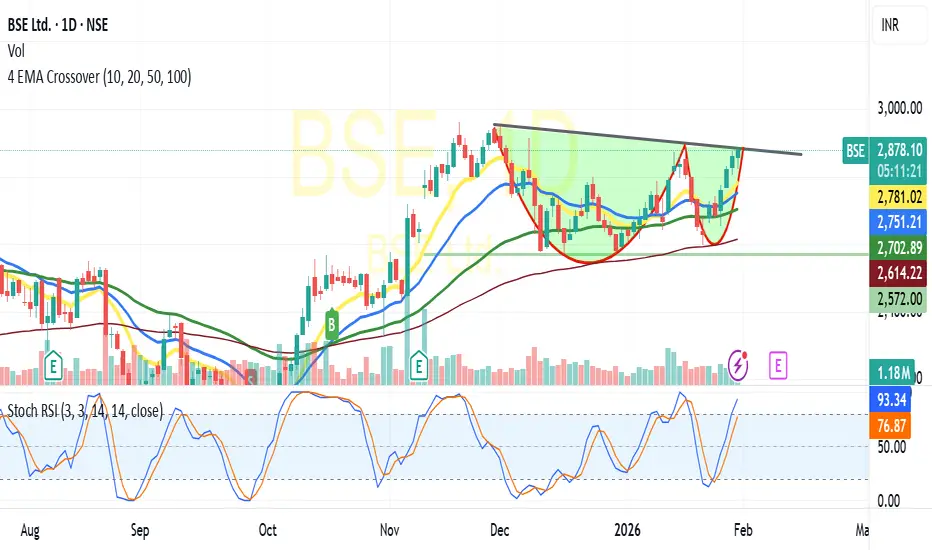
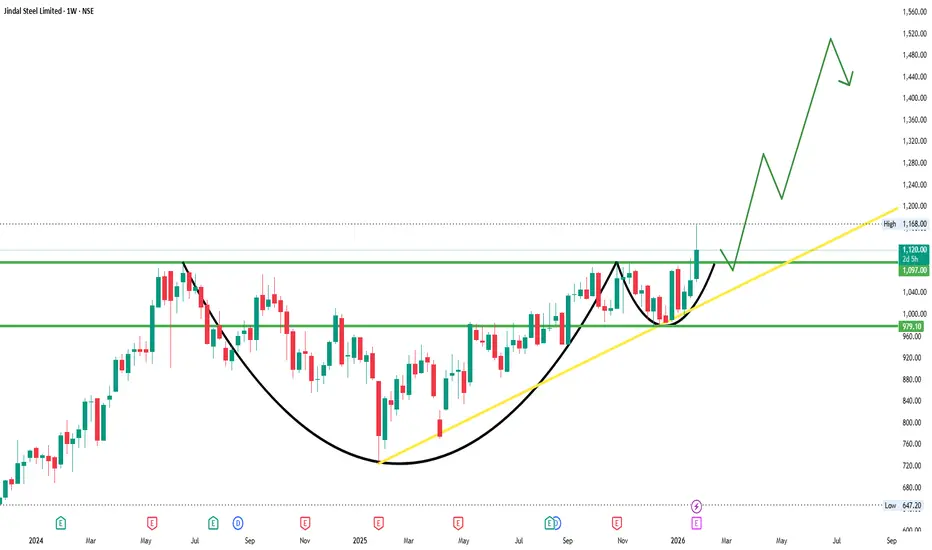
USDCHF – Gap Down From Resistance, Price Testing Key Support!USD/CHF was trading near a well-defined resistance zone where price has faced repeated rejection in the past. This clearly showed that sellers were active at higher levels and the market was struggling to sustain upside momentum.
From this resistance, the market opened with a gap down, which often signals aggressive selling and position unwinding rather than a slow intraday move. The gap was also supported by short-term U.S. dollar weakness, as the market adjusted expectations around risk sentiment and interest rates. When dollar weakness aligns with technical resistance, price usually reacts sharply.
After the gap down, price moved lower toward a major support zone, an area where buyers have previously stepped in. This makes the current zone a key decision point, either buyers defend again, or further downside continuation opens up.
This move is a result of both technical rejection and fundamental pressure, not random price action.
Disclaimer
This analysis is for educational purposes only and does not constitute financial advice. Trading involves risk, and past performance does not guarantee future results. Please manage risk responsibly.
Community ideas
Buy Dixon, W4 of Primary degree completionDixon completed W3 of Primary degree on 17 Dec 24 and ever since has been undergoing correction / forming W4 of Primary degree. The original thought was it was forming zigzag.
It completed Wave A on 7 Apr 25 and had a very good retracement of over 90% for Wave B (hence a flat) and completed same on 25 Sep 25 and started forming Wave C.
As per wave markings given in the chart, it is likely that stock has completed W5/Wave C at 50% of the overall length of W1-3 and took support at subwave iv of W3 region of the original impulse. This is also a general guideline under wave theory. (W4 tend to register their maximum retracement within the span of travel of the previous fourth wave of one lesser degree, most commonly near the level of its terminus).
Wave C has formed lower low than Wave A of the zigzag
RSI has formed clear divergence
Good support zone.
Buy with a stop loss below of 10,600. Target previous highs (medium term target).
INDIANB (Indian Bank)INDIAN BANK is showing a strong and constructive setup.
The stock recently made a fresh all-time high near 894, followed by a healthy pullback, which is a positive sign and often helps in building a stronger base for the next move. Importantly, the pullback was well-controlled, indicating limited selling pressure.
Price has now resumed its upward move and is trading above all key EMAs, reflecting continued strength and bullish momentum. The overall structure remains intact with higher highs and higher lows.
A decisive breakout from the current consolidation zone could open the door for a fresh upside move in the coming sessions.
Keep it in your watchlist.
✅ If you like my analysis, please follow me here as a token of appreciation :) in.tradingview.com/u/SatpalS/
📌 For learning and educational purposes only, not a recommendation. Please consult your financial advisor before investing.
ACC (NSE) | Weekly | Harmonic Reversal This chart highlights a high-probability bullish reversal on ACC (Weekly timeframe) based on Harmonic structure + Smart Money Context.
🔹 Pattern Insight
A well-formed XABCD harmonic structure has completed near the 0.886–0.918 PRZ
Price has respected the D-point demand zone, indicating smart money absorption
Extended consolidation near lows suggests selling pressure exhaustion
🔹 Why This Setup Is Strong
✅ Confluence of harmonic PRZ + higher-timeframe demand
✅ Structural symmetry maintained throughout the pattern
✅ Risk clearly defined below the PRZ (ideal R:R setup)
✅ Weekly context favors trend resumption on the upside
🔹 Trade Plan (Positional View)
Entry Zone: Near D-point / demand area
Invalidation: Below structure low
Upside Projection: Towards 2800–2900 zone
Bias: Medium- to long-term bullish
📌 This setup is best suited for positional traders & investors who follow harmonics, market structure, and smart money concepts.
⚠️ This is not financial advice. Always manage risk and confirm with your own analysis.
W. D. Gann TIME CYCLE VS ASTRO-TIME CYCLE (Real Estate Boom)W. D. GANN TIME CYCLE VS ASTRO TIME CYCLE
W. D. Gann and "Astro Time Cycles" are not actually opposing forces; rather, astrology was the secret engine behind Gann’s most famous time cycles.
While modern technical analysis often separates "Gann Angles" (math) from "Astro Cycles" (planets), Gann himself viewed them as the same thing. He believed the "Law of Vibration" governed both the movement of planets and the movement of stocks.
Here is the breakdown of how these two concepts relate and where they differ in application.
The Core Relationship : Geometry vs. Astronomy
Gann used geometry and math to "hide" his astrological findings. He often spoke in "code" because astrology was controversial in the early 20th-century financial world.
Gann’s "Fixed" Time Cycles
Gann identified several specific time intervals that he claimed were "natural" cycles of the market. While these look like simple math, they are almost all derived from the movement of the Earth or other planets.
The 1-Year Cycle (365 days): One full orbit of the Earth around the Sun.
The 10-Year & 20-Year Cycles: Closely linked to the Jupiter-Saturn cycle (which meets every ~20 years).
The 30-Year Cycle: Based on the orbit of Saturn (~29.5 years).
The 60-Year Cycle: Gann’s "Great Cycle," which is three Saturn orbits or one full cycle of the Chinese Sexagenary system.
The 90-Day Cycle: A "Square" in astrology (90° aspect), representing a period of seasonal change and market friction.
Modern "Astro Time Cycles" vs. Gann
Today, traders who use "Astro Cycles" without the Gann label focus strictly on:
Planetary Retrogrades: Specifically Mercury and Venus, often linked to market reversals or "fake-outs."
Inversion/Ingress : When a planet moves into a new zodiac sign (e.g., Sun entering Aries).
Eclipses : Used as "wildcard" markers for extreme volatility.
This was a topic for an astro-cycle discussion, but today we'll talk about what happens to real estate when Jupiter is in a water sign and how rallies begin.
For example, I am using the chart for Godrej Properties Ltd stock.
The water signs in the zodiac are as follows: (Cancer, Scorpio, and Pisces).
Jupiter is considered 'Guru' (teacher) in Vedic astrology, symbolizing expansion, wealth, and wisdom. When it comes to the stock market, Jupiter governs sectors that form the backbone of the economy. Jupiter is the planet of wealth.Wealth includes assets/property as well.Real Estate & Housing Finance (The 4th House Connection). Cancer traditionally rules the 4th House—the domain of land, buildings, and comfort.
We are likely to see a "Housing Super-Cycle." This isn't just about luxury condos, but Affordable Housing and Housing Finance Companies (HFCs).
Friends, whenever Jupiter begins its transit through a water sign, just look at the kind of surge we see in the stock market! It's incredible. This realization comes when you learn to correlate the charts with the planetary positions according to astrology. And this technique goes far beyond chart patterns and price action. We hesitate to use astrological methods, even though it is a part of our own heritage.
RBL Bank Shows a Powerful Cup Pattern Breakout on Weekly ChartRBL Bank has completed a textbook Cup & Handle pattern on the weekly timeframe, signaling a meaningful shift from a long consolidation phase into a fresh bullish trend. The rounded base formation highlights a gradual transition from distribution to accumulation, indicating growing confidence among long-term market participants.
The most critical development is the decisive breakout above the handle resistance zone, which had previously acted as a strong supply area. This breakout is supported by strong price expansion and follow-through candles, confirming that buyers are in control. Such breakouts from multi-month bases often lead to sustained trending moves rather than short-lived rallies.
From a price projection standpoint, the measured move of the cup suggests an initial upside target around 380+, followed by an extended projected target near 440+ if momentum continues to build. The current structure also shows healthy consolidation above the breakout level, which is a positive sign and often acts as a base for the next leg higher.
Risk management remains clearly defined in this setup. As long as the price holds above the breakout support zone near 280–290, the bullish structure stays intact. Any sustained breakdown below this area would invalidate the pattern and shift the outlook back to neutral or corrective.
Overall, RBL Bank appears to be transitioning into a new medium-to-long-term uptrend, backed by a strong chart structure and favorable risk–reward dynamics. This makes it a compelling setup for positional traders and investors who prefer structurally confirmed breakouts with clear targets and controlled downside risk.
Tata Steel Ltd The chart exhibits a Cup and Handle pattern on Tata Steel’s daily timeframe.
1. Pattern structure:
Cup: Formed from Nov to early Jan, with a rounded decline and recovery, creating the “U” shape.
Handle: A tighter consolidation from mid‑Jan to Feb, retracing ~10–15% of the cup’s advance, which is typical for a healthy handle.
2. Breakout:
The price has pierced the handle’s resistance (≈₹178) with decent volume (26 M shares), confirming the bullish signal.
The breakout candle is relatively strong, suggesting momentum behind the move.
3. Volume analysis:
Volume spikes during the cup’s formation and at the breakout, indicating institutional interest.
Handle volume is lower, showing reduced selling pressure and consolidation.
4. Target calculation:
Measured move: The depth of the cup (≈₹26.05) is projected upward from the breakout point, giving a target of ₹212 (13.93% upside).
Intermediate target: +₹9.32 (4.99%) to ₹197, often hit first in a gradual climb.
5. Support & resistance:
Immediate support now lies at the handle’s base (≈₹168–172).
Strong resistance is the previous high near ₹212.
6. Trading considerations:
Entry: Confirm close above ₹178 with volume > average; enter long.
Stop‑loss: Place below the handle’s low (≈₹168) to limit risk.
Position sizing: Allocate based on risk tolerance and the ~13% target upside.
Understanding Inverted Head & Shoulder Pattern & RSI MomentumBase Chart : TATA CONSUMER PRODUCTS LIMITED
🔍 What is an Inverted Head & Shoulder Pattern?
Definition: The inverted head & shoulder is a bullish reversal pattern that often signals the end of a downtrend or prolonged consolidation.
Structure:
Left Shoulder: A decline followed by a rebound.
Head: A deeper decline forming the lowest point.
Right Shoulder: A shallower decline followed by recovery.
Neckline: The resistance line connecting the peaks between the shoulders and the head.
Psychology: It reflects weakening selling pressure and strengthening buying interest, often preceding a trend reversal.
📊 Importance of Neckline Breakout on Long-Term Charts
Confirmation: The pattern is validated only when price breaks above the neckline with strong volume.
Long-Term Significance: On weekly charts, a breakout suggests sustained bullish momentum, not just short-term noise.
Target Projection: Traders often estimate upside potential by measuring the distance from the head to the neckline and projecting it upward from the breakout point.
⚡ RSI Indicator and Momentum Levels
RSI Above 50: Indicates bullish bias. Prices are generally supported by stronger buying interest.
RSI Approaching 60: Signals strengthening momentum. Crossing above 60 often aligns with medium- to long-term uptrends.
Momentum Confirmation: When RSI rises alongside a neckline breakout, it adds conviction to the bullish setup.
🛡️ Risk Management in Trading the Pattern
Entry Strategy: Enter only after a confirmed breakout above the neckline, ideally with volume support.
Target : Target is usually set to the height of the deep of the shoulder from neckline.
Stop-Loss Placement: Commonly set just below the right shoulder or neckline to limit downside risk.
Position Sizing: Avoid overexposure; allocate capital proportionally to risk tolerance.
False Breakouts: Be cautious of premature entries. Wait for sustained closes above the neckline.
💡 Investors’ and Traders’ Takeaway
For Traders: The inverted head & shoulder combined with RSI momentum offers a high-probability setup, but discipline in execution and risk management is crucial.
For Investors: On long-term charts, such patterns can mark the beginning of multi-month or multi-year uptrends, making them valuable for portfolio positioning.
Balanced Approach: Technical signals should be paired with fundamental analysis for stronger conviction.
✨ In summary, the inverted head & shoulder is a powerful bullish signal, especially when confirmed by RSI strength above 50 and 60. However, risk management remains the cornerstone of successful trading.
PNB Ready to touch ATH 225+ in next 1.5-2 Years timeframePNB Ready to touch ATH 225+ in next 1.5-2 Years timeframe
Fundamentals:
Stock is trading at 1.07 times its book value
Company has delivered good profit growth of 111% CAGR over last 5 years
Company has been maintaining a healthy dividend payout of 19.2%
Technical:
Chart has been forming rounding bottom on Monthly chart & is on breakout levels. Move above 145 will take the stock to 225+ Levels.
Timeframe - 1.5-2 Years
Earning potentials - 60%+
Happy Investing.
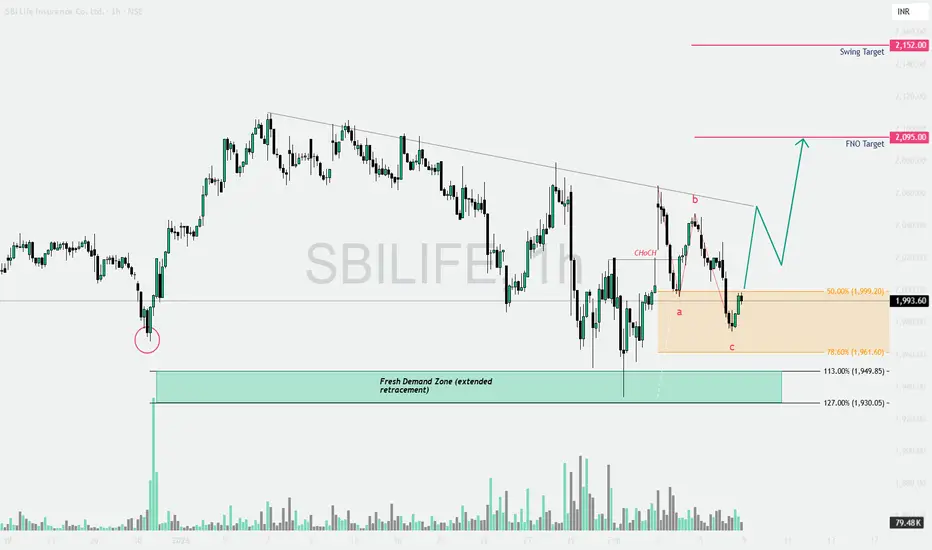
SBI Life: Double Top Signals Short-Term Downside RiskSBI Life Insurance is showing signs of a short-term trend reversal after forming a well-defined double top near the ₹2,105–2,110 zone on the hourly chart. The stock has slipped below its neckline support around ₹2,065, confirming bearish structure and indicating distribution at higher levels.
Momentum indicators reinforce the downside bias, with the RSI trending near 39 and MACD remaining in negative territory, suggesting selling pressure is still dominant. As long as prices remain below ₹2,085–2,100, the stock is vulnerable to further downside toward ₹2,040, followed by ₹2,020 and 2,000.
ASTRAL ltd ready to move higher?No strong breakout yet. Stock is consolidating.
above 1500 looks like a breakout level
sl 20-25%
tp 50-75%
rrr 1:2
Key levels to watch:
Support: ₹1,400–1,420
Major support: ₹1,300
Resistance: ₹1,520–1,550
Astral has the potential to move higher, but the ride may not be smooth, there are mixed signals in the short term and fundamental drivers that matter most over the long run high-quality compounder going through a slowdown phase.
If you’re trading short-term, watch for confirmed breakout levels and volume strength.
If you’re investing long-term, fundamentals like earnings growth, market share, and sector momentum will be key.
ALKYLAMINE 1 Week Time Frame 📌 Current Price (Latest Market Levels)
Approximate current trading price: ₹1,570 – ₹1,610 range on NSE (mid‑January 2026) — slightly below recent intraday highs/lows around this zone.
52‑week range: Low ~₹1,506 • High ~₹2,438.
Short‑term price action has been slightly bearish to neutral around this zone with some down‑side pressure evident.
📈 1‑Week (Weekly) Technical Levels
🔑 Weekly Pivot Levels
These come from multiple pivot calculations (classic & fibo), giving a weekly frame support/resistance range:
Weekly Pivot Zone
Pivot (~1,580 – 1,584) — acts as the mid‑point level this week.
Weekly Resistance
R1: ~₹1,610 – 1,615 (first resistance ahead).
R2: ~₹1,630 – 1,650 (stronger resistance).
R3: ~₹1,670 – 1,680 (broader weekly upper target).
Weekly Support
S1: ~₹1,545 – 1,555 (initial support).
S2: ~₹1,520 – 1,530 (deeper support).
S3: ~₹1,485 – 1,495 (significant near‑term buffer).
📌 Weekly pivot levels are useful to gauge if price holds above support — which implies stay bullish weekly — or breaks down through support — into bearish continuation.
💡 What This Means for the Next 1 Week
✅ Key levels to watch for directional bias:
Weekly Bullish trigger: Close above ₹1,610‑1,615
Weekly bearish trigger: Close below ₹1,545
Apollo Tyres Ltd – Chart Analysis (Daily)Price has respected the ₹495–500 support zone multiple times, indicating strong demand at lower levels.
A bullish pin bar has formed near this support, suggesting rejection of lower prices and potential upside continuation.
Current price is trading above support and near ₹525–530, showing improving momentum.
Immediate resistance: ₹535–540
Trend bias: Neutral to bullish above ₹495; weakness only if support breaks decisively.
Disclaimer:
This chart analysis is for educational and informational purposes only. It is not a buy/sell recommendation. Stock market investments are subject to market risk. Please do your own research or consult a qualified financial advisor before making any trading or investment decisions.
Banco Products (India) LtdDate 14.10.2026
Banco Products (India) Ltd
Timeframe : Day Chart
Highlight :
Despite of 38% rise in share price in the last 1 year the stock PE Ratio is still at 21
This is very rare occurrence in todays era in stock market, indicates strong earnigs & managment
About
Manufactures and supplies engine cooling modules and systems for automotive and industrial applications in both the domestic and international markets
Revenue Breakup
(1) OEMs: 55-60%
(2) Aftermarkets: 15%
(3) Export: 30%
Geographical Split
(1) International: 68%
(2) India: 32%
Top Clientele
(1) Ashok Leyland
(2) Eicher
(3) Mahindra
(4) Godrej
(5) TATA
(6) TVS
(7) Swaraj Mazda
(8) JCB
(9) John Deere
(10) The top 5 customers contribute less than 35% of revenue
Manufacturing Facilities
The company has 5 manufacturing facilities with a capacity to produce 3.33 million radiators annually
Valuations
(1) Market Cap ₹ 9,191 Cr
(2) Stock Pe 21
(3) Roce 32.4 %
(4) Roe 32.2 %
(5) Book Value 5.5X
(6) Opm 17.14%
(7) Promoter 67.88%
(8) Profit Growth (TTM) 26%
(9) EV/Ebita 114
(10) PEG 0.60
Regards,
Ankur Singh
BEL | Breakout WatchDescription
Bharat Electronics (BEL) is forming a clear Ascending Triangle on the daily chart.
Price has tested the ₹420–₹422 resistance zone multiple times.
Each pullback is making higher lows, indicating steady accumulation.
Price is now compressed near resistance, suggesting a potential breakout.
This structure reflects buyers absorbing supply and preparing for a directional move.
Trade Plan
Breakout Trigger
Daily close above ₹422
Entry
Above ₹423 after confirmation
Stop Loss
Below ₹410 (below rising trendline)
Target
Triangle height ≈ ₹40
Target zone: ₹460 – ₹465
Risk–Reward
Entry ~ ₹423
SL ~ ₹410
Risk ~ ₹13
Target ₹460 = ₹37
Target ₹465 = ₹42
Risk–Reward ≈ 1 : 2.8 to 1 : 3.2
Notes
This is a volatility compression pattern. When it breaks, the move is usually fast and directional.
Not financial advice. Always manage risk.
BAJFINANCE : AT A GOOD SWING
Timeframe: Daily
Current Spot Price: ~₹949
Trend Context: Primary uptrend intact | Ongoing corrective phase
🔍 Technical Structure Overview
Bajaj Finance has completed a corrective ABC structure, where:
Wave (a) initiated the correction,
Wave (b) retraced upward,
Wave (c) is nearing completion near a high-probability demand zone.
The ABC completion zone (₹934–₹945) coincides with:
Rising trendline support
Prior structure demand
Short-term mean reversion support (7-SMA)
This confluence increases the probability of a trend resumption bounce rather than a breakdown.
🟩 Swing Trade – Buying Strategy (Cash / Futures)
✅ Buy Zone (Accumulation Range):
₹945 – ₹935 (staggered buying preferred)
🎯 Swing Targets:
Target 1: ₹981
Target 2: ₹1,020
Extended Target: ₹1,066 (only if momentum sustains)
🛑 Stop Loss (Strict):
₹903 (Daily candle close basis)
Risk–reward remains favorable as long as price holds above the ABC completion zone and trendline support.
🟨 Options Trade Strategy – January Expiry
📌 Directional Bias: Moderately Bullish (Buy on Dip)
▶️ Call Buying Setup
Buy: 960 CE or 980 CE (January Expiry)
Ideal Entry: When spot sustains above ₹950–₹955 after pullback confirmation
🎯 Option Targets:
On move towards ₹981–₹1,020 in spot, expect healthy premium expansion
🛑 Option Stop Loss:
Spot-based SL: Hourly close below ₹931
OR 40–45% premium SL, whichever is hit earlier
Avoid aggressive OTM calls; prefer ATM or slightly ITM strikes for better theta and delta balance.
⚠️ Risk Management Notes
If price fails to hold ₹931 on an hourly closing basis, the bullish structure weakens.
A daily close below ₹903 invalidates the swing setup and may open deeper correction.
Position sizing should be conservative due to January expiry volatility.
📌 Summary View
Bias: Buy on dips near demand
Structure: ABC correction nearing completion
Edge: Trendline + demand zone confluence
Best Approach: Staggered swing buying + disciplined option positioning
⚠️ Disclaimer
This analysis is for educational purposes only. I am not a SEBI-registered analyst. Traders should manage risk responsibly and consult their financial advisor before taking positions.
AUROBINDO PHARMA – Bearish Breakdown patternAurobindo Pharma has broken down from a Double Top pattern , confirming bearish momentum.
🔻 Structure: Double Top Breakdown
🔻 Trend: Bearish
🔻 Volume: Breakdown supported by selling pressure
Trade Setup (Short):
Entry: Below Double Top neckline (breakdown zone)
Target: 1143 🎯
Stop Loss: 1221 ⛔
As long as price stays below 1221, downside pressure may continue. A decisive move towards 1143 is expected if bears maintain control.
⚠️ Disclaimer: This is for educational purposes only. Not financial advice. Manage risk properly.
EMCURE PHARMA ANALYSISTHIS IS MY CHART OF THE WEEK PICK
FOR LEARNING PURPOSE
EMCURE PHARMA- The current price of EMCURE is 1540.60 rupees
I am going to buy this stock because of the reasons as follows-
1. It has given a breakout of last 15 months resistance with some good volume and looks great.
2. This stock has seen some great buying in last few months. After IPO, it went down but later it recovered.
This stock has been in my watchlist from last few weeks.
3. It is showing better relative strength as it stood strong in volatile times including last few weeks.
4. The risk and reward is favourable.
5. The stock is one of the outperformers in this market. The structure is great as of now. It has also outperformed it's sector in very short term but it was more of a lagging stock in last 1 year and probably it will show better strength in coming days.
6. Another good part- The overall sector has shown some decent strength and have good momentum.
Also, Mutual Funds and FIIs have increased their stake in last Q.
I am expecting more from this in coming weeks.
I will buy it with minimum target of 35-40% and then will trail after that.
My SL is at 1352.45 rupees.
I will be managing my risk.
NETWEB: High-Conviction Support Bounce & Momentum ShiftNETWEB is demonstrating a powerful Breakout and Retest play. After clearing its 2024–2025 resistance levels near the ₹3,000 zone, the stock has pullbacked to test this area, which is now acting as a high-probability Demand Zone. This retest coincides with the weekly 20-SMA, increasing the conviction of a fresh upward leg.
Technical Analysis & Breakout Factors
Role Reversal (S/R Flip): The previous major supply zone around ₹3,000–₹3,100 has been comfortably absorbed and is now serving as solid structural support.
Moving Average Alignment: The stock is trading above ALL key long-term moving averages (100-day and 200-day SMAs). Crucially, the recent price action shows a successful bounce and close above the 10 and 21 Exponential Moving Averages (EMA), signaling that short-term momentum has reclaimed control.
Relative Strength (RS): RS is CONFIRMED POSITIVE. While the broader Sensex/Nifty has shown weakness (declining ~2.6%), NETWEB has significantly outperformed, gaining 8.3% in the same weekly period.
Character Change: The recent surge from the pivot bottom marks a Change of Character (CHoCH) with price now rising 9.5% from that local low.
Volume Confirmation: The initial breakout was supported by massive institutional delivery volumes (nearly 94% higher than the average), indicating genuine accumulation rather than retail speculation.
Trade Recommendation: Long Position (Swing Trade)
Action: BUY (Long Entry)
Entry Trigger: Current levels or a break above the recent intraday high of ₹3,437.
Target 1 (T1): ₹3,850 (Immediate swing high resistance).
Target 2 (T2): ₹4,480 (Test of the All-Time High).
Stop-Loss (SL): ₹2,980 (Weekly close below the critical ₹3,000 support zone).
Risk/Reward Ratio (R:R): Approx. 1:3.0 (Risking ~₹330 for a gain of ~₹1,160 to T2).
Key Takeaway for Traders
NETWEB is a unique "Sovereign AI" play with strong fundamental tailwinds, including a ₹21,840 million strategic order pipeline. The technical confluence of a Support Flip and positive RS makes this a standout candidate for the next leg of the bull run. Position size carefully ahead of the Q3 earnings results on January 16-17, 2026.
Disclaimer: This analysis is for educational purposes only and does not constitute financial advice. Always perform your own research before trading.
#Banknifty Directions and Levels for Jan 12thCurrent View
> If the market declines initially, the immediate support zone is expected to act as a strong support.
> If price gets rejected from this zone, structurally this could be a 5th sub-wave. In that case, the 5th sub-wave correction may complete here, followed by a bounce of around 38%–61% of the minor swing.
> This is the base structure. However, if price does not reject around the pullback zone, the 5th sub-wave could extend toward 58,737.
Alternate View
> The alternate scenario suggests a range-bound market with a bearish bias.
> If the market opens positive, we can expect a bounce of around 23%–38%. However, even if a bounce occurs, the broader outlook remains bearish, and the market may return to its opening level by the end of the day.
HAL (W): Neutral-Bullish (Coiling Pre-Budget)Timeframe: Weekly | Scale: Logarithmic
The stock is in the final stages of a 7-month consolidation pattern (Descending Triangle). While typically a bearish pattern, in a strong structural uptrend (like Defense), this often acts as a "Pause" before the next leg up, especially with the Budget acting as a trigger.
🚀 1. The Fundamental Catalyst (The "Why")
The stock is waking up due to seasonality:
> Union Budget (Feb 1): We are 3 weeks away from the Budget. The market expects increased defense spending, specifically for the Tejas Mk2 and AMCA programs, which directly benefits HAL.
> Volume Pickup: The recent volume accumulation suggests "Pre-Budget Positioning" by institutions who expect a breakout.
📈 2. The Chart Structure (The Squeeze)
> Resistance (The Lower Highs): The angular trendline starting from the July 2024 ATH is currently passing through ₹4,900 – ₹4,800 . A weekly close above this invalidates the correction.
> Support (The Floor): The horizontal support at ₹4,150 (active since Apr 2025) has held multiple times. This is the "Line in the Sand."
> Current Position: The stock is trading tight against the resistance. A breakout here would release 7 months of stored energy.
📊 3. Technical Indicators
> RSI: The RSI rising while price is sideways is a Bullish Divergence (hidden). It shows internal strength.
> EMAs: Watch for the short-term EMA's Positive Cross-over state.
Conclusion
This is a "Event-Driven Setup" .
> Refinement: The "Wait and Watch" approach maybe correct, but be ready to act fast. The Budget Expectation will likely force the breakout before Feb 1.