Transforming the World Through Innovation and IntelligenceThe Tech Digital Revolution
The tech digital revolution is one of the most powerful and far-reaching transformations in human history. It represents the rapid integration of digital technologies into every aspect of life, business, governance, and society. Unlike earlier industrial revolutions that were driven by steam power, electricity, or mechanization, the digital revolution is fueled by data, connectivity, software, and intelligent systems. Its impact is not limited to a single sector; instead, it reshapes how people communicate, work, trade, learn, and even think.
At its core, the digital revolution is about converting physical processes into digital ones, enabling speed, accuracy, scalability, and global reach. Technologies such as the internet, cloud computing, artificial intelligence (AI), big data analytics, blockchain, the Internet of Things (IoT), and automation are the key drivers of this change. Together, they form a digital ecosystem that continuously evolves, creating new opportunities while disrupting traditional models.
The Foundation of the Digital Revolution
The journey of the digital revolution began with the invention of computers and the development of the internet. Early computers automated calculations, but the real breakthrough came when computers became interconnected. The internet transformed isolated systems into a global network, allowing instant communication and information exchange across borders. Over time, this connectivity expanded with mobile devices, smartphones, and high-speed networks, bringing digital access to billions of people worldwide.
Cloud computing further accelerated the revolution by removing the need for physical infrastructure. Businesses and individuals could now store data, run applications, and scale operations without heavy upfront investment. This democratization of technology empowered startups, encouraged innovation, and lowered entry barriers across industries.
Artificial Intelligence and Data as the New Fuel
Data is often called the “new oil” of the digital age, and artificial intelligence is the engine that extracts its value. Every digital interaction—online searches, social media activity, financial transactions, sensor readings—creates data. AI systems analyze this massive volume of information to identify patterns, predict outcomes, and automate decisions.
Machine learning, natural language processing, and computer vision are transforming industries such as healthcare, finance, retail, and manufacturing. AI-driven diagnostics improve medical accuracy, algorithmic trading reshapes financial markets, personalized recommendations enhance customer experience, and smart factories optimize production. As AI becomes more advanced, it shifts technology from being a support tool to a decision-making partner.
Impact on Business and the Global Economy
The digital revolution has fundamentally changed how businesses operate and compete. Traditional brick-and-mortar models are increasingly replaced or complemented by digital platforms. E-commerce, digital payments, online services, and remote work have become mainstream. Companies that adapt quickly gain a competitive edge, while those that resist digital transformation risk becoming obsolete.
Digital platforms create network effects, where value increases as more users participate. Tech giants leverage data, scale, and innovation to dominate global markets, while smaller businesses use digital tools to reach international customers. Automation and robotics improve efficiency but also raise concerns about job displacement, requiring workforce reskilling and policy adaptation.
On a global scale, the digital economy contributes significantly to GDP growth. Emerging markets benefit from leapfrogging traditional infrastructure, using mobile technology and digital finance to drive inclusion. At the same time, digital inequality remains a challenge, as access to technology and digital literacy is uneven across regions and populations.
Transformation of Society and Daily Life
Beyond economics, the digital revolution has reshaped everyday life. Communication has shifted from letters and phone calls to instant messaging, video conferencing, and social media. Information is accessible in seconds, changing how people learn, form opinions, and interact with the world.
Education has been transformed through online learning platforms, virtual classrooms, and digital resources. Healthcare is becoming more patient-centric with telemedicine, wearable devices, and electronic health records. Entertainment has moved to streaming platforms, gaming ecosystems, and immersive virtual experiences.
However, this transformation also brings challenges. Issues such as data privacy, cybersecurity, misinformation, digital addiction, and mental health concerns have become prominent. Balancing innovation with ethical responsibility is one of the defining challenges of the digital age.
Governance, Security, and Digital Trust
Governments are increasingly adopting digital technologies to improve efficiency, transparency, and citizen engagement. E-governance platforms streamline public services, digital identities enhance access, and data-driven policymaking improves decision quality. At the same time, digital systems introduce new vulnerabilities.
Cybersecurity has become a critical national and corporate priority. As more infrastructure goes online, the risk of cyberattacks, data breaches, and digital warfare increases. Building digital trust—through strong regulations, ethical AI frameworks, and secure systems—is essential for sustainable progress.
The Future of the Digital Revolution
The tech digital revolution is not a completed event; it is an ongoing process. Emerging technologies such as quantum computing, extended reality (AR/VR), advanced robotics, and next-generation networks promise to push boundaries even further. The future will likely see deeper integration between humans and technology, with intelligent systems augmenting human capabilities rather than simply replacing them.
Success in this future depends on adaptability, continuous learning, and responsible innovation. Societies that invest in digital skills, inclusive access, and ethical governance will be better positioned to harness the benefits of technological change. Those that fail to adapt may face economic and social disruption.
Conclusion
The tech digital revolution is redefining the modern world. It is transforming industries, economies, and societies at an unprecedented pace. While it brings immense opportunities for growth, efficiency, and innovation, it also raises complex challenges related to equity, security, and ethics. Understanding and embracing this revolution is no longer optional—it is essential for individuals, businesses, and nations alike. Those who learn to navigate the digital landscape with vision and responsibility will shape the future of the global economy and human progress.
X-indicator
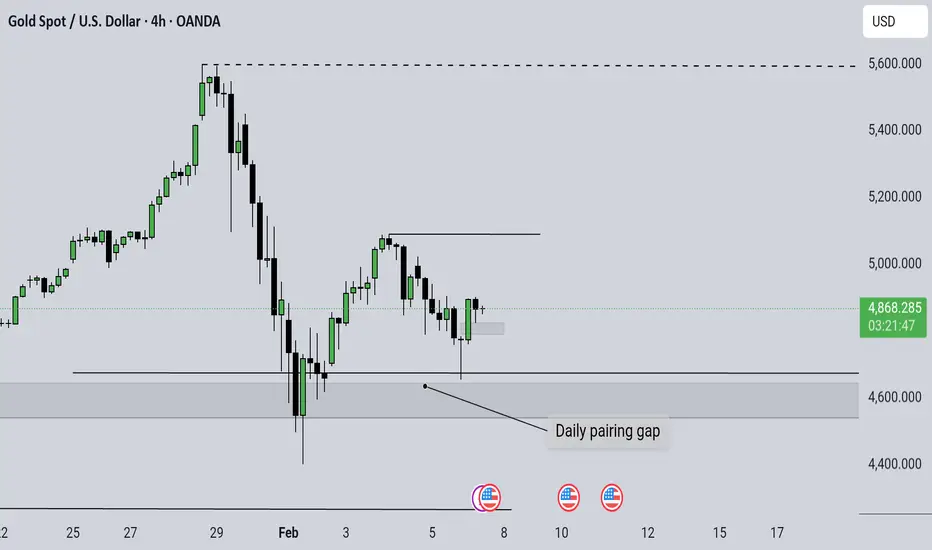
Gold going to boomm......^_^FVGs (Fair Value Gaps) below price → unfilled demand zones.
Equal highs / liquidity zone around 4350–4355.
Price is currently below liquidity, indicating a possible liquidity grab → continuation up.
1. Small pullback toward 4325–4300 (mitigate imbalance / trendline)
2. Strong bullish move
3. Break & close above 4355
4. Targets:
🎯 4400
🎯 4425 – 4450
HFCL BY KRS CHARTS17th September 2025 / 9:21 AM
Why HFCL?
1. First of all, its second time it's in my radar, previously we had more than 40% Return on this one and still long-term Target has been still loading 225 Rs.
2. 1M TF is making Higher High with current price level previously it breaks from flag pattern and gave upside move.
3. As we cand see in chart i have mentioned FVG range for 1M tf which was expected fall to be fill that FVG and it did.
4. Further, along with FVG filling 1W & 1D tfs is showing bullish divergence within range.
5. Volume is above avg with Morning Star Candle Breakout showing more bullish signs.
SL & Target is mentioned ‼️
** Attached Previous View on HFCL also go check it out**
#NIFTY Intraday Support and Resistance Levels - 18/12/2025A flat opening is expected in Nifty 50, with the index continuing to trade inside a well-defined consolidation range formed over the last few sessions. Price is currently hovering near the 25,800–25,850 zone, which is acting as a short-term balance area. This indicates that the market remains range-bound, with traders waiting for a decisive breakout or breakdown before committing to a strong directional move.
On the upside, a sustained move above 26,050 will be the key trigger for fresh bullish momentum. If Nifty manages to hold above this resistance level, long positions can be considered, with upside targets placed at 26,150, 26,200, and 26,250+. Additionally, a reversal long trade can be considered near the 25,750–25,800 support zone, provided price shows stability, targeting 25,850, 25,900, and 25,950+.
On the downside, if the index faces rejection near 25,950–25,900, selling pressure may emerge. In such a case, short positions can be initiated with downside targets at 25,850, 25,800, and 25,750-. A stronger bearish continuation will be confirmed if Nifty breaks below 25,700, which may open further downside toward 25,650, 25,550, and 25,500-. Until a clear directional breakout occurs, traders are advised to trade within the range, maintain strict risk management, and avoid over-leveraging.
[INTRADAY] #BANKNIFTY PE & CE Levels(18/12/2025)A flat opening is expected in Bank Nifty, with the index continuing to trade within a defined consolidation range seen over the last few sessions. Price is hovering near the 58,950–59,000 zone, which is acting as an important short-term balance area. This indicates indecision in the market, where both buyers and sellers are waiting for a clear directional trigger before committing aggressively.
On the upside, a sustained move above 59,050–59,100 will be crucial to revive bullish momentum. If Bank Nifty manages to hold above this resistance zone, buying positions can be considered. In such a scenario, the upside targets are placed at 59,250, 59,350, and 59,450+. A clean breakout above this level may attract fresh buying and push the index toward the upper resistance band near 59,450.
On the downside, if the index fails to hold the 58,950–58,900 support zone, selling pressure may intensify. A breakdown below this area opens up opportunities to selling, with downside targets at 58,750, 58,650, and 58,550-, where strong support is expected. Until a decisive breakout or breakdown occurs, traders are advised to stick to range-bound strategies, maintain strict stop-loss discipline, and avoid aggressive directional trades.
Palantir Short: Head and Shoulders.Palantir looking like its forming a textbook example of an Head and Shoulders pattern!
I anticipate as (if?) NDQ and SPX keeps declining and for this head and shoulders patterns to execute flawlessly.
There are also contributing signs like seen by the resistance in 180-190 area marked on my chart.
But the key metric for me is VOLUME , volume was very low during our last thrust up which signals to me a trend change for the coming weeks might unfold soon.
Gold Analysis & Trading Strategy | December 17 – 18✅ 4-Hour Chart (H4) Trend Analysis
1️⃣ Overall Structure: High-Level Consolidation, Bullish Bias Intact
After completing a strong impulsive move within the 4270 → 4350 range, gold is currently in a high-level consolidation phase.
Although price has not made new highs, higher lows are continuously forming, which confirms that the structure remains a bullish consolidation, not a reversal.
➡️ This is a post-rally digestion phase, not a trend reversal.
2️⃣ Moving Average Structure: Bullish Alignment Maintained
MA5 / MA10 / MA20 remain in a bullish alignment
Current pullbacks are mainly holding around MA10 – MA20 (4315–4325)
MA20 is still clearly sloping upward, indicating that the medium-term trend remains bullish
➡️ As long as price does not close decisively below MA20, the H4 bullish structure remains valid.
✅ 1-Hour Chart (H1) Trend Analysis
1️⃣ Short-Term Structure: Consolidation Within an Ascending Channel
Gold continues to consolidate above 4320, with limited pullbacks and no sustained high-volume selling.
Multiple tests of MA20 / MA30 have been quickly bought back, confirming strong demand below.
2️⃣ Moving Average Condition: Short-Term Reset in Progress
MA5 & MA10 crossing repeatedly → clear consolidation behavior
MA20 & MA60 remain upward sloping → overall trend still bullish
Current price is slightly above MA10, indicating the final stage of consolidation
3️⃣ Pattern Interpretation: Not a Top, More Like “Platform Accumulation”
Although strong selling pressure appeared around 4348–4350
Price failed to break below previous lows → no topping structure formed
Structure is more consistent with a high-level base / bullish flag formation
🔴 Resistance Levels
4340–4348 / 4355–4360 / 4380
🟢 Support Levels
4315–4320 / 4275–4270 / 4260
📌 Trading Strategy Reference
🔰 Buy on Pullbacks (Primary Strategy)
📍 4315–4325 zone — scale in with light positions
🎯 Targets: 4345 / 4355
⛔ Stop-loss: Below 4305
⚠️ Logic: H4 bullish structure intact + H1 pullback supported by moving averages
🔰 Short at High Levels (Short-Term Only)
📍 4348–4355 area — light short positions upon rejection
🎯 Targets: 4325 / 4315
⛔ Stop-loss: Above 4370
⚠️ This is range trading only, not a trend-following short.
✅ Trend Summary
The 4-hour chart remains in a bullish consolidation phase, while the 1-hour chart is building momentum through sideways accumulation.
As long as price holds above 4310–4305, the preferred strategy remains:
👉 Buy on pullbacks, not chase breakouts.
Wheat Analysis – Opportunity DevelopingHi Everyone,
Today, an interesting setup is forming on the wheat market.
On the daily timeframe, price is making a third pullback on the bearish trendline, following two previous retests clearly visible on the chart.
Historically, a third pullback on this type of structure significantly increases the probability of a bearish reversal.
📉 Primary scenario: bearish movement expected in the coming days
🎯 Target price: 500
NIFTY: Structure Shift Confirms Downtrend from 16 DecOn 16-12-2025, NIFTY showed a clear structure shift at the day’s open.
• Trend background changed to bearish
• Price started forming lower highs and lower lows
• Pullbacks were shallow, showing weak buying interest
From this point, the index gradually moved down nearly 200 points, respecting the bearish structure throughout the session and the following day.
This type of environment generally favors call option selling / put side bias, especially when price fails to reclaim previous intraday highs.
The key takeaway here is not prediction, but early trend identification and staying aligned with it. NSE:NIFTY
Supreme Industries: Constructive Breakout from Falling WedgeThe Technical Context Supreme Industries (SUPREMEIND) has been navigating a corrective phase for several weeks, forming a well-defined Falling Wedge Structure. Historically, market technicians view this pattern as a sign of decreasing selling pressure.
Technical Observations:
Structure Break: The price action has breached the upper resistance trendline of the wedge.
Volume Confirmation: The breakout is accompanied by a noticeable uptick in volume ("Decent Volume"), suggesting institutional participation rather than just retail activity.
Momentum Shift: The sequence of lower highs appears to be disrupted, indicating a potential change in the short-term trend.
Key Technical Levels:
Immediate Support: The upper trendline, which acted as resistance, may now act as support during a pullback.
Trade Invalidation: The bullish thesis would be structurally compromised if the price closes back inside the wedge or falls below the recent swing low (below ~3,200 zone).
Technical Resistance (Upside): If momentum sustains, the chart structure suggests potential supply zones near the previous swing highs (e.g., the origin of the wedge).
Risological Note: We are observing the "Expansion" phase following a period of "Contraction." The wedge breakout is the first technical evidence that buyers are regaining control.
Gold Analysis & Trading Strategy | December 17✅ 4-Hour (H4) Trend Analysis
Overall Structure: High-level consolidation, bullish structure intact
After a complete rally from 4180 → 4353, gold has entered a phase of high-level consolidation and corrective pullback.
Price is currently oscillating around the 4300 area (pivot approximately 4303), which represents post-rally consolidation rather than a trend reversal.
MA10 / MA20 remain upward-sloping
MA20 ≈ 4313, with price repeatedly consolidating around this level
The 4275–4255 zone remains the key H4 trend support area
✅ 1-Hour (H1) Trend Analysis
Overall Structure: Rebound capped, range-bound and slightly weak
Gold found support near 4271 and rebounded, reaching a high around 4342, but failed to hold above this level.
Price then quickly pulled back below 4310, indicating persistent selling pressure at higher levels.
The current H1 structure shows:
👉 Failed rebound after higher lows + renewed pullback
👉 The short-term market remains in a corrective consolidation phase, with no clear one-directional trend yet.
🔴 Key Resistance Levels
◾ 4315–4325 (H1 MA20 + short-term resistance)
◾ 4335–4345 (Pullback from previous highs + strong resistance zone)
◾ 4350–4365 (H4 upper band area, extremely strong resistance)
🟢 Key Support Levels
◾ 4300–4295 (Short-term bull–bear pivot)
◾ 4275–4255 (H4 Bollinger mid-band + core trend support)
◾ 4210 / 4170 (Trend defense zone — only a break below signals structural weakening)
✅ Trading Strategy Reference
🔰 Sell on Rallies (Primary Strategy | Short-term)
📍 If rejection signals appear in the 4335–4345 zone, consider light short positions
🎯 Targets: 4310 / 4300 / 4275
⛔ Protection: A sustained break above 4350
🔰 Buy on Pullbacks (Secondary Strategy | Swing)
📍 After stabilization in the 4275–4255 zone, consider light long positions
🎯 Targets: 4300 / 4330
⛔ Protection: A decisive break below 4245
✅ Trend Summary
👉 H4: Bullish trend with high-level consolidation
👉 H1: Range-bound and slightly weak, rebounds capped
👉 Short-term bearish bias, medium-term bullish bias
👉 Key approach: Trade within the range — sell high, buy low; avoid chasing moves
👉 4300–4275 is the key bull–bear pivot:
◾ Holding above → consolidation with bullish bias
◾ Breaking below → deeper corrective pullback
✅Trading strategies are time-sensitive, and market conditions can change rapidly. Please adjust your trading plan based on real-time market conditions.
Ingersoll Rand: When the Bullish Wedge Fails (Bearish Breakdown)The Setup Traders often look at Falling Wedges and blindly assume a bullish reversal is coming. Ingersoll Rand (NSE: INGERRAND) has just provided a textbook example of why "Assumption" is dangerous in trading.
Instead of breaking out to the upside, the price has sliced through the Lower Support Trendline on the Daily timeframe.
Technical Breakdown (The "Trap"):
Pattern Failure: The stock was forming a Falling Wedge (usually bullish). The market expected a bounce from the lower support.
The Invalidating Move: The recent heavy-volume candle breaking below the wedge support changes the structure entirely.
Psychology of the Short: Bulls who accumulated at the support line are now trapped. As their Stop Losses get hit, it creates a cascade of selling pressure (Long Liquidation).
Trade Management (Bearish):
Signal: The daily close below the wedge support (Current levels: ~3,438).
Conservative Entry: Wait for a "Retest" of the broken trendline from below (proving old support has become new resistance).
Trend Invalidation: A daily close back inside the wedge (above ~3,550). If it re-enters, the breakdown was a "Bear Trap."
Potential Target: Since this is a continuation of the downtrend, we look at the next major structural support zones (Psychological levels like 3,200 or 3,000).
Risological Note: We trade what we see, not what the textbook says should happen. A failed bullish pattern is often a stronger bearish signal than a standard downtrend.
Nifty - 25 Min Demand Zone Re-Rest Setup | Gap Filling TargetOn the NIFTY 25-Minute Chart, price is trading close to a strong intraday demand zone between 25,677 – 25,741.
This zone has acted as a buyer reaction area earlier, where price showed a quick bounce.
Currently, Nifty is consolidating just above this zone —
if buyers defend it again, we may see a short-term pullback towards the gap-fill area near 26,013.
That gap acts as the first resistance and logical target for this setup.
⚙️ Trade Plan (For Educational Purpose Only):
📍 Time Frame: 25-Min Chart
📈 Entry Zone: 25,677 – 25,741
🛑 Stop Loss: Below 25,670
🎯 Target: 26,013 (Gap Fill Area)
⚖️ Risk–Reward Ratio: Approx. 2:1
💡 Technical Summary:
✅ Demand Zone Support
✅ Gap Above as Target
✅ Bullish Re-Test Setup
✅ Clean Structure with Defined Risk
⚠️ Disclaimer:
This analysis is for educational purposes only — not a buy/sell recommendation.
Always do your own analysis and follow proper risk management before trading.
🔖 Tags:
#NIFTY #NSE #PriceAction #DemandZone #GapFill #25MinChart #SwingTrading #IntradaySetup #TechnicalAnalysis #TradingEducation #TradewithSahil #AkitenAcademy
XAUUSD Short-Term Pullback Within a Bigger Bullish Trend📉 XAUUSD Update – Short-Term Pullback Within a Bigger Bullish Trend
Timeframes: 4H & 5M
Gold has seen a sharp intraday pullback from the recent highs, but the higher-timeframe structure remains bullish.
4H View
Price is still above the rising EMA support, keeping the broader trend intact
Strong supply zone visible near 4360 – 4380, which triggered the rejection
Key higher-timeframe support sits at 4290 – 4300
5M View
Momentum has turned bearish short term, with price trading below the EMA–VWAP band
RSI near 38 signals short-term weakness, not yet a full reversal
Buyers may re-enter near 4310 – 4320
Key Levels
Resistance: 4328 – 4335
Support: 4310 – 4300
Bullish Reclaim: Above 4335
Outlook
This move looks like a healthy correction rather than a trend change. Holding above 4300 keeps the bullish bias intact, while a reclaim of 4335 could signal the next upside attempt.
Part 8 Trading Master Class Option Pricing and the Role of Greeks
Option prices are influenced by multiple factors, not just price direction. These influences are measured by Option Greeks:
Delta – Measures how much the option price changes for a 1-point move in the underlying
Gamma – Measures the rate of change of delta
Theta – Measures time decay; options lose value as expiry approaches
Vega – Measures sensitivity to changes in volatility
Rho – Measures impact of interest rate changes
Understanding Greeks helps traders manage risk, select strategies, and anticipate how options behave under different market conditions.
Heranba Industries: Why Falling Wedges Often Mark the BottomThe Setup Heranba Industries (NSE: HERANBA) has been in a corrective phase for months, but the structure has now matured into a classic Falling Wedge Pattern on the Daily timeframe.
For those new to this pattern: A Falling Wedge is a bullish reversal pattern. It is characterized by "Lower Highs" and "Lower Lows" contracting into a narrower range. This contraction signals that selling pressure is exhausting and buyers are stepping in at higher relative lows.
Technical Breakdown:
Price Action: The price has respected the upper trendline resistance multiple times. The recent breakout candle suggests a shift in momentum.
The Psychology: Notice how the selling waves are getting shorter? This "compression" usually precedes an expansion in volatility (the breakout).
Volume Profile: We are looking for a spike in volume to confirm the breakout validity. A low-volume breakout is often a trap, so watch the close.
Trade Management (Educational View):
Aggressive Entry: On the immediate break of the upper trendline (Current Levels: ~247-248).
Conservative Entry: Waiting for a "Retest" of the trendline around 240-242 to confirm support.
Stop Loss: Strictly below the recent swing low (invalidate the pattern if price falls back into the wedge).
Targets: The theoretical target of a wedge is often the top of the wedge structure (the origin of the pattern).
Risological Note: We track these compression patterns because they offer high Risk-to-Reward ratios. We are not predicting the future; we are reacting to probability.
BTC Market Update – FOMC Range ModeBitcoin is stuck in FOMC limbo — no clean pump, no dump, just tight consolidation as markets wait for Powell’s cue. Volatility is coiling, and a big move is loading.
Key Levels to Watch:
Support Zone: $92K–94K (must hold for bullish continuation)
Bullish Trigger: Break & hold above $94.6K
🎯 Next upside: $100K retest
Bearish Trigger: Break below $87.7K
🎯 Downside risk: Low $80Ks before a rebound attempt
Market View:
This is a classic decision range — expect sharp expansion once direction is chosen. Stay alert around FOMC headlines; volatility can spike fast.
Bias: ⚖️ Neutral → Breakout pending
Disclaimer:
For educational purposes only. This is not financial advice. Trading in Forex, Gold, Crypto, and markets involves high risk. Do your own research and trade at your own risk.
RIL 1 Day Time Frame 📊 Current Price Context (approx):
RIL is trading near ₹1,540 – ₹1,550 intraday range today.
📈 1‑Day Resistance Levels
These are levels where the stock may face selling pressure or pause on the upside:
Intraday Daily Resistances (Pivots & Speed Levels):
R1: ~₹1,549 – ₹1,550
R2: ~₹1,557 – ₹1,557
R3: ~₹1,562 – ₹1,563
(above current price)
Extended intraday pivot R4 (if breakout):
~₹1,570+ (from broader pivot series)
📉 1‑Day Support Levels
Key levels where buyers may step in on dips:
Intraday Daily Supports:
S1: ~₹1,536 – ₹1,537
S2: ~₹1,531 – ₹1,532
S3: ~₹1,523 – ₹1,524
(below current price)
Weekly pivot support band (if selling accelerates):
Around ₹1,531 – ₹1,505+ (broader support zone)
IOC 1 Month Time Frame 📊 Current Context
IOC is trading around the ₹166–₹168 range as of mid‑December 2025.
Over the last month, the stock has seen a slight decline (~‑2.7% to ‑3.6% depending on source).
🟢 Key 1‑Month Support Levels
These are levels where the price may find buying interest if the stock pulls back:
✅ Primary Support: ~₹164–₹162
➡️ Near recent lows and pivot zone where short‑term buyers could step in.
✅ Lower Support: ~₹160–₹158
➡️ Broader support band from slight chart congestion.
⚠️ Deep Support: ~₹138–₹135
➡️ A deeper correction zone identified by longer‑term indicators — likely only relevant if broader markets turn very weak.
🔴 Key 1‑Month Resistance Levels
These are price points that may cap upside near‑term:
🚧 Immediate Resistance: ~₹170–₹171
➡️ Short‑term hurdle around recent highs.
🚧 Next Resistance: ~₹172–₹173
➡️ Slightly stronger resistance if stock breaks above ₹171.
🚧 Higher Resistance: ~₹176–₹177+
➡️ Breakout zone toward the upper end of the near‑term range.