Growth in Emerging MarketsIntroduction
Emerging markets are nations that are transitioning from developing to developed status, characterized by rapid industrialization, growing financial markets, and increasing integration into the global economy. These economies — such as India, China, Brazil, Indonesia, South Africa, and Mexico — have become the engines of global growth over the past three decades. They represent not only significant opportunities for investment and trade but also a vital source of innovation, labor, and consumption.
In the 21st century, emerging markets have been at the forefront of global economic transformation. Their collective share of global GDP has risen dramatically, fueled by urbanization, technology adoption, infrastructure development, and a growing middle class. Yet, these markets also face substantial challenges — including income inequality, political volatility, inflationary pressures, and vulnerability to external shocks. Understanding their growth dynamics is crucial for policymakers, investors, and global businesses seeking to capitalize on the shifting balance of economic power.
Defining Emerging Markets
An “emerging market” is typically defined as an economy that exhibits some characteristics of a developed market but has not yet achieved that status. These economies are often marked by:
Rapid GDP growth and industrialization
Expanding middle-class populations
Developing but volatile financial markets
Institutional and infrastructural transformation
Increasing participation in global trade and investment
Organizations such as MSCI, International Monetary Fund (IMF), and World Bank classify countries as emerging markets based on factors like per capita income, market accessibility, and financial development. Major emerging markets are often referred to collectively as BRICS (Brazil, Russia, India, China, South Africa) or MINT (Mexico, Indonesia, Nigeria, Turkey).
Historical Background
The term “emerging markets” was popularized in the early 1980s by the World Bank’s International Finance Corporation (IFC) to attract investors to rapidly developing countries. In the post-Cold War era, globalization and liberalization opened new opportunities for these nations to integrate into the global economy.
From 1990 to 2020, emerging markets experienced a profound transformation:
China’s economic reforms under Deng Xiaoping unleashed massive manufacturing growth.
India’s liberalization in 1991 opened its economy to foreign investment and competition.
Latin American economies, after periods of hyperinflation, adopted market-friendly reforms.
Eastern European countries transitioned from centrally planned to market economies after the fall of the Soviet Union.
During this period, emerging markets contributed more than two-thirds of global GDP growth, reshaping international trade, investment patterns, and geopolitical influence.
Key Drivers of Growth
1. Demographic Dividend
One of the strongest drivers of emerging market growth is their young and expanding population. Countries like India, Indonesia, and Nigeria possess large working-age populations, creating both a labor supply and a consumer base. This demographic advantage supports productivity, innovation, and domestic demand — essential elements for long-term growth.
2. Urbanization and Infrastructure Development
Urbanization is a hallmark of emerging markets. Rapid migration from rural to urban areas has fueled demand for housing, transport, energy, and digital infrastructure. Cities have become centers of economic activity, contributing to higher productivity and consumption. Governments and private investors are heavily investing in infrastructure projects such as metro systems, smart cities, ports, and renewable energy.
3. Technological Leapfrogging
Emerging markets have harnessed technology to overcome traditional development barriers. The widespread adoption of mobile banking, e-commerce, and digital services has revolutionized sectors like finance, retail, and healthcare. For instance, India’s UPI digital payment system, Kenya’s M-Pesa, and China’s Alipay and WeChat Pay have made financial inclusion a reality for millions.
Additionally, emerging economies are becoming innovation hubs, contributing to global technology supply chains. Startups in fintech, edtech, and agritech are leveraging local needs and global technologies to create scalable solutions.
4. Foreign Direct Investment (FDI) and Trade Integration
FDI has played a critical role in boosting industrialization, technology transfer, and job creation in emerging markets. Multinational corporations view these economies as growth frontiers due to their large markets and lower labor costs. The signing of regional trade agreements — such as RCEP (Regional Comprehensive Economic Partnership) in Asia — has further deepened trade integration.
Emerging markets are also major players in global supply chains, especially in manufacturing, natural resources, and services. China became the “world’s factory,” while India emerged as a global IT and service hub.
5. Rising Middle Class and Consumption
The growth of the middle class has transformed emerging markets into major consumer economies. Rising incomes, better education, and urban lifestyles have driven demand for goods and services ranging from smartphones to automobiles. According to McKinsey, emerging markets will account for more than 50% of global consumption by 2030, making them pivotal for multinational corporations.
6. Policy Reforms and Economic Liberalization
Most emerging economies have undertaken structural reforms — privatization, deregulation, and financial liberalization — to attract investment and enhance competitiveness. Independent central banks, modern taxation systems, and digital governance have strengthened institutional frameworks and improved macroeconomic stability.
Challenges Facing Emerging Markets
While emerging markets have immense potential, their growth trajectories are not without obstacles.
1. Political and Institutional Instability
Weak governance, corruption, and policy inconsistency remain major barriers. Political instability can deter investors and slow reform implementation. For instance, frequent changes in government policies or bureaucratic inefficiencies can create uncertainty for long-term investments.
2. Income Inequality and Social Disparities
Economic growth has not always translated into inclusive prosperity. Many emerging economies face widening income gaps between urban and rural populations. Unequal access to education, healthcare, and digital resources hinders human capital development and social mobility.
3. Dependence on Commodities
Several emerging markets — particularly in Africa and Latin America — rely heavily on commodity exports such as oil, copper, and agricultural products. This makes them vulnerable to price volatility and global demand shifts. Diversification remains a persistent challenge.
4. External Shocks and Currency Volatility
Emerging markets are highly sensitive to global financial conditions. Fluctuations in U.S. interest rates, trade tensions, and geopolitical risks can trigger capital outflows, currency depreciation, and inflation. Episodes like the 2013 “taper tantrum” and the COVID-19 pandemic exposed the fragility of their financial systems.
5. Debt and Fiscal Pressure
Rising public debt, especially after the pandemic, has strained government budgets. Many countries have borrowed heavily to finance infrastructure and welfare programs, increasing vulnerability to credit downgrades and default risks.
6. Environmental and Sustainability Issues
Rapid industrialization has come at an environmental cost. Pollution, deforestation, and climate change pose existential threats to long-term development. Transitioning to green energy and sustainable industries is now essential but financially challenging.
Case Studies: Leading Emerging Markets
1. China
China is the quintessential emerging market success story. Through export-led growth, massive infrastructure investment, and state-directed capitalism, it became the world’s second-largest economy. However, China now faces slowing growth, demographic decline, and geopolitical pressures. The government’s push for technological self-reliance and green transition marks the next phase of its development.
2. India
India’s growth has been fueled by services, technology, and digital innovation. With a young population and expanding middle class, it is projected to become the world’s third-largest economy by 2030. Initiatives like “Make in India,” “Digital India,” and “Startup India” aim to boost manufacturing, innovation, and entrepreneurship.
3. Brazil
Brazil’s economy is driven by natural resources and agriculture but often hampered by political volatility and inflation. Recent efforts to promote renewable energy, fintech, and agritech indicate potential for sustainable diversification.
4. Indonesia and Vietnam
Southeast Asian economies like Indonesia and Vietnam have benefited from global supply chain shifts. Their competitive labor markets, stable governance, and reform-oriented policies make them attractive destinations for manufacturing and FDI.
5. African Emerging Economies
Africa, with its abundant resources and youthful population, represents the next frontier. Countries like Nigeria, Kenya, and South Africa are witnessing rapid digitalization and entrepreneurship. However, infrastructure gaps and governance challenges persist.
Future Outlook
1. Digital Transformation
The future of emerging markets will be shaped by digital infrastructure — 5G, AI, and fintech will drive innovation across industries. Governments and private sectors are investing in digital literacy, e-governance, and data economies to enhance competitiveness.
2. Green Growth and Sustainability
Sustainability is becoming central to policy agendas. The shift toward renewable energy, electric vehicles, and sustainable agriculture offers both challenges and new growth avenues. International financing for green projects will be key to achieving low-carbon transitions.
3. Regional Integration and South-South Cooperation
Emerging markets are increasingly trading and investing among themselves. Initiatives like BRICS cooperation, African Continental Free Trade Area (AfCFTA), and ASEAN integration are strengthening economic ties and reducing dependency on developed economies.
4. Innovation and Entrepreneurship
The entrepreneurial ecosystem in emerging markets is booming. Startups in fintech, healthtech, and edtech are solving local problems with global scalability. This innovation wave can help create high-value jobs and promote inclusive growth.
5. Balancing Growth with Inclusion
To sustain growth, emerging markets must prioritize education, healthcare, and social equity. Policies that enhance skills, reduce poverty, and support SMEs will be crucial for ensuring broad-based prosperity.
Conclusion
Emerging markets have transformed the global economic landscape. They have become the new centers of growth, innovation, and consumption. While challenges such as inequality, governance, and volatility persist, their potential remains enormous. With continued reforms, digital adoption, and sustainable policies, emerging markets are poised to lead the next wave of global progress.
As the balance of economic power shifts eastward and southward, the future of global growth will increasingly be written in the cities of Asia, Africa, and Latin America — where ambition, technology, and resilience are redefining what it means to “emerge.”
Globalmarket
Quarterly Trading Performance1. Importance of Quarterly Trading Performance
Strategic Assessment
Evaluating performance quarterly helps traders and fund managers assess the effectiveness of their trading strategies. Unlike monthly reviews, which may be skewed by short-term market anomalies, or annual reviews, which may mask mid-year changes, quarterly reviews strike a balance between short-term monitoring and long-term evaluation.
Risk Management
Tracking quarterly performance allows traders to assess their risk exposure systematically. Metrics such as maximum drawdown, Sharpe ratio, and volatility can be analyzed over the quarter to determine if risk levels are acceptable. Poor quarterly performance often signals the need to adjust position sizing, hedge exposure, or reallocate capital.
Investor Reporting
Institutional traders and fund managers are required to provide quarterly reports to stakeholders. These reports include trading performance, market commentary, and strategy updates. A transparent quarterly evaluation builds investor confidence and provides justification for strategic decisions.
Market Cycle Analysis
Financial markets often move in cycles influenced by economic activity, corporate earnings, and seasonal trends. Quarterly performance metrics help traders identify these cyclical patterns, such as increased volatility in earnings seasons or liquidity shifts in fiscal year-end periods.
Benchmarking and Comparative Analysis
Comparing quarterly performance against indices, peers, or historical data helps traders evaluate relative success. For example, a portfolio returning 5% in Q2 may seem positive, but if the benchmark index returned 10%, the strategy underperformed. Quarterly benchmarking highlights these gaps.
2. Key Metrics for Quarterly Trading Performance
To evaluate quarterly trading performance, traders typically rely on several financial and statistical metrics. These metrics are essential for both quantitative and qualitative assessments.
2.1 Profitability Metrics
Gross Profit and Loss (P&L)
The gross profit is the total gains from all trades before accounting for expenses, while gross loss represents the total losses. The net P&L for the quarter is calculated as gross profit minus gross loss.
Example: A trader gains $50,000 from winning trades and loses $20,000 from losing trades. The quarterly net P&L = $30,000.
2.2 Risk Metrics
Volatility
Volatility measures the degree of variation in portfolio returns over the quarter. High volatility indicates larger price swings, which could amplify gains but also increase risk.
Maximum Drawdown
This metric captures the largest peak-to-trough decline during the quarter. It helps assess the potential downside risk and the capital preservation efficiency of the trading strategy.
2.3 Operational Metrics
Win/Loss Ratio
The ratio of profitable trades to losing trades. A higher ratio indicates consistent strategy execution.
Average Trade Duration
Helps analyze whether strategies are performing better in short-term versus long-term trades. Some quarters may favor intraday or swing strategies depending on market volatility.
Trade Frequency
Number of executed trades in a quarter. High-frequency trading strategies may have numerous small gains, while long-term positions may yield fewer but larger profits.
Execution Efficiency
Measures slippage, transaction costs, and trade execution quality. Poor execution can erode profits, especially in volatile markets.
3. Factors Influencing Quarterly Trading Performance
Quarterly performance is influenced by a combination of market, economic, and internal factors:
3.1 Market Factors
Volatility: Sudden spikes or dips in volatility can significantly impact short-term trading strategies.
Liquidity: Thinly traded assets may lead to higher slippage and wider spreads, affecting profitability.
Market Cycles: Different quarters may favor specific sectors or instruments, such as retail stocks performing better during holiday seasons.
3.2 Economic Factors
Macroeconomic Data Releases: Quarterly GDP, inflation reports, and employment data can trigger market movements.
Interest Rates and Monetary Policy: Central bank policies affect equity, bond, and currency markets differently across quarters.
Corporate Earnings: Earnings season often leads to heightened volatility and trading opportunities.
3.3 Internal Factors
Strategy Changes: Modifications to trading algorithms or portfolio allocations can improve or hurt quarterly performance.
Trader Psychology: Emotional factors, such as overconfidence after a strong quarter, can influence decision-making.
Operational Constraints: Systems outages, liquidity issues, or margin limitations may impact quarterly results.
4. Analyzing Quarterly Trading Performance
Analyzing performance involves both quantitative assessment and qualitative insights.
4.1 Quantitative Analysis
Trend Analysis:
Examining profit and loss trends over the quarter to identify consistent gains or losses.
Correlation Studies:
Assessing how portfolio performance correlates with market indices or sectors. High correlation may indicate lack of diversification.
Performance Attribution:
Breaking down returns by asset class, sector, or strategy to understand what drove profits or losses.
4.2 Qualitative Analysis
Market Conditions:
Were the market conditions favorable for the strategy? For instance, a momentum-based strategy might underperform in a sideways market.
Execution Review:
Evaluating if trades were executed as planned or if human or system errors affected results.
Strategy Suitability:
Assessing if the strategy continues to align with market conditions and risk appetite.
5. Reporting Quarterly Performance
For professional traders and fund managers, quarterly performance reports are crucial. These reports typically include:
Executive Summary:
Key highlights, major gains/losses, and overall net performance.
Performance Metrics:
Detailed tables and charts showing returns, volatility, Sharpe ratio, drawdowns, and win/loss ratios.
Market Commentary:
Insights on market conditions, major events, and their impact on the portfolio.
Strategy Review:
Analysis of which strategies or positions contributed most to performance.
Action Plan:
Proposed adjustments for the next quarter, including risk management improvements or strategy tweaks.
6. Improving Quarterly Trading Performance
Diversification:
Spread investments across asset classes, sectors, and geographies to reduce risk.
Risk Management:
Implement stop-loss limits, position sizing rules, and hedging strategies.
Strategy Optimization:
Continuously backtest and refine strategies to adapt to changing market conditions.
Technology and Analytics:
Use advanced trading platforms, algorithms, and analytics tools to improve execution and decision-making.
Trader Education and Discipline:
Maintain emotional discipline, follow trading plans strictly, and avoid overtrading during volatile periods.
7. Case Studies of Quarterly Performance
Case Study 1: Equity Trading Fund
An equity-focused hedge fund recorded the following quarterly returns over a year:
Q1: +3%
Q2: -1.5%
Q3: +5%
Q4: +2%
Analysis revealed that Q2 underperformance was due to unexpected central bank announcements causing market-wide sell-offs. Adjustments included tighter stop-losses and hedging, resulting in improved Q3 and Q4 results.
Case Study 2: Forex Trader
A currency trader focusing on EUR/USD experienced a high quarterly volatility environment in Q2 due to geopolitical tensions. By adjusting position sizing and using forward contracts for risk mitigation, the trader achieved a net positive P&L despite turbulent market conditions.
8. Challenges in Assessing Quarterly Performance
Short-Term Volatility:
Quarters with extreme market events may distort performance evaluation.
Overemphasis on Returns:
Focusing solely on profits can neglect risk metrics, leading to unsafe trading practices.
Data Quality Issues:
Inaccurate trade records or reporting errors can skew quarterly performance assessment.
Market Regime Changes:
Strategies that worked in one quarter may fail in another due to shifting macroeconomic or technical conditions.
9. Conclusion
Quarterly trading performance is more than just a measure of profit—it is a comprehensive assessment of strategy effectiveness, risk management, and operational efficiency. By analyzing key metrics, understanding market influences, and implementing continuous improvements, traders can maximize returns and reduce risk exposure. Moreover, transparent quarterly reporting builds credibility with investors and provides a structured framework for decision-making.
A disciplined approach to quarterly evaluation allows traders to navigate market cycles successfully, adapt to changing conditions, and ensure sustainable performance over the long term. Ultimately, quarterly trading performance is both a mirror reflecting past decisions and a compass guiding future trading strategies.
BTCUSD updated viewA resistance zone was created on BTCUSD at the 99113 - 99944 level.
Also at the same level from top to bottom one resistance trend line shows strong resistance in that area. while looking at the HNS pattern in RSI on a closing basis and both the resistance zone and trendline we need a strong closing above the zone with the trendline breaking, then we can see the bigger target in BTCUSD.
otherwise, BTCUSD will take the resistance from the trendline and zone and can see the support level again.
I already shared what-if support level breaks.
XAUUSDGiven the recent bullish candlestick patterns and the strong support at 2636, there is potential for XAU/USD to test the 2655 resistance level. A successful break above 2694 could lead to further gains toward the 2737 -2775 zone.
However, monitoring market conditions closely is essential, as geopolitical events and economic data releases can influence gold prices.
"BE GREEDY WHEN OTHERS ARE FEARFUL.” Subject :
During this period, I view the market downturn as an opportunity to acquire quality stocks at lower valuations for long-term investment. As mentioned above, I am particularly interested in key levels for potential entry points. I wanted to share these insights with all of you, hoping you find them helpful. Thank you, everyone!🙏🏻
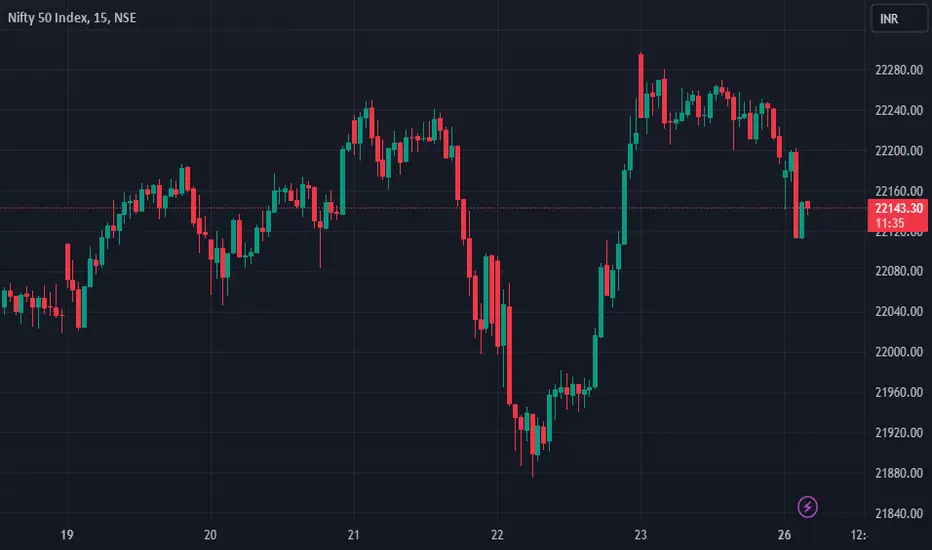
The recent downturn in both Indian and global stock markets can be attributed to several
key factors:
1. Monetary Policy Shifts: The U.S. Federal Reserve's recent decision to reduce the number of projected interest rate cuts for 2025 has heightened investor concerns.
2. Rising Treasury Yields: A significant selloff in long-dated U.S. government debt has pushed 10- and 30-year Treasury yields to their highest levels in nearly seven months. This trend poses a threat to stock valuations, as higher yields make risk-free government debt more attractive compared to equities.
3. Geopolitical Concerns: The potential return of Donald Trump to the U.S. presidency and his proposed economic policies, have raised fears of increased inflation and global trade tensions. These uncertainties contribute to market instability.
* Escalating conflicts in regions such as the Middle East have increased market volatility and investor uncertainty.
4. Foreign Investor Behavior: In India, heavy selling by foreign institutional investors has exerted downward pressure on markets. This trend is influenced by global monetary policies and a reduced appetite for risk amid prevailing uncertainties.
5. Sector-Specific Declines: Sectors such as financials and information technology have experienced notable losses, further dragging down market indices.
These combined factors have led to a bearish trend in both Indian and international stock markets in recent weeks.
About Reliance industries limited 📉:
1. Weak Performance in the Oil-to-Chemicals (O2C) Segment: RIL's O2C business, a significant revenue contributor, has faced challenges due to shrinking margins amid global oversupply. In the second quarter of FY25, the company reported a 5% decline in net profit, largely attributed to poor performance in its oil refining and petrochemical business. This segment was significantly impacted by cheap Russian crude oil flooding the market, pushing product margins lower.
2. Delays in IPOs of Jio and Retail.
3. Slowing Growth in the Retail Business: RIL's retail division has encountered slower growth, influenced by factors such as rising real estate costs and increased.
4. Broader Market Trends and Investor Behavior.
#valueinvesting. #indianstockmarket. #Reliance
Very Bullish on Silver Any one who interest to invest in silver ... This is the best time to buy silver as we can see that silver has give a big time breakout above the 26 dollar so its a clear sign that the buyer has come to flow upward price of the silver . . .
As you also know that the silver and gold is a good asset class . so wants to beat inflation with minimum risk can go with the silver and gold as well gold is also asset class but today my idea is specific about only one that is silver. . .
remember this line .
TRADE OF DEACDE IS SILVER RIGHT NOW DATED(05/04/2024)
In my opionion here are best available instrument in the area of silver to invest in india:-
1:-Tata silver etf (in my opinion this is best than nippon silver etf)
2:-Buy physical silver directly from your nearest jwellery shop
this 2 option is best to invest in silver in india . . .
if you want to purchase etf then you only want a demat account and you can easily purchase this tata silver etf
Disclaimer i invested in silver already
Disclaime:-i am not sebi registered all loss as well as profit you totally yours , i am not responsible for any kind of profit or loss solely you are responbile for that
my resoposbility is to share idea with you which i think that .
thanks for reading waiting for your profitable comment