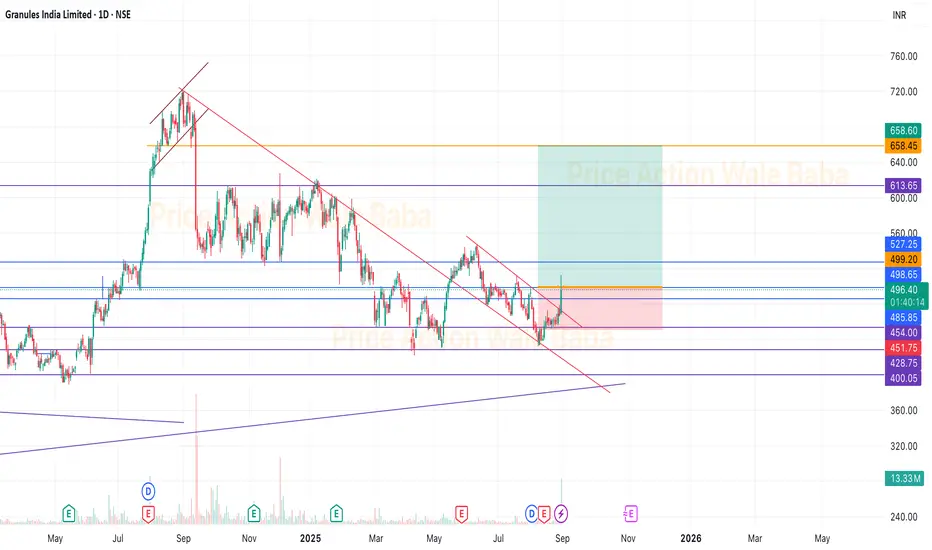
Sensex - Weekly expiry Jan 14The price was falling steadily in a descending channel, and now it is trying to move up by forming an ascending channel.
83500 is an important zone to decide the trend direction when it has a confluence with the channel trend line.
Buy above 83600 with the stop loss of 83480 for the targets 83720, 83860, 83980, 84100 and 83220.
Sell below 83300 with the stop loss of 83460 for the targets 83180, 83060, 82940, 82800 and 82640.
The expected expiry day range is 82900 to 83900.
Always do your analysis before taking any trade.
Parallel Channel
Sensex - Weekly review Jan 12 to Jan 16The price was falling steadily within a descending channel. The price has to break and sustain above it to move up.
Buy above 83560 with the stop loss of 83440 for the targets 83680, 83800, 83960, 84100, 84260, 84420, 84560 and 83700.
Sell below 83300 with the stop loss of 83440 for the targets 83180, 83040, 82900, 82740, 82600 and 82480.
Always do your analysis before taking any trade.
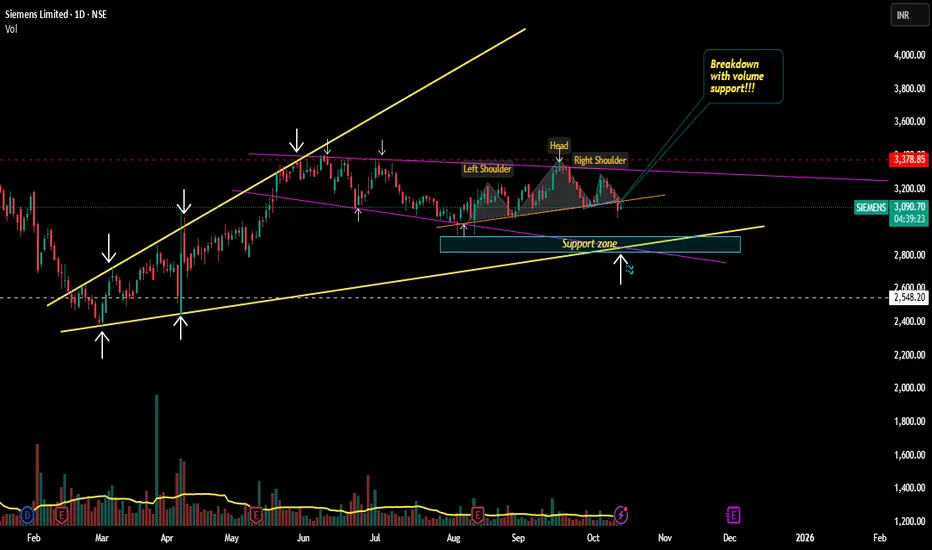
Siemens Down to Support zone??!!Siemens has been travelling inside a Ascending Expanding Channel Pattern(bold yellow line) from March 2025( making higher highs and higher lows )
Now it is in the down move to making a higher low (to support level)
This down move is being done by market in the form of Descending channel pattern making lower highs and lower lows(shown as purple line)
There is also a Head & Shoulders pattern ...which has given BREAKDOWN with Good Volume support (yesterday-13-10-2025)
Siemens is looking to take support at 2900 levels(2920)
SL can be bit choppy (either the high of Breakdown candle/high of right shoulder)
Bearish view can be negated once the red dotted line breaks!!!
Let's wait and watch!!!
Thank you!!!!
Just my view...not a tip nor advice!!!!
Sensex - Weekly expiry day analysis Jan 8The price moved in a descending channel, and today the price consolidated in a narrow range. This movement gave the move above the channel. This can give a pullback or upward move.
The patterns seen in the chart are 1. Rounding bottom 2. Descending channel
Buy above 84900 with the stop loss of 84780 for the targets 85020, 85180, 85300, 85460 and 85600.
Sell below 84640 with the stop loss of 84780 for the targets 84520, 84400, 84260, 84140 and 84040.
Always do your analysis before taking any trade.
SMALL CAP INDEXHello & welcome to this analysis
The index appears to be ending a wedge pattern near an Ichimoku cloud resistance with future Kumo bearish. It also has a slanting channel upper trendline resistance approaching.
The wedge would be considered broken below 17775, downside levels where it could then retrace to would be the Ichimoku Base line near 17400 and if that fails to hold it could further retrace till 16600 where it would form a Bullish Harmonic Gartley.
The PRZ of the Gartley coincides with a gap up area and the slanting channel lower trendline.
This bearish view would be invalid above 18150
All the best
HAL - Trading Within Descending Channel💹 Hindustan Aeronautics Ltd (NSE: HAL)
Sector: Defence | CMP: 4526
View: Corrective Bias within Descending Channel | Early Mean-Reversion Attempt
HAL continues to trade within a well-defined descending channel on the daily timeframe, with price respecting both the falling supply line and the lower demand boundary over multiple months, confirming a controlled corrective structure rather than trend breakdown. The recent test of the lower channel base near the 4200 zone has resulted in a reactionary rebound, forming a higher low on the immediate swing and indicating demand absorption at the channel bottom. The ongoing move reflects a mean-reversion attempt toward the channel midpoint, with price currently stabilising around the 4520–4550 region. Volume behaviour remains contained, suggesting structural repair rather than an aggressive trend reversal, and any meaningful shift from corrective to recovery would require sustained acceptance above the channel midpoint.
From a support–resistance perspective, HAL remains below multiple overhead supply zones. Immediate resistance is observed near 4575, followed by 4623 and 4702, with the 4900–5000 zone acting as a major institutional supply area. On the downside, 4448 acts as the nearest short-term support, followed by 4369 and 4321, while the 4200–4250 zone remains the key daily accumulation band; a breakdown below this region would materially weaken the structure. Overall, price remains range-bound between reactive support and strong overhead supply, keeping the environment patience-driven.
Momentum conditions are improving but still developing. The latest price action shows a decisive bullish candle alongside a favourable EMA structure shift, while volatility has begun to expand following prior compression. RSI remains in a healthy zone, trend strength is moderate, and the move is supported by above-average volume, indicating genuine participation rather than a low-quality bounce. Relative performance versus the benchmark remains positive, suggesting underlying leadership despite the corrective phase.
From an STWP analytical framework, the level around 4544.90 is tracked purely as a reference derived from recent momentum expansion, while the 4340–4380 zone continues to act as the primary risk reference supporting the structure. On the upside, 4790–4950 aligns with prior supply reactions, with higher swing reference zones visible beyond 5130. Internally, sentiment remains constructive with an upward bias, strong but developing momentum, elevated participation, and higher risk due to proximity to reaction zones, reinforcing the need for structure-led observation over prediction.
Derivatives data reflects a disciplined bullish bias, with call-side participation dominating near the ATM region and put positioning remaining defensive. Price–OI alignment, healthy liquidity, and moderate-to-low implied volatility favour controlled directional exposure, though continuation remains conditional on follow-through, given sensitivity to time decay near key levels.
From a demand–supply lens, the 4429–4342.60 zone stands out as the key daily demand area preserving structural stability, while 4788–4857 remains the primary daily supply zone. Intraday demand is layered at 4426–4410.50 (strong), followed by 4393–4385, and 4367–4342.60 (strong). Intraday supply emerges at 4548–4584, with higher resistance near 4585–4601.90. Any healthy pullback would ideally retrace into these demand zones with price stability and contraction; sustained acceptance below the daily demand zone would signal structural weakness.
Final Outlook:
Momentum: Strong (Developing) | Trend: Upward Bias | Risk: High | Volume: High
LTIMThis analysis is for educational purposes only. LTIMindtree (LTIM) stock trades within a defined channel, recently finding support at the lower boundary and reversing upward, now positioned above key moving averages including the 50-150-200. It also holds above the channel's support level, signaling a bullish trend with potential for further upside; always use a stop-loss to mitigate risk
Inside the Box: Nifty’s 25,700 Support vs. Channel RailsSupport-Focused:
The Nifty 50 index is oscillating within a 1-hour parallel channel, where it is likely to find critical support either at the 25,700 horizontal level or the channel's dynamic lower boundary.
Range-Bound Outlook:
Nifty is maintaining a structured consolidation on the hourly chart. Traders should monitor for a potential reversal near the 25,700 zone, which aligns closely with the parallel channel's support line.
Brief/Direct:
Nifty 1H: Watch for a support-driven bounce at 25,700 or the lower edge of the current parallel channel
NMDC Positional Trading IdeaParallel channel:
The asset is currently trading within a defined parallel channel .
Selling pressure at resistance:
A high-volume bearish engulfing candle has formed at the channel's upper boundary, indicating significant selling pressure.
Two potential setups:
Price action is being monitored for two distinct trading opportunities.
Long entry:
A decisive breakout and close above the 84 price level would trigger a long position entry
Retracement opportunity:
Alternatively, a retracement to the 78 price level is being anticipated
High-probability buy zone:
The 78 level offers confluence with the 20-period Exponential Moving Average (EMA) on the daily timeframe, creating a high-probability buy zone
Maruti: Rising Flag, Dropping ProbabilityStructure
The decline into Wave W is complete as a Regular Flat.
The rebound is a corrective Wave X, fully overlapping and contained within a rising channel.
Bias remains bearish as long as price trades inside this channel.
Wave Y Setup
Trigger: Breakdown below the channel near 16000.
Entry: Preferable after a break and retest of the lower channel line.
Target: Toward 15,260 to complete Wave Y.
Invalidation: A decisive close above 16,549 invalidates the bearish view.
Summary
The current rise is a corrective phase, not a trend reversal. The higher-probability outcome is a continuation lower into Wave Y unless the channel breaks to the upside.
Disclaimer: This analysis is for educational purposes only and does not constitute investment advice. Please do your own research (DYOR) before making any trading decisions.
Prime Focus (W): Strongly Bullish - Blue Sky BreakoutTimeframe: Weekly | Scale: Logarithmic
The stock has confirmed a major structural breakout, clearing both a short-term horizontal hurdle and a multi-year channel resistance. This move is supported by the highest weekly volume in months and significant corporate restructuring news.
🚀 1. The Fundamental Catalyst (The "Why")
The massive volume and breakout are driven by strategic clarity:
> Internal Restructuring: The company recently announced the divestment of its subsidiary, Prime Focus Studios , to DNEG S.a.r.l (its material subsidiary). This simplifies the group structure and potentially unlocks value ahead of DNEG's future listing plans.
> New ATH: The stock hitting a new All-Time High (~₹224) attracts momentum traders and algorithms, fueling the volume surge.
📈 2. The Chart Structure (Channel Breakout)
> The Pattern: Ascending Parallel Channel (since Aug 2021).
- The Move: Most stocks trade inside the channel. Breaking the Upper Resistance Line is a sign of extreme bullishness. It indicates that buyers are so aggressive they are willing to pay prices above the standard trend trajectory.
> Horizontal Breakout: The level of ₹203 (Sep 2025 High) was the final "Lid." The stock smashed through this on massive volume, turning it into a concrete floor.
📊 3. Volume & Indicators
> Volume Ignition: The 52.99 Million volume is not just "rising"; it is an Ignition Bar . It confirms that institutions are participating in this leg of the rally.
> RSI Strength: Rising RSI in all timeframes confirms the trend. Note that in a "Blue Sky" breakout, RSI can stay "overbought" (>70) for weeks.
🎯 4. Future Scenarios & Key Levels
The stock is now in "Price Discovery" mode.
> 🐂 Bullish Target (Momentum):
- Target 1: ₹254 .
- Blue Sky: If the "Parabolic" phase holds, the stock could overshoot towards ₹275 .
> 🛡️ Support (The "Must Hold"):
- Immediate Support: ₹203. The horizontal resistance has flipped to support. A pullback to ₹203-205 is a high-probability "buy the dip" zone.
- Trend Support: As long as the stock stays above the Upper Channel Line (now acting as dynamic support around ₹210), the accelerated trend is intact.
Conclusion
This is a High-Octane Setup . You have an "Upper Channel Breakout" + "New ATH" + "Massive Volume."
> Strategy: Ride the momentum. Use a trailing stop (e.g., weekly low) rather than a fixed target, as these breakouts can extend further than expected. Watch ₹203 as your safety net.
Adaniports As per the daily chart, price is moving within the channel. The price has faced resistance at the zone 1520 and is moving towards the lower trend line of the channel. It can take support from the 1480 zone.
If the price breaks the channel and sustains below 1465 zone, it means bears are gaining strength.
We can expect 2 scenarios. If the price takes support from the lower trend line of the channel, buy above 1486 with the stop loss of 1472 for the targets 1498, 1512, 1526, 1540 and 1558.
Sell below 1460 with the stop loss of 1474 for the targets 1448, 1434, 1420, 1404 and 1386.
It will be exciting if the market gives us 3rd scenario.
Always analyse before taking any trade.
Classic Descending Channel With Clear Structural LevelsThe primary feature of this chart is the broad descending parallel channel marked by the orange lines, which frames the entire corrective phase in a neat, orderly manner. Price has repeatedly respected both the upper and lower boundaries, reinforcing the relevance of this channel as a dominant structure.
A trend‑changing resistance line is drawn in white, connecting swing highs and visually separating the prevailing downtrend from any potential shift in behavior. This line serves as a clear reference for how price has reacted to supply zones within the channel, without implying any future breakout or directional bias.
The red dotted line acts as an internal, hidden line derived from prior price interaction, helping to map out the internal rhythm of the move. Overall, the chart is intended purely as a structural illustration of how price respects channels and internal reference lines, without any forecast or trade signal.
Bajaj Finance: Impulse Complete, Correction in ControlBajaj Finance completed a clean five-wave impulsive advance , topping out near ₹1,102.5 , followed by a clear loss of momentum. Since that peak, price action has shifted from trend to overlap , signaling a corrective phase rather than continuation.
Structurally, the decline is unfolding within a descending channel , fitting well with a W–X–Y corrective structure . The internal swings remain choppy and overlapping — classic correction behavior — with price respecting the channel boundaries so far.
During the impulsive rally ( Waves 1–5 ), the 50 DMA acted as dynamic support , confirming strong upside momentum. Post the top, price has slipped below the 50 DMA and is now oscillating around it, indicating momentum fatigue . A sustained hold below the 50 DMA, combined with a rollover in the average , would reinforce the short-term bearish / corrective bias , with the average potentially flipping into dynamic resistance .
From a price projection perspective, the ongoing Wave Y is favoring a move toward key Fibonacci retracement levels . The 0.618 retracement near ₹945 stands out as a high-probability reaction zone , while a deeper flush could extend toward the 0.786 retracement near ₹903 if downside pressure accelerates.
Risk is clearly defined. A sustained break above the upper boundary of the corrective channel would invalidate the W–X–Y interpretation and signal a structural shift back toward strength . Until then, the path of least resistance remains corrective .
Bottom line:
The impulsive phase is done. The market is digesting gains. Structure — not emotion — favors patience and respect for the corrective channel.
Disclaimer:
This analysis is for educational purposes only and does not constitute investment advice. Please do your own research (DYOR) before making any trading decisions.
Sensex - Weekly review Dec 15 - Dec 19Friday's movement was choppy, and the price is now testing the intermediate resistance at the 85300 zone. Next resistance is at the 85500 zone.
Buy above 85320 with the stop loss of 85180 for the targets 85460, 85580, 85740, 85900, 86060, 86220, 86400 and 86560.
Sell below 84960 with the stop loss of 85100 for the targets 84840, 84700, 84540, 84400, 84240, 84080 and 83900.
As per the daily chart, the price is testing the trend line, and it has to break and sustain above it.
Always do your analysis before taking any trade.
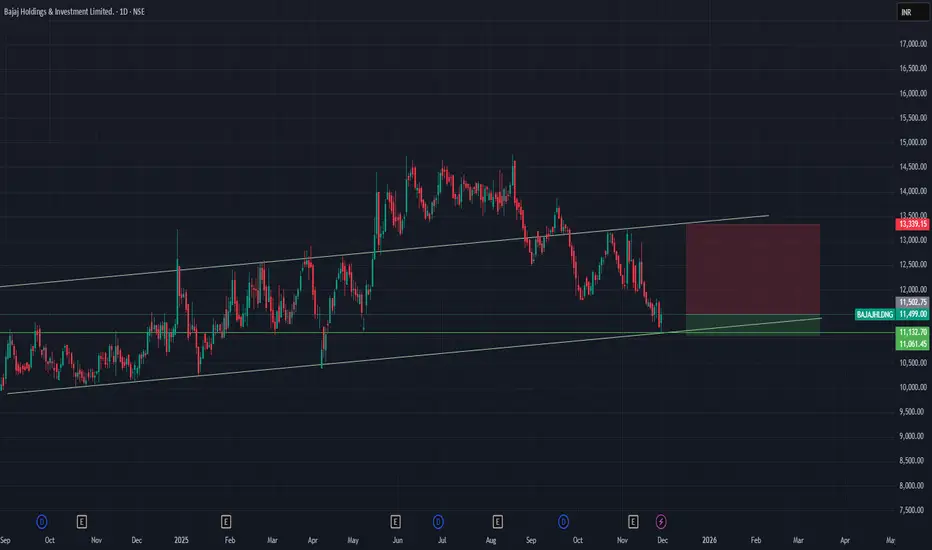
Double Zigzag Setup: Bulls Step Up, Retest Will DecideFeature, Detail
Pattern : Double Zigzag (W-X-Y) continuation structure
Bias : Bullish — Wave X looks complete with fresh buying pressure
Trigger : Breakout and successful retest of the channel (₹278–₹280 zone)
Current Signal : Strong expansion candle supported by a notable volume spike
Target : ₹292.15 (Wave Y ≈ Wave W)
Invalidation (SL) : Close below ₹276.55
Disclaimer: Edu Only, DYOR.
Indus Towers: Channel Breakout Meets Wave TheoryA simple but powerful concept from classical technical analysis — the channel breakout target — plays out beautifully here.
This idea, also discussed by Dr. Sudhir Dixit in his book on breakout signals, gives traders a disciplined way to estimate post-breakout targets.
After a steady five-wave advance from ₹312.55 to ₹369.55, Indus Towers entered a clean descending channel , forming the corrective Wave 2.
The breakout that followed came with a strong volume surge , confirming a clear shift in trend direction.
Concept Recap
In a channel breakout, the target can be derived by measuring the height of the channel (distance between support and resistance) and projecting it upward from the breakout point.
That gives the 1:1 projection , while stronger rallies often stretch toward 2:1 or 3:1 multiples of that range.
Wave Perspective
Elliott Wave traders can interpret this breakout as the early phase of Wave 3 , which typically extends 1.0 to 1.618× Wave 1 .
In this case, the 1.0× projection aligns near ₹395, while higher targets in the ₹412–₹430 zone fit naturally within Wave 3–5 progression.
Key Chart Highlights
Descending channel breakout — trend shift confirmed
Volume surge validates breakout strength
Wave 3 minimum extension ≈ ₹395
Stop-loss below ₹359 keeps the structure intact
Takeaway:
Even without labeling waves, the logic of a channel breakout offers a structured, rule-based method for identifying profit zones.
Combine it with wave theory, and you transform a simple pattern into a roadmap for impulsive rallies.
Disclaimer: This analysis is for educational purposes only and does not constitute investment advice. Please do your own research (DYOR) before making any trading decisions.
Nifty - Expiry day analysis Dec 9The price broke the channel and fall down towards the double bottom support at the 25900 zone. The price can move in this range 25800 to 26200 as per the higher(daily) and lower(15 minutes) chart analysis.
As per the daily chart, we can see a strong support at the 25850 zone.
Buy above 25900 with the stop loss of 25840 for the targets 25940, 25980, 26020, 26100, 26160 and 26200.
Sell below 25780 with the stop loss of 25840 for the targets 25740, 25700, 25640, 25600 and 25540.
Expected expiry day range is 25700 to 26100.
Always do your analysis before taking any trade.
TCS – Supply Zone + Channel Resistance | Short Idea (4H)Price has reached a major supply zone aligned with the upper channel resistance, creating a high-probability rejection zone.
The confluence of:
Horizontal resistance
Supply zone
Rising channel top
makes this area a strong rejection point.
🔵 Reason for Short Setup
Price is reacting at a previous rejection zone
Clear bearish wick activity near resistance
Channel structure shows exhaustion at the top
Risk:Reward remains favorable
🎯 Trade Plan
Entry: Around current rejection zone
Stop-Loss: Above supply zone + channel breakout
Target 1: Mid-channel
Target 2: Lower channel support
🔍 Market Structure
4H trend is still forming higher lows, but momentum weakens at resistance
If price closes above the blue zone, setup becomes invalid
Watching for confirmation candle (bearish engulfing / rejection wick)
⚠️ Invalidation
A strong 4H close above the blue resistance breaks the idea.
💬 Note
This is a pure price-action confluence setup. Will update once price reaches mid-channel target or shows breakdown signals.
Nifty - Weekly review Dec 8 to Dec 12We can see two types of channels in the chart. Channel resistance and double top resistance is at the 26200 - 26220 zone. 26320 is another resistance. Since we can see 2 resistances nearby, and if the price is unable to gain strength, this zone can be choppy. As long as the price is above 26000, it is buy on dips unless the price falls with strong bearish strength.
Friday's movement was bullish as per the daily chart.
Buy above 26100 with the stop loss of 26050 for the targets 26140, 26180, 26240, 26300, 26360, 26420 and 26480.
Sell below 25900 with the stop loss of 25960 for the targets 25860, 25820, 25760, 25700, 25660, and 25600.
Always do your analysis before taking any trade.
US500 – Clean Retest of Broken Structure With Bearish ContinuatiPrice has retested the broken structure level (blue line) and is now reacting inside a premium zone, suggesting sellers may re-enter the market from this region. The consolidation and repeated rejections indicate absorption of buy-side pressure.
With HTF context still pointing toward a deeper correction, this LTF retest offers a potential distribution setup before a continuation lower toward the next major liquidity pocket.
Bearish Path:
• Retest of the broken structure
• Reaction from premium supply zone
• LTF breakdown and structure shift
• Continuation toward downside liquidity + inefficiencies below
ICICI Bank — 200-DMA Rejection Keeps the Downtrend IntactMarket Context
ICICI Bank continues to trade inside a broad descending channel that has governed price since the 1500 peak. Every counter-trend rally has been corrective so far, and the recent recovery has shown the same character — overlapping candles, choppy subdivisions, and clear respect for channel resistance.
Key Technical Drivers
1. Rejection at the 200-DMA
The rally stalled exactly at the 200-Day Moving Average. This is the same zone where price lost momentum earlier, reinforcing that the long-term bias remains downward. A failed attempt to reclaim the 200-DMA in a corrective environment typically signals trend continuation rather than reversal.
2. Channel Resistance Still Untouched
Even though momentum carried the stock above short-term levels, the broader upper channel boundary continues to act as the main ceiling. Price behaviour near this level is corrective, not impulsive — another sign that the move is still part of a larger complex structure.
3. Structure Supports a Triple Zigzag (W-X-Y-X-Z)
This entire decline is best interpreted as a higher-degree W-X-Y-X-Z correction.
W bottomed at 1342.60
X rallied to 1445
Y bottomed at 1317.40
The ongoing rally fits well as the second X wave
Wave (c) of this X leg may be close to completion, but the subwaves allow room for a marginal push to retest the channel top before turning lower. Nothing in the current leg looks impulsive enough to suggest a larger trend reversal.
Trading Plan
Direction: Expect the next leg to unfold downward as Wave Z begins.
Target Zone: Break below 1317.40 is likely, with measured support near 1280–1300 at the lower boundary.
Invalidation: A sustained break above 1411.90 invalidates the bearish Z-wave view and opens the door for a trend reassessment.
Conclusion
The failed 200-DMA retest, corrective price structure, and channel resistance all point to the current recovery nearing exhaustion. Whether Wave X makes one more marginal high or not, the broader path remains lower toward the Wave Z terminal zone.
Disclaimer: This analysis is for educational purposes only and does not constitute investment advice. Please conduct your own research before taking any trading decisions.