Intraday Trading vs Swing Trading1. Definition and Concept
Intraday Trading:
Intraday trading, often referred to as day trading, involves buying and selling financial instruments within the same trading day. The positions are opened and closed during market hours, ensuring that no trades are carried overnight. The primary objective is to capitalize on short-term price fluctuations, often measured in minutes or hours. Intraday traders rely heavily on technical analysis, real-time charts, and market news to make rapid decisions.
Swing Trading:
Swing trading, on the other hand, is a medium-term strategy where traders aim to profit from price “swings” or trends over several days to weeks. Unlike intraday trading, positions in swing trading are not confined to a single day and may be held for multiple sessions. Swing traders attempt to capture significant market moves rather than minute-to-minute fluctuations, employing both technical and fundamental analysis.
Key Difference:
The central distinction is time horizon. Intraday trading is about short bursts of activity within a day, whereas swing trading spans multiple days to weeks, targeting broader trends.
2. Time Commitment
Intraday Trading:
Intraday trading demands significant attention and engagement throughout the trading session. Traders need to monitor charts, order flows, and news events continuously. This makes intraday trading time-intensive and akin to a full-time job for active traders. Missing even a short market movement can result in lost opportunities or losses.
Swing Trading:
Swing trading requires less constant monitoring. Since positions are held for several days, traders can check the market periodically, adjusting their positions as trends develop. This makes swing trading more suitable for part-time traders or those with other professional commitments.
3. Capital Requirements and Leverage
Intraday Trading:
Day trading often involves high leverage to magnify small price movements into meaningful profits. Many brokers offer intraday margin, allowing traders to take positions several times larger than their actual capital. While leverage increases profit potential, it also amplifies risk, making risk management crucial.
Swing Trading:
Swing trading generally requires more capital upfront because positions are held overnight and are exposed to market gaps and volatility. Leverage may still be used, but it is usually lower than in intraday trading, as the focus is on capturing larger moves rather than rapid micro-fluctuations.
Key Takeaway:
Intraday trading is more capital-efficient due to leverage but riskier in a short timeframe. Swing trading needs more upfront capital, but risk is spread across time, allowing more measured position sizing.
4. Risk and Volatility
Intraday Trading:
Intraday trading exposes traders to high volatility, but the exposure is limited to a single trading session. Traders can use stop-loss orders to manage risk aggressively. However, markets can move unpredictably within minutes, leading to rapid gains or losses.
Swing Trading:
Swing traders face overnight and weekend risk, where significant news events or economic developments can cause price gaps. While daily volatility may be less critical, holding positions overnight increases the potential for unexpected swings, which requires careful risk management.
Comparison:
Intraday trading: High short-term risk, low overnight exposure.
Swing trading: Moderate daily risk, higher overnight/holding risk.
5. Analytical Approach
Intraday Trading:
The strategy relies almost entirely on technical analysis, including:
Candlestick patterns
Intraday charts (1-minute, 5-minute, 15-minute)
Volume analysis
Moving averages, RSI, MACD
News and economic data for intraday sentiment
Fundamental factors are usually secondary, as their impact manifests over a longer timeframe.
Swing Trading:
Swing traders use a blend of technical and fundamental analysis:
Technical analysis identifies entry and exit points using daily or weekly charts.
Fundamental analysis helps assess whether a stock or commodity has the potential for multi-day trends, based on earnings reports, economic indicators, or sectoral developments.
Key Insight:
Intraday trading focuses on price action and market psychology in the very short term, while swing trading integrates market trends with underlying financial health.
6. Profit Potential and Target
Intraday Trading:
Targets small profits per trade, often measured in a few percentage points or fractions thereof.
High frequency of trades is necessary to accumulate meaningful gains.
Profit depends heavily on timing and execution.
Swing Trading:
Targets larger profits per trade, sometimes 5–20% or more depending on the instrument and trend duration.
Fewer trades are executed, but each trade aims to capture a substantial portion of the trend.
Patience is key; missing a trend reversal can significantly affect profitability.
7. Psychological and Emotional Factors
Intraday Trading:
Highly stressful due to rapid decision-making and constant monitoring.
Emotional discipline is critical to avoid impulsive trades based on fear or greed.
Traders often experience burnout, especially during volatile markets.
Swing Trading:
Less stressful in daily execution but requires patience and emotional control over longer periods.
Traders need to resist the urge to exit early or chase market reversals.
Swing trading fosters a calmer, more strategic mindset, focusing on trend-following rather than rapid reaction.
8. Costs and Expenses
Intraday Trading:
Higher transaction costs due to frequent trading.
Broker commissions, spreads, and taxes can eat into profits if not managed efficiently.
Swing Trading:
Lower transaction costs, as trades are less frequent.
Overnight exposure may involve financing costs if positions are leveraged in margin accounts.
Key Observation:
Intraday trading requires high-volume, low-margin efficiency, while swing trading benefits from fewer trades with larger profit potential per trade.
9. Suitability for Different Traders
Intraday Trading:
Suitable for traders with high risk tolerance, strong analytical skills, and the ability to monitor markets constantly.
Ideal for individuals seeking quick returns and able to handle high stress.
Swing Trading:
Better suited for part-time traders, investors who prefer moderate risk, or those who value trend-based strategies.
Aligns with individuals focusing on longer-term wealth accumulation without the need for constant market monitoring.
10. Tools and Technology
Intraday Trading:
Requires real-time data feeds, fast execution platforms, charting software, and news alerts.
Algorithmic trading and automated systems are commonly used to capitalize on micro-movements.
Swing Trading:
Can operate with daily charts, trend indicators, and fundamental reports.
Automation is less critical; research and strategic analysis often suffice.
11. Advantages and Disadvantages
Aspect Intraday Trading Swing Trading
Time Horizon Same-day Several days to weeks
Time Commitment High Moderate
Risk High short-term, low overnight Moderate daily, higher overnight
Profit Potential Small per trade, frequent Larger per trade, less frequent
Capital Efficiency High (via leverage) Requires more capital upfront
Stress Level High Moderate
Analytical Focus Technical only Technical + Fundamental
Transaction Costs High due to frequent trades Low to moderate
Suitability Full-time, active, risk-tolerant traders Part-time, trend-followers, moderate risk
12. Conclusion
Both intraday and swing trading are viable strategies but cater to different personality types, financial goals, and lifestyles. Intraday trading offers the thrill of rapid decision-making and potential for quick profits but requires high dedication, real-time analysis, and exceptional risk management. Swing trading, by contrast, offers a more patient, strategic approach, balancing market analysis with trend-based decisions, suitable for those who cannot dedicate full trading hours but still seek substantial returns.
Choosing between intraday and swing trading depends on multiple factors:
Risk tolerance
Time availability
Capital allocation
Emotional resilience
Market knowledge and analytical skill
Ultimately, successful trading in either domain demands discipline, strategy, and continuous learning. Understanding the nuances of intraday versus swing trading can help traders craft a personalized approach, optimizing both profitability and sustainability in financial markets.
Trade ideas
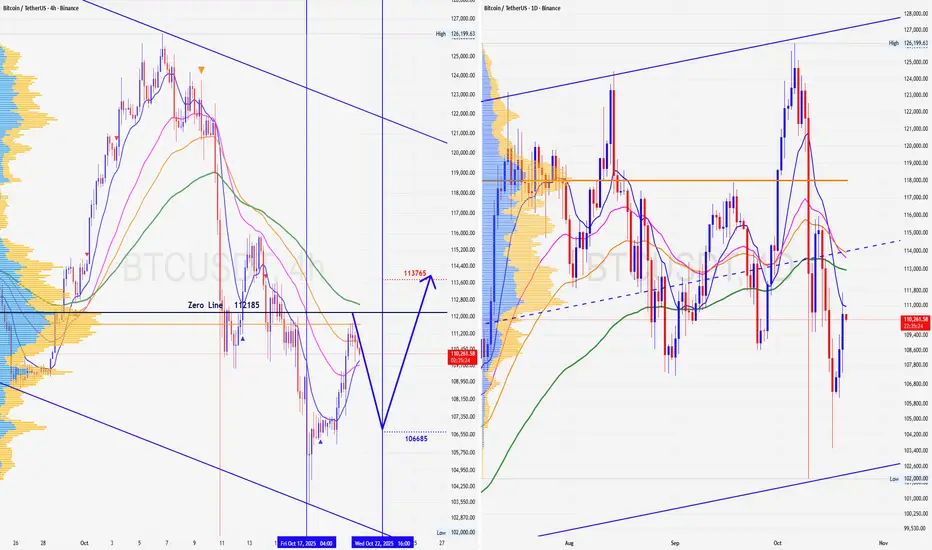
Bitcoin: Retrace before continue higher?Well now that res at $111 was broken , what's next?
Looking at price action and TIME left on bears side on the 4hrs TF we can say that a retrace to $106k will be ok as long as it doesn't stay in that range for too long while the Daily is setting up for its move that will start Tuesday Oct 21 and taking hold by Thursday Oct 23 that's the plan for a move to the $113k - $115k , once it gets there and most important how it gets there will give us a clue if the move have legs for a test to the $130k.
Buckle up ladies and gentlemen and feel free to lock in profits cause the Daily setup as of now looks week.
Play it right, play it safe , know the rules of the game.
Have a good trading day everyone.
Boost....Follow and Comment.
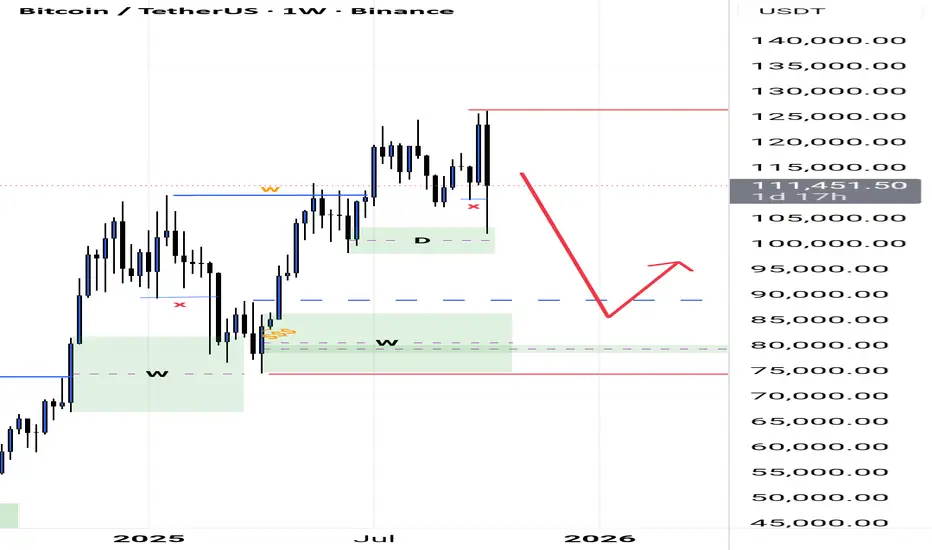
Bitcoin Is Flashing a Major Warning Signal Right NowBitcoin Is Flashing a Major Warning Signal Right Now ⚠️
KEY LEVELS:
Resistance: $123K (triple top) & $115.9K barrier
Support: $106K - CRITICAL level
BEARISH PATH (if $106K breaks):
→ Target 1: $91K (-18%)
→ Target 2: $79K (-28%)
BULLISH SCENARIO:
Reclaim $115.9K & break $123K to invalidate bearish structure
STRUCTURE ANALYSIS:
▶️ Lower highs forming = Reversal signal
▶️ Weakening momentum post- New ATH
▶️ Distribution pattern visible at resistance
STRATEGY:
✅ SHORT: Below $106K | Targets: $91K-$79K
✅ LONG: Above $115.9K | Stop: $106K
The chart doesn't lie. $106K is the line in the sand.
Risk management > predictions.
Trade smart. Adapt fast. Survive longer.
CRYPTOCAP:BTC #Bitcoin
NFa & DYOR
Introduction to IPOs in IndiaIntroduction
An Initial Public Offering (IPO) represents the first sale of a company's shares to the public, allowing the firm to raise capital from a wide pool of investors. In India, IPOs are a crucial avenue for both corporate growth and investor participation. They allow private companies to transition into publicly listed entities, enhancing their credibility, visibility, and financial flexibility.
The Indian IPO market has seen substantial growth over the past few decades, driven by economic expansion, policy reforms, technological innovation, and increasing investor awareness. For investors, IPOs offer an opportunity to participate in the growth story of emerging companies. For the economy, they facilitate capital formation and resource allocation toward productive sectors.
Regulatory Framework Governing IPOs in India
The IPO process in India is strictly regulated to protect investor interests and ensure transparency. The key regulatory authorities are:
Securities and Exchange Board of India (SEBI): SEBI regulates the issuance of securities under the SEBI (Issue of Capital and Disclosure Requirements) Regulations, 2018. It ensures that companies disclose complete, accurate, and timely information about their financial health, business risks, and objectives of fund utilization.
Stock Exchanges: IPOs must be listed on recognized stock exchanges such as the National Stock Exchange (NSE) or Bombay Stock Exchange (BSE). Exchanges ensure compliance with listing requirements, including corporate governance norms.
RBI (Reserve Bank of India): While RBI is not directly involved in IPO approvals, it oversees foreign investments and ensures compliance with capital account regulations for Non-Resident Indians (NRIs) investing in IPOs.
Merchant Bankers/Lead Managers: Investment banks or merchant bankers facilitate the IPO process, from drafting the prospectus to managing investor subscriptions.
Registrar and Depositories: Registrars handle the allotment of shares, while depositories such as NSDL and CDSL maintain electronic records of shareholding.
The IPO Process in India
The IPO process in India is structured and multi-staged to ensure regulatory compliance and transparency:
1. Pre-IPO Preparation
Before going public, a company must strengthen its internal systems and governance structures. Steps include:
Corporate Restructuring: Streamlining operations, consolidating subsidiaries, and cleaning up financial statements.
Due Diligence: Legal, financial, and operational checks to ensure transparency.
Engaging Advisors: Hiring investment bankers, auditors, and legal advisors.
Board Approval: The company’s board must approve the IPO plan and submission to SEBI.
2. Filing Draft Prospectus with SEBI
The company submits a Draft Red Herring Prospectus (DRHP) to SEBI. The DRHP contains critical information including:
Business model and strategy
Financial statements and projections
Risks and uncertainties
Promoter details and shareholding pattern
Purpose of the IPO (capital utilization plans)
SEBI reviews the DRHP, suggesting modifications or clarifications to ensure investor protection. Once approved, the company can file its Red Herring Prospectus (RHP) with stock exchanges.
3. Pricing and Marketing
The company must decide the IPO pricing mechanism:
Fixed Price IPO: A predetermined price per share is set. Investors know the exact cost.
Book Building IPO: Investors bid within a price band, and the final price is determined based on demand.
During this stage, companies conduct roadshows to market their shares to institutional investors and create awareness. Institutional investors, including mutual funds and insurance companies, play a vital role in subscription and price discovery.
4. IPO Opening and Subscription
The IPO is opened for subscription to:
Retail Investors: Individuals with an investment limit under SEBI norms (usually ₹2 lakh per application).
Qualified Institutional Buyers (QIBs): Banks, mutual funds, insurance companies, and corporates.
Non-Institutional Investors (NIIs): High-net-worth individuals or entities investing above a specified limit.
Investors apply through banks, stockbrokers, or online trading platforms. In modern India, electronic IPO application (ASBA – Application Supported by Blocked Amount) is mandatory for retail and non-institutional investors to ensure a smooth and secure application process.
5. Allotment and Listing
Post-subscription, shares are allotted to investors based on demand. In case of oversubscription, shares are allotted proportionally through a lottery system. Once allotted, shares are credited to investors’ demat accounts.
Finally, shares are listed on NSE and BSE. The listing day is crucial as it sets the market benchmark for IPO performance. A successful listing often leads to a surge in share prices, commonly known as “listing gains.”
Types of IPOs in India
India has witnessed various types of IPO structures:
Initial Public Offering (IPO): Traditional method where shares are offered to the public for the first time.
Follow-on Public Offering (FPO): Additional shares issued by an already listed company.
Rights Issue: Shares offered to existing shareholders before offering to the general public.
Offer for Sale (OFS): Promoters or early investors sell their stake to the public, often seen in large-cap firms.
Book-Built IPOs vs Fixed-Price IPOs: As mentioned earlier, the pricing mechanism differs, with book-building being the more popular modern method.
Trends in the Indian IPO Market
The Indian IPO market has evolved dynamically over the last two decades. Some notable trends include:
Rising Retail Participation: With digital banking and dematerialized accounts, retail investors increasingly participate in IPOs, contributing significantly to subscriptions.
Tech and Start-up IPOs: Companies in the IT, fintech, and e-commerce sectors, such as Zomato, Paytm, and Nykaa, have created high investor excitement.
Large-Cap IPOs: Established companies continue to go public, providing investors with a blend of growth and relative safety.
Regulatory Reforms: SEBI introduced reforms like fast-track IPOs for smaller companies and enhanced disclosure requirements to boost investor confidence.
Global Investor Inflows: Foreign institutional investors (FIIs) actively participate in Indian IPOs, reflecting confidence in India’s growth story.
Advantages of IPOs in India
For companies:
Capital Raising: IPOs provide a large amount of capital without increasing debt.
Brand Visibility: Public listing enhances credibility and visibility.
Liquidity for Promoters: Founders and early investors can monetize part of their holdings.
Expansion Opportunities: Funds raised can be used for acquisitions, research, technology, and market expansion.
For investors:
High Growth Potential: Early investment in high-growth companies can yield significant returns.
Portfolio Diversification: IPOs provide access to new sectors and businesses.
Market Participation: Encourages a culture of investment and wealth creation among the general public.
Risks and Challenges
Despite the potential benefits, IPOs carry significant risks:
Market Volatility: Listing day prices can be highly volatile, influenced by demand-supply dynamics and macroeconomic factors.
Overvaluation: Hype-driven IPOs may trade below issue price post-listing if valuations are unrealistic.
Limited Information: Despite SEBI regulations, investors may not fully understand business risks.
Lock-in Period: Promoter shares often have a lock-in period, which may restrict liquidity in the short term.
Recent Developments in India’s IPO Market
The Indian IPO ecosystem is becoming more sophisticated:
Digital IPO Platforms: Integration with UPI, net banking, and trading apps has simplified subscription and payment processes.
Retail-Centric Approaches: SEBI mandates minimum 35% allocation to retail investors in most IPOs.
Emergence of Unicorn IPOs: Technology startups and fintech companies have gone public, attracting substantial attention from domestic and global investors.
ESOP Buybacks and Employee Incentives: Companies often offer shares to employees before listing, fostering employee wealth creation.
Conclusion
The IPO market in India is a vibrant component of the financial ecosystem, offering a symbiotic platform for companies to raise capital and investors to access early-stage growth opportunities. With robust regulatory oversight, digital infrastructure, and growing investor awareness, India’s IPO market continues to expand and evolve.
However, while IPOs provide opportunities for wealth creation, investors must exercise due diligence, evaluate fundamentals, and assess risks before participating. Understanding the IPO mechanism, market trends, and regulatory landscape is essential for both corporate leaders and investors to make informed decisions.
India’s IPO market not only strengthens individual companies but also contributes to overall economic growth by channeling resources efficiently, promoting transparency, and expanding capital markets. With innovation, technology-driven platforms, and increasing investor participation, India is poised to see more dynamic IPO activity in the years ahead.
$BTC - Modified Harmonic in the making?
Watching a modified harmonic pattern — looks close to a Gartley-type structure, though AB retraces ~0.577 of XA (a bit shallow, but still within harmonic tolerance).
PRZ (potential reversal zone): 120–121k, around the 0.786 XA retracement.
If 108k gets reclaimed, I’ll start considering a long setup targeting that PRZ zone.
On the weekly, RSI is hovering near 50, which often acts as a bullish reset zone in an uptrend — worth watching for continuation strength.
Let’s see if BTC can reclaim structure and complete the pattern 👀
[SeoVereign] BITCOIN BEARISH Outlook – October 18, 2025Today, as of October 19, I would like to share my bearish (short) outlook on Bitcoin.
First Basis — IR BAT (Invalid Reaction BAT)
The core of this analysis lies in the IR BAT pattern, a concept I independently devised.
It is an adaptation of the traditional BAT pattern,
based on the principle that if no valid rebound occurs within a certain period after entering the PRZ (Potential Reversal Zone),
the pattern is considered invalid,
and the price tends to move strongly beyond the PRZ in that direction.
Currently, Bitcoin has entered the PRZ zone of the BAT pattern
but is showing sideways and weak movements without any significant buying reaction,
which satisfies the typical bearish scenario conditions of an IR BAT.
Second Basis — 0.2~0.5 Retracement Zone
At present, the chart is positioned within the 0.2–0.5 Fibonacci retracement zone relative to the upper structure.
This area is generally interpreted as a sell-dominant zone in the IR BAT (Invalid Reaction BAT) pattern,
where short-term rebounds are limited and re-declines tend to emerge.
Accordingly, the average target price is set around 102,570 USDT.
Depending on future price developments,
I will provide further updates regarding any changes to this idea and position management strategies.
Thank you for reading.
Bonds and Fixed Income Trading in the Indian MarketIntroduction
Bonds and fixed-income instruments form the backbone of the debt market, serving as crucial avenues for capital formation and risk management. Unlike equities, which represent ownership in a company, bonds are debt instruments issued by governments, corporations, or financial institutions, providing fixed returns over a predetermined period. In India, the fixed-income market has evolved substantially over the past decades, driven by regulatory reforms, growing investor awareness, and the need for diversified investment options. Understanding bonds and fixed-income trading is essential for investors, fund managers, and institutions aiming to manage interest rate risk, generate income, and balance investment portfolios.
Understanding Bonds
A bond is essentially a loan made by an investor to an issuer, who promises to pay interest (coupon) at fixed intervals and return the principal amount on maturity. Bonds vary based on several parameters:
Issuer Type:
Government Bonds: Issued by the Central or State Governments. Examples include Treasury Bills (T-Bills), Government Securities (G-Secs), and State Development Loans (SDLs).
Corporate Bonds: Issued by companies to raise capital. These can be investment-grade or high-yield bonds depending on the issuer’s creditworthiness.
Municipal Bonds: Issued by urban local bodies for infrastructure projects.
Tenure: Bonds can be short-term (less than 1 year), medium-term (1–5 years), or long-term (5 years and above).
Coupon Type:
Fixed Coupon Bonds: Pay a predetermined interest rate.
Floating Rate Bonds: Coupon varies with benchmark rates like MIBOR or RBI repo rates.
Zero-Coupon Bonds: Sold at a discount and redeemed at face value; no periodic interest is paid.
Credit Rating: Rating agencies like CRISIL, ICRA, CARE, and Fitch assess creditworthiness. Higher-rated bonds carry lower default risk but offer lower yields.
Indian Bond Market Structure
The Indian bond market can be broadly divided into government securities market and corporate debt market.
Government Securities Market
The government securities market is the largest segment of the Indian debt market. The Reserve Bank of India (RBI) is the primary regulator and issuer of government securities. Instruments include:
Treasury Bills (T-Bills): Short-term securities issued at a discount with maturities of 91, 182, or 364 days. They are zero-coupon instruments and highly liquid.
Government Bonds (G-Secs): Medium- and long-term debt instruments with fixed or floating coupons. They fund fiscal deficits and infrastructure projects.
State Development Loans (SDLs): Issued by state governments, these bonds are similar to G-Secs but carry slightly higher yields due to state-specific credit risk.
Corporate Debt Market
The corporate bond market in India has witnessed significant growth, though it remains smaller than the government securities market. Key features include:
Issued by public and private sector companies.
Can be listed on exchanges like NSE and BSE or traded over-the-counter (OTC).
Includes instruments like non-convertible debentures (NCDs), commercial papers (CPs), and perpetual bonds.
The corporate bond market allows companies to raise long-term funds efficiently while offering investors higher yields compared to government securities, albeit with higher risk.
Participants in the Indian Bond Market
The Indian bond market comprises a variety of participants:
Retail Investors: Individuals seeking stable returns, typically investing through government bonds, NCDs, or mutual funds.
Institutional Investors: Insurance companies, pension funds, mutual funds, and banks. They dominate the market due to large capital requirements.
Foreign Institutional Investors (FIIs): Invest in Indian government and corporate bonds, subject to regulatory approvals. Their participation adds liquidity and depth to the market.
Brokers and Dealers: Facilitate buying and selling of bonds on exchanges and OTC platforms.
Regulatory Authorities: RBI and SEBI regulate issuance, trading, and settlement of bonds to maintain market integrity.
Bond Pricing and Yield
Understanding bond pricing and yields is fundamental for trading. The price of a bond depends on the present value of its future cash flows discounted at prevailing market interest rates. Key concepts include:
Yield to Maturity (YTM): Total return expected if the bond is held until maturity.
Current Yield: Annual coupon divided by current market price.
Price-Yield Relationship: Bond prices move inversely to interest rates; when rates rise, bond prices fall, and vice versa.
In India, yield curves are published regularly by the RBI, showing the relationship between bond yields and maturities. These curves help investors make informed trading decisions.
Trading Mechanisms in India
Bond trading in India occurs through primary and secondary markets.
Primary Market
In the primary market, bonds are issued for the first time.
Government securities are auctioned by the RBI using competitive and non-competitive bidding.
Corporate bonds are issued through private placements or public offerings, often under SEBI regulations.
Secondary Market
Secondary trading involves buying and selling existing bonds.
For government securities, trading occurs on platforms like the NSE NDS-OM (Negotiated Dealing System – Order Matching) and OTC markets.
Corporate bonds are traded over-the-counter or on exchanges such as NSE and BSE.
The secondary market ensures liquidity, enabling investors to adjust portfolios according to interest rate movements or credit risk perceptions.
Risk Factors in Bond Investing
Even though bonds are considered safer than equities, they carry certain risks:
Interest Rate Risk: Price of bonds fluctuates with changes in market interest rates. Long-term bonds are more sensitive.
Credit Risk: Risk of issuer default. High-yield corporate bonds carry higher credit risk.
Liquidity Risk: Some bonds, especially corporate and municipal bonds, may be hard to sell quickly without impacting the price.
Reinvestment Risk: Risk of reinvesting coupons at lower rates when interest rates fall.
Inflation Risk: Inflation erodes real returns, particularly on fixed-coupon instruments.
Role of Technology and Exchanges
Technology has transformed bond trading in India, improving transparency, efficiency, and accessibility. Key developments include:
Electronic Trading Platforms: NSE NDS-OM for government securities and BSE’s bond platform for corporate bonds.
Real-Time Price Discovery: Investors can view live bid-ask spreads, yields, and volumes.
Settlement Systems: Clearing corporations like CCIL ensure efficient settlement and reduce counterparty risk.
These innovations have made trading safer and more efficient, encouraging greater participation from retail and institutional investors.
Regulatory Framework
The bond market in India is highly regulated to ensure investor protection and market stability.
Reserve Bank of India (RBI):
Manages issuance and trading of government securities.
Implements monetary policy, influencing interest rates and liquidity.
Securities and Exchange Board of India (SEBI):
Regulates issuance and trading of corporate bonds.
Ensures transparency, disclosure, and fair practices in the market.
Credit Rating Agencies: Assess the creditworthiness of issuers to help investors make informed decisions.
Regulations have promoted the growth of a more transparent and efficient market over the last two decades.
Investment Strategies in Bonds
Investors adopt different strategies based on their risk appetite, time horizon, and market outlook:
Buy and Hold: Investors purchase bonds and hold them until maturity to earn stable coupon payments.
Trading on Yield Movements: Active traders buy bonds when interest rates are high and sell when rates fall.
Laddering Strategy: Investing in bonds with staggered maturities to reduce reinvestment and interest rate risks.
Credit Diversification: Combining government, corporate, and high-yield bonds to balance risk and return.
Bond mutual funds and ETFs are also popular instruments for retail investors seeking diversification and professional management.
Challenges and Future Outlook
Despite steady growth, the Indian bond market faces certain challenges:
Limited Retail Participation: High minimum investment amounts and complexity deter retail investors.
Corporate Bond Liquidity: Secondary market liquidity for corporate bonds remains lower than for government securities.
Interest Rate Volatility: Rapid policy changes can impact yields and bond prices.
However, the outlook is positive due to:
Increased FII participation in government and corporate bonds.
Growing awareness of fixed-income products among retail investors.
Technological innovations improving market access and efficiency.
Government initiatives like the Bharat Bond ETF, which allow retail investors to access high-quality corporate bonds.
Conclusion
Bonds and fixed-income instruments play a vital role in India’s financial ecosystem, providing stable income, risk diversification, and capital market depth. The Indian market has matured over the years, offering a variety of instruments for investors with different risk appetites. While challenges like liquidity constraints and interest rate sensitivity remain, regulatory reforms, technological advancements, and increasing investor awareness are strengthening the market. For both individual and institutional investors, understanding the dynamics of bond pricing, yield, risk factors, and trading mechanisms is essential to effectively navigate the Indian fixed-income market. As India’s economy continues to grow, the fixed-income market is expected to expand further, offering new opportunities for investors seeking stability and returns in a diversified portfolio.
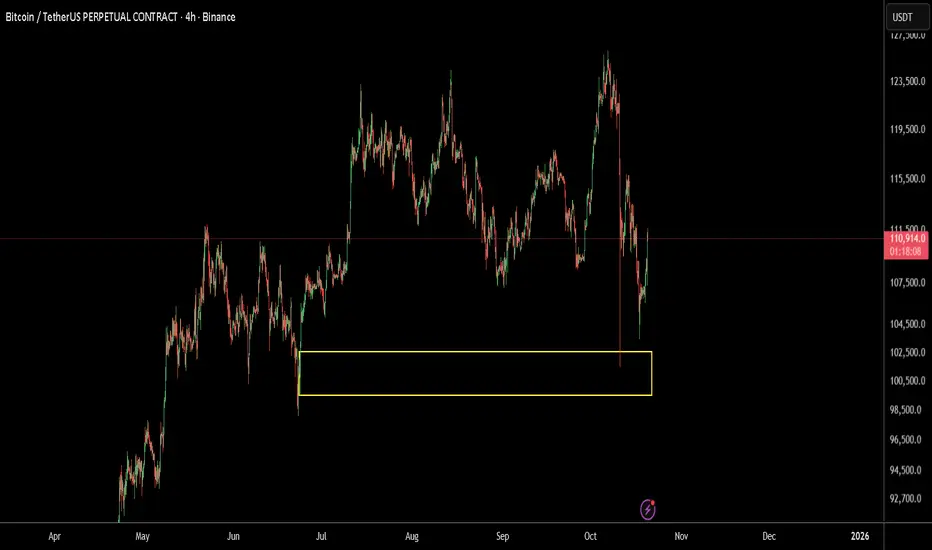
BTC - S & R levels. Buy some long qty now at support nowBTC is at support and profit booking and weak hands giving up qty. I have not see any big players stopped accumulation..... price is at good or reasonable buy levels for atleast one to 3 months i expect price to see new ATH again. few groups booking profits at every new ATH for buying back at support and safer levels.... Buy now for good investments with atleast 2 weeks to 2 months time period for great profits or else book profits as u wish
BTC SWING PLAY LONGChart Overview and Data
• Asset: BITCOIN/TETHERUS PERPETUAL CONTRACT.
• Time Frame: The chart shows data up to "16 Oct" (likely the date the screenshot was taken). The primary candles visible span from approximately June to October of the current year, with the x-axis extending into 2026, suggesting a daily (1D) or weekly (WEEK) candlestick view, though the top-left corner indicates "1D - WEEK", which might mean the current view is Daily (1D) within a larger Weekly (WEEK) analysis context.
• Price: The current price is approximately $107,705.3, and the asset is down $3,007.6 (-2.72%) for the period shown.
• Trading Action: There are prominent SELL and BUY buttons at the top left, with current bid/ask prices of $107,691.3 (SELL) and $107,691.4 (BUY).
Technical Analysis Elements
Candlestick Pattern
• The chart uses candlesticks to represent price action over time.
• The recent price action (around August to October) shows a period of consolidation or a slight uptrend that has recently seen a significant drop, as indicated by the large red candlestick currently forming (the one far to the right).
Indicators and Lines
• Moving Averages: Several moving average lines (blue and purple, and possibly a thinner red line) are overlaid on the candlesticks, typically used to identify trend direction.
• Support and Resistance:
• Support Zones (Red Boxes/Lines): Several horizontal red lines and a large red-shaded area beneath the current price action indicate potential support levels where traders expect buying interest to emerge. Key price points marked by red lines are around $106,973, $103,204, $101,297, and the "Low" at $98,125.2. Further support is indicated by the lowest red line at $89,076.1.
• Resistance/Target Zone (Yellow/Green Box): A prominent yellow horizontal line at $126,220.2 (labeled "High") acts as a significant resistance level or a potential upside target. The large green-shaded area above the current price, extending up to $161,047.0, appears to represent a profit target or a long-term trading objective for a potential long position.
Trade Setup Indication
• The chart appears to be illustrating a potential short trade setup, or a breakdown scenario, given:
• The large red-shaded area below the current price, which could be a projected target zone for a short position.
• The significant price drop in the last candle, breaking below recent support.
• Small arrows and boxes near the consolidation area (around July/August) also suggest previous or ongoing trade indications.
Axis and Additional Information
• Y-Axis: Represents the price of BTCUSDT, ranging from approximately $84,800 up to $161,047.
• X-Axis: Represents time, spanning from approximately July to April 2026.
• Volume: A smaller chart pane at the bottom shows volume data, represented by red and green vertical bars, which helps gauge the strength behind price movements.
Part 12 Trading Master Class With Experts Importance of Knowledge and Timing:
Successful option trading depends heavily on market knowledge, timing, and strategy selection. Understanding concepts like intrinsic value, time decay (theta), volatility (vega), and interest rate effects (rho) is essential. Mistimed trades or poorly chosen strategies can lead to total loss of the premium. Additionally, options are time-sensitive assets, meaning the value erodes as expiration approaches. Traders must monitor market conditions and adjust positions accordingly. While options can offer high returns, they also carry significant risk, and disciplined analysis, research, and risk management are crucial to navigate the complexity of option markets effectively.
Part 4 Institutional Trading Types of Option Trading Strategies
Option traders use different strategies depending on their market view:
Bullish Strategies: Buying Call Options, Bull Call Spreads.
Bearish Strategies: Buying Put Options, Bear Put Spreads.
Neutral Strategies: Iron Condor, Straddle, Strangle — for when the trader expects low volatility.
These strategies help balance risk and reward, allowing traders to profit even in sideways markets.
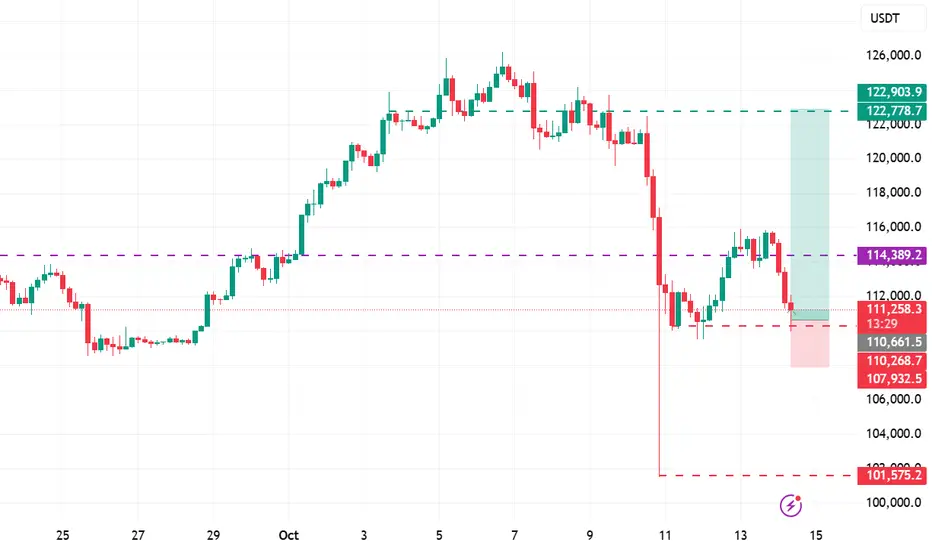
Bitcoin LTF Analysis & Market OutlookBitcoin LTF Analysis & Market Outlook
#Bitcoin still doesn’t look strong on LTF, and I’m expecting some more downside movement in the coming days. So if you’re holding high leverage longs, manage them carefully and always use strict stop loss.
Here’s the key structure to watch:
Resistance 1: $116,000
If CRYPTOCAP:BTC fails to break and hold above this level, momentum stays weak and we could revisit the $100,000 zone again.
Resistance 2: $122,500
Only a confirmed breakout above this level can trigger the next leg toward a new ATH around $150,000.
Until then, play defense. Avoid emotional trades, don’t gamble with your hard-earned money, and only take entries backed by clear confluence, strategy, and discipline.
Remember: The market always rewards patience, not greed. Stay alert, follow structure, and let the setup come to you.
Part 2 Support and Resistance Why Traders Use Options
Options are versatile instruments. Traders use them for:
Speculation – Betting on price movement to earn profits.
Hedging – Protecting existing investments from adverse price moves.
Income Generation – Selling options (writing) to earn the premium.
For example:
A trader may buy a call option expecting prices to rise.
A portfolio manager may buy put options to protect their stocks from falling prices.
An experienced investor may sell covered calls to earn regular income.
[SeoVereign] BITCOIN BEARISH Outlook – October 13, 2025As of October 13th, I would like to share my bearish outlook on Bitcoin.
The first basis is the Shark pattern within the 1.13–1.414 range.
The Shark pattern, established by Scott Carney, is a modified harmonic pattern that defines its PRZ (Potential Reversal Zone) within the 1.13–1.414 XA extension range.
This zone represents a region where the buying momentum tends to be exhausted after excessive price expansion,
and it is typically interpreted as an area where strong reversal pressure tends to emerge.
Currently, Bitcoin has entered this 1.13–1.414 range and is repeatedly testing the upper resistance zone.
Therefore, I believe the probability of a short-term bearish reversal is gradually increasing.
The second basis is that Wave 5 forms a 0.382 length ratio relative to Waves 0–3.
This is a Fibonacci-based structural relationship often observed in Elliott Wave Theory.
When Wave 5 fails to extend excessively and remains around 0.382 of Waves 0–3,
it typically indicates a phase of exhaustion, followed by a corrective or retracement phase.
Accordingly, I set the average target price around 111,350 USDT.
Depending on the future development of the chart,
I will provide updates on position management and any changes to this idea.
Thank you for reading.
My Analysis Perfect 100%Analysis of the Price Action
Based on the image, the market experienced a significant and rapid downward movement, indicated by the long red candle (often called a 'sell-off' or 'wick' depending on how the candle closes) around the area you've highlighted.
• Before the Drop: The price was trading in a relatively high range, hovering around the 120,000 to 122,000 USDT mark, following a strong uptrend from late September to early October.
• The Drop: The price crashed through multiple key support levels (the horizontal white, yellow, and red lines, as well as the green/red zones you have drawn) in a very short period.
• The Volume: This massive price drop was accompanied by a huge spike in selling volume (the very tall red bar in the volume indicator at the bottom), which confirms a strong and sudden selling event.
• The Low: The price wick reached a low around 101,668.1 USDT before bouncing slightly.
Interpreting "My Target is Done"
Since I don't know the specifics of your trading strategy, "My target is done" could mean a few things:
1. Stop-Loss Hit: If you were long (betting on the price going up) and had a stop-loss set somewhere in the zone where the price fell, this sudden move would have triggered your stop-loss, closing your position for a loss (a target for your risk management).
2. Take-Profit Hit (Short Position): If you were shorting (betting on the price going down) and had a take-profit target set in the lower price ranges (perhaps around 110,000 or 105,000 USDT), this drop would have executed your take-profit order for a gain. This is the most common interpretation if you are celebrating a target being done during a crash.
3. Target for Entry: If you were waiting to buy the dip, the price hitting the very low levels (the wick) might have triggered a buy limit order you had placed, meaning your target for a new entry was achieved.
Given the nature of the move, if you were short, congratulations! If you were long, this looks like a painful liquidation or stop-loss event.